Monday, June 17, 2013

The June meeting of the SOCCCD BOT: "jackass free"


     [Please see Tere's Board Meeting Highlights.]
     I just entered the "Ronald Reagan" room here at Saddleback College—at pretty close to 6:00—and the meeting seems to have just begun. Evidently, no actions were taken by the board during closed session.
     Bill Jay lays on the religion pretty thick for his invocation. Dave Lang asks the audience to join him in "paying respects" to the flag. Really? To the flag? (Sorry, I'm a philosopher.)

Commendations:

     Right away, Nancy tears into the meeting. "Commendations" commence. Martin Carbone, Saddleback College Emeritus volunteer, comes up to receive recognition.
     Burnett explains that two commendation recipients couldn't attend. The SC chapter of Phi Theta Kappa wasn't present somehow. Also, Andrew Craven isn't present for some reason. I think he's in charge of parking or something. Lots of applause. You know how this goes.
     IVC's Glenn Roquemore comes up, asking that Diane Oaks and her "team" come up. They got some sort of recognition from CC Pro. So this is a case of giving a prize to people for getting a prize. (I don't understand why they stop there; why not give 'em another prize for the prize they just gave em'?) They seem like deserving people, though. They're pretty smiley and happy.
     Glenn asks Officer Tony Mancini to step up. He got an award from the CCUPCA for identifying a suspect, etc.
   
     Public comments: 

     Bob Cosgrove comes up, praises some people re SC's accreditation effort. (It sounds as though there's a dying squirrel in Bob's mike.) Mentions a Saddleback College retreat. Commends various people. Bob's old-fashioned that way. "An excellent presentation" by Todd B, evidently.
     A person named Mark Goodleaf also wants to address the board--re "IVC's ATEP," the purported layoff (an instructor in a particular program) coming up to a vote tonight. If you were to understand the contribution of this program (whatever it is), you wouldn't consider doing this, he says. I don't need to teach there, but I have for years, he says. "That's not why I'm here." Talks about the contribution of the school (program?). And "the youth." I was a little bit afraid of the youth, but...blah, blah, blah. These students are now contributing to the community. They're "positive citizens," fully employed. This wouldn't have happened were it not for ATEP and this particular program!

Board reports:

     Bill Jay: no report
     Tim Jemal: it was a pleasure last month to participate in commencement at IVC. Commends everyone involved. Went off "pretty well," he says. Had an opportunity to be interviewed on TV. A legislative action, TV show--something about Emeritus. Legislation that would throw older folks "under the bus," and he doesn't support it. The budget seems to be stabilizing. FTES equivalent of 1200 elderly students at Saddleback, evidently. Etc.
     Marcia Milchiker: agrees with Tim about the Emeritus Institute (should support it, protect it). Have always fought for these courses, these students. Last meeting, I read a list of the "60 things" I did. This time, commencements. "Can't thank enough" the people responsible. Went to Human Services certificate award ceremony. Marcia says she got a certificate from those people for having always attended.
     Mentions Bob Cosgrove's remark about me (yes me) at the last board meeting (Bob noted my efforts reporting on board meetings). A "Cumbaya" moment, says Marcia: in his report about the last board meeting, Roy Bauer wrote (she reads this):
     Yes folks, here we are yet again for another meeting of the SOCCCD BOT. This is, as I’ve suggested previously, the best BOT the district likely has ever had, which ain’t saying much, I know [big laugh], but it’s a damned good thing nonetheless. Essentially, the board is now jackass-free. [More laughter.] Plus we've got a Chancellor we can work with and trust.
     High praise from Roy Bauer, says Marcia. [Much laughter-like noise. Mostly, I keep my eyes closed, hoping for the moment to pass.] Nancy says something positive. I give her a thumbs up. What did that mean? I don't know. Everybody seems to be in a good mood about this. Well, OK, me too.
     TJ Prendergast: discusses the problem of addiction to prescription drugs. Attended an event about that, wants to spread the word. A disturbing trend.
     Nancy Padberg: she offers a helpful household tip: if you go to your pharmacist, they've got some method to dispose of your old drugs, she says. (You mail 'em somewhere.) Attended this and that. Won some prize somewhere. Mentions retirements: Don B, someone else.
     James Wright: also attended graduation ceremonies, both "wonderful events." Went to retirement dinner for Carl Abrams. Gravely mentions recent tragedy at Santa Monica College.
     [I see that the latest board innovation is a timer, a countdown from 3 minutes or 2 minutes while the person speaks. Nancy is like the Library Cop on Seinfeld.]
     Dave Lang: I also enjoyed both commencement ceremonies. Dave thanks the two Presidents. Participated in the SC golf tournament. "Not a skilled foursome..."
     Student trustee David Robinson: thanked board members for "warm welcome." Condolences and prayers re Santa Monica College tragedy. (Prayers? These kids today!)
     Chancellor's (Gary Poertner's) report: "I have no report this evening."
     IVC President Glenn Roquemore: blah, blah, blah.
     Saddleback College Prez Tod Burnett: introduces Kathy Werle. (Do you suppose she's getting tired of all this attention?) She stands; receives applause. Tod appreciated strong faculty turnout for commencement. Thanked people who helped with the event. Thanked the Ac. Senate for bestowing honorary degree on UCI Chancellor Drake, the keynote speaker. Mentions a successful governance retreat.
Reports requested: 

     TJ Prendergast requests a report of impact on employees (cadillac tax, etc.) of federal health care bill implementation. They vote (to pursue report): unanimous approval. Nancy opines that it seems like a good idea (asking for the report)

Item 4.1 — discussion item — Basic aid allocation recommendation for FY 2013-4

     Deb Fitzsimmons presents.
     Discusses BAARC (Basic Aid Allocation Recommendation Council), "the district wide participatory committee responsible for making recommendations to the Chancellor."
     Outlines BAAARC's activities, timeline. BP3110 was strictly followed. [This concerns an accred recommendation to do budgeting in a less top-down fashion.]
     Net amount available for BAAAARC. Allocation: $52,853,446
     Capital projects: $26 mil. Various others.
     District wide tech projects: $10.8 mil
     Small renovation projects: $ 5.75 mil
     etc.
     ANY QUESTIONS?:

     Prendergast: this is a lot of work; nice to see so many groups involved, making sure that it's not top-down. I hope the groups agree with that. This is a really good thing. (Response to accreditation recommendation.)
     Jemal: echoes Prendergast's comment. Happy about techno investment. There's a lot in here. Asks Bramucci to summarize....
     B: Student Success Dashboard. Everything will be on one page per student. Mostly we're just keeping the lights on, getting things refreshed. Replacing desktops. This dashboard thing is a culmination of lots that we've done.
     Jemal: when will the dashboard be operable? B: was supposed to be a year project. Contingent on ....
     Padberg instructs trustees on how to use the new buttons on their desktop. Lang asks, "Which button?" Confusion. Nancy gives up: "just raise your hand." [Laughter.]
     Lang: congrats to the BAAAAARC. Getting lots of imput from the entire community [as per accred rec]. Also pleased we're making investment in tech. It seems to me that we once had discussion about some of this generating a revenue stream? Any news on that front?
     B: there's some work that needs to take place for that.

Consent calendar. There's a correction. Lang pulls 5.8. Vote: unanimous

     5.8: confused about this item — Brandye comes up to explain about demolishing classroom cluster "building project." She's her usual clear and competent self, it seems.

     6.1: tentative budget. 
     Again, Deb Fitz presents. Shows the usual stats, slides. Again, there seems to be a dying squirrel in her mike. [Meanwhile, the meeting has been plagued with minor problems with the overhead or "computer" system. Nancy is slightly peeved about that.]
     Sorry for my disinclination to follow this presentation. I'm just in no mood to think about numbers, fiscal. Evidently, nothing alarming or surprising is being said. The board exhibits mild interest, perhaps boredom.
     Fitz is talking "liability" and "estimates," etc. Prop 30. Etc.
     Fitz gives her usual evidently clear and competent presentation. On it goes. I always get the feeling that she does a good job with this stuff, but that's an odd coming from someone who neither understands nor seeks to understand fiscal matters. Whatever.
     She continues..... She looks pretty earnest, but everything's OK, I guess. The board seems reasonably pleased. She said something about funds for "scheduled maintenance." The factoid is pleasing, evidently.
     Nancy: we're sticking to our rule about basic aid funds are we? (a reference to the idea that basic aid funds are never for ongoing expenses)? F: yep.
     Student trustee Robinson asks: do you anticipate keeping fee [?] to $40? F: state fees are set by state.
     Prendergast: we're waiting for the Governor to sign the current budget, are we? Good news mostly about amount budgeted? F: very positive for Cal CC system as a whole; very positive for our district in particular. Governor has veto power on certain sections. It'll be interesting to see "which bills pass." P: something about 1.63% growth. Someone comes up to explain some seeming discrepancy, I know not what. Everything is cool, though. Sorry, I don't know what this is about. Half of my brain is on summer holiday.
     Lang: back to comment about deferred maintenance money available at state. What sort of allocation for us? F: It's project based. "About 2% of the total." She gets into the weeds, I'm not following. Blah blah blah. Lang: several of our capital improvement projects involve state monies. How will that be affected by state budget? F: shouldn't be.
     Voting on the item: unanimous approval.

     Tentative student government budget(s).
     SC student Prez (didn't catch his name) presents. (Nice suit, dude.) Goes through process, etc. Pretty halting, awkward. Luckily, everything is projected on screen. His presentation is brief, thank God.
     Lang: I think you did a wonderful job. We're starting the year with pretty healthy beginning fund balance. You're using all of the funds available except for emerg. reserve for the categories you've indicated. So why do you have an ending balance?
     Student: we have a rollover every year. The figure is an estimate based on last year. Lang seems satisfied.
     Next, IVC student gov budget. This time, Jee Chung(?) speaks. Says he wants to be quick and clear. Formal, a bit awkward. Goes through process. Halting, but again, the slides lay out the data. Yadda Yadda. Painful. But no more than usual.
     Jemal: IVC revenue seems higher than Saddleback's, which is odd (Saddleback is much bigger.) To what may this be attributed? Nancy points to Saddleback kid: ASC receives 40% contract revenue, he says. The other 60 not in alignment with "our mission."
     Burnett: the college determined that ASG was being asked to make decisions on ongoing academic matters. Inappropriate. So a change was made, and now ASG sticks to its mission.
     Prendergast: great presentations. In past, we've gotten comparisons of last year with this year. Fitz: yes, that makes sense. That comparison will be included in the final budget.
     Student Trustee Robinson: do you anticipate increase in scholarship allotment? ASG kid says something about $20,000.
     Lang: since we don't have the comparative info now—can you give us idea on what you have emphasized in this budget vs. last year? Answer: our co-curricular programs, he says.
     Wright: do you talk with your colleague at SC? I noticed discrepancies between the two colleges re ASG budget items. (I didn't follow the resolution of this. Too weary.)
     Unanimous approving vote (with Jay out of the room on a bathroom break).

Oscar
6.3: Authorizing design-build procurement for the SC site improvements project
     Brandye D presents.
     Prendergast: do we know when we use this approach--do we have criteria about which (approach) to use when? (Reference to previously customary approach—Lease/leaseback—vs. newer design-build approach)
     B: we have a preference for "design-build." Etc. I didn't follow this, but P seemed satisfied.
     Lang: unfortunate publicity recently surrounding (cc college construction?, overruns?), how still competitively bid? Give us some comfort in this area, says Dave.
     B: some of the controversies you've heard about—these districts use a less stringent approach in bidding. We understand the conservative nature of our board, so we are very conservative in our approach. Current approach mirrors competitive bid process, etc.
     Jemal: follow-up to Lang. Is there a dollar amount minimum (I didn't get this). The answer involved the figure $15,000--that is, the approach in question applies to all projects over that amount (I think). Don't expect that to change, says B. [This issue--the advantages to moving to design-build--was discussed at length previously. As I recall, B and Co. have been very positive about our use of design-build vs. Lease/leaseback. The latter seems inevitably to lead to big problems with sub-contractors, thus contractors. They get locked into prices and then things change, they go belly-up. This new method avoids all that.)
     Jemal: Projects over $15k will be competitively bid then? (The answer seemed to be "sort of" or "yes" but I didn't follow the details.)
     Milchiker: why prefer design-build? Blah blah blah. The board seemed satisfied.

6.4: Board policy revisions. Unanimous approval.

6.5: BPs for review and study.
     Lang: BP164, the first one. This item involves increase in trustee stipend from $400 to $700 per month. There's good justification for that. Has been through shared governance process. Public should be aware of this increase. Nancy: we've been authorized to do this for years, but held back because of budget. Accept for review and study? Unanimous. (This issue last came up four years ago: Trustees to delay 67% pay increase for themselves, Jan 16, 2009; Trustees set to nearly double their monthly stipend, Dec 2, 2008)

6.6: request, rescind sabbatical leave. Unanimously approved
6.7: Academic Personal actions. Unanimous
6.8: Classified Personal actions. Unanimous.
6.9: resolution re classified employee layoff. Revenue not there to continue. Thus lay off recommended.
Prendergast: is the position related to the program the public speaker referred to earlier?
     Bugay: yes. It's categorically funded.
     Roquemore: we've lost the (something). Grants involved. Coming to an end without any replacement funds. The funds are drying up. Unanimous approval of rec. layoff.
7.1: info item about speakers.
. . .

8.0: reports from shared governance groups. 

     I'll just mention highlights here, if any occur.
     SC academic senate guy (unfamiliar to me). Echoed Bob's comments. Mentions retreat. "Collegial and informative experience." A "palpable sense of comaraderie in the room." 1st Senate meeting: new degrees approved. (Boy does this guy have lots to say. But he does a good job.)
     There is now a site for "History of Saddleback College." Professor Cobos' website. 1967-68, oral histories. "Making history, the first years of Saddleback College."
     Faculty union: negotiation team.
     No rep for IVC Ac. Senate.
     Peebles: no report beyond written.
     Bramucci: blah blah blah about technology
     Bugay: something about training deans, coming from ACCA. Local personages involved.
     Fitzsimmons: [The timer's working!] Blah blah blah. Awesome fiscal team, etc.
     IVC classified ac senate, Dennis Gordon: conference, etc. End of year celebration. My last meeting: appreciate this opportunity. Board meetings: "A refreshing change from how it's been in the past."
. . .
    Wright: Adjourned meeting in memory of Steve Sworder, who recently passed away.
    The meeting ends before 8:00 p.m. Pretty dang efficient.

Lots of cloud

     [The further adventures of the Bauer family of Trabuco Canyon, including my parents, my sister (Annie) and I—who live nearby—and sometimes my younger bro (Ron) and his family.]

"It's alive!"
     On Sunday, Ron & Susan and the kids came by to help celebrate Father’s Day, and that went very well, though, as usual, it felt like a hurricane. (But I'm not complainin'!)
     After Ron and the gang blew out toward the ocean, I found what I took to be Susan’s cell phone on the bed in the extra bedroom. (The kids had been in there, playing, telling ghost stories, etc.) I drew attention to the thing as I left for home that night. “I think Susan left this here,” I said.
     Next day: Annie and I came by for lunch. There occurred three conversations. [Imagine now that I am Rod Serling.] Three Bauerian adventures in thought and language—in an area which we call the Bauer Zone.
     The main adventure, which centered on the word "it," was sandwiched between a before and an after adventure:

a priori

     Ma: “Roy called about his radio this morning.”
     “Roy?” I ask. “I'm Roy. You mean Ron, right?”
     “Oh yes, of course,” says Ma. “Ron, then, called about his radio.”
     “His radio?” I asked. “What radio?”
     “Yeah, the radio you found yesterday,” said Pa.
     I stared at Annie. She stared at me. I then said: “do you mean the cell phone I found?”
     “Yeah, the radio,” said Ma.
     Annie got up to find the dang thing.
     “Oh,” I said, “that’s not a radio. It's some kind of cell phone, I think.”
     Annie found it nearby and brought it to the table. She removed the gizmo in question from its small leather sleeve. Said she: “It’s a Blackberry.” She briefly explained what that is.
     “Right,” I said. “Its not a radio and it's not a cell phone. It’s an internet/email/phone gizmo, a precursor to smart phones, sort of. You know what smart phones are?”
     “The original cellphones,” asserts Pa, “were called radiophones.”
     Oh. Beyond anything else he was trying to do, my dad was signaling that we had better drop the subject. We—Annie and I—were causing disharmony, evidently, by picking at my mother and her trivial linguistic errors.
     OK.

a posteriori

"Who's alive?"
     Ma: “He sure has some cloud.” ["He" was some guy—doesn't matter who. I never found out.]
     Pa: “Yeah, lots of cloud.”
     Me: “What’s that you’re saying? ‘Cloud’?”
     “Yeah,” says Pa. “Juice.” He sure had a lot of juice. Or cloud.” He said this with his usual enthusiasm for having mastered a colloquial expression. (My folks are originally from Germany. My dad loves to pick up "new" expressions.)
     I offer: “I think you mean ‘clout.’ He had lots of clout.” (This reminded me of the "blood cloth" saga. Do your recall that one?)
     My dad commences staring in disbelief.
     “That’s what I said,” says Ma. “Cloud. He has lots of cloud.”
     Friends and acquaintances sometimes witness these episodes. At such times, my mother's obliviousness and cheerful disregarding positivity is invariably warmly embraced as Big Old World Charm. —Really Big.
     “No," said I. “It’s not ‘cloud.’ It’s ‘clout,’ with a ‘t.’”
     I pronounce the word very clearly, stressing the hard “t” sound: “ClouTTTT.”
     “Clout?”
     “Yep. That's what you mean to say. He has CLOUT.” (I worry that my folks are running around saying "cloud" when they mean "clout." But I really shouldn't. One more malapropism among dozens: who cares?)
     Says Ma: “Why do they spell it with a ‘t’?”
     “They don’t spell the word 'cloud' with a 't.' The word is clout; they spell that word with a 't.'”
     Ma and Pa look at each other. I do believe they’re giving each other the “there he goes again” look.
     It’s a look of resignation and dismissal. It is communicated quickly, efficiently. A shorthand.
     It is final, a death sentence.
     It means: Evidently, our son Roy is a real troublemaker. And, perversely, he insist on finding error where there is none.
     Why does our son do this? It's a painful thing to contemplate. Horrible, really.
     Tick, tick, tick, tick....
     Oh well, we'll just soldier on, as we always have. We will survive, somehow. (Sigh.)
     --They immediately drop the subject, having identified the nature of the problem and its solution.

OK, so here’s the main event. Get ready.

"He is."
     “Annie, maybe you can help us with the ad for the rental,” said mom.
     “Just put it on Craig’s List,” Annie proclaims.
     Guess so. I know what Craig's List is, but I've never actually gone there. Annie's into Craig's List. Yeah, whatever.
     My folks, however, don’t know about Craig’s List. They know it has something to do with computers and the internet (two things that they refuse to distinguish). Any mention of the internet is, to them, like mention of, say, a “College Professor” to, say, a Tea Partier. It's a red flag waved in front of a bull.
     Bewilderment. Plus hostility. That's what comes up. And a primitive impulse to grab a torch and commence marching up a hill to a castle to help secure an evil-doer's fiery death.
     “We have that ad. It’s been done and done and done,” said Ma.
     She was referring, I think, to all of the ads of all of the rentals in her life, going back many years. Yes, there’ve been many of those, I suppose.
     But here's the thing: none of those ads has much to do with this ad for this house.
     “Well, it doesn’t cost anything to write a specific ad for this rental,” said Annie.
     “It doesn’t need to be different,” said my mom.
     “Well, this isn’t complicated. Just a brief description of the house,” said Annie.
     “It’s pretty much the same thing,” said mom.
     “What is?” I ask.
     “You can write the ad and give it to me. I’ll take it from there,” said Annie.
     “It’s crazy,” said mom.
     “What is exactly? What do you meant by ‘it’? What, exactly, is crazy?”
     Uh-oh. That never works—every time I ask my mom to explain who or what she is referring to by some pronoun, she gets seriously defensive and hostile. Then my dad gets seriously defensive and hostile on her behalf. I could tell that she and my dad (and maybe my sister too) were getting confused about what they were talking about. There’s the needed ad. There's the decision where to run it. There’s the old ads for the same rental--created years ago, before anyone knew about Craig's List. There’s the effort and action of putting out the ad. Etc. I could sort it out for them, but I'd pay a price: I would be accused of "lecturing" them, of bullying them with all manner of clarity and logic. But there's only so much of this kind of endless confused discussion that I can listen to before I say, "Please stop!"
     My folks have a funny way with language. It is very typical of them to use "he," "she," or "it" without any clear idea what they are referring to. They do it all the time. Things are confused all the time.
     It drives me nuts.
"Who's he?"
     “There you go again,” mom said. “I’m being perfectly clear.”
     “Look, I just want to understand what you’re saying. If somebody hears another person say, ‘It’s on the table,’ it’s always fair to ask, ‘what do you mean by IT?’ WHAT is on the table?”
     Good Lord, was I asking for it. I had torn open a festering wound!
     “We don’t need a lecture,” says my dad.
     “You (I was facing my mom) just used a sentence with the word ‘it.’ I’m just asking you what you are referring to with that word. That's all.”
     “There he goes again,” says my dad. “Let’s be pleasant. It's a nice day. Let’s change the subject.”
     That pissed me off. “I’m not being unpleasant," I said. "I’m only asking what you (mom) are talking about.”
     I turned to Annie: “Isn’t it fair to ask what a person means by ‘it’ when they use the word ‘it’?”
     “Well, yes," she said. "And when Roy asked you (Ma) what you meant by ‘it,’ I had no idea what you meant either. And then, when Roy asked what you meant, you didn’t answer,” said Annie.
    "I just want to know what you are saying," I said. "That's all."
    "No," she said. "You do this," she said, accusingly.
     Yeah, I do.
     But mostly now, I don't. And that's OK too. Really, it is.
     I love these people anyway.
     Good grief.

Saddleback memories

     A recent post by the OC Weekly’s Gustavo Arellano (An Incomplete, Embarrassing Timeline of Anti-Black Moments in Orange County) reminded me of an incident in Saddleback College’s past

from Dec. 30, 2009:
Much ado about nothing? —Or: a pattern of distressing incidents at a cheery college in a sunny place (OC) with a cloudy history

I’ve been looking for stories about our district’s history, and, in the course of pursuing the lurid tale of a certain notorious former chancellor (no, not Mathur), I came across an old (4/10/94) OC Reg article about “anti-black harassment” at Saddleback College—and the hiring of Ned Doffoney, an African-American (not the first; he succeeded Constance Carroll), as President. (See A VISION OF CONFIDENCE: Ned Doffoney, president of a college with a history of racial problems, says he is not single-issue oriented).

You know about Ned: he’s from Louisiana but spent time in education in LA before taking on the Saddleback gig. After he was ousted by 1997’s notorious right-wing Board Majority (Frogue, Williams, et al.), he went back to Louisiana. More recently, he was the President of Fresno City College and, a year and a half ago, he became the Chancellor or the North Orange County Community College District. (See North Orange County gets a New Chancellor.)

According to the Reg article, back in early 1994, “anti-black harassment” had often “put the college in the news”—for years, evidently going back to about 1991.

The Reg explained:
Since 1991, a handful of black staff members and students have sporadically received threatening or harassing fliers or phone calls. Last fall, two black students running for homecoming king and queen abandoned their quests after receiving hate mail. ¶ In November, even as nearly 600 people packed a campus forum on racial intolerance, Ricc Waddell, the would-be homecoming king and president of the black student association, found a threatening, racist note under his vehicle's windshield wiper.
According to the Reg, at the time, the college had hired consultants “to help smooth the way as the campus becomes more diverse.” Evidently, just then, these consultants were about to file “a report…calling for a department of ethnic studies.” (See College May Offer Ethnic Studies Dept. (L.A. Times, 5/19/94).)

The Reg seemed to expect the recommendation to inspire opposition “from parts of the faculty.”

Don’t know what that’s about. (Do you?)

This Waddell kid (of the black student association) was pretty cynical about the Doffoney hire:
…Waddell, 23, the history and psychology major who was the target of the latest racist fliers, said Doffoney has yet to "see the irony in this whole situation." ¶ "He's the master token, and he doesn't realize it," Waddell said. "I just think he's being brought in as a pacifier. (District trustees) don't want Saddleback to get the name of being racist."
But Ned is a pretty charming—and genuinely nice—guy, and so Waddell met with him and then reported that "He's a real cool guy. I'm very happy that he's here."

Nevertheless, Waddell opined that Doffoney would be dealing with a “hostile climate” for minorities. (No doubt there was some hostility. Any old-timers want to weigh in on whether this episode leaves a false impression? A correct impression? A small handful of rat bastards can cause quite a stink. Is that what this was, essentially? On the other hand, South County is the home of both the Minutemen and the Birthers, both arguably racist organizations. Newport Beach, of course, is the home of the nation's foremost Holocaust denial organization, the IHR, whose friends came to the district in significant numbers to support their hero Steve Frogue a decade ago.)

Within a year or two after Doffoney’s arrival, trustee Steve Frogue commenced his perplexing series of criticisms of the IVC Academic Senate--and the Jewish Anti-Defamation LeagueHe even seemed to question an instructor’s inviting an ADL official to speak to a class (at IVC), learning about the Holocaust.

Naturally, that didn’t please the district’s Jewish population.
Digression: the "Menorah cartoon" incident, 1989-1990:

The 26-year old art editor of the Saddleback College Lariat ran a cartoon criticizing Israel's nuclear policy--using Jewish symbols (Menorah, Holocaust). People went apeshit. For a (partisan) review of the facts concerning the incident, see Orange County: A Tragicomedy in Three Acts, by Tom Moran, 3/90 in the willing-to-criticize-Israel (yikes) Washington Report on Middle East Affairs. See also Apology: offensive Lariat editorial cartoonLA Times, 12/17/89
TigerAnn, cat

I then (as now) taught at Saddleback’s sister college to the north, and, frankly, I didn’t pay any attention—indeed, I was oblivious—to the racial tensions referred to here. I came into the (political) picture only when Frogue commenced sniffing around my office mate’s Holocaust course (c. 1995). (I wrote a piece for IVC’s Voice, criticizing Mr. Frogue’s apparent embrace of the incompetent Institute for Historical Review, a local Holocaust denial organization.)

Do any readers have information concerning these events at Saddleback College of the early 90s?

The article reveals how times have changed—not just with regard to interracial relations (which seem good these days, on our campuses). Doffoney identified among his challenges the setting up of a “computer network”: “Many of our students have computers. Their homes are technologically equipped. And it's our task to catch up," he said.

It's hard to remember a time when we didn't have computers in our offices. Our computers arrived in the mid-to-late 90s.

I recall the district dragging IVC’s computer-savvy (and otherwise-savvy) Peter Morrison out of the classroom (this must’ve been about 1997) to organize and plan this computer catch-uppery. I think they were also trying to keep him above the various frays that then raged at IVC and the district.

Did you know former Chancellor Robert Lombardi? I never had a problem with him, but he occasionally offered less-than-articulate comments to the press over the years. This particular article ends with a typical Lombardian "comment." Commenting on Doffoney, he was quoted as saying
"He makes us all easier with diversity…. When you experience people who are different from yourself and you have a real positive experience with that ... that experience helps us then deal with other people who are different than we are."
Um, yeah. Sure.

“Moments in SOCCCD History” coming soon*:
• Saddleback instructor’s lurid “wide stance” student/teacher conference in the Utt library restroom
• Saddleback instructor’s student-bimbo v. wife brass-knuck-assisted on-desk bout leading to über-costly medical payout
• Irvine Valley banana boy’s unseemly & illicit internet surfin’ in the stacks
• Irvine Valley gasbag leading student prayer huddles pre-tournament, amen
*Well, no, we won't be delving into this kind of history. I mention these events (all real) only because three of the instructors were supporters of Raghu P. Mathur and were part of the corrupt union inner circle that brought us the 1996 Board Majority. And guess what? Those are the three who weren’t fired.

Photo from Steve Turnbull’s “The Great Laguna Fire of 1993”

Comments

Anonymous‬ said...
I was there.
 Brother Ricc invited the Minister of Information from the Nation of Islam [to] speak in the BGS large lecturer hall. The "bodyguards" from the Nation Of Islam were patting down anyone who attended at the entrance. Who knows where our Campus Police where.


Later in the semester the "note incident" occurred. Things were very odd at the time. Linda Newell and her assistant Norma Yanni were the "District Diversity Office" or something like that. They seemed to have an agenda, but I couldn't figure it out.


The forum was hosted by another "Diversity Officer" from another college. Paid, of course. To me it smelled like a RICO investigation was needed. Cause some trouble and collect the cash. Why didn't Linda run the forum? Did her paid host get her a gig on his campus for a forum? Pure speculation on that part, but it sure felt like it.


Not long after that the "District Diversity Office" was dissolved and Saddleback got both employees.


I had the pleasure of working with Ned and he was a professional and a gentleman. He did what was best for the college and—shock—believed in shared governance. He was in charge, but he did listen and work for the best outcome.


Peter Morrison was a most interesting person. He pushed through a District Budget Allocation Model that favored IVC for many years. He was the terror of "DRAC". He got drafted to the District network/computer project because the colleges were bypassing the district in technology.
For those in the know "The (Ed) Buck Stopped Here".


My favorite memories of Peter was when he walked out during Frogue's tirades in the BOT meetings about the IVC Academic Senate elections. When he was done, Frogue would look up and ask "he wouldn't stay to hear me out?"

12:29 AM, December 31, 2009

Friday, June 14, 2013

Flucht-Kinder

Edith, about age 8,
Bärwalde, Pommern
     [From the Bauer Family Blog:]
     The story of the Bauers is, among other things, an immigrants’ tale. One cannot understand Bauerei unless one comprehends the adventurousness, hope, and ambition of two remarkable German teen-agers—one barely 18, the other 19—and their trials and tribulations crossing the ocean and making their way in that great hodgepodge that was eastern Canada in the early 50s. (They became U.S. citizens in 1965.)
     I’ve chronicled some of that slog-fest on this blog [i.e., the Bauer Family Blog].
     It is only a slight exaggeration to say that the Bauer saga is also, in part, a post-apocalyptic tale, with the apocalypse at issue being WWII (i.e., the European front) followed by the collapse and occupation of Germany. Everything, it seems, points always to that.
     [My parents] Edith and Manny were just kids when the war's end enveloped them in the early months of 1945: 12 and 13 years old, respectively. Naturally, they routinely remember and relive much of what happened to them and to those with whom they were close.
     This is especially true of my mother, Edith, whose family was forced to flee their ancestral home—not just their house, but their town, their region, their part of Germany. She and her people didn't just leave that home; it died behind them, first occupied, then in stages transformed to something utterly "other."
     It is, I think, difficult to appreciate the sense of loss and injury of that forgotten “Flucht” generation, especially the then-young people, who are, of course, all that remain of that experience now. They seem always to yearn to return, and yet they understand, too, that the place they left cannot exist, its population having long been supplanted by people of a different culture and language—people, we must remember, who were themselves for decades suppressed and thwarted in their strange new home. One wonders if they are capable, now, of enjoying their freedom, such as it is. (In my estimation, it seems not.)
     Edith is nearly 80 years old now (albeit a very youthful 80), and so are the other remaining Flucht-Kinder. An elderly bunch, and still forlorn too, I think.

* * *

     Yesterday, in Edith’s presence, I grandly asked, “Gosh, do you suppose that there’s a German version of YouTube?” I grabbed the laptop. Two or three clicks later, I found it. Voila!
     YouTube, of course, is a big, dumb raft of video cargo, and included among its freight—mostly ephemera and detritus—are marvels of history Writ Small, including simple filmed remembrances by ordinary people—video/audio testimony of "what happened to me."
     At first, though, I found a documentary there entitled “Pommern Wie es War” (Pomerania as it was). Edith commenced watching bits and pieces of that. She was at times excited, even gleeful. “Look, that’s exactly what we did!”, "I know that place!" she’d exclaim.
     On her laptop, I bookmarked Germany's YouTube and also that particular documentary. I wanted to find even better things.
     I came across a series of interviews of Flucht-Kinder (my term, probably Germanically illiterate), entitled: “Flucht aus Pommern" (Flight from Pomerania). It seems to be housed at the site for Gedächtnis der Nation (Memories of the Nation)—some sort of massive private German oral history project. (It seems well worth checking out, but only if you know some German.)
     This "Flucht aus... " series is pretty damned wonderful. I showed some of it to my mother: one after another, ordinary elderly people—invariably children or teenagers in 1945—describe their experiences in their attempted escape from their homeland before (and sometimes into the hands of) the notorious, and indeed terrible, invading Soviet army. (Unfamiliar with this? See 'They raped every German female from eight to 80'Guardian. See also Antony Beevor and Silence Broken On Red Army Rapes In Germany [NPR]. Upshot: 2 million German women raped, many repeatedly, systematically. My Aunt Frida was among them.)
     Me, I could understand maybe a third of what these people were saying. (My German ain't so hot; I understand German the way a dog understands his master.) Edith, of course, understood all of it, though she was amused by the various dialects. She was riveted by the stories, which were often much like her own and the stories of her friends and relatives.
     This morning, I surfed Germanic YouTube anew and found more.
* * *
by Prof. Gordon L. Bowen, Ph.D.
* * *
     After lunch today, I got Edith interested in a three-part documentary entitled “Als der Osten noch Heimat war”—I think that translates to “When the east was still home.” I got her started, in particular, on part 3—about West Prussia—when I left her just a few minutes ago. She’s pretty excited.

Series blurb:
     Teile des heutigen Westpolen waren früher deutsche Regionen: Pommern und Schlesien gehörten bis 1945 zum Deutschen Reich, Westpreußen wurde nach dem Ersten Weltkrieg polnisch, behielt aber eine deutsche Minderheit. -- Der dreiteilige Film berichtet vom Alltag in diesen Regionen zwischen dem Ersten Weltkrieg und dem Beginn von Flucht und Vertreibung.  
     [My translation: Parts of today's western Poland were formerly German regions: from after WW I until 1945, Pomerania and Silesia belonged to the German Empire; West Prussia was Polish, but retained a German minority. –This three-part documentary presents the stress of everyday life in these regions between WW I and the beginning of flight and expulsion at the end of WW II.]
[When the east was still home, Pomeranian part (1/3)]

Pre-war map; in case you are unfamiliar with this bit of history: much of what had been eastern Germany became Poland (and even Russia) at the end of the war (e.g., consider the fate of Königsberg)
• Als der Osten noch Heimat war - Schlesien Teil 2/3
[When the east was still home, Silesian part (2/3)]

• Als der Osten noch Heimat war - Westpreußen Teil 3/3
[When the east was still home, West Prussian part (3/3)]


RELATED:

     …Edith’s mother stubbornly refused to abandon her home, protesting, repeatedly, that she had worked too long and hard on it simply to abandon it. The soldiers tried to tell her what the Russian troops would do to women, even to little girls, but she wouldn’t listen. Finally, the soldiers commanded: “Take the two girls and leave here, now!” And so, on the 28th of February 1945—Edith recites the date without hesitation—Edith, her “mother,” and her sister, along with several relatives, abandoned their fine home….
• Ghost Ship Found (National Geographic)
     [During their flight west, at one point, Edith and her group had to choose between train or ship. As it turns out, it was a good thing they chose the train:] 
     The three largest marine disasters in history were the 1945 Baltic losses of Wilhelm Gustloff, Goya, and Steuben [all ships carrying German & Polish refugees from the Soviet advance, all sunk by Russian submarines]. But how many people were on these ships? Approximately 5,200 people were on Steuben when it set sail on February 9, according to our article, and 4,500 people died when the ship sank….
     Counterbalance that with historian Heinz Schön, who claims that a smaller total is accurate. … Since 659 survivors were counted after Steuben sank, according to Schön, 3,608 died when the ship went down.
     Let's compare that to the sinking of Wilhelm Gustloff on January 30, 1945. The Gustloff's records cite 918 naval officers and men, 173 crew, 373 women's naval auxiliary, 162 wounded, and 4,424 refugees, for a total of 6,050 people. In 1980 a trio of British journalists studied the tragedy and reported an estimated 7,000 to 8,000 deaths on board Gustloff. But Schön, a survivor of the Gustloff tragedy, has revised the Gustloff numbers in his more recent works, based on an analysis of the movement of people conducted by a documentary film company. "When it sank," Schön wrote to me, "there were 10,582 passengers on board. 8,956 were refugees, mainly women and children. 9,343 died when the ship sank (it took 62 minutes after the torpedo attack) and 1,239 survived."
     And Goya? One of the more reliable reports says 7,000 refugees and wounded soldiers were on board when it departed Hela, near Danzig. When Goya was hit by Soviet torpedoes and sank in four minutes, all except 183 survivors went down with the ship…. —David W. Wooddell
     Manny: “I remember when my grandfather Karl Bauer was talking loosely with his friends. He’d always be saying terrible things about the Nazis, about Hitler. He turned to me and said, “You’d better not repeat any of this, or I’ll be dead and you’ll regret it.”.... 
. . . How was school? Manny: “I had very little schooling because of the constant bombing and strafing, etc. Also, I volunteered to work a hoist, part of the effort to dig out the side of the sandstone hills to create shelters. We built those things ourselves.” 
     There’d be bombing and even fighters coming down to shoot at us. The first bombing was in the nighttime, the British. Later, the Americans bombed in daylight. At night, the “black angel” would come. Parachutes with burning magnesium or something. Those things would allow the bombers to see their targets.” 
     The fighters would accompany the bombers? “Yes. They’d sometimes come in and strafe people. The French ‘redtails’—American fighter planes painted red in back, flown by the French—they came separately just to strafe and bomb civilians. 
     One time, a bomb went off. I could see the plane as a profile from the front. The wing was just a line.... There was this attack, and I managed not to get hurt, but there was someone on a bike just four feet from me. He was just pulp smashed against a wall. The bomb must have gone off just above ground, hitting a steel pole. This guy on the bike must have been on emergency leave. He was just about to get off the bike. Then he was just mush. The two ladies from the store came out with newspapers and covered him.” . . . 
     “This stuff—the bombing and strafing—was nearly daily near the end. You could hear the hum before they arrived. So, often, there was no school. . . . 
     “When [the Allied soldiers] first came, we were in the bunkers in the dark. A Frenchman came over, looked down. Saw all these dirty, unwashed civilians. They pretty much left us alone. Then the Americans came in. They were the ones who went house to house, looking for something to steal. They loved to take radios or firearms. Anything they could send home. We’d take tubes out of our radios so the Americans wouldn’t steal them”….
     On [the ship] Anna Salen, sailing to Canada, from Bremerhaven, October 7, 1951.
     Edith turned 18 on the boat, on the 13th.
     Manny: “When we were off the coast of Labrador, we saw beautiful northern lights. Amazing, colorful. Then Newfoundland. We landed in Quebec City on the 17th. We were supposed to land in Halifax, but because the bow on our ship was cracking open, we had to reroute to Quebec City. We were processed as new immigrants. We were taken on a train way west to Ajax in Ontario (it's on the north coast of the lake)."
     “They didn’t give me my money [in Ajax, during processing?],” says Edith. “They were supposed to give you $25. You had to buy the $25 in Germany. Then they’d convert it to Canadian money and give it back when you got to Canada. They didn’t give me my money. Happened to some other people too. Some screw-up. Luckily, I had some of my own money.
     “But then some German fellow took that….”
     [My grandfather, Otto Bauer, served with Rommel in North Africa. Later, he was stationed in Italy, fighting the British. There, he was eventually captured by the British, who put him to a POW camp in North Africa, where he remained for years, until 1947.]
     ...These are photographs of Otto and his colleagues at a British POW camp (for German GIs) in Egypt. The war (with Germany) ended in May of 1945. Otto was not released from the POW camp until two years later: May of 1947. (See documents below.)
     I did some checking, it was not uncommon for German POWs to be released from Egyptian camps as late as 1948. Why so late? That's not clear.
     The story I have always been told is that prisoners in the camp were subjected to very bad conditions that killed many of them and that Otto was only released (as early as he was) because he was gravely ill….
     …This document suggests that Otto suffered from a stomach ailment, for which he was treated. The story is that, in Egypt, he suffered from dysentery, which caused permanent damage. Further, the policy at the camp was that, when POWs appeared to be dying, they were immediately sent home, and that is why Otto was sent home.
     In fact, for the rest of his life, Otto received benefits based on his being disabled, as documents attest....
     ...When the time came, young Edith [Hänfler] went to the nearby town of Neustettin, which had a hospital. Meanwhile, Frederic was a [French] POW in Berlin, but he was determined to be with his love. When Edith gave birth to the child—she insisted that she didn’t know who the father was—Frederic declared that he would steal himself to Neustettin by train.
     Naturally, this was a lunatic notion, but Frederic would not be dissuaded, and so brother Hänfler (reluctantly, I hope) helped Frederic with operation Loony Loversmuggling this non-German-speaking Frenchman from Berlin all the way to Bärwalde and back without alerting the authorities. Edith [my mom] remembers that a great effort was made to dress Frederic properly for the trip. The plan involved his saying nothing, dressing well, and hiding in the train’s restroom. It was all very French….
     So, on the 28th of February, 1944, Peter was born and was handed over to Else, who was thrilled. The arrangement was decidedly unofficial, off the books.
     The great German flight to the west—in response to the dreaded Soviet invasion—occurred exactly one year later. Martha, Edith [my mom], Else (Georg had died), and little Peter managed to escape by train, ending up in the Munster area south of Hamburg.
     Meanwhile, Frederic somehow ended up back in France. He and his family made great efforts to locate Edith and Peter, and, pretty soon, Edith and Frederic were reunited, in France, where they married. They wanted to retrieve their son, Peter, who, of course, was being raised by Else.
. . .
     … Then, suddenly, it became clear that Else was suicidal. Over a period of days, she attempted suicide, unsuccessfully.
     It was during these tense “suicidal” days that Sierra, riding her bike to work one morning, stopped by Else’s place to check in on her. (Peter was in the care of others.) Sierra, who would have been sixteen or seventeen, called out to Else, but there was no answer. Sierra used her key to open the door. Everything was still; the place was immaculate, as always. There was a bedroom to the left. The door was closed. She entered it. Else was hanging, motionless, from the curtain rod, her face draped.
     It was obvious what had happened.
     Sierra was horrified. She does not recall what she did then. After a time, she realized that she had to get help, but there was no phone. Sierra managed to ride her bike to the office, which was perhaps a quarter mile away. From there, she called her boyfriend, a cop. He said he would get right over there (evidently, all relevant personnel were elsewhere than Bärwalde). Sierra then returned to Else’s. She stayed downstairs, in the basement. Finally, after a half hour or so, her cop boyfriend arrived, but he “brought everyone”: the usual officials and workers for such circumstances. It was overwhelming.
     Until just a few days earlier, no one had thought of Else as someone who might commit suicide. But she had kept the fact of Peter’s imminent departure from everyone. Even during the few days after Else’s death, no one understood what had motivated Else’s action....
     As I explained previously, Edith remembers that Rosengarten, the Stettin street where she lived each summer from about 1937 until perhaps 1945, had a significant Jewish population. Indeed, many shops revealed in old photographs of Rosengarten Strasse appear to be Jewish.
     I've done some reading about the plight of Jews in Stettin, and, as it turns out, the events of Kristallnacht occurred very near Rosengarten….
     My late grandfather, Otto, was a friend of an aircraft designer and manufacturer named Hanns Klemm (See Wikipedia.) Opa, a wood worker, was with the R&D unit (Klemm was a great believer in wood construction and made significant contributions to wood construction and glue for aircraft). Like my grandfather, who was a communist, Herr Klemm badmouthed the Nazis, and that finally got him into trouble. I do believe he was arrested toward the end of the war. I seem to recall coming across an article about Herr Klemm's fate. I'll try to dig it up….
. . .
     In june 1943 Hanns Klemm dared the unimaginable, he resigned from the NSDAP [the Nazi Party]. The reason he gave on 26th May 1943 was: "I consider my membership of the NSDAP to be no longer compatible with my belonging to the Christian community". [Note: this was about the time that my grandfather was secreted to the Wehrmacht, keeping him out of the reach of the authorities.]….

     …Edith reminded me that many Jews were among the powerful and important people of their town [Bärwalde]. This elite—Nazis, Jews—comprised a network of friends.  
     For some reason, the fate of Jews was quite different in Bärwalde than in other places. There still were Jews living and working in Bärwalde into 1944, though there was increasing reason to worry, and by late 1944, all local Jews had left to Switzerland and perhaps other places for their own safety. 
     Edith recalled one Jewish store closing. She was there for the going away party. She was all dressed up and people fussed over her. This would have been in 1943 or even 1944. (You’ll recall that a Jewish friend gave Edith [well, Martha] a beautifully crafted piece of cloth in the form of a Star of David for Edith’s baptism.) 
     Edith says that she cannot recall a case in which Jews were actually rounded up and taken away in Bärwalde. They all left, but they did so on their own accord, though anticipated worsening conditions were the reason for their departure. 
     Otto [Hänfler, Edith’s beloved step-father] made no effort to hide or disguise his political views, which were harsh toward the Nazis and otherwise unacceptable. His friends—including Nazis—would tell him, “Otto, dial it back. We won’t be able to protect you forever!” But he never did that. He was loudly opinionated to the very end (in 1941)….


Chaotic Enrollment Patterns at Community Colleges (Inside Higher Ed)
     Students at two-year institutions display "astounding variation" in their patterns of enrollment, according to a new study by the Community College Research Center at Columbia University's Teachers College….
U.S. House Panel Questions Value of Accreditation (Chronicle of Higher Education)
     Accreditors just can't win in Congress. Republican members generally think accreditation costs too much for institutions, stifles innovation, and is too secretive. Democrats generally think accreditation goes too easy on for-profit institutions and doesn't safeguard parents and students from programs that will saddle them with debt and worthless degrees.
     Those criticisms were aired again on Thursday in the U.S. House of Representatives, where the Subcommittee on Higher Education and Workforce Training held a hearing to discuss the frustrations of members in both parties with the current system….

Thursday, June 13, 2013

n.b.

     I want to remind DtB readers of the following:
that those who object to the factoids reported on [this] blog have recourse. For instance, they can email me and explain the problem. (I make no effort to hide my identify or to make myself unavailable.) They can even anonymously write comments pointing out the (alleged) errors. I AM PERFECTLY HAPPY TO INCLUDE SUCH COMMENTARY ON THE BLOG, TO MAKE IT AN ACTUAL BLOG POST, AND TO PRINT IT UNEDITED.
     I have often explained the above on these pages, usually to no avail. 
     On the other hand, over the years, several people have taken me up on my willingness to make corrections and print responses. That has generally turned out to my and their satisfaction.
     Recently, a person who shall remain nameless expressed frustration with the spewage of false claims about him—and he addressed the point to me, it seemed. He implied that this blog was guilty of such spewage. 
     In response, I sent him the above statement. 
     I also noted the curious phenomenon of readers attributing DtB reader comments to DtB. That's a fallacy, of course. 
     I explained why DtB tries hard not to delete reader comments, even offensive comments—and the rationale for that policy. Essentially, I said that the solution to false statements is the addition of true counter-statements. As they say, "the remedy to bad speech is more speech." Not censorship.

Rockin' In The Free World - Neil Young
GratefullyNORML | Myspace Video

Ah, the good old days

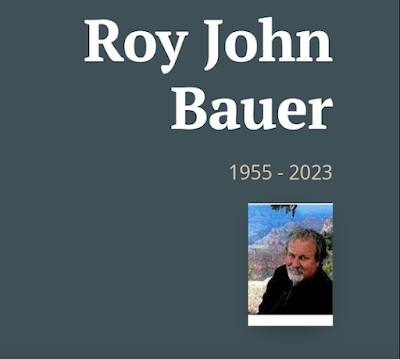
Roy's obituary in LA Times and Register: "we were lucky to have you while we did"

  This ran in the Sunday December 24, 2023 edition of the Los Angeles Times and the Orange County Register : July 14, 1955 - November 20, 2...