Showing posts with label Kathie Hodge. Show all posts

Monday, August 14, 2000

Fall Opening Session; Union Luncheon; Adam Probolsky; Tom Fuentes

[FROM DISSENT 50, 8/21/00]
Title: "Duck Crap and Rubber Bullets" by Chunk Wheeler (Roy Bauer)
Monday, August 14, 2000:

The Fall “Opening Session”:

I showed up at Saddleback’s Ronald McDonald Theatre at about 9:00 a.m., just as the last of the coffee and donuts crowd filed inside to take their seats at the back of the hall (presumably in hopes of avoiding the stink that emanated from the front). As we entered, we were handed a program filled mostly with the names of “service pin recipients,” a list a more meaningless than which cannot be conceived. The session promised to by gloomy, owing to the overwhelming pall of ruin that now pervades the district now that, essentially, idjits are in charge and nothin’ works.

Ticklin’ them ivories:

At about 9:05, Cedric “Liberace” Sampson, seated primly at a piano in a sparkly rhinestone jacket, got things started with a single C-chord, which echoed stupidly through the hall. “Last year,” he warbled nasally, as Mathur tapped his foot, “was a turn-around year.” Meanwhile, at stage right, about a dozen dignitaries, including three trustees, quietly snoozed in chairs that were arrayed across the big, empty Ronald McDonald stage. Trustee Williams—who, as a tyke, was the model for the Bob’s Big Boy statue—stoically chomped on a french fry.

A year ago, cooed Ced, the press produced lots of “unflattering news” about the district—but no longer! Besides, he added, we’re no longer on the fiscal watch list and, owing to a highly effective intimidation campaign, we’ve overcome our warning status with the Accrediting Commission! We’ve been “delivered” from these nuisances, he roared, breaking briefly into a daft rendition of “Chopsticks.”

No one was buying it and he knew it. Worried, Ced broke into a Grinch grin and then explained that, at Saddleback College, they’re about to demolish a building, an event, which, he assured us, is “symbolic.” (Everyone seemed to agree.) He continued: they’re also putting up a parking-lot! (“Where’s his pal Dot?” I wondered.)

The Chancellor, with his usual air of contempt, went on to recite recent personal achievements. Hadn’t he fixed the sewage system at Saddleback in his spare time? Hadn’t he taken the Accrediting Commission to task for applying unwritten subjective standards to the SOCCCD and not following its own goddamn rules? And hadn’t the Department of Education confirmed his charge that one of the Commissioners was biased? You bet!

Oddly, Ced neglected to mention that, according to the DOE, the Commissioner in question was biased, not against the college, but in favor of it. No matter: Ced is into sophistry. He launched clumsily into “Heart and Soul,” humming persistently and defiantly through his nose.

From my perch amid snoring colleagues, I amused myself by studying the fine array of stinkwater dignitaries below. Marcia and Dave held their noses. Raghu picked his, I think, threatening a total cranial collapse. Trustee John “Brown Boy” Williams, sporting an aspect of staunch harrumphitude, bitterly clutched an empty bag of fries as a lurid puddle of goo formed around his left shoe.

El Ced spoke of the Master Plan, which emphasizes growth and development, he said. Full-time faculty hiring, he declared, should proceed in accordance with the Plan. “Our goal,” noted the Chance, is to achieve an “internal consensus” regarding the direction of the district. Also, we should seek to regain a leadership role in the “community college movement.” Cleverly appealing to an old TV ad, he urged us to “just do it.” He briefly paused to take a bow.

More yawnage. Somebody belched. Raghu Mathur’s lower lip jutted upward hideously as he contemplated Board Policy 8000 and the tight relationship it posits between campus speech and lawn-care. One or two droplets of a ghastly brownish fluid dripped from the ceiling, bespeckling the rotting floor.

Ced pressed on, noting that, all over the state, districts have failed to adopt policies required by law, and our district is no exception. We have until November to correct the situation. He seemed to look forward to the process.

Utterly bored, I again studied the seated dignitaries, who stared blankly into space. The audience stared back. A relatively lively Tom Carol admired his Hawaiian shirt, while, immediately to his right, Mike Runyan’s head seemed to sink impossibly deeply into his body. Meanwhile, somewhere, Mr. McClendon was listening for extra-terrestrials while Mr. Walker practiced trouser-fastening.

Ced closed by promising, as he had done a year ago, that we will soon “convert” the Tustin Marine Corps Air Station. The political machinations of the Feds and other school districts have delayed conversion, he noted peevishly. Finally, he simpered: “I look forward to working with you,” and slid testily off the piano bench and into the repulsive puddle of filth that encumbered the stage. The feeble sound of polite applause followed him to his chair.

“What’s that stink?” asked a new hire. Someone pointed downward, toward the stage, aghast.

Her first big kiss:

Next came the presentation of service pins. I do believe that I was the only person in the room who did not receive one. Dean Howard Gensler got a 10-year pin even though he was hired as a full-timer in 1999. “What could this mean?” I asked myself.

The ceremony would have been unrelievedly tedious were it not for two prodigious incidents. First: one of the recipients gave President Bullock a bear hug and then lifted her straight into the air, causing her to thrill and gasp, and, upon release, to stumble and squeal as though she had just received her first Big Kiss. Second: Kathie Hodge, despite not having been lifted into the air at all (not while I was lookin’), received a truly enormous round of applause, causing Ced to look up and feign magnanimity and joy. His pain was palpable. John, looking vaguely Hitlerian, strangled his empty bag of fries.

Eventually, Mr. Goo, radiating fumes from his sweaty suit, stood up, splashed through a stinkwater puddle, and made his way to the podium. The situation was not promising, for Mathur regularly punishes audiences with his trademark melange of New Age twaddle, educationist drivel, business-world blather, and stupefying malapropisms. Plus he owes me money.

“Good morning,” he sniffed imperiously, already employing the spiffy leadership techniques he learned this summer at Hah-vud. (On Tuesday, at IVC, he explained that, at the conference, he had read so darned much that it all started coming out of his ears!) The audience lamely responded with the same. Said the Gooster: “I think we can do better than that!” Not so, as it turned out.

Mathur then introduced new hires, a wholly tedious exercise, though, at one point, a comic book did fall out of Mr. Goo’s massive and fleshy left ear, injecting a welcome note of the bizarre. Bullock, who seems even more convinced than the rest of us that she has absolutely nothing to say, went through the same exercise. Everyone suffered horribly.

Crap slidage:

After a while, an inexplicably cheery Maureen Smith stepped up to the podium to shout, “Tom Selleck for president!” and then introduced the guest speaker, one Anne E. Mulder, Director of Development at the notorious Nova Southeastern University, the repository of, among other things, several X-files and Dr. Raghu Mathur’s doctoral Scantron answer sheet.

Mulder instructed all the new hires to get up and move to the front of the room, cuz it’s a drag to speak to a big empty space like she was doin’. (At the Ronald McDonald Theatre, people traditionally line the back wall in hopes of avoiding notice by Ronald.) This produced several minutes of chaos. The bespectacled Mulder gazed patiently upon the scene, wondering just what was wrong with us.

Nevertheless, Mulder soon expressed admiration for the quality of our new faculty and the “longevity” of other faculty, what with all the service pins and bald, shiny heads. She invited us to applaud ourselves, which we did. Then Mulder explained that she recently visited Tucson, where the average age was 112.

Mulder likes to tell jokes and stories, and she told a good one about “duck crap” (punchline: “We’ve been sliding into this building for years”). Looking briefly in the direction of the chancellor (or so it seemed to me), she deftly tied the crap theme to the notion of “responsibility,” as an oblivious El Ced polished a rhinestone with his hanky.

Mulder likes to string together lots of positive things, even if they don’t really add up to anything much. She announced that teachers are “wonderful” and that California is a “bellwether state.” She spoke of diversity and shared governance and how it really does rain in California. (“Man, it pours.”) She joked about the likes of Jimmy Hoffa (“I was nice to those guys”) and, finally, she noted WASC’s new standard, according to which faculty are supposed to take the lead in securing student “success,” etc., which is all part of the new “accountability” craze that’s sweeping the nation, like those damn Razors you can’t seem to get away from.

She lingered on that last point, her big “accountability” theme. We should not be threatened by this new accrediting “mandate,” she said. Rather, we should view it as an “opportunity” to invest in the future of students!

I found it necessary to snort.

Mulder is into lists. She spoke of five “powers” to produce change: the power of presence (that had something to do with being “entrepreneurial” and “showing up” for stuff), the power of imagination and intelligence (somethin’ about “kaleidoscopic thinking,” sacred cows, and dead faculty, I believe), the power of voice (“If you dream it and give voice to it, then you can do it”—Bleccch!), the power of partnering (some damned people, she said, think they’re in charge of everything!), and the power of motion, momentum, and persistence (“Middles are difficult,” said she, causing Old Guardsters in the center of the room to grimace and scratch their empty, balding heads).

Mulder made a few more scattershot points: we teachers have to take a leadership role; there are “five practices” that will help us (she listed them); teachers gotta experiment and take risks; my brother Fox is a flake; and so on. She quoted “Megatrends.”

Finally, Mulder returned to the theme of responsibility and duck crap: “We share responsibility,” she said with an air of self-satisfaction, “in creating the internal and external world.” That sounded like crap to me, but everybody else acted as though Agent Mulder had just handed ‘em a pearl.

That was about it, so we all got outa there fast. In the mad rush to leave, some people did get hurt—mostly, I think, owing to flying rubber cylinders and the frenzied feet of panicking Old Guardsters. Later that day, stinkwater broke through the walls and ceiling and drowned a coupla students. But, hey, life goes on.

The Faculty Association luncheon:

Not long after, I wandered over to the cafeteria, where the Faculty Association was holding its customary Flex-week luncheon/love-in.

People sure do like to tie on the feed bag, especially when they can do it for free. (“Hell,” said someone, “I’m goin’ for seconds on them lard chips, cuz I pay for ‘em with my dues.”) There was so much sloppy beef and cheese that people got happy just lookin’ at it all. Soon, everybody was chowin’ down and yuckin’ it up with abandon, inspiring Lee H to announce that he couldn’t remember when we’ve all had so much fun!

Adam Probolsky is a big fat idiot:

The GOP's Fuentes
While in line, I spoke with a prominent member of the union Old Guard, who explained why, at the July 12 special board meeting, she had spoken in support of the appointment of Tom Fuentes as a replacement for Frogue. I noted that, as the leader of the OC Republican Party and a partisan of its conservative wing, Fuentes is undeniably anti-union. Then I listed several actions—the poll-guard incident, the Mexican flag gambit, etc.—for which Fuentes is notorious. What about all that? I asked.

Well, said she, when she arrived on the 12th, Fuentes’ appointment was really already a done deal, and, when that’s the score, you’ve gotta go along and just get the best deal you can for yourself!

She was probably right about the “done deal” part. To many observers of the special meeting, Fuentes’ appointment seemed to be, well, highly orchestrated. Consider: of the three candidates who were interviewed on the 12th, only Fuentes showed up with written answers for each of the Board’s questions. Someone in the audience told me that the pro-Fuentes remarks offered that night by three Old Guard unionists were read from documents written in the same font as was displayed on Fuentes’ prepared answer sheets. Possibly this verbiage was provided by the remarkable Adam Probolsky, a fat man in a white shirt who kept running around the board room fixin’ things. Probolsky, one of Fuentes’ lieutenants, is a consultant for local right-wing politicos. His partner is the son of Lou Sheldon (of the “Traditional Values Coalition”). Essentially, Probolsky’s a big fat idiot.

Conspiracy fans, I’ve got two intriguing facts for you to chew on. (1) Six days before Fuentes’ coronation, a select group of OC Republicans partied at the Corona Del Mar home of Tom Phillips, a filthy-rich East Coast publisher who hopes to enter politics here in OC. The shindig was a gathering of the “Silver Circle,” an elite support group for the OC GOP. I’m told that George W’s nephew was among the special guests that day.

Guess who else attended this soiree? That would be Trustee Williams, Trustee Wagner, Board President Padberg–and Tom Fuentes.

(2) Intriguing factoid #2: Raghu Mathur met with Fuentes months prior to Frogue’s resignation (perhaps in May). –Ain’t it cool?

Don’t sweat the big stuff:

As I was saying, at the union feed lot, my Old Guard friend defended Mr. Fuentes, explaining that she is more impressed by little things about a person than that big dumb stuff she reads in the papers. That’s why she likes Frogue, despite all those pesky facts (legal declarations provided by former students, quotes in several newspapers) that seem to point to his being a Holocaust denier. Evidently, once during a conversation with the Froguester, he related how he killed a possum in his back yard. Boy did he feel bad about that. After all these years, he still grieves.

“That’s good enough for me,” she said.

“Oh,” I responded, as the “Twilight Zone” theme played in my head and “Mr. Bojangles” played in hers.

A Starship Enterprise:

Lots of people attended the luncheon, including some bigwigs: John Williams, Marcia Milchiker, the Chancellor, the President of the Community College Association, Laurence Oldewurtel. –Dazzling.

At about noon, Association president Lee H addressed the group. His election, he said, was a mandate to “right the course” and “steady the ship.” People didn’t want “business as usual.” Lee then introduced various Faculty Association officers and division representatives. They all seemed terribly pleased to be there.

This exercise made clear that the days of Old Guard domination are over, even though several Old Guardsters were in the room, sneerin’ and gossipin’ and runnin’ up for seconds, cuz they paid for the chow, goddam it.

Lee explained the need for everyone to “work together.” There’s nothing worse, he said, than a union that is not unified. “That’s a contradiction!” We need to go back to being “one of the Starship community colleges of the system,” offered the president. He announced an August 29 candidates forum and noted his regular and friendly visits with the Chancellor.

“Uh-oh,” I thought.

Hard to port!

Lee then asked the Chancellor to address the crowd.

The Chancellor? How odd, thought I. Here’s a guy who, on behalf of his corrupt board patrons (who fear union opposition in the next election), illegally blocked the collection of union PAC funds despite instructions from duly authorized union officials. And we’re lettin’ him speak? I don’t get it. “The ship’s a bit off course today, Lee,” thought I.

El Ced got up to repeat some of his blather about how last year was a “turn-around” time for the district. Then he picked up on Lee’s “working together” blarney. You’ve gotta have three things: a strong faculty, a strong board, and strong administration, he said. When the system works, it’s like three strong stool samples on somebody’s leg. (Or maybe it was three strong legs on a stool. Not sure.) Now, he added, the board is strong, but administration is weak, and, in recent years, the faculty have been weakened by divisiveness. So it’s like we’re on a broken sub on the bottom of the ocean or something.

Ced, who, I’m told, is seeking the union’s support in his effort to receive a lengthier contract and a big fat pay raise, threw Lee a kiss and then ended his remarks by inviting us to send thoughts and suggestions his way. Even hostile ones. “Anytime you have a hostile thought,” he said, “send it as an email.”

I wouldn’t recommend it.

Just then, the coffee maker made a deep bubbling sound. Someone whispered to me that we oughta rename the union the “Kursk.”

The president of CCA (I think) got up to speak. (Her name’s Dian Dolores Hasson.) She addressed the state budget. She noted that each district must come up with a five-year plan to reach a 75/25 ratio of full-time to part-time faculty. She condemned the voucher initiative (Prop 38), which, she insisted, isn’t just a K-12 issue. She’s a firm believer in public education, she said. “Everything we do must be for the students,” she added.

And that was about it.

Stupid and ruthless:

In the melee Monday night, police charged protesters with horses, fired “stinger rounds” at them and pushed them far away from Staples before allowing them to scatter. The opening moments of that push were rough, and amplified by the fact that the LAPD had cut off some natural routes of departure. That, according to many observers, made it hard for protesters who wanted to leave peacefully to do so without confronting the police. Instead, many were struck with batons or shot with stinger rounds.

On Friday, Police Chief Bernard C. Parks apologized to anyone who was struck or shot while trying to leave the area peacefully.

“We’re sorry if anyone was injured unnecessarily,” Parks said.
—LA Times, 8/19/00

Later that night, I got a call from a friend who was acting as a green-capped legal observer at the protests outside the Democratic Convention hall up in LA. She was on a “puppet truck,” she said, which drove away just minutes before a horrible clash erupted between protesters and cops. A mutual friend and fellow legal observer—a kingpin in efforts to support protesters’ rights—had been hit between the eyes with a rubber bullet which seemed to come from out of nowhere. (A few days later, the bruise left by the bullet had spread down her face, leaving her with two enormous black eyes.) Another legal observer—Carl Manheim, a respected educator—ended up in the hospital, owing to the effects of a rubber bullet or cylinder on his shoulder. These people were being peaceful and cooperative, she said, but that didn’t matter to the LAPD.

My green-capped friend was frightened. All the protesters now feared the police, she said, and that was plenty creepy. “These cops are insane. If you think those assholes at the district are stupid and ruthless, wait’ll you get a load of the LAPD!”

A few days later, she was back in OC and called me from her home. She was upset about LA and about the district. “Things suck,” she said.

And they do.

Oh, and, by the way, welcome back! —CW

Monday, February 14, 2000

Board Meeting: the proposed “speech and advocacy” policy

Cedric and Dot

Dissent 44

February 14, 2000

“IT’S A MESS,” SHE SAID—The special board meeting

By Chunk Wheeler [Roy Bauer]

Anthrax:

       February 7: As I neared Library 105, the distinctive smell of charred flesh filled the air. I stood by the locked door. The trustees were still in closed session, and, evidently, they were chowin’ down. Just then, a man sniffed skyward. “Smells good,” he said. I stared at a moldy brown Popsicle stick that lay on the ground.
       Campus cop Harry Parmer came by amid the pall to say hello. He spoke of biological weaponry. “This much anthrax,” he said while holding an imaginary beaker, “would take out Orange County.” Wow. Such talk soon led to stories about the JDL’s Irv Rubin and the squad of Frogue-supporting neo-Nazi wackos that once attended board meetings. “I’m sure glad that’s over,” said Harry. “Yeah,” said I. Harry seemed to like Irv, but he clearly disliked the Nazis.
That reminded me of a special union meeting of a week or two earlier. Joe R, in a moment of hyperbole, had rebuked the union Old Guard for, among other things, supporting “a Nazi,” whereupon Lee Walker pointed a finger at Joe and exclaimed, “That’s a hate crime! That’s a hate crime!” Joe regarded Lee for a moment and then said simply: “Yeah. I hate Nazis.”
As we waited, more people gathered, but not many. Someone told me that, earlier—before the board went into closed session—Peter Morrison (IVC Academic Senate president) and Armando Ruiz (IVC VP of SS) had had “words” about something. I smiled. A war of words between Peter and Armando? That’s like a wrestling match between a gorilla and a twig.


       Suddenly sensible of sustained stompage, we stared southward and espied Dot, who marched toward us at the opposite end of the hallway. Upon giving us—or just me—a dirty look, she opened the door to the Backroom and waddled in, causing meaty brown fumes to waft toward us like mustard gas. Someone choked, spilling a Coke on the ground, and we all regarded the foaming puddle of goo. In Hindi, “goo” means “shit.” I did not know that.
       Suddenly, the main door of Library 105 swung open with explosive and deadly force, owing to the labors of one Nancy Padberg, board president. They say that Dot is just a piker compared to Nancy when it comes to micromanagement. Door opening, apparently, is among Nancy’s new areas of oversight. She dispatched this particular door by herself and then proceeded quickly to the administration of other objects. Oddly, she whisked past the aforementioned Popsicle stick without advising administration how to deal with it.
       When it seemed safe, we entered 105, and, almost immediately, there was a roar of conversation, which made me sleepy. I looked over at the portion of the wall normally reserved for the display of trustee high school graduation photos. None was present, except the student trustee’s. A portent.
       I looked across the boardroom, through the door to the Backroom, where the trustees, et al., had been meeting in private for the last hour and a half. There, I saw a rumpled fellow in a cheap suit and cheap shoes with his hands in his pockets. “The Cheap Detective,” I muttered.
In fact, it was Alan Willian, one of the district’s bad lawyers. “I bet that guy gets five bucks an hour and he’s happy,” I announced. As I recall, in her written rulings, Judge Audrey Collins, who handled the student’s 1st Amendment suit against the district, referred to Willian as “that fool.” Maybe it was another phrase. Could be. 

The BP 8000 juggernaut:

       The meeting finally started at about 6:45. Item #1, of course, was the discussion of the proposed “speech and advocacy” policy (BP 8000), of which Mr. Willian is the chief author. That’s what I had come for.
       Vice Chancellor Hodge was asked to comment on the proposal. Then the trustees weighed in. Marcia Milchiker opined that the policy is much too long (32 pages!) and much too complicated. It contains contradictions and other errors and it engages in unnecessary “editorializing,” said she. Plus it gives “too much authority” to administrators. In general, it is “too prescriptive”—for instance, the business about how many inches students should stand away from doors and urinals and such. And how are bands supposed to thump, as they ought, when they are prohibited from using the “bass” settings on their amplifiers? Anyway, she concluded, a speech and advocacy policy oughta apply only to students.
       Someone awoke Cedric from his dogmatic snorage. He choked unpleasantly into consciousness and sputtered something about taking all this stuff down.
       Dot Fortune, erstwhile board president, affecting her idea of elder statesperson deportment, leaned back in her chair and sighed. But before issuing any profundities, she took a gratuitous swipe at one of her colleagues: “Unlike Marcia,” she said, I have provided comments “in writing.”
I watched Marcia, who glared. She seemed frozen in an eternal moment of hatred, the pen in her clenched fist writhing and twisting, the ink of the pen oozing, the steam in her head spouting outward.
Dot smiled while Padberg offered a supportive sibilation. Yes, said Dot, we must acknowledge that there are typos in the proposed policy. She went on to explain that this “speech and advocacy” business stems, ultimately, from a ’98 student lawsuit (against President Mathur). We thought, said she, that this matter was resolved in the spring of ‘99 with the adoption of board policy 5406, but no. That’s why this thing is so prescriptive, she said. We’re just responding to the federal judge! He wants all this stuff in the policy. So we can’t be less prescriptive. And what about playing that heavy metal music, which could go on for 6 hours? Gotta prevent that.
Dot leaned back, apparently weary from having delivered so magnificent and wise a riposte. The springs of her chair groaned salaciously. Willian, now in the audience, belched.
       OK. It was trustee Lang’s turn. He had various “serious concerns.” He worried about extending the policy, which originally applied only to students, to faculty and staff. He noted that the policy is unnecessarily long. He spoke of  the “word police.”
       Nancy P, anxiously clutching her gavel, sensed that she was losing control of the situation, so she insisted on speaking next. The policy is not prescriptive, said she; rather, it is “descriptive and clear.” It gives greater “latitude” than the earlier policy. We’re just responding to the last court hearing, she added. “I think it expands what you are able to do.”
       Mr. Frogue, who seemed more bewildered than usual, commended Alan Willian for his labors. “He’s done an excellent job here,” said Steve. (Meanwhile, Don, evidently writhing in some Wagnerian hell, quietly screwed up his face.) The Froguester declared that the policy is indeed “descriptive, not prescriptive.” The board, he added, has been “pilloried” (lovely image) for breaking the law—especially the Brown Act. When, he said, the trustees were alerted to those violations, they were “more than happy” to make corrections. (False.) So now the court has directed the board to amend the policy. Mr. Willian performed “Spartan labors” here, said Steve. We (the board) are an entity, he said, that is wondering which way the court will push us next! It’s one damn thing after another!
I got the feeling that Willian and Frogue are pals. As Frogue spoke, trustees generally cringed, but Willian nodded approvingly. At one point, in my imagination, as Frogue spoke, Willian shouted, “Good one, Uncle Steve!”
       Williams, a sneer on his Hitlerian visage, called for the question and snarled.
       But wait! Padberg was reminded to ask the student trustee, Jennifer Kalena, to comment on the proposed policy. “It’s a mess,” said Kalena. You say it is clear, but “I didn’t find it that way,” she added.
       I think I like this kid.
       Fortune groaned, then sighed a world-weary sigh, and everyone regarded her as one might regard a visiting bear. She reminded her colleagues that the proposed policy is “much more liberal” than the policy that was in place up through ’97. That one was very “paternalistic and controlling.” True, those rules were never enforced, “but they were there.” Anyhow, the district went over to UCI and took their new policy. “That [policy] was sued,” supposedly because it was too limiting. But with this new policy, “you can say anything”—as long as you’re not breaking the law. You can post anything; you can have meetings anywhere. The lawyers tell us, she added, that this policy is less restrictive than the ones at Stanford or at “Cal Berkeley.” She was referring, I guess, to the opinion of Mr. Willian, an apparent illiterate. (I’ve read the policy.)
       Ms. Padberg suddenly made an announcement for the benefit of governance groups, directing them to provide their input in written form. She seemed pleased. Of course, no governance groups were in the room.
       Ms. Milchiker objected to the policy’s assumption that religious events necessarily occur on Sunday. And these restrictions on roller-blading—what do they have to do with speech and advocacy?
       Someone called for the question. The item passed.

Scandal!

       Next, the “board from Hell” discussed item #2: “final distribution of net litigation proceeds…from [the] Orange County bankruptcy.” Essentially, the district has an opportunity to recover over $600,000 of its investment, if it files by a certain date.
       Amazingly, Mr. Frogue sought to prevent the filing, for he was “very concerned” about an apparent cover-up. He alluded to grand jury testimony regarding the bankruptcy, which, he implied, has not been made public and should be “released”—something, he seemed to think, the board was somehow in a position to cause. Thus we should “withhold judgment” until we have an opportunity to look into ways to force officials to release the testimony. This matter, he said, “goes to the very heart of government.” (Willian nodded approvingly; Wagner’s eyes widened.) Frogue declared that he would not vote for approval until he gets “some answers.”
       John “Brown Boy” Williams took the opportunity to tell one of his favorite canards: that the bankruptcy caused the district to slip onto the state chancellor’s fiscal watch list! He smiled, which, as I recall, caused his ears to become pointy and devilish. The audience recoiled. Someone whispered, “Look! He looks like Hitler!” Everyone nodded. (Maybe they were talking about Wagner; it’s hard to say.)
         Lang opposed delaying the district’s receiving these monies. We need to act promptly, he said. Milchiker agreed, saying that it would be “irresponsible” to do otherwise.
         Frogue then launched into a familiar harangue: that decision-makers need good information, but, damn it, information is withheld from them by sneaky and disloyal underlings. For instance, said he, administrators at SOCCCD failed to inform trustees that we were on the watch list until we were placed even higher (lower?) on the list! “We need information,” he added. Information, information, information! Referring to the bankruptcy, he said, dramatically, that it was a “scandal!”
       Padberg became pragmatic; she suggested that they take the money and run--while simultaneously persuing this “information” thang. Doing the former does not preclude doing the latter, she said. With that, the item passed unanimously. Whew!

IVC’s “burgeoning administrative structure”:

       Item #4 was an “academic personnel action”: “authorization to establish and announce [an] assistant dean position” for IVC. Essentially, Raghu P. Mathur wants to create another administrative position as a ploy to remove Bill H, a Mathur critic, from a quasi-administrative position and to expand his army of goose-stepping Goosters. Earlier that day, Peter Morrison presented the board a financial analysis that demonstrated that the new dean would cost the district $96,000. Ruiz had tried to blow him off. So Peter repeated his point and Armando got hissy and defensive.
Now, Mathur and Ruiz, furiously ignoring the money issue, argued that Bill’s position is essentially administrative, and thus it should be filled by an administrator, not a faculty member. Ruiz explained that he was “particularly troubled” that Bill, a member of the faculty, was evaluating other faculty. (He failed to mention that, during the days of the IVC “chair model,” faculty routinely evaluated faculty, and the sky refrained from falling.)
Mathur and Ruiz insisted that they had solicited “input” from all of the governance groups and that this input was duly “considered.”
When, at long last, trustee Lang spoke, he blew Mathur’s proposal totally out of the water. He said that, in the past, the board has recognized the folly of making ad hoc changes in the administrative structure without regard to the overall structure; it was precisely this sort of change that was being proposed in this case. Second, he said, with the addition of this administrator, IVC will have more administrators than Saddleback, despite being half Saddleback’s size! At IVC, he said, there is a “burgeoning administrative structure.” (Duh!) He also noted that the proposed position has not yet received approval from the state chancellor’s office. Finally, he explained that, in fact, the new position was “rejected by every single shared governance group” at IVC!
Whoa! Good trusteeage, Dave!
Dot opted to ignore Dave’s points. “I believe,” she said idiotically, “that a teacher’s place is in the classroom.” Her chair again groaned, and so did the audience.
Williams, in an effort to silence Lang and Milchiker, who sought to address the matter further, called for the question, but that failed. Padberg snippily ignored Milchiker and Lang and asked Wagner to speak. Wagner asked Mathur if it is true that all of the governance groups reject the proposed position. “It is not true,” said Mathur. How it was “not true” was not made clear.
Eventually, Lang was allowed to speak. If Bill is replaced, said he, the district would still have to pay his salary. Thus the new dean would mean new costs. Marcia reiterated that, since IVC has more administrators than Saddleback, it makes little sense to add more of them.
Frogue, referring to Lang, said that his “facts are wrong.” Not all governance groups opposed the position, said he. We ought to take the advice of the college president, he added.
Suddenly, Padberg remarked that the board needed to proceed to other business. Fortune called for the question, but the motion again failed. Frogue questioned Padberg’s understanding of Roberts Rules of Order. Then Wagner explained that, though he was worried about the number of administrators at IVC, this was not the time to deal with that problem. He worried that, by allowing faculty to evaluate faculty, there would be litigation.
Williams opined, nastily, that the board shouldn’t “second guess the president.” Eventually, the motion passed, 5/2.

Unauthorized plaquage:

       Item 7 had been added at the last minute. According to the agenda, someone (the chancellor?) was recommending the belated ratification of memorials “to Dr. Edward A. Hart and Sean J. Sheridan on the IVC Campus.” But wait! Those plaques were installed many years ago! What gives?
Evidently, the board was attempting to address unauthorized plaquage and namage. (Only the board is authorized to name stuff.) No doubt this action has something to do with Mathur’s plan to fire an instructor on the grounds of his alleged refusal to honor the “namage” policy in the case of the “Terry Burgess Garden.” It now appears that, in the past, college officials have often violated that policy.
Curiously, item 7 failed to mention other unauthorized plaques at IVC, including the one that graces the “Dan Larios Garden.” (Apparently, Mathur now plans to quietly remove that plaque. Payback time!)
Marcia asked why this action was being proposed now. Why, she asked, are we dealing with plaques put up 10 years ago?
According to the chancellor, the board has a “new administration in place.” As things come up, they are dealt with. This came up. We discovered the existence of these plaques, he said.
Frogue seemed lost. He thought they were discussing item 6. No, said everybody, we’re on item 7. Oh.
The discussion became raucous. Frogue became unpleasant and coughed up a hairball. Frogue and Milchiker butted heads. At one point, Marcia actually put her hands up by her head and made an infantile gesture at the Froguester. That stopped the meeting cold for about 20 seconds.
Item 7 was rammed through on a 6/1/1 vote.

Beanie Baby:

After the meeting, cat-lover Sharon Macmillan said she had something for me: a book about organic cat care or something. Someone else gave me a “Beanie Baby,” whatever the hell that is. I stuffed it in my pocket, where it could observe the proceedings. It was some kind of rodent, I think. As I shook a trustee’s hand, it seemed to glare with disapproval. The trustee stared back at the Beanie Baby and then left the building.

And that was about it.  —CW

Tuesday, April 14, 1998

Contract ratification: "What a pr*ck," I thought (Chunk Wheeler)

Counting the ballots

by Chunk Wheeler [Roy Bauer]

Dissent 5 - April 14, 1998

Quote of the week:
     “The board put that provision in the contract so that it could hide from the state the fact that they’re giving teachers a raise.”
Sharon MacMillan, FA President-elect, in OC Weekly, 4/10/98
Pat Fennel
On Tuesday, the 31st, I headed down to Saddleback College for the Counting of the Ballots—the final episode of our union’s shabby contract election. Unfortunately, a week earlier, a fit of generosity caused me to assent to Sharon M’s request that I participate in this event. So, I had to go.

I arrived at Saddleback a few minutes late—largely because I put off leaving from IVC until the very last minute, so eager was I to participate. Upon finding the designated room, I entered from the rear, where the odious Mr. [Patrick J.] Fennel was sitting alone, chewing his lip and growing his hair. He spotted me, and with his usual flair for the ugly, he spit forth something like: “Well, c’mon, Bauer! They’re waiting!”

“What a pr*ck,” I thought.

Just then, an unfamiliar man—evidently, the imported “mediator” or “neutral party”—started the proceedings. He announced that he was there to authenticate the ballot-counting, not the entire election, which, obviously, he could not do. I walked, warily, toward the front of the room, hoping that my obligation to participate had somehow been rendered moot by the leadership’s usual sequence of unexplained changes in plan; but then Pete E noticed me and directed me to my assigned position next to the mediator.

So I walked up to this fellow, whose name, I believe, was Hart, and shook his hand. “How are ya!” he shouted. “Nice day, doncha think!” he said. “Stand right there, fella! That’s it!” Later, he asked me if I ever played football. No, I said, and his eyes communicated bewilderment.

Kopfstein
I suppose that, among my critics, there are those who believe that I am always unaffected by their occasional signs of hostility toward me. Not so! On this day, I had had quite enough of that sort of thing to last me a while, and so I tried to do the job at hand without regard of any expressions of hostility. I was relieved to find that Mr. [Robert] Kopfstein, another of Mr. Hart’s little helpers, was behaving almost courteously. I felt so warm and fuzzy inside, that I almost gave him a hug.

Before I could do that, however, I noticed that the voting instructions taped to IVC’s ballot box were distinctly different from the instructions taped to the Saddleback box. I recall in particular that the IVC instructions required that the voter show her photo ID and sign a roster prior to voting, while the Saddleback instructions made no such demands. I apprised the audience of this peculiarity.

In response, Sharon MacMillan briefly explained how the disparity had come about. I think she said that, at first, Saddleback faculty were asked to show IDs and so on, but some objected, and so the Saddleback, but not the IVC, instructions were changed in mid-election. Naturally, union leaders saw no problem with this change at one campus but not at the other. For his part, Mr. Hart seemed particularly uninterested. “I’m just here to count ballots, ya know!” he said.

“Hey, everybody, I’m practically worthless!” he added, in my imagination.

No doubt Mr. Hart was in danger of being late for his weekly poker game. Under his direction, we hastily recorded names, ripped open outer envelopes, ripped open inner envelopes, and studied the occasional electoral curiosity (unknown voter names, etc.). I watched with amusement as the Neutral One rashly threw the inner envelopes into a trash barrel, for the separate piles of white paper that we created were almost indistinguishable, and we helpers could easily have placed ballots and envelopes in the wrong piles.

“Pretty half-assed,” I thought.

At times, the four or five of us on the counting crew were in ridiculous independent uncoordinated motion, like bumper cars or ants, and it was clear that neither Mr. Neutrality nor anyone else could keep track of us all. (Not that it mattered.) Out of the chaos, I think I saw one envelope pop into the air, fly across the room, and land in Sherry’s hair, but no one noticed. I bet it’s still in there somewhere.

Sharon M
When some in the audience complained to Mr. Hart that he was not making the meaning of our efforts clear, he responded by picking up the pace and explaining things loudly and with many gestures. It was as though he had been told that the audience comprised deaf simpletons who were growing impatient. For what it’s worth, the process was clear to me, and it seemed indeed to be on the up and up, albeit unnecessarily confusing to the audience.

When all the ballots (except for a handful of mutant instances) were counted, 104 proved to be “pro,” while 86 proved to be “con.”

Some in the audience made celebratory gestures and sounds. Others glowered. I glowered.

And thus it was that the contract was ratified.

Diane Fernandes-Lisi:

Reporters began to buzz around. I talked to a Lariat reporter for a few minutes and then walked over to Diane Fernandes-Lisi (of CCA/CTA), who, earlier, had been studying my every action as though I were a grifter counting the day’s receipts. I asked her if she was concerned about the various irregularities of this election—the union leadership’s failure to provide a ballot box at IVC during the first few days of the election, their numerous bewildering changes of the election closing date, their failure to sunshine some elements of the contract to the membership, the failure of the union’s negotiating team to understand, or even to read, the terms of the restoration of steps 26-30 until negotiations were over, the exclusion of eligible voters (new members) from the election process, etc.

She was, she said.

I asked her if she understood that, until recently, the union leadership had planned to hold the bylaws ratification election among the Rep Council, not the membership, contrary to the FA’s current bylaws. I asked if she knew about the illegal “refusal ballot” scheme that the union leaders were now contemplating applying to upcoming elections. She grew glum and glummer.

In the background, I could here Ken [Woodward] declaring to all who would listen to him that this election was the most honest and above-board event that had ever occurred in the history of the entire world and of all possible worlds, too.

I left.

AFTERMATH

By the next morning, word had spread that a press conference was scheduled for the purpose of announcing the attainment of a faculty contract. It was to be held at 5:30 that day.

That same morning, I received a call from Trustee [Marcia] Milchiker. Among other things, we discussed our alarming mutual pen pal [a reference, I think, to Michael Collins Piper]. She told me, parenthetically, that she had just read about the press conference in the paper. Evidently, Pam Zanelli, the hapless board majority-hired media consultant, did not judge it necessary to invite Marcia or some of the other trustees to this event.

Later, on my way home, I dropped by the district offices shortly after 5 o’clock; I left copies of the Dissent with the usual suspects. At one point, I espied Teddi Lorch, who was conferring with Zanelli in her office, and John Williams, who was conferring with unfamiliar faces inside Chancellor [Kathie] Hodge’s office. A pyrotechnics team, perhaps?

I was aware that, just by standing there outside the Chancellor’s office, I would inspire a conspiracy theory or theorette in Williams’ feeble brain, even though, in reality, I was merely waiting for the Chancellor’s secretary (I’ve forgotten her name) to finish her phone call. Sensing an opportunity, I assumed a conspiratorial air by raising one eye brow. Williams, on the other side of the glass, unconsciously felt for his weapon.

As I walked away, I noticed that the Chancellor’s conference room just down the hall was all decked out for a major PR event: microphones were set up, name plates were displayed, tasty beverages were set out, and a band was practicing in the corner. (Well, I made up the last part, although I think I saw a John Tesh cassette on the table.)

But nobody was around. Something told me it was time to blow.

The next day, I found out that not one reporter showed up for the press conference.

The Register had covered Tuesday’s ratification vote-count in its Wednesday edition. The story started like this: “The state’s highest-paid community college professors approved a new contract Tuesday that will cost the South Orange County Community College District at least $5 million in raises and perks over the next five years.”

It went on to explain that “Some professors are angry with their own teachers union and say the fighting began during the November [1996] elections for four seats on the district’s board of trustees.” Pete E was quoted as saying that “There wasn’t an agreement on how to go about choosing which candidates we would advocate for. A small group made decisions for us.”

Mr. Woodward, however, was quoted as expressing a very different view about the source of conflict within the union: “[He] said the bitterness stems from a board decision several months ago [July ‘97] to reorganize the district...Professors who chaired their [schools] were removed from these quasi-administrative posts and sent back to the classroom. The teachers union didn’t protest, which angered some of the professors...‘Nothing bad happened,’ said Woodward. ‘They just had to go back and teach.’”

This analysis of the union’s internal problems is demonstrably false. Among that group of persons who have been most active in challenging our union’s leadership, only one was ever a school chair—me. My quarrels with the union leadership began way back during the campaign of ‘96—eight months before I started my two-month stint as a school chair. Finally, the letter of complaint about our union—signed by 109 full-time “concerned faculty”—was sent to CCA/CTA eight months prior to the “reorganization” meeting to which Ken refers. That letter ultimately caused the CTA to send down a “leadership team” to investigate the union early in 1997. Again, all of this occurred before the Trustees’ infamous (re)organizational meeting.

A successful student protest—designed to call attention to the actions of the Board Majority and Raghu Mathur and the threat these actions pose to students—was staged at IVC on Thursday, the 2nd. The day before, President Mathur and at least one other administrator met with the students who were organizing the protest. If the organizers encountered pressure at that meeting, they withstood it successfully, for the demonstration proceeded more or less as planned at noon on Thursday. It was, by all accounts, a great success.

At first, a handful of students with signs marched alone around the A-quad near the administration building. Soon, however, others joined them, including numerous full- and part-time faculty and even some brave classified employees. At least fifty marchers snaked through the quad area and the environs for thirty minutes (as planned); they chanted, waved signs, joked with the many onlookers (perhaps 100), and generally had a great time.

At the end of the “march,” the still-intact group silently paraded through the administration building. Afterward, the students explained that they would resume the protests (on Thursdays) after the Spring break.

The event was reported in the OC Register’s Metro section, page 2, on Friday, April 3 and the Irvine World News, April 9.

[Early April, 1998]

On Thursday (4/3), the Irvine World News, the (IVC) Voice, and the (Saddleback) Lariat came out, and each covered recent district events and related matters.

An article in the IWN announced that “Gay and lesbian groups” have joined the Frogue recall effort. According to the article, “gay and lesbian organizations...are upset because Pamela Zanelli, a political consultant who gave advice to a Faculty Association political action committee campaigning for Frogue’s reelection in 1996, is working for the district [as its public affairs consultant] and may apply for a newly created public affairs position.” The article goes on to explain that Zanelli has been accused of authoring the infamous “same-sex marriage” mailer of the ‘96 campaign. (The mailer, sent to South County Republicans, got [Steve] Frogue, [John] Williams, and [Dorothy] Fortune elected.)

Jeff LeTourneau of ECCO (Elections Committee of the County of Orange, a gay political lobbying group) described the mailer as “the most deplorable, awful, homophobic piece of garbage that I’ve seen in 25 years of political activity.

Zanelli denies having written the mailer. I am told that, during the last Board meeting, she told a reporter that she would never write such a thing, for a relation of hers “died of AIDS.” Zanelli’s reasoning is reminiscent of the puerile moral logic often embraced by the current union leadership (“We’re not responsible! The consultant made us do it!”--Remember?), for, though, evidently, she would never “author” homophobic literature, it appears that she advised our union to author and use it:

Zanelli...said she was hired as a consultant in October 1996 by the Faculty Association political action committee to help target issues for campaign, purposes. The domestic partners benefits issue was among the polling topics of discussion during the summer and fall of 1996, said Zanelli. Polls showed that 70 percent of voters in the area would have voted against domestic partners benefits, she said.

LeTourneau said the flier came about based on Zanelli’s advice.

“Whether she sat down and wrote the flier is irrelevant. She designed the hit piece attacking gays and lesbians. That’s not tolerable,” he said.

Zanelli was hired by the district board earlier this year as a temporary public affairs consultant, which, according to some college officials, has resulted in an ethical conflict of interest.

Trustee [Dave] Lang, who voted against the move to appoint Zanelli as a consultant, said, “It is inappropriate for a person to be writing political cover for four trustees (Fortune, Frogue, Williams and Teddi Lorch).

“She wrote, or helped write, Dorothy Fortune’s (commentary) for the Times. In my view that represents a theft of public funds. I’ve called for a full investigation of her activities since she was hired to work for the district.”

In an article concerning the faculty contract, Trustee Williams’ involvement in the contract negotiations—unprecedented among trustees, as far as I know—was discussed:

Williams took criticism for being a member of the negotiating team. Fellow trustee Joan Hueter said, “Whenever a trustee goes into a negotiating situation like that it puts a whole different spin on things.”

She said trustees have to make the final decision and shouldn’t have an influence over the bargaining process.

Williams said he had to get involved as president of the board.

“I did involve myself when the process was bogging down as a last-ditch resort, to break a log jam,” he said. [Wow, mixing three metaphors. ]

What’s “extortion” mean?

Negotiations had gone on for more than a year, he said, and he felt that he had direction from the board to bring back information to them.

Also in the Apil 2 Irvine World News was a guest editorial by Trustee Williams, accompanied by Williams’ high school graduation picture, evidently. Here, Mr. Williams says that Terry Burgess “was not informed his contract would not be renewed and...was not fired.” Consider this: Mr. Williams’ recently-alleged attempted quid pro quo depended on the understanding that Mr. Burgess’ contract would not be renewed in June, for, allegedly, Williams suggested (to at least one minority board member) that he would arrange for Burgess’ (and Deegan’s) contract to be renewed (contrary to everyone’s expectation)--if the minority would agree to refrain from voting against Raghu Mathur (for IVC president).

Mr. Williams offers the fact that the chancellor of the Chabot-Las Positas Community College district offered Burgess the Chabot presidency as evidence that Burgess was not fired. Huh? In fact, knowing that his contract would not be renewed, Burgess sought other administrative positions and was offered one by Chabot. Obviously, that he sought the position and got it is not evidence that he was not told that he would be fired!

Mr. Williams defends his violations of the Brown Act by suggesting that he is not accountable; rather, the district’s legal counsel is accountable:

The part-time board relies on the full-time chancellor and district legal counsel, who said we were in compliance with the Brown Act Open Meeting law.”

This from a man who, elsewhere in his article, asserts that “actions taken by the board of trustees are not about ‘politics and power and winning.’ They’re about accountability.” Evidently, in Williams’ view, everyone should take responsibility for what they do—everyone, that is, excepting the Gang of Four.

Williams implies that the board’s Brown Act violations involved mere technicalities. If so, why then did Judge McDonald render null and void every action that had been based on the illegal appointment of Raghu Mathur as interim president of IVC?

Williams asserts that “no attempt was made to keep the proceedings secret.” Really? In fact, for the meeting in question (April 28, 1997) the board failed to indicate on its agenda that it was considering an interim presidential appointment. Further, it failed to allow the public to comment on this action before the meeting. Finally, the names of the signatories of the petition upon which Mathur’s appointment was based were not made public.

An article in the 4/2 Lariat reports that, according to Saddleback student Antonio Aguilar (the student who, months ago, challenged an explicit Holocaust denier during a board meeting), he was ‘spit at’ by English instructor Tony Garcia on March 30. Evidently, Garcia responded to the charge by saying that “I cleared my throat as [Aguilar] went by.”

The article ends with a masterpiece of understatement:

Richard McCullough, Saddleback College Interim President, said he would not condone this type of behavior from faculty if it did, indeed, occur.

“That’s not what they should be doing,” he said.

In a letter to the editor, Lynn Wells responds to a comment that had been attributed by the Lariat to Sherry Miller-White:

...I address a response attributed to Sherry Miller-White that “the association (membership) had its chance to object to the provision (an increase in salary steps 26-30 for Doctorates) before it went into the contract. She says, “A lot of times, people don’t read the information...”

A South Orange County Community College District Faculty association newsletter (2/98) reports “salary scale steps 26-30. One step movement will be allowed per year.” In that document there is no mention made as to which full-time faculty this will apply.

After reading this and reading the contract proposal, I made phone calls to negotiators, who claim they had been misled by administrative negotiators (the chief of which was a former association president and negotiator [Bill Jay].) Right up to the first Contractual Explication meeting, association representatives claimed steps 26-30 did apply to the entire faculty. During that meeting (March 2) negotatiors claimed that they negotiated a contractual item which clearly alluded to a prior contract (specifically the 1980 contract) without having even read that contract. In fact, they begged that anyone with a copy to bring it forth.

Appalling words; appalling behavior.

In a story concerning the contract that appeared on the front page of the April 2 IVC Voice, English instructor Lewis Long is quoted as saying

“The contract makes it difficult for there to be any faculty participation in shared governance...The contract does not serve the interest of the college nor does it serve a majority of the interests of the faculty. The qualified people with teaching experience might not want to come here because it limits what they might be paid as compared to other campuses.”

The article briefly discusses alleged “inconsistent voting practices”:

“...according to Paula Jacobs, Saddleback’s faculty development chair and professor of counseling and special programs, there were two different voting procedures at Saddleback, depending on when one voted.

“On the first day, each member had to mark their ballot and put it in the master box. There was no second envelope, no signature, no social security number, nothing,” said Jacobs. “Beginning the second day, each ballot had a number on it. Members then had to put the ballot inside of a sealed envelope, place it inside of another envelope, seal it and write their name and social security number on the front. If you deviated from that process at all, they wouldn’t count your vote.”

Jacobs raises another issue:

“There are two deans at Saddleback who are members of the union. For years, the association has continued to take their dues and allowed them to vote. During the ballot counting, the union refused to count their votes. If they are not allowed to vote, why did the union continue to collect their dues? Or, if they are members, why weren’t they allowed to vote?” she said.

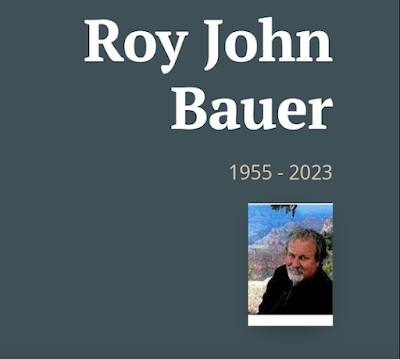
Roy's obituary in LA Times and Register: "we were lucky to have you while we did"

  This ran in the Sunday December 24, 2023 edition of the Los Angeles Times and the Orange County Register : July 14, 1955 - November 20, 2...