|
| Richard O'Neill c. 1950 |
At first, nobody was quite sure where the doctor’s political money came from. Eventually, he was convicted of stealing it from the taxpayers through massive Medicare and Medi-Cal fraud.
In 1974, “Dick and Doc,” as they were known then in California political circles, were the state’s biggest political contributors. They made quite a splash, in Orange County, and throughout the state.
O’Neill and his political cronies were developing a local political farm system, nurturing prospective political leaders via election, initially, to unexciting nonpartisan offices. They were assisted by a new breed of smart and ruthless political advisor, like consultants Butcher and Forde, who pioneered new tactics and technologies that, while sometimes ethically questionable, were undeniably effective.
 |
| Dr. Lou Cella c 1974 |
Dick O’Neill was especially keen to land an OC politician in state office, and he was willing to fork over hundreds of thousands of dollars to make that happen. In 1974, Dick and Doc supported local pol, Ken Cory (1937-1998), for state Controller, and Cory won the office, retaining it for three terms. Cory, a former Assemblyman and avowed foe of greedy oil companies, had been working for years with the likes of Butcher and Forde and was himself a seasoned and innovative political tactician.
Arguably the most experienced—and least scrutinized—among O’Neill’s crew, a man judged a “political genius” by Cella, was Fred Harber (1919-1974), who, starting in the 50s, had secured some local political offices (City Council, Mayor), but by the early 70s, had developed into OC’s shadowy political kingmaker. According to OC district attorney Cecil Hicks, Harber and his pals, especially Lou Cella, ran a “shadow government.” He took a dim view of that sort of thing.

It was not the first, and it would not be the last, curious death among this cast of characters.
It is said that the 1974 yachting disaster, taking both Caspers and Harber, marked the beginning of the end for the “coalition.” Soon, it all went poof.
I want to explore and investigate the darker corners of this tale.
Here’s a good starting place: an interview of Ken Cory in late 1987 and early 1988, years after his surprise retirement from politics.
Interview of KEN CORY by Gabrielle Morris (1930-2013)
October 1, October 22, December 10, 1987, and
February 6, 1988, Sacramento, California
“YOU OWE US”
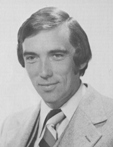 |
| Cory |
MORRIS: People in your legislature, or in the party?
CORY: No, there is no Democratic party, there is a group of people. There were people, most of whom were Democrats, some of whom were Republicans, but they were friends of mine, and supporters of mine, who said, “You owe us more than that than to just quit. We want to continue to support you, and we don't care what it costs.” We had some very frank discussions about the cost, and I finally said, “Well, the only other office, other than governor, that I think I would be willing to run for would be senator.” It was clear that I wasn't in the league to run for governor, or United States senator, and the only other subject matter that had any appeal or interest to me was the Controller's office.
MORRIS: Could you say a little bit more about the business of your supporters saying “You owe it to us for what we've done for you”? That's pretty heavy stuff.
CORY: Well, yes. They said that they'd always supported me, and that they'd invested money, because they thought it was important, and that they believed in me, and that I had an obligation not to just quit.
MORRIS: They'd made you a visible public figure…

MORRIS: Your deputy and administrative assistants?
CORY: Employees, and that sort of thing. And your fundraisers, and people get ego gratification from knowing somebody in Sacramento, and all that. They just didn't want to give that up. And so, I could see that there was some sense of obligation. There was also something that I thought would be fun to do, if I were controller, and I thought well, you know, I could do that for four years and then I could get out and do whatever I wanted.
That didn't come to pass, and I assumed that four or five years, the major thing I was interested in was trying to resolve the price fixing of oil, which was very clearly going on. I thought that could be litigated within a four to five year period of time. Three years, if you got lucky.
MORRIS: The controller's office has a vantage point from which to initiate that kind of research. But had you had any particular contacts with your predecessor as controller, or any of his people?
PAL OF REPUBLICAN CONTROLLER, FLUORNOY
 |
| Hugh Fluornoy |
MORRIS: Did he have some of the same concerns you did about the way some of the large corporations did business on related matters?
CORY: Yes, I can recall one time going to Hugh and explaining what I thought the public good should be.
RUNNING FOR CONTROLLER (1974):
CONTROVERSIAL SUPPORT AND FUNDING
MORRIS: Did you anticipate your supporters and funding were going to become such a controversial issue?
CORY: I'd discussed that with them beforehand, that it would clearly become a major issue. And that they would undergo a great deal of personal scrutiny, and they ought to be prepared to endure it. It was inevitable, if they were going to contribute that much money. It was so preposterous and so foolish.
MORRIS: Why did they contribute—it may sound like an odd question—but why did they contribute that much money?
DICK AND DOC
 |
| O'Neill |
Dick O'Neill … and his sister Alice [O'Neill]… [T]he family is a meat-packing family, and has been in the meat-packing business for generations. Dick and Alice are longtime members of the Forbes 400. Are you familiar with that … designation? … [T]hey estimate each of them were worth $275 million. They don't try to make money.
MORRIS: Just makes itself.
CORY: They spend more time avoiding money. Dick—if he had had people like the people I know that are around [ ] Sid Bass—Dick could clearly be worth two or three billion. It's inordinate wealth, and so, five, six hundred thousand dollars to Dick O'Neill is irrelevant. It truly is irrelevant, and Dick happens to like politics, and our biggest chore in that campaign was to keep him and Lou from spending money.
MORRIS: Have they backed statewide candidates before?
RESENTMENT
CORY: No, that was part of it—they had never been taken seriously. Dick really resented … you have to understand, the O'Neill family, they still own forty thousand acres of Orange County. They do not have a mortgage on the forty thousand acres.
MORRIS: They inherited it.
CORY: But it's free and clear. That land is worth… [L]arge portions of it currently you could sell for a million dollars an acre.
MORRIS: Orange County is indeed sort of a landowner's heaven.
CORY: And the O'Neill family owned Camp Pendleton at one time. Dick O'Neill's home that he grew up in as a child is the officer's club at Camp Pendleton. So he grew up going to school at the Mission San Juan Capistrano, in a landed aristocracy. When he got to high school age, they bought a house in Beverly Hills for him to get an urban education.
So he got up there and I would guess [he was] not treated very well, because they considered him a hick from Orange County.
He had been living under that kind of pressure from people. But through the years, O'Neill as a contributor… people from statewide campaigns would not take Orange County seriously. They would not come to Orange County; they would not help the Democratic party build.
MORRIS: Because [OC] was conservative.

MORRIS: And not have any input in return for the money.
CORY: Yes, and that whole thing. Dick found it the same with many wealthy people; they resent being used just for their money.
MORRIS: That's interesting, I thought that the state Democratic finance committee was set up to find and cultivate and make friends of rich, rich Democrats in whatever county they were in?
CORY: Dick is substantive enough to say, “Well, why do I have to go to Beverly Hills to a meeting? Why can't we get a bunch of rich people together here in Orange County, and have them come down here and talk to us?” So in the '64 campaign (where Dick and I developed a fairly decent relationship) with [U.S. Senator] Pierre Salinger, I was able to raise money by convincing Pierre and [Donald J,] Don Bradley, who was running his campaign in the general election, that we could raise real money. [B]ut Pierre was going to have to spend time with people.
For that period of time, we raised a lot of money for Pierre. We raised in one dinner at the Villa Fontana $93,000. Dick thought that was great, because he could go in Orange County, right in Santa Ana—actually, it was in Orange, on Main Street—and it was Orange County. It was…
MORRIS: Where he felt comfortable. He knew something.
CORY: Yes, and grew up there, and that they would give him some recognition. At that time, Pierre was a United States senator, and actually came down and had a dinner with twelve, fourteen people. They kicked in a lot of money.
MORRIS: That's the Ben Swig school of fundraising.
CORY: Yes, … Dick O'Neill puts on the fundraisers in Orange County at the ranch. Most candidates would rather have Dick O'Neill write the check, but Dick wants the action, and doing a barbecue at the ranch. It would be cheaper for Dick to write the check, but there's no point…
MORRIS: How did you get to know him?
CORY: I met him in '64, when he was sort of around. He decided to spend more time in Orange County in '64.
MORRIS: He'd been away for a while?
CORY: Dick had just won some litigation against Crocker Bank. The property was in a trust. Crocker Bank tried to sell the ranch for $five million, $seven million, one or the other, and Dick thought that was wrong, and litigated it, and won. So he wanted to start spending more time down there. He started to develop Mission Viejo [with Donald Bren]. It was just about to open…
MORRIS: He sounds like he might have been related to or had similar problems with the [University of California Irvine] Irvine campus.
CORY: He resents … that's one of his problems: the family is an older landed family than the Irvines. He resents the publicity that Irvine family gets. Jokingly, it frequently was referred to as … the Irving Company.
…And so since then, they were referred to as the Irving Company. … I mean, here was a family that had owned this land long before [James] Jim Irvine, when Jim Irvine was the nouveau riche hustler that came in.
MORRIS: How old is Dick O'Neill? …
CORY: [pause] Late fifties, mid to late fifties.
MORRIS: Because Father Irvine, or Irving, just wasn't making or functioning as a tycoon, like in the twenties and thirties.
CORY: But these people, the O'Neill family, Dick's great-grandfather came out here in the Civil War.
MORRIS: Very interesting.
CORY: The O'Neill meatpackers, which are descendants of the family, have plants in Fresno, San Diego, and they have had their property without a mortgage on it for a long period…
MORRIS: You met him first in the Salinger campaign?
CORY: I may have met him in Dick Hanna's campaigns prior to that…
MORRIS: He'd been interested in politics…?
CORY: He'd been around, yes, but he was a hundred dollar contributor, something like that. And Dick likes to help everybody, Democrats. He can get—if he feels comfortable with you—the capacity to do more. I doubt that he will ever, given the amount of heat that he took for that contribution, will ever do that again.
MORRIS: Did he also take an interest in the campaign, in putting on your strategy meetings?
CORY: Yes, that's what Dick likes, and that's why, I guess, a friendship developed where he wanted to build the Democratic party, in Orange County, during the time that Dick O'Neill was interested in financing [campaigns], very indirectly, because he never wanted people to know… [A]nd that's the thing a lot of people don't understand… [T]hey think there's something sinister. It's just the same reason people give to charities anonymously. The Democratic party is Dick O'Neill's charity. It's the same psychology. He is bothered by reading about his contributions in the press.
O’NEILL BUILDS THE OC DEMOCRATIC PARTY
But we worked with him about what ideas would work, what ideas wouldn't, what kind of people… We started getting people running for nonpartisan offices who were Democrats who we could build into credible Democratic candidates, getting them funded for city council, school board, supervisor, those kinds of things.
MORRIS: That's local, too, city and county.
CORY: Yes, that's because you had to do that, because of the partisan thing, that they had to be nonidentified because of the Republican edge. Then you could create a persona that was acceptable, that you could bring people along with this. The same format that the Republican party, as the minority party statewide, always uses. Nothing magic about that.
MORRIS: Well, the Republicans for a while … they were using a special districts approach, putting a lot of effort into electing Republicans in certain legislative districts.
CORY: But they start … they recognize they are a minority party.
MORRIS: You still say they are a minority party? You don't…
CORY: Sure.
MORRIS: …think the demographics and the registrations make it different?
CORY: …[T]here are still less Republicans than Democrats statewide. Now, it's narrowed, and a lot of that narrowing is just returning to the pre-Watergate phenomenon. But nationwide, there are more Democrats than Republicans. The Democrats are more willing to vote for a Republican than Republicans are willing to vote for Democrats. And that's a whole other issue.
But we use that basic format of getting people elected to places where they could get elected, nonpartisan offices.
And that makes them credible, and puts them on the ballot. You've got a choice of four people you've never heard of, one of whom has been on the school board, and the other guy's a janitor, and the other guy's a store clerk. Who are you going to vote for? You're going to vote for the guy who was on the school board.
MORRIS: This is done in your local Democratic elections.
CORY: Yes, that's what we did in Orange County, … just so we have more Democrats, more credible candidates in the state. We would find we would have people that did not appear to be quality candidates. There's nothing you can really say about them.
MORRIS: Would you go around looking for people, to encourage them to run for the school board, or something like that?

THE O’NEILL (CELLA, HARBER) FARM SYSTEM
CORY: Yes, we’d sit down, and you’d work with Dick O'Neill, Lou Cella, Fred Harber, and you'd go out and you'd find—going through the list of particular, nice-looking lawyers insurance agents—try to go through the registration files, finding out which ones were Democrats, then talking to them, finding out what kind of people they really were, and then you'd start encouraging them, and then you'd end up with an obligation of running their campaigns and supporting them.
That grew to the point where Orange County had a Democratic registration at one point, and that was Dick O'Neill. He basically made that happen, and Lou Cella.
MORRIS: And none of the surrounding counties were watching, interested, or…?
CORY: The bottom line was that when you had Dick and Lou there, if you got to the point where you needed some money to make something happen, they'd put it out. You don't have that in other places. They would not put it up.
MORRIS: Outside of Orange County…
CORY: No, they would not put it up early. It was not a thing where they would just say, “Here's the money, go do it.” But if you were struggling, and … everybody was working, and something was happening, he had people… [Y]ou could organize and get thirty people to go out and walk door to door to register Democrats. … Dick saw that organized, but you needed … “How are we going to get them out next weekend!” “Well, we're going to have to feed them lunch.” There would be the money there to do that [with O’Neill].
Those are the kinds of things that if you don't have those kinds of supporters that will do that … if they do it too early, then everybody becomes an executive, and the money gets frittered away. And Dick understood that. Dick wouldn't play in that game. He'd walk away from that kind of thing. But over a sustained period of time, and the same kind of support would come where Howard Adler, who was a—I've known Howard since he was a high school student. He was the Democratic chairman of the central committee for Orange County for a long time.
But you look at Howard, who worked in the Dick Hanna operation—he worked on Dick's staff, but he worked hard for the Democratic party. When he had a business opportunity and he needed help, Dick would give him help. Howard's a wealthy man today, but he'd worked hard; he's earned that money. But Dick was the kind of person who would support that kind of person, because he knew him in politics, and knew him to be a hard working and honest person.
Somebody could come to Dick with a better financial business deal, who just wanted Dick's money, and Dick wouldn't even talk to him, because Dick would not make a stupid financial investment … he and Dick and Howard invested in various deals together, but Dick didn't do that to make money. He did it to help somebody who didn't have money.
MORRIS: Somebody he knew and loved.
 |
| Tom Fuentes' pals |
I can recall, when I was first elected to the legislature, they had passed the constitutional amendment on the Williamson Act and I kept expecting Dick to read the thing. And I was sitting on the Rev and Tax Committee. I finally called … Dick and said, “Dick, next week the Williamson Act is up for committee.” And he said, “What's that?” I said, “Well, that's the thing on the ballot, we have the ballot thing that said that agricultural property could be taxed differently than highest and best use.”
“Oh, yeah? What about it?”
“I haven't heard from you or anybody in the company about what your views were on that, and I just thought I'd check in.” This was as a legislator, not as controller.
And he said, “Wait a minute, Ken, is somebody from the company talking to you about that?”
I said, “No, that's just the point, nobody has contacted me.”
He said, “Well, Ken, if anybody from the company calls you, tell them to stick it.” [Laughter]
I said, “What do you mean?”
He said, “Look, I paid my taxes last year, I'll pay my taxes next year. If the legislature wants to charge me less taxes, sure, I'd rather pay less taxes than more. But it's irrelevant, it's deducted from the federal, and I frankly could care less. And if anybody from the company is lobbying you to do something, I want to know.”
So, I had that conversation with him. Several years later, he arrived in Sacramento unannounced, by himself. [Samuel] Sam Yorty was mayor of Los Angeles, and had imposed a local sales tax on drinks served in bars. It was known as the "tipplers tax" by the press.
Dick was outraged. Dick moved up here [in Sacramento] and he stayed in my house for about two, three months, during the legislative session. (I had a house here in town.) He lobbied a bill through to preclude … make it crystal clear… [S]omebody went to court saying it was unconstitutional for the city to impose a sales tax. L.A. city put in a statute authorizing it, and Dick was up here trying to kill [that] bill.
That was the only thing that he's ever asked my support on. He was dead right on the issue, philosophically. It was an illegal tax. The court held it was an illegal tax. It's foolishness to have those kinds of local options on taxes as a matter of tax policy, in my judgment. So it was very easy for me to support [the preclusion bill].
MORRIS: Was he a gentleman that liked a bourbon?
CORY: Well, whether he does or not, Dick has owned a lot of bars.
He owned at that time, in the mid-Wilshire area of Los Angeles, he owned the Blarney Castle, the Black Forest, the HMS Bounty, and the Bull and Bush.
MORRIS: Sounds very international.
CORY: Those tended to be supper-club, after-work, kinds of bars in the insurance area, and the city boundaries jog around, and there are places across the street that were in the county that didn't charge. A guy getting off of work had an option of going into the Bull and Bush and getting a 6 percent tax laid on his drink, or going across the street, and not having a charge.
I remember asking Dick, I said, “Dick, how much money do you make on the restaurants?” Here was a man that, without embarrassing him and disclosing the confidence, his personal income was millions each year. And he avoided income by hiring professionals to keep him from making money. He still had millions coming in each year, and he was making maybe fifty thousand… dollar profit in each one of those bars.
He said, “You know, if we absorb the tax, that turns me from making a fifty thousand dollar profit to being in the red.”
“Okay, but why do you care? Why do you care if you lose twelve thousand [dollars], or make fifty, when you've got ten million coming in? I mean, three months of your life with this? I mean, really!”
He said, “Well, everybody in my family bitches about me owning these bars and restaurants. If they're losing money, it's really hard to justify. But if they're making money, it's okay.” That's the only issue Dick O'Neill has ever leaned on me on. … But that's O'Neill.
MORRIS: Did he enjoy it?
CORY: Oh, yes, he likes the action. He thought what he was doing was right, and he really identifies with the common man. I mean, to him it was the concept of the little bar owner and the guy buying a drink… But, yes, he enjoyed it.
MORRIS: And he never has found another issue that he took that seriously?
CORY: There were things that he cares about, and money is close to irrelevant to him. It's a burden to him. It's a problem. He does not want to be used for his money. [S]ubsequent employees of his … have profit centers who are all trying to trade on it, but Dick's never spoken to me about this, he's never hassled me, and when I've found where legislation has gone through that would be beneficial to them, it's never been O'Neill that did it. And that's not that he put people up to it, it's just that O'Neill would not do that to people.
But other people who don't know Dick that well … --if an employee came in and asked me for something, they would think that they had to do it for Dick. If they really knew Dick…
MORRIS: Is it possible that some of his employees or associates…
CORY: --without consulting with him, had the use of his name for their own purposes?
Sure, but I mean, it's de minimis [trivial]. But people wanted to know what was Dick O'Neill going to get out of it. …O'Neill wanted the action, he wanted someone from Orange County [e.g., Ken Cory] to be a statewide officeholder. He wanted to force the Democratic party to be recognized.
CELLA EQUALLY SELFLESS
MORRIS: Is Dr. Cella equally enlightened and disinterested? [At about the time of this interview, Cella was imprisoned for embezzlement.]
CORY: Yes, he was even a little harsher in his standards. He has always stated to me that he wanted me to always vote against any issue that affected him. He … made it very clear I was up here to vote against him. “If I have something that affects me, and I can't get it passed without your vote, I shouldn't get it passed—” He was just cold turkey.
O'Neill … would just be offended if somebody, like the Williamson Act [mandatory disclosing of info in hostile takeovers], somebody was pushing you from his company without him knowing it. Then he'd be upset. But if you voted against O'Neill, that would bother him, because you were his friend and you shouldn't vote against him. But he doesn't have anything up here [in Sacramento], so he doesn't care.
Cella was aware that he might have issues [e.g., bills advantageous to his business dealings] up here. He made it very clear … “Do not vote for them, I'm your contributor; I don't need the grief; you don't need the grief. If it's meritorious, it will pass.”….
MORRIS: Yes, even in the medical business [“Doc” Cella’s office was in a hospital], he was in an area where there was a lot of state legislation and concern in those years. It's hard to avoid the appearance of…
CORY: Yes, actually, he was more aggressive on the other side.
MORRIS: So, did they have some ideas about how to transfer your success in developing visibility and credibility on a statewide basis?
CORY: Not really. I mean, they were interested in—their interests were very provincial. They were basically Orange County.

CORY, NEXUS OF CAMPAIGN STRATEGY BRILLIANCE
MORRIS: So, did you have some professional staff?
CORY: Basically, we developed and built our own. Various people who were involved were Arnold Forde and Bill Butcher….
MORRIS: You worked with [them] before?
CORY: Yes, Bill Butcher ran my first campaign [for OC Assemblyman, 1966]. Arnold Forde ran the campaign of the guy that thought he was going to get the [California Democratic Council] endorsement, and didn't.
MORRIS: This is on your controller's campaign, right?
CORY: No, … first assembly campaign [1964].
MORRIS: And Forde and Butcher worked again in '74…
CORY: --they were friends; they've always been I guess supporters, but they weren't running the campaign, I've never hired a campaign firm.
MORRIS: Really? Even in '74?
CORY: No, we did it ourselves. Now, you go around to some of the campaign firms that exist, [the belief there seems to be that?] Butcher-Forde [pioneers of the ethically-challenged approach to winning elections] were very much involved in my campaign.... Carl D'Agostino [notorious for his outrageous political consulting style] was my chief deputy, and he was working for Ford Aeronotronics … when I hired him to work in politics. He is a very bright, capable person. But I knew the fellow who ran the company called Braun Campaigns, Braun Associates, who run ballot propositions in L.A … The guy who runs that, [well-known Public Affairs Strategist] Doug Jeffe, used to be my administrative assistant.
MORRIS: So you worked with everybody in the business, pretty much.
CORY: They basically worked for me, and we ran campaigns and then they'd go off on their own and start their own companies. [Cory seems inclined to take a fair amount of credit for the methods and tactics of these various, well-known political advisors/consultants.]
MORRIS: This was when you were in the administrative office in the assembly?
CORY: No, they worked for me in the assembly, and as Controller. Doug Jeffe was my district office administrative assistant. He was my administrative assistant as caucus chairman. Carl D'Agostino was consultant to the committee, Joint Committee on Public Domain, that I was chairman of. Bill was my first administrative assistant, when I was first elected to the legislature [in 1964]. … Bill Butcher and I were married to sisters. Bill and I grew up in the same hometown, a vast while ago.
MORRIS: Those are really very close ties.
CORY: And so, I don't…
MORRIS: What you're saying is that they learned a lot from you, and that over the years you've developed…
CORY: No, we've learned a lot together. I was able to raise money, I have contributed to some of the campaign techniques. I used to run campaigns for a living myself, so we developed some things, and we were able to make sure that the money was well spent. Braun Campaigns basically grew out of that [1972] Watson initiative [to lower property tax] campaign.