Counting the ballots
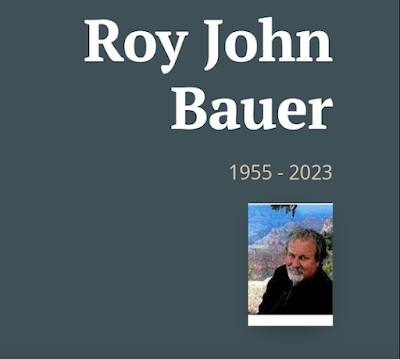
by Chunk Wheeler [Roy Bauer]
Dissent 5 - April 14, 1998
Quote of the week:
“The board put that provision in the contract so that it could hide from the state the fact that they’re giving teachers a raise.”
–Sharon MacMillan, FA President-elect, in OC Weekly, 4/10/98
 |
| Pat Fennel |
On Tuesday, the 31st, I headed down to Saddleback College for the Counting of the Ballots—the final episode of our union’s shabby contract election. Unfortunately, a week earlier, a fit of generosity caused me to assent to Sharon M’s request that I participate in this event. So, I had to go.
I arrived at Saddleback a few minutes late—largely because I put off leaving from IVC until the very last minute, so eager was I to participate. Upon finding the designated room, I entered from the rear, where the odious Mr. [Patrick J.] Fennel was sitting alone, chewing his lip and growing his hair. He spotted me, and with his usual flair for the ugly, he spit forth something like: “Well, c’mon, Bauer! They’re waiting!”
“What a pr*ck,” I thought.
Just then, an unfamiliar man—evidently, the imported “mediator” or “neutral party”—started the proceedings. He announced that he was there to authenticate the ballot-counting, not the entire election, which, obviously, he could not do. I walked, warily, toward the front of the room, hoping that my obligation to participate had somehow been rendered moot by the leadership’s usual sequence of unexplained changes in plan; but then Pete E noticed me and directed me to my assigned position next to the mediator.
So I walked up to this fellow, whose name, I believe, was Hart, and shook his hand. “How are ya!” he shouted. “Nice day, doncha think!” he said. “Stand right there, fella! That’s it!” Later, he asked me if I ever played football. No, I said, and his eyes communicated bewilderment.
 |
| Kopfstein |
I suppose that, among my critics, there are those who believe that I am always unaffected by their occasional signs of hostility toward me. Not so! On this day, I had had quite enough of that sort of thing to last me a while, and so I tried to do the job at hand without regard of any expressions of hostility. I was relieved to find that Mr. [Robert] Kopfstein, another of Mr. Hart’s little helpers, was behaving almost courteously. I felt so warm and fuzzy inside, that I almost gave him a hug.
Before I could do that, however, I noticed that the voting instructions taped to IVC’s ballot box were distinctly different from the instructions taped to the Saddleback box. I recall in particular that the IVC instructions required that the voter show her photo ID and sign a roster prior to voting, while the Saddleback instructions made no such demands. I apprised the audience of this peculiarity.
In response, Sharon MacMillan briefly explained how the disparity had come about. I think she said that, at first, Saddleback faculty were asked to show IDs and so on, but some objected, and so the Saddleback, but not the IVC, instructions were changed in mid-election. Naturally, union leaders saw no problem with this change at one campus but not at the other. For his part, Mr. Hart seemed particularly uninterested. “I’m just here to count ballots, ya know!” he said.
“Hey, everybody, I’m practically worthless!” he added, in my imagination.
 No doubt Mr. Hart was in danger of being late for his weekly poker game. Under his direction, we hastily recorded names, ripped open outer envelopes, ripped open inner envelopes, and studied the occasional electoral curiosity (unknown voter names, etc.). I watched with amusement as the Neutral One rashly threw the inner envelopes into a trash barrel, for the separate piles of white paper that we created were almost indistinguishable, and we helpers could easily have placed ballots and envelopes in the wrong piles.
“Pretty half-assed,” I thought.
At times, the four or five of us on the counting crew were in ridiculous independent uncoordinated motion, like bumper cars or ants, and it was clear that neither Mr. Neutrality nor anyone else could keep track of us all. (Not that it mattered.) Out of the chaos, I think I saw one envelope pop into the air, fly across the room, and land in Sherry’s hair, but no one noticed. I bet it’s still in there somewhere.
 |
| Sharon M |
When some in the audience complained to Mr. Hart that he was not making the meaning of our efforts clear, he responded by picking up the pace and explaining things loudly and with many gestures. It was as though he had been told that the audience comprised deaf simpletons who were growing impatient. For what it’s worth, the process was clear to me, and it seemed indeed to be on the up and up, albeit unnecessarily confusing to the audience.
When all the ballots (except for a handful of mutant instances) were counted, 104 proved to be “pro,” while 86 proved to be “con.”
Some in the audience made celebratory gestures and sounds. Others glowered. I glowered.
And thus it was that the contract was ratified.
Diane Fernandes-Lisi:
Reporters began to buzz around. I talked to a Lariat reporter for a few minutes and then walked over to Diane Fernandes-Lisi (of CCA/CTA), who, earlier, had been studying my every action as though I were a grifter counting the day’s receipts. I asked her if she was concerned about the various irregularities of this election—the union leadership’s failure to provide a ballot box at IVC during the first few days of the election, their numerous bewildering changes of the election closing date, their failure to sunshine some elements of the contract to the membership, the failure of the union’s negotiating team to understand, or even to read, the terms of the restoration of steps 26-30 until negotiations were over, the exclusion of eligible voters (new members) from the election process, etc.
She was, she said.
I asked her if she understood that, until recently, the union leadership had planned to hold the bylaws ratification election among the Rep Council, not the membership, contrary to the FA’s current bylaws. I asked if she knew about the illegal “refusal ballot” scheme that the union leaders were now contemplating applying to upcoming elections. She grew glum and glummer.
In the background, I could here Ken [Woodward] declaring to all who would listen to him that this election was the most honest and above-board event that had ever occurred in the history of the entire world and of all possible worlds, too.
I left.
AFTERMATH
By the next morning, word had spread that a press conference was scheduled for the purpose of announcing the attainment of a faculty contract. It was to be held at 5:30 that day.
That same morning, I received a call from Trustee [Marcia] Milchiker. Among other things, we discussed our alarming mutual pen pal [a reference, I think, to Michael Collins Piper]. She told me, parenthetically, that she had just read about the press conference in the paper. Evidently, Pam Zanelli, the hapless board majority-hired media consultant, did not judge it necessary to invite Marcia or some of the other trustees to this event.
Later, on my way home, I dropped by the district offices shortly after 5 o’clock; I left copies of the Dissent with the usual suspects. At one point, I espied Teddi Lorch, who was conferring with Zanelli in her office, and John Williams, who was conferring with unfamiliar faces inside Chancellor [Kathie] Hodge’s office. A pyrotechnics team, perhaps?
I was aware that, just by standing there outside the Chancellor’s office, I would inspire a conspiracy theory or theorette in Williams’ feeble brain, even though, in reality, I was merely waiting for the Chancellor’s secretary (I’ve forgotten her name) to finish her phone call. Sensing an opportunity, I assumed a conspiratorial air by raising one eye brow. Williams, on the other side of the glass, unconsciously felt for his weapon.
As I walked away, I noticed that the Chancellor’s conference room just down the hall was all decked out for a major PR event: microphones were set up, name plates were displayed, tasty beverages were set out, and a band was practicing in the corner. (Well, I made up the last part, although I think I saw a John Tesh cassette on the table.)
But nobody was around. Something told me it was time to blow.
The next day, I found out that not one reporter showed up for the press conference.
The Register had covered Tuesday’s ratification vote-count in its Wednesday edition. The story started like this: “The state’s highest-paid community college professors approved a new contract Tuesday that will cost the South Orange County Community College District at least $5 million in raises and perks over the next five years.”
It went on to explain that “Some professors are angry with their own teachers union and say the fighting began during the November [1996] elections for four seats on the district’s board of trustees.” Pete E was quoted as saying that “There wasn’t an agreement on how to go about choosing which candidates we would advocate for. A small group made decisions for us.”
Mr. Woodward, however, was quoted as expressing a very different view about the source of conflict within the union: “[He] said the bitterness stems from a board decision several months ago [July ‘97] to reorganize the district...Professors who chaired their [schools] were removed from these quasi-administrative posts and sent back to the classroom. The teachers union didn’t protest, which angered some of the professors...‘Nothing bad happened,’ said Woodward. ‘They just had to go back and teach.’”
This analysis of the union’s internal problems is demonstrably false. Among that group of persons who have been most active in challenging our union’s leadership, only one was ever a school chair—me. My quarrels with the union leadership began way back during the campaign of ‘96—eight months before I started my two-month stint as a school chair. Finally, the letter of complaint about our union—signed by 109 full-time “concerned faculty”—was sent to CCA/CTA eight months prior to the “reorganization” meeting to which Ken refers. That letter ultimately caused the CTA to send down a “leadership team” to investigate the union early in 1997. Again, all of this occurred before the Trustees’ infamous (re)organizational meeting.
A successful student protest—designed to call attention to the actions of the Board Majority and Raghu Mathur and the threat these actions pose to students—was staged at IVC on Thursday, the 2nd. The day before, President Mathur and at least one other administrator met with the students who were organizing the protest. If the organizers encountered pressure at that meeting, they withstood it successfully, for the demonstration proceeded more or less as planned at noon on Thursday. It was, by all accounts, a great success.
At first, a handful of students with signs marched alone around the A-quad near the administration building. Soon, however, others joined them, including numerous full- and part-time faculty and even some brave classified employees. At least fifty marchers snaked through the quad area and the environs for thirty minutes (as planned); they chanted, waved signs, joked with the many onlookers (perhaps 100), and generally had a great time.
At the end of the “march,” the still-intact group silently paraded through the administration building. Afterward, the students explained that they would resume the protests (on Thursdays) after the Spring break.
The event was reported in the OC Register’s Metro section, page 2, on Friday, April 3 and the Irvine World News, April 9.
[Early April, 1998]
On Thursday (4/3), the Irvine World News, the (IVC) Voice, and the (Saddleback) Lariat came out, and each covered recent district events and related matters.
An article in the IWN announced that “Gay and lesbian groups” have joined the Frogue recall effort. According to the article, “gay and lesbian organizations...are upset because Pamela Zanelli, a political consultant who gave advice to a Faculty Association political action committee campaigning for Frogue’s reelection in 1996, is working for the district [as its public affairs consultant] and may apply for a newly created public affairs position.” The article goes on to explain that Zanelli has been accused of authoring the infamous “same-sex marriage” mailer of the ‘96 campaign. (The mailer, sent to South County Republicans, got [Steve] Frogue, [John] Williams, and [Dorothy] Fortune elected.)
Jeff LeTourneau of ECCO (Elections Committee of the County of Orange, a gay political lobbying group) described the mailer as “the most deplorable, awful, homophobic piece of garbage that I’ve seen in 25 years of political activity.”
Zanelli denies having written the mailer. I am told that, during the last Board meeting, she told a reporter that she would never write such a thing, for a relation of hers “died of AIDS.” Zanelli’s reasoning is reminiscent of the puerile moral logic often embraced by the current union leadership (“We’re not responsible! The consultant made us do it!”--Remember?), for, though, evidently, she would never “author” homophobic literature, it appears that she advised our union to author and use it:
Zanelli...said she was hired as a consultant in October 1996 by the Faculty Association political action committee to help target issues for campaign, purposes. The domestic partners benefits issue was among the polling topics of discussion during the summer and fall of 1996, said Zanelli. Polls showed that 70 percent of voters in the area would have voted against domestic partners benefits, she said.
LeTourneau said the flier came about based on Zanelli’s advice.
“Whether she sat down and wrote the flier is irrelevant. She designed the hit piece attacking gays and lesbians. That’s not tolerable,” he said.
Zanelli was hired by the district board earlier this year as a temporary public affairs consultant, which, according to some college officials, has resulted in an ethical conflict of interest.
Trustee [Dave] Lang, who voted against the move to appoint Zanelli as a consultant, said, “It is inappropriate for a person to be writing political cover for four trustees (Fortune, Frogue, Williams and Teddi Lorch).
“She wrote, or helped write, Dorothy Fortune’s (commentary) for the Times. In my view that represents a theft of public funds. I’ve called for a full investigation of her activities since she was hired to work for the district.”
In an article concerning the faculty contract, Trustee Williams’ involvement in the contract negotiations—unprecedented among trustees, as far as I know—was discussed:
Williams took criticism for being a member of the negotiating team. Fellow trustee Joan Hueter said, “Whenever a trustee goes into a negotiating situation like that it puts a whole different spin on things.”
She said trustees have to make the final decision and shouldn’t have an influence over the bargaining process.
Williams said he had to get involved as president of the board.
“I did involve myself when the process was bogging down as a last-ditch resort, to break a log jam,” he said. [Wow, mixing three metaphors. ]
What’s “extortion” mean?
Negotiations had gone on for more than a year, he said, and he felt that he had direction from the board to bring back information to them.
Also in the Apil 2 Irvine World News was a guest editorial by Trustee Williams, accompanied by Williams’ high school graduation picture, evidently. Here, Mr. Williams says that Terry Burgess “was not informed his contract would not be renewed and...was not fired.” Consider this: Mr. Williams’ recently-alleged attempted quid pro quo depended on the understanding that Mr. Burgess’ contract would not be renewed in June, for, allegedly, Williams suggested (to at least one minority board member) that he would arrange for Burgess’ (and Deegan’s) contract to be renewed (contrary to everyone’s expectation)--if the minority would agree to refrain from voting against Raghu Mathur (for IVC president).
Mr. Williams offers the fact that the chancellor of the Chabot-Las Positas Community College district offered Burgess the Chabot presidency as evidence that Burgess was not fired. Huh? In fact, knowing that his contract would not be renewed, Burgess sought other administrative positions and was offered one by Chabot. Obviously, that he sought the position and got it is not evidence that he was not told that he would be fired!
Mr. Williams defends his violations of the Brown Act by suggesting that he is not accountable; rather, the district’s legal counsel is accountable:
The part-time board relies on the full-time chancellor and district legal counsel, who said we were in compliance with the Brown Act Open Meeting law.”
This from a man who, elsewhere in his article, asserts that “actions taken by the board of trustees are not about ‘politics and power and winning.’ They’re about accountability.” Evidently, in Williams’ view, everyone should take responsibility for what they do—everyone, that is, excepting the Gang of Four.
Williams implies that the board’s Brown Act violations involved mere technicalities. If so, why then did Judge McDonald render null and void every action that had been based on the illegal appointment of Raghu Mathur as interim president of IVC?
Williams asserts that “no attempt was made to keep the proceedings secret.” Really? In fact, for the meeting in question (April 28, 1997) the board failed to indicate on its agenda that it was considering an interim presidential appointment. Further, it failed to allow the public to comment on this action before the meeting. Finally, the names of the signatories of the petition upon which Mathur’s appointment was based were not made public.
An article in the 4/2 Lariat reports that, according to Saddleback student Antonio Aguilar (the student who, months ago, challenged an explicit Holocaust denier during a board meeting), he was ‘spit at’ by English instructor Tony Garcia on March 30. Evidently, Garcia responded to the charge by saying that “I cleared my throat as [Aguilar] went by.”
The article ends with a masterpiece of understatement:
Richard McCullough, Saddleback College Interim President, said he would not condone this type of behavior from faculty if it did, indeed, occur.
“That’s not what they should be doing,” he said.
In a letter to the editor, Lynn Wells responds to a comment that had been attributed by the Lariat to Sherry Miller-White:
...I address a response attributed to Sherry Miller-White that “the association (membership) had its chance to object to the provision (an increase in salary steps 26-30 for Doctorates) before it went into the contract. She says, “A lot of times, people don’t read the information...”
A South Orange County Community College District Faculty association newsletter (2/98) reports “salary scale steps 26-30. One step movement will be allowed per year.” In that document there is no mention made as to which full-time faculty this will apply.
After reading this and reading the contract proposal, I made phone calls to negotiators, who claim they had been misled by administrative negotiators (the chief of which was a former association president and negotiator [Bill Jay].) Right up to the first Contractual Explication meeting, association representatives claimed steps 26-30 did apply to the entire faculty. During that meeting (March 2) negotatiors claimed that they negotiated a contractual item which clearly alluded to a prior contract (specifically the 1980 contract) without having even read that contract. In fact, they begged that anyone with a copy to bring it forth.
Appalling words; appalling behavior.
In a story concerning the contract that appeared on the front page of the April 2 IVC Voice, English instructor Lewis Long is quoted as saying
“The contract makes it difficult for there to be any faculty participation in shared governance...The contract does not serve the interest of the college nor does it serve a majority of the interests of the faculty. The qualified people with teaching experience might not want to come here because it limits what they might be paid as compared to other campuses.”
The article briefly discusses alleged “inconsistent voting practices”:
“...according to Paula Jacobs, Saddleback’s faculty development chair and professor of counseling and special programs, there were two different voting procedures at Saddleback, depending on when one voted.
“On the first day, each member had to mark their ballot and put it in the master box. There was no second envelope, no signature, no social security number, nothing,” said Jacobs. “Beginning the second day, each ballot had a number on it. Members then had to put the ballot inside of a sealed envelope, place it inside of another envelope, seal it and write their name and social security number on the front. If you deviated from that process at all, they wouldn’t count your vote.”
Jacobs raises another issue:
“There are two deans at Saddleback who are members of the union. For years, the association has continued to take their dues and allowed them to vote. During the ballot counting, the union refused to count their votes. If they are not allowed to vote, why did the union continue to collect their dues? Or, if they are members, why weren’t they allowed to vote?” she said.
 “Hi Raghu. I’ve got something for you!” chirps Wendy.