Wednesday, November 30, 2011

Our nebulous past: these guys are all dying

Louis J. Cella, Jr.
     About a week ago (see), I provided a link to an OC Reg story about the death of a “Notorious OC political kingmaker,” namely, Louis J. Cella Jr.

     In that article (Notorious O.C. political kingmaker dies), Martin Wisckol reported that
     Louis J. Cella Jr., Orange County’s biggest political donor before being convicted of embezzlement in 1976, died Nov. 7 after a lengthy neurological illness. He was 87 years old.
     Cella was born in Providence, R.I., on Aug. 21, 1924, and received his medical doctorate from Marquette University in 1948. [According to the Times, he was expelled for cheating from his first med school.] In the early 1950s, he moved to Orange County and joined the Santa Ana Clinic in downtown Santa Ana.
     By the late 1960s, Cella was contributing heavily to state and local campaigns. In 1974, he made $550,000 in political donations, the most of any individual in California. He was particularly interested in the Board of Supervisors and their potential to control health-care facility licensing, according to a 1987 Register profile. He was key to getting four supervisors elected: Robert Battin, Ronald Caspers, Ralph Clark and Ralph Diedrich. All but Caspers were – like Cella – Democrats.
     Hmmm. According to an article in today’s LA Times (Dr. Louis J. Cella Jr. dies at 87), Cella was a registered Republican, though he “mainly supported Democratic candidates….”
     Wisckol goes on:
     Even by Orange County’s lively political standards, it was a wild time, with 42 Orange County politicians and political aides indicted between 1974 and 1977.
     Battin was convicted of illegally using county staff for campaigning. Diedrich was convicted of taking bribes from a developer in exchange for a rezoning vote. Caspers died at sea in a boating accident.
     OK then. The corrupt Cella supported OC Supes (1) Battin, (2) Caspers, (3) Clark, and (4) Diedrich. Battin and Diedrich were eventually convicted of crimes. Clark managed to ride out the scandal, though he gave up his Supe seat in 1986 partly owing to persistent accusations that he had had unsavory dealings with notorious “corrupter” W. Patrick Moriarty. (I think the DA persuaded him to step down.)
     I remember Clark. He was an old-fashioned, glad-handing politician. Some people loved 'im.
     Yes, Caspers, the Republican, died in 1974. As far as I know, his boat and his body were never found (one hears rumors, from older reporters, that foul play was likely afoot).
     Caspers’ right-hand man was, of course, a young Tom Fuentes, whom Nathan Rosenberg once described as “Caspers' bagman.” (See LA Times, Badham vs. Rosenberg at TV Taping, May 20, 1986).
     Rosenberg is a Boy Scout, so I believe 'im.
     Fuentes’ reaction to Caspers’ death was extreme: he entered a seminary. But that didn’t take. Six months later, he left the seminary and became a "consultant." As near as I can tell, he was the kind of consultant who wined and dined certain key persons on behalf of certain companies. He was very good at that. By '84, he was OC GOP chair, where he became legendary for his wining and dining accomplishments.
     It’s all very strange.
     Wisckol snooped around some old Register stories, where he learned that
     In 1976, Cella was convicted of 22 federal counts related to embezzling at least $600,000 in Medi-Cal funds through two Orange County hospitals in which he had an ownership stake. He served 32 months of a five-year sentence.
     Before his indictment, Cella also oversaw a political literature print shop in one of his hospitals, provided candidates with hospital-paid phone banks, and paid candidates for phantom jobs while they were out campaigning, according to the 1987 Register story.
     The story also notes that before his indictment, “Little was known about the source of his apparent immense wealth.”
     The source? He stole it. Well, it’s all very delicious, isn’t it? We’ll probably never know all the details.
     These guys are all dying.

See also Louis J. Cella, Former Orange County Political Power Broker, Dies at 87 (Voice of OC)

These days


I've been out walking
I don't do too much talking
These days, these days.
These days I seem to think a lot
About the things that I forgot to do
And all the times I had the chance to.

I've stopped my rambling,
I don't do too much gambling
These days, these days.
These days I seem to think about
How all the changes came about my ways
And I wonder if I'll see another highway.

I had a lover,
I don't think I'll risk another
These days, these days.
And if I seem to be afraid
To live the life that I have made in song
It's just that I've been losing so long.
La la la la la, la la.

I've stopped my dreaming,
I won't do too much scheming
These days, these days.
These days I sit on corner stones
And count the time in quarter tones to ten.
Please don't confront me with my failures,
I had not forgotten them.

Tuesday, November 29, 2011

In Cal, broad support for the Occupy movement

From this morning’s Oakland Tribune:
Poll: Californians evenly split on Occupy movement

     California voters are almost evenly split, largely along ideological lines, over whether they identify with the Occupy movement, according to a new Field Poll. ¶ The poll found 46 percent of California's voting public identifies a lot or some with the Occupy movement, while 49 percent declare not much identification with it. But while voters are closely divided in their identification with the movement, a 58 percent to 32 percent majority say they agree with the protests' underlying reason….
. . .
     Conservatives are very unlikely to identify with the movement, liberals are very likely to do so and independents are about evenly split, [Field Poll Director Mark] DiCamillo said.
. . .
     DiCamillo said that for context's sake, he went back and checked a similar poll asking about the Tea Party movement in January 2010; at that time, 28 percent of Californians identified strongly or somewhat with that movement. ¶ By comparison, he said, Occupy is "a bigger, broader phenomenon" than the Tea Party, which was mainly just within the bounds of the Republican Party….

See also: STATE: Most people share Occupy views, poll finds (The [Riverside] Press-Enterprise)

Ask an Editor! Gustavo Arellano takes the helm at the OC Weekly


Over at the OC Weekly, Matt Coker has the news:

Ted B. Kissell informed his news staff via today's copy meeting and everyone else at Orange County's favorite alternative weekly newspaper via email that he has resigned as editor of OC Weekly.

Kissell, who joined the staff weeks after founding editor Will Swaim ended his 12-year run at the helm in 2007, also announced that Gustavo Arellano will assume the editor's post "effective 5:01 p.m." this Friday, Dec. 2....

..."I want to thank all the skinheads, pedophile priests, Know Nothings, and battleship tacos that made this day possible," Arellano said of taking over the editor's office. "I look forward to continuing the Weekly's mission of comforting the afflicted and afflicting the comfortable with the best damn group of writers this side of the Fortean Times. And I promise to offer our disgraced, felonious ex-sheriff Mike Carona a complimentary subscription to our rag so he can get his jollies off to our backpage ads!"

Arellano, who grew up and went to high school in Anaheim, began freelancing at the Weekly in 2001 and became a staffer upon graduating from UCLA with a master's degree in Latin American studies in 2003.

Having served as managing editor the past year and a half, Arellano will continue as editor to author his popular syndicated column, ¡Ask a Mexican!, which won the 2006 and 2008 Association of Alternative Weeklies (AAN) Award for Best Column. He'll also keep contributing to the Weekly's tasty food coverage. Indeed, he's rolled some of that knowledge into his forthcoming third book, Taco USA: How Mexican Food Conquered America.

A press release about Arellano assuming the editorship that VVM submitted to AAN today notes that OC Weekly's new editorial chief "is the proud son of two Mexican immigrants, one of whom was illegal."
*
Felicidades a Gustavo!
*
Re Gustavo, see also:

Monday, November 28, 2011

That's some survey, that Don Wagner "immigration" survey


     Today, I visited Assemblyman (and former SOCCCD trustee) Don Wagner’s government website: here. I noticed a button: “click here to take our latest survey.”
     So I did. At present, Don has three surveys: Healthcare, Immigration, and Jobs.
     I chose the one on immigration. It asks just four questions:


     Observe that the third and fourth questions of this survey are about how respondents “feel” about things:


      (California's "situation"? That's mighty vague. On the other hand, under the circumstances, I think we can safely assume that Don means the state's fiscal situation, which, of course, is dire.) 

     Whether "illegal immigration is a large contributing factor to" the state's fiscal "situation" and how much (if at all) it contributes to it—these are empirical questions. When confronted with empirical questions, one should make the appropriate observations; one should seek the relevant data. 
     One does not ask for people's opinions.
     Odd.
     Also, Don is asking questions about matters imbedded in a cluster of empirical and non-empirical issues that comprise the illegal immigration issue. (Can the existing pattern and amount of immigration be stopped or thwarted? How can it be? At what cost in other values such as privacy? Is multiculturalism a legitimate value? Is it decent to seek to prevent such phenomena as the gradual dilution of one's "culture"? Etc.) 
     Don distorts the immigration issue by implying that it's essentially about whether illegal immigration is costly.
     And isn't Don asking for people's opinions (about these curiously selective matters) already knowing full well what those opinions are? ("It's a big contributor! It's immense!")
     That's some survey, that Don Wagner "immigration" survey.

That's some catch, that Catch-22

Rant On: "futile, if not cynical wastes of time"


Monday is here and, as promised, Rebel Girl has some reading for you.

Clio Bluestocking, Reb's most recent infatuation, weighs in on her community college experience in "The Nebulous Creature."

Blue writes:
In my years at the community college, I found three insidious concepts that pointed toward the endemic problem of the college. All three were the sort of things that, on the face of it, seem like they could maybe be good ideas; but, when you looked a little beyond the surface, you could see that the ideas were concocted outside of the reality of the institution, of the needs of the institution, and of the needs of everyone associated with the institution, including the students. These three things were outcomes assessment, online instruction, and "completion."
Reb likes it when teachers write about teaching. She finds it refreshing.

As you may remember, late last week, Rebel cited Bluestocking's assessment of SLOs.

In the same post, Blue makes the familiar arguments about online education: "The problem is that the dictum seems to not seriously care if it is done well. The dictum is to serve more students and this is an easy and cheap solution. Doing it well will require more staff and therefore more money."

Regarding "completion," Blue points out that institutions, even though they advise instructors "to have compassion and understand the problems facing students with full-time work, full-time family, and full-time course loads; yet, they do not look at that very fact of the students' lives as an obstacle to advancement. You want completion? Address the real reasons that students don't complete."


But here's where she won Reb's heart:
Who is "they" in my rantings here? Who comes up with these ideas, thinks they are grand, and demands their implementation in the face of overall opposition from the people who have to do the implementing? Well, I wish I knew. Anyone can be part of "they" at any point on any issue, I suppose, but the main "they" is the real, endemic problem of the college where I worked. The endemic problem went above and beyond the college itself to the people who the decision makers at the college seemed to want to serve...

This nebulous creature and its handlers, however, had very very little knowledge of how education works or the purpose of education. Very few people connected to this nebulous creature had any experience in education beyond their last college course; and this nebulous creature had obviously failed itself in its own education because it could not conceive of anything as being useful unless there was a point-to-point correlation between something in a classroom and a specific skill that might be demanded by an employer. Anything going on in the classroom must directly translate into a student's ability to profit and the line had to be direct. Any questioning of the nebulous creature's demands was met with "if we don't do what it wants ourselves, then it will come in and do it for us."

Now, I don't think it is a bad idea to explain how the Humanities are useful to society or even to individuals who are just in college to get a better job. That's most of the students in a c.c. anyway. It is the reason that college is connected to upward mobility. Humanities exposes people to a variety of ideas, expands their way of thinking, hones their analytical skills (or exposes them to the concept of analysis), and requires verbal expression and communication most often in written form. Sometimes this may not seem so obvious as one tries to wade through the causes of the American Civil War or the intricacies of Hamlet.

Sadly, the nebulous creature seemed not particularly interested in those explanations. It understands "business writing" or Elizabeth I, CEO. It understands, "student will be able to demonstrate the ability to use a comma" or "student will be able to identify George Washington." It understands "history" as "dates and facts and wars and politicians who have no connection to anything happening now." It understands "literature" as "that boring shit in which everything meant something when really the white whale was just a whale and who gives a damn anyway?" This nebulous creature is simplistic and does not take into consideration that education is a complex endeavor that is bigger than the numbers that they want to production -- sometimes even more subjective and not apparent for years. It can sometimes be as traumatic as it is enlightening, if done right, which is why it should not be a series of hoops to jump through or numbers to generate in order to do it right.

The biggest problem in the face of this nebulous creature was the way that it was able -- despite its nebulous nature -- to force complete capitulation and compliance, to draw so many into its thrall. I kept asking, as everyone complained about the "outcomes assessment," and online "learning," and "completion" -- at every level in some cases -- "at what point do we just say 'NO'?" Seriously, at what point do we, those of us actually IN the college, say "WE are the professionals here, we actually ARE competent, and we actually DO know what we are doing." When do we -- and I mean faculty, staff, librarians, counselors, administrators, everyone at the college who increasingly sees these measures as futile, if not cynical wastes of time -- when does that we seize control of our own business as professionals?

Indeed, what would happen if we did? What if we said, "we will decide our own 'outcomes' and how best to determine if they are being met," rather than going through the farce of the current system in place at the college? What if we said, "these are the terms on which we will offer and implement online courses in our departments according to our department's needs"? What if we said, "your definition of 'completion' has no meaning at our institution, so here is our varied means of determining 'completion' at our college"? Seriously, what would happen? ...
Rebel Girl has not successfully resisted the urge to quote often and long here. Sigh. Forgive her. She hopes that you will visit Blues' original post here and read it in its entirety. She hopes that you will chime in in the comments section and tell us what you really think.

More later~~~~

Sunday, November 27, 2011

Trustee Tom Fuentes' dark warning, November 16


Go ahead: install Microsoft Silverlight. The district says it's OK!

The video starts with the tail end of public comments: the "hat" or "mouse" lady offers her services as Chancellor, then stalks off. No stranger than usual.

Addressing the TV audience
00:24 – Board Reports
00:26 – Trustee Meldau
02:00 – Trustee Milchiker
04:46 – Trustee Prendergast
07:02 – Trustee (President) Padberg
08:46 – Trustee Fuentes He offers his dark and dire warning
11:36 – Trustee Lang
11:55 – Student Trustee Larson
12:50 – Chancellor’s report (Gary Poertner)

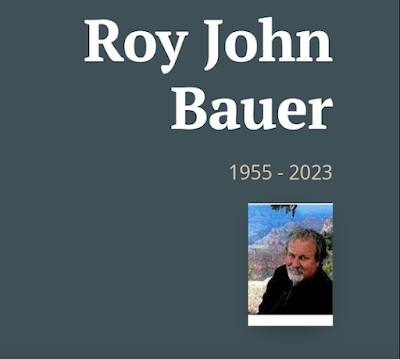
Roy's obituary in LA Times and Register: "we were lucky to have you while we did"

  This ran in the Sunday December 24, 2023 edition of the Los Angeles Times and the Orange County Register : July 14, 1955 - November 20, 2...