Saturday, December 23, 2006

In the Hobbit Hutch


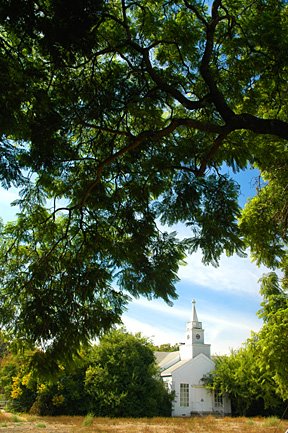
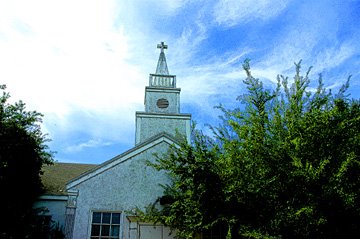
IT WAS A BUSY DAY, and I've still got this rotten cold. Limber Lou dropped by, but only for a few minutes. It was so beautiful outside, I decided to take a few snaps. Limber Lou kept talking and squirming and asking me questions, and it was kind of a relief when he left. I waved.


My folks wanted me to drop by about something, and so I did that. Got to talking with my mom, Sierra, about that image of a German Shepherd that you see on K-9 cop cars. (I mentioned it a couple of days ago.) It’s a stencil that you can buy in the usual cop supply outlets. When I Googled “K-9 supplies” or some such thing, I first found a place in Kentucky that sold maybe 15 different stencils. Prominent among them was this one (see).

I asked Sierra (i.e., my mom) to tell me the story. Here’s what she told me.

It was the mid-70s, and she was painting animals in those days. She and my dad (and, to a certain extent, I) got to know a cop named Dave R. I’m not sure he was a cop—he could have been an electrician—but he was definitely involved in training dogs for police “K-9” squads.

Dave asked Sierra to paint portraits of his two dogs, Kai and Cora. They were magnificent purebred German Shepherds from Germany, as I recall, and they were truly amazing dogs, and beautiful, too. They were trained as “Schutzhund” (working) dogs—we had met Dave at a Schutzhund club. The training includes such routines as shooting a gun off next to a dog’s head! The dog isn’t supposed to freak out. These dogs never did. They were cool customers, boy.

I do believe that Dave regarded Kai and Cora as his best dogs ever, and he loved ‘em to pieces. My dad took some photos of the two—they were a kind of team, and they were lots of fun to be around—and my mom used those pictures, mostly, to paint the portraits.

Dave was pretty happy with the results. My mom got paid. Not long after that, my folks gave up on the dog club, and they didn’t see Dave much after that. (We had joined the club to get my little brother Ray interested in something wholesome—like dogs and dog-training. It didn’t work.)

After a few years, Sierra did hear from Dave again. He had sent her a letter along with a sweatshirt and some stencils. It turns out that his dog-training company needed an image of a dog, and they couldn’t get any image to work—except for the two portraits that my mom had painted (or photographs of the portraits). So, after a little manipulation, those images ended up on the company’s logo and masthead (etc.). The sweatshirt that Dave had sent had the picture/image of Kai, the male dog, on the front. (See below.) On the back was the company logo, which, I believe, included the image of Cora, the female. Dave had also sent stencils used to transfer the Kai image onto the sides of police "K-9" cars. He explained that police departments all over the country were using these stencils. They were being used in Germany, too.

In the letter, Dave was apologetic. He said he felt bad that she wasn’t getting royalties. I’m sure my mom didn’t care about that. Besides, she told me, Dave owned the painting. She had sold it to him, and so he had every right to use it.

I asked Sierra if she still had the sweatshirt and the stencils. Off she went looking for them. After a few minutes, she returned with the shirt. It was in a bag and it was as good as new:


She said that she thought the stencils were up in the old “Hobbit hutch,” my family’s name for an old dilapidated structure that my parents once used for painting. They don’t paint much anymore. Nowadays, they’re into pottery and sculpture.

I headed up there. It’s a real rat-hole, up against the hill, right above my parents’ private road. I could find no stencils. But I did find interesting things.

Mostly, the shed is filled with old paintings—some on canvas, some on board—leaning against each other. The weather—the sun and moisture—and even the rats had gotten to them. In the case of some paintings that were directly exposed to sunlight coming through the dirty windows, the paint had mostly peeled away. The paintings that were stacked along the wall were very dusty and dirty.

I didn’t find the stencils, but I did find some of my mom’s old animal paintings, though most of them lay flat one on top of another in flat drawers. I focussed mostly on the paintings that were stacked along the walls.

Here’s one that was probably painted some time before the Kai & Cora episode:


I had to wash it down to really see the image. Even after that, it looked grimy and dark. Later, I photographed it, downloaded it to my Mac, and then Photoshopped it. I tried the “auto level” button, and, voila! For once, that button pretty much did the trick. (Later, I’ll actually clean up the painting. That’s tricky.)

I kept digging. One painting was a real surprise, and it brought back lots of memories. In the early seventies, my beautiful and silly German cousin Tina had visited my folks for several months. (This was while I was attending UCI.) She didn’t speak a word of English. Still, she managed quickly to become part of the family. She’s was—still is—a great gal, full of fun and full of wild gestures and great emotions. We took her everywhere. She charmed the pants off of everybody.

Evidently, my mother had started a portrait of her. It’s pretty badly damaged, but there’s no doubt who it is:


Well, I’ll be spending some time working my way through all this stuff in the crummy old "Hobbit hutch." (I seem to be the family historian and archivist.) I won’t go on and on about all the things that I found there today.

Well, there was one thing. Evidently, my whole family had attended one of the wild parties given by one of my Professors/advisors in grad school. This would have been about 1980. I don’t know how it happens, but, somehow, my family ends up knowing everybody that I know. The “wild party” Professor—a famous philosopher of religion!—had visited my folks on several occasions, too. I don’t get it, but there it is.

My sister was at the party, too. She’s an artist, and she took lots of photographs. Later, she developed the photos—they were pretty wild—into these 1 1/2-inch square “portraits,” exhibiting every imaginable emotion or attitude. She assembled these geometrically upon a large board. The resulting piece was a work of art. It was pretty wild. Pretty terrific.

Well, I found that thing—next to a large rat nest. It was covered in muck. Some of the photos were missing; others were damaged. I took it up to my place and started cleaning the photos, one by one.

The first one I cleaned—it was the first picture in the first row—was of my late brother Ray, who also attended the party. Ray was probably the funniest person I have ever known. I vaguely recall that he had entertained people, in his outrageous manner, quite successfully at this particular party, which occurred in a great little house near the ocean in Laguna Beach. Here’s the pic:

Ray would have been about 19 years old at the time. He's obviously giving my sister a dirty look. I loved the guy.

Later in the day, my mom called. She said that she had found some photos that I might want to look at. Among them was this one of my little brother Ray, standing before his “crop,” somewhere in Northern California (circa 1990):


I love this photo, which I've never seen before. It's so Ray.

If there are any Junior G-Men out there, well, just chill out. Ray’s long dead. And I don’t know where the photo was taken.

Ray knew the Latin names for everything. For instance, he knew the Latin names for all the varieties of vegetation in the Santa Anas. And he knew the Latin names of other vegetation, too.

He got into a lot of trouble, though not in the Santa Anas.

He sure did have a green thumb.

Evidently, Fidel Castro was at the party, too.

Friday, December 22, 2006

Ms. Sunny


A busy day for cadaver dogs

Site MeterSunny's been a big help, finishing grading. She creates a fine Gemütlichkeit.

I remember seeing a Kamikaze rocket plane like this one at one of the many El Toro Marine Base air shows in the 1960s. Incredibly cool!


▼ CHECK UNDER THE FLOORBOARDS. They’re tearing up the buildings at the old El Toro Marine base to make way for the “Great Park.” (Base under destruction.) Way cool. I do hope they're on the lookout, though, for bodies and such. Jake, it's Orange County.


▼ REALPOLITIK, TICK, TICK. Yesterday, the OC Reg’s Martin Wisckol (Total buzz) reported that the notorious Tan “Stand by your Tan” Nguyen case continues, and the decision whether to file charges will likely be made before January 8:
Just heard from Nathan Barankin at the state Attorney General's Office and he said the investigation continues into the controversial letter sent out by erstwhile Congressional candidate Tan Nguyen's campaign. The letter, mailed to foriegn-born [sic] Latino voters, was condemned by both Democrats and Republicans as an attempt at voter intimidation.....
Intimidation. That's Trustee Fuentes' department. Fuentes was among Nguyen's advisors.


▼ SUB-A-DUB-DUB HUBBUB. After nine years of abject mothballery, those old Disneyland SUBMARINES are getting hosed out and painted for use in some kind of NEMO ride, at Disneyland of course. See Bringing sub ride out of mothballs. I think they should bring back that daffy "Home of the Future" ride too. Made by Monsanto, wasn't it? I vaguely recall standing in that place in the late 50s. "Mom, how come this place stinks?" Answer: "It doesn't stink, Chunky. That's just the plastic. Plastic is good. Go ahead, Chunky. Sniff it! Sniff the future!"


▼ AGENDA: JE NE SAIS QUOI. Looks like the Capistrano Unified School District board is going to court, owing to its evident failure properly to agendize a lengthy closed session a while back. See Capistrano Unified district's closed sessions get trial date. The trustees tried the old “when you evaluate somebody, everything is relevant” gambit as a way to get around proper notification/agenda requirements.

In '59, I was there, sniffin' the future.

Thursday, December 21, 2006

Chunk's folks: howling and creating


I TELL PEOPLE that I was raised by wolves in the mountains of British Columbia, and that's true, but it might give 'em the wrong idea.

For one thing, my folks are artists. In my family, everybody is some kind of artist. Well, everybody is several kinds of artist. I'm not saying they're any good at it. That doesn't really matter. But they're always making things, and then they're making more things.

It's the holiday season, and I'm feeling all warm and fuzzy. Could be these crazy socks. Anyway, I'm gonna do something different; I'll show you some of my family's artwork that somehow ended up in my house--er, my lair. It's a totally random sample.

For starters, my pop did the painting above. My mom was the model. He used to paint all the time. I seem to recall that he won 1st Prize at the Orange County Fair, amateur oil painting division, thirty or so years ago. He doesn't seem to paint anymore.

These days, mostly my folks work in clay. Here's a plate that my dad did a few years ago. I keep it in my living room. I used to have an even better one that he did, but somebody stomped on it. That can happen, if you don't watch out.

My mom makes lots of clay pots and whatnot. Here's one she made a while back:

Actually, I kinda messed up the photograph, so it looks darker than it really is. But I like it.

Here's another pot--or something--Mom made. I'll drop by their shop, and I'll be looking at one of these things, and she'll just say, "Want it?" Usually, I'll say, "sure."

A friend of mine finds his way to my folks' workshop as often as he can just on the chance that my mom'll offer him one of her pots.

Here's one of my favorites:

Actually, I've got lots more of these things, but I don't want to over-do it. There are literally hundreds of pots and jars and paintings and sculptures and photos sitting' around the property, at my parents' house, at friends' houses, here and there.

Next time, I'll show you my sister's "Easter Goose," which she did for the American Cancer Society or something. I forget. One time she was over my place and she spotted this laminated and folded thingy that I had bought. It showed all the flora and fauna of the hills around here. She picked it up, looked at it, and said, "I did this."

You know the German Shepherd image you see on the side of K-9 police cars? Well, it's adapted from a painting my mom did more than twenty years ago of a dog owned by a cop that my parents knew. They met him--the cop and the dog--at a "Schutzhund" club, but that's another story.

I remember the guy, named Jim or Rick Weaver, I think. He was a health nut. Rode his bike thirty or forty miles a day.

I think he was in his early 50s when he suddenly died of a heart attack.

People go like that sometimes.

I've got a bad cold, and so don't expect any of this to make sense. I just did this, that's all, like the rest of my howling, lunatic family. Here it is.

Love 'em, though.

Ahhwooooo... Werewolves of Trabuco, Ahwooooo!

Letting Go


It's that time of year.

Me, we travel to this place (some call it the poor man's Galapagos) on the Sea of Cortez, about a third of the way down the bony finger of Baja California, where the desert meets the sea in ways I have only known in Greece (think Mani) and we let go. The whole year ends there and another begins. Yes, we know it's just a construct, these calendar pages but at the same time it's a useful construct and the earth does turn and the days do begin to grow again. The light gets longer, the darkness shorter. We come back from our week, our 10 days, our fortnight and we're ready to do it again. Something about the sea there, the rocks, the sea turtles, the people who care for them, the creak of the pelicans' wings, the flash of the fish jumping from the water, the islands, over a dozen jutting out from the blue, the quiet sunrises, the enormity of the spreading sand, the white beauty of the animal and bird bones I find there every year bleached by years in the sun. Years. Bahia de los Angeles.

Years ago, John Steinbeck and Ed Ricketts were frightened of what they found there. Read all about it in "The Log from the Sea of Cortez." We were too, our first trip. It was too much. Now it no longer is. It is just right.

We let go of a lot of things this year, some willingly, many not so. It was hard. Still is.

I wake some mornings and imagine that death—a stooped figure—cackles in the corner of my bedroom. Death is a bad actor, a stock character whose cheesiness embarrasses me; after all, my consciousness must have created the creature. Still, it is forceful, frightening despite its cartoonish nature, persistent. This has got to stop, I tell myself, I tell the dream figure before it fades. But, of course, it won't. Death lives with life. Those bones on the beach, the ones beneath my own skin, my friends, my family, those in the family of things here, known to me and unknown, all living and dead.


And now, another Mary Oliver poem for my friend who I don't see often enough but who was kind enough to write:

In Blackwater Woods

Look, the trees
are turning
their own bodies
into pillars
of light,
are giving off the rich
fragrance of cinnamon
and fulfillment,
the long tapers
of cattails
are bursting and floating away over
the blue shoulders
of the ponds,
and every pond,
no matter what its
name is, is
nameless now.
Every year
everything
I have ever learned
in my lifetime
leads back to this: the fires
and the black river of loss
whose other side
is salvation,
whose meaning
none of us will ever know.
To live in this world
you must be able
to do three things:
to love what is mortal;
to hold it
against your bones knowing
your own life depends on it;
and, when the time comes to let it go,
to let it go.

- Mary Oliver

~~~~~~~~~~~~~~~
Site Meter

Forcing the issue can suck


▼▲ BACK IN THE 60s, I was a Boy Scout, a member of Troop 850 in Villa Park. Later, my dad and I started a troop in the Anaheim Hills (Troop 536, sponsored by Trinity Lutheran Church).

In those days, attitudes were different of course. Scoutmasters routinely led kids in rituals of simple-minded “love it or leave it” patriotism. My troop admired the local Marines. (I still admire them pretty much as I did then.) But I don’t recall any Scout leader ever supporting or even mentioning the war. The war was viewed as too political, too much a matter of personal opinion (among parents—kids didn't talk much about the war).

And I don’t recall an emphasis on religion. For us Scouts, religion came up as an annoying break in the fun on Sunday mornings on campouts. For an hour, Protestants would go off to do their thing and Catholics would go off to do theirs. (Other groups were accommodated whenever possible.) Mostly, though, religion was viewed as each Scout’s private business. And if a kid was a non-believer, an effort was usually made to keep him out of the crosshairs of bigotry.

I do not recall homosexuality being addressed in any way. Admittedly, Boy Scout leaders viewed male homosexuality as most people did in those days. But there was no explicit policy about it or against it. No one ever talked about it.

● WELL, AS YOU KNOW, that changed. Much later, the Boy Scouts of America (BSA) embraced an explicit policy of exclusion of atheists and, especially, gays. Back in 2002, the BSA adopted a Resolution according to which
…homosexual conduct is inconsistent with the traditional values espoused in the Scout Oath and Law and … an avowed homosexual cannot serve as a role model for the values of the Oath and Law
I appreciate the problem for BSA posed by Scout leaders who are “avowed homosexuals” (although there’s avowed and then there’s avowed). It isn’t always good to force an issue as some gay Scout leaders evidently did. Sometimes, that sort of thing makes matters worse.

But why did the BSA have to embrace the notion that “homosexual conduct” is contrary to Scout values? Why go there?

So the BSA went where it went, and that involved the BSA self-identifying as a kind of private religious organization that excludes certain people.

● A RELIGIOUS ORGANIZATION? Well, the BSA may want to find the guy who counsels Scouts on their “Litigation” merit badges, ‘cause the California Supreme Court will soon consider whether the BSA are ineligible for receiving state aid, seeing as how they’re some kind of religious organization! Here are excerpts from this morning’s San Francisco Chronicle (High court may take up question of Scouts' religious status):
Six years ago, the Boy Scouts convinced the U.S. Supreme Court that their deep-seated principles gave them a constitutional right to exclude gays and atheists. Now the California Supreme Court has been asked to look at the other side of that coin—whether the Scouts are a religious organization ineligible for certain types of government aid….

U.S. District Judge Napoleon Jones ruled in 2003 that the Scouts—who require members and leaders to believe in God, and who have numerous faith-based programs—are a "religious organization with a religious purpose and a faith-based mission.'' He said the city's preferential treatment, granting a no-bid lease [of property, in San Diego] to the Scouts for a nominal fee, was therefore unconstitutional.

The federal appeals panel wants the state Supreme Court to decide whether the lease violates the state Constitution's strict bans on government aid and preferences for religious institutions….
The ACLU is involved. It doesn’t look good for the BSA.

● ACCORDING TO JUBAL at the conservative OC Blog, the “The Orange County United Way has cut all funding to the Orange County Council [OC Boy Scouts] from 2006-2009.” That factoid yesterday inspired the OC Register’s Steven Greenhut to opine: “The [OC United Way] has given some excuse for no longer funding the scouts, but the Boy Scouts have been long under attack for not accepting gays.”

Greenhut could be right about the United Way’s true motives, I suppose.

● "FORGET THAT ORDER." This stuff reminds me of a story told by former WAC Johnnie Phelps.
(Note: since I first wrote this post, I have become aware that some knowledgeable, if partisan, individuals assert that Phelps' account is fabricated or the result of delusion. See, for instance, the research of Lois Beck, Pat Jernigan, Margaret Salm.)
Phelps claimed to have an encounter with General Dwight Eisenhower (when, according to her, she served on his staff during the postwar occupation of Europe) in which Ike saw the wisdom in not forcing the "lesbian" issue. Here’s Randy Shilt’s account (see page 107) of that conversation:
…Phelps admired Eisenhower as a soldier’s soldier who genuinely cared for his troops and would never order them to do something he would not do himself. Out of respect for Eisenhower, Phelps would never have lied to him, which was why she knew how to answer the day he called her into his office and said he had heard reports that there were lesbians in the WAC battalion. He wanted a list of their names, he said, so he could get rid of them. That, Phelps suspected, would be a tall order, since she estimated 95 percent of the WAC battalion … was lesbian.

“Yes, sir,” Phelps said to the general, according to her later account. She would make the list, if that was the order. Then she reminded Eisenhower that the WAC battalion at his headquarters was one of the most decorated in the Army. It performed superbly, had the fewest unauthorized absences, the least number of venereal-disease cases, and the most infrequent number of pregnancies of any WAC group anywhere. Getting rid of the lesbians would mean losing competent file clerks, typists, and a large share of the headquarters’ key personnel. “I’ll make your list,” Phelps concluded in her crackling North Carolina accent, “but you’ve got to know that when you get the list back, my name’s going to be first.”

Eisenhower’s secretary, also in the room, corrected the sergeant. “Sir,” the secretary said, “if the General pleases, Sergeant Phelps will have to be second on the list. I’m going to type it. My name will be first.”

According to Phelps, Eisenhower looked at her, looked at the secretary, shook his head, and said, “Forget that order. Forget about it.”
(For a discussion of the factual refutation of Phelps' story, see comments below.)

▼▲ This morning, I read about some undertakers making a beefcake calendar for charity: R.I.P. the shirt!. See the pic (Men of Mortuaries) above. I put it up there to catch your eye. I can be tricky like that.

Um, plus it’s a slow news day.

Wednesday, December 20, 2006

Good news and bad news for veterans & historiphiles


▲ THE LAST OF JOHN LENNON'S FBI FILES. As you know, UCI's John Wiener, a friend to DISSENT & Dissenters, is known for his work, as a historian, on secret FBI investigations and files. Check out articles in today's New York Times and LA Times concerning files re Lennon that had been withheld for more than 25 years for security reasons but that have at long last been released. Turns out the security reasons were bogus all along.

Trust the government? I think not.

▲ SHOW ME THE MONEY. There are lots of unhappy campers among local veterans this morning. They're pissed, but things could be a lot worse.

The OC Supervisors OKed a plan that would preserve the north blimp hangar of the old Tustin Marine Air Station by offering it to a corporation that would turn it into a sports complex. Hence, it now seems, the hangar won’t become a military museum, as some had hoped.


On the other hand, it seems likely that Industrial Realty Group Inc. (IRG), unlike the veterans group that proposed a museum, really has the money to make their plan work.

And so at least the hangar is spared demolition. Don’t know yet about the south hangar.

The SOCCCD's Advanced Technology & Education Park (ATEP) is very near the north hangar. My own view is that, beyond keeping veterans and historiphiles happy, preservation of the north hangar would be good for ATEP and the SOCCCD and, so, should make us happy too.

From the OC Reg’s Military museum plan loses out:
Tustin's historic blimp hangar will be turned into a $100 million sports-themed complex called "Play" under a deal approved Tuesday by the Orange County Board of Supervisors.

The extensive plan by a private company beat out a proposal by veterans, who wanted to build a military museum….

The three supervisors who voted in favor of the deal … said the plan would preserve the iconic hangar without cost to taxpayers. Supervisor Bill Campbell, who represents Tustin, urged veterans to work with the developer, who plans a military memorial as part of the project…"Come up with something that honors what (military veterans) did and keep this blimp hangar here," Campbell said.

…The 17-story hangar, along with another one to the south, were built in 1942 and first used for the military blimps that patrolled the coast. They have become part of Orange County's geography and history, housing helicopters after the blimps were phased out and now being used for movie and commercial shoots. Tustin is still considering proposals for the south hangar….

Here’s the Register’s description of IRG’s plan:
What is 'Play'? The $100 million "Play" proposed by [IRG] is being billed as a sports, recreation and leisure center within the 150,000-square-foot blimp hangar. Plans include:

•Basketball, volleyball and gymnastics courts
•A 150-foot rock-climbing mountain
•A 25,000-square-foot "sports demonstration zone" for celebrity tennis matches, skateboarding half-pipes and BMX bike shows
•Two levels of sports-related retail stores and restaurants
•An entertainment plaza for outdoor concerts
•A 20,000-square-foot veterans exhibit
•A cinema complex
PHOTOS: NEAR ATEP & THE NORTH HANGAR:


Roy's obituary in LA Times and Register: "we were lucky to have you while we did"

  This ran in the Sunday December 24, 2023 edition of the Los Angeles Times and the Orange County Register : July 14, 1955 - November 20, 2...