Taking online college courses is, to many, like eating at McDonald's: convenient, fast and filling. You may not get filet mignon, but afterward you're just as full.
Now the University of California wants to jump into online education for undergraduates, hoping to become the nation's first top-tier research institution to offer a bachelor's degree over the Internet comparable in quality to its prestigious campus program.
"We want to do a highly selective, fully online, credit-bearing program on a large scale - and that has not been done," said UC Berkeley law school Dean Christopher Edley, who is leading the effort.
But a number of skeptical faculty members and graduate student instructors fear that a cyber UC would deflate the university's five-star education into a fast-food equivalent, cheapening the brand. Similar complaints at the University of Illinois helped bring down that school's ambitious Global Campus program last fall after just two years.
UC officials say theirs will be different.
On Wednesday in San Francisco, UC's governing Board of Regents will hear about a pilot program of 25 to 40 courses to be developed after UC raises $6 million from private donors. The short-term goal is to take pressure off heavily enrolled general education classes like writing and math, Edley said.. . .
Long term, the idea is to expand access to the university while saving money. Tuition for online and traditional courses would be the same. But with students able to take courses in their living rooms, the university envisions spending less on their education while increasing the number of tuition-paying students - helpful as state financial support drops.. . .
UC wouldn't be the first university to offer undergraduate degrees online. Among the most successful is the University of Massachusetts' "UMassOnline," which includes graduate degrees. It reported revenue growth of 20 percent since last year, to $56 million, and 14 percent enrollment growth, to 45,815 students.. . .
But UC says it's looking for something qualitatively different, possibly like Stanford University's high-end – and cyber – graduate engineering degree.. . .
But some UC faculty and graduate student instructors believe removing face-to-face interaction by definition diminishes quality.
In May, student instructors delivered a less-than-subtle warning to the regents.
"We find Dean Edley's cyber campus to be just the beginning of a frightening trajectory that will undoubtedly end in the complete implosion of public higher education" in California, Berkeley doctoral student Shane Boyle testified.
Using a slightly more sober tone, the Berkeley Faculty Association expressed similar concerns in a May report.
"The danger is not only degraded education, but centralized academic policy that undermines faculty control of academic standards and curriculum," it said. "It is also likely that the whole thing will be a boondoggle."
Furthermore, the report said, online instruction is "inappropriate for many subjects and types of learning.". . .
The UC Board of Regents will meet Tuesday through Thursday at UCSF-Mission Bay Community Center, 1675 Owens St., San Francisco.
Discussion: The Committee on Educational Policy will discuss five items, including the online undergraduate degree pilot project, beginning at 9:35 a.m. Wednesday.
Monday, July 12, 2010
The University of California and online degrees: money saver? crappola?
UC online degree proposal rattles academics (San Francisco Chronicle)

Sunday, July 11, 2010
Higher Ed For-Profits: more worrisome factoids
Government Vastly Undercounts Defaults (Chronicle of Higher Education)
The share of borrowers who default on their student loans is bigger than the federal government's short-term data suggest, with thousands more facing damaged credit histories and millions more tax dollars being lost in the long run.
According to unpublished data obtained by The Chronicle, one in every five government loans that entered repayment in 1995 has gone into default. The default rate is higher for loans made to students from two-year colleges, and higher still, reaching 40 percent, for those who attended for-profit institutions.. . .
They also show that the government's official "cohort-default rate," which measures the percentage of borrowers who default in the first two years of repayment and is used to penalize colleges with high rates, downplays the long-term cost of defaults, capturing only a sliver of the loans that eventually lapse.
While the data obtained by The Chronicle are not directly comparable to the two-year rate, which reports defaults by borrowers rather than loans, they reveal that default rates continue to climb years after borrowers have left college, particularly among students who attended two-year and for-profit colleges.
For loans made to community-college students, the 15-year default rate is 31 percent. David S. Baime, senior vice president for government relations at the American Association of Community Colleges, called that number "shockingly high."
"It's really just a tragedy given the consequences of student loan default," he said.
Borrowers who default on their student loans face significant personal and financial burdens. They become ineligible for additional federal aid and may have their wages and tax refunds seized by the government. Their negative credit records make it harder for them to obtain car loans, mortgages, and credit cards, and even apartments or jobs. When they can get loans, they pay higher interest rates.
But it's the high rates of default at for-profit institutions that are likely to get the most attention from members of Congress, who have recently raised concerns about the cost and quality of for-profit higher education. Fifteen years into repayment, two out of every five loans made to students who attended two-year for-profit colleges are in default.. . .
"We have a responsibility to ensure that taxpayer dollars are being spent wisely, and that for-profit colleges are serving students, not just shareholders," said Sen. Tom Harkin, chairman of the Senate committee, in his opening remarks. Shown the 15-year default data for for-profits after the hearing, he appeared taken aback. "Whoa," he said.
While for-profits educate less than 10 percent of students, those colleges' students received close to a quarter of Pell Grant and federal-student-loan dollars in 2008, according to the College Board. And they accounted for 44 percent of defaults among borrowers who entered repayment in 2007, according to the Institute for College Access and Success, a nonprofit organization that advocates making higher education more affordable. When the government can't collect on those loans, taxpayers pick up the tab.. . .
…Gail O. Mellow, president of LaGuardia Community College, of the City University of New York, said comparing community colleges with their for-profit counterparts ignores the fact that far fewer community-college students borrow. So while the percentages of defaults may be similar, the number of defaulted loans of former community-college students is smaller.
Only 10 percent of community-college students took out federal Stafford loans—the most common type of federal education loan—in the 2007-8 academic year, and most borrowed less than $10,000, according to the College Board. At for-profit colleges, 88 percent of students took out Stafford loans, and nearly 20 percent of associate-degree recipients graduated with more than $30,000 in debt. Those borrowing rates reflect the higher cost of attending a for-profit college. In the 2009-10 academic year, the average for-profit institution charged $14,174 in tuition and fees, according to the College Board, and the average community college only $2,544.. . .
By any measure, for-profit colleges account for a disproportionate share of student-loan defaults. Two years into repayment, 11.9 percent of borrowers who attended for-profit colleges have defaulted on their federal loans, compared with 6.2 percent of those who attended public colleges and 4.1 percent who attended private colleges, according to provisional data that the Education Department released in February. Three years out, for-profit colleges' default rate has nearly doubled, to 21.2 percent of borrowers, and the gap between the sectors has widened….
Annie and Roy, British Columbia, c. 1958

I'm told that we were very quiet and well-behaved kids. Our parents would take us somewhere, and we'd just sit on a couch (or, as they said in Canada, on a "Chesterfield"), playing quietly. We didn't produce noise. We didn't run around.
Today, I was at my nephew's birthday party. Good grief. You don't see kids being quiet and well-behaved much anymore. I almost never see that. The kids are nice, but they seem never to stop running around and they seem endlessly driven by impulses. They don't seem to remember anything I tell 'em.
But I'm getting used to it.
These kids always seem to want to wrestle me to the ground. Or I'm supposed to toss 'em around for hours.
I seem to still have some "kid" inside me. I connect with little ones.

Even Annie was quiet and polite. Yep.
Unless it was just the two of us.

She was a year older than me and she tended to dominate. There are many family stories about her little schemes and minor misadventures. There are few about me. I was a very quiet, good kid, they say. Never got into trouble.
We had good parents.

I was a very shy kid. That stayed with me.
I learned how to interact with people. But, inside, I'm still that shy kid, uneasy with strangers.
Annie is notoriously gregarious. Still.
She makes lots of friends.
I find most of them to be annoying.

Annie's always saying something. Mostly, I say nothing.
Even now.
I listen to people nowadays, and it is as though they are members of a talkative foreign culture.
I am drawn to the outdoors or to an empty room. Silence. It says nothing false.

It has struck me recently, all at once, that my life is now long enough that parts of it occurred "a long time ago." When I was a kid, I thought the forties were a long time ago: an era utterly eclipsed by two decades of change. Now, twenty years ago (1990) seems like yesterday.
Don't feel old though. Feel more or less as I did in, say, 1975.
And you?
Saturday, July 10, 2010
German immigrants in Canada, 1957

That's mom (Sierra) on the right.
These old pictures seem to record some pretty wild partying, but mom says no.
Lots of dancing, singing, she says. But it was all pretty innocent, she insists.
Dad says so too, so there you go.

Mom was quite the dancer. Don't know who this guy is.

Just about everybody smoked.
They did a lot of drinking too. Brewed their own beer.
There wasn't much to do, says my dad. Especially in the remote construction villages where we lived for a while.

Mom with guys and guns. Everybody had a rifle or two.
These people loved to wear crazy hats, at parties anyway.

Dad and a gal named "Gisele."
(She had quite the reputation, evidently.)

Mom and some guy, pointing at dad, who is armed with his Retina, I guess.

Gisele again. Mom laughing.

These two, Hermann and Marianne, are my folks' closest and oldest friends. I've known them all my life.
Upon retirement (maybe fifteen years ago), they moved back to Canada, owing to that country's health care system. They now live in Vancouver (my family lived there in 1959).
As a child, mom lived in the eastern part of Germany—Prussia—but she and her stepmother were forced to flee the Russian invasion, and they ended up far to the west, near Hamburg.
That's when mom met Marianne. The two girls went to school together, were confirmed together. Did everything together.
Meanwhile, Hermann was a huge "footballer," but he was trained in carpentry.
Dad lived far to the south, near Stuttgart.
They all ended up in Canada. But they really wanted to be in the U.S.A.
Too bad about the health care thing. Really too bad.
 Annie and I were in bed, I suppose.

Friday, July 9, 2010
Explosion? Nope. Barely a “pop”
From today’s issue of physicist Robert L. Park’s weekly newsletter, “What’s New”:
Last week we reported that Michael Mann, the Penn State University climate scientist who played a key role in alerting the world to global warming, was exonerated by the University in the climategate controversy that broke in December (here).
On Wednesday, a British panel exonerated the members of the Climate Research Unit at East Anglia University in the UK. However, the scientists had failed to uphold the standards of openness on which the credibility and influence of science is grounded.
Everyone involved has now been held accountable for their actions, except the unknown hackers who broke the law. They must have imagined the [selectively revealed] e-mails would set off an explosion, but it was in the end a barely audible "pop."….

Thursday, July 8, 2010
Some of Sierra and Manny's pottery

Several Dissent readers have requested photos of my mom's pottery.
I've shown some of her work before, but not for a long time.
I happened to be at my folks' place today and I had my camera but I only had my macro lens. Well, I worked with what I had.
Above and below, we see two sides of one of mom's pots. (I call her "mom," but the rest of the world seems to call her either "Sierra" or "Edith.")

Mom used to be a painter.

Me, I go for simple and elegant designs, like this one.

It's hard to tell, but this thing is big.
I think I messed up my back puttin' it on the kitchen table. Sheesh.

This is one of my dad's efforts in clay (he paints too).
That's all I'll say about it.
But I do like it.

Another one of my mom's (i.e., Sierra's) efforts. Very delicate.


This is one of my dad's. Did I mention that people call him "Manny"?

His real name is "Gunther Manfred"

Another simple, elegant design. This is the smallest of a set of three. You know, my back.

Something I found in a corner of their home.

Well, there you go. You can't walk around there without tripping over one of these dang things.

Earlier, I mislabeled this photo at left. Nope, it isn't a picture of mom when she got off the boat; rather, it is a picture of mom just before she boarded the boat (ultimately to Canada). So the picture was taken in Germany.
The next photo was taken of my dad maybe a year or two earlier in Germany.

So much for "ClimateGate"; Kaplan snubbed
British Panel Largely Clears 'ClimateGate' Scientists of Misconduct Charges (Chronicle of Higher Education)
So far, community colleges snubbing for-profit Kaplan University (California WatchBlog)Climate scientists were cleared of charges of scientific misconduct but criticized for a lack of openness in a report released on Wednesday by a panel in Britain.
The panel was set up by the University of East Anglia, which found itself at the center of the so-called ClimateGate scandal after more than 1,000 private e-mail messages by climate researchers there were made public without authorization last November. Some of the e-mails suggested that scientists had attempted to exaggerate their findings, hide data from critics, and pressure journal editors to suppress information in an effort to strengthen arguments that global warming requires political action.
The investigation largely cleared the scientists of wrongdoing.
"We find that their rigor and honesty as scientists are not in doubt," Muir Russel, who led the panel, said at a news conference. "In addition, we do not find that their behavior prejudices the balance of advice given to policy makers.". . .
But in a 160-page report, the investigators faulted the scientists for attempting to dodge potential open-records requests by deleting some e-mail messages, and said the University of East Anglia management "should have accepted more responsibility for implementing the required processes for FOIA and EIR compliance," referring to Freedom of Information Act requests and Environmental Information Regulations.. . .
Several other investigations have found the researchers innocent of scientific misconduct, including one last week by Pennsylvania State University, where another of the climate scientists implicated in the e-mails works….

It's been about six months since California Community Colleges Chancellor Jack Scott signed a controversial deal with Kaplan University that would allow students to take classes from the for-profit company for credit at a community college.
Under the terms of a December 2009 memorandum of understanding, it's up to the individual colleges to sign agreements with the for-profit company to decide which Kaplan courses would be eligible for community-college credits. But so far, not a single college has signed up, a Kaplan spokeswoman said.
When the Kaplan deal was announced, some faculty groups and student advocates questioned it for a number of reasons. For one, students taking the Kaplan classes would pay 10 times as much as they would for the community college class, even after a special discount. ¶ They also questioned the transferability of the Kaplan courses for students who want to eventually attend a UC or CSU campus.
Michelle Pore, spokeswoman for Kaplan, said it's too early to expect colleges to have set up agreements with the for-profit company. Plus, she said Kaplan doesn't really need the extra business. Before the agreement was signed in December, the company already had deals with 75 colleges that allowed community college graduates to transfer to Kaplan.. . .
… Jane Patton, president of the Academic Senate for California Community Colleges, said a number of community college officials in the state told her they declined approaches from Kaplan about signing agreements. The Academic Senate has been one of the groups to voice concern about the Kaplan deal….

Subscribe to:
Posts (Atom)
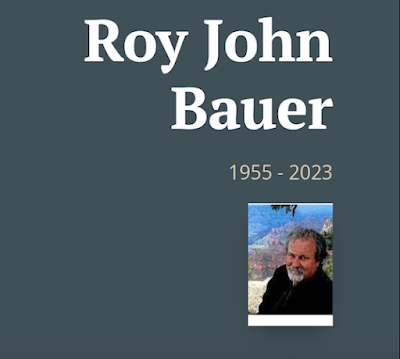
Roy's obituary in LA Times and Register: "we were lucky to have you while we did"
This ran in the Sunday December 24, 2023 edition of the Los Angeles Times and the Orange County Register : July 14, 1955 - November 20, 2...
-
 Professor Olga Perez Stable Cox OCC Trumpsters/GOP A professor called Trump’s election an ‘act of terrorism.’ Then she became the vict...
-
 Recently, I spoke with a veteran who’s been part of the vet community here at IVC for some time. He too has complained about Mr. Ma...
-
 I don’t know how anyone could learn about the way our colleges are funded and how their budget decisions are made without thinking...