Thursday, November 7, 2002

B. von Traven


We know virtually nothing about him (we get his posts via email); and what we think we know is wrong.

Some say he’s a novelist. He’s almost certainly of German descent. Alleged friends (he provided a brief list) say that he is in the habit of shouting, “I think this is a pile of shit!”, which he occasionally screams in German. At other times, he simply mutters “merde,” though friends say that he isn’t French and that he certainly doesn’t “act French.”

He is rumored to be an anarchist, politically—a philosophy he reportedly “saw” one day upon opening his eyes and observing Orange County as he lay inexplicably in the dry, hot bed of Santiago Creek.

Some say that the real B. von Traven died off of the coast of Baja in 1974 when a yacht named “Shooting Star,” carrying several OC residents (including OC Supervisor Ronald Caspers), mysteriously sank without a trace. If so the current “B. von Traven” is an imposter.

On the other hand, if one is to believe one persistent rumor (told to us by a prominent journalist at the OC Register), von Traven survived the sinking, washed up on the coast of Mexico, started a quiet life there (he is known by the natives as "El Gringo"), and has permitted the fiction of his demise for reasons unknown.

It is possible that he lives or lived in Ojinaga. Alternatively, he died there during a clash between Federales and Zapotec Indians in the mid-70s.

Evidently, he helped write the screenplay for the critically savaged film Death Ship. He seems to be close to the Hollywood Huston family (Walter, John, Angelica), and is said to share with the existing Hustons a fascination with “Black Dahlia murder” conspiracy theories.

Some say he was born in Anaheim, in an apartment attached to a motel near Disneyland. (There are dark rumors of illegality involving prostitution. Supposedly, there is a record of this in the OC Register, but nothing has been found.)

At times he has gone by the name “Rhet”—perhaps during a period of obsession with Vivien Leigh and Topol. He appears to have many Hollywood connections. He is said to have owned one of the last “Lassies” and the “great, great, grandson of ‘Rin-Tin-Tin.’”

Despite his ancestry, he is said to resemble a “300-pound Samoan,” or perhaps a Mexican, also 300-pounds.

There’s some evidence that he is related to a German brick-burner and carpenter named Otto Maximilian Bauer, who was born in Böblingen, Germany in 1909, but who moved to Canada after the war and then to Anaheim in 1960, using the curious name “B. Hauptmann.” (Bauer died at least ten years ago.)

Von Traven has sent us photographs of Bauer as a young man in Germany (c. 1929), apparently wearing the uniform of the Communist Party.

Von Traven has agreed to write for Dissent but only on the understanding that he will not report anything concerning the South Orange County Community College District.

Note: some of this information was supplied to us by von Traven’s associate, Hal Croves.

Friday, November 1, 2002

Re Scientific Culture and Educational Research (2002)

Scientific Culture and Educational Research [Click on link for PDF of article]
by Michael J. Feuer, Lisa Towne, and Richard J. Shavelson
EDUCATIONAL RESEARCHER November 2002 vol. 31 no. 8 4-14

Abstract:

     The No Child Left Behind Act of 2001 requires federal grantees to use their funds on evidence-based strategies. The law includes definitions of research quality, which are also featured prominently in the administration’s strategic plan and in draft language for the re-authorization of the U.S. Office of Educational Research and Improvement. These initiatives pose a rare opportunity and formidable challenge to the field: What are the most effective means of stimulating more and better scientific educational research? In this article, which draws on a recently released National Research Council report, the authors argue that the primary emphasis should be on nurturing and reinforcing a scientific culture of educational research. Although the article focuses on scientific research as an important form of educational scholarship, the call for building a stronger sense of research community applies broadly. Specifically, the authors argue that the development of a scientific culture rests with individual researchers, supported by leadership in their professional associations and a federal educational research agency.

Monday, October 7, 2002

An ominous atmosphere (Academic Senate moving toward a lawsuit)

From Dissent 66,

Oct. 7, 2002

[no title]
I counted two and seventy stenches,
All well defined, and several stinks.

—Coleridge
Intervention sought:
     During an August meeting of the IVC Academic Senate, it was suggested that, given the Chancellor & Board’s exclusion of the Academic Senate from governance, there really is no point in continuing. It was suggested, too, that the Senate might better devote its energies to seeking redress in the courts.

* * *

     On September 12, the exec. cabinet of the IVC Academic Senate sent a letter to State Chancellor Nussbaum, seeking his “intervention” “to secure rights granted to local senates under Title 5” of the Ed Code. The letter cited four examples of the Board’s many actions in violation of “law, policy and process.”
     The first concerned the Board’s action (Fall 2000) to revise BP6120 (academic freedom), despite objections from the senates. Example 2 was the Board’s adoption (12/01) of a revision of BP5604 (eligibility for admission) despite “vehement” senate objections. Example 3 was the Board’s decision (2/02) to unilaterally revise BP 2100.1 (delegation of authority to academic senates), despite the policy’s explicitly prohibiting such action.
     The fourth and most recent example concerned “revisions to District hiring policies,” including revisions to the Full-Time Academic Employees Hiring Policy, developed over the summer by Chancellor Mathur. These revisions, said the letter, “are rife with numerous individual violations of law, policy and good practice.” Despite Title 5, “At no time were any of the governance groups on either campus invited to participate, or even alerted to the existence of the committee.” Further, governance groups were given only 8 days to provide “input.”

* * *

     The Senate’s letter yielded a response—a letter discovered belatedly, and already opened, in the senate president’s mail box! Dated Sept. 16, the letter, from Ralph Black, attorney for the State Chancellor’s Office, requested further info to determine whether his involvement “would be warranted.” Black offers a jurisdictional point: “Unless faculty hiring is listed as an ‘academic and professional matter’ under the SOCCCD shared governance policy..., faculty hiring does not fall under the jurisdiction of [the Board of Governors’] regulations.” (More on this later.)
     On Sept. 25th, Mathur emailed the Saddleback ac. Senate, suggesting that he is under no obligation to consult the Academic Senates regarding modifications of the hiring policy. To support this odd view, he cited Black’s letter and its point about jurisdiction, but he ignored Black’s remark, in the same letter, that
     Faculty hiring procedures are covered by [the] Education Code..., which requires that “hiring criteria, policies, and procedures for new faculty members shall be developed and agreed upon jointly by representatives of the governing board, and the academic senate….” (Ralph Black)
     Late in 1993, the Board approved a “Full Time Academic Employees Hiring Policy” that makes clear that the hiring policy can be changed only upon mutual agreement between the district and the faculty senates. This, of course, is the crucial “further information” that Ralph Black needs and will soon receive.

* * *

     Budget development, of course, is plainly listed among the academic and professional matters of the district’s “shared governance” policy (2100.1). Hence, a failure to consult with the academic senate regarding budget development would be a violation of “shared governance”—one that clearly does fall under Black’s jurisdiction. Mr. Black will be interested to learn that, at IVC, the senate has been excluded from the budget development process for years.

Mmmmm, it’s time for pie:
     Call me a cock-eyed optimist. To me, government officials ought never to sell their decisions for money or support or favors. The head of the CTA, Wayne Johnson, evidently disagrees. Not long ago, he complained that teachers did not get “more” from Governor Davis, in view of CTA’s massive contributions to Davis’ campaign. Said Johnson, “People who gave him less money than we did have gotten more…You expect favorable treatment. That’s why you do it. That’s as American as apple pie.”
Just ask John “Let’s make a deal!” Williams.
     Back in 1997, during the IVC presidential search, Williams, evidently acting on behalf of the Board Majority, approached Trustee Lang with what he later described as a “compromise.” Williams knew that the Majority had the votes to appoint Raghu Mathur, but he wanted a unanimous, or at least an unopposed, appointment.
     According to sworn legal declarations, the proposed deal went like this: (1) the Majority would spare two IVC administrators from dismissal and (2) Williams would support any future bid on Lang’s part for Board office. In exchange, the Minority would support (or would refrain from opposing) Mathur’s appointment. The latter action, of course, was something the Minority was loath to do, for it understood Mathur’s history of unprofessional and even illegal conduct.
     Because the two administrators wanted no part of this deal, Lang rejected the “compromise.” Subsequently, he has never been elected to Board office, despite numerous nominations. Meanwhile, two more junior trustees have already served as board president.

* * *

     Well, once again, the pie-man cometh. Williams has approached the faculty union to secure its endorsement of his bid for a position at the OC Community Affairs Office. (See OC Weekly, 3/1/02) Williams, of course, is the Board’s most egregious Brown Act violator; he’s its staunchest defender of process violations (remember Mathur’s questionable appointment in ‘97 and the Accrediting Commission’s subsequent censure of the board?); he’s embraced every effort in recent years to thwart “shared governance”; plus he’s the sort of politician who will say and do anything—including use homophobic scare tactics—to advance his career. No decent organization would endorse such a man for office.
     Further, Williams, more than anyone, is responsible for the union’s current position behind the eight ball re contract negotiations, a situation he is in no position to now undo. (See Dissent 64.)
Nevertheless, some union members advocate the endorsement. One expects this from the astonishingly unprincipled Old Guard—the people whose “quid pro quo”s thrust us into the “Board Majority” era—and, as always, they do not disappoint. But some of the New Guard seem to agree!
     The New Guard has generally stayed off of the low road; as a consequence, the Times and Register have been friendly. If Williams gets his endorsement, expect that to change.

[Note: for what it's worth, as a member of the senate (and sometimes senate leadership), I was always the strongest advocate for pursuit of a legal remedy. It took a long time to get everyone on board. --RB]

SEE ALSO: "HOW RUDE ARE YOU!": THE SENATES SUE THE DISTRICT, April 14, 2003

The Rodney Poindexter affair

See links (at end of this post) to Mora/Mathur discrimination trial, which concerned the Poindexter hire (Why wasn't the manifestly more qualified Cely Mora hired?)

From Dissent 66
October 7, 2002

By Chunk Wheeler (Roy Bauer)

White male from Virginia

     Among Raghu Mathur’s achievements while IVC President was a series of administrative hires that, despite protests from search committees, boldly ridded the college of administrative competence. One such hire was “Rod” Poindexter, ASIVC’s recent Administrator of the Year. (The ASIVC prez was one Anthony Kuo, a Mathurian.)
     Mathur & Co.’s appointment of Dean Poindexter in June of 2001 was controversial. According to the Irvine World News,
     More than 40 teachers, students and community college leaders came to [the] meeting of the SOCCCD board of trustees to air their displeasure that long-time athletic director Aracely Mora was passed over for the job as dean of health sciences, physical education and athletics at IVC…The board voted 5-2 to appoint John Rodney Poindexter…Board members Marcia Milchiker and David Lang dissented… According to Irvine Valley College president Raghu Mathur, Poindexter is a well-qualified candidate and “brings a wealth of knowledge and background to this assignment.”...Psychology professor John Lowe, a member of the hiring committee, said that Mora was the best candidate for the dean’s position… (6/28/01)
     When he arrived, Poindexter proved to be a devotee of Mathurianism, i.e., the fastidious disregard of faculty opinion. Worse, judging by rumors, it seemed that Poindexter somehow posed a threat to safety, a situation that Mathur, and then Glenn Roquemore, steadfastly refused to recognize.
     In the spring of ‘02, the problems at PE suddenly became public. The Times (6/29/02) reported that
     All five tenured members of an OC community college physical education department have filed a harassment complaint against their dean, and his secretary has told campus police she fears for her safety after he allegedly chased her down a corridor and cornered her…Rod Poindexter, dean of health sciences, physical education and athletics at IVC, has been the subject of faculty complaints since shortly after he started his job a year ago…“Dr. Poindexter is becoming more and more isolated,” said the 11- page complaint filed with the college…“His behavior has created an environment where there is fear that he can ‘snap’ and physically hurt others and himself. We need help. The abuse, retaliation and discrimination need to stop.”…The complaint…asks that the dean “be removed from the campus during the investigation…in order to protect the safety of the department members and the liability of the school district.”
     …The alleged confrontation between [secretary] Franzoni and Poindexter occurred Jan. 4. Poindexter said the relationship between them had been getting worse. “She went to the other side and started working against me.”…According to the campus police report, Franzoni had just come from a meeting with Poindexter in which he had told her she was not doing her work. She walked to the office of Weatherford…According to her statement to campus police, “In the next moment, Rod [Poindexter] came charging down the hallway directly at me. Rod pinned me in the corner against the wall” and began screaming at her…Franzoni also filed a report with the Irvine police department the same day. The officer wrote that Franzoni “repeatedly broke out into tears…I could sense [she] was very scared of Poindexter and very frustrated because the school officials don’t seem to be taking the situation seriously.”…Brent Shaver, Irvine Valley’s sports information officer, told campus police “what I did witness was Dr. Poindexter putting Suzie in a scary and threatening position.”….
     About a week later, the IWN reported that Franzoni was filing a “$1 million lawsuit” against the district. Some expected Poindexter’s immediate dismissal. That didn’t happen.
     After the Franzoni incident and the faculty complaint, cops regularly came by the PE building in an effort at pacification. Meanwhile, Poindexter had other problems: e.g., by late spring, word spread that two administrators, including Poindexter, had grossly overscheduled for the Fall. When this was detected—by the ever-clueless Glenn Roquemore, who had failed to heed faculty’s warnings about Poindexter’s scheduling innovations—everybody’s scheduling was hurt.
     As had been predicted, Cely Mora soon found a job at another district. On August 1, 2002, the IWN reported that she had been “named dean of exercise science, health and athletics at Santa Ana College” for a salary of “$106,812.” (The IVC deanship paid $97K.) Off she went. (On the agenda of the last board meeting was “Mora v. Mathur.” Evidently, it is a discrimination lawsuit.)

Wall bounceage:
     One quiet morning in mid-August, the PE area again exploded with excitement. Paramedics rolled up and then carted someone away, and a rumor quickly spread that there had been a “fight” between Poindexter and an instructor. According to the rumor, Poindexter had ended up on the floor and had dialed 911!
     About three weeks later, the IWN reported that Poindexter “has been put on paid administrative leave by the SOCCCD board of trustees” (Sept. 5, 2002). The IWN hinted that the board’s action was prompted by the latest Poindexterous fracas:
     The decision came about two weeks after a confrontation between Poindexter…and…teacher Ted Weatherford…Campus police were called after an argument between Poindexter and Weatherford in the athletic offices on Aug. 14…Poindexter said he suffered back and neck injuries when Weatherford, the former chairman of the Physical Education Department, hit him with the door to Weatherford’s office…Weatherford…said he shut the door to his office after asking Poindexter to leave…Poindexter was informed on Aug. 27 of the board’s decision to place him on administrative leave…“I don’t know why (the decision was made) and they’ve (board members) told me nothing,” Poindexter said Tuesday. “I haven’t heard anything, they won’t return my phone calls.”…Poindexter…said he was not given a reason for being put on leave…[IVC President] Roquemore did not indicate when a decision would be made regarding Poindexter’s fate and did not know whether Poindexter would return to IVC…Poindexter suggested that the confrontation with Weatherford may have had a bearing [on the board’s decision]…
     Poindexter said he and Weatherford had a meeting regarding Weatherford’s teaching schedule…Weatherford was upset, according to Poindexter, that he wasn’t assigned to teach some of the classes he had requested…The meeting began in Poindexter’s office, according to Poindexter…“He yelled about a tennis class and why it was being assigned to Jerry Hernandez,” Poindexter said. “He went storming down the hall and I went to calm him down.”…Poindexter said he followed Weatherford to his office to continue the discussion and Weatherford “slammed the door as hard as he could on me.”…Poindexter said he then “bounced off the wall” outside Weatherford’s office and suffered neck and back injuries that caused him to be hospitalized for six days. Poindexter said he strained his lower back and neck and doctors told him it will take approximately six weeks to fully recover…After the incident, Poindexter said he returned to his office to call the campus police. The college nurse and paramedics then arrived and Poindexter was taken to Irvine Medical Center…Poindexter missed six days of work, but said doctors told him he was well enough to return to work on Aug. 26. The next day, Poindexter was informed he had been put on administrative leave…Poindexter was not sure whether charges would be filed against Weatherford…“I thought he (Weatherford) would be suspended,” Poindexter said. “People tried to make it sound like it was my fault.”…Meanwhile, Poindexter will wait for a decision on his future…“I’ve been going to the doctor and meeting with my attorneys,” he said…
     Weatherford…said an argument began after Poindexter suggested some physical education classes would be dropped…“I was concerned about classes being cut and he became argumentative,” Weatherford said. “I was calm and I said I didn’t want to argue.”…Weatherford said he then went to his office and Poindexter followed him…Weatherford said he then asked Poindexter to leave numerous times but he didn’t. He also denied that he slammed the door on Poindexter…“That’s absolutely not true,” Weatherford said. “I don’t know what he did, but I tried to close the door and he put his shoulder against the door.”…
* * * * * * * * * * * * * * * * * * * * * * * * *

     The latest issue of IVC’s Laser Beam notes Larry Oldewurtel’s selection as ASIVC’s “Teacher of the Year,” but it fails to mention Poindexter’s selection as ASIVC’s “Administrator of the Year.” So I wrote the PIO: “Why the omission?”, I asked.
     He wrote back: “It was an oversight on my part. I’ll do a follow-up in the next Laser to acknowledge him, albeit belatedly. Thanks for catching it.”
     You’re welcome!
     Meanwhile, the latest issue of Saddleback’s Online Newsletter (4/23/02) offers some sage remarks by Chancellor Mathur, including this one:
“I am reminded every time I point a finger there are 3 fingers pointing back at me. It all begins with ME.” [Emphasis in original.]
How true.

            —Chunk Wheeler

TIMES 6-29-02

Re the Mora/Mathur trial (Mora accuses Mathur of discrimination in hiring incompetent, white male Rodney Poindexter) 

(Mora was a highly-respected administrator who applied for the Dean of PE position; but it was given to the manifestly incompetent and underqualified Rodney Poindexter (by Raghu Mathur). Four years later, Mora formally accused Mathur of discrimination. The trial was interesting; oddly, Mora lost her case.

  1.  Monday, August 28, 2006 - Anti-discrimination suit against CEO Mathur finally goes to trial next week  
  2. Wednesday, September 28, 2005 - MATHUR VS. WOMEN
  3.  Tuesday, April 24, 2007 - The discrimination lawsuit: Mathur's "unauthorized baseball diamond" yarn 
  4.  Wednesday, April 25, 2007 - The Mathur discrimination trial: according to witnesses, in 1997, Mathur rejected a candidate because of her ethnicity  
  5.  Friday, April 27, 2007  - MATHUR discrimination trial, day 3: courtroom titters  
  6.  Wednesday, May 2, 2007 - Cely Mora's stunning testimony  
  7.  Thursday, May 3, 2007 - The lost reference: it was "very positive"  
  8.  Thursday, May 3, 2007 - Mathur: reference checks for Poindexter  
  9.  Friday, May 4, 2007 - Get a baseball bat  
  10.  Friday, May 11, 2007 -  Subdued 

Thursday, October 3, 2002

"White paper" concerning the Early College program (at IVC)

[Sorry about the highlighting, which was not included in the original. -R]
To IVC Faculty,
Requested Action:
I ask that the Early College Program be placed on the Academic Senate agenda as an action item.  I would like the Senate to consider the following actions:
1. Creation of an Academic Senate committee to do the following:
a. identify, discuss, and clarify faculty concerns about the EC program. 
b. identify components of the EC program for which decisions should rely primarily on faculty expertise, and components that require both faculty and administrative agreement.
c. interface with the administrative to insure proper design, planning and implementation of the EC program.
2. Authorize the design and completion of an anonymous survey of all faculty who have taught in the Early College program. 
Analysis:
Lest you get the wrong idea from the following discussion, I think the idea of an ‘Early College’ program has some educational merit.  However, I have serious reservations concerning its initiation and implementation.  My concerns group into four general areas. 


Concern #1:  Implementation of the EC curriculum.
I have serious concerns about potential violations of the contract and the academic rights and responsibility of the faculty.  
1. Who makes decisions regarding inclusion of freshman and sophomores?   Faculty used to be able to say yes or no, but this choice seems to have been eliminated somewhere along the way. Our on-campus students can enroll in our classes if they are over eighteen or possess a high school diploma or GED.  So we must admit them and assume they have the skills and maturity to succeed. Not all high school students are guaranteed admission.  So why are the high school administrators, rather than our faculty, choosing who gets into our classes?
2. The decision to include young students seems to be made without proper evaluation of their reading, writing, math and critical thinking skills and with apparent disregard for their emotional maturity.  What evaluations are being made before enrolling students?  And why are appropriate evaluations made by high schools and not IVC? 
3. The scheduling patterns created by administrators without agreement with faculty often forces alteration of course curriculum.  For example, our lab exercises are designed to teach data collection, analysis, and evaluation.  To accomplish these goals, which are part of the course outlines of record, labs are schedules for three hours.  Scheduling labs that are 1.5 or 2 hours, often forces alteration or elimination of critical components of an exercises, disrupts continuity of lab exercises, and defeats the purpose of the lab within the course.  This seems to be a serious academic issue that projects further than a simple scheduling issue.
4. In many instances, discussion/tutor periods have been added to an EC course to compensate for the enrollment of students who cannot do college work.  This represents a change to the curriculum when this additional obligation is dumped on the teaching faculty. 
5. In some instances, alb what is alb? enrollments have been as high as 36 students, a lab size that no sane college would attempt on the college campus.  Who decides the max enrollment and how is it decided?  Isn’t this a curriculum issue and isn’t max course size set by the curriculum?
6. Courses have apparently been offered to area high schools before discussion with faculty.  Who decides which courses are appropriate for younger students who may not have the academic training to succeed? 
7. The college has decided in some instances to hold spaces in our on-campus summer classes for students who do not pass the EC version of the course.  What makes an administrator think that a student who could not pass a semester-length course is capable of passing the same course when offered in a 6-week format?  This issue alone tells me the administrators who are involved in this know next to nothing about how to teach or how student learn. 
8. In many instances, underage children are enrolled in night sections where the instructor has no access to emergency or administrative personnel.   
9. Although administration touts the success of students in this program, it has done nothing to validate the equivalency of the EC versions of courses with the on-campus versions.  In fact, all the anecdotal evidence I have received implies that instructors are badgered into lower standards so these students can succeed. If that is indeed the case, we are teaching high school classes that are not worthy of college credit. 


Concern #2:  What are the steps being taken to evaluate the program? 
What are the short and long term goals of the program?  How are these being evaluated and who does the evaluation?  If we MUST continue with this program then a much better organization of the program needs to occur along with well thought out program SLO’s and rubrics.

Concern #3:  There is an apparent mismatch between academic expectations and academic preparation of the proposed high school student.


This became apparent when our department was asked to teach Bio 1 to the students at Beckman High School.  Approximately 33% of the class was not prepared for the course and needed to drop.  There was considerable pressure given to the IVC instructor by the high school administration to ‘do something’ to prevent these students from dropping the course. (i.e. hand out extra credit).  In spite of this concern, we were directed to offer Biology 1/1L at El Toro High School (and apparently other local high schools) for a student population consisting primarily, if not exclusively, of high school freshman and sophomores.  I enumerate the expectation-preparation mismatches below.


1. Reading skills of the proposed student population do not match the reading level of course materials.  
The most glaring mismatch is between the language skills required by the course and those possessed by the proposed student population.  The Bio 1 course text and exams require a reading level appropriate to college freshman (grade 12-14); and lectures are presented with language appropriate to the same student group.  (I had the reading level of the Biology 1 text and lab manual evaluated several years ago by Jan Horn.)  However, the proposed student population of high school freshman and sophomores in all likelihood does not read at or close to a college level.    Thus, the ‘Early College’ group will have more difficulty reading the text and following lab instructions than our present adult student population.


2.  Critical thinking skills of the proposed student population are not commensurate with course expectations.  
As written and taught, our biology courses require critical thinking skills commensurate with the cognitive abilities of adults.  Success in the lecture component of the course requires the ability to synthesize, analyze and evaluate a large body of evidence to support modern biological theories.  In addition, lab exercises are experimental in nature.  They require collection and analysis of data plus subsequent evaluation of data relative to accepted theory.  Yet there is considerable literature supporting the argument that adolescents do not achieve an adult cognitive skill level until 17-18 years of age.  Thus, our biology courses, if truly college-level, are outside the cognitive abilities of most high school freshman and sophomores, and are border-line accessible for high school juniors. 


3.  The general science background of the proposed student population does not match the course expectations.
Biology is a metascience.  It invokes principles of other sciences, e.g. mathematics, chemistry and physics, to synthesize, analyze, and evaluate biological concepts and theories.  As such, our college-level biology classes assume an appropriate level of high school training in general science.  Even though most of our present adult student population (>18 years of age) has had high school science, they struggle in our Bio1/1L course.   However, the proposed freshman-sophomore student population will attempt this college-level course as a first science course, with essentially no prior training in science.
 
4. Writing skills of the proposed student population are insufficient to meet course expectations. 


The curriculum for Biology 1/1L not only requires college-level writing assignments but the exams must be 25% essay format.  To achieve optimal success, a student taking this course should possess writing skills similar to those of entering college freshman.  About 2/3 of high school students tested at IVC must enroll in WR201.  These data strongly suggest that high school freshman and sophomores are somewhat less skilled at writing than our on-campus student population and therefore at an extreme disadvantage with regard to written assignments and essay portions of exams.

Concern #4:  There seems to be an apparent mismatch between the role of community college courses in higher education and their present use in the ‘Early College’ program. 


Biology courses at IVC are written to satisfy general education requirements at CSU and UC.  As such, they are written to parallel CSU and UC courses with similar content, level of detail, and expectations of student academic performance.  While some faculty view this approach as erudite and pompous, it is in fact an attempt to provide our students with the same education they would receive at any California institute of higher education.  And, it is an honest effort to do what we claim to do - teach college-level transfer courses that equate to those taught at any UC or CSU.
 
We offer many advantages to students who opt to complete lower-division coursework at IVC rather than at UC or CSU.  The most obvious advantage is cost.  But there are significant educational advantages as well.  Our class sizes are 10-20% of typical UC and CSU GE courses; and faculty contact and availability are much higher at IVC.  For students who did not enter CSU or UC because they lacked the necessary academic credentials, we offer an opportunity to build skills and raise grades.  If our curriculum and faculty prepare our students properly and require the same level of academic performance as any UC or CSU, the students should be academically on par with college juniors upon transfer. We accomplish the task because we raise student expectations and focus on improving their ability to synthesize, analyze and evaluate information; we don’t get students through lower-division coursework by ‘dumbing down’ our courses to match student ability. 


Our biology courses also play an important role within the IVC curriculum.  They of course provide for both GE and major preparation for transfer.  But equally as important, each course reiterates concepts taught in other courses. Students must read and interpret a college-level text; read, interpret and complete lab instructions; and read the discipline literature to some extent.  Students must provide written answers on quizzes and exams; and they do considerable writing in the form of lab reports or lab notebooks.  Students must use their math skills for collection and analysis of data, presentation of data in graphic and tabular form, and interpretation of data.  And every course is designed to enhance student critical thinking skills in line with both state criteria and general academic expectations.
 
What role does our curriculum play in the ‘Early College’ program? During the last 30 years, I have interacted with many a parent who demanded admission to our Biology 1/1L course for their 8th, 9th or 10th grade child.  Some of these were parents who wished their child to take my class; many others were seeking admittance to courses taught by other instructors (back when Chairs fulfilled the role of academic Deans).  After letting each parent explain to me why their child was intellectually up to the challenge, I asked a simple question: “Would you enroll your child in this class at UCI or at CSUF?”  Unequivocally and without hesitation or exception the answer was no.  When asked why, the universal answer was that their child would probably not succeed at UCI.


The apparent contradiction raises an interesting question that has bothered me for years.  Why would a parent, who does not think their child can succeed at either CSUF or UCI, think they could succeed if enrolled in a transfer-level course at IVC – a course that is supposed to be equivalent in every way to the same course at UCI or CSUF.  Although the EC program could be successful for a limited number of high school students, at present it seems to be configured and implemented to assuage the egos of over-zealous parents, and do who knows what for high school and IVC administrators, many of whom seem to have little comprehension of either teaching or learning.  This group of administrators expects professors of these courses to start with students who are just out of junior high school - with commensurate academic skills in reading, writing, math and critical thinking - and elevate them to college-level students by course’s end.  This of course is an impossible task. 


Monday, September 23, 2002

TRUSTEE FUENTES: SOME BACKGROUND

Don Wagner and Tom Fuentes, pledging allegiance to the flag

From Dissent 64, 9/23/02

WHENCE CRAPULENCE?

It’s no secret that, contract-wise, the SOCCCD BOARD MAJORITY has adopted a tough and unsympathetic stance toward employees. Thus, negotiations between the district and the classified union reached an “impasse.” No one doubts that the district/faculty negotiations will be equally unpleasant.

How did this happen? Why the sea change? Whence crapulence?

The answer is simple: the Board is now dominated by three dyed in the wool anti-unionists, namely, Fuentes, Wagner, and Padberg.

And how did that come about?

Again, the answer is simple: the Faculty Association’s Old Guard—with the help of their ally John Williams—put these three on the board.

FUENTES’ “SUSPICIOUS” APPOINTMENT:

Fuentes’ appointment to the board in July of 2000 was fishy, boy. It all started with Steve Frogue’s abrupt resignation only 5 months before the election, which inspired the Irvine World News to opine: “Frogue’s actions…smack of back-room politics. Resigning from an elected board post just before a term expires is an old trick used to give a board majority the opportunity to hand-pick an ally for the seat. The handpicked successor then has the distinct advantage of running as the incumbent when the seat comes up for election” (6/29/00). Despite its suspicions, the IWN hoped that the Majority—by then, Williams, Frogue, Fortune, Wagner, and Padberg—would, for once, eschew “politics.”

No such luck. Within days, the ultra-conservative chairman of the OC GOP—a man who could advance the careers of the Majority’s political wannabes—announced his candidacy. Though there were other candidates, trustees opined that Fuentes was “the guy to beat.”

Now, obviously, Fuentes is about as unsympathetic to Labor as can be imagined. But on the night of the board’s Frogue-replacement decision, three members of the faculty union’s Old Guard, including SHARON MACMILLAN, showed up to urge Fuentes’ appointment!

Well, Fuentes was appointed. John Williams seemed especially pleased. He proudly told the Irvine World News that, back in June, he “called a circle of his friends in town to tell them of the vacancy, including Fuentes, looking for qualified referrals. He ‘jokingly’ asked Fuentes if he was interested in the job and Fuentes said he would consider it.” (7/20/00) Sure.

Conspiracy fans, I’ve got two facts for you.

(1) Six days before Fuentes’ appointment, there was a party at the Corona Del Mar home of Tom Phillips, a filthy-rich East Coast publisher who hoped to enter politics here in OC. The shindig was a gathering of the “Silver Circle,” an elite support group for the OC GOP. Guess who attended this soiree? Tom Fuentes, of course. But also Williams, Wagner, and Board President Padberg. (How unseemly!)

(2) Intriguing fact #2: Board Majority toady RAGHU MATHUR met with Fuentes about a month before Frogue’s resignation. Hmmm.

FUENTES & THAT OTHER “BOARD MAJORITY”:

Ours is not the only anti-faculty “Board Majority” in OC. Until its members were recalled last year, the Orange Unified School District’s board majority wreaked havoc on its teachers, and how. According to the OC Weekly,

The Orange Unified Board of Trustees, whose 6-1 conservative majority made it the darling of OC Republican and Christian education reform groups such as Tustin’s Education Alliance…gained nationwide prominence by winning the court battle to rid the OUSD’s…schools of bilingual education programs…[T]he board provoked the passions of…a bitterly resentful teachers’ union by slashing teachers’ benefits…and attempting to…dismantle the teachers’ retirement fund…OUSD teacher salaries are among the lowest in the county, and the district boasts a staggering turnover rate of 80 percent among teachers employed fewer than four years, according to district employment records… (3/26/99)

Now consider these facts:

(1) Tustin’ Education Alliance (EA)—a pro-voucher organization that authored and then promoted a measure (Prop 226) that was designed to destroy the political muscle of teachers unions--also supported Wagner and Padberg.

(2) During its reign of terror against faculty, the OUSD Board Majority’s key support came from HOWARD AHMANSON, Jr., a Creationist who provided Education Alliance’s seed money, and county GOP chairman Tom Fuentes.

Fuentes’ support of OUSD’s Board Majority continued even after the Recall, when he assisted Majoritarians in their failed bid to win back their seats. (See OC Weekly, 12/28/01)

FUENTES AND THE CLAREMONT INSTITUTE:

During a board meeting in ‘99, John Williams proudly reported visiting a place called the “Claremont Institute” (CI). After Fuentes’ board appointment, Williams mentioned CI again. According to the IWN, “Williams said [that, among candidates,] Fuentes rose to the top due to his broad range of experience and his roots in the community college system…‘He knows about policy making. He’s a member of the Claremont Institute’ …” (7/20/00).

Actually, Tom Fuentes is more than a member of CI: he’s on its board of directors.

I found a description of the Institute’s “policy making” on the “Americans United for Separation of Church and State” website:

The CI [is]…an ultra-conservative advocacy group with ties to the Republican Party and some of the most extreme elements of the Religious Right… Claremont’s board of directors includes Howard F. Ahmanson Jr., a California-based Religious Right activist…[He] personifies the Institute’s ties to the farthest fringes of the right. He has contributed significant sums of money to spread a radical philosophy known as “Christian Reconstructionism.” Reconstructionists believe the Old Testament’s harsh legal code should be binding on modern society. They advocate the death penalty…for a number of religious “offenses,” including apostasy [i.e., abandonment of one’s faith], blasphemy and “unchastity.” The Reconstructionist view is perhaps best summed up in a 1992 quote by Ahmanson: “My purpose is total integration of biblical law into our lives.” Ahmanson gave the Institute $185,000 in 1995…Claremont attacks the concept of a wall of separation between church and state. One Institute article labeled Thomas Jefferson’s metaphorical wall “imaginary.”…The CI believes homosexuality is an affliction that can be cured by therapy…Another Institute project is Doctors for Responsible Gun Ownership….

As near as I can tell, this accurately describes CI’s “policy making.” Good grief!

I invite you to explore CI’s own website; unquestionably, CI—and its man Fuentes—mean to promote the interests, not of Labor, but of Big Business and Big Authority. Their vocal support of Prop 226 is part of a pattern. The pattern’s pretty plain, dude.

It’s obvious what Williams is about. But why did the Old Guard help put the anti-union Fuentes (and Wagner & Padberg) on our board?

I dunno. Why don’t you ask ‘em?

And give ‘em my love! --CW

Consultin’ Collegially, Raghu Style

(with apologies to Calvin Trillin)
I’ll brief the Senates and the unions
and notify all classified employees
I’ll send out a lot of memos
Then do just as I please.
(Rebel Girl)

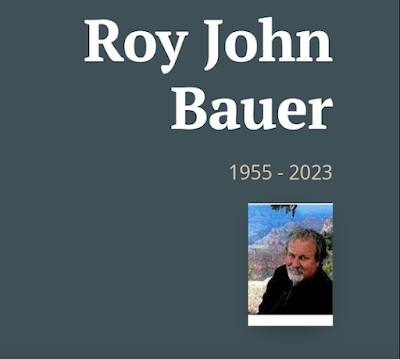
Roy's obituary in LA Times and Register: "we were lucky to have you while we did"

  This ran in the Sunday December 24, 2023 edition of the Los Angeles Times and the Orange County Register : July 14, 1955 - November 20, 2...