Monday, June 18, 2018

Of brothels, and cheerleaders and our country as a casino

Dennis Hof, center, and Heidi Fleiss, right, react after receiving election results June 12 in Pahrump, Nev.
David Montero / Los Angeles Times
If it’s not all juxtaposition, she asked, what is the binding agent? - Forrest Gander

It's beginning to feel like summer.  Rebel Girl has begun to read the morning newspapers (two!) and linger over them. She has even begun to write. The time and the newspapers have given her lots to think about. Her goals? A draft of a story or essay or poem - one per week.  We'll see if she can keep up the pace and her promise to herself. Still, she already feels mildly successful.

This week she was inspired by election results last week which included the the victory of Dennis Hof, the self-proclaimed "Trump from Pahrump," who may very well be headed to the Nevada statehouse.  David Montero's article "Dennis Hof: A pimp, a brothel owner, a businessman and now GOP nominee in Nevada" in the Los Angeles Times tells the story which evoked a great deal in Rebel Girl.  She could have gone in the direction of her own time in Pahrump in the 80s and 90s, but instead she went to her childhood and her fascination with the word "brothel."  

The moody result was picked by by the Los Angeles Review of Books and published online today. (That's pretty big," remarked her son who is not easily impressed. Most sixteen-year-old are not impressed by their parents.) Check it out below and click to read it in its entirety. It's all of two tight paragraphs. A meditation, an excavation. She hopes LARB might be interested in some of her other work.  She's got a few things started: one about the death of Ronald Reagan, the other about an educator who, all in good fun (ha ha ha) disseminates links to photos of a rival college's misbehaving cheerleader squad. We'll see. 

Jean Honore Fragonard, The Stolen Kiss
"Brothel"

Brothel owner and reality TV star Dennis Hof advances in Nevada election. “Call him a pimp. A brothel owner. A businessman. Now call him the Republican nominee for a Nevada State Assembly seat…Hof, who has billed himself as the “Trump from Pahrump,” nabbed the endorsement of Nye County’s Republicans.” –David Montero, Los Angeles Times, June 13, 2018

The “Trump from Pahrump.” A brothel owner.
As a child, “brothel” was one of the words that fascinated me. I found it in the books my mother stuffed under her bed, the ones I was not supposed to read but did anyway when she was at work. She was at work a lot. I found it in the paperback books I bought at the corner liquor stores, the ones I found on the spinning racks by the magazines. (Remember when liquor stores sold books? The corner liquor store was my first bookstore. This was in the early 1970s.) I favored Tudor romances, Henry the VIII and his doomed wives. I especially liked the court intrigue, the young women on the margins, the virtuous servant girls and meek attendants who caught the eyes of courtiers (another romantic word!), the ones who had fine ankles and slim necks and who could, despite their humble origins, sing a light air, play a lute, or embroider a fine stitch.
To read the rest, click here.

We at Dissent hope your summer is going well, where ever you are.

Do let us know if there is something we should know.

*

Friday, June 15, 2018

Pioneer Emma Flueckiger—and, in general, women having many children

     I’ve been doing lots of research concerning the saga of the Jenni family of Central Montana. Here's a little bit of it. It’s pretty eye-opening.
     Feminists will be interested, I think.
     From
Emma Flueckiger—and, in general, women having many children 
     on the Jenni Family Blog:

Fred Jenni (1856-1944)
     FIRST, some (brief) background: Fred Jenni (aka Friedrich) immigrated with his family to the US from Switzerland in 1869, when he was 13 years old. The family settled in Amazonia, Missouri, where they farmed.
     By 1881, Fred—aged 25—struck out on his own, soon settling in central Montana, where he established his Beaver Creek homestead. His younger brother John (b. 1863) soon joined him. The two “Jenni boys” worked hard and gradually became highly regarded ranchers/farmers in central Montana.
     When their father, Samuel Jenni, died of yellow fever in 1884, their mother, Anna Segesseman (b. 1820) came out; they built her a big house (shared with Fred), but she soon died of pneumonia (in 1885 or 1886). Still, the Jenni Bros persevered and prospered, their brother Gottlieb (b. 1859) joining them.
     In 1890, John married Swiss immigrant Albertena Dieziger; the two eventually had five children. In 1891, Fred met another Swiss immigrant—Emma, also from a family in Amazonia. They married—Charlie Russell was among their wedding guests—and commenced building a large family.

* * *

Frieda Flueckiger
     OK, here’s the thing. Emma’s folks were Fredrich “Fritz” Flueckiger (1845-1924) and Anna Maria Scheidegger (1856–1886). They lived in a small town outside of Bern, Switzerland (about 20 miles from the Jennis' hometown).
     They had lots of kids. Friedrich (“Fritz”) came in 1870; Emma: 1873; Bertha: 1875 (she died in ’83); Alfred: 1876; Frieda: 1879; Johannes: 1881 (he died in 1897).
     In 1883, the family emigrated. They ended up in Amazonia, Missouri.
     In 1885, Carl (aka “Charlie”), child No. 7, arrived. Anna died soon thereafter, in 1886.
     She died in Missouri, though she seemed to be buried in Ohio (Navarre, Stark County). There’s a family portrait, c. 1893, evidently taken in Cleveland, Ohio, so maybe their base was Ohio. Not sure.
     Near as I can tell, after Anna’s death, the Flueckigers continued to live in Missouri (or Ohio?), but, in 1891, Emma, then 18, traveled to the wilds of central Montana, and soon married 35-year-old Fred(erick) Jenni—most of whose family were also living in Amazonia. I suspect the two families knew each other.
John Jenni (1863-1939)
      Meanwhile, in 1890, procreation-wise, Herr Flueckiger wasn’t done yet; he now married Rosina Heck (1846-1940), a German woman who already had at least one child, Louis (b. 1884), from her marriage with Christopher Grossman, who died in 1884. So Fritz Flueckiger added two more to his herd of seven: Rosa (1891) and Walter (1893). That's a total of nine, not even including the step-son, Louis.
     Not to be outdone, Emma—and Fred, of course—took up where Anna had left off. They produced Anna Friedalena (’93), Louise Margaret (’94), Maria Emma (’95), Frederick John (’97), Hulda C (’98), Clara Elizabeth (’00), Lena Lillian (’03), and finally Samuel Gottlieb in ’06. That’s eight.
Charlie Russell
     Emma died two months after Samuel’s birth—during minor surgery, which was somehow accompanied by an epileptic fit. She was thirty-three years old. Naturally, Fred was overwhelmed. He gave the infant, Samuel, to a local couple (who eventually adopted him). Emma’s younger sister, Frieda (b. 1879; by then married to a Mr. Charles White, b. 1855!), came to help out. All the kids took up the slack created by mom’s death....

See also


     Here’s a picture of Fred and Emma's family. Assuming that the young boy is Samuel, and given that he's about ten years old here, I figure the picture was taken in about 1916—ten years after Emma's death.

The Fred Jenni family - 1916?
     Here's a contemporary photo of John and Albertena's family:


     Here are some other photos, mostly of the Flueckingers.

Friedrich J. Flueckinger (b. 1845), wife Rosina (b. 1846), daughter,
Rosa (b. 1891) on his lap; step-son Louis Grossman standing;
daughter Frieda (b. 1879) standing with arm on Rosina; baby
Walter Eugene Flueckinger (b. 1893) on Rosina's lap. I'm guessing
this photo was taken in 1893 or 1894.
C. 1898: Herr Flueckiger and sons.
Left to right: Fred Jr. (b. 1870), Frederick (b. 1845),
Alfred (b. 1876)—and Charlie (b. 1885) in front.
1918?
Carl (Charlie) Flueckinger, b. 1885 (d. 1956)
I believe Charlie married and became a minister.
Walter Eugene Flueckinger (b. 1893), 10 Sept 1919, Rushville, Nebraska.
Wedding photo of Walter and Esther Marie Jungck (b. 1899)
1929: Alfred Flueckinger (1876-1942), wife Helen Tonn (1880-1966), and Louis Grossman (b. 1884).
Grossman was Frederick Flueckinger's stepson.
Elsie Marie Flueckinger (1916–2011), daughter of Alfred and Helen
1902: Alfred Flueckinger & Helen Tonn, Rushville, Nebraska
I think that's Frederick Flueckinger at right.
Not sure about the cat.
From Ancestry.com

Thursday, June 14, 2018

Good grief. Again.

OC Supervisors Move to Take Away Independent Oversight
(Voice of OC)
     Orange County supervisors moved Tuesday to remove independent oversight of their actions, county finances, and the practices of the Sheriff’s Department and District Attorney’s Office.
     The most significant of the supervisors’ actions came at the suggestion of Supervisor Shawn Nelson. He and three other supervisors voted to prepare actions taking away the auditing and financial control functions of the office of elected county Auditor-Controller Eric Woolery, and to instead have those staff report to the supervisors and county CEO Frank Kim, who also reports to the supervisors.
     The move is scheduled for another vote by supervisors June 26 to implement it. Supervisor Todd Spitzer abstained.
     Woolery’s office is in charge of auditing county departments and controlling when payments of county funds are made or not made.
     The auditor-controller is independently elected by county voters, and Woolery won re-election last week with about 75 percent of the vote. But he has repeatedly drawn the ire of Nelson and other county supervisors since he took office in early 2015, including his questioning of the legality of supervisors’ taxpayer funded mailers to voters that prominently feature the supervisors.
     A second action by supervisors eliminates all funding for the county’s Office of Independent Review, which is tasked with monitoring liability issues from any potentially problematic practices within the Sheriff’s Department, DA’s office and other county law enforcement agencies.
     That action came weeks after the supervisors hired a new head of the office, Kevin Rogan, who started work in April after supervisors left the office vacant for two years….
     SEE 

Beauteous OC, Land o' Abiding Corruption, DtB

Why Did More Than 85,000 People Vote to Hand Over the County Clerk-Recorder Job to a Convicted Ketchup-Bottle Thief?
(OC Weekly)
     On June 5, the voters of Orange County collectively voted to give another four years in office to incumbent OC Clerk-Recorder Hugh Nguyen. In 2014, after winning his first race, Nguyen became the nation’s first Vietnamese-American clerk-recorder in U.S. history. A moderate Republican, he extended his department’s operating hours to include one Saturday per month—thus making it easier for working people to access the agency’s services—and also supervised the department’s successful digitization of records, thus vastly speeding up the agency’s recording process.
     Clearly, Nguyen, who took in 79.3 percent of the votes, was the best man for the job, and he won in a landslide. But sadly, that’s not the big headline coming out of the 2018 Orange County Clerk-Recorder’s race. Instead, it’s this: For some reason, 20.7 percent of voters chose a rival candidate, Steve Rocco, a man whose chief mission in life is spewing conspiracy theories involving global domination, a grocery-store chain, a brand of breakfast sausages, and the Kodak Film Co.
. . .
     In the chaotic wake of numerous OUSD meetings during which Rocco refused to vote on any matters and used his time to harangue fellow board members, a group of concerned parents rallied to recall Rocco. But this effort sadly failed to garner enough public support. So the school board voted to censure Rocco, causing him to sue the school district, thus wasting hundreds of thousands of taxpayer dollars. After he failed to win a Santa Ana City Council seat, Rocco went dark for a while.
     Then, on Sept. 29, 2008, campus security at Chapman University arrested Rocco for stealing a half-empty bottle of ketchup from a cafeteria.
. . .
     Nguyen, who beat Rocco handily this year, says he was mystified as to how Rocco won so many votes. He said he considered challenging Rocco’s ballot statement, but he ultimately decided against it. “I didn’t want to make a big stink and give him media time,” he explained. “It’s kind of sad that so many people voted for him because people always complain about folks who are elected and don’t do their job. I love what I do and will continue to work harder. That’s why I got 250,000 votes.”….
     SEE 

OC: land of corruption (even without Tom's help), DtB
Rocco v. Williams; instant carnival!, DtB

Tuesday, June 12, 2018

"Conflict within the ranks": the emergence and disappearance of Socialism in early Twentieth-Century Montana


     Anyone who skims or peruses old Central Montanan newspapers from around the turn of the (19th) century cannot avoid noticing that the denizens of that region were (they still are!) mighty conservative—as in "classical liberal" or "libertarian." True, the conservative and dominant Fergus County Argus had competition, for a time, from the Fergus County Democrat, but these Democrats were not socialists.
     But, as its turns out, socialism did emerge—and soon fade—in Montana during the first two or three decades of the Twentieth Century, and it turns out that Lewistown was the locus of the state's first socialist newspaper!
     That's hard to imagine now, but it's true.
     In the course of my investigations—amounting mostly to rummaging turn-of-the century newspaper articles about Fergus County, MT—I've come upon at least two interesting items from something called the "Montana News":

Montana News, November 8, 1905

Montana News, May 14, 1908
     Wow. Such sentiments stand in crisp contrast to the stodgy and staunch Libertarian notions of the partisanly Republican Fergus County Argus (which, as I said, competed, for a time, with the Fergus County Democrat).

* * *

     First, just who was this "Benjamin Fay Mills"?
     From a site called Biblical Training:
Benjamin Fay Mills
Mills
1857-1916. Evangelist and Christian Socialist. ...[H]e received Congregational ordination in 1878. He served Minnesota, New York, and Vermont pastorates before entering itinerant evangelism in 1886. Using his District Combination Plan, he conducted the most highly organized citywide revivals of the nineteenth century, perfecting many presently used methods. Believing social and economic problems could be solved only by effecting God's kingdom on earth, Mills became the only major evangelist attempting to unite revivalism with the Social Gospel. Finding this impossible, he terminated his itinerancy in 1895 to preach Christian Socialism* in New York and Boston. In 1899, despairing of an evangelical awakening, he became minister to First Unitarian Church, Oakland, California. He founded and led the Los Angeles Fellowship (1904-11) and Chicago Fellowship (1911-14). Repenting of his heterodoxy, he returned to itinerant evangelism in 1915.
     OK, but what was "Christian Socialism"?
     From the same site:
     By definition [?] the term applies to the activities of a group of Anglicans between 1848 and 1854, but their ideas inspired subsequent generations. The group, which formed as a response to the Chartist fiasco of 1848, consisted of F.D. Maurice,* J.M.F. Ludlow,* and Charles Kingsley,* though later they were joined by Tom Hughes, Archie Campbell, Vansittart Neale, and others. They reacted against the dominant utilitarianism of the age, laissez-faire economics, and the indifference of the Anglican Church to social issues. Though not united politically, they were united in believing that Christianity stood for a structure of society which would enable men to live and work as brethren, and that competition is not a universal law. Ludlow was the founder of the movement, but Maurice was its prophet and thinker. Maurice had a dread of societies and hated the prospect of Christian Socialism's becoming a party. He aimed to “Christianise Socialism and to Socialise Christendom, not to Christian-Socialise the universe.”
     The day following the failure of the Charter, the group brought out a poster introducing the Christian element into socialism. This was followed by the short-lived, much-criticized journal Politics for the People. Workers suspected this journal as a middle-class trap, but in 1849 the group began regular meetings with workingmen, which improved relations. Kingsley, meanwhile, wrote his novels Yeast and Alton Locke in defense of working-class aspirations, and Ludlow produced a program of founding workers' cooperatives. In 1850 associations of tailors, bakers, needlewomen, builders, bootmakers, and printers were formed, together with a Society for the Promotion of Working Men's Associations. Through lack of money, some of the associations foundered, but the group did make a direct contribution to the Industrial and Providential Societies Act (1852), which gave cooperatives their charter. In 1850 a new journal Christian Socialist appeared and met with much hostility. The driving force of the group was its Monday evening Bible study, though on Fridays it met to discuss social problems and the action to be taken. There were, however, clashes in the group, and from associations Maurice began to turn his attention to education, founding in 1854 the first workingmen's college, soon to be followed by others throughout the country.
     The failure of several associations, the rising prosperity of England, and the indifference of the church at large ended the Christian Socialists, but the movement marked the beginning of modern social concern in the Anglican Church....
     Interesting. During my (now substantial) lifetime, the combining of Christianity and politics has always yielded a decidedly conservative product. Not so during the late 19th Century and early 20th Century. Christians in those days actually made the kinds of moves one might expect, given the humane core of the Christian religion, not the oddly unChristian spasms and assaults of today's usual suspects (Tea Partiers, Trumpists, Christian Right, et al.).

* * *

     Let's turn now to this curious socialist newspaper, the Montana News. Here's what I've found:

     From Library of Congress: About Montana News. (Lewistown, Mont.) 1904-191? [1912]
Montana News (Lewistown, Mont. [actually, Helena, MT]) 
     The Socialist newspaper, the Montana News, has its roots in Lewistown, Montana, as the Judith Basin News published by J. H. Walsh, from April to June 1904. 
     On July 6, 1904 [both articles above are from this period] Walsh resumed publication of the newspaper in Helena [the state capitol] under a new name, the Montana News. The origins of the American Socialist movement are linked to the first national convention of the Social Democratic Party in Indianapolis in the summer of 1901. The Socialist upwelling in Montana can be tied to deadly working conditions in the state’s forests, smelters, and industrial copper mines. The Judith Basin News constituted the first Socialist newspaper in Montana, and its influence was reflected in the mushrooming [ha!] of the party’s membership from 25 in 1901 to 400 in 1904. The Montana News, a four-page, six-column weekly continued operating until January 4, 1912, following the decline of Socialist electoral fortunes in Montana. 
     After moving the Montana News from Lewistown to Helena [in 1904], the owner and editor Walsh located the newspaper at 22 Park Avenue [in Helena], the Socialist Party headquarters. Beginning in 1905, James D. Graham, state secretary of the Socialist Party and Montana’s first Socialist candidate for alderman, assumed the role of business manager. ... In December of 1905 a prominent Colorado suffragist and friend of the labor movement, Ida Crouch-Hazlett, assumed the position of editor. Crouch-Hazlett had played a key role in women winning the vote in Colorado and ran for the U.S. Congress several times as a Socialist. 
     Over the years, the Montana News covered the activities of the U.S. Socialist Party and its the state and local organizations and editorialized about the difficulties women faced in the workplace and community. The paper published front-page cartoons satirizing its political opponents and “capitalistic interests.” Crouch-Hazlett applauded the Socialists for accepting women into their fold without hesitation and affirmed party efforts to promote universal suffrage. 
     Beginning in 1908, a major schism appeared between the officers of the Montana Socialist Party [in Helena, the state capitol] and the management of the Montana News [run from the party offices]. Lewis Duncan—a Unitarian minister, party leader, and Socialist mayor of Butte (1911-14)—accused Crouch-Hazlett and Graham of misappropriating funds. In 1910, the Montana Socialist Party brought suit against the two newspaper managers [i.e., Crouch-Hazlett and Graham], and that same year Duncan accused Crouch-Hazlett of “living openly in an adulterous and licentious relationship with a former member of the Lewistown local.” [Garsh, I wonder who that guy was?]
     Conflict within the ranks of the Socialist Party both in Montana and nationally contributed to its decline by the early 1920s. Despite its relatively short run, the Montana News provides insight into the rise and fall of a third party in Montana and offers a unique perspective on U.S. politics during the turbulent era framed by rapid industrialization, labor unrest, and the beginning of World War I. (Provided by: Montana Historical Society; Helena, MT)
     Here's part of the Wikipedia article on Crouch-Hazlett:
Big Bill
     Graham and Crouch-Hazlett were accused of the misappropriation of party funds ..., and the matter ended up in the courts. The Unitarian minister Duncan also made morals allegations against Crouch-Hazlett....
     Back of these factional fisticuffs in addition to financial and personal disagreements there lay a policy difference. [The] Local Butte [organization] was at this time warmly supportive of Big Bill Haywood, industrial unionism, and the syndicalist  Industrial Workers of the World, going so far as to endorse Haywood as a potential candidate for President of the United States, while Crouch-Hazlett in Montana News stressed the historic refusal of the Socialist Party to directly intervene in trade union matters.
     In 1910, with Montana News, broken by the factional warfare and party membership down by 45 percent, Crouch-Hazlett again resumed her role as a professional organizer for the  Socialist Party of America. She dedicated the bulk of her time to organizing efforts in the American South from 1914 to 1916. Crouch-Hazlett moved to Brooklyn, New York during the latter part of the decade and ran for New York State Assembly in the 1st District of Kings County, New York on the Socialist ticket in 1920.
     Crouch-Hazlett ended her career as an organizer on behalf of the Socialist Party in 1921. During this final year, Crouch-Hazlett was at least once kidnapped by a band of members of the American Legion, who transported her hundreds of miles before leaving her in a deserted area. This experience did not break Crouch-Hazlett's commitment, but it did nonetheless coincide with an end to her tenure as a Socialist Party organizer.
     Membership in the SPA plummeted during the early part of the 1920s, following its split into rival Socialist and Communist organizations at its 1919 Emergency National Convention. With dues collections drastically diminished, the party was forced to curtail the number of its paid functionaries due to ensuing budgetary difficulties, forcing Hazlett to seek other means of support.
     Crouch-Hazlett visited England, arranging beforehand with British labor activist Jessie Stephen to have her letters typed whilst there.
. . .
     In 1925 Crouch-Hazlett enrolled at New York University in an effort to earn a Doctorate degree. She died in May 1941. Her papers reside among the Social Democratic Party Papers of the Milwaukee County Historical Society in Milwaukee, Wisconsin.
     Let's turn, now, to the sentiments expressed in the two items with which I started. I like 'em. (I'm particularly impressed with Mills' inclusion of the adjective "planless" to describe competition in the so-called "free market.")
     Obviously, we are now living through a time of transition, and one naturally guesses that, while the right has turned increasingly to selfishness and tribalism, the left will inevitably turn increasingly to something like the progressivism of Ms. Crouch-Hazlett, James Graham, and Mr. Benjamin Fay Mills a century or so ago.
     We'll see, I guess.
     Things never seem to change, do they? Down, I say, with idle, loafing, vagabond millionaires! Power to the 99%!
     Feel free to disagree, past and present Montanans!

—Roy Bauer (from Orange County, CA!)

Sunday, June 10, 2018

Garnishing Social Security benefits of oldsters


Why the AARP is worried about student loans
(Politico)
The powerhouse lobby has its eye on a growing drag on old-age savings.
     As student loan debt has ballooned over the past two decades, the issue has moved from the sidelines of wonky policy debates into a full-fledged campaign issue, with even presidential candidates playing to the economic anxieties of parents and recent college grads. In the latest sign of just how far-reaching student loan debt has become, the issue is now on the radar of another, perhaps more surprising group: AARP.
     Over the past several years, the nation’s leading senior lobby has become increasingly involved in student-loan issues, pressuring the federal government to stop garnishing the Social Security benefits of older borrowers who defaulted on their loans. And in some state capitals the group is taking on the student loan industry, pushing for more regulations to police abusive loan-collection practices.
     A retirement organization may seem like an unlikely force for reform of student debt. But AARP’s involvement underscores just how long a shadow student loans are increasingly casting over Americans’ economic lives—a shadow that stretches all the way into their retirement. Remarkably, Americans over 60 years old are the fastest-growing category of student loan borrowers, having roughly quadrupled in number between 2005 and 2015, according to the Consumer Financial Protection Bureau. Although older borrowers still account for just a sliver of the more than $1.5 trillion in total outstanding student loan debt, they’re more likely than younger borrowers to be behind on payments. Most are repaying debt they took out to help finance the education of their children or grandchildren, though some are still paying off their own tuition.
     “We consider it a looming threat,” said Lori Trawinski, director of banking and finance at the AARP Public Policy Institute. A central concern, she said, is how student debt—for themselves and their children—can delay key financial milestones like home ownership and chip away at retirement savings....

Friday, June 8, 2018

$5 million to Chapman University from billionaire Charles Koch sparks an uproar
(OC Register)
     A Nobel laureate decries the “hate speech.” The university president accuses faculty critics of seeking to stifle academic freedom. Professors tar each other as “disingenuous,” spreading “baseless lies and accusations.”
     The normally tranquil Orange County campus of Chapman University is in the throes of a bitter controversy — all due to a $5 million donation from the Charles Koch Foundation.
     The gift from the conservative billionaire helps fund a program in “Humanomics,” which the university defines as “reintegrating the study of the humanities and economics.”
     The question at hand: Are political strings attached to the money?
     “No other donor would be allowed to pre-select professors based on their ideology,” said Tom Zoellner, an English professor. “Appointments were hustled through without due process or necessary transparency.”
     Last fall, the English department voted to reject two candidates for tenured professorships partly funded by the Koch donation. The two literature scholars were later hired by the business school for the interdisciplinary program, but only after the head of an economics hiring committee resigned in protest, citing “a lack of objectivity.”
. . .
     Charles Koch, CEO of Koch Industries, the Kansas-based oil and chemicals conglomerate, and his brother David are ranked by Forbes as the 8th richest people in the world, with a net worth of $60 billion each.
     The brothers are best known for spending hundreds of millions of dollars to elect conservative Republicans to public office, and to dispute the impact of fossil fuels on the global climate.
. . .
     Protests have erupted over Koch donations at public universities such as Florida State, Montana State, Arizona State, George Mason University, the University of Utah, the University of Kentucky, the University of Kansas, the University of Arizona, and Western Carolina University.
     But private institutions are also vulnerable to government funding cuts and eager for Koch support. Faculty and students at Wellesley College, Wake Forest University and Catholic University have pushed back against the foundation’s gifts, claiming it seeks to exercise ideological influence on faculty hiring.
. . .
     In April, a student lawsuit forced the disclosure of confidential agreements between the foundation and Virginia’s George Mason, the recipient of some $50 million in Koch gifts. The documents show Koch officials exercised a say in the hiring and performance reviews of the professors who benefited from the donations.
. . .
     The money, disbursed over five years, will help pay to hire 11 professors, five post-doctoral fellows, visiting academics and conferences. They are to include scholars in economics, politics, philosophy and literature.
. . .
     And not all the hiring for the Smith Institute has been rocky. The philosophy department, without incident, brought on Bas van der Vossen from the University of North Carolina, a specialist in political philosophy and ethics, and co-author of the 2017 “Routledge Handbook of Libertarianism.”
     “I hold libertarian ideas,” van der Vossen wrote in a Panther op-ed. “I believe that market economies generally make people better off, rich and poor. But… I am a philosopher first, and a philosopher’s job is to seek the truth, following the arguments wherever they might lead.”
     Students seem divided over whether the Koch donation matters....

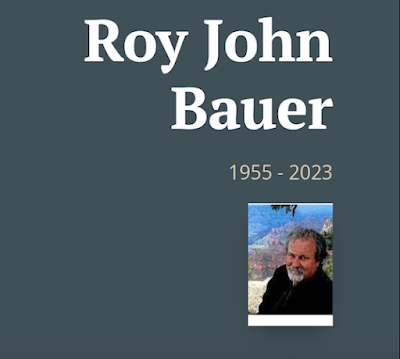
Roy's obituary in LA Times and Register: "we were lucky to have you while we did"

  This ran in the Sunday December 24, 2023 edition of the Los Angeles Times and the Orange County Register : July 14, 1955 - November 20, 2...