Thursday, May 3, 2018


Lake Street Dive do the Kinks' classic, "Lola"

Well I'd left home just a week before
And I'd never ever kissed a woman before
Lola smiled and took me by the hand
She said, "Little boy, gonna make you a man."
Well I'm not the world's most masculine man
But I know what I am and I'm glad I'm a man
So is Lola

Monday, April 30, 2018

Doc D (aka David Bugay) has written a new musical comedy—Zombie Dearest—and, natch, it's being produced here at IVC!?


     You remember David Bugay! Despite what his Linked in page says below, Bugay was Vice Chancellor (not President) of Human Resources at SOCCCD. 
     —Until, that is, he was fired about a year ago. (See Poof: Bugay bugs out)


     Bugay certainly had his detractors. HR had a pretty bad reputation while he was in charge of it. 
     It didn't help that Teddi Lorch was the "Director" of HR. She's an idiot. 
* * *
     You'll recall that, way back in 2011, district denizens were informed:

Colleagues and Friends,
You are invited to attend the premiere of
The Naked Turtle Dances

Poem by David Bugay
Music by Daniel Luzko
Choreography by Marie de la Palme

     This poetry/music/dance thang was presented at IVC (Luzko teaches and de la Palme taught at IVC). 
     His poetry is pretty bad. So, what gives?
     I guess Bugay had pull up here at the northern college. 
     Those with knowledge of poetry at the college took a dim view of Bugay's efforts. (See The pious and the poetic, November, 2011.) Not for the first time, we asked: Why all the sub-collegiate bullshit at IVC? 
     Remember the time our "multiculturalism" event was a showing of 20th-Century-Fox's The King and I?
     Our college is best known, of course, for holding that idiotic "Astounding Inventions" competition for kiddies. You know: hats that drop sandwiches into your face.
     Remember when the Foundations director wanted to put on a "book burning" to publicize the college? A year or so later, he wanted to present a collection of famous shoes.
     Typically, when High Schoolers are invited to the college, Team IVC sets up bouncy-houses. And there're hundreds of blue and white balloons.
     WTF?
     It's a question we often ask here at Dumbshit College.
* * *
     It turns out that Bugay has long pursued a writing career. As writer, he now goes by the pen name "Doc D" (see below). Aside from The Naked Turtle Dances, Doc D has written such works as Backbonology: Tough Decisions at Work, Zombie Dearest: Poems for Young Zombies, and Zombie Dearest: a Two-Act Musical Comedy:

From the "Doc the Writer" homepage.
"He has found two major obstacles in the skillsets of emerging leaders."
Obstacles in their skillsets?


     —And guess what?! TODAY, Irvine Valley College's "IVC Happenings" sports the following page:


* * *

     Just who is this La Grand Barr? —Actually, his name is LeGrand (or Le Grand) Barr, and he lives in Aliso Viejo. (IVC publications seems to think his name is "La Grand".)
     He's a local musician (piano). Here's his Facebook Page.
     He tells us that he has "played for different ministries here in South Orange County...."
     Uh-oh.


Thursday, April 26, 2018


He blew his mind out in a car
He didn't notice that the lights had changed
A crowd of people stood and stared
They'd seen his face before
Nobody was really sure if he was from the House of Lords


Wednesday, April 25, 2018

As it turns out, I'm not the Golden State killer!

Ex-cop DeAngelo
     Late last Thursday, I found a message on my answering machine from the FBI. The next morning, I called and was told that someone had provided an anonymous "tip" according to which I (Roy Bauer) had claimed to be the "Night Stalker" and the "Golden State killer" on a website.
     We need to check out each of these tips, no matter how ridiculous, said the agent.
     I have never made any such claim, of course. And I've never heard of the website.
     Nevertheless, they asked me to come to the office (in Orange) so that I could be "excluded" via DNA. (See In "an FBI zone".) So I did that.
     Crazy, man.
     Crazier still, just five days later (i.e., today!), we get this:

Suspected Golden State killer, a former police officer, arrested on 'needle in the haystack' DNA evidence (LA Times)
     Authorities have arrested a former police officer who is suspected of being one of California’s most prolific serial killers and rapists — the Golden State killer.
     A local and federal task force apprehended the suspect late Tuesday evening, after tying him to the crimes through “surveillance and discarded DNA,” Sacramento County Sheriff Scott Jones told reporters Wednesday.
     In the 40 years since the Original Night Stalker began his campaign of terror in Sacramento and moved south through the Bay Area and Santa Barbara and Orange counties, he had remained unidentified. Authorities say the attacker, also dubbed the East Area rapist and the Golden State killer, is responsible for 12 killings, 45 rapes and more than 120 residential burglaries from 1976 to 1986.
     The Sacramento County district attorney announced on Wednesday the arrest of Joseph James DeAngelo Jr., 72, suspected as the Golden State Killer in a case that took four decades to solve. Sacramento County Sheriff's Department
     A 72-year-old Citrus Heights resident, Joseph James DeAngelo Jr., has been arrested on suspicion of murder and is being held without bail, according to Sacramento County jail records.
. . .
     The last known crime associated with the Original Night Stalker took place in 1986, but his notoriety persists. In 2004, California voters passed an initiative, bankrolled by the brother of one of his victims, that mandates collection of DNA samples from people convicted — or even arrested — in felony cases.
. . .
     Authorities in 2011 pinpointed DNA evidence from the killer in the 1981 slayings of Cheri Domingo, 35, and Gregory Sanchez, 27. And they matched that evidence with DNA from other crime scenes.
. . .
     …At the time of the crimes he was described as being about 5-foot-9 with blond or auburn hair. He appeared to have military or law enforcement training.
     Before he became known as the Original Night Stalker … the killer was tied to no fewer than 52 sexual assaults in Sacramento County and the Bay Area.
. . .
     In addition to the four people DeAngelo has been charged with killing, Orange County Dist. Atty. Tony Rackauckas told reporters that DeAngelo was responsible for a series of attacks in Orange County, including the 1980 slaying of husband and wife Keith and Patrice Harrington in a Laguna Niguel home....
     Natch, this is a national story and it's all over TV.
     Some of my pals here at the college (IVC) are spinning theories about the "connection" between my curious episode on Friday and today's astounding development.
     "They found an abandoned sample [of DNA] last week!!!!" reports Ms. B "And now this!"
     In the course of checking my DNA, these FBI fellers opened some old file and out drops this mysterious abandoned sample!
     "What's this?!" they exclaimed.


The above video is a product of the "Saddleback College OC News Team."

Monday, April 23, 2018

Disastrous administrators: an SOCCCD tradition

Stevens
     Just a reminder: this district and its colleges have a striking record of hiring disastrous administrators despite serious red flags.
     I’ll mention two obvious examples.
     The infamous case of Dean Rodney Poindexter. (See also Mathur: reference checks for Poindexter)
     The notorious case of Chancellor Larry Stevens. (See especially The Larry Stevens years, 1982-1986, Part 2: a hatchet man "heavy on the decisive action and light on the open, free exchange”)
     Just sayin’.

TIMES 6-29-02

Proudly atop Mathur's Shit List

     Raghu Mathur has a blog of sorts. Well, it isn’t really a blog, since it isn’t a record of events (i.e., a log) and it isn’t regularly updated.
     Showing his usual flair for language, Mathur calls it “Dr. Raghu Mathur Statement.” It sports just five posts from September 12, 2012 to July 28, 2013.
     Post titles include:
  • My Philosophy and Experiences as a Student Centered Chancellor of SOCCCD
  • My Accomplishments as Chancellor of South Orange County Community College District
  • Reason For My Retirement as Chancellor from SOCCCD
     The latter post starts with this paragraph:
     I had the privilege of serving as the Chancellor of South Orange County Community College District for nine years…. Per direction and support of a majority of the Board of Trustees, I was engaged in tough and successful contract negotiations with the faculty and staff unions under declining economic conditions…. However, a disgruntled faculty union member had created blog with continued irresponsible, unprofessional and defamatory false statements about me and my outstanding work as Chancellor....
     I wish to draw attention to the last sentence, which refers to a “disgruntled faculty union member” who "created [a] blog."
     Is that supposed to be me?
     Guess so.
     I ask, since, though I am technically a member of the union (Faculty Association), I have never been particularly associated with it. I've long had a strained relationship with that organization, which I helped to reform twenty or so years ago. Ever since, union leadership clearly hasn't appreciated my efforts as a blogger, and I don’t appreciate their lack of appreciation. Dissent the Blog—and our earlier newsletters (Dissent, the ‘Vine)—have never pretended to speak for the union and have seldom championed the union’s causes.
     On the other hand, I'm sure that Dissent the Blog looms large in Mathur’s consciousness, for it has often drawn attention to the fellow’s misdeeds and lowly character and has often inspired critical pieces about him and his corrupt pals in local newspapers and websites.
     Occasionally, I feel dejected, believing that Dissent the Blog is, to use Wittgenstein’s phrase, "a wheel that turns even though nothing else turns with it, and is therefore no part of the mechanism." I have often felt that DtB is precisely such a wheel, a useless thing.
     At such times, Rebel Girl always reminds me that those we criticize, if no one else, are avid and impassioned DtB readers!

A blog called "Dr. Raghu Mathur Statement"

Assorted readings on "Guided Pathways": explanation, skepticism, promotion, history, etc.

Bailey
     It appears that the chief guru/promoter of "Guided Pathways" is Thomas Bailey, who, along with Shanna Smith Jaggars and Davis Jenkins, authored the 2015 book Redesigning America's Community Colleges: A Clearer Path to Student Success. 
     Bailey's degrees are in the field of Economics. He teaches at Columbia.
     As you know, I am deeply skeptical about most education theory for familiar reasons. (I approach such matters from a mainstream logical/scientific perspective.) On the other hand, Bailey isn't necessarily advocating the "Guided Pathways" approach qua theorist. He's not an education theorist. He's an economist. Neither Smith Jaggars nor Jenkins are educationists. —So there's that. A real plus in my book.


What we can learn from Guided Pathways skeptics (EAB [a large education consulting firm]; June 1, 2017)
     Hoax. Trend. Empty. Meaningless. Silly. Mandatory.
     These were just some of the words college leaders used to describe their frustration with Guided Pathways to me at community college conferences I’ve attended this year.
. . .
     There’s no evidence that the current "cafeteria style" approach to student success is working. According to the National Student Clearinghouse analysis of students who began college in fall 2010, fewer than 40% earn a credential in six years….
. . .
     Another senior leader I spoke with pointed to her colleagues’ exuberance as the reason the theoretical discussions overshadowed discussions about implementation: “Talking about the problem of ‘cafeteria colleges’ was cathartic in a way. We all needed that moment of clarity and looking in the mirror to realize we were doing things wrong…but that’s all we ever talk about now, and it’s not enough. I can’t reorganize my school away from something bad without knowing that we’re headed towards something good. It’s not fair to the students.”
. . .
     …I’ve personally written many pages devoted to the promise of Guided Pathways in the community college sector, and even I must admit the skeptics have a point. There is no shining example of a college who has fully accomplished all four pillars of the Guided Pathways model for 100% of their students. The City University of New York’s ASAP program and Guttmann Community College are close, but their selective enrollment requirements mean their impressive outcomes forever have an asterisk next to them, at least in the minds of leaders at the helm of open-access institutions where most students are part-time, working, non-traditional age degree-seekers in need of developmental education and academic direction….
Guided Pathways Initiative (College Spark Washington)
     As a legacy of the community colleges’ emphasis on access, flexibility, and choice, the classes offered by many community colleges are often an array of disconnected courses that are not organized as cohesive programs of study.  Students are provided with insufficient clarity on how to navigate a path to their desired degree, transfer, or career.  As a result, many students either become overwhelmed and drop out or waste time and money on courses that do not add up to a meaningful credential.
     The Guided Pathways Initiative aims to address this issue by reducing and simplifying the number of choices about course selection a student must make, informing and supporting those choices, and directing students into an intentional, comprehensive program of study within one or two terms.  The process from college entrance to program selection to degree completion is streamlined, providing students with a much clearer, more efficient path to completion. Most stand-alone developmental math courses are eliminated and instead students are placed in career-focused college-level math while giving underprepared students significant support to succeed in such courses. At colleges that have transitioned to a Guided Pathways model, new students pick from a handful of “meta-majors” rather than from hundreds of courses….
Get With the Program… and Finish It: The Guided Pathways Approach to Helping Students Complete College

Submitted by Davis Jenkins on Tue, 03/11/2014
     Most community colleges offer a wide array of programs. Yet, colleges typically provide little guidance to help new students choose a program of study and develop a plan for completing it….
     Community college students often report that they are confused and frustrated by the many choices they confront during college. When left alone to advise themselves, many students end up making bad decisions that can waste time and tuition dollars, and decrease their chances of completing college.
     While advising is critical, most community colleges cannot afford enough advisors to provide one-on-one support to the students who need it. Instead, a growing number of colleges are redesigning their academic programs to simplify students’ choices and create clearer pathways to program completion, further education, and career advancement.
     Our recent paper examines this “guided pathways” approach, which has three main features:
     1) Clear roadmaps to student end goals. In guided pathways reforms, academic programs are clearly mapped out by faculty to create educationally coherent roadmaps with clearly defined learning outcomes. They are aligned with requirements for further education and, in occupational programs, for career advancement. Students are given a default, whole program sequence of courses to follow for their chosen programs based on these maps, but they can also opt out to follow an alternative path. The guided pathways approach does not restrict students’ options, but it does scaffold decision-making, so that students will be more likely to make good decisions and achieve their goals.
      2) On-ramps to programs of study. The intake system is redesigned to help new students clarify goals for college and careers and, once these are established (even tentatively), to develop an educational plan. All students are required to choose an initial field of interest (such as business, allied health, or English and humanities) and to follow a default curriculum that gives them a taste of the field and helps them decide whether they want to pursue a particular program in that field or switch to another one. Academic foundation skills and “college knowledge” skills are contextualized in college-level coursework in the student’s field of interest.
     3) Embedded advising, progress tracking, feedback, and support. Students’ progress relative to their academic plan is closely monitored and frequent feedback is provided. This way, students can see where they stand in relation to their goals, and faculty and advisors can intervene when students are not making progress or stray “off path.” Advisors and faculty work cooperatively to ensure a smooth transition from initial general advising to advising in a program....
Does Guided Pathways Lead Colleges to Cut Programs and Limit Student Options? (Community College Research Center [Columbia])

Thursday, 16 November 2017

By Thomas Bailey and Davis Jenkins [Bailey seems to be the chief "Guided Pathways" guru/theoretician.]
     The guided pathways model is a strategy for institutional reform designed to strengthen college programs and majors and help students achieve their end goals. There are four elements to the model: mapping programs to student end goals, helping students choose and enter a college-level program of study, helping students stay on and finish that pathway, and assuring that students are learning skills and abilities appropriate for their pathway and end goals.
     Several hundred colleges in many states are actively implementing the model. But in some circles, guided pathways reforms have a bad image. They’re seen as the latest fad in college reform and as a way for administrators to juice their completion numbers at the expense of students getting the full intellectual college experience. In the most simple construction, some think guided pathways means handing students a list of courses they must take to graduate, preferably in an occupational field, giving them few if any choices. In the process, the argument goes, this gives college administrators license to cut courses and programs they deem unnecessary….
Guided Pathways at Community Colleges: From Theory to Practice (Association of American Colleges & Universities; Fall 2017)

By: Thomas R. Bailey

Lessons Learned About Guided Pathways (Inside Higher Education)

Guided pathways reforms will surely encounter implementation challenges, but we have already learned a lot to help resolve those challenges -- and will continue to do so, argue Thomas Bailey, Shanna Smith Jaggars and Davis Jenkins.

Davis Jenkins, Shanna Smith Jaggars and Thomas Bailey
July 18, 2016

A Key (State) to Completion (Inside Higher Education)

     California’s public colleges are partnering more with foundations to achieve completion goals, and while resistance among faculty members remains, the previously rocky relationship appears to have improved.

By Ashley A. Smith; August 4, 2017
… The urgency to increase completion is driven, in part, by the fact that the state is facing a work force skills gap. According to the Public Policy Institute of California, the state will be about 1.1 million college graduates short of meeting the demand for workers with a bachelor’s degree by 2030, if current trends continue. Furthermore, in order for the state to be among the top 10 in the country for educational attainment rates, it needs to produce 2.4 million technical certificates, associate and bachelor’s degrees by 2025. Lumina estimates that the number is closer to 3.7 million credentials by 2025 in order for the state to compete internationally.
. . .
     Still, skepticism exists, particularly around accelerating students’ progress through remediation, he said.
. . .
     The community college system is using guided pathways as the frame to organize many of the initiatives colleges are using in order to reach those completion goals.
     [CC State Chancellor] Oakley said the pathways framework has been well received in the colleges because it allows each institution to look at its data individually and not have the system office micromanaging the campuses.
     “People are frustrated that even over the last five years, with a tremendous amount of work and advancement, the colleges haven’t seen the improvement everyone wants to see,” he said. “That’s why you see openness to the framework and an acknowledgment our systems need to improve.”
. . .
     For many students, taking one or two courses to gain skills or complete a career and technical education certificate is great for them, said Webster, but that can count against colleges and faculty members when completion and attainment goals are discussed.
     Some also had concerns about the new pathways program. For example, faculty and union groups weren’t clear on just what the new initiative would look like, Webster said, adding that many faculty members already feel they’ve had these initiatives on their campuses.
. . .
     “Instead of going to faculty and saying, ‘Here are the problems,’ and asking how we can solve these problems, they went straight to the top,” [Jonathan McLeod, a history professor at San Diego Mesa College and a California Federation of Teachers representative] said. “They went to education administrators at the state level. They went to the U.S. Department of Education and state legislators and governors and said, ‘Education is in trouble and this is what we’re going to do to change education.’”
The completion push in the Cal State system is being driven by legislators and the governor’s office, who probably hear the message at national gatherings and from foundations, said Geron, the CSU East Bay professor, adding that some faculty members have been upset that they were not included in developing proposed reforms.
     While some faculty rallied around these reforms, most were initially skeptical, McLeod said.
. . .
     The completion agenda is about getting students through as quickly as possible and into the work force while minimizing barriers. One way to do that is to push for more online courses. And the students who are least likely to succeed in online courses are underrepresented minorities, he said.
     “But that is what happens with self-proclaimed reformers -- they go to the top and meet with state chancellors of institutions and maybe it gradually filters down … and gets to faculty last,” he said. “Sometimes these reforms are formed not by the people in the trenches.”
California 'student success' initiative slow to increase community college completion rates (Larry Gordon, EdSource, APRIL 2, 2017
     California has seen no substantial increases in community college completion rates despite passing a much-anticipated reform law and spending nearly $890 million in subsequent state appropriations, all aimed at bolstering student progress.
     Backers of the reforms, however, say signs of positive change are evident and that improvements will accelerate in the near future.

     The 2012 Student Success Act sought to increase the share of community college students who earned a certificate, an associate degree or transferred to a four-year college within six years.
     When the reforms were first debated, the most recent completion figure available was 48.8 percent from the 2010-11 school year for students who enrolled six years earlier.
. . .
     A report in September 2016 by the Legislative Analyst’s Office found that the system “made significant progress” in implementing the new policies in the Student Success law, which included hiring an estimated 3,000 more staff, such as counselors and orientation leaders. But it found mixed results, noting “though progress is moving in the right direction, it remains slow and uneven.” A little more than half of students statewide newly enrolled in fall 2015 received orientation, planning or other counseling in their first semester, it found.
. . .
     Davis Jenkins, a senior research associate at the Community College Research Center at Columbia University’s Teachers College, said too much of the Success Initiative has been piecemeal and unevenly implemented, more like a “bunch of boutique small-scale reforms.”
     [CC State Chancellor] Oakley is a strong supporter of Brown’s proposal to allocate $150 million from Proposition 98 funds to develop such “guided pathway” programs. That would be in addition to the Student Success program, the annual funding of which has risen from $49 million in 2012-13 to $285 million this year, totaling $890 million over those five years.
     The 2012 law grew out of a much-debated report earlier that year from a Legislature-created task force of faculty, administrators, students and others who studied ways for college students to speed up their studies and for colleges to improve guidance, technology and financial aid policies. Officials estimate that about 85 percent of the task force recommendations were put into effect through the legislation and policies adopted by the statewide college system and local districts….
Blockchain in Higher Ed: Guided Pathways and Bitcoins (Econprof)
JANUARY 13, 2018 / JIM LUKE
     ...And that reminds me of the change efforts in higher ed. For one example (there are many) most anyone at a community college, and even university, is likely familiar with the push for Guided Pathways. The education guru establishment, funded by folks like the Gates Foundation and led by foundations, consultants, and ed tech companies, sells some “innovative” concept that will “solve” some supposed serious problem in higher ed. In the case of Guided Pathways, the perceived problem is a mix of excessive number of drop-outs, “wasted” credits when transferring, and the accepted “fact” that students “don’t do optional”. Administrators and sycophantic, ambitious faculty embrace the new solution credo and discount all the faculty voices that say “wait a minute, it’s not that simple.” Who needs context or analysis when you’ve got the true solution? Instead, faculty and staff are urged to get on-board lest they miss the train the same way investors are urged to buy their bitcoin lest they miss out on the promised future of all riches.
     Of course, these problems are themselves only problems through a particular lens. Deeper critical thinking may or may not lead us to reject the solution, but it will certainly lead to a more effective solution. What do we mean by “wasted credits”? Are we saying the students may have learned “too much”? What standard is learning enough, then? Or is perhaps the real problem that students take more classes than we want them to or maybe than they can afford but they don’t know they can afford? Perhaps the real problem is the cost structure and financing of higher ed. Do students really “not do optional”? Or do they simply get lost and make poor choices because we don’t provide readable, usable curricular guides? If they persistently make poor choices, isn’t that a teaching opportunity to teach them how to make a better choice? How do they learn how to choose if we won’t let them choose? Asking questions like these in a college is like asking the bitcoin salesman questions about the sociology, economic institutional structures, and liquidity problems bitcoin is supposed to solve. In the long-run, it would be a better use of school resources and avoid some waste, but in the short-run it makes the salesman feel stupid. Don’t question that emperor’s clothes. They’re beautiful.
What We Know About Guided Pathways (Community College Research Center; Columbia ) ["This research overview was prepared by Thomas Bailey, Shanna Smith Jaggars, and Davis Jenkins."]
     The idea behind guided pathways is straightforward. College students are more likely to complete a degree in a timely fashion if they choose a program and develop an academic plan early on, have a clear road map of the courses they need to take to complete a credential, and receive guidance and support to help them stay on plan.
However, most community colleges, rather than offering structured pathways to a degree, operate on a self-service or “cafeteria” model, allowing students to choose from an abundance of discon- nected courses, programs, and support services.
Students often have difficulty navigating these choices and end up making poor decisions about what program to enter, what courses to take, and when to seek help. Many drop out of college altogether.
. . .
     To address this problem, a growing number of community colleges and four-year universities are adopting a guided pathways approach, which presents courses in the context of highly structured, educationally coherent program maps that align with students’ goals for careers and further education. Incoming students are given support to explore careers, choose a program of study, and develop an academic plan based on program maps created by faculty and advisors. This approach simplifies student decision-making and allows colleges to provide predictable schedules and frequent feedback so students can complete programs more efficiently.
. . .
     While the design principles of guided pathways are well supported by research in a range of fields, no rigorous research to date has been conducted on whether whole-college guided pathways reforms improve student outcomes. Nevertheless, a number of studies indicate that early enrollment in a program of study, and higher levels of structure and support, lead to higher rates of completion. Preliminary results from colleges that have implemented guided pathways reforms are also encouraging. …
Is Guided Pathways Misguiding Us? Let’s Explore the Latest Theoretical Postsecondary Reform
Alexandros M. Goudas
Associate Professor of English
MDEC President Emeritus
Delta College, Michigan
…Possible Negative Effects of Guided Pathways

• Counselors may simply choose random majors for students if they are undecided, and some students may spend longer in unwanted programs
• It may reduce choice and the mission and philosophy of community colleges
• The net effect may be that choice and access will be restricted; few of the crucial supports may be implemented, thus harming faculty, institutions, and ultimately students
• The primary problem with holistic reform is that it must be comprehensive to work
• ASAP14,15 has been proven to work; it is a comprehensive reform, well-designed and well- funded ($7K per student per year=double grad rates)
Has there been an example of guided pathways in action with proven results? Not yet...time will tell... In the meantime, is it misguiding rather than guiding?

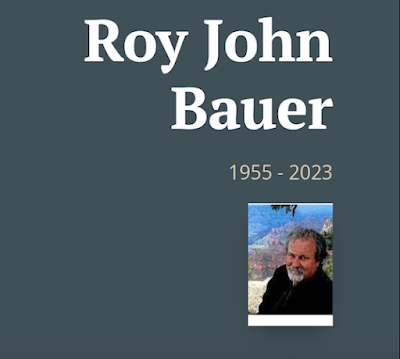
Roy's obituary in LA Times and Register: "we were lucky to have you while we did"

  This ran in the Sunday December 24, 2023 edition of the Los Angeles Times and the Orange County Register : July 14, 1955 - November 20, 2...