The SOUTH ORANGE COUNTY COMMUNITY COLLEGE DISTRICT —
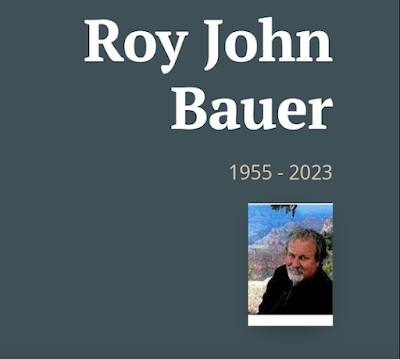
"[The] blog he developed was something that made the district better." - Tim Jemal, SOCCCD BoT President, 7/24/23
I noticed that the OC Register has made available a brief video segment from CNBC's House of Cards. It concerns Orange County, the "birthplace of the sub-prime mortgage."
In the video, with the help of a Register reporter, we're introduced to one Daniel Sadek, a guy with a 3rd-grade education, who owned Quick Loan Funding, a seriously sleazy operation that specialized in giving loans to people who shouldn't get loans.
Click here to see the video. (You'll have to endure 15 seconds of a commercial first.)
..."There's a big irony, when thousands of people are struggling to get affordable loan modification offers from servicers that aren't responsive, that someone who has perpetrated harm would get a loan modification," said Paul Leonard, of the Center for Responsible Lending. "It's incredible." … Quick Loan Funding, which Sadek founded in 2002, wrote about $4 billion in subprime mortgages before it collapsed in 2007. Sadek made, and eventually lost, a fortune through Quick Loan. He bought a Newport Coast mansion, a fleet of exotic cars and a condo in Las Vegas where he became a high roller at the blackjack tables. … In May 2007, The Orange County Register reported that Sadek took out a $1 million marker from the account of his escrow company, Platinum Escrow, to gamble in Las Vegas. … "The Feds just worried that [Citi is] so big, so interconnected with the rest of the financial industry, that they can't let it fail," said Kurt Eggert, a Chapman University law professor and former advisor to the Federal Reserve Bank.
"It's poetic justice that Citi was in bed with this guy [Sadek] and they're stuck with him," Eggert said. "But why is it so hard for regular Joes to get loan mods when this guy, who seems like a terrible loan risk, can do it?" ....
Sadek made a film starring his girlfriend. It was called Redline. I think he spent his—or somebody else's—last dime on it. It stunk and tanked, losing tens of millions.
This morning, Rebel Girl asked me if I’d read Stanley Fish’s latest piece in the New York Times.
Nope, I said. I’d somehow missed it.
“It’s about academic freedom,” she said.
Neither of us is a big fan of Fish and his views about academic freedom. For instance, he has flatly argued against instructor “advocacy” in the classroom. Against this, I have argued that there is room for careful instructor advocacy.
This morning, Rebel Girl seemed particularly peeved. Said she: “Fish discusses some professor somewhere who gives A+'s to all of his students.”
I looked at her. She mentioned some of this professor’s other exotic practices and notions. She looked at me.
“What do you call it when someone finds the worst example of a thing in order to represent it and then attack it?,” she asked.
I’m not entirely sure what Fish thinks he’s arguing for—no doubt he favors one of the “languages”—but I hope nobody is getting the idea that Fish's Nutty Professor is a common sort in academia. He's not.
Professor Denis Rancourt of the U of Ottawa has been “dismissed with cause.” Earlier, he had been suspended from teaching and “banned from campus.” He then defied the ban.
Reportedly, Rancourt is an anarchist who views society’s institutions as mechanisms of oppression. Accordingly, schools and universities exist to crank out “obedient workers.” Grading, according to this line (says Fish), is “a tool of coercion in order to make obedient people.”
Hence the A+’s.
Rancourt, says Fish, is an exponent of “‘squatting’ – ‘where one openly takes an existing course and does with it something different.’” Rancourt is supposed to teach physics. Instead, his course encourages “activism.”
Fish (speculatively, I think) attributes to Rancourt the following attitude toward his employers:
I refuse to do what I have contracted to do, but I will do everything in my power to subvert the enterprise you administer. Besides, you’re just dictators, and it is my obligation to undermine you.... And, by the way, I am entitled to do so by the doctrine of academic freedom, which I define as “the ideal under which professors and students are autonomous and design their own development and interactions.”
I suppose Fish is right to view Rancourt as embracing a very broad and extreme sense of academic freedom, one in which it is part of "a global project whose goal is nothing less than the freeing of revolutionary energies, not only in the schools but everywhere.” Fish seems to advocate a “narrower concept” according to which academic freedom is a “doctrine whose scope is defined by the purposes and protocols of the institution and its limited purposes.”
Well, OK. But I’ve never met an academic like Rancourt. Yes, I've met a handful who share some of Rancourt's theories--but I've met none who puts them into practice with A+'s, "squatting," and so on.
I and some of my colleagues here at Irvine Valley College have been ardent advocates of academic freedom, especially in the past dozen or so years. But none of us defines the concept as Rancourt seems to.
Do we believe that much is amiss with society and that, in some sense, society ought to change? Sure. But we also think that we should teach our subjects in the classroom and do that well.
That's what Rebel Girl thinks. That's what I think.
My subject is philosophy. As it happens, this afternoon, I was teaching Plato’s Republic, a work in which the Sophist Thracymachus famously argues that “justice is nothing but the advantage of the stronger.”
Thracymachus’ view, as portrayed by Plato, is not unlike Rancourt’s. On some interpretations, Thracymachus is a skeptic who views morality as a sham. We are earnestly taught that morality is meaningful, that virtue is its own reward. In reality, says Thracymachus (maybe), morality is a set of constraints and demands that serve to keep the elite comfortable and powerful. That's all.
Thracymachus seems actually to admire those who are grandly and profitably immoral.
In class, I focused on that idea--about the "elite" and power. I discussed Machiavelli, Marx, and Nietzsche. I explained Chomsky's views regarding the “manufacture” of consent. I asked: Is there any truth to this? Are most of us stupid sheep who are manipulated into cooperating with and furthering strategies and goals that are beyond our comprehension? Are Americans encouraged to concern themselves with the inane—silly entertainments, stupid politics—while the really real stuff is going on in the shadows?
Hmmm. This reminds me of former Congressman Dick Army (R-Texas) and something he said about politics on Hardball a few days ago. Check it out; you'll just love it:
Yeah, I know. Army's a sexist a**hole from hell. But forget that. What about his message?
“Politics is silly. It’s inane…Take what amusement you can from [practitioners of politics], but don’t take them seriously.”
… E. Gordon Gee told his fellow college presidents Sunday evening that the current economic crisis is no reason not to consider bold and far-reaching reforms of the institutions. “I am calling for intentional upheaval at our colleges and universities just when fiscal chaos already places us on the edge,” Gee said here at the annual meeting of the American Council on Education.
The choice for higher education, he said: “reinvention or extinction.” … With regard to community colleges, Gee noted that despite his career leading research universities, many of the most important issues are based on the two-year sector. “Truly, the drivers of our future will be this nation’s community colleges,” he said. That means that research universities need to go beyond traditional ways of supporting community colleges — such as articulation agreements — and to think more ambitiously.
As an example, he cited a program Ohio State will be announcing today in conjunction with the College Board and Columbus State Community College in which selected students will be admitted to medical school or other health professions programs at Ohio State while still doing work at Columbus State. While a number of medical schools have programs in which students may be admitted to medical school as undergraduates, these programs generally involve elite undergraduate institutions, not community colleges. Students in the program will receive special academic guidance and a special curriculum to guide them from the two-year college through medical school.
While Gee said he was proud of the program, he said that it was but one effort, when many universities should have much more of a sense of true partnership with community colleges.
Gee was highly critical of higher education for being tradition-bound, but he also said repeatedly that he believes colleges are uniquely suited to help the United States rise out of the country’s economic mess. “This will be the century of the American college and university, if we but have the courage to make it so,” he said at the end of his speech, which received a standing ovation.
It was dark. I looked out my window and saw clouds, and the moon, very bright. Got my camera and took a few. I almost never drink anymore, but I had a Becks, looking at this marvelous sky, waiting for my camera to say, "click."
I used to say that I remembered my childhood as a kind of dark age, with gray skies and dreary, stone walls, but now I'm not so sure.
I recall laying on the floor, on my back, with the crummy speakers of the crummy stereo on each ear, listening to Nights in White Satin, and swooning.
"How can a thing be so good? What can this feeling mean?"
The largest scientific study of the effects of prayer showed that it could, in fact, be harmful
…We now have all the evidence we need to show that prayer is not effective, and even that telling someone you are going to pray for them can be harmful. ¶ I say this on the basis of the largest and best controlled study of the effects of prayer. In the Harvard prayer experiment, 1802 cardiac bypass patients were divided into three groups. Two were told that they might be prayed for; half were and half weren't. The third group were told they would be prayed for and they were. The first two groups recovered equally well, but the group that knew they were being prayed for actually did worse. Perhaps their hopes were falsely raised, or perhaps they were upset to know that someone was praying for them. We don't know, but we can safely conclude that knowing you are being prayed for is not helpful….
California Attorney General Jerry Brown has come out strongly in defense of a new law targeted in federal court by meat-industry groups. ¶ AB 2098, which took effect Jan. 1, makes it a crime to allow meat from livestock too weak or ill to stand to enter the food chain. ¶ The law also requires so-called downer cows to be humanely euthanized….
Dewey Martin, the drummer for Buffalo Springfield, the short-lived but influential 1960s California rock band that spawned the careers of Neil Young and Stephen Stills, was found dead on Feb. 1 in his apartment in Van Nuys, Calif. He was 68. ¶ … The cause has not been determined, the newspaper said; … he had had health problems in recent years….
This afternoon: first a hailstorm, then a rainbow.
 I noticed that the OC Register has made available a brief video segment from CNBC's House of Cards. It concerns Orange County, the "birthplace of the sub-prime mortgage."