Wednesday, November 29, 2006

Heads up! Accreds visiting this week!

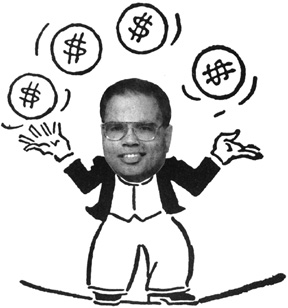
He's making a list and checking it twice
Gonna find out who's naughty and nice
"Warning" clause is coming to town


s you know, the Accreditation teams are visiting our two colleges this week. On Thursday, I believe, we'll have opportunities to speak with the teams.

WHAT'S UP

Our colleges’ Accred situation is complex, for each college is on two schedules. (1) Each is going through the standard accreditation process, which involves a midterm report, due in a year or so. (2) In the meantime, each college is going through the process of responding to the Accrediting agency’s recommendations.

You’ll recall that the Accreds were impressed by instruction, etc., but they were unhappy with, and RECOMMENDED remediation of:
● continued board micromanagement (Saddleback, IVC)
● administrative instability (Saddleback)
● lack of clarity re governance groups' roles and responsibilities (IVC)
● the plague of despair (IVC/SC?)
THIS WEEK'S ACCRED VISIT CONCERNS (ONLY) THE ABOVE RECOMMENDATIONS and whether our colleges are responding to them adequately. This is not the occasion to raise other concerns.

Back in September, I had occasion to describe each college's progress report draft. I reproduce that discussion below:

Saddleback College Progress Report:

✔ Re board micromanagement:
There are some issues that still need attention. Among them are these…(2) [T]he board’s rejection of college-determined institutional memberships…In March 2006, one board member pulled the American Library Association membership…The trustees spent portions of three board meetings debating whether or not the ALA endorsed pornography for children…[T]he board now requires detailed justification each time an institutional membership is requested or renewed.

…Another perception is that the board favors other units (such as ATEP) within the district over Saddleback College.

Evaluation: …[T]he question that requires clarification is whether the college defines its own mission, goals and objectives…? Or, whether it is the district that defines its mission, goals and objectives and the college…then defines its role in response to the district mission?....
✔ Re administrative instability:
The perception remains among faculty and classified staff that the governance style of the board and district discourages college administrators from taking risks to solve difficult problems….


Irvine Valley College Progress Report:

✔ Re board micromanagement:
[During a March 27 presentation,] [t]he Chancellor … states that there is no college that has lost accreditation because of micromanagement….The Chancellor intimates that the faculty and staff may invite micromanagement by the board, as noted in the following statement:

“To the faculty and staff, please don’t invite micromanagement by going directly to the board about college issues. Please come to me as chancellor and/or go to the college presidents.”

…During [a]…discussion…, other trustees [than Mr. Fuentes] raised concerns as to whether it would be prudent to continue denying that there is a problem with board micromanagement by blaming other constituent groups. In response to those concerns, … [Fuentes] states:

“I’m saying that the problem in this district is more a macromanagement by elements who ought not to be macromanaging than it is by a couple of trustees on this board micromanaging….”

…[T]he majority of the board and the chancellor believe that the issues in the district relate to macromanagement by faculty leaders rather than micromanagement by the board….

…On January 31, 2006, in opposition to the recommendation of the chancellor, the board voted to deny the colleges’ institutional membership in the American Library Association, alleging that: 1) the ALA is comprised of “liberal busybodies…”; 2) the ALA opposed the Child Internet Protection Act and therefore favored allowing children access to pornography in public libraries; and 3) the ALA opposed the USA Patriot Act.

…Similar board involvement occurred relative to the decision by the IVC administration to discontinue intercollegiate tennis…Based on the discussion of the board and presentations by members of the community, the college administration elected to continue the intercollegiate tennis program.
Site Meter

Tuesday, November 28, 2006

Rebel Girl's Poetry Corner: If I Had a Hammer

If Rebel Girl had a hammer, you can bet she'd hammer in the morning, in the evening, all over this campus. There is, indeed, much repair needed.

However, the inability to find the necessary tool to hammer out our particular strains of injustice and incompetence, plus the inability to generate many words continues (Week 2!), so Rebel Girl will do what some of her students sometimes do when faced with a blank page and a deadline: Quote! A lot!

It's an obvious enough strategy that she hopes will distract you enough to give her a passing grade for this week. Her offering is from Dean Young, a poet who lives part-time in Berkeley and the rest of the year where he teaches, in Iowa City. RG runs into him every other year at a summer writing conference where she serves the gods of poetry the best she can.

Hammer
BY DEAN YOUNG

Every Wednesday when I went to the shared office
before the class on the comma, etc.,
there was on the desk, among
the notes from students aggrieved and belly-up
and memos about lack of funding
and the quixotic feasibility memos
and labyrinthine parking memos
and quizzes pecked by red ink
and once orange peels,
a claw hammer.
There when I came and there when I left,
it didn’t seem in anyone’s employ.
There was no room left to hang anything.
It already knew how to structure an argument.
It already knew that it was all an illusion
that everything hadn’t blown apart
because of its proximity to oblivion,
having so recently come from oblivion itself.
Its epiphyses were already closed.
It wasn’t my future that was about to break its wrist
or my past that was god knows where.
It looked used a number of times
not entirely appropriately
but its wing was clearly healed.
Down the hall was someone with a glove
instead of a right hand.
A student came by looking for who?
Hard to understand
then hard to do.
I didn’t think much of stealing it,
having so many hammers at home.
There when I came, there when I left.
Ball peen, roofing, framing, sledge, one
so small of probably only ornamental use.
That was one of my gifts,
finding hammers by sides of roads, in snow, inheriting,
one given by a stranger for a jump in the rain.
It cannot be refused, the hammer.
You take the handle, test its balance
then lift it over your head.


Site Meter

Leprechauns & heaviness, obeisance-wise

Site Meter
obeisance: acknowledgment of another's superiority or importance : HOMAGE
There are some interesting—and perhaps important—items in this morning’s Inside Higher Ed. In its “Quick Takes” section, we learn:
● While many American policy makers of late have been worrying about increased competition from India’s universities, a report in the International Herald Tribune found that outside a small number of elite Indian universities, most of the country’s higher education system is in terrible shape. “Most of the 11 million students in the 18,000 Indian colleges and universities receive starkly inferior training, heavy on obeisance and light on marketable skills, students, educators and business leaders say,” according to the article. [My emphasis.]
Heavy on obeisance? Imagine that!
● A former student at the Art Institute of Portland, in Oregon, says that he was suspended and then expelled, in a series of events that started when he questioned another student’s belief in leprechauns and she complained about his questions, The Portland Mercury reported. Institute officials denied that anyone could be expelled for questioning another’s belief in leprechauns and suggested that other issues were involved.
● This morning’s lead article (Fixing Higher Ed, Legislator-Style) is a description of a new report on the state of higher ed in the U.S., and it ain’t pretty:
Higher education is in crisis, in large part because of government neglect, and states must take the lead in fixing the problems, a bipartisan group of state legislators says in a new report.

“Transforming Higher Education: National Imperative — State Responsibility,” the report from a 12-member special panel of the National Conference of State Legislators, in many ways falls in line with other recent studies that have identified concerns about access to and the performance of American colleges and universities….

Like those reports, the legislators’ study (a summary of which can be found here) cites statistics showing the United States slipping on international indicators, bemoans the effect that increasing tuitions and flattening financial aid have had on college access for low and middle income students and adult learners, and notes that those problems must be addressed if the country is to provide a meaningful future for the waves of educationally underprepared Americans preparing to slam into higher education and society….

…“The American higher education system is no longer the best in the world,” the NSCL report states without equivocation. “Although the United States has some of the best institutions in the world, we do a poor job overall in our mass education production.... The American higher education system is not preparing students for the 21st century global society.... Faculty are content with the teaching methods of the past and are not changing as the world is changing.”….
● ALSO: in this morning's New York Times (Pastor Chosen to Lead Christian Coalition Steps Down in Dispute Over Agenda):
The president-elect of the Christian Coalition of America, which has long served as a model for activism for the religious right, has stepped down, saying the group resisted his efforts to broaden its agenda to include reducing poverty and fighting global warming....
Jeez, what would Jesus say?

Gee Whizzery


Site Meter
Looks like the OC Register has decided to toss a fuzzy little softball at IVC. Check out “Irvine Valley College to build business center” in this morning’s edition, which notes the recent groundbreaking ceremony and offers a healthy dollop of Gee-Whizzery:
"There's just no doubt with a structure like this … it's a wonderful addition for the campus," said Glenn Roquemore…."This particular building will be at the cutting edge of technology."

Aesthetically, the center will have a "high-tech look on a low budget," said Raul Villalba, SOCCCD director of facilities planning.

"I think it will motivate students," [student Tomo] Mizuno said.
Also, DON’T FORGET: this is the week in which the ACCREDS visit re Validation of the 2006 Accreditation Progress Report.

Sunday, November 26, 2006

Mentoring do's and don't's

Site Meter Mentoring is a good thing. But you've gotta be careful. Many years ago, in one of my philosophy classes, I mentioned a very difficult essay—it was called, “Do the numbers count?”—and it was considered a brain-teaser by my pals back in grad school. In class, I briefly explained its argument. I mentioned that I found it difficult. The next day, a student from that class showed up for my office hours to explain the article to me. He had found it, read it, and understood it. I was astonished. There was no doubt in my mind that the kid was a genius. Subsequent conversations confirmed this. I was his mentor, I guess, for about a day or two. But some of his remarks soon revealed that he was, well, mentally ill. (Don’t ask.) I’m no expert, but I am certain that the kid was very dangerous, perhaps a psychopath. I tried to nix the mentor/mentee thing (and I tried to get the kid some counseling), but it was too late: he started stalking me and I had to call in the authorities. I hate when that happens. EARLIER TODAY, I read the latest article in the OC Weekly (Sad Chronicle) about accused child molester Jeffrey Ray Nielsen, a prominent local Republican activist with close ties to Republican bigwigs like Dana Rohrabacher, Michael Schroeder, Scott Baugh, and Tom Fuentes. According to the Weekly, back in 1996, then-25-year-old Nielsen was being mentored by the likes of Tom Fuentes. That, at any rate, is the impression left by letters printed by the Weekly and allegedly written at the time by Nielsen to a young boy in Virginia. In a letter dated October, Nielsen wrote:
It was really nice to get a letter from you and for you to call me. I understand that you are not able to call me as much as I call you. Just tell me when you want me to call. I don’t mind being the one doing the calling, as long as you’re there to receive the call…. So, here’s what’s going on with me. On Friday, Tom Fuentes (the chairman of the OC Republican Party) called me and wanted me to meet him at Macy’s at South Coast Plaza. I got there and he bought me a suit. Then he took me to dinner and the sauna at the ritzy Balboa Bay Club. [Name deleted] told me he likes to reward hard-working young Republicans that he likes and he knows are going to go far. It was really rewarding. As you know, I’ve been working really hard on the Scott Baugh campaign…. The only time I’m not working is when I’m watching a USC game, at church, asleep or writing you . . . or trying to get my law school applications together. I’ve got both my USC and Chapman applications typed. I’m working on getting all of my Letters of Recommendation together now. I’ve got Rohrabacher, Flanagan and Fuentes done. Today I found out that this guy who is the state chair of the Republican Party, Mike Schroeder (a friend of Rohrabacher), would also write me a letter of rec. It’s really good that he does because he’s on the board of trustees at USC Law School.
Gee, sounds like Jeff’s got some important friends there! Eventually, Scott Baugh got Nielsen a job with fancy Irvine law firm Manatt, Phelps & Phillips. Then (says the Weekly), in 2003, “Nielsen was arrested…for allegedly molesting a Westminster High School freshman boy and possessing a huge, illegal cache of man-boy pornography.” After several (suspicious) delays, the trial is set for January 22. I know what it’s like, Tom. You try to help a kid out, and what happens? They turn out to be psychopaths and accused child molesters, that’s what. I woulda nixed the suit-buying episode, though. And that “dinner and spa” business is a little off, I think. Sends the wrong signals fer sher. But, other than that, I feel your pain, brother.

Still HAVA problem!


Site Meter

This morning, I read (in this morning’s San Jose Mercury) that, in the Senate, Diane Feinstein will be leading an effort to scrutinize e-voting.

Democrats had braced for Republican funny-business during the last election—especially e-voting skullduggery—but when the election turned out well for them, the issue seemed to disappear.

Obviously, the country can't afford to lose sight of it. Perhaps Feinstein's on the ball. Sure hope so.

The Mercury article mentions an organization, founded by a Stanford computer science prof, that is devoted to e-voting reform. According to the Verified Voting Foundation [VVF] website,
The Verified Voting Foundation is a nonpartisan nonprofit organization championing reliable and publicly verifiable elections…[T]he organization supports a requirement for voter-verified paper ballots…on electronic voting machines allowing voters to verify individual permanent records of their ballots and election officials to conduct meaningful recounts….
Please check it out. (See also Voter's rights advocacy organizations--Wiki.)

HAVA

As you know, after the 2000 Florida election debacle, citizens fretted about the integrity of vote counting, and that led to legislation called the “Help America Vote Act” (HAVA). HAVA is widely understood as having mandated the use of e-voting (i.e., electronic voting) systems. That has produced a windfall for electronic voting systems vendors such as Diebold.

Mighty suspicious, I’d say.

Oddly, HAVA mandated the use of e-voting, but it also permitted the use of record-less e-voting machines. Since the 2000 election, many states have moved toward e-voting, but they have not insisted upon e-voting systems that leave records.

One might say, then, that HAVA has produced CRAPPA, or worse.

Hence the creation of VVF and similar organizations.

EAC? —P.U.

Naturally, HAVA created a commission, namely, the Elections Assistance Commission (EAC), which is advised by two boards, the smaller of which is the EAC Board of Advisors. EAC and its boards have been busy bees. They're buzzing right now. Hear 'em?

When, back in May, conservative Republican J.C. Watts left EAC's Board of Advisors, Speaker Dennis Hastert (yes, that guy) nominated our own TOM FUENTES to replace Watts. Bush then appointed Fuentes. (See More on Fuentes’ appointment.) Naturally, it was a slam-dunk.

DtB duly reported Fuentes’ nomination, which yielded an appreciative posting on Matt Coker’s Clockwork Orange (5/23/06):
Our buddies at Dissent the Blog are following up an announcement made at the most recent SOCCCD Board of Trustees‘ meeting that former Orange County Republican Party chairman Tom Fuentes has been appointed to the agency that “certifies” electronic-voting systems. As DtB [Dissent the Blog] so eloquently put it:

“Uh-oh.”

[Matt then mentions HAVA.]…The main goal of that act is to replace paper voting with electronic voting. As DtB so eloquently put it:

“Yikes!”

Joining the U.S. Election Assistance Commission is apparently a more plum (plumer? Plumber? Dick Nixon? Hello?) appointment than the National Dog Catcher Commission board or whatever the hell that lowly agency was that Bush appointed Fuentes to after the 2000 stolen presidential election.

INSTA-ADDENDUM: Say, who was that Orange County Republican Party chairman who in 1988 approved the use of poll guards to intimidate Latinos going to vote? And he’s now gonna help oversee national elections at a time when anti-immigrant fever is spreading like lube at a Young Republicans circle jerk? Good times!
Sadly, Matt’s blog is now defunct, evidently.

OK, so here’s my point. HAVA is a DISASTA. And when the likes of TOM FUENTES become our election watchdogs, well, THINGS SUCK BIGTIME.

So let’s support Feinstein’s efforts and the efforts of such organizations as VVF!

Saturday, November 25, 2006

Sans surge

[Please see UPDATE at end.]

Yesterday, the OC Register threw Orange Coast College (OCC) a big fluffy softball in the form of the article "Orange Coast College tops in 4-year transfers”.

Indeed, OCC is tops when it comes to CSU transfers. Check out the rest of the top 25 “transfer” (to CSU) community colleges. They're listed in the article.

Alas, SOCCCD’s two colleges are nowhere to be found on that list. How come? (See update below. IVC is too small. Saddleback is not.)

Today, the Reg throws a somewhat harder ball at the same college: "Community college students stuck in rut”. OCC may be No. 1 in CSU transfers—and No. 3 in combined UC/CSU transfers—but that doesn’t mean that many students are transferring or that many students are getting degrees:
Students at California's community colleges are unlikely to earn associate's degrees or transfer to four-year universities, even if they enroll with those goals in mind, according to a new study from the Public Policy Institute of California.

Researchers studied student data over seven years and described "pervasive attrition" throughout the system, particularly among older, black and Hispanic students….

"Providing associate's degrees is a major function of community colleges, yet less than one-tenth of students … earned an associate's degree," according to the [report’s authors]…. "In addition, only about a quarter of students who were focused on transfer courses in their first year eventually transferred to a four-year institution."

…"This is not a report that says that community colleges are doing a bad job. They may just have students who are ill-prepared to achieve," said Hans Johnson, the research fellow who edited the report. "But there is an educational mismatch between what employers demand and what our system can supply. Employers are going to demand more college graduates than the state is able to produce."

…The statewide chancellor for the community colleges, Marshall Drummond, said many of the system's students arrive ill-prepared for college work and need to take remedial training, slowing the process.

University of California and California State University officials also blame poor preparation by K-12 schools for their student attrition

…OCC student Josh Aden remembers going to an academic counselor when he arrived on campus in fall 2004 and asking for help setting up a plan to see what he needed to transfer.

According to Aden, the counselor misdirected him into four classes that turned out to be nontransferable – a fact he didn't learn until he went to another counselor the following year.

"He said, 'Why are you taking these classes?' I said, 'Well, the other guy told me to take them.' He said: 'Don't take them. They are nontransferable. You don't need to be taking these classes.' "….
Hmmm. That doesn't sound so good. (To be fair: Aden is just one case. Proves nothing.)

I'm so glad that I teach at the far superior South Orange County Community College District, a district so phenomenally kick-ass that the Chancellor--Raghu P. Mathur--has been rewarded with a salary well over a quarter million dollars a year! Imagine that!

On Monday, the Board of Trustees gave him more fabulous cash prizes!

--No, wait. The Reg article includes a list of the “top 25” community colleges re transferring to California's four-year institutions (i.e., CSU & UC combined).

OCC is No. 3. Good for them. Fullerton College is No. 8. Not bad.

Our own Saddleback College is way down there at No. 21. Hmmm.

IVC isn’t even on the list. [Well, its size takes it out of the competition. See below.]

--OK, OK. We're still kick-ass! I mean, consider the surge in enrollments we've been experiencing!

Well, no. I checked. There's no surge. We're definintely sans surge.

Increases in productivity? Nope. Sterling accreditation evaluations? Not. Um.......

I'm thinking, I'm thinking!

UPDATE (midnight):

Some who left comments (see) made valid points that require a more careful examination of the data. For instance, is it fair to expect IVC to make the top 25 in number of students who transfer when it is a relatively small college? Etc.

Below, is the ranked list of California community colleges that transfer the most students to the University of California and California State University systems, 2005-06—according to the Register’s article, Community college students stuck in rut.

I wanted to find enrollment data for these colleges, and so I went to the California Community Colleges Chancellor’s Office website and found a page called Chancellor’s Office Data Mart. I could find no data concerning headcount (i.e., the number of students enrolled per college), but I did find data, per college, for “Full Time Equivalent Students." (FTES takes all courses taken and divides by a full-time student’s load of classes.)

I selected “annual 2005-6” and got data for all California community colleges. I focused only on “credit” FTES.

The upshot: below is the Register’s ranked list—plus FTES in each case. (I do hope I made no clerical errors. I rounded to the nearest 100.)

1. Santa Monica College (23,900)
2. De Anza College (23,100)
3. Orange Coast College (17,800)
4. Diablo Valley College (16,500)
5. Pasadena City College (21,500)
6. Mt. San Antonio College (22,000)
7. City Coll. of San Francisco (30,000)
8. Fullerton College (16,500)
9. El Camino College (15,300)
10. Riverside Comm. College (21,800)
11. San Diego Mesa College (14,000)
12. American River College (21,200)
13. Fresno City College (15,600)
14. Grossmont College (11,600)
15. Sierra College (13,200)
16. Palomar College (18,700)
17. Moorpark College (12,200)
18. Santa Rosa Jr. College (16,900)
19. Santa Barbara City Coll. (13,100)
20. Pierce College (12,400)
21. Saddleback College (13,800)
22. Glendale Community Coll. (11,900)
23. Sacramento City College (16,100)
24. Cerritos College (18,600)
25. East Los Angeles College (17,400)

Irvine Valley College has 7,000 FTES, and so, indeed, it is unreasonable to expect IVC to make this list—a list that comprises no colleges with fewer than 11,600 FTES.

Of course, the real issue is: how well does IVC do re transfers compared to other community colleges with similar FTES/enrollments? I have the transfer numbers for IVC (see Student right to know—rates), but I do not have comparison numbers.

How well does Saddleback College do re transfers compared to other colleges with equal or fewer FTES? I’ve taken the above list and ranked it by number of FTES:

1. City Coll. of San Francisco (30,000)
2. Santa Monica College (23,900)
3. De Anza College (23,100)
4. Mt. San Antonio College (22,000)
5. Riverside Comm. College (21,800)
6. Pasadena City College (21,500)
7. American River College (21,200)
8. Palomar College (18,700)
9. Cerritos College (18,600)
10. Orange Coast College (17,800)
11. East Los Angeles College (17,400)
12. Santa Rosa Jr. College (16,900)
13. Diablo Valley College (16,500)
14. Fullerton College (16,500)
15. Sacramento City College (16,100)
16. Fresno City College (15,600)
17. El Camino College (15,300)
18. San Diego Mesa College (14,000)
19. Saddleback College (13,800)
20. Sierra College (13,200)
21. Santa Barbara City Coll. (13,100)
22. Pierce College (12,400)
23. Moorpark College (12,200)
24. Glendale Community Coll. (11,900)
25. Grossmont College (11,600)

Again, the real issue is, how well does Saddleback College do re transfers compared to colleges with comparable FTES? Check this out:

Fresno City College (15,600) #13
El Camino College (15,300) #9
San Diego Mesa College (14,000) #11
Saddleback College (13,800) #21
Sierra College (13,200) #15
Santa Barbara City Coll. (13,100) #19
Pierce College (12,400) #20
Moorpark College (12,200) #17
Glendale Community Coll. (11,900) #22
Grossmont College (11,600) #14

I selected these ten colleges on the Register's list, with FTES from 11,600 to 15,600—roughly comparable to Saddleback College’s 13,800.

Within this group, only one college is ranked lower in transfers than Saddleback College. (Remember, too, that Saddleback College doesn't appear at all on the list of top 25 CSU transfer institutions.)

Of course, it is possible that there are other community colleges (with comparable FTES) that didn’t make the top 25. (See all California community colleges.) But it’s late, I’m tired, and I’m goin’ to bed.

Roy's obituary in LA Times and Register: "we were lucky to have you while we did"

  This ran in the Sunday December 24, 2023 edition of the Los Angeles Times and the Orange County Register : July 14, 1955 - November 20, 2...