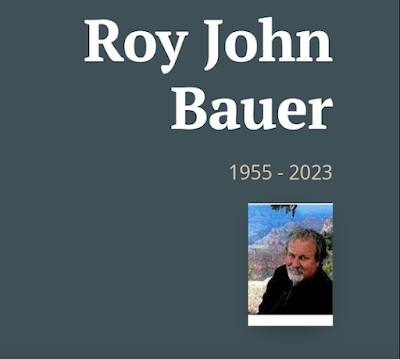
☛
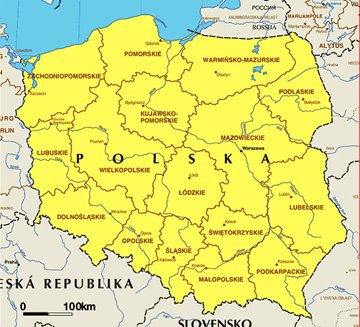
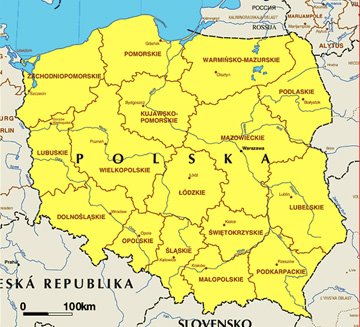
THIS, OF COURSE, is a map of modern Poland. The borders of Poland throughout history--well, that's a seriously messy and violent subject. I won't go into it.

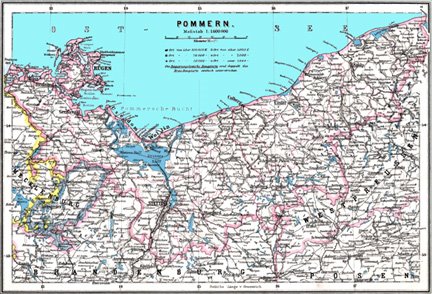
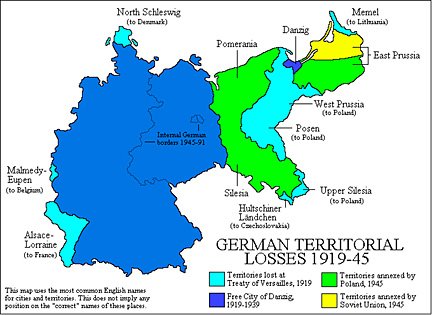
For a long time, regions of what we now know as northwestern Poland were German. Pommern (Pomerania) was among these regions. (See map.)
As Nazi Germany collapsed at the end of World War II, the Soviet forces invaded from the east, raping and pillaging. (See
Red Army atrocities.) Civilians were ordered to flee to the west, and few remained. Many men--usually elderly--who remained, including one of my relatives, were killed. Almost all women were raped. See
Every German female raped.
After the war, Pommern, renamed, was a part of Poland.
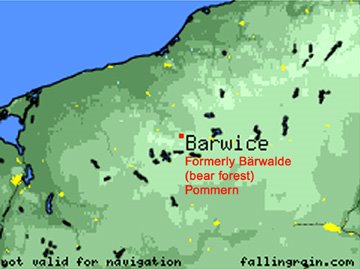
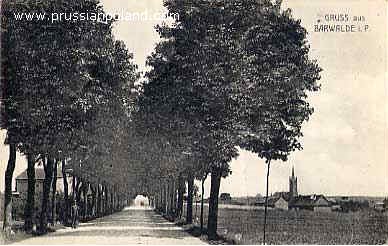
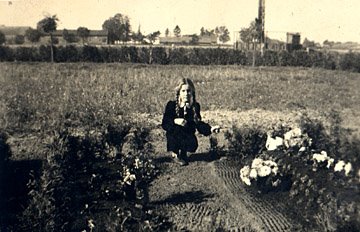
Until the "Russian" invasion of 1945, my mother lived in the town of Bärwalde ("bear forest"), Pommern. There were two towns in Pommern by that name at the time, and I do believe that my mother's town--her stepfather was its mayor until his death in 1939[?]--is now named
Barwice.
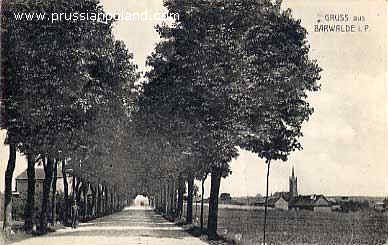
In 1945, mom, then 11 years old, and her mother (actually, her aunt) fled west by rail, ending up in Hamburg, which was ultimately occupied by British forces. At one point as they planned their escape, the pair were faced with the choice of rail or ship (further north), including the 550-foot
von Steuben. They chose rail. Their train was among the few that survived strafing by Russian aircraft. They were extremely lucky.
The Steuben was filled beyond capacity with 5000 people, including over 1000 refugees, almost all women and children. It was sunk by a Russian sub on Feb. 10. There were 659 survivors. (See
National Geographic: Ghost Ship Found.)

Germans (correctly, near as I can tell) viewed the British and American invaders as much more humane than their Russian counterparts. Mom was very happy to settle in what became the British sector of post-war Germany.
She watched lots of American movies. She got the notion that she must go to America and become an American. Simultaneously, my father, in southern Germany, hatched similar dreams.
She eventually became an American citizen (during the mid-60s). Nobody's more American than my mom.
She voted for Bush, but we don't talk about that.
THE MORE DETAILED VERSION OF MOM'S STORY:
What follows is an account of the war and post-war experiences of Manny and Edith Bauer, based on taped anecdotes recorded in the summer of 2004. Manny and Edith were children at the time of the war’s end (his birthdate is 1932; hers is a year later), and they left Germany for Canada only a half-dozen years later, when Manny was 19 and Edith was 18 (she turned 18 on the boat). The two married not long after. Eventually, Manny and Edith moved their little family (including a girl and boy) to the U.S.A (in 1960).
I have generally resisted the temptation to editorialize about, or to correct, my parents' (usually my dad's) perceptions and historical assertions. I am telling the story essentially from their point of view. (--RJB aka CW.)
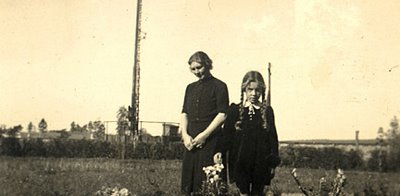 The Russians were coming:
By early 1945, the collapse of Germany had begun, and, in the eastern part of the country, the Russians advanced. Manny [my dad] states that the “Mongolians” were by then the vanguard Russian troops. “The Soviet Union had run out of white Russians,” he says. “So the Russians brought in the Mongolians.” These troops, he says, were even more brutal than the Russians.
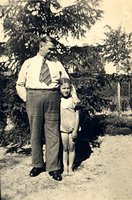
Edith, who was 11 or 12 years old, lived with her mother in Pommern, in the eastern part of Germany. The woman Edith calls her mother was in reality her aunt, who, along with her husband, took Edith in when her real mother died in the late [?] 30s. [Her death is somewhat mysterious.] In 1939 or perhaps later, her uncle died as well. Edith was very close to him.
In those days, in Germany, no child was legally permitted to be without two parents, and so, when Edith’s uncle died, the town’s chief of police—a family friend—was assigned the role of father-guardian.
At the time of her real mother’s death, Edith’s sister, Ilsa, was sent to live with other relatives nearby.
Edith recalls that Ilsa was somewhat “gung ho,” a patriot. So was Edith, in a way, she now says, for she was an avid athlete, an ardent competitor, and, as we know, the Nazis promoted athletics. Edith remembers attending the 1936 Olympics in Berlin. She loved that sort of thing.
Ilsa’s “gung ho” tendencies got her into trouble with her family at least once. Polish prisoners were supposed to stand aside on sidewalks in deference to Germans. One time, evidently, a Polish prisoner did not stand aside quickly or far enough to satisfy young Ilsa, and so she angrily pushed the guy onto the ground. Someone saw this and reported it to Oma [Grandmother] Losa. There was hell to pay that night.
The family was very clear that they were not the sort to mistreat the Polish prisoners.
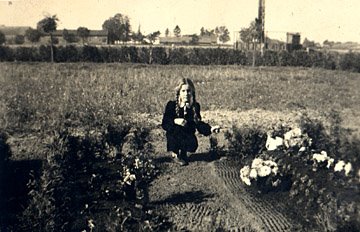
In the days before the Russian invasion, Ilsa moved in with Edith and her mother. They lived in a beautiful home on a hilltop—the last house on the eastern side of town, and thus the dwelling that would first encounter the advancing Russians. Already, local soldiers occupied it: ammunition and weaponry was stored in the garden, and men were billeted inside. Now, as the Russians drew close, the local soldiers selected this particular home for their defensive stand.
“It would be like a fort,” says Edith.
Edith’s mother stubbornly refused to abandon her home, protesting, repeatedly, that she had worked too long and hard on it simply to abandon it. The soldiers tried to tell her what the Russian troops would do to women, even to little girls, but she wouldn’t listen. Finally, the soldiers commanded: “Take the two girls and leave here, now!” And so, on the 28th of February 1945—Edith recites the date without hesitation—Edith, her “mother,” and her sister, along with several relatives, abandoned their fine home.
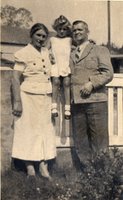
Most of Edith’s relatives lived on farms and thus owned wagons, but Edith and her mother lived in town, and they lacked transportation. The soldiers told them to go the railroad station to await the westbound military trains, so Mom and the girls and a few other relatives packed their most cherished belongings in suitcases and put them on a little wagon—Edith remembers that it was like the little red wagons kids have here in the U.S.—and rolled their stuff to the station.
They waited there for days, enduring strafing and bombing. Edith remembers the siren’s howl and the noise of bombs and guns. At one point, the station [?] suffered an attack that killed fifteen hundred people, including most of their neighbors and relatives, who were also waiting for the trains. (Apparently, German papers ardently covered such events.)
Finally, the trains arrived, and so the refugees hurriedly secured possessions, and themselves, to the open flatcars. Then, at the end, there came another attack. Some people hid by the flatcars, while others dove under nearby wagons. Edith ran clear of the trains and into a hole somewhere. All of a sudden, a portion of one train blew up, killing everyone aboard it.
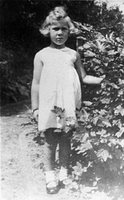
Edith remembers that, about then, the engineer of her train yelled, “the Russians are closing in on all sides; everybody get on the train; we’re leaving now!”
The engineer was a Pole. Polish prisoners had worked and lived in the town since the invasion of Poland years earlier. People from conquered territories manned much German industry during the war, and, evidently, they did other work as well. Edith recalls that Polish women and girls worked as domestics in her town.
Edith’s mother ran the family lumberyard across the street from their home, and that business relied on thirty or so Polish workers who slept on bunk beds in a barn-like structure. Edith says that her mother prided herself in treating her prisoners with kindness, and, in general, prisoners were not mistreated in the town, though she recalls exceptions.
Manny explains that, on the eastern front, many “German” soldiers were in fact Poles, Ukrainians, and Finns who had decided to join the Wehrmacht [army]. They wore the regular German army uniform, but with a thin armband indicating their non-German nation of origin. (Manny lived in southern Germany.)
Evidently, during the Russian advance into collapsing Germany, some Poles stayed, hoping to be embraced by their new masters; others feared the Russians no less than did the natives and, alongside Germans like Edith and her little group, they fled to the west. Many Poles thus eventually ended up in barracks-like housing—at first, along with German refugees—in what became West Germany, and lived in those conditions well into the 50s.
Edith says that the non-German refugees were often mistreated, though she adds that the German refugees, too, were not treated well, since, wherever they showed up, they represented an added burden on already burdened locals.
Some of Edith’s relatives, including Oma Losa, didn’t make it out of Pommern. Later, Edith learned that the younger girls who remained behind—not Oma Losa, who was older, but virtually all of the younger women, including toddlers—were raped. That was the fate of Edith’s sister-in-law, Frida. Years later, says Edith, Frida refused to acknowledge the event, though what had happened to her was no secret at the time. There was no doubt that it had occurred and that it was traumatic.
The invading soldiers had diseases, and so, says Edith, it was necessary for rape victims to do all sorts of awful things to themselves. Terrible bubbling liquids were used, she says.
Frida was raped, but her husband was killed. He had worked for the diplomatic service, and, when the Russians entered and ransacked his and Frida’s home, they found pictures of him in uniform with his ribbons and medals. They assumed that he was a dignitary, an official. He had built a hiding place behind a false wall, and he and Frida were there when the Russians entered the house; but these Russians were no fools: they tapped on the walls and found the two. They dragged Frida’s husband to the front of the house and hanged him there.
Edith’s little group of refugees learned these terrible facts only later; they learned about the rapes and killings and about the burning of all the homes of the neighborhood; they learned, too, that all the younger people were forced by the Russians into work camps.
For some reason, says Edith, after about two years, the Russians allowed Germans to leave, and so they did, traveling west. That was before the Wall had been erected to prevent emigration.
During that exodus and before, people were scattered throughout the country and had no way to find each other. Agencies such as the Red Cross organized efforts to reunite family and friends. Thus, they would announce that former citizens of town X were to meet in town Y at a certain date. People arrived there, carrying signs with their names on them. This went on for years.
Edith remembers one day—this was years later, when she lived near Hamburg—coming home from work and noticing the smells of cooking wafting from her family’s small apartment. She was alarmed, for she knew that, at that moment, her mother and sister were elsewhere. When she entered, she was astonished to find that the mystery cook was none other than her Oma Losa!
Manny hastens to add that, before Edith and her group left Pommern by rail, they had the option of travelling north, instead, to a Baltic harbor, where a ship awaited refugees. But travel by ship would mean abandoning various larger things that they hoped to take with them. Edith’s mother therefore insisted that they take the train.
That was fortunate: later, they learned that the Russians sank that ship, killing most on board. [After this taping session, my father read an issue of National Geographic that described the sinking of the Steuben. I have done further research, and it appears that
three refugee ships (part of a massive evacuation project) were sunk by a Russian sub at about that time, killing perhaps 20,000 people. It is possible that the ship that my mother almost boarded was one of the other two. See also
Sinking of the Wilhelm Gustloff. See also
Tragedy at Sea.]
 Life as refugees:
So Edith’s little group, unlike so many others, did manage to escape to the west, to the area near the western port city of Hamburg. As Edith recalls, the area was at first controlled by the Americans, and then the British.
The Allied soldiers weren’t nearly as cruel as the Russians, but they were no angels. Rape was fairly common—it tended to happen to incautious “bad girls,” says Edith—and theft and ransacking were routine. Soldiers would regularly rifle through refugees’ suitcases and simply take what they wanted. Anyone who owned something of value—say, a radio—removed essential parts so that it didn’t work, hoping that that would deter theft, though Allied soldiers often simply smashed “broken” things.
Americans also tended to destroy anything that sported the Swastika, even though much that had no special connection with Nazism adorned with that symbol.
One had to be careful around Allied soldiers, to not be caught alone and in a quiet place with them. British soldiers seemed to be relatively decent and reliable compared to the Americans.
Edith remembers that many of the American soldiers who drove the trucks were black. She had never seen a black person before that.
Edith and Manny express disapproval at the misconduct of invading or occupying soldiers. German troops, says Manny, faced severe penalties for abusing civilians in occupied territories. Rape was especially forbidden in occupied territories, Edith explains, owing to the importance the Nazis placed on German racial purity. (One hopes that that was not the sole reason for the prohibition!)
Manny remembers that an older German friend named Karl—Manny met him years later, in Canada—was for a time thwarted in his efforts to emigrate, owing to a problem with his German military record. As a Wehrmacht soldier in Italy, some of Karl’s colleagues had taken firewood from a peasant, and the episode was duly noted as a black mark in Karl’s German military record!
Unfortunately for Karl, says Manny, the German army took a dim view of such misconduct relative to civilian populations.
Manny and Edith evidently detect no irony in the fact that, as they say, Germany applied high standards of conduct to its soldiers relative to the treatment of people. [To this day, my parents seem to view the Nazi atrocities that were revealed after the war as utterly strange, as though they were not a part of the Germany in which they lived.]
* * * * *
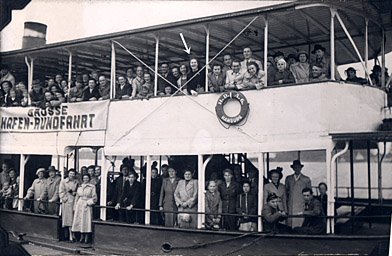
Edith’s arrival in Hamburg was no picnic. She and her small group were taken straight from the train to a large gymnasium—a kind of regional sports center, with wooden flooring. They were kept in that place with nothing to do for maybe two months.
Edith remembers how local families were forced to share their houses and apartments with the refugees, and this, along with other sacrifices in that time of scarcity and poverty, inspired strong anti-refugee feelings.
“They hated us,” she says, referring to the locals. She recalls when, during any icy February, soldiers came and ordered everyone in a neighborhood outside. Housing was then reassigned and people would be forcibly relocated and separated from their friends. Such events especially caused bitterness toward refugees.
Edith recalls curfews and the importance of carrying one’s papers on one’s person at all times....
☀☀☀☀
 First in a series of accounts by Chunk of his family's history. This is Chunk with his nephew Adam, age 2.


 Rebel Girl
 .....Writer and union organizer and father. Raised by wolves from a place across the ocean. He edits a well-regarded journal and, when not kayaking, writes funnily and caustically about rat bastards who, naturally, do not like him. He owns a house in the mountains, but he is proud of his yurt. (Modjeska Canyon)
 Sometime Red's just a blur.
 There is a persistent rumor that C. Wheeler and Reb are actually Philosophy instructor Roy Bauer and English instructor Lisa Alvarez.
 Many years ago, Chunk hiked all over the Santa Ana Mountains with Billy the Wonder Dog. Billy loved to play in Trabuco Creek.
 Mountain Ray loved the Santa Anas. Had a green thumb, they say. He and his crop are now gone.
 Looking north, toward Santiago Peak, from Chunk's canyon abode.
 Chunk's house.
 In the Santa Ana Mountains, circa 1900. I'm the guy at the top.
 The garage near Red's place
 What remains of an old house, across the road from Reb's place
 Reb's mountain home
 Reb's "Hearst" entrance
 Just down the road, in the canyon, across from the Radleys
 Sister Annie, somewhere in Northern Cal, c. 1973
 Mid-70s: what was to become Rancho Santa Margarita
 The magnificent Atilla, atop Santiago Peak, mid-70s
 Li'l Sarah, "Iguanodon"
 Chunk's family, c. 1958