The Evil of Froguenstein
The real monsters behind community college trustee
Steven J. Frogue
by Matt Coker
IF YOU'RE LIKE MOST ORANGE Countians, this is probably how you imagine Steven J. Frogue: He's a big, fat, Nazi goose stepper. He stands in front of his bathroom mirror at night in his swastika jammies, holding a black comb under his nose, and pretends to be Adolf Hitler-foaming at the mouth and swatting imaginary flies before the masses. Frogue thinks the Anti-Defamation League of B'nai B'rith is filled with a bunch of Catholic-president-slaying juden who have nothing better to do these days than figure out ways to fuck with the Frogue. "Holocaust, schmolocaust," he'll tell you-without you asking. "So it was strongly suggested the Jews go on a little extended holiday. Is that so wrong? Well, is it?"I'd ask Frogue if any of this stuff is true, but he won't let me. Something about the OC Weekly being "too radical," as the South Orange County Community College District's spokeswoman put it.
Frogue, a member of the board of trustees that oversees the district encompassing Saddleback Community College in Mission Viejo and Irvine Valley College in Irvine, has been accused of anti-Semitism and minimizing the Holocaust. Meanwhile, he's also part of a reform-minded board majority that-depending upon who you listen to—is saving the colleges from financial ruin or driving them into the ground.
Over mere months, several top administrators have unexpectedly retired or been canned. Teachers have been stripped of department chairmanships, deans have been moved from campus to campus, and teachers have been plucked from classrooms to replace administrators. Board majority members have been accused of interfering in the district's day-to-day operations. Against this backdrop, the state is preparing, if necessary, to take over the financially troubled district.
The controversy surrounding Frogue—the top vote getter in the 1996 trustee elections—has led to a recall drive. However, it's obvious when you speak with anyone on either side of the recall movement that there is more to the push to push out Frogue than bigotry and pesky board meddling.
So while conspiracy theorists like Frogue would have you believe Lee Harvey Oswald was a patsy for those who really offed John F. Kennedy, here's another conspiracy theory for you-from an outside observer who cares not what a community college trustee truly believes when he stares into the mirror at night:
Steven J. Frogue is the patsy in the mess that has become the South Orange County Community College District, and there are indeed dark forces behind it all.
They're called teachers.
 |
| From Tustin News, 1992 |
Received bachelor's and master's degrees from Chapman University. Lake Forest resident for 26 years. Married to an elementary school teacher. Two grown sons. Presbyterian deacon.
"He doesn't do press," answered Pam Zanelli, who was hired a couple of months ago as the college district's public-affairs consultant. Nor, she said, would the district chancellor, other administrators or other board members speak to me.
"They're afraid of you," she explained.
Frogue may be Weekly-shy, but "he craves attention," according to Terry Burgess, former vice president of instruction at Irvine Valley College, who recently became president at Chabot Community College in the Bay Area. "He likes being the naughty boy. He loves people to listen to him."
Frogue would have to agree that he has a stunning ability to piss people off.
Late last summer, Frogue, then the board president, got his fellow trustees to approve spending $5,000 in district money to bring four speakers to Saddleback for a JFK-assassination seminar. Among the speakers lined up: talk-show host Dave Emory, who contends Nazis who fled defeated Germany played a leading role in slaying the dashing young president; John Judge, who echoes the views of late New Orleans District Attorney Jim Garrison in saying a cabal of gays and the military-industrial complex were behind the killing (documented so deliciously in Oliver Stone's madcap romp JFK); and Sherman Skolnick, a self described "traditional Jew" from Chicago and frequent contributor to Spotlight (which the Anti-Defamation League [ADL] calls "the most anti-Semitic publication in America"), who has written about a plot against Kennedy in Chicago two weeks before the assassination involving Oswald and an Oswald look-alike.
But it was the fourth speaker on Frogue's dream team that caused the matzo to hit the fan: Washington, D.C., author Michael Collins Piper, whose latest book, Final Judgment: The Missing Link in the JFK Assassination Conspiracy characterizes the Kennedy killing as a joint hit orchestrated by top-level CIA officials in collaboration with organized crime "and, most specifically, with direct and profound involvement by the Israeli intelligence service, the Mossad."
Witnesses, historians, Jewish activists, U.S. courts and even California approved high school textbooks agree that 6 million Jews. perished during the Holocaust, many in gas chambers. Piper, also a Spotlight contributor, has said the figure might be far lower and that, in any case, no Jews died in gas chambers.
 |
| FA President |
But that didn't end the rancor. A recall campaign aimed at Frogue was launched as fast as you can say, "Die, Nazi scum." Saddleback and Irvine Valley student newspapers and student governments called on Frogue to resign. The Orange County Human Relations Commission, which has rarely criticized elected officials, denounced Frogue as "anti-Semitic" and "intolerant."
Some defended the trustee. The uproar put academic freedom under attack, reported Vanderbilt University's Freedom Forum, a nonpartisan foundation that defends free speech. Piper, the Spotlight, and its ultrafringy publisher, the Liberty Lobby, used the seminar's torpedoing to attack the ADL, which they claim has been at "the forefront of the effort to squelch . . . writers, editors, radio programs" and "is on the other side of just about every position patriots advocate."
Defending Frogue's seminar, Zanelli cited that seven of every 10 Americans don't believe the Warren Report, which determined that Oswald acted alone in killing Kennedy. She maintained that Frogue led a similar class in 1988, and "no one said anything." It should be noted that Frogue was not a district trustee, let alone the board's president, in 1988.
News of the seminar turned seats at the district's monthly board meetings into hot tickets. First came Israel backers,. Holocaust survivors and militant Jewish activists. They were soon joined by Frogue supporters-uninvited, according to Zanelli-who spouted neo-Nazi and white-supremacist rhetoric. While protectors and supporters took over the meetings-loudly-the man of the hour either remained silent or didn't show up at all. Frogue's defenders insist he was trying to keep an out-of-control situation from getting worse. Others read his silence as smugness toward critics or agreement with creepy supporters.
"I do not hold Mr. Frogue accountable for the fact that white supremacists came and spoke in support of him," said Rich Prystowsky, an English and humanities professor who presents a well-regarded Holocaust seminar at Irvine Valley. "I do hold Mr. Frogue accountable for not telling these supremacists, 'You have the right to speak, but you don't have my support.' That he is accountable for."

From Persons (others)
FROGUE'S RECENT CHUMINESS WITH reputed anti-Semites didn't come out of nowhere. He told Irvine Valley's student newspaper, the Voice, in 1995 that he has read publications from the Institute for Historical Review, the Newport Beach organization that contends the Holocaust was exaggerated. Frogue inferred that perhaps the institute's information should be debated in public.
As a high school teacher, Frogue's attitudes toward the Holocaust caught students' attention. Ten former students at Foothill High School in Santa Ana have given sworn affidavits to the Committee to Recall Steven J. Frogue, claiming the history teacher questioned the Holocaust and denigrated Jews, Asians, Mormons, Hispanics and African Americans during classes. In her affidavit, Lida R. Jennings, who attended Frogue's social-studies class during the 1982-83 school year, said the teacher told his students: "The Holocaust didn't really kill that many Jews. It was more like 6,000." After an in-depth discussion of Japanese internment camps, Pamela Suzanne Brown-Bustamante said she asked the teacher when he would cover the Holocaust. "His reply was to the effect that he would not be discussing it in class because it was too controversial a subject and that he questioned its validity and significance," said Brown-Bustamante, who felt his "remarks were an affront on a very personal level because of my Jewish heritage." John Mapes took Frogue's world cultures class as a freshman in 1992-93; he remembered "a few instances where people would get upset to the point of tears in his class at his comments."
Complaints from Foothill High students and parents in 1994 reportedly led to Frogue's removal from his history class for a year. His new assignment: watch kids on detention. A tenured instructor, Frogue appealed to the school board, which returned him to the classroom. Today, Frogue vehemently denies that inappropriate comments led to his temporary reassignment. No, he says; the move occurred because it was his turn for detention duty. Officials at the Tustin Unified School District, who oversee Foothill High, can't comment because it's a "personnel matter."
Frogue was quoted in a 1997 LA Times story saying he believes Oswald worked for the ADL. But amid the recall heat, Frogue now claims past quotes attributed to him in the mainstream and student press are "lies." One Times story he won't run away from is a March 1 column on the Orange County edition's opinion page by his board chum Dorothy Fortune. (Frogue, Fortune, Teddi Lorch and current president John Williams comprise the so-called board majority-or "Gang of Four," as it is unaffectionately called. ) The story accused ADL, and Jewish Defense League (JDL) officers, "most [of whom are] from Los Angeles County," of fueling the fire engulfing Frogue.
Zanelli told the Weekly she co-wrote the Fortune piece. And, in our interview, she resurrected a point Frogue has frequently made in past stories: that the ADL "spies" on people. That's a reference to a lawsuit the ADL settled in 1996 with several civil-rights organizations that alleged the league hired agents to gather secret information about their activities.
"It is really insulting to me as a Jew who has worked on projects for the ADL to have this human-rights organization treated this way," Prystowsky said of the Fortune/Zanelli story. "I think there would be a real outcry if this was happening to other groups."
 |
| Times 8/22/97 |
No one really pays much attention to community college district boards. An ambitious politician is not going to find a nonpartisan board seat much of a launching pad to higher office. And a trustee's traditional role is to just vote yea or nay on matters that have already been thoroughly hashed out by administrators, academic senates and faculty department chairpersons. The most important votes a trustee casts are for employee contracts.
As more union-endorsed trustees have been elected, the faculty association's power has grown. So have teachers' paychecks. The sixth-largest community college district in California, the South County district currently has the highest-paid faculty. The average full time professor's salary is $67,495—which is $12,000 more than the state average for community colleges, according to the state chancellor's office.
Anyone who runs for a board seat without the backing of the faculty association is going to have a tough go. Just to stay even, such a candidate would have to double the local union's backing, since the California Teachers Association (CTA) automatically matches any contributions the faculty association doles out.
"Very few people can raise that kind of money for a community college board seat," said a source involved in school board elections for Orange County teachers unions. "Candidates that are union-elected are committed to the union."
 |
| Pam Zanelli |
"This is not really about Frogue and whether he has a right to say whatever it is he says," the source said of the controversy swirling around the trustee. "The question is really whether the union has systematically turned the board into an adjunct board of the union. A recall won't accomplish much because the union still has all the cards."
So check out this conspiracy theory: a career high school teacher has run-ins with administrators. He runs to the union for protection. Besides hanging out with conspiracy nuts and professional anti-Semites, the teacher presses the flesh with influential local and state teachers union members (faculty associations at the high school and college districts fall under the same CTA umbrella). With their blessing and financial backing, this good union soldier wins a community college board seat. He says and does some nutty things, but the seat is his to keep so long as he fulfills the union's chief goal: increase teacher salaries.
"He's anti-administration by persuasion," Burgess said of Frogue. "I'd offer he doesn't get along with administration because he isn't worth a shit."
Endorsed by the faculty association, Frogue and Williams won their first four year board seats in 1992. Williams remained mostly in the background after joining the board, but "Frogue was wacko from the jump," Burgess said. The trustee took on the ADL, administrators and Irvine Valley's academic senate (he called it an "intellectual drive-by shooting" and "the Spanish Inquisition carried out by fifth-graders"). But few took Frogue seriously, certainly not the then-board majority. He was like the goofy uncle you put up with once a year at Thanksgiving.
Then came the Orange County bankruptcy of December 1994. Property-tax revenues had already taken a four-year beating thanks to the recession. New home building, which had been the district's hope for new property-tax revenues, stopped. "The way funding works is, if the district generates enough money, all that money stays within the district," said Bob Cosgrove, a Saddleback English professor, former academic senate president, member of district and Saddleback budget committees, and recall supporter. "They had been living high on the hog."
Suddenly, those funds were no longer keeping pace with rising spending, and the district was forced to rely solely on state payments for each student enrolled, which totalled less than had been coming in before and was subject to the whims of Sacramento's budget ax.
The financial downturn turned out to be a boon for Frogue, providing him with an issue in his 1996 re-election campaign that resonated with South County voters wary of bureaucrats wasting their hard-earned tax dollars. "He ran on a platform of reducing administration and being more responsive to students," Zanelli said.
A number of teachers went to the leaders of the faculty association before the 1996 election and asked that the union not endorse Frogue because he already had a reputation as a nut. The union ignored them and instead hired an outside consultant to help direct the campaign of its slate of candidates: Frogue, Fortune, Williams and Don Davis.
That consultant was Pam Zanelli.

ZANELLI-WHOSE EX-HUSBAND, JERRY Zanelli, worked for former LA County state Senator David Roberti-told the Weekly she's been in politics since she was 19. The Tustin resident represented former Governor Jerry Brown in OC; was Brown's appointment to the male-dominated Orange County Fair Board; sat on Santa Ana's Human Relations Committee; served on the staffs of former state Senator Paul Carpenter and then-county Supervisor Harriet Wieder, helped the campaigns of a slew of Assembly and judicial candidates; and was a founding member of the Orange County Commission on the Status of Women.
She was paid $4,200 to be the faculty association's 1996 campaign consultant. One of the campaign's most dramatic moments came when the slate mailed a hit piece aimed at its opponents: "Taxpayer Alert: Don't Allow Your Tax Dollars to Pay for Same-Sex 'Marriage' Domestic Benefits at Your Saddleback Community College District." Sent to Republican voters in the district shortly before the election, it alleged that the slate's four opponents-including incumbent Lang-supported the use of "education tax dollars" for health benefits for employees' same-sex partners, college classes including "content about gay and lesbian lifestyles" and "seminars and conferences to educate participants about the gay and lesbian lifestyle."
"Vote to oppose these four candidates," the mailer read. "Their plan will cost taxpayers $9,000 per 'partner' each year."
Lang later told The Lariat, Saddleback's student newspaper, that no candidate on his slate campaigned with domestic-partner benefits as an issue, although they were asked their feelings about it at a public forum. The claim that Lang's slate planned gay and lesbian seminars and classes "was invented," he added.
The mailer was paid for by Taxpayers for Responsible Education, a political action committee established by what was then known as the Saddleback Community College District Faculty Association. The union spent at least $44,000 on behalf of Frogue's slate in that election, records show.
The mailer worked (except for Davis, who lost to Lang). Frogue was the race's top vote getter, garnering 128,361 votes and a decisive 61 percent to 39 percent trouncing of his opponent.
How does a candidate with Frogue's baggage get elected by such huge margins?
"Because, to put it bluntly, most people don't know who's running when you get to races that far down on the ballot," said Bob Wilberg, a recall volunteer and unopposed Democratic candidate for the South County's 73rd Assembly District seat, currently held by Republican Bill Morrow, a Gang of Four booster. "A person puts himself down as an educator, and there's a commonality there for a school board seat. Most people, including myself, don't ask who these people are."
Teachers incensed over the mailer asked faculty association president Sherry Miller-White why such divisive literature was used to elect the union's candidates. She blamed the association's hired consultant-Zanelli emphatically denied it was her-and then reminded everyone of the union's desire to have its candidates win elections at all costs.
The cost may be higher than Miller-White first calculated: at the board's March 23 meeting, Orange County gay and lesbian groups announced that they have joined the Frogue recall drive because of lingering outrage over the mailer. That announcement came a few days after another by the recall committee: infused with sizable cash from an "anonymous" donor to help pay for a Santa Monica political consultant, the committee quit trying to beat the clock to get the recall on the June ballot and is now shooting for November. At a Zanelli-arranged press conference the next day, Frogue, with Williams and Miller-White at his side, said: "The recall of Steven J. Frogue has failed. They couldn't deceive the public once, and they won't be able to deceive the public a second time."
AFTER THE '96 ELECTION, ZANELLI LANDED another job that placed her close to the Gang of Four. Her consulting group was hired by the board to look into the district's public-information program in the wake of the Jews-killed-Kennedy incident. After the consultants' report-foes say it cost taxpayers $15,000-was handed to the board, Zanelli was hired as an in-house consultant, serving as the district's media spokesperson and providing political expertise. Frogue's opponents call her "a $5,000-per-month spin doctor," referring to the amount she's reportedly paid and the information she's dispensing. The board voted on March 23 to turn it into a full-time position. With a resonance in her voice that could only lead one to assume she'd rather swallow Drano than answer the other way, Zanelli replied, "No" when asked by the Weekly if she'll apply for the full-time position.
 |
| Frogue, age 16 |
Burgess is among the long list of administrators who have also been let go, told their: contracts would not be renewed, or have retired. "My departure is a direct consequence of the politics of that place and the agenda of the board majority, which feels like it's on some sort of jihad to right past wrongs," said Burgess, who pointed to his longtime criticism of faculty-association tactics.
"Those in power now are a vengeful lot," he said. "If you talk to the rank-and-file people . . . morale is horrible. They are all very angry, frustrated and fearful of losing their jobs. [The board majority is] playing with people's professional lives."
Burgess clearly sees the Gang of Four's ascendancy as a kind of Revenge of the Nerds: hounded by administrators throughout his tenure as a high school teacher, Frogue is now in a position to give back.
Not so, says Zanelli, who claims any pain is a byproduct of the board's commitment to reform a district in severe financial trouble. "Four [board members] have the same goal: streamline administration," she said. "This is going on around the country with community colleges. They are trying to stretch tax dollars, and they are trying to be more responsive to students."
To do that, Zanelli says, the board killed a program that allowed teachers to consider themselves on-the-clock when they perform administrative functions and redirected that teaching time into more core-subject classes.
But to replace fired or retired administrators, the board has-in six out of 10 cases-plucked appointees out of district classrooms. According to the recall committee, that negates ballyhooed gains in putting more teachers to work. And a source close to the district claims that nearly every new administrator had recently been active in the faculty association. "They are rewarding their friends, not picking qualified people," the source said.
Critics also charge that the board has mishandled "release time"-a procedure that pays teachers to perform quasi-administrative tasks. Some teachers sit on the academic senate, for example, an advise-and-consent teachers council. Under release time, the hours teachers spent sitting in academic senate meetings could be subtracted from the time they were required to spend in front of students. Not anymore. From now on, the anti-administration Gang of Four has said teachers will teach, and administrators-handpicked from among their loyalists, critics say- will administer.
Faculty members opposed to the Gang of Four say the attack on release time is destroying the notion of "shared governance." The union hierarchy's answer to this grievance? Sharon MacMillan, the association's president-elect, has said teachers were repeatedly warned that release time was getting out of hand and that a policy to control it needed to be established. "The academic senates did not respond," she said.
"When the academic senate president is making more than the chancellor, something is wrong," added union negotiator Kenneth Woodward.
About 15 hours of release time is dedicated to faculty association officers so they may work on union business, district teachers said. The board has not stripped them of that time.
 |
| Sharon MacMillan, in her youth |
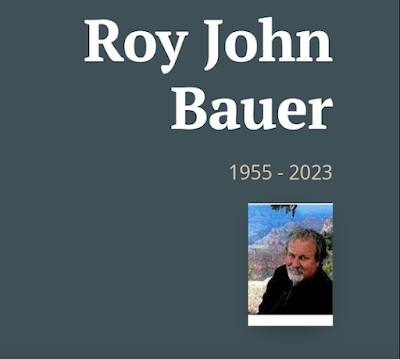
Irvine Valley philosophy professor Roy Bauer successfully sued the board over the Brown Act violation. Under that state law, governing bodies can meet in private to discuss personnel or pending litigation, but the matter to be discussed must be announced before going into closed session, and no vote can be taken in private.
Zanelli discounts the violation, calling it "a procedural issue. The board was following the advice of a previous chancellor and its attorney."
But it wasn't the first time trustees had gathered outside public meetings to discuss district business, according to former trustee Harriett Walther, who volunteers for the recall. She said Williams assured her at a board meeting during the height of the bankruptcy that he, Frogue and Lorch had been meeting separately to tackle the problem. Walther said she was ignored when she asked for agendas and minutes from those meetings. The Brown Act is supposed to apply to such subcommittees.
 |
| Walther |
Mathur's appointment brought a resounding vote of no-confidence in the board from the Irvine Valley faculty. The board fired back on July 16, 1997. On that day-the day of the Junta—the Gang of Four voted in closed session to return all department chairpersons—10 faculty members, including Bauer—to their classrooms. Deans from Saddleback were transferred to Irvine Valley to take over the ex-chairpersons' administrative duties.
It was a kind of bureaucratic "fuck you." By eliminating Irvine Valley's chairpersons and dumping that release time back into the classrooms, the district saved $600,000 in school overhead and $250,000 in salaries, according to Zanelli. Meanwhile, it has allowed the district to offer 10 percent more classes in such core subjects as English and math. "It had a very real effect on the bottom line," Zanelli said. "This restructuring...cost nothing because the deans [who were transferred from Saddleback] were already getting paid. But it created a lot of anger."
That's not all that has created anger. Some in the Gang of Four have resorted to "desk checks," monitoring the work areas of administrators to make sure they are on the job when they should be, Cosgrove said.
"Four board members are micromanaging the district," said Cosgrove, who has been with Saddleback since 1981. [They are] not letting people do what they are trained to do....This group is asking for l9th-century high school board controls."'
After meeting behind closed doors-again-in September, the Gang of Four removed the "interim" from Mathur's presidency title. Unlike other administrative hirings, a faculty/ staff/community committee was not allowed to submit a list of finalists among the 19 candidates for the post. The board also skipped having the chancellor make the final recommendation.
The Gang of Four liked the process used to hire Mathur so much that they voted on March 23 to make it formal district policy.
"No one does that in the state," Burgess said.
 |
| In 2016, Frogue's son (2nd from left in 1989) became Trump's chief health policy advisor |
Before his recent retirement, vice chancellor of finance Anthony Carcamo predicted the reserves will be 3 percent when the current fiscal year ends.
Fortune has said the board is looking to slash another $700,000. Someone from the outside looking at a district where teacher salaries and benefits account for more than 50 percent of its budget might assume belt tightening should begin there. But the Gang of Four says the district's mission has always been to maintain a top-quality faculty. And given Frogue's base of support in the union-support that has withstood charges of anti-Semitism and gay-bashing-it's unlikely that even looking at holding the line on salaries is an option.
That could produce a showdown between the board and the state chancellor's office, which has noted the district continues to dole out high salaries while on watch. "It is so out-of-whack," said Burgess, who alleged there are faculty members showing up to class-two days per week earning $81,000 per year and more than 30 professors earning more than six figures per year.
Carolyn Gillay, a Saddleback faculty member in the business sciences-computer-information-management department and union supporter, does not like the assertion that teachers are overpaid. "I can't believe what's being told to the public," she said. "People think I'm making all this money. I took a pay cut to come here."
Gillay, who after 14 years at Saddleback earns about $72,000, believes teachers are generally underpaid. "If you live in Orange County, it's a hell of a lot more expensive to live here than it is in, say, Riverside," she said. "You'd expect salaries to be higher here."
They certainly will be under the five year faculty contract approved on March 31 after a monthlong union election that set a district record for ballots cast (190) and featured the closest margin o victory longtime observers can remember (55 percent to 45 percent). The contract applies to the 300 full-time and 700 part time faculty members in the district.
Carcamo is reportedly wary of the pact, saying it will cost the district $5.6 million. "It's just flat-out irresponsible" considering the district's precarious financial position, Burgess said.
 |
| Econo boy |
The first year of the just-signed contract applies to the current school year ending in June. As fast as you can say "Yippee, it's July," yearly cost-of-living increases, currently estimated at nearly 3 percent, kick in and continue through 2002. Zanelli told the Weekly those raises are mandated by the state.
Another example of the contract seeming to be cognizant of the watch status is cost-of-living raises appearing to be tied to whether the district retains a 3 percent reserve. But when that was brought up at a tense faculty association contract meeting in a bone-cold Saddleback lecture hall on March 9, Miller-White assured colleagues the district can only "ask the union to reconsider negotiations." By simply deciding against going back to the bargaining table, the raises will automatically kick in no matter how low the reserve dips, Miller-White said.
"The board put that provision in the contract so that it could hide from the state the fact that they're giving teachers a raise," MacMillan said.
The contract also restored five levels at the highest end of the pay scale that had been negotiated away in the 1970s. Seventy-five longtime professors will get $2,500 yearly stipends along with their cost-of-living raises at restored levels, retroactive to the current school year.
"Even though there are no raises per se, everybody in those five steps will get a 3 percent raise by virtue of just being alive at the end of the year," Burgess explained. "If there is a 3 percent [cost of-living] raise, they will get a 6 percent total raise in a 3 percent economy."
"What you have are union loyalist on both sides of the [bargaining] table," said Bauer, who, in addition to suing the board, pokes fun at them in his campy campus newsletter The Vine. "The whole thing really stinks....These so-called fiscal conservatives are doing the bidding for a greedy union."
Zanelli, who claims the new contract will drop the district from first place in the highest-paid faculty sweep stakes to fourth, responded, "The faculty association approved the contract with a zero percent raise [the first year]. If that means the union controls these four board members, the proof isn't in the ... contract."

 |
| Matt Coker |
SEE ALSO
- NIGHT OF THE NAZI by Chunk Wheeler
- FROGUE'S "SCHOLAR" HINTS AT VIOLENCE
- FROGUE AMBUSHES A YOUNG CRITIC--WITH HELP FROM THE CHRISTIAN COALITION by Tom
- A MOTLEY CREW OF NAZIS VS. JDL THUGS: OH, WHAT A NIGHT! by Chunk Wheeler
- THE SAYINGS OF CHAIRMAN FROGUE (1997?)
- LIES! LIES! LIES! --the May '97 Board Meeting
- TO CONCERNED UNIONISTS: FROGUE DEFENDS HIMSELF AGAINST THE CHARGE THAT HE IS A HOLOCAUST DENIER
- His view of Holocaust stirs furor (Dan Froomkin)
- IS TRUSTEE STEVEN FROGUE A HOLOCAUST DENIER?