Thursday, May 26, 2011

Seeing mostly old Danzig with the lovely Agnes

Today, we took the tri-city tour (in and around Danzig/Gdansk) with the lovely Agnes, a thirty-year-old Polish girl who has lived in the area her entire life. She remembers the "Communist time," when she was a little girl. She remembers, too, all the celebrations as the Soviets left, by degrees. They were finally gone by about 1991.
She joked about how, unlike Californians, she doesn't have to worry about earthquakes, fires, etc. I said, "Yeah, just Germans and Russians." We laughed.

The weather was fine: I do believe it hit about 80 degrees F. As it turns out, the original Mr. Fahrenheit hailed from the city of Gdansk, and we came across a tribute to him.

The end of the Soviet Empire really started with the successes of Solidarity, a non-Communist-controlled trade union, which managed to gain concessions from the ugly and oppressive Soviet puppets that controlled Poland. But quite a few protesters died along the way (first in 1970), and this is a monument to them.

This, said Agnes, is the longest "and ugliest" building in Poland, built by the communists. She was careful—ever the professional—but it was plain that she had nothing but contempt for that lot.

We drove north, from Gdansk, to a magnificent church that housed an enormous pipe organ. Poland is one seriously green country. There are forests everywhere, and they are amazing. We probably picked the best time of the year to visit.

The front of the church

It's enormous inside; very impressive.

We heard a twenty-minute organ concert. My folks were enthralled. It rocked.

Yes, though the Gdansk area is near the Baltic, the beaches are beautiful, and, owing to a protective peninsula, the water is calm and relatively warm (by three degrees Celsius). At the height of the summer—several weeks away—bathers must arrive early to claim their patch of sand.

One finds old-fashioned striped cabanas at this particular beach, which is associated with the famous Grand Hotel.

And here is that hotel. DeGaulle, among others, stayed here. And movie stars: Marlene Dietrich, et al.
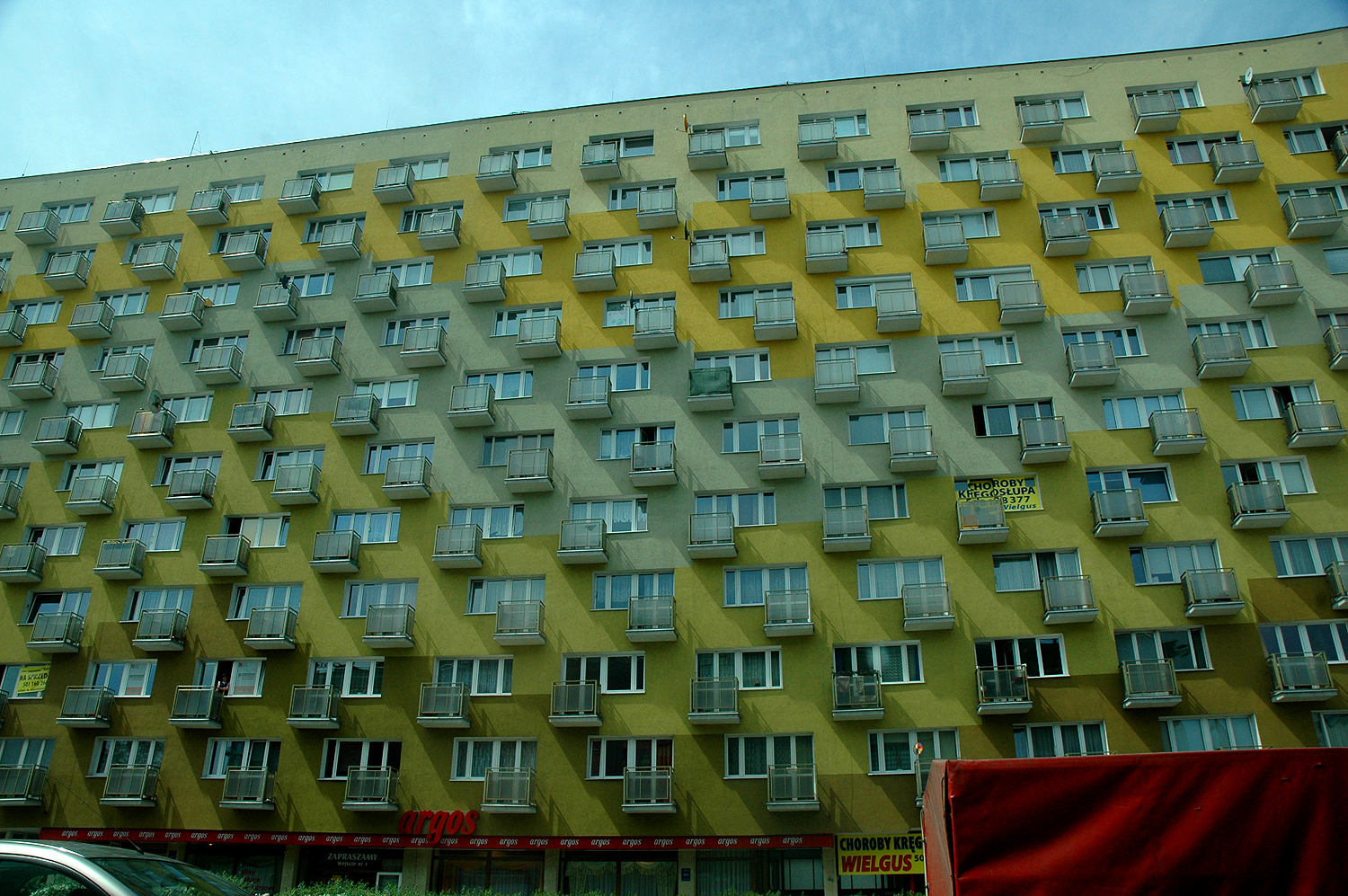
The architecture varies considerably from town to town. This apartment complex was mesmerizing. Poland has experienced a construction boom in recent years, which has kept its economy relatively healthy.

Yes, Poland has a Navy. And they're proud of it, too.

Eventually, we made our way back to Gdansk, and walked down King's Road in Old Town.

It's really quite spectacular. I was surprised by it all. The architecture is magnificent—and large. Originally, each narrow building was owned by a single family. Today, each floor is an apartment.

This region is the amber capitol of the world. My dad spent several hundred bucks here buying jewelry for mom.

The tower in the background is undergoing renovation.

Generally, the architecture in this part of the world is colorful.
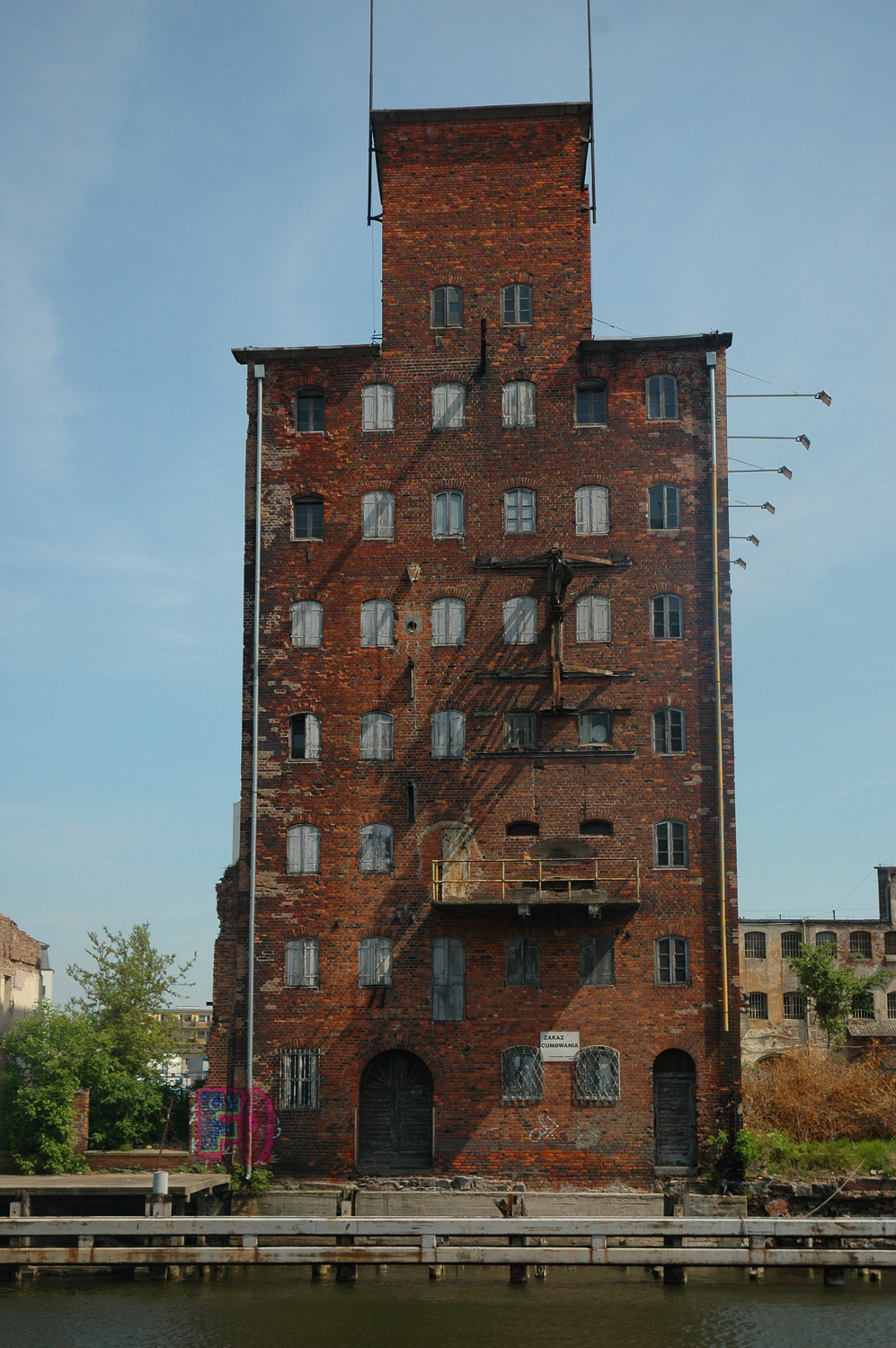
An old building along the canal that leads to the bay.


Agnes and my folks, making their way through the many spectacular streets.

Another impressive church.

Gateway to the King's Road.


The atmosphere in these streets is fun. Lots of restaurants, bars, novelty shops, etc. Lots of tourists.

Much of this—though not the tower—was destroyed during the war and then later rebuilt.

I was mighty impressed.

"take back your university"


This letter from UC Riverside professor Tom Lutz is making the rounds. Read it. Do something. How bad is it? Bad. Very bad. As Laila Lalami writes on her blog (which is where I located this letter): "the University of California is now being slowly dismantled, and its mission of public education perverted, thanks to the budget cuts it has had to absorb over the last few years."


(Yes, Lutz does get it wrong about the quality of community college education - but he gets so much else right.)

Dear colleagues and students,

After a year and a half as Chair of the department, I am stepping down. Professor Andrew Winer will be taking my place, for which we should all be grateful.

As my last act as Chair, I would like to share with you my sense of the gravity of the situation we face. I spent most of my academic career doing what most of us do—teaching, writing, reading graduate applications and theses, having office hours, reading in my field, doing research. I didn’t pay much attention to the University and its administration. None of us have that luxury anymore. Budget cuts after budget cuts after budget cuts have left us all painfully aware of how the sausage is made, or not made.

Having served in administrative posts for most of the last five years, I have come to know the budget issues very well. We are now past the tipping point. We are on a rapid downhill slide that will have profound effects for our state, our families, our country, and our world.

In the space of less than a single lifetime, the University of California, Riverside went from being a small agricultural experiment station to being one of the top 100 universities in the world. An incredibly dense and elaborate web of specialists across all fields of scholarship, science, and the arts was developed, and it took enormous efforts by thousands of people over those years to make it happen. In less than the four years it used to take to graduate, it is being destroyed.

Our department is a great example of the breadth of vision and dogged effort that has made Riverside the exceptional place it has been. There are other creative writing programs in the country, but not a single one anywhere with the range across genres and fields, with the breadth of knowledge in world literatures, with the diversity of voices, methods, and styles that we have. And there is not another creative writing program anywhere—and certainly none with our caliber of professors—that is more truly dedicated to its pedagogical mission at every level. The faculty at Princeton is perhaps a bit more famous, but undergraduates there never meet them, much less have access to them in, before, and after class. I have now taught at every kind of school—fancy elite universities, small colleges, Big 10 universities, art schools, and universities abroad. I have never been part of a faculty this student-centered, this concerned about the educational experience and future prospects of its undergraduate and graduate students.

Three years ago I was offered a job at USC, which is much closer to my house, more prestigious as an academic address, and was offering me more money. UCR worked hard and did the best it could to match the salary and I stayed. I stayed because I wanted to be part of this project, I wanted to teach a student body that is over 85% first-generation college students, that comes not from the richest families in California but some of the poorest, students that have a much greater likelihood than not of coming from immigrant families and from families that speak other languages as well as English. I wanted to remain part of one of the greatest democratic experiments in history, and certainly one of the few greatest experiments in public education in the history of the human race, the University of California.

If I got that offer today, though, I’m not sure I could turn it down, and, in fact, many people are not turning down outside offers these days. People who have taught here for more than twenty years are now considering going somewhere else, somewhere the future is a bit more certain. These are people who are the best in their field—you don’t get outside offers unless someone thinks you are among the best in your field—and UCR, and the educational experience at UCR, is diminished each time this happens, each time one of the best of our best leaves for a better job. We can’t blame them—they have kids of their own to put through college, they have research projects that require funding, they know that to teach the most complex subjects effectively, they need to run seminars with 15 students sitting around the table, not 150.

The budget cuts of recent years and the ones we know for certain are coming next year mean a gross deterioration of our school. Those faculty who leave for better jobs are not being replaced. Many of you know Yvonne Howard, who has been the chief administrator for our department since it was founded. This year her job was unceremoniously terminated. Staff people and faculty who retire are not being replaced. Next year students at UCR will have trouble getting the classes they need, and many of the classes they get will be crowded beyond responsible limits. Departments are being forced to abandon optimal class-size limits for classes two, three, and five times that size. The library has virtually stopped buying books. We are on a race to become a mediocre university at best, and if the $500 million of proposed cuts to UC turn into a billion dollars, as they are now discussing in Sacramento, we will be over. The billion dollar cut translates into thousands of classes across the system. It means creative writing workshops with 50 students. It means we will cease to be a real university, and will simply become another community-college-level institution at best. Then, maybe, after a few years, with tuition at $25,000 or $30,000 a year, we can begin the slow, arduous build back into a real university.

Why is this happening? Political demagoguery and corruption. Thirty years ago UC received 9% of the state budget and prisons 3%. Now UC gets 3% and the prison-industrial complex gets 9%. The legislature is taking the money that should be used to educate the best of its citizens and using it enrich the people who make a profit from the imprisoning the poorest. The percentage of the cost of higher education provided by the state has been cut in half, cut in half again, and is on the verge of getting cut in half a third time. The people in the legislature understand the value of public higher education—the vast majority of them (in any given year over 80%) have degrees from our state system, and many of them have multiple degrees—all made possible by the legislators who preceded them, and who had more courage. They do not protect the University for a very simple reason: if they do, they will suffer a flow of conservative attacks and Tea Party racism, funded by the Koch brothers and their ilk, the standard price if one stands up for anything that is directly devoted to the commonweal.

In my darkest moments, I think the monied interests working against reasonable taxation are doing so because they consciously, actively seek to make sure we do not have an informed, educated citizenry, the better to extract our collective labor and wealth unimpeded. But such intentionality isn’t necessary. Simple, short-sighted, grab-it-now, bottom-line greed explains their destruction of our culture, without recourse to any dystopian conspiracies.

The only thing that has a chance of turning this devastation around is student activism. We in higher education cannot spend millions of dollars on campaign contributions the way the prison profiteers or the medical and insurance and aerospace industries do, so we need to find other ways to provide a political counterweight. We need to make our voices heard. For you students, your own self-interest should be the catalyst, as you will, no matter what happens this year, have trouble finding the classes you need, much less the ones you want, and the chance you will graduate in a reasonable amount of time is already gone. But you should also think of what this means for your families, your neighbors, your friends, your own kids when they come of age. And think what it means if California reduces its higher education budget to the levels of Missouri or West Virginia—we will become like those places. Because of its education system, a system that, until just a few years ago, has always been considered the best in the country, California has been among the most innovative and significant literary and cultural centers in the country, and because of this education system, too, California has been the economic powerhouse it has been—1000 research and development companies a year are formed out of the UC system, for instance, and four UC inventions a week are presented to the patent office. We had the best educational system because we were willing to pay for it, and our expenditures were among the highest in the nation, too. In a few short years we have dropped into the middle in state spending, and we are fast falling even farther. Only a political movement strong enough to buck the corporate money determining our tax policy can change this downward spiral. Only you can make that happen.

We have been told, from the top, not to expect a return to ‘the glory days.’ This year was not the glory days. This year we already have discussion sections that are not discussions, fewer classes, an exploded faculty/student ratio, decimated staff; we are very far from the glory days. Now that either 500 million or 1 billion additional dollars are getting yanked out of the system, your favorite lecturer will be gone. The class you wanted won’t exist anymore. Your student advisor will have 800 or 1000 students to advise instead of the 300 we all agreed was an absolute maximum two short years ago. This is the end of quality. And why? Because a few very wealthy people are protecting their wealth from taxes, taxes considered reasonable not only everywhere else in the developed world, but considered reasonable in America until the last 20 years.

I hope you get angry. I hope you get active. Call and write your legislators, get out in the streets, take back your university, don’t let yourselves be the last people to have even this chance.

Tom Lutz
Professor and Chair, Department of Creative Writing


To contact your state legislators, click here. (Remember, some of you may be represented by our former trustee now assemblyman Don Wagner.)

*

Wednesday, May 25, 2011

Give me the name of this street


     You know what the funniest thing about Europe is? It's the little differences. I mean, they got the same shit over there that we got here, but it's just...it's just—there it's a little different.
     Take the bathtubs. Here's a pic of my tub in my hotel room in Gdansk, Poland. It's hard to tell from the photo, but there's a big difference between the depth of the tub and the height of the tub wall—it's like a mile high—and so, when you step out of the tub, it's a big f*cking step, man. It could kill a guy. I'm serious. They oughta issue parachutes or something.
     And what do short people do?

     Here's the hallway outside my room. It's strictly from The Shining. It isn't just the look of the place; it's that nobody's ever outside their room. It's like I'm the only guy on the 2nd floor! I can hear 'em knocking around sometimes. But they never show!
     —Yeah, I know. The hotel in the Shining was supposed to be in the U.S. Whatever.

     This is the Polish potato dumpling thing I ate for lunch today. It was quite good (I skipped the bacon). Since I was raised on my mom's cooking, and since my mom's cooking is pretty close to the kind of cooking they do in northern Poland, I found it quite familiar. Very gooey and potato-y. These dumplings had a spinach filling, I think. I like to say the word: "dumpling, dumpling, dumpling."

     These Poles have got złoty on the brain. I've got dollars and I've got Euros (see above), but Poles want nothing to do with 'em. It's złoty they want. 
     When I tried to leave my parking garage yesterday, the gate just wouldn't open, and that pissed off all the Poles behind me. (They like to use their horns, man.) So I managed to drive over to the nearby "buro," and I talked to the garage parking official there (a girl). She said I needed to pay up. "OK," I said. I tried to use my credit card. "No credit card," she announced. How about Euros? No. Dollars? No.
     "Złoty," she said. "Polish money."
     "So you mean to tell me that I've got to come to you to give you złoty every time I leave this garage?"
     "Thees ees true." 
     But I don't hold it against her. It's the system man.

     I don't know if it's the Scandic Gdansk or it's just Poland, but the phones are mighty dodgy around here.
     Today, I tried to call someone to confirm a tour for tomorrow, and I couldn't get my hotel phone to accept the numbers I was typing in. So I went down to the desk, and the pretty girl there (they're all pretty) said I didn't need to use the prefix, 'cause I'm in Poland. So up I went to my room to try the number again, sans prefix.
     Nope.
     So I went downstairs to the gal at the desk (still pretty), and she tried to call for me. It didn't work.
     "The phones," she said, cryptically.
     She tried another phone. Finally, she got through. She shoved the phone in my face. "Talk," she instructed.
     Tonight, we noticed that about a dozen seriously pretty girls—dressed to the nines—were hanging around the lobby area of the hotel. My dad pointed out the phenomenon. "Maybe it's a hooker convention," I suggested.
     But they looked a tad wholesome for that. 
     I still don't know what that was all about. I'll do some investigating. But they do have lots of conventions and meetings and stuff here at the Scandic. 
     "They take pride in it," announced my mother.
     I just stared at her.

     It goes without saying, I suppose, that much of the world is fucked up. And here we see about 50% of the fuckery: weird-assed voltage around the world, including in Poland. I think I fried my C-PAP machine.

     These card-keys suck. At least they do in Poland. I've had to replace mine twice. My folks had to change theirs too. Every time I go down to the desk and tell the gal or dude about the problem, they flash a quizzical expression, as though this never happens. 
     I guess they're just being professional. No use revealing that you know what a shithole you're working in.

     I'm actually having a wonderful time in Poland, and I really like the people. 
     Still, I'm thinking of writing a letter of complaint to the Gdansk Picayune. These Poles need to know that their language is seriously fucked-up (although, admittedly, it sounds pretty good coming out of women). 
     Take this map of the harbor area of Gdansk: check out the names! Here's a quick list of some of 'em:
Gdańsk Główny
Chlebnicka
Dlugi Targ
Koskiot pomeno-nicki
Szopy
U Furty
     "Szopy"? "Główny"? "U Furty"? They've gotta be kidding!
     I've been doing all of the driving on this trip, and that's not easy, 'cause these Poles are wild and quite possibly suicidal drivers. But sometimes you want to remember the name of a street, and so you tell everybody to look for that, 'cause you've got your hands full just trying to stay alive.
     These Poles. They stick like a novel on every street sign. You wouldn't believe it. You look at one of these things, and then you see something like, "Gdańsk Główny Chlebnicka Dlugi Targ Koskiot pomeno-nicki."
     Yeah, give me the name.


Board meeting highlights highlights

     As no doubt you are aware, Tere Fluegeman’s Board Meeting Highlights are now available. (I couldn't attend Monday's meeting; I'm in Europe!)
     Video of the meeting is available here. (Mac users: try Firefox.)
     Near as I can tell, Trustee Tom Fuentes was once again a no show.

     IMPRESSIVE FACTOIDS (PAINT A SPECIAL PICTURE). According to Tere’s notes, Tod, Glenn, and Co came to discuss Master Plans:
Educational and Facilities Master Plan Overview
Saddleback College President Tod Burnett, Irvine Valley College President Glenn Roquemore, District Director of Facilities and Planning Brandye D'Lena, and GKK architect David Hunt gave a updated summary of the Educational and Facilities Master Plans for each college projecting needs from five to 20 years. They explained the year-long process which included data collection and comprehensive college and district input from 89 committee meetings, 39 group interviews, and six milestone presentations along the way in order to gain consensus.
     Doncha love a recital of the merest of factoids? They don’t quite tell the story, do they? Somehow, the process did not produce a true consensus. It permitted a kind of technical consensus, at best.
     "Milestone presentations"? C'mon. Don't know about Saddleback, but IVC is short on leadership. Technical leading is not leading. Technical consensus is not consensus. Occasional BS/grip-n-grin sessions do not mean we're working together like one happy family.
     And everyone fears the VPI. "Don't trust 'im!" is a very common remark about that fellow. He has produced a toxic workplace at some levels. "Don't run afoul of Craig," people say. "He can be nasty; and he's vindictive."
     VPI Peter Sellers does wear an excellent smile and a thick seeming collegiality. A master disguise.
     And he seems to run the college.

     MONEY FOR WHAT? The board also accepted some money:
Acceptance of a $400,000 grant from the State Chancellor's office to expand career exploration at the 7th and 8th grade level, fund development of green and hybrid technology in Saddleback College's automotive program, and to develop robotic technology at IVC.
     OK, so this grant is to “expand career exploration at the 7th and 8th grade level….” Do YOU know what that means? How can anybody at one of the colleges “expand career exploration” in Junior Highs? Somebody explain this to me.

     WHAT KIND OF STUDENT? Up at Irvine Valley College, lots of faculty are steamed about administration’s undying support of the Early College Program, which has “bad idea” written all over it (a survey of EC faculty last year provided considerable evidence of deep programmatic shititude).
     Someone wrote to tell me that, according to recent spams from IVC administration, “Beckman High” students graduated at last Friday’s IVC commencement (in connection with the EC program).
     But wait. Those students were IVC students who happened also to be Beckman High students. Why doesn’t our administration understand this? The friend is peeved.

     ACTIONS SPEAK LOUDER THAN WORDS. Evidently, at the board meeting, there was the expected blathering about the mass exodus of hundreds of full-time instructors. Aren’t they wonderful? Won’t we miss ‘em? We love them so. Yeah.
     A friend has emailed me a different picture:
Here’s yet another chapter in the annals of ****** treatment of people. Apparently each of our IVC retirees has been completely shut off from their ivc.edu emails, their blackboard accounts. everything. They cannot finish their spring grades or even open their summer school rosters!
     Is this true? Is there any truth to these claims? (UPDATE: I do have some verification: two people thus treated. On the other hand, the problem with emails seems to have more to do with, um, a lack of knowledge or skill rather than any kind of deliberate snubbery.)
     I ran into Kate Clark two weeks ago; she retired maybe two or three years back. I asked her if she had an ivc email account so that I could email her some Senate meeting notes.
     Nope, she said.
     She wants to have one. But evidently she doesn’t have one.
     How come?
     It's because she's so loved, as are all "emeritus" faculty.
     Nothing quite works, does it? In that regard, IVC administration is like Poland. But without the charm.

     OOPS--forgot to mention this: On Monday, the OC Reg reported that former OC Treasurer (and fraudster) Chriss Street lost his appeal of last year's $7 million judgment against him. As you know, Street was a star on the super-pious Team Fuentes (like John Williams and Mike Carona and so many other creeps), and he often visited SOCCCD board meetings to make gratuitous reports about OC tax collection amounts.
     Evidently, his political career is now officially toast.

"Family Fun" night with Assemblyman Wagner


Over at The Liberal OC, Dan Chmielewski reports on the latest Don Wagner sighting, this time at a "Family Fun" night at a local elementary school:

Asm. Wagner: 18 Month Extension on Taxes Likely to Get Needed GOP Votes on Budget

excerpts:

State Assemblyman Don Wagner said Friday that if Governor Jerry Brown pushed forth an 18 month extension of the taxes instead of the five year plan Brown wants, the Governor would likely get the Republican votes he needs although Wagner made it clear, he wouldn’t be one of the Republicans voting to extend the taxes....

...One neighbor, who’s done the legislative action battles with me for years, asked me who he (Wagner) was. I told her Assemblyman Don Wagner. She asked, “will he do anything to help get us more money for our schools?” I said, “Unlikely.”

I’ll concede one thing to the Assemblyman; unless Democrats can come up with a great candidate to beat him, we’re likely stuck with him for the next five years as he keeps the seat warm while delivering no meaningful legislation to impact the amount of state education dollars to our well-below average funded local school districts.


To read his post in its entirety, click here.

*

Our day of rest

Been having a recuperative day here in Gdansk, which seems to be pronounced "GdAIngsk." Going to lunch was the big adventure. Did that a few miles south in a little town called Pruszcz (Praust) Gdański (pop. 23,000). They seem to pronounce it Proosht GdAINSK. Something like that. It was the site of the Praust concentration camp (for women) during the war.

This is the scene in the level below my hotel. Quaint, nice. So far, the food's been great. Even tried some Polish dumplings. Could do without the bacon, but otherwise great.

These old religious buildings are now occupied with Kentucky Fried Chicken (at right) and McDonalds (in the middle). I do believe that the building over to the left is something like a train station. Haven't visited these places yet. I'm thinking of getting a Happy Meal.
My dad insists that Poland is "very Catholic," but I've seen no open religiosity at all.

Typical Gdansk street scene. Signs of Poland's "communist" era are everywhere, and they are generally negative--e.g., the seemingly indiscriminate placement of factories and other industrial construction. Many of these places seem simply to stand unoccupied, unmaintained, testaments to absurdity and ugliness. (But, photographically, they are often very attractive.)

Typical semi-rural scene along the main drag here (going south). Very green, lovely forests. Great old buildings, some of them simply falling apart from neglect. There's lots of that in this part of Poland. It's a beautiful place but one senses that the recovery from the era of Soviet domination continues.

Tuesday, May 24, 2011

My European adventure


     WELL, WE GOT HERE, and all is well.
     The flight—on Lufthansa—was grueling. We were OK for the first 2/3 or so, but the sardine can conditions (economy) and heat (I tend to run hot) got to us. Didn’t sleep a wink, and couldn’t move an inch. Plus I had too much stuff with me, what with my camera and laptop.
     But none of this triggered anxiety, which was a slight worry. I had pills for that, but they were in my pocket, and, qua sardine, there was no way I was gonna get to the bottom of that particular region. When I finally did, the pills seemed to have disappeared, and that never happens, man.
     Essentially, I’m taking my folks on a kind of pilgrimage to my mother’s home, from which she was obliged to flee in 1945, ‘cause the Russians were coming. That part of Germany (Pommerania) is now in Poland—literally half way across the northern half of today’s Poland.
     --But getting back to the fiascos: my folks were mighty neurotic about every aspect of this trip, leading up to it. So they dithered endlessly about their baggage and its weight. (I was skeptical of every alleged factoid they uncovered about the Byzantine baggage rules.) The plan was to have only carry-on luggage—namely, one of those bags on wheels with an extendo-handle.
     Meanwhile, I didn’t pack until literally the night before departure. It all sort of came together pretty well, I thought.
     When it came time to board in LA, the Lufthansa people had no problem with my little bag, but they rejected my folks’ as too big, and so those neurotically-prepared cases were consigned to the lower baggage area (of our 747).
     Amazingly, my folks did not freak.
     When we got to Frankfurt airport, we discovered that the notion of German efficiency and technological prowess is mostly a myth: we lost track of my folks’ bags, the departure gate for our next flight had somehow changed, Lufthansa’s computers suddenly went down, nobody manned the (alleged) correct departure gate for hours, and, as it turns out, Frankfurt is, like, the world’s most humid f*cking place—and, yes, I blame that on the Germans too.
     Everybody tolerated it, but not me. Perpetual flop-sweat.
     Luckily, we had hours to sort it all out, which we did. But not the sweat part.
     Eventually, we got on some bus, which took us to a regional jet, which turned out to be a smallish plane cleverly named the “Bombardier.” So, off we went, headed for Gdansk. We didn’t seem to bomb anything.
     When we arrived, we soon realized that Poland isn’t Germany. Everything’s pretty small-scale and half-assed here, and things just barely work. But that’s just a first impression. I may feel differently later today.
     They’ve got lots of cops in Poland, I guess, and they all look at you like they know you’re about to commit a crime. Many cops are female and attractive.
     We were supposed to be met by a guy at the information desk with our rental car, but that didn’t happen. I dragged my sweat-soaked carcass all over the little terminal, and I didn’t get anywhere. And then it started to rain. It was cold and rainy, I was exhausted (but nothing like my folks), and I was sweating like a pig.
     Just as we were about to procure a taxi, I noticed a young man standing in a corner with a sign that said “Bauer.” Sure enough, he was our guy. I said, “you were supposed to be at the information desk, dude—like an hour ago.”
     He was a nice kid and he quickly explained that he was not told about any of that, and all he knew was that he was supposed to be there at noon.
     It was 8:00 p.m.
     The kid—Peter—is studying math in Warsau (at some poly-technical institute, I guess) and he expected to become an actuary. “There are only 204 in Poland, and I expect to be number 205,” he told me. Nice kid.
     Eventually, we were on the road, and I was driving. We had no idea where our hotel—the Gdansk Scandic—was, and, as it turns out, it’s not like you can just stop at a gas station and ask some guy. My folks were no help at all (don’t even get me started). But I figured that the Scandic was likely near the center of town, and so I followed the signs that pointed me to downtown Gdansk, which is maybe twenty miles from the airport. What with the rain, my father’s enfeebled state, and my mom’s pissed-off-itude, it was quite a joy ride, but, pretty soon, and after numerous pronouncements, miscommunications, and squabbles, we found ourselves in what appeared to be the heart of Gdansk.
     “There it is!” screamed my mom.
     “No, it’s not here,” peeved my dad.
     “Where’s what?”, I asked.
     “What is?!” said my dad.
     “Mom?”, I said.
     It was the Scandic.
     Now, you’d never guess that this could be a problem, but having seen the actual Scandic is no guarantee that you’ll ever actually get there. I had to do some fancy driving, stopping over trolley tracks (“Don’t stop here, we’ll be killed!” insisted my father) to make a U-turn, while endlessly looking out for the adventurous Polish pedestrians who seemed always to dart out from nowhere.
     “Where’s the entrance?” I asked.
     Eventually, I parked on the sidewalk in an alley along the Scandic—that seems to be how people park here: way up on the sidewalk, no matter how high the curb. And, sans jacket, wet with sweat and rain, I wandered around until I found the “entrance” of the hotel, which is somewhat obscure. It's like it's a secret location or something.
     I won’t go into the remaining misadventures (they gave me a room that was already occupied by two women, etc.), but we eventually got our rooms and freshened up. (The two ladies were nice.)
     Dinner at the Italian (I guess) restaurant attached to the hotel was quite good. We had trouble paying for it: they didn’t like dollars or Euros. You’re supposed to have Złoty, I guess. We eventually paid with a credit card. It was 130 somethings, I know not what. At that point, we didn't care.
     I tried to write something for the blog last night, but it was hopeless. Kept falling asleep.
     Turns out my C-PAP machine (for sleep apnea) requires a new fuse to operate in these hinterlands (no, getting the adapter wasn’t enough), and so sleep is an iffy business. Don’t yet know what absurdities have befallen my folks over the night, but I’m sure I’ll soon find out. (No doubt they went out for coffee but then couldn’t make sense of the card-key and they’ve probably been out there for hours studying the card and the lint and who knows what.
     So, so far, so good!

Roy's obituary in LA Times and Register: "we were lucky to have you while we did"

  This ran in the Sunday December 24, 2023 edition of the Los Angeles Times and the Orange County Register : July 14, 1955 - November 20, 2...
