Sunday, March 4, 2012

The sinking of the Shooting Star, part 2


The entire “Fuentes/Shooting Star” saga can be found here.

Tim Klein on the "Shooting Star," La Paz
     Nine days ago, I posted about the mysterious 1974 sinking of the yacht "Shooting Star," a tragedy that took the life of Tom Fuentes' then-boss, OC Supervisor Ronald Caspers, and nine others. Since then, I've received two articles in the mail, entitled "The Last Voyage of the Shooting Star" (parts 1 and 2), by Wayne Clark.* They're from the November and December, 1974, issues of the now-defunct Orange County Illustrated. 
     They were sent to me by the daughter of one of the ten victims (one of the three Klein brothers on the yacht).
     I'm working my way through these articles, piecing together the curious events in this tragedy. Here's what I've got so far:


     PLANE TO LA PAZ. On Sunday, June 9, 1974, Caspers & Harber's party fly south from LAX to La Paz. From there, they take a charter flight to Cabo. They leave Cabo on the Shooting Star (SS) early the next morning (Monday, the 10th). 
     Caspers' chief aid, Tom Fuentes, has packed an extra ice chest with steaks, hors d'oeuvres, drinks, etc. (Fuentes was supposed to join the group for the trip, but, at the last minute, he decides not to go.) 

     ROUGH SEAS. Early into the voyage, the SS runs into rough seas. There are 6 to 8 foot seas for three days and three nights. Only Caspers and Harber are experienced sailors. 
     At 8:30 a.m. on June 13, the SS gives its position (to an operator in California) as northwest of Turtle Bay (see maps). That it is so far out to sea suggests that it is taking a beeline course to San Diego. The SS calls the National Weather Service to learn of weather conditions in San Diego (they are reported as fair). The forecaster detects no anxiety on the part of the SS crew during the call.

     BACK TO TURTLE BAY. The SS next heads southeast (!) to Turtle Bay for refueling. It arrives late in the morning; the refueling takes two hours. Crewmen Joseph Klein, Leonard Bashor, and Richard Tully mail postcards on which they describe the trip as difficult. A dockworker later recalls that the SS's crew was in a "big hurry."


The "Beeline" to San Diego
     BACK ON THE "BEELINE." Late afternoon, June 13: a Turtle Bay fisherman observes the SS heading north on the seaward side of Isla Natividad (see above). He wonders: why didn't the captain take the safer coastal route to the east? The SS seems to be in a great hurry.
     Seven hours later (11:35 p.m.), the California radio operator receives a radio call from the SS, asking to relay a request for pumps to nearby ships. The SS is taking on water, but there's no MAYDAY. (The SS is known to have pumps, which are important, owing to the ship's tendency to take on water from the deck during rough seas.)

     MAYDAY. Twenty minutes later (11:55 p.m.), the operator receives a MAYDAY. The message is garbled, and it is possible that the SS's position is significantly miscommunicated. (If so, this may have doomed the SS.) The message is passed on to Coast Guard search and rescue in Long Beach.
     A private research ship, the Scandia (at anchor on the other side of Baja) hears the SS's MAYDAY. A Scandia crewman remembers the call thus: 
"MAYDAY, this is the Shooting Star with nine persons on board.... [Not ten?] We are sinking about 50 miles south [!] of Turtle Bay." 
The rest of the message is garbled.
     The Coast Guard's information places the SS near San Benito Island, 50 miles north of Turtle Bay and 25 miles west of Isla Cedros. (Incidental factoid: the original inhabitants of Isla Cedros called it the "island of fog.")

     THE COAST GUARD ARRIVES FOUR HOURS AFTER SS's MAYDAY. With the information that the SS is near San Benito Island, a Coast Guard helicopter in San Diego heads south at 12:55 a.m. (June 14). A Coast Guard C130 aircraft leaves San Francisco at 1:40 a.m. The helicopter arrives at San Benito Island at 3:45 a.m. and begins the search in a 15-mile radius around the island. The C130 arrives at 4:15 a.m. Each aircraft scans the dark for flares. Their crew spot nothing.
     Dawn arrives at about 5:00 a.m. Running low on fuel, the two aircraft and their ten crewmen fly east to the city of Guerrero Negro, where they await refueling—perhaps a tragic delay—while international red tape is untied.


The Venturous
     PERMISSION DELAY. The Coast Guard in San Diego can't send out more planes until it gets permission from the Mexican government, but the needed Mexican officials are not available. After 8 hours, officials are located and the permission is granted. A second C130 is dispatched and lands at Guerrero Negro at 1:00 p.m. It refuels the helicopter, and then the two craft head west to San Benitos Island. (The other C130 flies back to San Diego for refueling.) The U.S. and Mexican Navies are contacted to join in the search, but they have no ships in the area. Also, as it happens, few private ships are present.
     Early Friday afternoon, the cutter Venturous is dispatched to the area to organize the search. The ship and its crew of 63 arrive at San Benitos Island at 10:00 a.m., Saturday (the 15th). 

     LOOKING FOR THE TWO 13-FOOTERS. By Saturday, things look pretty grim, for hypothermia would take any survivors in the water within 24 hours (and, further, sharks are numerous in these waters). And so the search turns to efforts to locate the two boats carried by the SS: a 13-foot Boston whaler and a 13-foot snark sailboat.
     On Saturday, another helicopter, three more C130s, and a Navy P2V aircraft (with highly sensitive equipment) arrive in the search zone. Wind and current are taken into account, and thus the search moves southward. But nothing is found. The search area is expanded.
     On Sunday, the cabin top of the Shooting Star is spotted, but its location is north of the original search area by some 50 miles! Aircraft head north and continue searching. 
     They find nothing. Search commences, too, along the Baja coast, on the assumption that the 13-footers would head east, but nothing is found.

*** to be continued***

A Coast Guard C130
Click on pics to make them larger
A Navy P2V
*Oddly, Clark seems to have been a deputy of one of the OC Supervisors about the time of Caspers death. I haven't yet determined which Supervisor.

Friday, March 2, 2012

One step forward, two steps back: Roquemore's clueless announcement


     After the Academic Senate meeting of two weeks ago, in which Senators expressed unanimous concern about new developments in the administration’s “civility initiative,” one would have thought that IVC Prez Glenn Roquemore and Co. would take a step back. —Maybe gently apply the brakes. Offer some assurances perhaps.
     But no.
     At that meeting, senators agreed that certain elements of the notorious Feb. 2 "civility report"—e.g., the notion that any “incivility” of employees should be noted by supervisors and included in employee evaluations!—were counterproductive, civility-wise. There seemed to be agreement that the very idea of enforcing civility via a "civility statement" or district policy was a move in the wrong direction, especially considering our college's benighted history, which has left conscious employees in an ongoing state of suspicion and distrust—that, instead, we’d achieve what we really wanted by making our college a place where employees can speak up without fear of retaliation.
     So you’d think that IVC Prez Glenn Roquemore would modify his rhetoric a bit, maybe communicate assurances that the "civility" initiative is a thing warm and fuzzy.
     No such luck.
     Here’s the latest “communication” from our “leader":

TO: All Members of the IVC Community

FROM: Glenn R. Roquemore, PhD, President

RE: Open Meeting March 23 on Civility and Mutual Respect

DATE: March 2, 2012

On December 16, 2011, the Working Group on Civility and Mutual Respect was formed in response to District-wide Goal 1, “SOCCCD will create a district-wide culture which is characterized by mutual respect and collaboration and which celebrates the uniqueness of each institution.” In addition, District-wide Planning Objective 1.1.3 states, “Draft a Board policy on mutual respect and forward for BPARC review.” It is expected that the Working Group on Civility and Mutual Respect will engage the campus community in dialog regarding campus and district civility and mutual respect and develop a statement that is intended to contribute to the development of a Board Policy on mutual respect.

On Friday, March 23, 2012, from 12:30 to 5 p.m. in room BSTIC 101, the second meeting of the IVC Working Group on Civility and Mutual Respect will be held. This meeting is an open forum and everyone in the IVC community is encouraged to participate. Please arrive at 12:30 p.m. for refreshments and informal conversation. At 1:00 p.m. sharp the meeting will begin.

The meeting will be facilitated by a five-person team. Professor Lewis Long, President of the IVC Faculty Association, will be joining the four persons who facilitated the first meeting on December 16th: Classified Senate President Dennis Gordon; Faculty Senate Vice-President Jeff Kaufmann; Dean Keith (Shack) Shackleford; and John Spevak, a member of the College Brain Trust.

The facilitators will review the prioritized comments and suggestions made on December 16 (see attached) and use them as a starting point for crafting recommendations to the District's Board Policy and Administrative Regulations Committee. We will also create an action plan with specific steps to develop a culture of mutual respect and civility within the IVC community.

I will be sending another email between now and March 23, with additional information, including an agenda for the meeting.

The facilitation team and I believe this upcoming meeting will be an opportunity for an open and honest discussion about creating an environment which will enable us to accomplish positive things for the IVC community, in both the near and extended future.

If you have any questions or comments, please send them to me or to any or all members of the facilitation team. The email addresses are groquemore@ivc.edu;dgordon@ivc.edu; jkaufmann@ivc.edu; llong@ivc.edu; kshackleford@ivc.edu; john.spevak@gmail.com.

Thank you.

Very Respectfully,
Glenn R. Roquemore, Ph.D.

     It's as if the Feb. 16 meeting never happened.
     Commissar Roquemore can't even get his facts straight. He says the working group was formed on Dec. 16. According to the “Civility” report sent out by VPI Justice on Feb. 2, “the IVC Working Group on Civility… had met … on October 17, 2011....” Thus, by the time of the Dec. 16 “workshop,” the Working Group had already existed for two months, which was more than enough time for folks to figure out that no faculty union rep was included—and, indeed, that the very idea of drafting a civility statement is clueless and oblivious to fairly recent history, including our own.
     But why schedule this third meeting for a Friday—a day almost guaranteed to minimize participation by Friday-phobic IVC faculty? Roquemore might as well announce that Raghu Mathur and Tom Fuentes will be there to take pictures with your kids!
     Has the massive application of brakes that occurred at the Feb. 16 Senate meeting—a meeting attended by VPI Craig Justice, who seemed agreeable to senators' sentiments—been forgotten? How can that be?
     What on Earth is going on here?
     My God, these people are freakin’ unbelievable.

It's Art!

from this morning's New York Times:


2012 Whitney Biennial: A dancer in Sarah Michelson's "Devotion Study #1 - The American Dancer."

*

Scholarship program woes: a complete overhaul

     At Thursday’s meeting of the Irvine Valley College Academic Senate (Rep Council), senators and visitors (including Richard Morley, recently-hired Foundation Director, and Darryl Cox, long-time Director of Financial Aid) discussed IVC’s troubled Scholarship Program, which has been the object of much criticism recently—and, indeed, for years.
     The scholarship program has grown quickly over the last dozen or so years, so much so that it became necessary to purchase a computer program called STARS (Stars Online?). Unfortunately, employing STARS has been a case of fitting a “square peg into a round hole.” One difficulty evidently concerns entry of faculty letters of recommendation into the system.
     That was bad enough. Then, very recently, it came to light that IVC’s scholarship system is possibly out of compliance with state and federal standards—specifically with regard to awarding scholarships to “protected classes.” The college received an 18-page legal opinion that lays out the issues. That was in early February (the district had received the opinion in December). The letter’s arrival sparked a mad scramble to tweak the computer program, yielding some recent snafus.
     Nevertheless, we seem to have cobbled together a fix that allows us to move forward for now.
Richard Morley
     As things now stand, scholarships can be earmarked to specific groups, but because we are a public college, we may not disperse by class; hence, we will work with donors to adjust the language in reference to protected categories. The scholarship pool is chosen with donor criteria and scores on students’ written essay. These essays, Morley explained, are scored on the basis of content only, read by a “highly trained,” monitored, broad-based committee of faculty, staff and community. Applicant can submit letters of recommendation. Donor criteria and essay score determine applicant pool ranking for each scholarship. Donors are then involved in an advisory role. The scholarship committee recommends final awards to the foundation board of governors.
     During yesterday’s Senate discussion, I questioned the purported “objectivity” of the process’s approach to the student essay, given that there is no mechanism for determining the accuracy of its “content.” (I also questioned whether essays can be read without regard to “style.”) My colleague, Melanie, also questioned the “content, not style” provision, noting that some students’ poor writing skills prevent them from adequately conveying their points. Others noted the difficulty of writing letters of recommendation without reference to the student’s sex (and other protected categories). Biologists at the meeting noted that they have received very few requests for letters from students this year.
Darryl Cox
     It appears that the current system relies heavily on assessment of the student essay—a rather dubious document—and much less so on (more reliable) faculty letters of recommendation, which are not even required.
     Recognizing legal constraints, I nevertheless questioned the adequacy of such an approach. Some, during discussion, noted that faculty letters can compensate for inadequacies in student essays—e.g., stating relevant facts that students might fail to recognize as important.
     In the end, a member of the cabinet motioned to assemble a task force (housed under the Academic Affairs committee) to overhaul the entire process. The senate supported the motion unanimously.
     That, I think, is a good outcome.
     Naturally, the product of that overhaul will come too late to apply to this year’s process. (I wish to thank Melanie H, whose notes formed the basis of some of the above.)

Trying (and failing) to be all things to all people

Community colleges: $6.4 billion buys confusion (OC Reg; OC Watchdog)

Constance Carroll (one-time
Saddleback College President)
     What is California hoping to buy with the $6.4 billion it spends each year on community colleges?
Remedial academics? College prep? Vocational instruction? ‘Educational enrichment’?
     The answer is “yes” — and that is the root of many problems plaguing the California Community Collegesystem, according to a new report by the Little Hoover Commission, the independent state watchdog.
     California’s Community College system is the nation’s largest college system, with 112 campuses governed by72 districts and more than 2.6 million students. In Orange County, that includes Cypress, Fullerton, Orange Coast, Irvine Valley, Coastline, Santa Ana, Golden West, Santiago Canyon and Saddleback community colleges, with tens of thousands of students.
     “(T)he community colleges have opened doors to people who want to improve the quality of their lives by earning more income, building skills to run a business, excelling in careers, being better parents, or taking another chance to realize their dreams and fulfill their potential,” the Little Hoover Commission said. “Yet, the Commission found that in trying to be all things to everyone, community colleges are coming up short for many.
     “In this study, the Commission found that the state lacks a clear, uniform set of goals for its community college system and campuses. Too many students leave without accomplishing what they set out to achieve, whether learning new job skills or completing a certificate or degree program. Too many are unprepared for college-level work and do not receive adequate guidance to help them make up their educational deficits. At the same time, many students are hobbled in their progress by system policies that encourage campuses to increase enrollment at the expense of the services and supports that can help students move through the system and on with their lives. The result is that community colleges are rationing access, but not in a rational way, putting students on waiting lists who are prepared to succeed at college-level work. In making its recommendations, the Commission envisions a system that asks more of students, but asks more of colleges as well in supporting students and helping them move up and out of the system.”
     While the colleges pride themselves on serving as “a critical entry point to higher education” — particularly for low-income and minority students who otherwise might not pursue college — studies have found that only 3.3 percent of students actually managed to earn a certificate, and and only 7.9 percent earned an associate’s degree. Nearly 23 percent transferred.
     A big problem: Community colleges are open to, and must accept, all comers.
     “Unlike the state’s four year universities, California Community Colleges operate as open institutions, by law admitting ‘any California resident who possesses a high school diploma’ or anyone 18 years of age or older ‘who is capable of profiting from the instruction offered.’”
     But graduating from high school doesn’t mean students are ready for college work.
     “As long as it is acceptable for students to pass the [California high school exit exam] with 10th grade English and 8th grade math skills, we will have problems,” San Diego Community College District Chancellor Constance Carroll told the Commission.
     The Little Hoover Commission makes a long list of suggestions on how to fix things — from reforming enrollment, funding and governing systems to, essentially, deciding what community colleges want to be when they grow up….

Thursday, March 1, 2012

One of Don's friends makes an announcement

Arpaio with tallish friend
Sheriff Arpaio: Obama birth certificate is forgery (OC Reg)

     Controversial Maricopa County Sheriff Joe Arpaio today announced that his investigators believe President Barack Obama‘s birth certificate and Selective Service card are forgeries….
. . .
     Numerous fact checkers have verified Obama’s birthplace, and Hawaii’s top health official announced that she confirmed he was born there....


After all that, I bet that gal had a killer headache.
Not sure about the dancing, but the song works for me.

Excuses, excuses.

Click on graphic to enlarge

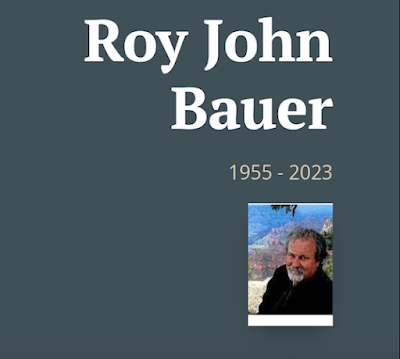
Roy's obituary in LA Times and Register: "we were lucky to have you while we did"

  This ran in the Sunday December 24, 2023 edition of the Los Angeles Times and the Orange County Register : July 14, 1955 - November 20, 2...