"The mind of this country, taught to aim at low objects, eats upon itself."
–Ralph Waldo Emmerson*
Yesterday, I noticed the Register piece on James Corbett, the hapless Capistrano Valley High School history teacher, who was sued by a student a couple of years ago for trashing Christianity in class. (Intellectuals must 'push back,' urges teacher sued by student.)
I was in no mood to write about Corbett, who strikes me as the wrong guy to be a poster child for K-12 academic freedom. I do wish he’d go away.
As near as I can tell, he continues to be the wrong guy.
He’s got a message. It’s about “intellectuals.”
Where does he promulgate his message?
At a Mensa convention.
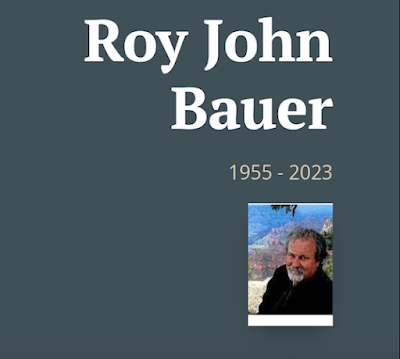
You probably know that Mensa is that silly society that exists to satisfy the alleged needs of the high IQed. (Poor lonely devils.) My late brother Ray was a member (in the San Diego chapter, I believe). Ray was smart, and I loved him, but he was disturbed and profoundly unwise. His membership in Mensa and his activities there didn't leave a good impression of that organization. (Corrupt former OC Sheriff Mike Carona and Holocaust denier James von Brunn appear to be members.)
Really, Dr. Corbett? Your message is about intellectuals and you want to spread it at Mensa meetings?
That’s stupid. It plays right into the right-wingers’ hands, what with their endless yammering about “elites.” I’m not sure what to make of Mensa, but I don’t think anybody denies that “intellectuals” refers to a kind of well-educated, scholarly elite.
One of the Mensa “intellectuals” who heard Corbett speak had this to say:
"I enjoy hearing an educated person talking … He is very articulate and makes me wish I was a lawyer and can go pro bono and help him out."
Well, IQ isn’t everything, I guess.
Part of Corbett’s message is on target, I think. He refers to conservative “anti-intellectualism.” (The term “anti-intellectualism” owes whatever currency it has to the classic "Anti-Intellectualism in American Life,” by historian Richard Hofstadter, published in 1963.)
Clearly, the phenomenon of conservative anti-intellectualism exists and thrives. Does it ever. But Corbett evidently hasn’t noticed that it thrives, too, among liberal and progressive elites (and non-elites).
In my classes, I sometimes explain the reasons for skepticism of various popular philosophies, including the embrace of so-called “alternative medicines” and organic farming and the fear of genetically modified foods. The latter are more or less a part of the progressive (and pro-diversity) world view.
It never fails. No matter how carefully I talk about the best evidence regarding these ideas and the fallacies and sophisms that make them popular, students—often some of my best students—declare that I am mistaken, for so-and-so says so. “You should see this video,” they often say, referring to something they viewed in another class. Or: "You should listen to Professor So-and-So."
They simply ignore the evidence I have presented. Evidence schmevidence.
I get the feeling that my "truth" is, um, incorrect. (Admittedly, I get more flak about my other, allegedly "conservative," incorrectnesses.)
* * *
If you’ve got anything on the ball upstairs, teaching isn’t easy. (If you’re a dolt, it’s amazingly easy; but you’re likely a lousy teacher.) You want to encourage skepticism, but not too much skepticism. You want students to know the things that are known, but you also want them to maintain the appropriate doubts about the mechanisms of knowledge-production and pseudo-knowledge production. A kind of moderation is important, I think. If possible, I say, take things slowly and easily. (Once again, uselessly, I declare, "See? I am a conservative.")That’s why I lay so much emphasis on, not knowledge, but the methods of attaining it (deductive reasoning, inductive reasoning, scientific method, avoidance of fallacies, etc.). I often tell my students, “I don’t care what you believe, I really don’t.” And that’s true, more or less. “I do care how you believe and how you arrive at your beliefs. If you reason well, I will be impressed, no matter what you believe. I will pay attention to what you say.”
One problem with this approach is that you undercut yourself when you refuse to reveal the products of your own careful efforts to arrive at the truth. So, to varying degrees, I allow myself to disclose them. When students ask me if I believe in God, I will answer them (I am some manner of agnostic), but, first, I typically explain that my opinion isn’t relevant. What’s relevant are the arguments, the evidence. And when we cover a topic such as the existence of God, I never bring the class to some big declaration of the truth. Whatever truth there is anyway tends to be “nuanced,” as they say.
Here are the sorts of things I tend to say during, and at the end of, the “existence of God” unit in my Introduction to Philosophy course:
“Yes, the traditional arguments for God’s existence turn out to be pretty shaky, but, remember: that in itself is not evidence for the non-existence of God. Possibly, there are good arguments that have not yet been discovered or formulated.”
“Theists are obliged to present a coherent picture of the world, and, thus far, their efforts seem satisfying only to believers. Their account needs to succeed with those who do not already believe that God exists."
“Often, atheists’ point about the problem of ‘evil’ is simplistic, but there are non-simplistic versions of the point, and we need to consider those.”
“David Hume noted that, since we have no experience with the creation of universes, it is difficult or impossible to speculate about the cause of our own. Perhaps that is correct. It’s hard to say.”
"Please remember that the history of humanity is a history of arrogance--of assuming that we are far less prone to error than the generations who came before us. But, thus far, that has never been the case. It is important to maintain some humility, especially with such important questions."Yeah, that's what I actually say. I refer to my own views no less than to students' views when I make that point about arrogance and humility. The point is important to me. Nevertheless, unsophisticated (and intermittently present) students hear only, “belief in God is stupid and illogical” repeated over and over. "Only stupid people believe in God," says that rat bastard Bauer.
Listening to some of these bizarre-of-hearing students, you’d swear I show up to class telling students to take off their goddam “Jesus glasses” and urging them to combat the right-wing, religious, capitalist cabal!
Gosh, I hardly ever do that.
*Stolen from a Susan Jacoby piece.
Photo from the OC Register.