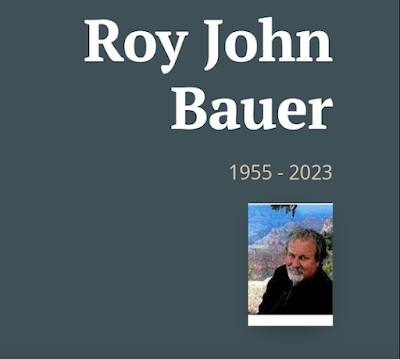
The SOUTH ORANGE COUNTY COMMUNITY COLLEGE DISTRICT —
"[The] blog he developed was something that made the district better." - Tim Jemal, SOCCCD BoT President, 7/24/23
The online encyclopedia Wikipedia has become embroiled in a bitter row with psychologists after a Canadian doctor posted answers to controversial tests on the site. ¶ The Rorschach test is designed to give psychologists a window into the unconscious mind, but many now fear their patients will try to outwit them by memorising the "right" answers….
Of course, the test was already useless, so this is no big deal.
Essentially, the doctor poked a hole in a flat tire.
The Rorschach inkblot test is considered controversial by some researchers for several reasons. Some skeptics consider the Rorschach inkblot test pseudoscience, as several studies suggested that conclusions reached by test administrators since the 1950s were akin to cold reading. [I added the link.]
Cold reading. That’s what palm readers do. It’s what John Edward and James Van Praagh do.
Rorschach tests are bullshit.
Here’s inkblot 3.
If you see two humans, then, deep in your unconscious, either you (1) seek to realize your potential or (2) you are a pedophile.
Plus: Have you been thinking about taking a class or doing some maintenance on your mind, body or soul? Now is the time.
There’s an interesting story about college kids and religiosity in today’s Inside Higher Ed: God and Majors.
Many parents worry that college will drive religion out of their kids. Does it?
A new national study that looks at trends between study of certain subjects and religious observance provides some evidence to back up those worries, but also may surprise members of some disciplines and some faiths. And the research also finds that religious students are more likely than others to attend college….
Among the findings:
• [1] The odds of going to college increase for high school students who attend religious services more frequently or who view religion as more important in their lives….
• [2] Being a humanities or a social science major has a statistically significant negative effect on religiosity…. …The impact appears to be strongest in the social sciences.
• [3] Students in education and business show an increase in religiosity over their time at college.
• [4] Majoring in the biological or physical sciences does not affect religious attendance of students, but majoring in the physical sciences does negatively relate to the way students view the importance of religion in their lives.
• [5] Religious attendance is positively associated with staying in majors in the social sciences, biological sciences and business majors. For most vocational majors, the researchers found a negative relationship between religious attendance and staying in the same major….
…The study’s authors were interested in exploring whether a “scientific mindset” discouraged religiosity:
"Our results are … consistent with [that] overall theoretical framework guiding this research. We believe that there are important differences among the college majors in world views and overall philosophies of life....," they write.
"[O]ur results suggest that postmodernism, rather than science, is the bête noir – the strongest antagonist – of religiosity."
Some of these findings (as reported) are a bit perplexing, but I’m sure nobody’s surprised by indications that humanities and social science majors are negatively influenced concerning their religiosity.
I’m not at all surprised that education and business majors tend to move towards (or more deeply into) religion. I bet they go to chiropractors and read horoscopes, too.
They (i.e., people with education degrees) are in charge of K-12 education, you know. Our K-12 education system is a disaster you know.
Just sayin'.
That fourth "finding" is interesting. Of course, if most science majors are irreligious at the outset, we shouldn't be surprised that their college years won't change their church attendance. I would expect most college students (in demanding fields) to increase in sophistication and understanding of their irreligiousness, which is consistent with this "finding."
The fifth "finding" is curious. Does this refer to students who choose a major and stick with it? I would expect religious students to be more likely to do that, owing to their, um, faith-based thinking. It's harder, I would think, to decide what to do with one's life if one proceeds without the comfort and inertial intellectual infrastructure of a theistic world view.
The family photo archiving continues. These pics are from 1952. Here's mom, checking out the scenery in western Canada. I think she learned all her moves and poses from glamour and show-biz magazines. She was daffy for that stuff.
This is mom with her (soon to be) mother-in-law, near Niagara Falls, I think. Eventually, mom and pop moved west, to British Columbia. (I don't think mom was terribly fond of "Oma.")
In those days, Canadians, it seems, were in the habit of bringin' out their rifles and just walking around with 'em. People did lots of hunting, I guess. But what can you bag on a road? Squirrels?
Mom would have been barely eighteen in this pic. A year or so earlier, she had left Germany alone, age 17, on an old Liberty ship (the kind Henry Kaiser made; they tended to break in half).
I think she lied about her age. Pop was a year older. They met on the boat.
Lookin' for varmints, I guess.
My folks have lots of bear stories. Moose and elk stories too. Mostly, they seem to be tall tales. I guess some of 'em could be true.
But I refuse to believe the one about the bear that cursed in French. Ain't buyin' it. Nope.
I've been scanning and archiving old family photos.
Found some pics of a trip I took with Attila and Ildico to the top of Santiago Peak in 1978. Drove my old '66 Bug. That thing could go anywhere.
They sure were great pups.
Here's a shot (click on the photo to enlarge it; look at the center) of my little brother Ray and me. Ray had just bought himself an old motorcycle, and he had just got it to start. Boy was he happy. He road it around for a while. Then he asked me if I wanted to take a spin.
So I did. [Actually, I now think the guy to the left is my other little bro, Ron.]
I had ridden the thing for maybe two minutes when I heard Ray screaming. I couldn't tell what he was saying, though, later, I learned that it was, "You're on fire!"
I soon figured that out for myself. Somehow, the thing had caught fire, and it didn't look good. I laid it down.
Almost immediately, it was engulfed in flames. My mother had heard Ray screaming (imagine that) and managed to call the fire department. Apparently, she was convinced that someone was actually on fire.
The fire department showed up after a while. By then, an oak tree had caught fire. But they got it out. There was nothing left of Ray's motorcycle. I was burned, but not badly. I think I've got a scar on my hand from that day. Maybe.
I do believe that this episode set my mom back some. Poor thing.
There were many such episodes, where my brother Ray was concerned.
As I recall, Ray tried to blame me for the incident. That was typical of him.
Over the subsequent years, I often lent my bro money. I knew I'd never see any of it again.
The last time I saw him was the night I picked him up from county jail. It was maybe 2 or 3 in the morning. He had lost some teeth. He didn't look good.
He wanted to go to a Del Taco, so we went there. He loved that crap.
That night, as I recall, he asked me when I was gonna pay him all the money I owed him.
...Speaking of bullshit, from a scientific perspective, the direction that America’s space program has taken in recent decades is seriously wrong-headed. During the Bush Administration, things got worse still: for the Bushies, science was an enemy.
Early indications are that Mr. Obama understands the value of science and has made wise decisions—in particular concerning our space program.
Many scientists complain that, Buzz Aldrin to the contrary, if we seek to attain scientific knowledge, we must abandon our prejudice in favor of manned space flight, which is both expensive and unnecessary. Robots can do almost anything astronauts can do, and they can do it much more cheaply.
Initially, in this regard, America’s space program had some stunning, though now appreciated, victories.
Yeah, but didn‘t we get caught with our pants down by the Soviets with their Sputnik? Weren’t we playing nothing but catch-up?!
As Bob Park explained yesterday (What’s New), that’s not really what happened:
Launched on 4 Oct 1957, [the USSR’s] Sputnik carried no instruments. It just beeped…. But a month later, Sputnik 2 carried a Geiger tube and a radio transmitter to relay the Geiger output back to Earth. It also carried a tape recorder to store data when the satellite is over the horizon, but it wasn't working on launch day.
Soviet scientists placed a call directly to Premier Nikita Khrushchev requesting permission to delay the launch for a day, but Khrushchev refused; he wanted to announce another successful launch at a meeting of heads-of-state the next day…. … On 31 Jan 1958, only four months after Sputnik, the US launched Explorer 1 carrying an experiment designed by James Van Allen, Physics Chair at the University of Iowa. It was just a Geiger tube, a radio transmitter, and a recorder – but the recorder worked.
Data from a full orbit confirmed the existence of charged particle bands around Earth, now known as the Van Allen belts. It was the first major discovery from beyond the ionosphere.
Soviet scientists were crushed; only four months after Sputnik, the US had taken the lead in space science and has never relinquished it.
Manned space flight remains a sideshow. In the end, all that will endure is the science. James Van Allen was the true American space hero. During [my] long talk with Jim a year before his death in 2006, he summed-up manned space flight: "It's so old-fashioned."
a priori (adj.): Based on a hypothesis or theory rather than on experiment or experience.
—American Heritage Dictionary
“Let’s get empirical.” As a citizen of a college community, I find myself saying that a lot. “Let’s get empirical” means: let’s take a look at what actually happens in the world.
As opposed to what? As opposed to appealing to unverified theories and our sense of the facts.
People, especially teachers, really love their sense of things, their intuitions. They trust ‘em—just like W trusted his "gut."
Screw that. Gotta look at the facts. Unfortunately, one can’t always get the facts. Getting reliable data can be difficult.
But sometimes one can get them. If relevant data (experiments, studies, surveys, etc.) are available, we need to look at all that before making decisions. That’s why I’ve been keen to monitor good studies (no, not instructor and administrator anecdotes) regarding the viability of “online instruction.” OI looks like a classic case of something shiny and new that some will embrace without bothering to ask whether it works.
Let’s give this general fallacy a name: “inappropriate a prioriism.” It is the fallacy of making decisions on the basis of theory or our sense of things—when relevant empirical data are available and have not yet been examined.
Incidentally, so far, there are strong indications that OI does work for at least some kinds of learning. But, really, not enough is known about it to justify a wholehearted embrace. (It is possible that OI works well, not because of anything intrinsic to OI, but because of the circumstance that OI students spend more time studying. My “sense” of things [oops!] is that study time is more important than “mode of instruction.”)
PRESIDENT EMPIRICUS
One thing that has impressed me about President Obama is his apparent tendency to get empirical.
A couple of days ago, Paul Krugman offered a defense of Obama’s efforts with regard to health care reform (Costs and Compassion). At one point, he stated:
I don’t know how many people understand the significance of Mr. Obama’s proposal to give MedPAC, the expert advisory board to Medicare, real power. But it’s a major step toward reducing the useless spending — the proliferation of procedures with no medical benefits — that bloats American health care costs.
And both the Obama administration and Congressional Democrats have also been emphasizing the importance of “comparative effectiveness research” — seeing which medical procedures actually work.
If ever there were an area of human thought and action afflicted by “inappropriate a prioriism” it is health and medicine. Here, the affliction is widespread and system-wide. It’s the perfect place to “get empirical.” That’s what Obama wants to do.
President Obama singled out California on Friday for failing to use education data to distinguish poor teachers from good ones, a situation that his administration said must change for the state to receive competitive, federal school dollars.
Obama's comments echo recent criticisms by his Education secretary, Arne Duncan, who warned that states that bar the use of student test scores to evaluate teachers, as California does, are risking those funds. In an announcement Friday at the Education Department in Washington, Obama and Duncan said the "Race to the Top" awards will be allocated to school districts that institute reforms using data-driven analysis, among other things.
"You cannot ignore facts," Obama said. "That is why any state that makes it unlawful to link student progress to teacher evaluations will have to change its ways."
Obama recently announced that considerable federal funds will be made available for instruction in the states, but it is largely tied to recipients' efforts at determining what actually works.
THE IRRATIONAL EGOIST
Now, as it turns out, emphasizing “the facts” in education is an approach that can be abused, a fact illustrated by eight years of George W. Bush and his right-wing “learning outcomes” crowd.
Whether the subject was education or foreign policy, Bush was consistently factually challenged. Not only did he and his people commit the fallacy of inappropriate a prioriism, they dove still deeper into irrationality, routinely proceeding as though the truth is somehow “known” (by the righteous? the God-fearing?) independent of the evidence and the “evidence” is something that one manufactures or exploits to sell this “knowledge.”
I do hope that the era of Presidential anti-rationality is over. Looks like it is.
Prima facie, it should be possible to determine whether a teacher teaches well or not. At the very least, we should be able to identify the very bad teachers. Getting rid of them would be a great help.
EDUCATIONIST ANTI-RATIONALISM
There’s one problem though. The California K-12 educational establishment rivals the Bush Administration for systematic anti-rationality. Remember California's absurd embrace of “whole language” reading instruction? (Empirical evidence did not support the "whole language" approach. It did support the "phonetic" approach that WL eschewed.) Remember the emphasis on “self-esteem”? (There were no studies supporting the idea that encouraging high self-regard prevents problems like teen pregnancy, criminality, and drug use. No matter!)
If we leave the matter of evaluating teachers up to them, we’re in big trouble.
For those looking for my usual report on the meeting of the SOCCCD board of trustees—well, I didn't attend the meeting. Had better things to do.
Meanwhile, big changes are unfolding state-wide:
THE PROPOSED CA BUDGET:
“State universities and local community colleges alike will take deep cuts under the state budget deal.” –So begins the OC Reg’s take on what the not-yet-approved state budget means for higher ed:
The deal includes $3 billion in reductions to higher education, to be allocated between the UC and CSU systems. This is on top of $813 million already being cut by UC. … Local community colleges–which follow a different budget schedule than the state or K-12 districts–have [been] cutting budgets, trimming back programs and digging into reserves in anticipation of this week's state budget deal.
Coast Community College District…has worked to keep cuts away from classrooms. … …The district does not anticipate employee furloughs or layoffs for 2009-10, but at the same time, a hiring freeze has been instituted.
No new instructors could spell trouble, as all community colleges in the state are bracing for the deluge of students who have been turned down by UC and CSU systems. … Nevertheless, the district will not be offering additional classes to accommodate the influx.
North Orange County Community College District used its reserves, in part, to manage the cuts that came in 2008-09. … But the district now faces sacrifices in its curriculum, and the district chancellor’s staff has been meeting weekly into the summer months to continue budget planning.
The proposed tuition hike is a point of concern. The district has already started fall registration, but once fees are raised, the district will have to call back students and collect the balance of fees. … Equally worrisome are the future of soft dollar “categorical programs,” such as matriculation counseling, equal opportunity, and special needs students. Funding for these directives depend on state budget earmarks.
“The programs that stand to lose the most are [those for] our most needy students.”
Scott Lay, president and CEO of the Community College League of California, said similar stories are playing out across the state.
While layoffs may not been happening, most community college districts will not be renewing the same course load, and therefore part-time instructors will be cut.
“Silent layoffs,” said Lay….
Lay sees one small victory amid the crisis. The state has promised to repay K-12 schools and community colleges $9.5 billion as the economy rebounds. Payments would likely begin in 2013 and community colleges would see about 11 percent of the money. … Lay says California’s community colleges are facing a roughly 12.5 percent cut while experiencing a 10 percent rise in enrollment.
“We have record high school graduation rates. We have veterans coming back. We have the redirected students from other university systems. We have the unemployed workforce looking to be retrained,” Lay said. “The demand is significant and real.”
According to the League’s projections earlier this year, a district like Coast would lose 9 percent or 7,062 students in 2009-10 due to state budget cuts.
“The students are pouring onto campuses demanding technical training and education, and it breaks the heart of these administrators to not be able to provide for them.”
Attila and Ildico, receiving a Christmas treat
THE VETS ARE COMING:
As Lay suggests, part of the dilemma facing community colleges (viz., that funding is reduced just as demand for education is sharply increasing) concerns the new GI Bill of Rights, which supports vets who seek to go to college. The law kicks in in two weeks.
In this morning’s Inside Higher Ed (Survey of Services for Veterans), Elizabeth Redden describes a report on preparedness of colleges for the expected influx of vets:
…A new report from a group of five higher education associations, "From Soldier to Student: Easing the Transition of Service Members on Campus," represents, the authors write, the first attempt to assess the current state of programs and services nationally. … A total of 723 institutions responded to the survey, out of 2,582, for a 28 percent response rate. … Among the findings, 57 percent of institutions said they currently provide programs and services specifically designed for service members or veterans. The report's conclusion notes a number of areas where colleges are meeting the needs of veterans, and also areas where they're not.
Where colleges are doing well, the report notes, is in recognizing prior military experience….
But colleges have much more work to do in the following areas, the report notes:
• Assisting in the transition to college…. • Offering professional development to faculty and staff, on transition issues and issues specific to students with brain injuries and other disabilities. • Easing the path to re-enrollment for service members once they return from deployments… • Helping veterans connect with other veterans….
Attila the Pup (1975)
Pics: (1) as soon as I got my new lens, Annie ran out with it and took pictures of flowers--in the shade. "Sun is the photographer's friend," I intoned. Does she listen to me? She does not. So I just photoshopped the heck out of her dreary pic. I like the way only the leaf and the edge of some petals are in focus. (2) It's hard to explain the love everybody in my family had for these two wonderful dogs, Attila (male) and Ildico (female). I won't even try. They were extraordinarily sweet creatures. Here they are, in their old age, receiving some sort of treat, Xmas 1985. The always-dignified Ildy (at right), a spectacular athlete, was the smaller dog; by midlife she was hobbled by hip dysplasia. Even so, she was quietly dominant (her dominance is less quiet in this photo), and, despite her pain, she had a very long and good life. Atti (or "Billy"), at left, was fabulously loyal and good natured, a great protector. My wonderful pal. (3) Billy, 1975, the super-pup.
P.S.:
TigerAnn insisted on going outside again, so I took a coupla "posie" shots:
Way crazy, eh?
Too conventional? Guess so.
(This bougainvillaea flower is seriously small: maybe a sixth of an inch across. I think I spotted Raquel Welch wavin' at me from its center.)