Wednesday, January 21, 2009
Faculty refute Tom Fuentes' distortions of the proposed faculty contract
From last night's meeting of the South Orange County Community College District Board of Trustees.

OC Treasurer Chriss Street opines
I attended most of last night's meeting of the South Orange County Community College Board of Trustees.
Nothing of any great importance occurred last night (at least during the first 3/4 of the meeting). The faculty contract item had been pulled. Nevertheless, board president Don Wagner allowed several guests to speak on the matter, including OC Treasurer Chriss Street, who seemed to be there to predict fiscal doom and gloom. (I'm not sure, but that decision may have been unprecedented.)
No doubt, notoriously anti-union trustee Tom Fuentes arranged for Street’s appearance as part of his effort to prevent a faculty raise. As is his custom, Fuentes has turned a complex issue into a matter of stupid and ugly politics. Intelligent deliberation about the proposed contract is now virtually impossible.
Street’s remarks concern the SOCCCD’s unusual “basic aid” funding, which depends on locally collected property taxes. Street’s point is that those funds will soon shrink substantially. (Also this night, a lobbyist for the community colleges indicated that there are officials who seek to channel this “basic aid” money to K-12 districts—and thus away from the SOCCCD. John Williams offered a strong opinion in opposition to that idea.)
Last night, other speakers referred to the fact that the proposed contract includes an approximately 5% increase that is in fact a COLA provided to all others state employees (including SOCCCD non-faculty employees) last year. Hence, most of this so-called proposed “raise” includes an increase already granted to employees across the state.
I do hope—and expect—that the faculty will secure this 5% increase. Speaking for myself only, I think that, under the circumstances (namely, the economic downturn), there is room for compromise regarding the rest of the proposed increase. Times are tough, and sacrifice is in order. But, again, I would insist on the 5%.
Later today, I'll have other videos from Tuesday's meeting.
Tuesday, January 20, 2009
How to Kill a Mockingbird
It's been an MLK Birthday/Obama Inaugural weekend at Rebel Girl's abode. It started early when, inspired by her pals in D.C., she wrote this post: Get Your Ball Gown On.
On Friday, sans ball gown and ball, she wore her official Obama campaign t-shirt out in the world. Orange County for Obama, it read. Most seemed happy to see it. The shoe salesman from Sri Lanka shared that he had supported Obama and joked about how, before the election, he imagined he could send his shoe-stretching devices for the torturers to use in Gitmo – now I won't have to, he said. Ha ha. It wasn't the best joke but Reb understood the spirit in which it was given. The saleslady at the Salvation Army offered that she was praying for the new president and wished him and his family well. At the farmers' market, the man who sold rum-soaked Italian cakes offered her a slice, claiming it was part of Obama stimulus plan.
Then there was the middle-aged man with thinning blonde hair who approached Reb at the market. He stopped and didn't smile. He pointed his finger at her chest and said: "Your boy makes me worry."
Reb smiled. "Don't be," she replied and walked on. She bought organic Fuji apples, avocados, two fillets of John Dory, beets, arugula and early asparagus, 3 for $5.00.
She kept thinking of that fellow all that day, how the sun seemed to thin when he spoke, his tone of voice, his finger, the way his "Your boy" made her feel.
# # #
Perhaps ten years ago, Rebel Girl had a student in her evening creative writing class. Nice young man. But one day he wasn't there and the next week she saw him at the coffee cart and did what she does – made him come to her office to pick up the work he missed. She's like that. It was early in the semester. She was still getting to know her students. They were still getting to know her.
The student followed her to her office and while she rifled through the papers on her desk, he looked around her office. His eyes settled on the framed portrait of Dr. King on her bookcase. It's that famous one of him in his office, with a portrait of Gandhi on the wall behind him.
"My grandfather worked with Dr. King," he said. Reb looked up. "So did a lot of fine people," she replied. "Dr. King couldn't do it alone."
"You might have heard of him," he went on.
 "Maybe," she said. "I've studied that period. I've taught it. Try me."
"Medgar Evers," he replied.
Reb swallowed. "I certainly have," she said.
She wondered how the grandson of one of the Civil Rights Movement's most famous martyrs ended up in her class – but she figured that that was community college – the world comes to your classroom, history shuffles its feet on your office floor. She wanted to ask him many things, but she resisted the impulse. It was, he suggested once, a challenge to be the grandson of such a revered figure. A lot to live up to.
# # #
The movie of the weekend has been "To Kill a Mockingbird," which is just about right for the little guy and still works its powers on his parents.
The little guy, nearly seven years old, kept calling it "How to Kill a Mockingbird." He liked Boo Radley best, of course, and feisty Scout and how the kids, Jem, Dill and Scout, got to run wild in the summertime. Henry Cunningham has his own gun and just like Jem, the little guy was impressed and jealous.
His father admired the parenting skills of Atticus.
His mother, of course, went for that other heart of the story, the tragic Tom Robinson, the grown man referred to as, of course, a "boy." The simple, chilling slap of the word.
By the end, they found the book on the shelf and were looking up lines. It seemed the right thing, maybe not the best thing but good enough, with Dr. King's speeches on the radio and the Obama family ready to move into the White House. Here's one:
"They're certainly entitled to think that, and they're entitled to full respect for their opinions... but before I can live with other folks I've got to live with myself. The one thing that doesn't abide by majority rule is a person's conscience. "
~Harper Lee, To Kill a Mockingbird, Chapter 11, spoken by the character Atticus
# # #
Rebel Girl is up early this morning. Can't sleep. That's okay. She'll call her father in a little while. He wakes up early too. Her octogenarian father, WWII vet and lifelong firefighter, didn't vote for Obama in the primaries because, as he told his daughter, he knew a sad thing or two about America. Her father would recognize the type of fellow who approached her in the farmers market with his "your boy." He'd recognize the prejudice percolating through Harper Lee's small town of Maycomb. If Rebel Girl ventures to share her frustration and disappointment about what won't be happening at the college where she works, he'll say, What did you expect?
That's the America he grew up in. Reb's father knows how people killed mockingbirds without a second thought. Like Atticus, he was trying to protect his daughter, teach her too. After all, even Atticus Finch believed that Tom Robinson might prevail on appeal. Tom thought different, ran and was shot dead. So Rebel Girl's father didn't waste his vote on what couldn't be in March. His daughter did. They argued, genially.
November was different. Rebel Girl's Father voted for what he thought was impossible. The impossible prevailed. And today, well. Here we go.
On Friday, sans ball gown and ball, she wore her official Obama campaign t-shirt out in the world. Orange County for Obama, it read. Most seemed happy to see it. The shoe salesman from Sri Lanka shared that he had supported Obama and joked about how, before the election, he imagined he could send his shoe-stretching devices for the torturers to use in Gitmo – now I won't have to, he said. Ha ha. It wasn't the best joke but Reb understood the spirit in which it was given. The saleslady at the Salvation Army offered that she was praying for the new president and wished him and his family well. At the farmers' market, the man who sold rum-soaked Italian cakes offered her a slice, claiming it was part of Obama stimulus plan.

Then there was the middle-aged man with thinning blonde hair who approached Reb at the market. He stopped and didn't smile. He pointed his finger at her chest and said: "Your boy makes me worry."
Reb smiled. "Don't be," she replied and walked on. She bought organic Fuji apples, avocados, two fillets of John Dory, beets, arugula and early asparagus, 3 for $5.00.
She kept thinking of that fellow all that day, how the sun seemed to thin when he spoke, his tone of voice, his finger, the way his "Your boy" made her feel.
# # #
Perhaps ten years ago, Rebel Girl had a student in her evening creative writing class. Nice young man. But one day he wasn't there and the next week she saw him at the coffee cart and did what she does – made him come to her office to pick up the work he missed. She's like that. It was early in the semester. She was still getting to know her students. They were still getting to know her.

The student followed her to her office and while she rifled through the papers on her desk, he looked around her office. His eyes settled on the framed portrait of Dr. King on her bookcase. It's that famous one of him in his office, with a portrait of Gandhi on the wall behind him.
"My grandfather worked with Dr. King," he said. Reb looked up. "So did a lot of fine people," she replied. "Dr. King couldn't do it alone."
"You might have heard of him," he went on.
 "Maybe," she said. "I've studied that period. I've taught it. Try me."
"Medgar Evers," he replied.
Reb swallowed. "I certainly have," she said.
She wondered how the grandson of one of the Civil Rights Movement's most famous martyrs ended up in her class – but she figured that that was community college – the world comes to your classroom, history shuffles its feet on your office floor. She wanted to ask him many things, but she resisted the impulse. It was, he suggested once, a challenge to be the grandson of such a revered figure. A lot to live up to.
# # #
The movie of the weekend has been "To Kill a Mockingbird," which is just about right for the little guy and still works its powers on his parents.
The little guy, nearly seven years old, kept calling it "How to Kill a Mockingbird." He liked Boo Radley best, of course, and feisty Scout and how the kids, Jem, Dill and Scout, got to run wild in the summertime. Henry Cunningham has his own gun and just like Jem, the little guy was impressed and jealous.

His father admired the parenting skills of Atticus.
His mother, of course, went for that other heart of the story, the tragic Tom Robinson, the grown man referred to as, of course, a "boy." The simple, chilling slap of the word.
By the end, they found the book on the shelf and were looking up lines. It seemed the right thing, maybe not the best thing but good enough, with Dr. King's speeches on the radio and the Obama family ready to move into the White House. Here's one:
"They're certainly entitled to think that, and they're entitled to full respect for their opinions... but before I can live with other folks I've got to live with myself. The one thing that doesn't abide by majority rule is a person's conscience. "
~Harper Lee, To Kill a Mockingbird, Chapter 11, spoken by the character Atticus
# # #
Rebel Girl is up early this morning. Can't sleep. That's okay. She'll call her father in a little while. He wakes up early too. Her octogenarian father, WWII vet and lifelong firefighter, didn't vote for Obama in the primaries because, as he told his daughter, he knew a sad thing or two about America. Her father would recognize the type of fellow who approached her in the farmers market with his "your boy." He'd recognize the prejudice percolating through Harper Lee's small town of Maycomb. If Rebel Girl ventures to share her frustration and disappointment about what won't be happening at the college where she works, he'll say, What did you expect?
That's the America he grew up in. Reb's father knows how people killed mockingbirds without a second thought. Like Atticus, he was trying to protect his daughter, teach her too. After all, even Atticus Finch believed that Tom Robinson might prevail on appeal. Tom thought different, ran and was shot dead. So Rebel Girl's father didn't waste his vote on what couldn't be in March. His daughter did. They argued, genially.
November was different. Rebel Girl's Father voted for what he thought was impossible. The impossible prevailed. And today, well. Here we go.
Monday, January 19, 2009
The Inauguration as festivity—one party too many

There can be no doubt that tomorrow’s Inauguration is an important historical event, a massive shift in leadership at a very difficult time. In the last four months, I have occasionally suggested to my students that we’re living through history—not only because of the election—and we may as well be conscious of that.
"Pay attention," I tell them.
But it seems that tomorrow’s Inauguration is viewed by many as essentially a celebration of an achievement, a victory. In a way, it is, but in important ways, it is, or it should be, a time for sobriety, not festivity, for the real battle is still to come.
With regard to the Inauguration-as-festivity: I do think it's one party too many. We've been partying (in some sense) since early November. Meanwhile, things are going from bad to worse, at least with regard to the economy, while President Moron sits on his hands and spins revisionist tales about his eight years of incompetence and contempt.
I feel bad for Prez-elect Obama. My guess is that the last thing he needs or wants is another "celebration" over his victory. I suppose there was no stopping it. But that is unfortunate, for the tasks before him (for us) are spectacularly difficult, even with the leadership of so seemingly talented and wise a man.
I dunno, but it seems to me that, when a guy is given a grave and nearly impossible task, you join him in worry and hope—and in hunkering down for uncertainty and sacrifice.
You don't celebrate. Or you do, but you do it quietly, reverentially, like confident soldiers with improved leadership, knowing the battle has finally come to them, and they are hopeful that they will rise to the occasion.
(Graphic: adaptation of a Mike Luckovich cartoon.)

Sarah, yesterday.

Adam, yesterday.

The sky, early this morning.
A great under-appreciated band:
The Bottle Rockets:
"I'll be Comin' Around"
“Delivery”: deathwatch for the Humanities

In his column yesterday in the New York Times, Stanley Fish discusses an important new book that explains and describes the, um, death of the Humanities (The Last Professor).
Fish begins by identifying a traditional conception of higher education according to which the university seeks, not utility, but understanding. He quotes the great Michael Oakeshott:
“There is an important difference between learning which is concerned with the degree of understanding necessary to practice a skill, and learning which is expressly focused upon an enterprise of understanding and explaining.”
"Human communities," I often suggest to my students, "always include members with a powerful intellectual curiosity. They want to understand." And so we have the University, a very human institution.
Fish asks, does the Oakeshottian ideal have a chance at survival?
According to Fish, in a new book, The Last Professors: The Corporate University and the Fate of the Humanities, Frank Donoghue answers “No.”
According to Fish, Donoghue rejects the notion that the old model will make a comeback—a pendulum swing back to sanity.
According to Fish, in a new book, The Last Professors: The Corporate University and the Fate of the Humanities, Frank Donoghue answers “No.”
According to Fish, Donoghue rejects the notion that the old model will make a comeback—a pendulum swing back to sanity.
“Such a vision of restored stability,” says Donoghue, “is a delusion” because the conditions to which many seek a return – healthy humanities departments populated by tenure-track professors who discuss books with adoring students in a cloistered setting – have largely vanished. Except in a few private wealthy universities ..., the splendid and supported irrelevance of humanist inquiry for its own sake is already a thing of the past. In “ two or three generations,” Donoghue predicts, “humanists . . . will become an insignificant percentage of the country’s university instructional workforce.”
How has this happened? According to Donoghue, it’s been happening for a long time, at least since 1891, when Andrew Carnegie congratulated the graduates of the Pierce College of Business for being “ fully occupied in obtaining a knowledge of shorthand and typewriting” rather than wasting time “upon dead languages.”
Industrialist Richard Teller Crane was even more pointed in his 1911 dismissal of what humanists call the “life of the mind.” No one who has “a taste for literature has the right to be happy” because “the only men entitled to happiness . . . are those who are useful.”
Donoghue argues that the Carnegies and Cranes of the world have “already won the day.”
The best evidence for this is the shrinking number of tenured and tenure-track faculty and the corresponding rise of adjuncts, part-timers more akin to itinerant workers than to embedded professionals.”….
…
…Universities under increasing financial pressure, [Donoghue] explains, do not “hire the most experienced teachers, but rather the cheapest teachers.” Tenured and tenure-track teachers now make up only 35 percent of the pedagogical workforce and “this number is steadily falling.”
Once adjuncts are hired to deal with an expanding student body…, budgetary planners find it difficult to dispense with the savings they have come to rely on; and “as a result, an adjunct workforce, however imperceptible its origins … has now mushroomed into a significant fact of academic life.”
What is happening in traditional universities where the ethos of the liberal arts is still given lip service is the forthright policy of for-profit universities, which make no pretense of valuing what used to be called the “higher learning.” John Sperling, founder of the group that gave us Phoenix University, is refreshingly blunt:
“Coming here is not a rite of passage. We are not trying to develop value systems or go in for that ‘expand their minds’” nonsense.
The for-profit university is the logical end of a shift from a model of education centered in an individual professor who delivers insight and inspiration to a model that begins and ends with the imperative to deliver the information and skills necessary to gain employment.
In this latter model, the mode of delivery – a disc, a computer screen, a video hook-up – doesn’t matter so long as delivery occurs. Insofar as there are real-life faculty in the picture, their credentials and publications … are beside the point, for they are just “delivery people.”
…
Those ideas have now triumphed…, and this means, Donoghue concludes, “that all fields deemed impractical, such as philosophy, art history, and literature, will henceforth face a constant danger of being deemed unnecessary.”….
As it happens, a motif in my own philosophy courses is reflection on the nature and purpose of philosophy, about which, obviously, much can be said.
But I often emphasize the “inevitability” of philosophical questions. “There’s no avoiding them,” I say. “They keep coming at us, and they keep being important.”
Only those who lead the Life of the Mindless would regard Philosophy (and Literature and Classics) as “unnecessary.”
Well, if everything goes to hell in a hand basket, it won’t be for the first time, and at least my crowd will know how to think about that.
SEDAN DELIVERY
Only those who lead the Life of the Mindless would regard Philosophy (and Literature and Classics) as “unnecessary.”
Well, if everything goes to hell in a hand basket, it won’t be for the first time, and at least my crowd will know how to think about that.
It's back to the hills and catacombs for a century or two. To watch and wait, to think and scribble and hope.
MONEY
SEDAN DELIVERY
Rebel Girl's Poetry Corner: "the lives/fleshing his dream of the beautiful needful thing"
 Rebel Girl knows she has posted it before, but damn, it's a great poem for this great time.
She keeps going back to the poem, re-reading it, savoring it, seeing new things in each line, tears sometimes leaking out of the corners of her eyes (She wrote "lives" instead of eyes the first time she typed the line. She almost left it like that. Rebel Girl used to fancy herself a poet - a very bad poet she realized.)
So, once again, Robert Hayden, a great poet.
Frederick Douglass
When it is finally ours, this freedom, this liberty, this beautiful
and terrible thing, needful to man as air,
usable as earth; when it belongs at last to all,
when it is truly instinct, brain matter, diastole, systole,
reflex action; when it is finally won; when it is more
than the gaudy mumbo jumbo of politicians:
this man, this Douglass, this former slave, this Negro
beaten to his knees, exiled, visioning a world
where none is lonely, none hunted, alien,
this man, superb in love and logic, this man
shall be remembered. Oh, not with statues' rhetoric,
not with legends and poems and wreaths of bronze alone,
but with the lives grown out of his life, the lives
fleshing his dream of the beautiful, needful thing.
Subscribe to:
Posts (Atom)
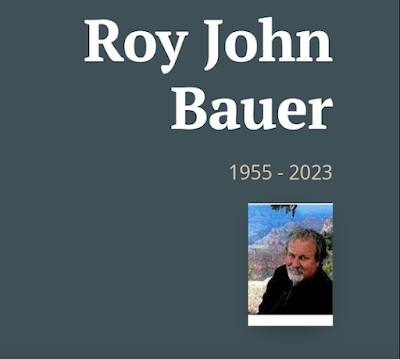
Roy's obituary in LA Times and Register: "we were lucky to have you while we did"
This ran in the Sunday December 24, 2023 edition of the Los Angeles Times and the Orange County Register : July 14, 1955 - November 20, 2...
-
 Professor Olga Perez Stable Cox OCC Trumpsters/GOP A professor called Trump’s election an ‘act of terrorism.’ Then she became the vict...
 -
 Richard O'Neill c. 1950 Richard O’Neill (1924-2009), a wealthy Orange County land owner, wanted the Democratic Party to be...
 -
 The "prayer" suit: ..... AS WE REPORTED two days ago , on Tuesday, Judge R. Gary Klausner denied Westphal, et alia ’s motion f...