Showing posts sorted by relevance for query dick and doc. Sort by date Show all posts

Friday, December 29, 2017

Crooked as a barrel of fish hooks

 
Richard O'Neill c. 1950
     Richard O’Neill (1924-2009), a wealthy Orange County land owner, wanted the Democratic Party to be a force in staunchly Republican OC, and he was willing to spend some of his enormous wealth to secure that end. By the early 70s, somehow, he had hooked up with a doctor—and registered Republican—named Lou Cella (1924-2011), a fellow who ran some kind of political operation out of a hospital. He too had big money to spend.
     At first, nobody was quite sure where the doctor’s political money came from. Eventually, he was convicted of stealing it from the taxpayers through massive Medicare and Medi-Cal fraud.
     In 1974, “Dick and Doc,” as they were known then in California political circles, were the state’s biggest political contributors. They made quite a splash, in Orange County, and throughout the state.
     O’Neill and his political cronies were developing a local political farm system, nurturing prospective political leaders via election, initially, to unexciting nonpartisan offices. They were assisted by a new breed of smart and ruthless political advisor, like consultants Butcher and Forde, who pioneered new tactics and technologies that, while sometimes ethically questionable, were undeniably effective.
Dr. Lou Cella c 1974
     Dick and Doc managed to get four of their people, three Democrats and one Republican, on the 7-member OC Board of Supervisors. That provided protection from the local DA, a Republican, who was determined to investigate Lou Cella and bring down his political machine. (Eventually, he succeeded.)
     Dick O’Neill was especially keen to land an OC politician in state office, and he was willing to fork over hundreds of thousands of dollars to make that happen. In 1974, Dick and Doc supported local pol, Ken Cory (1937-1998), for state Controller, and Cory won the office, retaining it for three terms. Cory, a former Assemblyman and avowed foe of greedy oil companies, had been working for years with the likes of Butcher and Forde and was himself a seasoned and innovative political tactician.
     Arguably the most experienced—and least scrutinized—among O’Neill’s crew, a man judged a “political genius” by Cella, was Fred Harber (1919-1974), who, starting in the 50s, had secured some local political offices (City Council, Mayor), but by the early 70s, had developed into OC’s shadowy political kingmaker. According to OC district attorney Cecil Hicks, Harber and his pals, especially Lou Cella, ran a “shadow government.” He took a dim view of that sort of thing.
     Harber was smart all right, but he was also dirty. Early on, relying on political connections, he set up lucrative “pay to play” schemes. It appears that, along with OC Supervisor Ronald Caspers, he was pursuing one such scheme when he mysteriously disappeared, with Caspers and eight others, in a yacht off the coast of Mexico. Neither the yacht nor the ten men on it were ever seen again.
     It was not the first, and it would not be the last, curious death among this cast of characters.
     It is said that the 1974 yachting disaster, taking both Caspers and Harber, marked the beginning of the end for the “coalition.” Soon, it all went poof.
     I want to explore and investigate the darker corners of this tale.
     Here’s a good starting place: an interview of Ken Cory in late 1987 and early 1988, years after his surprise retirement from politics.

Interview of KEN CORY by Gabrielle Morris (1930-2013)
October 1, October 22, December 10, 1987, and
February 6, 1988, Sacramento, California

“YOU OWE US”
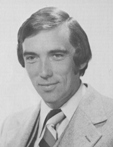
Cory
CORY: [circa 1974:] People said… “You really should run for something, and we'll back you.” I declined, and they asked me to meet with them one more time, and they made some very strong personal appeals to me as to what I owed to them for their past support.

MORRIS: People in your legislature, or in the party?

CORY: No, there is no Democratic party, there is a group of people. There were people, most of whom were Democrats, some of whom were Republicans, but they were friends of mine, and supporters of mine, who said, “You owe us more than that than to just quit. We want to continue to support you, and we don't care what it costs.” We had some very frank discussions about the cost, and I finally said, “Well, the only other office, other than governor, that I think I would be willing to run for would be senator.” It was clear that I wasn't in the league to run for governor, or United States senator, and the only other subject matter that had any appeal or interest to me was the Controller's office.

MORRIS: Could you say a little bit more about the business of your supporters saying “You owe it to us for what we've done for you”? That's pretty heavy stuff.

CORY: Well, yes. They said that they'd always supported me, and that they'd invested money, because they thought it was important, and that they believed in me, and that I had an obligation not to just quit.

MORRIS: They'd made you a visible public figure…

CORY: Yes, and it was important to them, and things they were interested in, the causes, the shades of that. There were about six or eight of them. Plus, they wanted me to run for controller. This was sort of last minute; I had decided I wasn't running for anything, although in retrospect, some of that … people who worked for you end up having a vested interest in having you continue to run, because they have…

MORRIS: Your deputy and administrative assistants?

CORY: Employees, and that sort of thing. And your fundraisers, and people get ego gratification from knowing somebody in Sacramento, and all that. They just didn't want to give that up. And so, I could see that there was some sense of obligation. There was also something that I thought would be fun to do, if I were controller, and I thought well, you know, I could do that for four years and then I could get out and do whatever I wanted.
   That didn't come to pass, and I assumed that four or five years, the major thing I was interested in was trying to resolve the price fixing of oil, which was very clearly going on. I thought that could be litigated within a four to five year period of time. Three years, if you got lucky.

MORRIS: The controller's office has a vantage point from which to initiate that kind of research. But had you had any particular contacts with your predecessor as controller, or any of his people?

PAL OF REPUBLICAN CONTROLLER, FLUORNOY

Hugh Fluornoy
CORY: I'd been a friend of [Republican moderate] Hugh Fluornoy's since '61… [I]n '61 or '62, Hugh tried to get me to go to work for him, when I was on the [Assembly Education Committee] staff. I just thanked him very much, because it was a very gracious offer that he made to me…. And I just said, “Hugh, I'm a Democrat. I'm sorry, I like you, it has nothing to do with that, but I just would not be comfortable working for a Republican.”

MORRIS: Did he have some of the same concerns you did about the way some of the large corporations did business on related matters?

CORY: Yes, I can recall one time going to Hugh and explaining what I thought the public good should be.

RUNNING FOR CONTROLLER (1974):
CONTROVERSIAL SUPPORT AND FUNDING

MORRIS: Did you anticipate your supporters and funding were going to become such a controversial issue?

CORY: I'd discussed that with them beforehand, that it would clearly become a major issue. And that they would undergo a great deal of personal scrutiny, and they ought to be prepared to endure it. It was inevitable, if they were going to contribute that much money. It was so preposterous and so foolish.

MORRIS: Why did they contribute—it may sound like an odd question—but why did they contribute that much money?

DICK AND DOC

O'Neill
CORY: They were on an ego trip and they wanted to do it. If you look at it and understand it, it was basically [Richard] Dick O'Neill and [Dr. Louis] Lou Cella. The two of them were making a great deal of money. Dick is one of the wealthier people in the state of California.
   Dick O'Neill … and his sister Alice [O'Neill]… [T]he family is a meat-packing family, and has been in the meat-packing business for generations. Dick and Alice are longtime members of the Forbes 400. Are you familiar with that … designation? … [T]hey estimate each of them were worth $275 million. They don't try to make money.

MORRIS: Just makes itself.

CORY: They spend more time avoiding money. Dick—if he had had people like the people I know that are around [ ] Sid Bass—Dick could clearly be worth two or three billion. It's inordinate wealth, and so, five, six hundred thousand dollars to Dick O'Neill is irrelevant. It truly is irrelevant, and Dick happens to like politics, and our biggest chore in that campaign was to keep him and Lou from spending money.

MORRIS: Have they backed statewide candidates before?

RESENTMENT

CORY: No, that was part of it—they had never been taken seriously. Dick really resented … you have to understand, the O'Neill family, they still own forty thousand acres of Orange County. They do not have a mortgage on the forty thousand acres.

MORRIS: They inherited it.

CORY: But it's free and clear. That land is worth… [L]arge portions of it currently you could sell for a million dollars an acre.

MORRIS: Orange County is indeed sort of a landowner's heaven.

CORY: And the O'Neill family owned Camp Pendleton at one time. Dick O'Neill's home that he grew up in as a child is the officer's club at Camp Pendleton. So he grew up going to school at the Mission San Juan Capistrano, in a landed aristocracy. When he got to high school age, they bought a house in Beverly Hills for him to get an urban education.
   So he got up there and I would guess [he was] not treated very well, because they considered him a hick from Orange County.
   He had been living under that kind of pressure from people. But through the years, O'Neill as a contributor… people from statewide campaigns would not take Orange County seriously. They would not come to Orange County; they would not help the Democratic party build.

MORRIS: Because [OC] was conservative.

CORY: Orange County was Republican, and all they were interested in was finding rich people in Orange County who would give them money, so they could spend it.

MORRIS: And not have any input in return for the money.

CORY: Yes, and that whole thing. Dick found it the same with many wealthy people; they resent being used just for their money.

MORRIS: That's interesting, I thought that the state Democratic finance committee was set up to find and cultivate and make friends of rich, rich Democrats in whatever county they were in?

CORY: Dick is substantive enough to say, “Well, why do I have to go to Beverly Hills to a meeting? Why can't we get a bunch of rich people together here in Orange County, and have them come down here and talk to us?” So in the '64 campaign (where Dick and I developed a fairly decent relationship) with [U.S. Senator] Pierre Salinger, I was able to raise money by convincing Pierre and [Donald J,] Don Bradley, who was running his campaign in the general election, that we could raise real money. [B]ut Pierre was going to have to spend time with people.
   For that period of time, we raised a lot of money for Pierre. We raised in one dinner at the Villa Fontana $93,000. Dick thought that was great, because he could go in Orange County, right in Santa Ana—actually, it was in Orange, on Main Street—and it was Orange County. It was…

MORRIS: Where he felt comfortable. He knew something.

CORY: Yes, and grew up there, and that they would give him some recognition. At that time, Pierre was a United States senator, and actually came down and had a dinner with twelve, fourteen people. They kicked in a lot of money.

MORRIS: That's the Ben Swig school of fundraising.

CORY: Yes, … Dick O'Neill puts on the fundraisers in Orange County at the ranch. Most candidates would rather have Dick O'Neill write the check, but Dick wants the action, and doing a barbecue at the ranch. It would be cheaper for Dick to write the check, but there's no point…

MORRIS: How did you get to know him?

CORY: I met him in '64, when he was sort of around. He decided to spend more time in Orange County in '64.

MORRIS: He'd been away for a while?

CORY: Dick had just won some litigation against Crocker Bank. The property was in a trust. Crocker Bank tried to sell the ranch for $five million, $seven million, one or the other, and Dick thought that was wrong, and litigated it, and won. So he wanted to start spending more time down there. He started to develop Mission Viejo [with Donald Bren]. It was just about to open…

MORRIS: He sounds like he might have been related to or had similar problems with the [University of California Irvine] Irvine campus.

CORY: He resents … that's one of his problems: the family is an older landed family than the Irvines. He resents the publicity that Irvine family gets. Jokingly, it frequently was referred to as … the Irving Company.
   …And so since then, they were referred to as the Irving Company. … I mean, here was a family that had owned this land long before [James] Jim Irvine, when Jim Irvine was the nouveau riche hustler that came in.

MORRIS: How old is Dick O'Neill? …

CORY: [pause] Late fifties, mid to late fifties.

MORRIS: Because Father Irvine, or Irving, just wasn't making or functioning as a tycoon, like in the twenties and thirties.

CORY: But these people, the O'Neill family, Dick's great-grandfather came out here in the Civil War.

MORRIS: Very interesting.

CORY: The O'Neill meatpackers, which are descendants of the family, have plants in Fresno, San Diego, and they have had their property without a mortgage on it for a long period…

MORRIS: You met him first in the Salinger campaign?

CORY: I may have met him in Dick Hanna's campaigns prior to that…

MORRIS: He'd been interested in politics…?

CORY: He'd been around, yes, but he was a hundred dollar contributor, something like that. And Dick likes to help everybody, Democrats. He can get—if he feels comfortable with you—the capacity to do more. I doubt that he will ever, given the amount of heat that he took for that contribution, will ever do that again.

MORRIS: Did he also take an interest in the campaign, in putting on your strategy meetings?

CORY: Yes, that's what Dick likes, and that's why, I guess, a friendship developed where he wanted to build the Democratic party, in Orange County, during the time that Dick O'Neill was interested in financing [campaigns], very indirectly, because he never wanted people to know… [A]nd that's the thing a lot of people don't understand… [T]hey think there's something sinister. It's just the same reason people give to charities anonymously. The Democratic party is Dick O'Neill's charity. It's the same psychology. He is bothered by reading about his contributions in the press.

O’NEILL BUILDS THE OC DEMOCRATIC PARTY

But we worked with him about what ideas would work, what ideas wouldn't, what kind of people… We started getting people running for nonpartisan offices who were Democrats who we could build into credible Democratic candidates, getting them funded for city council, school board, supervisor, those kinds of things.

MORRIS: That's local, too, city and county.

CORY: Yes, that's because you had to do that, because of the partisan thing, that they had to be nonidentified because of the Republican edge. Then you could create a persona that was acceptable, that you could bring people along with this. The same format that the Republican party, as the minority party statewide, always uses. Nothing magic about that.

MORRIS: Well, the Republicans for a while … they were using a special districts approach, putting a lot of effort into electing Republicans in certain legislative districts.

CORY: But they start … they recognize they are a minority party.

MORRIS: You still say they are a minority party? You don't…

CORY: Sure.

MORRIS: …think the demographics and the registrations make it different?

CORY: …[T]here are still less Republicans than Democrats statewide. Now, it's narrowed, and a lot of that narrowing is just returning to the pre-Watergate phenomenon. But nationwide, there are more Democrats than Republicans. The Democrats are more willing to vote for a Republican than Republicans are willing to vote for Democrats. And that's a whole other issue.
   But we use that basic format of getting people elected to places where they could get elected, nonpartisan offices.
   And that makes them credible, and puts them on the ballot. You've got a choice of four people you've never heard of, one of whom has been on the school board, and the other guy's a janitor, and the other guy's a store clerk. Who are you going to vote for? You're going to vote for the guy who was on the school board.

MORRIS: This is done in your local Democratic elections.

CORY: Yes, that's what we did in Orange County, … just so we have more Democrats, more credible candidates in the state. We would find we would have people that did not appear to be quality candidates. There's nothing you can really say about them.

MORRIS: Would you go around looking for people, to encourage them to run for the school board, or something like that?

THE O’NEILL (CELLA, HARBER) FARM SYSTEM

CORY: Yes, we’d sit down, and you’d work with Dick O'Neill, Lou Cella, Fred Harber, and you'd go out and you'd find—going through the list of particular, nice-looking lawyers insurance agents—try to go through the registration files, finding out which ones were Democrats, then talking to them, finding out what kind of people they really were, and then you'd start encouraging them, and then you'd end up with an obligation of running their campaigns and supporting them.
   That grew to the point where Orange County had a Democratic registration at one point, and that was Dick O'Neill. He basically made that happen, and Lou Cella.

MORRIS: And none of the surrounding counties were watching, interested, or…?

CORY: The bottom line was that when you had Dick and Lou there, if you got to the point where you needed some money to make something happen, they'd put it out. You don't have that in other places. They would not put it up.

MORRIS: Outside of Orange County…

CORY: No, they would not put it up early. It was not a thing where they would just say, “Here's the money, go do it.” But if you were struggling, and … everybody was working, and something was happening, he had people… [Y]ou could organize and get thirty people to go out and walk door to door to register Democrats. … Dick saw that organized, but you needed … “How are we going to get them out next weekend!” “Well, we're going to have to feed them lunch.” There would be the money there to do that [with O’Neill].
   Those are the kinds of things that if you don't have those kinds of supporters that will do that … if they do it too early, then everybody becomes an executive, and the money gets frittered away. And Dick understood that. Dick wouldn't play in that game. He'd walk away from that kind of thing. But over a sustained period of time, and the same kind of support would come where Howard Adler, who was a—I've known Howard since he was a high school student. He was the Democratic chairman of the central committee for Orange County for a long time.
   But you look at Howard, who worked in the Dick Hanna operation—he worked on Dick's staff, but he worked hard for the Democratic party. When he had a business opportunity and he needed help, Dick would give him help. Howard's a wealthy man today, but he'd worked hard; he's earned that money. But Dick was the kind of person who would support that kind of person, because he knew him in politics, and knew him to be a hard working and honest person.
   Somebody could come to Dick with a better financial business deal, who just wanted Dick's money, and Dick wouldn't even talk to him, because Dick would not make a stupid financial investment … he and Dick and Howard invested in various deals together, but Dick didn't do that to make money. He did it to help somebody who didn't have money.

MORRIS: Somebody he knew and loved.

Tom Fuentes' pals
CORY: Yes, Frank Barbero, a lawyer down there [OC] who was running for office—same kind of relationship. Time and time again, you'd see Dick do those kinds of things. And the other side of it, in terms of why it's an O'Neill charity… I've only had Dick O'Neill talk to me about one political issue, government issue, all the time I've known him, where he was trying to be an advocate of a position.
I can recall, when I was first elected to the legislature, they had passed the constitutional amendment on the Williamson Act and I kept expecting Dick to read the thing. And I was sitting on the Rev and Tax Committee. I finally called … Dick and said, “Dick, next week the Williamson Act is up for committee.” And he said, “What's that?” I said, “Well, that's the thing on the ballot, we have the ballot thing that said that agricultural property could be taxed differently than highest and best use.”
   “Oh, yeah? What about it?”
   “I haven't heard from you or anybody in the company about what your views were on that, and I just thought I'd check in.” This was as a legislator, not as controller.
   And he said, “Wait a minute, Ken, is somebody from the company talking to you about that?”
   I said, “No, that's just the point, nobody has contacted me.”
   He said, “Well, Ken, if anybody from the company calls you, tell them to stick it.” [Laughter]
   I said, “What do you mean?”
   He said, “Look, I paid my taxes last year, I'll pay my taxes next year. If the legislature wants to charge me less taxes, sure, I'd rather pay less taxes than more. But it's irrelevant, it's deducted from the federal, and I frankly could care less. And if anybody from the company is lobbying you to do something, I want to know.”
   So, I had that conversation with him. Several years later, he arrived in Sacramento unannounced, by himself. [Samuel] Sam Yorty was mayor of Los Angeles, and had imposed a local sales tax on drinks served in bars. It was known as the "tipplers tax" by the press.
   Dick was outraged. Dick moved up here [in Sacramento] and he stayed in my house for about two, three months, during the legislative session. (I had a house here in town.) He lobbied a bill through to preclude … make it crystal clear… [S]omebody went to court saying it was unconstitutional for the city to impose a sales tax. L.A. city put in a statute authorizing it, and Dick was up here trying to kill [that] bill.
   That was the only thing that he's ever asked my support on. He was dead right on the issue, philosophically. It was an illegal tax. The court held it was an illegal tax. It's foolishness to have those kinds of local options on taxes as a matter of tax policy, in my judgment. So it was very easy for me to support [the preclusion bill].

MORRIS: Was he a gentleman that liked a bourbon?

CORY: Well, whether he does or not, Dick has owned a lot of bars.
   He owned at that time, in the mid-Wilshire area of Los Angeles, he owned the Blarney Castle, the Black Forest, the HMS Bounty, and the Bull and Bush.

MORRIS: Sounds very international.

CORY: Those tended to be supper-club, after-work, kinds of bars in the insurance area, and the city boundaries jog around, and there are places across the street that were in the county that didn't charge. A guy getting off of work had an option of going into the Bull and Bush and getting a 6 percent tax laid on his drink, or going across the street, and not having a charge.
   I remember asking Dick, I said, “Dick, how much money do you make on the restaurants?” Here was a man that, without embarrassing him and disclosing the confidence, his personal income was millions each year. And he avoided income by hiring professionals to keep him from making money. He still had millions coming in each year, and he was making maybe fifty thousand… dollar profit in each one of those bars.
   He said, “You know, if we absorb the tax, that turns me from making a fifty thousand dollar profit to being in the red.”
   “Okay, but why do you care? Why do you care if you lose twelve thousand [dollars], or make fifty, when you've got ten million coming in? I mean, three months of your life with this? I mean, really!”
   He said, “Well, everybody in my family bitches about me owning these bars and restaurants. If they're losing money, it's really hard to justify. But if they're making money, it's okay.” That's the only issue Dick O'Neill has ever leaned on me on. … But that's O'Neill.

MORRIS: Did he enjoy it?

CORY: Oh, yes, he likes the action. He thought what he was doing was right, and he really identifies with the common man. I mean, to him it was the concept of the little bar owner and the guy buying a drink… But, yes, he enjoyed it.

MORRIS: And he never has found another issue that he took that seriously?

CORY: There were things that he cares about, and money is close to irrelevant to him. It's a burden to him. It's a problem. He does not want to be used for his money. [S]ubsequent employees of his … have profit centers who are all trying to trade on it, but Dick's never spoken to me about this, he's never hassled me, and when I've found where legislation has gone through that would be beneficial to them, it's never been O'Neill that did it. And that's not that he put people up to it, it's just that O'Neill would not do that to people.
   But other people who don't know Dick that well … --if an employee came in and asked me for something, they would think that they had to do it for Dick. If they really knew Dick…

MORRIS: Is it possible that some of his employees or associates…

CORY: --without consulting with him, had the use of his name for their own purposes?
   Sure, but I mean, it's de minimis [trivial]. But people wanted to know what was Dick O'Neill going to get out of it. …O'Neill wanted the action, he wanted someone from Orange County [e.g., Ken Cory] to be a statewide officeholder. He wanted to force the Democratic party to be recognized.

CELLA EQUALLY SELFLESS

MORRIS: Is Dr. Cella equally enlightened and disinterested? [At about the time of this interview, Cella was imprisoned for embezzlement.]

CORY: Yes, he was even a little harsher in his standards. He has always stated to me that he wanted me to always vote against any issue that affected him. He … made it very clear I was up here to vote against him. “If I have something that affects me, and I can't get it passed without your vote, I shouldn't get it passed—” He was just cold turkey.
   O'Neill … would just be offended if somebody, like the Williamson Act [mandatory disclosing of info in hostile takeovers], somebody was pushing you from his company without him knowing it. Then he'd be upset. But if you voted against O'Neill, that would bother him, because you were his friend and you shouldn't vote against him. But he doesn't have anything up here [in Sacramento], so he doesn't care.
   Cella was aware that he might have issues [e.g., bills advantageous to his business dealings] up here. He made it very clear … “Do not vote for them, I'm your contributor; I don't need the grief; you don't need the grief. If it's meritorious, it will pass.”….

MORRIS: Yes, even in the medical business [“Doc” Cella’s office was in a hospital], he was in an area where there was a lot of state legislation and concern in those years. It's hard to avoid the appearance of…

CORY: Yes, actually, he was more aggressive on the other side.

MORRIS: So, did they have some ideas about how to transfer your success in developing visibility and credibility on a statewide basis?

CORY: Not really. I mean, they were interested in—their interests were very provincial. They were basically Orange County.

CORY, NEXUS OF CAMPAIGN STRATEGY BRILLIANCE

MORRIS: So, did you have some professional staff?

CORY: Basically, we developed and built our own. Various people who were involved were Arnold Forde and Bill Butcher….

MORRIS: You worked with [them] before?

CORY: Yes, Bill Butcher ran my first campaign [for OC Assemblyman, 1966]. Arnold Forde ran the campaign of the guy that thought he was going to get the [California Democratic Council] endorsement, and didn't.

MORRIS: This is on your controller's campaign, right?

CORY: No, … first assembly campaign [1964].

MORRIS: And Forde and Butcher worked again in '74…

CORY: --they were friends; they've always been I guess supporters, but they weren't running the campaign, I've never hired a campaign firm.

MORRIS: Really? Even in '74?

CORY: No, we did it ourselves. Now, you go around to some of the campaign firms that exist, [the belief there seems to be that?] Butcher-Forde [pioneers of the ethically-challenged approach to winning elections] were very much involved in my campaign.... Carl D'Agostino [notorious for his outrageous political consulting style] was my chief deputy, and he was working for Ford Aeronotronics … when I hired him to work in politics. He is a very bright, capable person. But I knew the fellow who ran the company called Braun Campaigns, Braun Associates, who run ballot propositions in L.A … The guy who runs that, [well-known Public Affairs Strategist] Doug Jeffe, used to be my administrative assistant.

MORRIS: So you worked with everybody in the business, pretty much.

CORY: They basically worked for me, and we ran campaigns and then they'd go off on their own and start their own companies. [Cory seems inclined to take a fair amount of credit for the methods and tactics of these various, well-known political advisors/consultants.]

MORRIS: This was when you were in the administrative office in the assembly?

CORY: No, they worked for me in the assembly, and as Controller. Doug Jeffe was my district office administrative assistant. He was my administrative assistant as caucus chairman. Carl D'Agostino was consultant to the committee, Joint Committee on Public Domain, that I was chairman of. Bill was my first administrative assistant, when I was first elected to the legislature [in 1964]. … Bill Butcher and I were married to sisters. Bill and I grew up in the same hometown, a vast while ago.

MORRIS: Those are really very close ties.

CORY: And so, I don't…

MORRIS: What you're saying is that they learned a lot from you, and that over the years you've developed…

CORY: No, we've learned a lot together. I was able to raise money, I have contributed to some of the campaign techniques. I used to run campaigns for a living myself, so we developed some things, and we were able to make sure that the money was well spent. Braun Campaigns basically grew out of that [1972] Watson initiative [to lower property tax] campaign.


Tuesday, July 3, 2012

The corruption files: early seventies (Fuentes, Michelena, et al.)


     In the early seventies, there seemed to be a recognition in the OC that the county was entering an era of increasing corruption or quasi-corruptionwhich, of course, it had done, especially with regard to county government. Perhaps no one at the time imagined how bad things would become:
     “From 1974-77, an eye-popping 43 Orange County political figures were indicted, among them, two congressmen, three supervisors and the county assessor, according to the California Journal” (Jeffe, 1996).
     And Tom Fuentes was there, in Hinky Town, pretty much at ground zero.
     Lots of that corruption and criminality concerned “Dick and Doc” (Richard O’Neill and Dr. Louis Cella) and their stable of pols, including many Democrats and some Republicans. It is entirely possible that Ronald Caspers, another Dick & Doc pol, was "spared" from indictment the hard way: by his and Harber's mysterious 1974 deaths, along with eight others, off the coast of Baja. 
     (On the other hand, some say that incident took away the very people who could have prevented DA Cecil Hicks' prosecutions.)

Louis Cella
     THE NEW BOARD MAJORITY. One aspect of the aforementioned recognition was some worried talk about “lobbyists” and their influence on government officials. Consider, for instance, Evan Maxwell’s “Lobbyists: Dealers in Trust and Compromise” (LA Times, 2/20/72). In that article, an anonymous OC city councilman seems pretty steamed about the emerging influence of lobbyists; he said, “There is something unclean about somebody [i.e., a lobbyist] who uses the trust of a public official to sell him a project…A lobbyist has to be a prostitute. He sells his trust to the highest bidder.”
     (Pace prostitutes!)
     But, in that article, there were also plenty of Orange Countians defending lobbyists. One professional lobbyist that Maxwell interviewed, Chip Cleary, rejected the assumption that there is any conflict between the public interest and the interests of the lobbyist’s typical client. And if a conflict were to come up, he said, “My advocacy would be on the side of the public interest. Our own self-interest, all of us, lies with the public interest, not any selfish private interest…Our interests are all connected.”
     I do believe that people were more trusting forty years ago and, perhaps, Mr. Cleary’s remarks weren’t then manifestly ridiculous to all, as they surely are today.
     The election of 1970 produced two new Supes: Ronald Caspers, who had wielded unprecedented amounts of money and remarkably devious and dishonorable tactics during the campaign, and Ralph Clark, another big spender. Both were tied to O’Neill/Cella/Harber.
     Dick and Doc had managed to seat one of their own on the BOS earlier, back in 1968namely, the mavericky and loose-cannonish Robert Battin.
     A few months into the 1971 BOS, observers discerned a possible “basic philosophical shift” between the majority of Battin, Clark, and Caspers—Dick and Doc’s people—and the minority, the two old-timers: William J. Phillips (who joined the board in 1957) and David L. Baker (who joined in 1963). The new guys seemed to want to change things, and the old guard pushed back a bit.
     There didn’t seem to be widespread recognition yet of the actual unifying principle of the apparent Battin/Clark/Caspers block—namely, O’Neill/Cella/Harber and (at least on the part of Cella and Harber) an embrace of lucrative varieties of “pay to play” (bribes, shakedowns, etc.). With the exception of some political insiders, that recognition came later, I think. So people talked about the board as dysfunctional and divided, and the notion that there was a kind of vision ("selfish private interest") behind the majority’s movement for "change" was only a hazy and undefined theory. (See “Supervisors take stock after a stormy beginning,” LA Times, 3/21/71.)

Robert Battin
     A COMPARISON. Please excuse my parochialism—my political understanding, such as it is, grew out of my participation in battles, starting in 1996, within the South Orange County Community College District—but: 
     The new BOS “board majority” of 1971 really reminds me of the majority that emerged on the SOCCCD Board of Trustees (BOT) in December of 1996, which comprised Steve Frogue, John Williams, Teddi Lorch, and newcomer (and transitioning Democrat) Dorothy Fortune. Even though three of the four had been on the board for years, their attainment of majority block status at the end of 1996 inspired them to impose their crude “conservative” philosophy on the district, one that held no respect for how things had been done and the judgment of those who did them. This board wielded groundless skepticism or cynicism of faculty programs ("study abroad" programs in Costa Rica and later Cuba), routinely rejected the advice and urgings of administration, and imposed a clueless and ham-fisted reorganization on the district, the unfortunate consequences of which can still be felt today.
     The BOS of 1971 did similar things with similar arrogance. In the 1971 Times article, Battin is quoted as saying,
     “The old board was influenced by the traditional approach to things,” he explains. “They were more apt to look at things from the standpoint of whatever is good for big business was good for Orange County.” [See.] ¶ “This group will have a greater awareness of keeping Orange County as a desirable place to live, even if it means going against big business at times. [Battin acknowledged that there would be some 3/2 votes:] ¶ “The difference is that the majority will swing back and forth depending upon the issue involved,” he said. ¶ Asked why the board placed all county department heads on a 30-day employment basis until after budget time in July, Battin said it was because he feels all department heads should have their jobs examined closely.
     Of course, some observers (e.g., onetime OC GOP chair Tom Rogershave suggested that, contrary to Battin’s progressive blather, the arrival of (especially) Caspers signaled the beginning of an era in which the interests of Orange Countiansin wise development, maintaining the county’s rural characterwere systematically thwarted in favor of the interests of rich developers.
     Dick and Doc’s chief political advisor, Fred Harber, was tied to each of the three new majority Supes. In the Times article, Clark feels compelled to answer a question about pressures applied by outside groups by attempting to diminish Harber’s role in his recent campaign. (Why bring up that name?) Battin and Harber, of course, were very close. Earlier, I described an episode in which Battin felt compelled to make a public statement to the effect that he was not Fred Harber’s “puppet.” (He protested too much, methinks.) We know that Caspers and Harber became very close, though I’m not sure when that started. They seemed to be working very closely together at least by 1973 by I'm sure that happened earlier.
     ("In 1968, Robert Battin, a Santa Ana lawyer, won a 12-way race to become the first Orange County Democratic supervisor since the Depression. Much of the reason for his success was the financial backing of two wealthy Democratic activists, land developer Fred Harber and Santa Ana physician Lou Cella. ¶ Two years later, again with the backing of Cella and Harber, Ralph Clark became the board's second Democrat. Cella and Harber also helped Republican Ron Caspers that year. Ralph Diedrich became the board's third Democrat in 1972, also supported by Cella and Harber.From "Board's clout peaked with controversial reign of Democratic coalition," Chris Knap, July 17, 1988, OC Register.)
     In any case, Harber was the brains (politically) of the Dick and Doc Show, and Caspers was in the Dick and Doc stable—certainly by 1969 (likely before that).

Tom Fuentes
     CURIOUS ADVOCATES OF CLEANER GOVERNMENT. Early in 1971, Battin made a move that, prima facie, was an effort to make county government cleaner, though I must confess that I regard this future jailbird's effort with unmitigated cynicism. Evidently, he requested some sort of “lobbyist registration” ordinance, but that inspired considerable debate on the board, though it appears that, in the end, the Supes scrambled variously to make themselves look like advocates of lobbyist registration. They could not, however, agree on the details.
     I found a 1972 article that describes the board as "delaying" a vote on a proposed registration ordinance ("Supervisors Delay Vote on Proposal to Register Lobbyists," 8/16/72) to consider "amendments creating a tough governmental code of ethics." Battin was noisily against any delay, and I suspect he hoped voters would read his haste and noise as commitment to clean government.
     Battin there cites the "Mile Square" bribery case as something that would have been prevented had his kind of ordinance been in effect. That's odd (or just shameless and bold), for it seems likely that Battin's "puppeteer," Fred Harber, was up to his eyeballs in the Mile Square doings. (In the course of the trial, the mayor of Westminster [and defendant], Derek McWhinney, was quoted as claiming that six people, including he and Harber, ran the County. Let's see: O'Neill, Cella, Harber, McWhinney—and two others. Who? [My guess: Michelena and Fuentes.] See here.)
     Curiously, Battin's ordinance got support from an unlikely character: Frank Michelena, a notorious and influential lobbyist who was very connected to Dick and Doc and Caspers. (You'll recall that, according to Tom Rogers, Tom Fuentes and Michelena worked together in the early seventies.)
     According to the article, Michelena "considered the ordinance a step forward for Orange County government." ¶ "It should be broader however," he added, "to cover not only those who work for pay but also those who lobby for political purposes."
     In an article that appeared over a year later ("County delays action on lobbyist measure," Times, 10/24/73), we learn that the lobbyist registration measure had still not been approved. The latest delay was caused by a "challenge to include provisions for 'honesty in government' as well."
     What a dysfunctional (or just corrupt?) crew.
     New Supervisor Ralph Diedrich (who, backed with big money, had defeated Phillips in '72) said he wanted "to study suggestions that county employes [sic], 'including supervisors,' also be required to report any gratuities or gifts they receive." 
     Diedrich, of course, would be an odd choice for "honest government" poster boy: he was later convicted of soliciting a bribe from a developer, among other things. (He resigned in 1979 and then served a prison term.)
     Once again, some Supes rejected Battin's proposal or at least its latest version. Battin then "charged that the other board members already had been influenced by lobbyists."
     (Battin was a bit of a hot head and loudmouth—a Democratic Don Wagner.)
     Once again, Frank Michelena magically emerges as a supporter of Battin's ordinance: "Michelena said the burden of registration should lie with the lobbyists and he argued against exempting attorneys."
     I don't know whatever became of the ordinance. I do know that, after the political scandals erupted in the mid-70s, Shirley Grindle pushed for a campaign reform ordinance, known as TINCUP (1978), but it has proven to be inadequate. In 2008, the OC grand jury recommended that TINCUP be updated. (Don't recall what happened next.)
     But get this: a year and a half ago, the "Orange County supervisors ... voted to remain the state's only large county without any kind of registration requirements for lobbyists" (See OC is still the Wild West for lobbyists, Voice of OC, 11/9/10).
     Good freakin' grief.

Ronald Caspers
      CASPERS' SPECIAL INVITATION. Back in early 1972, the head of a local anti-tax group—together with the Register’s lawyer—got a judge to issue a restraining order “on the use of county tax funds to pay for the one-day trip [to Sacramento] for county supervisors and department heads” (see “Court Blocks Funds for Sacramento Trip; County Officials Faced With Paying Own Costs,” Times, 4/7/72).
     The trip came about because of an invitation, sent out in early May by Supervisor Caspers, to attend the April opening of a county lobbying office in Sacramento. (I assume the office housed those hired by the county to influence state legislators. Presumably, this is a relatively wholesome form of lobbying.)
     A surprisingly large group was invited, though the core of invitees were Supervisors and department heads. This group was treated to plane travel and an expensive luncheon at the famously luxurious Firehouse Restaurant. On the menu: “two wines, beef tenderloin and strawberries in champagne for dessert.”
     Among the invited: Supervisor Robert Battin; his executive aid, Steve Polatnick; Medical Center Administrator Robert White; Gene White, administrative aide to Supervisor William Phillips; County Administrative Officer Robert Thomas; Board of Supervisors Chairman Ronald Caspers; Supervisor Phillips; County Assessor Andrew Hinshaw [who was convicted of accepting bribes in 1977]; Tax Collector Robert Citron; Recorder J. Wylie Carlyle; Harbors and Parks Director Kenneth Sampson; Probation Officer Margaret Grier; Public Information Officer Christine Galanis; Planning Director Forest Dickason; and Casper’s two executive aides, Tom Fuentes and Paul White. (Owing to the restraining order, several of these people did not actually attend. For many, the order was handed to them too late to prevent the trip/luncheon.)
     According to the April 7 Times article, “The new suit alleges that the use of tax funds for a trip to Sacramento to open the lobbying office was ‘an improvident expense.’”
     Maybe yes, maybe no. But it sure was interesting.
     Once again, Frank Michelena’s name comes up. According to the Times, he arranged for the lunch at the pricey restaurant. “Michelena is a governmental advocate in Orange County who once served as executive aides to Supervisor Williams Phillips and currently represents several clients before various county departments and the Board of Supervisors.”

     Why wouldn't a guy like that wine and dine these county officials? ('Cause it looks dishonest, is why.)
     That crazy "champagne strawberries" lunch idea sure sounds like something that Tom Fuentes dreamed up. And, of course, he was there.
     A week and a half later, there was a hearing in which several people testified. According to the Times (April 19) “Frank Michelena, owner of a public relations firm, said he volunteered to pay for the cocktail reception and wine served with the luncheon.”
     The judge indicated that he would make his decision within a few days.
     A week later, the judge essentially threw out the case. According to the Times (April 26),

     Superior Judge Kenneth Williams denied a request for a preliminary injunction aimed at preventing Orange County from using tax money to pay for county officers’ transportation to Sacramento and lunch at the opening of a new lobbying office. In denying the request, Judge Williams also dissolved a temporary restraining order, thus clearing the way for the county to pay the bills….
     Dang. Do you suppose Williams was responding to pressures? Gosh, I just don't know.

BATTIN: the "COALITION" HARBER'S "BRAINCHILD

OC Reg Feb 18 1976

Saturday, June 30, 2012

Fuentes, Michelena & Overby: plump mosquitoes from the same swamp


     “Frank G. Michelena is the guy you go to see when you want something from Orange County government.”
LA Times, 1990

     "I challenge Mr. Bein and his lobbyist Tom Fuentes to give even one legitimate reason why their firm gives gifts to individuals who have decision-making power over contracts…. ...Now we all know what it takes to be a successful engineering firm in Orange County."
Shirley Grindle, 1993
     In my last post, I laid out former SOCCCD PR gal Pam Zanelli's fortuitous appearances, like magical momentary moths, in the tangled fabric of Orange County politics and corruption. As you know, our own Tom Fuentes, late SOCCCD trustee, was all over that fabric; and, in particular, he had connections to a notorious (c. 1970s) campaign finance entity—the duo "Dick and Doc"or at least to that entity's delighted and deficient beneficiaries. Now, as it happens, it's a seriously small world, 'cause Pam Zanelli was an employee of the notorious Dr. Louis Cella, the "Doc" half of "Dick and Doc." What a coincidence!
     Anyway, our gal Pam worked for Dr. Cella at exactly the time when his curious operation (hospital, political giving, printing, Medicare and Medi-Cal fraud, etc.) was in full operation.
     She assures us, of course, that she had no idea what her boss was really doing, insofar as any of it was something he shouldn't o' been doing. Natch.

From the Times' "Lobbyists: dealers in trust and compromise," 2/20/72, where Michelena is
identified as one of six "top" professional lobbyists in OC. At the time, the Rancho Mission
Viejo was owned by the O'Neill family (headed by Richard O'Neill of "Dick & Doc").
     Among Zanelli's other moth-like flittings in OC's lurid fabric was a cheese-and-wine party she helped organize for Governor Jerry "Moonbeam" Brown (1981). Just who would be invited to that bash was a critical and delicate matter, it seems, 'cause it was OC where there are no Moonbeams. Now, some of the fat cats in attendance were invited by notorious lobbyist Frank Michelena. Michelena, as it turns out, worked with Tom Fuentes on the seriously hinky Team Caspers, back in 1970 and thereafter.
     (Frank Michelena was an aide to OC Supe Bill Phillips [1957-1973] and later to Supe Ralph Clark, a D&D beneficiary who ultimately resigned under a cloud [prostitutes for favors?!] and became a lobbyist.)

From "The case against Dr. Cella," May 9, 1976 (Times)
     Another coincidence! It's, like, everybody's connected to everybody.
     Now when people talk about famous (or infamous) OC lobbyists, Michelena isn't the only name to pop up. Another one, a big one, is Lyle Overby, a fella who's made lots of money helping entities (including himself) secure lucrative government contracts. He's a go-between guy, a kind of pricey lubricant in a world of big wallets straining against nasty moral and legal friction to be emptied or filled like they wanna be. Pfffffwoooooo!
     (In the early 70s, Overby was an executive aide to Supervisor Ralph Diedrich, a fellow who was later indicted [1977] on 16 felony and misdemeanor violations concerning campaign finance. Soon after, the county grand jury charged him with two counts of bribery and one count on conspiracy. In the 80s, he served 20 months in Chino.)
     Overby, you'll recall, shares with Tom Fuentes membership in a very special group: guys who were invited on that fateful 1974 trip on the doomed yacht "Shooting Star" but who bailed, thereby saving their goddam lives. Ten men died on that trip, including Supervisor Caspers and Dick and Doc's political guru, Fred Harber. That spelled disaster for the "Dick and Doc show," 'cause Harber was like the Spiderman of creepy OC politics/business/whatever webulosity, and none of the other bugs had web-shooters.
     In Fuentes' case, though he made sure to stow a special cooler of goodies for his boss (Caspers) on the boat, at the last minute, he refused to board 'cause it wasn't safe. (Selfish bastard. What about his pals?) Overby actually traveled on the first leg of the trip—but bailed before the ship headed north, to its appointment with danged destiny.
     Lucky guys. Or something.
     One more thing before I go on: Tom Fuentes was also a lobbyist, you know. Near as I can tell, he made his living getting firms he worked for in contact with government officials who were in the position of granting big contracts. (He also invested in properties and such, just like his pal Fred H.)
     He had to be mighty careful, as you can imagine. He slipped up sometimes. You can't let the strings show.
     Now, as it happens, you can find points in time and space when all of these dudes spectacularly and accidentally come together to become one slime-event in the universe or something. One good example is June, 1985, in Santa Ana, CA:

$1-Million Contract for Vote-Count Unit Awarded, LA Times, June 26, 1985
     Ignoring staff recommendations, the Orange County Board of Supervisors voted unanimously Tuesday to award a $1-million contract to a San Francisco firm for a new ballot-counting system.
     After months of intense lobbying by the major manufacturers, Sequoia Pacific Systems of San Francisco was chosen to supply the county with new machinery in time for November's community college, school and special-service district elections.
     Sequoia's price for the new system, which uses computer cards with candidates' names printed on them and a hole-punching machine to mark ballots, is about $500,000 more than the pen-marking system recommended by a board-appointed advisory committee.
. . .
     The decision is controversial because the new system will replace existing vote-tally equipment installed five years ago, also over the strong objections of county staff....
. . .
     As late as Monday afternoon, Sequoia Pacific's lobbyist, Frank Michelena, was visiting board members in their offices. Moreover, county Republican Party Chairman Tom Fuentes wrote letters to supervisors and called Board Chairman Thomas F. Riley to urge selection of Sequoia Pacific. [Gosh, I wonder why the reporter neglected to mention that Frank and Tom were pals from way back?]
. . .
     "We don't feel the county did the right thing," said DFM President Tom Diebolt after Tuesday's decision.
     However, Diebolt said he did not think any improprieties had occurred during the bidding process.
. . .
     Diebolt said he did not employ the services of a lobbyist because "Our firm has never had to deal directly with county board members before . . . In every county where our services have been selected, we dealt only with county staff, who made the selection and then followed up with recommendations to the board. Often, we were simply an item on a consent (no discussion) calendar (agenda)."
     Fuentes said he recommended Sequoia Pacific to Riley and other board members after he met with Michelena and a Sequoia official to discuss the importance of audit trails in close recounts, such as occurred in last year's 256-vote victory by Assemblyman Richard Robinson (D-Garden Grove) over Republican challenger Richard Longshore. The term "audit trails" refers to the process of being able to trace and analyze the ballots cast so that none are lost or misplaced. Fuentes said he received no compensation for recommending Sequoia.
. . .
     The existing system was sold to the county by Valtec Co. of Tulsa, Okla.
     There was intense lobbying—including controversial campaign contributions from vendors to county supervisors—during the selection process last time. In the end, the board ignored the recommendations of its own staff and picked a system that had never been tried.
     Valtec hired Lyle Overby, an aide to former supervisor Ralph Diedrich, during the last bidding war. Overby was not involved in the current competition, county officials said….
     In May, the Times had reported:
     The existing system was purchased—over the objections of a county advisory group—from the Valtec Co. of Tulsa, Okla., after an intensive lobbying campaign in which Valtec hired lobbyist Lyle Overby, who earlier had served on the staffs of former Supervisors Ralph Diedrich and Robert Battin.
     Battin and Diedrich, of course, were beneficiaries of Dick and Doc's largesse.

* * *
     “When we wrote TIN CUP (the county law limiting campaign donations), one of the main reasons was to stop what [Frank Michelena] was doing,'' said campaign watchdog Shirley Grindle, who agreed he was one of the most influential people in the county in the 1970s. “Once there was TIN CUP, he played by the rules. In fact, we became friends. He had a very generous heart. He was basically a kind person."
Shirley Grindle, OC Reg, 8/2/2005
     One lobbyist, Frank Michelena, has established himself as the Santa
Claus of county consultants. He has given more than $ 7,800 in
sporting-event tickets, meals and other gifts to supervisors and their
aides in the past five years, according to gift reports filed by the
officials.
     In second place is lobbyist Lyle Overby, who has given $ 2,834 in gifts
to supervisors and aides during the same period, the reports show.

OC Register, 11/20/88 

BATTIN: the "COALITION" HARBER'S "BRAINCHILD

OC Reg Feb 18 1976


Thursday, June 28, 2012

Remember Pam Zanelli? (It’s a small freakin’ world)

From the "Trustee Tom Fuentes files" [Fuentes got his start working for corrupt OC supervisor Caspers; Caspers' chief crony was the corrupt Fred Harber]:

Irvine Valley President Sues College District, LA Times, Sept. 13, 2000
Pam Zanelli, PR hack
     From the 18th to the 21st of October, 2000, the Association of Community College Trustees (ACCT), of which our district was (and is) a member, held its annual conference—this time, at the Opryland Hotel in Nashville, TN. The theme for ACCT’s “Convention 2000” was “Leadership in a Democracy.”
     A contingent from the SOCCCD presented during that conference. I'm afraid it was pretty embarrassing.
     On Friday, Oct. 20, they offered “Dealing with the Media—Controversy Real or Contrived.” It explained the district’s alleged victimization at the hands of biased media with regard to such issues as: the board’s repeated violations of the Brown Act, trustee Frogue’s forum that invited anti-Semitic conspiracy theorists, the district’s placement on the state fiscal watch list, one college’s blatantly whitewashed accreditation report, failure to follow accepted procedures when hiring administrators, and so on. According to this benighted bunch, the media made the district look bad, not because they were doing their job of reporting the facts. No, according to this crew, the media and its people were friendly to, well, critics like meand these people assisted in our scheme to hurt the district, the trustees, the union, et al., purely out of vengeance and malevolence. (For an overview of the district's "issues" c. 2000, see South O.C. Seats Have 10 Trading Hostilities, LA Times, Oct. 31, 2000; Cirque du Socccd, OC Weekly, Oct. 12, 2000; and Irvine Valley President Sues College District, LA Times, Sept. 13, 2000.)
     Such nutty and incompetent thinking is known as having a "bad conspiracy theory."
     As I’ve explained before, the only reason I got on well with reporters is that I never attempted to manipulate them, never lied or exaggerated. And they responded. It's that simple.
     They did not become my friends. I do not communicate with them now (with the exception of Gustavo Arellano of the OC Weekly—who doesn't need prodding from me to cover the endless silliness emitted from certain sectors in our district).
     My efforts were not particularly well-organized. If there was a story I thought that reporters would like to know about, I contacted them. That's it. Sometimes they contacted me.
     No conspiracy. No organized effort.
     What these fools fail to understand is that one need not "sell" a story to journalistsif the story is true.
     The district presenters that day included trustee Nancy Padberg, trustee Dorothy Fortune (who later resigned amid accusations that she was no longer an OC resident), SOCCCD Chancellor Cedric Sampson, Accuracy in Media’s Charles Wiley, and SOCCCD director of public affairs, Pam Zanelli.
     (For full transcripts of their remarks see Nancy does Nashville.)
Steve Frogue holding IHR publication
     Wiley’s organization, Accuracy in Media, which was founded by the likes of Reed Irvine, was/is known for its unreasonable insistence that Vince Foster was murdered, its challenge of reports that suggest that global warming is real (and it very likely is), and its criticism of human-rights reporting in El Salvador by the New York Times (in 1983).
     The latter reports were eventually determined to be accurate.
     I.e., Accuracy in Media is a joke.
     And Pam Zanelli? At the conference, Padberg introduced Zanelli as follows:
     OK, and our next speaker is the lady in the trenches; she is the first line of attack with the press; thank goodness we have her, cuz, without her, we would just be deluged all of us individually. So that is Pam Zanelli. She has a BA in journalism; as I explained earlier, she has vast experience before coming to us, and, uh, it’s served her well. Pam Zanelli.
     WHENCE ZANELLI? Back in 1996, Zanelli had been hired by SOCCCD's notoriously corrupt “Old Guard” faculty union to advise on how to get its slate of trustee candidates—staunch “fiscal conservatives” Frogue, Fortune, John Williams, and Don Davis—elected. Relying on polling data, she advised that benefits for gay couples was a local “hot button issue.”
     Of course, at the SOCCCD at the time, it was also a phony issue, an invention.
     In his award-winning 1998 cover story about Steve Frogue, OC Weekly writer Matt Coker explained:
     A number of teachers went to the leaders of the faculty association before the 1996 election and asked that the union not endorse Frogue because he already had a reputation as a nut. The union ignored them and instead hired an outside consultant to help direct the campaign of its slate of candidates: Frogue, Fortune, Williams and Don Davis.
     That consultant was Pam Zanelli.
     Zanelli…told the Weekly she's been in politics since she was 19. The Tustin resident represented former Governor Jerry Brown in OC; was Brown's appointment to the male-dominated Orange County Fair Board…; served on the staffs of former state Senator Paul Carpenter and then-county Supervisor Harriet Wieder, helped the campaigns of a slew of Assembly and judicial candidates....
     She was paid $4,200 to be the faculty association's 1996 campaign consultant. One of the campaign's most dramatic moments came when the slate mailed a hit piece aimed at its opponents: "Taxpayer Alert: Don't Allow Your Tax Dollars to Pay for Same-Sex 'Marriage' Domestic Benefits at Your Saddleback Community College District." Sent to Republican voters in the district shortly before the election, it alleged that the slate's four opponents—including incumbent [SOCCCD Trustee DaveLang—supported the use of "education tax dollars" for health benefits for employees' same-sex partners, college classes including "content about gay and lesbian lifestyles" and "seminars and conferences to educate participants about the gay and lesbian lifestyle."
. . .
     Lang later told The Lariat … that no candidate on his slate campaigned with domestic-partner benefits as an issue, although they were asked their feelings about it at a public forum. The claim that Lang's slate planned gay and lesbian seminars and classes "was invented," he added.
     The mailer was paid for by … a political action committee established by … the … Faculty Association. The union spent at least $44,000 on behalf of Frogue's slate in that election, records show.
     The mailer worked....
* * *
Lang: betrayed
his supporters
     DIGRESSION: Back in 1998, Lang was the board majority—and its toady, IVC President Raghu Mathur’s—harshest critic. But then, in 2000, Friend-of-Mathur Tom Fuentes … was appointed to (and later elected to) the board. Fuentes and Lang were pretty consistently on opposite sides of issues.
     But then Fuentes did what Fuentes does: he found a weakness in his colleague: Lang badly wanted to become OC Treasurer, and Fuentes convinced him that he could help with that. (This is speculation based on subsequent events.)
     And so, in 2005, Lang underwent a dramatic transformation from being Raghu Mathur’s harshest critic to being Mathur’s most ardent champion!
     Lang's supporters were thunderstruck. Lang seemed unable to explain himself. He simpered.
     Ultimately (in 2008), Fuentes helped with Lang’s campaign for the OC Treasurer spot. The campaign was a dismal failure. Briefly, the Earth spun with the music of justice.
     For reasons unknown (to me), Lang, who for so many years was virtually the board’s sole voice of reason, has, since 2005, continued to be Fuentes’ Yes-Man. And that has led him to vote in ways that are impossible to defend. [End of Digression]

* * *
     ZANELLI, PART TWOAmazingly, despite the obvious conflict-of-interest, in 1997, the new union-friendly (i.e., union-paid for) board majority decided to hire Zanelli as its chief PR person. According to Coker,
     After the ’96 election, Zanelli landed another job that placed her close to the Gang of Four. Her consulting group was hired by the board to look into the district's public-information program in the wake of the Jews-killed-Kennedy [Frogue forum] incident. After the consultants' report…was handed to the board, Zanelli was hired as an in-house consultant, serving as the district's media spokesperson and providing political expertise. Frogue's opponents call her "a $5,000-per-month spin doctor," referring to the amount she's reportedly paid and the information she's dispensing.
     WEAPONS CONFISCATED; SO IT'S SAFE. As a district flack, Zanelli committed her share of gaffs. My personal fave was the Great Weaponry Gaff.
     In February of '98, Acting Chancellor Kathie Hodge distributed a memo to administrators, alerting them that "Without my authorization, a District Press Release was sent out...today. The release, titled 'Weapons Confiscated at SOCCCD Board Meeting,' has the potential of being frightening to our students and the community...." Zanelli had authored and sent out the press release.
     A day later, the Times ran a pleasant little piece entitled, "Knife, Pepper Spray are Found at Meeting." According to the article, "Campus police confiscated a 9-inch folding knife and a small canister of pepper spray from a man attending a SOCCCD board meeting last week. The seizure came amid tighter security measures in response to controversy surrounding a seminar Trustee Steven J. Frogue proposed last year on the assassination of President Kennedy... 'We want people to know they are safe at these meetings and they will not be disrupted for any reason,' campus spokeswoman Pam Zanelli said." (Times, 2/20/98)
     Oops.
     And so why, you ask, am I taking this stroll down the Zanelli memorial gutter of Memory Frickin' Lane?
     It's cuz I just wanna say once again that it’s a small freakin’ world. And it is.

Harriett Wieder
     IT'S A SMALL WORLD. Zanelli, you’ll recall, was tight with Jerry Brown. But Brown (back in the seventies) was a pal of—that’s right, Dr. Louis Cella of the famous “Dick and Doc” campaign finance duo, which controlled the OC Board of Supes in the seventies. (See Dan Walters.)
     As you know, that project (the "Dick and Doc Show" and all of its players) ended in a hail of indictments and prison sentences.
     Now I have no idea if anything hinky went on between “Dick and Doc” and Linda Ronstadt's old boyfriend. I only know that Brown invited Cella (and no doubt Cella’s partner, Dick O’Neill) to parties during a period in which D&D made substantial campaign contributions that were to Gov. Brown’s liking.
     Zanelli also worked for Republican Harriett Wieder, who, during her supervisorial tenure, was a known critic of then-OC GOP chairman Tom Fuentes. Wieder was also a vocal critic of the “Old Boys” club that is OC politics; Tom, of course, was the navigator and exploiter par excellence of such networks.
     Zanelli worked for state Senator Paul Carpenter.
Paul Carpenter
     Guess what?
     Back in the 70s, Carpenter was in league with Ron Caspers and “Dick and Doc.” According to journalist Dan Walters, back in the 70s,
     Carpenter was the executive director of the county health planning council—an organization that rubber stamped construction of [among others', D&D's] hospitals—before winning an Assembly seat in 1974, thanks largely to financing from Cella and O’Neill.
. . .
     Carpenter moved his political base to Los Angeles County and got himself promoted from the Assembly to the Senate, where he eventually became a member of the Democratic leadership with major responsibility for enhancing campaign fund collections. That brought him to the attention of federal investigators as they probed vote peddling in the Capitol and resulted in indictment, trial and conviction.
     Early in 1995, Carpenter was given seven years and three months in federal prison for his part in the Sacramento vote-selling scandal. (See Dan Walters, Jan 23, 1995)

     PAUL CARPENTER WAS A DICK AND DOCKER. Now get this. Former OC GOP chairman Tom Rogers writes that Carpenter was involved in Ron Caspers’ notorious smear campaign against Republican supervisor Alton Allen in 1969-70. (You’ll recall that Tom Fuentes was Caspers’ campaign manager in 1970; he then became Caspers' chief executive aide until Caspers' mysterious death in '74):
     The incumbent in the 5th district was [Republican] Alton Allen, a retired banker…. Allen was widely respected for his representation of the 5th District, which included … thousands of acres devoted to agricultural production.
     It came as a rude shock when, in 1969, a tabloid-type mailer was received by residents of the 5th District alleging wrongdoing on the part of Allen and his staff. Allen’s reputation for honesty and integrity had been undoubted, never a whisper against his character had ever been heard.…
     Allen contacted Republican leadership for help against this scurrilous attack. At a meeting at the Balboa Bay Club, GOP leaders met with Allen and those in attendance were at a loss for any explanation of the anti-Allen campaign. The retired banker was obviously distraught at having unfounded insinuations directed at himself and his staff.…
     The mysterious anti-Allen forces opened a headquarters in Laguna Hills from which to launch a formal recall campaign. The mailers kept arriving with insinuations of Allen’s “wrongdoing.” …
. . .
Robert Battin
     It would be revealed later that Tarantino [the man whose name was on the recall] had ties to Lou Cella, [Cella and Caspers' political consultant] Fred Harber, and others identified by Robert Battin as “the Coalition.” Battin, in an attempt to depict his own conviction as discriminatory, revealed the existence of the group, which also included [OC land baron] R.J. O’Neill. 
. . .
     Robert Battin was to use his position on the Board of Supervisors to make Allen look inept in dealing with certain issues. Paul Carpenter also admitted to being part of the recall effort much later, but denied knowledge of the other Coalition members being involved. Carpenter claimed that the clandestine effort was confined to himself and a Republican who aspired to be a supervisor [presumably, Caspers]…. (From Agents' Orange, Tom Rogers, 2000)
     Gosh, it all makes my head spin.
     I don't have much info on Zanelli, but she seems to be 66 years old, which would make her 30 in 1976 or thereabouts. So, she could easily have been working for Carpenter during the bad old days of Battin and Caspers and Dick & Doc.

THIS STORY CONTINUES: see Zanelli once worked for Cella, June 30.


Page 2 of the 4-page "same-sex" flier, paid for by the SOCCCD faculty union to get Frogue, Williams, and Fortune elected. It worked. (Consultant: Pam Zanelli)

Limber Lou running home at poetry softball game
     These days, Rebel Girl is up north, helping run the famous Writers' Workshops at Squaw Valley. Today, she sent me this pic.

Roy's obituary in LA Times and Register: "we were lucky to have you while we did"

  This ran in the Sunday December 24, 2023 edition of the Los Angeles Times and the Orange County Register : July 14, 1955 - November 20, 2...