Friday, March 26, 2021

Odd person out: "lyric" or "lyrics"?


     As a fan of popular music, I am a fan of lyrics. 

     Let’s talk about the word. 

     “Lyrics,” I mean. 

     If I want to refer to the words of a particular song, I usually write or speak of the song’s lyric. (I'm aware of how strange that sounds to people; so, really, I waver on this, using "lyrics" frequently.)

     Does my use of "lyric" surprise you?

     I am now officially old and, as one who has seen and heard much, I can report a gradual shift in the use of the word “lyric/lyrics,” even in my lifetime. As a young person, I recall being corrected—I don’t recall who did the correcting—when I referred to a song’s “lyrics.” 

     “‘Lyric,’ not ‘lyrics,’” they said, authoritatively. 

     I vaguely recall being impressed by this authority, whoever it/she/he was. And so I mostly went along with that advice. And so, for the most part, I have referred to a song’s “lyric,” and thus to the “lyrics” on an album (i.e., many a lyric; hence lyrics, plural). 

     Still, it soon became obvious to me—even by the 1970s—that I had joined a shrinking minority. I was saying and thinking "lyric," but all I ever heard was "lyrics." 

     "Lyric" even sounded funny.

     It sounds gravely funny today, and it’s not hard to find putative authorities correcting those who say “lyric.” 

     “‘Lyrics,’ not ‘lyric,” they say, authoritatively. 

     My issue with the use of “lyrics” instead of “lyric,” to the extent that I have one, is now clearly a case of “shoveling shite against the tide,” to use my late dad's favorite phrase. 

* * * 

     Let's consult the Oxford English Dictionary, which is pretty dang authoritative about the use of English words. It paints the following picture: “lyric,” the adjective, was originally simply the adjectival form of “lyre,” the musical instrument. But, as always happens, things got complicated in the English language. Among other things, “lyric” eventually became a noun that referred to poets and singers and, well, the words of a song or poem. 

     OK, HERE’S THE THING. By the late 19th Century, it appears that speakers of the language used the word “lyric” to refer to the words of songs. 

     Actually, the OED provides this definition: “The words of a popular song; frequently plural.” 

     – That last part ("frequently plural") perhaps implies that, according to the OED, “lyric” and “lyrics” were used interchangeably back then.

     But wait! In truth, most of the OED’s early examples of the use of the noun, starting 1876, involve “lyric,” not “lyrics.” Here are the first three:

     1876 J. STAINER & W. A. BARRETT Dict. Musical Terms 276/2  Lyric, poetry or blank verse intended to be set to music and sung. 

     1927 Melody Maker Aug. 759/3  On July 8 Edgar Leslie, the prolific and most successful lyric writer in America, arrived in London. 

     1933 Punch 16 Aug. 180/3  The gramophone plunged fervently into that lyric called ‘I've Got a Date with an Angel’. 

     The first use of “lyrics” (plural) that the OED mentions is in 1934: 

      1934 C. LAMBERT Music Ho! IV. 272  The lowbrow poet—the type of writer who in the nineteenth century produced ‘Champagne Charlie’ and now produces revue lyrics

     So I’m guessing that, in the late 19th Century, “lyric” was the word used for the words of a song, but then, by the 1930s, “lyrics” started being used too. 

     Here are the rest of the OED entries; they seem to reveal a pattern:

     1938 Oxf. Compan. Music 526/2  Another well-known poet constantly advertises himself in the British musical press as ‘Lyric Author…2,000 songs…not one failure to give great pleasure’. 

     1946 E. O'NEILL Iceman Cometh II. 150  They all join in a jeering chorus, rapping with knuckles or glasses on the table at the indicated spot in the lyric

     1958 Times 2 Aug. 7/4  Teenagers in Minneapolis, believing that the words of some ‘pop’ songs can encourage juvenile crime, have..‘opened a nation-wide “better lyrics” contest’. 

     1967 Listener 3 Aug. 130/1  Having introduced a new sound in the music, they saw that they had next to change the type of lyric

     1968 Listener 7 Nov. 610/1  According to Mick Farren, lyric-writer of the Deviants: ‘Pop music is..the last free medium.’ 

     1972 Jazz & Blues Sept. 12/1  The banality of the lyrics

     1973 Listener 19 Apr. 522/1  The bo' weevil fugues..in blues lyrics

     I’m guessing, then, that the English language experienced a shift from the dominance of “lyric” in the late 19th Century to the dual use of "lyric/lyrics" by about the 1930s; and, in subsequent decades, the use of “lyric” slowly faded, replaced, especially since the 70s—that's when I stumbled onto the scene—with the use of “lyrics.” 

* * * 

      Wikipedia—I know, I know—has a “lyrics” entry, including a section on “etymology,” which tends to confirm my guess: 

"Lyric" derives via Latin lyricus from the Greek λυρικός (lyrikós), the adjectival form of lyre. It first appeared in English in the mid-16th century in reference to the Earl of Surrey's translations of Petrarch and to his own sonnets. Greek lyric poetry had been defined by the manner in which it was sung accompanied by the lyre or cithara, as opposed to the chanted formal epics or the more passionate elegies accompanied by the flute. The personal nature of many of the verses of the Nine Lyric Poets led to the present sense of "lyric poetry" but the original Greek sense of "lyric poetry"—"poetry accompanied by the lyre" i.e. "words set to music"—eventually led to its use as "lyrics", first attested in Stainer and Barrett's 1876 Dictionary of Musical Terms. 

Stainer and Barrett used the word as a singular substantive: "Lyric, poetry or blank verse intended to be set to music and sung". By the 1930s, the present use of the plurale tantum [plural only] "lyrics" had begun; it has been standard since the 1950s for many writers. The singular form "lyric" is still used to mean the complete words to a song by authorities such as Alec Wilder, Robert Gottlieb, and Stephen Sondheim. However, the singular form is also commonly used to refer to a specific line (or phrase) within a song's lyrics.

     If this is correct, it appears, then, that the person who corrected me 50 years ago was already shoveling shite—by which I mean, not that he was slinging crap, but that he was bucking a trend that was already decades old and approaching dominance. 

     If so, my present use of “lyric” is an instance of hyper- or super-trend buckery, aka abject fuddy-duddery. I may as well be referring to "palaver" or "lingo" or even "blarney."

     On the other hand, I'm with Stephen Sondheim on this one. How uncool could that be?

* * *

     NEXT TIME: if I hear one more kid say that X is "based off" of Y, I'm gonna scream.

     STILL LATER: I remember when "begging the question" was an informal fallacy!


Harriett Walther: 1932 - 2021

From the LA Times: 

HARRIETT WALTHER 

December 11, 1932 - March 20, 2021 


Orange County civic leader, Harriett Walther, died on Saturday of natural causes at the age of 88. 

Her many accomplishments in public and community education ranged from being a nursery school teacher and director for Head Start, to her appointment and re-election to the Saddleback Community College District Board of Trustees, where she served two terms as president and three as vice president, and as president of California Association of Community Colleges. 

Long-term member and past president of the League of Women Voters of Orange County, she was also director of the National Issues Forum of Orange County, and an officer and program chair for the American Association of University Women. 

She received many accolades including the Saddleback College Students' Outstanding Leadership Award, the Association of Tustin Schools for Outstanding Service as Administrator, Soroptimist International of Irvine for Woman of Distinction in Economic and Social Development, Saddleback College's Outstanding Woman in Orange County, Outstanding Board Member from the Orange County School Board Association, AAUW Award for Outstanding Service to the Tustin Community and as its California Legislature Assembly Volunteer of the Year. 

In her personal life she was an avid choral singer and a proud graduate of Stanford University; she cherished her performance at the San Francisco Opera House with the Stanford choir under direction of Pierre Monteau, as she did her later involvement with the choir at the University Synagogue of Irvine, where she had her adult Bat Mitzvah. A supporter of Israel, anti-war, pro-choice, opponent of guns, a terrible swimmer but an avid dog-lover, she was known and loved for her quick wit and sense of humor. 

She was a trusted friend to many, lifelong best friends with her beloved sister, Jackie Wissen, proud of her sons, Joe and Eric Walther, daughter-in-law Sandra Walther, grandson Ben Walther, and the beloved nieces, nephews, cousins, and neighbors who gathered at her home and at her table. Of her own passing, Harriett would no doubt remark, "That could have been serious." Donations in her memory may be directed to the League of Women Voters.

To this crowd, including the notorious faculty union
Old Guard c. 1996, Walther was Public Enemy #1
For a time, trustee Steve Frogue was her nemesis; but he didn't last

Our district: once were prayerless - Harriett brought a breath of fresh humanist air into the district; but it was choked out by the Faculty Association

• Trustees Set Goal for Minority Hiring (LA Times) - December 17, 1990
   
 …"One benefit of having a diverse faculty is that it tends to open up throughout the district all jobs and shows that Saddleback Community College District really does hire people of all backgrounds," Trustee Harriett Walther said.
     Jo Ann Alford, the district's staff diversity coordinator and the committee's chairwoman, said Saddleback's affirmative action program must be strengthened because "other local districts are doing a far, far better job of hiring minorities than we are."
     "All we are doing is asking that Saddleback match the state's goal, which goes into effect in 1992," Alford said….

• Outgoing Trustees Vote Selves Benefits (LA Times) - November 20, 1992
   
 …The board voted 5 to 2 on Monday to continue the full health, dental and visual benefits worth about $6,800 per year for longtime trustees John C. Connolly, Robert L. Moore and Shirley Gellatly. All three were defeated in their reelection bids earlier this month. Trustees Harriett S. Walther, the only board incumbent to win reelection Nov. 3, and Marcia Milchiker cast the dissenting votes….

• WITHOUT A PRAYER [LA Times, December 10, 1992]: 
     Trustee Harriett S. Walther has finally won her fight to cut the invocation at meetings of the Saddleback Community College District, a 25-year-old tradition. Walther has long worried about the potential illegality of mixing prayer with government meetings. . . . "We should err on the side of caution in dealing with the Constitution, which we have been sworn to uphold," she says. The vote was 4 to 3 on Monday--after that meeting's opening prayer.

ALSO: Tracking "Cancel Culture" in Higher Education (National Association of Scholars)

Monday, March 22, 2021

Cancel Culture; Academic Freedom; and Bullies


From the Chronicle of Higher Education

The Review

Where higher ed argues with itself. Len Gutkin's weekly tour of the big ideas and provocative arguments shaping the academy.

From: Len Gutkin 

Subject: The Review: Cancel Culture; Academic Freedom; and Bullies 

"Free speech is an aberration." So begins a magisterial 2016 essay by David Bromwich in the London Review of Books. Its social or political enshrinement is the exception, not the rule; everywhere, censorship and its primordial revulsion from blasphemy stalk the perimeters of acceptable speech. (In adumbrating the connection between blasphemy and censorship, Bromwich relies on the legal scholar Leonard Levy's Blasphemy: Verbal Offense Against the Sacred, From Moses to Salman Rushdie.) Nevertheless, Bromwich goes on to say, "The freedom to speak one’s mind is a physical necessity, not a political and intellectual piece of good luck; to a thinking person, the need seems to be almost as natural as breathing."

The claim is historical. The type of person for whom free speech feels like a physical need appeared at a certain time and place, enabled by certain kinds of institutions — including, in our time, the university. According to Keith Whittington, today those institutions must be reminded of commitments they've let lapse. As Whittington, the chair of the academic committee of the newly founded Academic Freedom Alliance, explains to Academe's blog, "I suppose the Steven Salaita episode at the University of Illinois was a wake-up call to me on how likely universities were to cave under pressure when faculty speech became the source of a public controversy." (And at the Review, Wesley Yang broke the story of the AFA's founding.)

Not everyone is convinced that organizations like the AFA are necessary. In her essay for this week's Review, Jennifer Ruth argues that, while "we must support the academic freedom of people we disagree with," such groups are stalking horses for the politics of the conservative donor class. She describes an ugly incident at her own institution, Portland State University, in which, as she puts it, two professors "outsourc[ed] the harassment of a colleague" to a mob of online trolls. Others say that the real threat comes not from campus activists but from conservative state governments, which, as our Nell Gluckman describes, seem increasingly willing to interfere in university curricula. (For his part, Whittington, of the AFA, lists "state legislatures … considering proposals to restrict what can be taught in a college classroom" as an area of concern.) 

The smoke of the culture wars risks obscuring some real differences in principle. As Salaita explained a couple of years ago in "My Life as a Cautionary Tale," "I do question the wisdom of allowing a civil liberty to dominate notions of freedom." On this view, free speech (as expressed in the institution of academic freedom) achieves a range of positive goods (it "preserves democracy," "emboldens research," and "facilitates faculty governance") but should not be seen as an end in itself. Bromwich's "thinking person," for whom "the freedom to speak one's mind is a physical necessity," would presumably disagree. These are fundamental problems; they will not evaporate with the passing of the current campus dust-ups.


Monday, March 15, 2021

A Tale of Two Students

Christian Secor

IVC alum Christian Secor in V.P. Pence's chair


“It was the best of times, it was the worst of times, 
it was the age of wisdom, 
it was the age of foolishness, it was the epoch of belief, 
it was the epoch of incredulity, it was the season of light, 
it was the season of darkness, it was the spring of hope, 
it was the winter of despair.”
― Charles Dickens, A Tale of Two Cities

Hey there. Rebel Girl apologizes for her long absence. It's been one thing after another this last, uh, YEAR. Mostly another. She will spare you. But she's been haunted these past few weeks as it became known to her that there were two IVC alums at the U.S. Capitol on January 6th: one breeching the capitol with the would-be insurrectionists and one working as staff for a Democratic congresswoman.

Imagine that.

Rebel Girl can't stop imagining this scenario.

Somewhere in the rotunda, on January 6, Christian Secor marches with his candidate's flag. 

Somewhere else, a congressional aide takes cover.


Go Lasers.

Rebel Girl learned about Secor when the rest of the country did: upon his arrest at his mother's Costa Mesa home on February 16. News outlets identified him as the UCLA student he currently is but there was something vaguely familiar about him. Denizens of the the LA Building quickly recognized him as a former IVC student, a history major, member of the the award-winning forensics team, competing and earning some accolades. (Curious note: Secor, an avowed rightist with documented anti-immigrant and racist sentiments, competed on the IVC team alongside the son of one of OC's most lauded writers and professor, UCI's Ngũgĩ wa Thiong’o, an immigrant from Kenya.)

Since then much more has been written about Secor who remains in custody despite his attorney's recent attempts to get him out in order to complete his finals. You can read the 23-page complaint "The United States of America v. Christian Secor" (complete with lots of photos) here. Or you can listen to and/or read today's NPR story here: UCLA Student Charged in Capitol Riot Took Inspiration From Online Extremist.

It hard to choose from the many disturbing details, but one that has special resonance for students and educators is that "Secor took on the handle 'Scuffed Elliot Rodger' — an apparent reference to the misogynist gunman  [a UCSB student] who killed six people in Isla Vista, Calif. [on and off UCSB campus], in 2014."

So when Rebel Girl learned that there was another IVC alum in the Capitol, this one a congressional aide, she was struck by the coincidence. Shaken, really, to imagine it. She spoke to the aide's mother who is — get this — an IVC student herself now. An older woman, returning student, an immigrant. She is proud of her daughter — of course! — but confessed that January 6 was a scary day. Of course.

What to make of this?

Rebel Girl doesn't really know.  Something about California's public education system? Something about democracy? Something about chance? Our small world?

Something.


Friday, March 12, 2021

The Reg notices Saddleback's mascot issue

Saddleback College has 21 semifinalists for its new mascot School recently dropped 'Gauchos' for athletic teams moniker 

Orange County Register 

Saddleback Crows? 

Saddleback Gophers? 

How about Saddleback Slammers? 

Those are among the 21 semifinalist candidates for a new mascot for Saddleback College. The community college in Mission Viejo earlier this year dropped its Gaucho mascot, which had been in place since the school was founded in 1968. 

A petition to eliminate Gaucho as the mascot and nickname for Saddleback College athletic teams led to discussions involving students, staff and administration. The discussions took place during the fall semester and the school’s president, Elliot Stern, made the decision in January to drop the moniker for reasons he went on to explain in a letter posted at the school’s website: 

“Your fellow students and my Latinx colleagues who shed tears and told of their pain at our open forums over the last few months were not the first to do so,” Stern said in the letter. “But this time, we listened. And more came forward.” 

Saddleback College requested mascot ideas for consideration. School officials said more than 330 entries were received from students, college employees, alumni and community members. The 21 semifinalists are: 

• Barracudas 

• Bears 

• Bobcats 

• Broncos 

• Condors 

• Chaparral 

• Crows 

• Flyers 

• Gophers 

• Grizzlies 

• Iguanas 

• Mountain Lions 

• Mountaineers 

• Rattlers 

• Scorpions 

• Sea Lions 

• Sharks 

• Slammers 

• Surf 

• Surfliners 

• Waves 

“Gauchos” was painted into an end zone when renovations of the stadium at
Saddleback College were recently completed. (Photo courtesy Saddleback College) 

The school in April will hold forums to discuss the choices with a ranking survey to determine finalists concluding each session. 

The forum are scheduled for 9 a.m. and 10 a.m. on April 7, noon on April 8 and 6 p.m. on April 9. Register to participate at saddleback.edu/mascot, which also will provide updates during the selection process.


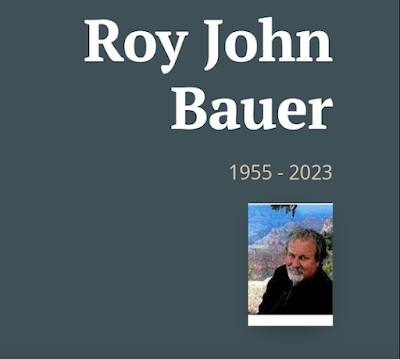
Roy's obituary in LA Times and Register: "we were lucky to have you while we did"

  This ran in the Sunday December 24, 2023 edition of the Los Angeles Times and the Orange County Register : July 14, 1955 - November 20, 2...