Sunday, July 15, 2012

OC's "win at any cost" political ethic: Butcher-Forde, Tom Fuentes, & James Lacy

Butcher & Forde united during
the first Caspers campaign

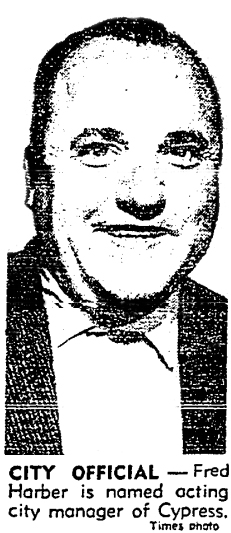
From the "Trustee Tom Fuentes files" [Fuentes got his start working for corrupt OC supervisor Caspers; Caspers' chief crony was the corrupt Fred Harber]: 

     “Some of these consultants regard a campaign as the equivalent of warfare, in which anything goes, short of overt violations of the law. Deceptions and misrepresentations, especially unleashed at the last minute through computerized mailings, seem to have become, for some, a standard campaign technique.”

—Orange County Citizens' Direction
Finding Commission report, 1978
     OK, this one’s for the “It’s a small world” file—and for those of us who love to see “connections” between people and events, especially surprising or interesting ones.
     A couple of days ago, our old pal Matt Coker (NavelGazing/OC Weekly) reported about some seriously sleazy campaigning in San Diego that bore the fingerprints of OC dirty-tricksters.
     You’ll recall that, in the past, I have noted that OC has been on the cutting edge of political methods, including sleazy and dishonest campaign tactics. One entity that figures importantly in that story is the consulting firm “Butcher-Forde,” which early on (c. 1970) exploited computer-assisted campaigning and direct-mail approaches. Butcher-Forde definitely wasn’t into the “truth” or "honesty" thing; they plainly adopted an “end justifies means,” win-at-any-cost approach.
     Such language has been used to describe Tom Fuentes' approach as chairman of the OC GOP. Tom, of course, worked with Butcher-Forde and people close to the firm during its beginning.
     One such person was political consultant (and Shooting Star yachtsman) Fred Harber. You'll recall that Harber was crucial to the success of “Dick and Doc” and such candidates as Ron Caspers, for whom Tom Fuentes worked at the start of his political career.

Gary Kreep
     Now back to Matt’s post about San Diego political sleaze:
     Birther and San Diego County judgeship candidate, Gary Kreep, it seems, survived the recent primary and will be on the ballot in November. But reporters down south have been looking into his campaign, and they smelled a rat:
     After Kreep, a very right-wing candidate with Minuteman leanings, received the majority of votes in the primary for the Superior Court seat, the Voice of San Diego analyzed precinct data and discovered he did very well in southern San Diego, which is composed mostly of Democrats, Latinos and Democratic Latinos. [!]
     Tipped by an anonymous source, San Diego City Beat's Dave Maass is reporting last-minute robocalls were made by a political action committee (PAC) called Taxpayers for Safer Neighborhoods against Kreep's opponent, Deputy District Attorney Garland Peed. Maass includes in his online report [an] audio of such a call, which claims Peed would be "the worst kind of county judge" because he used plea bargains to put a drug dealers back on the streets.
     The call cites the case of a criminal named Brian Moore, but as Maass reports the group conflates the prison sentences of two inmates with the same first and last name. Robocalls in elections are outlawed in California anyway if they are not introduced by a real person. The one slamming Peed was not, according to the City Beater.

     
Matt goes on to explain that this sure smells like OC sleaze. And that’s because it IS OC sleaze:
     The PAC [viz., Taxpayers for Safer Neighborhoods] lists as one of its directors James Lacy, a former Dana Point city councilman, constitutional-law attorney and onetime national chairman of Young Americans for Freedom. Lacy is also chairman of Western Conservative Political Action Conference, whose vice chairman and counsel is . . . drum roll, please . . . Gary Kreep!
     Lacy … is one of campaign-finance reform's most lethal enemies.
James Lacy
     DtB readers will recall that we’ve mentioned Mr. Lacy many times before. I do believe I first encountered his name back in the days when I worked with Wendy (Gabriella) on our (successful) Brown Act lawsuits against the SOCCCD BOT. As I recall, Lacy had contacted Wendy and wanted to speak with her. I don’t recall if she and he ever got together, but I do know that Lacy went on to represent a client who sued the Capo Unified School District Board for its egregious Brown Act violations.
     In DtB, Lacy’s name has come up in connection with The American Conservative Union, the conservative CPAC conference, and the Young America’s Foundation. It has come up, too, in connection with the worst kind of political dirty tricks—the kind that make one think of Lee Atwater and Karl Rove. (As chair of the OC GOP, Fuentes established the annual "Republican Party of Orange County Lee Atwater Award"—an action not unlike establishing a "Machiavelli" prize for "excellent ruthlessness.")*
     And, of course, Lacy was very friendly with late SOCCCD trustee Tom Fuentes.

Butcher, c. 1982
     But let’s get back to Matt’s recent article, which next cites Nick Schou’s report on Lacy of ten years ago. That article revealed that Lacy is an old hand at the tactic used against Mr. Peed.
     I decided to read Schou’s article: Slate Nailer, Dec. 12, 2002.
     Schou reported Lacy’s slate mailings in support of prominent liberal Democrats in Santa Monica. The mailings also directed voters to vote “No on JJ.” JJ was the city’s living-wage ordinance, which would have forced employers to pay bottom-wage employees more. These anti-JJ slate-mailings were paid for by hotel owners who had hired conservative consultant Jim Lacy.
     It is likely (evidently) that JJ failed (by a small margin) because of the confusion among liberal voters created by these crafty slate-mailers.
     Schou contacted Lacy and spoke with him. It is here where the name William Butcher comes up:
     In a recent interview at his Laguna Niguel law office, Lacy acknowledged that he was asked to help defeat Measure JJ by his old friend William "Lord" Butcher, who is listed on election paperwork as the person who "authorized" the contents of the mailer.
     Butcher and Lacy previously teamed up to produce slate mailers for "Save Proposition 13," having first met in the late 1970s when they worked for the Howard Jarvis Taxpayer's Association, which sponsored the controversial statewide property-tax initiative. [The Jarvis organization used Butcher-Forde.] Prop. 13 prohibited any new property taxes on existing homeowners. It had the effect of starving California of cash for welfare, education and other social programs.
     Butcher, who moved to England in the 1980s and changed his name to Lord Butcher even though he is neither a British subject nor of noble birth, is even more famous for his right-wing direct-mail campaigns. He formed a Newport Beach consulting firm with Arnold Forde; the pair liked to call themselves the "Darth Vaders of Direct Mail." They raised money for conservative political causes by, among other things, scaring elderly voters into thinking they were in danger of losing their Social Security checks or that Prop. 13 was about to be overturned.
     Meanwhile, they got rich, allegedly pocketing much of the money they raised. A 1996 Los Angeles Times story reported they kept as much as $5 million per year of their firm's $12 million in earnings in the mid-1980s.
     Lacy doesn't find it ironic that he and Butcher, two lifelong pro-life Republicans, were the only officials of a phantom group calling itself the Pro-Choice Voters Committee. "The irony is I'm a lawyer," he said. "I work for Democrats and Republicans, but I happen to be a conservative Republican."
     Because he's a lawyer, Lacy is a double threat. He helps organize deceptive slate-mail campaigns on behalf of private developers, anti-abortion groups and other conservative causes. Then, when voters pass campaign-finance laws to regulate deceptive slate-mail campaigns, he uses his legal expertise to get those regulations overturned in court.
. . .
     Lacy is still trying to overturn a county-approved $1,000 cap on individual contributions—a limit that also applies to slate mailers and, thus, his pocketbook. The ordinance, which the Board of Supervisors passed in July, was authored by good-government activist Shirley Grindle.
. . .
     On [Lacy’s point that slate-mailers can’t be ignored], if on nothing else, Grindle says she completely agrees with Lacy. She has spent the past three decades trying to reform campaign-finance laws, only to see much of that work overturned by legal challenges, as most recently occurred with Props. 134 and 208—both of which Lacy helped orchestrate.
     "Every time we close a loophole, it seems like they find a new way to get around it," she said. "I'm just about ready to give up."
Bill Butcher today
     Grindle also battled the influence of professional lobbyistssuch as Thomas Fuentes, Lyle Overby, and Frank Michelena. But though her TINCUP legislation has helped, lobbyists, too, have found ways to get around existing regulations. (See.)
     You'll recall that Mr. Butcher was involved in the trial of Dr. Louis Cella. Cella's business dispersed large sums of money through means seemingly designed to obscure the money trail. Butcher was a major beneficiary of such funds. (See here for Lord-Butcher's response to Schou and Schou's response to that response.)
     Immediately after the SOCCCD BOT acted to appoint James Wright and not Jolene Fuentes as Tom Fuentes’ replacement on the board, a James V. Lacy wrote a piece in the California Political Review in which he expressed puzzlement over the board’s action. (I wrote a response, correcting some of his misconceptions.) 
     It seems likely that the piece was part of a concerted effort by those close to Tom (including the OC Reg's Frank Mickadeit) to stir up anger in hopes of fueling a petition drive or support for Jolene Fuentes’ run in November.
     Today, I realized that that James Lacy is the same one discussed above in connection with William Butcher.

* * *
     "When Butcher and Forde brought professional management and a fierce competitive drive to Orange County campaigning, they were challenging decades of friendly, folksy clannishness. They have been called amoral and their campaign tactics deceptive. And the accusations have not been hurled exclusively by their candidates’ opponents."

 — "Butcher and Forde, wizards of the computer letter," California Journal, May 1979.
Lacy's Robocall

*From New York Times:
Forde, c. 1982
     Friends said Mr. Atwater spent his final months searching for spiritual peace. The man renowned for the politics of attack turned to apologies, including one to Michael S. Dukakis, the Massachusetts Governor who was the 1988 Democratic Presidential nominee. ¶ Mr. Dukakis was the target of a campaign advertisment about Willie Horton, a black convicted murderer who escaped from the Massachusetts prison system while on a weekend furlough and raped a white woman and stabbed her husband. The advertisement became a central focus of the 1988 campaign. ¶ "In 1988, fighting Dukakis, I said that I 'would strip the bark off the little bastard' and 'make Willie Horton his running mate,' " Mr. Atwater said in the Life article [about his battle with cancer]. ¶ "I am sorry for both statements: the first for its naked cruelty, the second because it makes me sound racist, which I am not." ... ¶ The Bush organization, which campaigned relentlessly on the Horton case, was widely criticized as appealing to racial fears.
     (One of Jim Lacy’s former partners, Floyd Brown, was directly responsible for the Horton ad.)

Saturday, July 14, 2012

Shit hits fan (Oh my!)

Brian Probolsky
Saddleback College Foundation
     Norberto Santana of the Voice of OC reports that things may finally be unraveling down at the County. The story’s pretty juicy and it even sports a McGuffin!

Bustamante Scandal Sends Another Top Official Packing (Voice of OC)

     Indications are that Orange County Deputy CEO Alisa Drakodaidis is the latest high-level official heading out the door in the wake of the Carlos Bustamante sex crimes scandal.
     And Drakodaidis has left behind a scathing letter that could rock the foundation of the county government.
     On Monday, Orange County Public Works Director Jess Carbajal was fired with cause for failing in his role as a supervisor to Bustamante, who stands accused by District Attorney Tony Rackauckas of committing 12 felonies against at least seven women over an eight-year period while a manager at Public Works.
. . .
Pat Bates
     Drakodaidis’ letter levels a host of accusations against members of the county Board of Supervisors for interfering with hiring and contracts as well as conducting questionable campaign finance practices.
     It also accuses Rackauckas of using the Bustamante scandal as revenge against CEO Tom Mauk for firing Public Administrator John Williams earlier this year over what officials have described as incompetence.
     County officials have declined to immediately comply with a Voice of OC public records request for the attorney’s letter, which has been distributed to the supervisors.
     County lawyers are reviewing the Voice of OC request “but are not certain when their review will be completed,” a county spokesman said.
     Terry Francke … says there’s no doubt that the county bureaucracy and supervisors are simply stalling. He said the public has an immediate right to see that letter.
. . .
     According to several sources that have read the letter, Drakodaidis takes direct aim at several county supervisors for interfering in county contract administration.

     She specifically criticizes County Supervisor Pat Bates for placing one of her aides, Brian Probolsky (also a board member of the Moulton Niguel Water District) in a position inside the Orange County Community Resources Department. She also criticizes Bates over campaign finance issues, the sources say. [Note: both Pat Bates and Brian Probolsky are on the Saddleback Foundation's "Advisory Council."]
     And she alleges that Rackauckas’ investigators went hard on her during the Bustamante investigation because Rackauckas is angry at CEO Tom Mauk over the removal of Public Adminstrator John Williams in the wake of the 2010 scandal that erupted after Rackauckas fired Deputy District Attorney Todd Spitzer.
John Williams
     Drakodaidis has been on the hot seat since supervisors reviewed a controversial audit of the Human Resources Department last year that found top executives were giving themselves questionable raises. Drakodaidis had her salary cut by 13 percent following the audit, and sources said supervisors had been questioning her performance ever since.
     Drakodaidis also was the deputy CEO in charge of Public Works, where Carbajal and Bustamante worked.
     Sources indicate that within weeks the leaders of a special county investigation, spearheaded by a host of former Public Works officials, will present a critical report on how the department was managed….

SEE ALSO Bustamante's ex-supervisor in O.C. public works department is fired (LA Times, July 11)

Tuesday, July 10, 2012

Louis Cella's trial: Harber, Overby, Hoffman and unanswered questions


     This morning, I read a May 9, 1976 LA Times article, a substantial piece of reporting about the trial of the infamous Dr. Louis Cella, who, along with OC land baron Richard O'Neill, ran a campaign financing scheme in the 1970s—benefitting mostly Democratic candidates but also Republicans such as Ron Caspers—known as the "Dick and Doc Show" ("The Case Against Dr. Cella: Bits and Pieces of Paper").
     It was reported by Richard O'Reilly and Tracy Wood. These days, Wood is Senior Writer for The Voice of OC. Don't know about O'Reilly.
     Cella's business interests involved two hospitals, which devoted substantial square footage to non-medical workers and such non-medical activities as printing. Here, hospital funds would be directed to various persons and vendors. Ultimately, Cella was found guilty of a host of illegal activities, including fraud against the state and feds.
     According to the article, one of the ways in which money was dispersed—often to persons having no clear relationship to the hospital(s)—was through postage refunds issued as treasury checks or postal money orders. Presumably, this helped obscure the money trail from Cella to payees:
     The Grand Jury devoted a full day to testimony by Postal Inspector Peter Hickok about how the hospitals spent at least $145,000 on postage for political campaign mailings.
     He said the hospital checks would set up bulk mailing accounts or buy credit on postage meters. But not all of the postage would be used and refunds would be issued in the form of treasury checks or postal money orders.
     The practice involved about a dozen post offices, but at the time Hickok testified, he said, his investigation was incomplete. He said records showed that refunds totaling more than $92,000 were obtained from two post offices alone—Santa Ana and Cypress. Of that, $55,000 went to Butcher, he said.
     Butcher, who has repeatedly refused to be interviewed by Times reporters, was not called as a witness by the Orange County Grand Jury. He was called before the federal grand jury, however, where he reportedly refused to testify.
The O'Neill family (c. 1950)
     "Butcher" was William Butcher of the campaign consulting firm "Butcher-Forde," which became notorious for bringing computer-assisted mailings and new levels of demagoguery and dirty tricks to OC politics. According to Tom Rogers, B-F were also important in the rise of the influence of developers in OC. 
     Fred Harber, Dick and Doc's chief political advisor, was very close to Butcher-Forde. He was also close to Cella, O'Neill, and Caspers.
     You'll recall that lobbyist Lyle Overby has come up again and again in our saga of curious, Fuentes-related political activity forty years ago and thereafter. He, too, received these curious postal refunds:
     Another person who is recorded as having received postage refunds is Lyle Overby, now an aide to Supervisor Ralph Diedrich. In 1974, Overby received $4,600 in 16 money orders acting as an agent for [codefendant Theodore] Schiffman, Hickok testified.
     Overby, who was then working for the late Fred Harber, has refused to respond to a Times query as to what he did with the money.
     Hickok told the jury it is highly unusual for refunds that large to be made in money orders, which are limited to a maximum of $300 each. (Money orders are issued with the payee’s name blank so that the person obtaining the money order can make it payable to anyone he wishes without anyone else knowing.)
     Why did Overby receive payment in so odd and inconvenient a fashion? And just what was he being paid for? Brain surgery?
     You'll recall that Harber's secretary was a woman named Arlene Hoffman, who was ultimately murdered in her Laguna Niguel home (with a cross bow!) twenty years later. That crime was never solved. (See Who killed Arlene Hoffman? ) (Incidentally, Overby had recommended Hoffman to Supervisor Silva, for whom Hoffman was working when she was killed.)
     She was a witness at Cella's trial, but she was decidedly uncooperative:
Tracy Wood (these days)
     Another mystery man in the transcripts is Fred Harber, a political strategist who was closely teamed with Cory, Cella and O’Neill until he was lost at sea with nine others in June, 1974, when his boat sank off Baja California.
     The Grand Jury called Harber’s executive secretary, Mrs. Arlene Hoffman, to testify, but she repeatedly claimed not to know many details of his work.
     Mrs. Hoffman was paid by the hospitals from 1972 until last fall, but told the jury she didn’t do much work at either hospital until after Harber’s death.
     Before that she worked with Harber in Jesse Unruh’s 1973 mayoral campaign in Los Angeles, Democratic Party fund raising, and in the 1974 primary campaigns of Cory, Assemblyman Richard Robinson (D-Santa Ana) and Rep. Jerry Patterson (D-Calif.)
     Mrs. Hoffman testified that Harber was a consultant to the hospitals and said she considered the work she did on politics as public relations for the hospitals.
     (However, Patterson told the Times he was not aware she was being paid by the hospitals during the time Harber was working on his congressional campaign.
     (“If there was public relations for the hospitals, they were doing it very subltey,” [sic] Patterson said. “I didn’t know there was a connection with the hospital.”)
     Dep. Dist. Atty. Brice repeatedly tried to get details of Harber’s activities from Mrs. Hoffman, usually without success.
     “Can you tell us anything that he did for Mission Hospital?” Brice asked. “If he was a landscaper there, you could tell us he planted 15 trees regardless of the day or when it occurred, or if he was a nurse, you could say he changed bed pans or something. Do you know something that Fred Harber did related to the activities of Mission Hospital?”
     “No. I can’t answer that question for you; I can only speak in generalities,” Mrs. Hoffman testified.
     One of the “generalities” was that shortly before his death Harber was working on contracts to help large construction firms win approval for their projects from city and county governments.
     What was Hoffman's motive in revealing so little about her and Harber's activities? By the time of the trial, Harber had been dead for nearly two years. Was she motivated by loyalty? By self-interest? (Note: Pam Zanelli, later a SOCCCD PIO, was among those working in the "political" wing of the hospital at the time.)
     You'll recall that, according to developer Richard Jordan, Harber and Caspers were shaking him down for "help" in overcoming county non-approvals that his construction project had encountered. This was at the time of the Shooting Star sinking in June of 1974.


     Caspers, Harber, and eight other men perished in that disaster. Their bodies were never found despite a massive search. (Cella desperately searched for his man Harber long after the "official" searches were abandoned.)
     Like Tom Fuentes, Lyle Overby was supposed to be on that fateful boat trip. But he bailed after its first leg (to Cabo San Lucas). Richard Jordan was also invited but declined (for he wanted the DA to record conversations, which would have been impossible in Mexico).
     It's all very odd.

May 9, 1976 - LA Times - Case against Cella

It's official: trustee James Wright


Thursday, July 5, 2012

When solicitations are threats (and, as always, Tom Fuentes was there)

     An Orange County developer, actively seeking County Planning commission approval of a rezoning project, claims he was once approached following a public hearing by an appointed county official.
     The official, who has since resigned his position, suggested that one developer might want to buy two tickets to a high-priced political dinner for a local officeholer.
     “I told him to go to hell and walked away,” the developer said in a recent interview. “The next week, our deal was turned down by the commission.
     “I could never prove that the two things were related but there was sure a damn strong inference that they were.”
—LA Times, 1974

Dorothy Fortune
     THE SETTING: OLD GUARD SANS UNIONBy some time in 1998,* control over the union was back in the hands of decent faculty, but the new leadership soon found union coffers to be empty. Attempts at locating and acquiring Old Guard financial records were brazenly thwarted. As I recall (and here my memory is hazy), we never really got a clear accounting of where all the money went and who exactly controlled it. (I’ve been told by union insiders that CTA/CCA failed to aggressively assess Old Guard leadership because Sherry Miller-White, the union front-person, was African-American.)
     Though the Old Guard no longer controlled the union, it wasn’t quite dead. During the election of 1998, they managed to help elect two new right-wingers: Don Wagner and Nancy Padberg. (The "board majority" grew to five.)
     By the election of 2000, these rogue unionists were still somewhat organized. One wonders if the resourceful Mr. Tom Fuentes—for he had just arrived on the scenedid not take steps to enhance their viability. They had money—one wonders where it came from—and they backed the “slate” of Don Davis (against Lang), Dorothy Fortune (against William Shane), Tom Fuentes (against Bob Loeffler), and John Williams (against Bill Hochmuth). 
     Lang/Shane/Loeffler/Hochmuth billed themselves as the “Clean Slate.”
     Of the Clean Slate, only Lang prevailed. Unsurprisingly, all of the winners of the 2000 election, Lang included, went into it with the powerful “incumbent” advantage.
     Fuentes, the long-time chairman of the Orange County GOP, had been appointed to the board only four months earlier (in July) when the Holocaust-denying trustee Steve Frogue announced his intention of resigning.
     At the time, observers smelled a rat. They smelled accurately.

* * *
     KOPFSTEIN'S CURIOUS LETTER. I’ve come across an old LA Times article (“South O.C. Seats Have 10 Trading Hostilities,” October 31, 2000) from just before the election of 2000. It was written by our old pal Jeff Gottlieb, who has since made a name for himself (Pulitzer!) covering such stories as the Bell scandal
     Jeff reported:
Jeff Gottlieb
     …[T]here have been nonstop battles between the administration and the faculty, with disputes often ending up in court and the district typically being ordered to back off and pay its opponents' legal fees.
     This history sets the stage for the current contentious campaign.
     For example, four single-page anonymous fliers are circulating, filled with misinformation and inflammatory language that portray the Clean candidates as supporting domestic-partner benefits and a gay and lesbian studies program.
     These have been sent out with no return address, stuffed in mailboxes and even faxed to some people. It is difficult to tell how widely they have been distributed.
     The candidates named in the mailers said the subject is not even an issue in the campaign. Board President Padberg, who is part of the board majority, agreed. "I have no knowledge this [domestic partners] is going to be coming to the board," she said, adding it won't be up for discussion for at least two years, when a new contract is negotiated with teachers.
. . .
     Another flier, from a group identifying itself as "Conservative Americans for College Excellence," was mailed to residents of Laguna Woods. The flier endorses "true conservative American candidates" Davis, Williams, Fortune and Fuentes. "Don't let your education tax dollars be diverted from [classes for seniors] to pay for Same-Sex Domestic Partner Benefits," the flier states.
     This is not the first time that fliers with references to gay issues have become part of a campaign in the college district.
     In 1996, the teachers' union spent nearly $40,000 on a slick campaign piece that attacked first-time candidate Lang and his slate of candidates for using "your education tax dollars to pay for seminars and conferences to educate participants about the Gay & Lesbian Lifestyle." A more liberal leadership took over the union in 1998, and the organization's endorsements changed accordingly.
     Hostility between conservatives and liberals within the union continues.
     After the change in leadership, the California Teachers Assn. sent a team to investigate a number of allegations, including that money raised by the union to support political candidates had been mismanaged.
     The leader of the audit team, David Lebow, said the continuing probe centers on what happened to money collected for the union's political action committee at the rate of $15,000 to $30,000 a year. When the union leadership changed, the departing officers said there was no money left in the account and closed it down. Most of the former union presidents who controlled the fund have refused to cooperate or to turn over records, Lebow said, adding that the issue may be taken to court.
     One former union president, Robert Kopfstein, did provide investigators with the information he had available, Lebow said.
     Kopfstein, a professor at Saddleback, has since become treasurer of the South Orange County Taxpayers for Quality Education, and is backing incumbent trustees Fortune, Fuentes and Williams.
     What comes next really caught my eye:
Mr. Kopfstein
     On invitations for a Sept. 29 fund-raiser, Kopfstein added a handwritten note to 20 vendors who had done business with the district. "We hope that you can help support the campaigns of these incumbent trustees who, in the past, have shown support for your business," he wrote.
     District Chancellor Cedric Sampson said one vendor complained the note was inappropriate, but Sampson said he [did] not think there was anything illegal about it.
     Kopfstein defended the note. "What I'm saying here is this is someone with a connection with Saddleback College and they should be concerned about the trustees who are elected," he said. "If they're doing business, there's a vested interest in the school."
     Presumably, the vendor judged the solicitation to be inappropriate because it could easily be viewed as a threat: pay up or we’ll give the contract to somebody else.
     Such veiled threats are familiar in politics—where the citizenry are clueless and the regulations are lax. Like in OC.

* * *
     1974: WORRIES ABOUT SPECIAL INTERESTSBack in 1974, just months before the general election (in Orange County), the LA Times’ Don Smith wrote a lengthy piece about fund raising (“Fund Raising: A Basic Necessity of Political Life,” Aug 11, 1974) and the unseemly actions that campaign finance pressures yielded. It started with the story that heads this post: an OC developer tells of being approached by a county official who suggested the developer might want to buy tickets for a certain office holder's political fund-raiser. The developer refused.  The next week the developer's plan was rejected by the county.
     Smith marveled at the amounts that some incumbent candidates for non-partisan offices had collected for the recent June primary. For instance, incumbent supervisor Caspers had collected $196,264—for a job that made only $15K a year.
     Smith quotes a visitor from Chicago, a town notorious for corruption:
     “In Chicago,” she explained, “you know who you have to pay and how much to get something done. Here, there is no price tag. They hit you for anything they can get.”
     One campaign contributor whom Smith interviewed said,
     “You give,” he snorted, “because you know there is a contract coming up. If you don’t, you might not be considered. We don’t want all of it but we do expect to get our fair share. Contributions are one way to make sure the guy remembers your name.”
     At the time, Tom Fuentes was an aide to Ron Caspers, who had just disappeared in a boating incident off the coast of Baja.
     Fuentes explained Team Caspers' reliance on $1,000-a-plate or $500-a-plate testimonial dinners:
     “We used some very special invitations for those,” Fuentes explained. “One time, we sent a dozen roses to each person on the list with the invitation included in the gift card. Another time, we used a special parchment invitation with a red ribbon around it.”
     The key attraction for such events is a gourmet meal in a high-quality restaurant.
     For example, Caspers’ last such affair, which drew 21 guests, was held in the Westgate Plaza Hotel in San Diego. Guests were flown there on a chartered jet from Orange County.
     Smith spoke with one contributor who was asked to sell ten tickets for an expensive affair. By that time, everyone had already written a check or two, and so he only sold a few. He purchased the rest out of his own pocket:
     Asked what would have happened if he had simply returned [the tickets] unsold, he simply shrugged.
     “Probably nothing,” he replied. “We had contributed to all the other supervisors also, so one vote might not have hurt us. On the other hand, if the guy got mad at us, he could have blocked us from getting a contract in this district. So I ate the $500 and let it go.”
     Once again, our old friend Frank Michelena, a powerful OC lobbyist, popped up. According to Smith, he donated $1,000 to each of the incumbent supervisors (on behalf of a client). And he personally “tossed in a total of $7,000 to Caspers’ campaign and another $1,000 to Supervisor Ralph Clark.” (Caspers and Clark, of course, were in Richard O’Neill and Louis Cella’s stable.)
     Why did he do that?
     “In my business, it means a lot—as well as a lot of money for some of my clients—to be able to pick up the phone and get right through. ¶ “Someone who isn’t so well-known will also get through but it may take a little time to do it. With the costs involved in developing and building today, that quick access can save a lot of money for my clients.”
     Evidently, the OC Grand Jury was concerned about then-current campaign practices:
     In its farewell report, the jury contended that potential contributors are often harassed and claimed that at least one large contributor actually leaves the county before an election to avoid solicitations.
     The report called on county officials to stop soliciting funds from firms doing business with the county….
     Those solicitations, of course, could be viewed as veiled threats. No doubt, often, that’s just what they were.

* * *
     BENTS' ALLEGATIONS OF "STRONG-ARMING." Less than three months before the above article, Smith reported a curious press conference held by one of Supervisor Ron Caspers’ Republican challengers for the upcoming primary (“Fund-Raising Tactics by Caspers Criticized,” May 31, 1974):
     …[S]upervisorial candidate Marcia Bents charged Thursday that Supervisor Ronald Caspers has “strong-armed” firms into contributing to his campaign.
     Mrs. Bents, referring to Caspers’ latest financial report showing more than $222,000 in contributions, said the firms made contributions “because they were afraid not to give.” These firms are doing business with the county or seeking county permits, she said.
     Naturally, Team Caspers was there to rebut Bents’ charges. As usual, Team Caspers meant, not Caspers himself, but Tom Fuentes. (As we’ve seen, Tom seemed to be much more than an executive aide.) According to Smith, Fuentes asserted that Bents’ charges had “no element of truth.”
     “They are only an indication of her own floundering campaign,” Fuentes said, “and are unsupported by facts. [Evidently, he did not provide any facts.] The people and firms who contribute to Ron do so because they support what he is doing.”
     At a courthouse press-room conference, Mrs. Bents handed newsmen a list of 26 firms and individuals who have donated or pledged $1,000 or more to Caspers’ campaign. All of these donors are involved in subdivisions, zone changes, variance use permits, tracts, special projects or contracts with the county.
     “…some of these firms have expressed to me, privately, that they felt they were being forced into making substantial contributions to Caspers’ campaign.”
     Bents also presented a written signed statement by former Caspers aide H. Ronald Jones in which the latter states that “he had worked on county time to address and stuff envelopes for a Caspers’ testimonial dinner….”
     Further, “Jones charged that he had also used county time and a county car to drive to Los Angeles County to pick up materials for Fuentes’ campaign for the County Republican Central Committee.”
     –Evidently, the latter is contrary to county policy.

* * *
     TOM FUENTES, BULLYAs Orange County GOP chairman, Fuentes had become notorious for strongly discouraging challenges to Republican incumbents, no matter how odious. Some of these people reported that Fuentes had actually threatened them:
     "He said my business would be ruined, and that my husband's business would be ruined," said [former Superior Court Judge Judith] Ryan, a challenger to U.S. Rep. Robert K. Dornan for his seat in 1992. "I was taken aback." (Guiding With an Iron Hand, Times, July 11, 1996)
     The more you look at it the more the fabric that is Orange County Republican politics—where it concerns the late Tom Fuentes—is surprisingly homogeneous.

~ ~ ~
     *BACKGROUND: During the SOCCCD trustees campaign of 1996, a group of phenomenally unprincipled and secretive faculty—I dubbed them the "Old Guard"—controlled the faculty union and its substantial PAC money. These union leaders (Sherry Miller-WhiteSharon MacMillan, and the guys for whom they fronted: Mike RunyanTom Carroll, et al.) supported the trustee candidacies of “fiscal conservatives” John WilliamsSteven FrogueDorothy Fortune, and Don Davis. They printed and mailed a homophobic and stunningly deceptive flier to persuade local Republicans to defeat the slate of benign non-union (P.I.E.) candidates, including Dave Lang. (Confused? Lang “switched sides” in about 2005.)
     The Old Guard’s crew of Neanderthals (except for Davis) prevailed, and thus it was that, starting in December of 1996, the district was thrust into the “board majority” era, a period of incompetence, decline, venality, and embarrassment.
     Through the majority’s first years, union leadership steadfastly supported “their” board members, even as the latter brought the district to near fiscal disaster (we were placed on the "watch" list), endless accreditation difficulties, 1st Amendment lawsuits, and very unflattering news stories.
     (Motive? The Old Guard trustees wanted help paying for their campaigns, and, as near as anyone could tell, the Old Guard had struck a “quid pro quo” deal with these trustees to secure faculty contracts that benefited some at the expense of others.)
     Gradually (by 1998), horrified rank and file faculty took back control of their union, despite the hapless CTA/CCA.

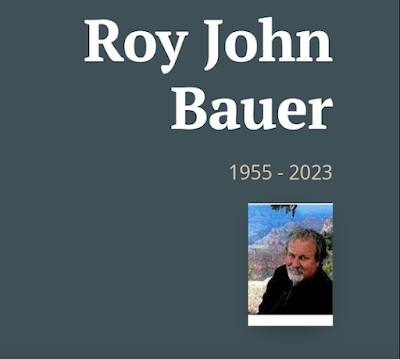
Roy's obituary in LA Times and Register: "we were lucky to have you while we did"

  This ran in the Sunday December 24, 2023 edition of the Los Angeles Times and the Orange County Register : July 14, 1955 - November 20, 2...