Tuesday, August 17, 2010

Two factoids re the SOCCCD trustees race

     #1. Orange Juice’s Allen Wilson reports endorsements made by the Orange County Republican Party Central Committee last night in races for “Mayor, City Council and School Boards.”
     Guess what? Among those endorsed: Kevin Muldoon, a Republican candidate for trustee, Area 2 of the South Orange County Community College District. It was already pretty clear that he was the GOP's Anointed One. (See Another right-winger?)
     That’s Don Wagner’s trustee seat, which he is abandoning in order to run for Assembly in the 70th.
     No surprise, I suppose. Also endorsed were Anna Bryson and Larry Christensen, two clueless and incompetent incumbents at the Capistrano Unified School District. Both have been supported by Tustin’s Education Alliance, on whose board (as far as we know) sits our own Don Wagner.
     (Bryson is also an assistant to OC Treasurer and fraudster  and pal o' Fuentes Chriss Street.)
    
     #1.2. I checked the OC Registrar of Voters site for the Assembly race (70th), and there is no longer a link to Don's candidate's statement: see.

     #2. I looked again at Muldoon's "candidate's statement" on the OC Registrar's website, and I noticed a web address at the bottom of the page.
     So I went there.
     Guess what? It's a Go Daddy ad page, advertising a cluster of legal firms specializing in bankruptcy!
     Muldoon is a bankruptcy attorney. Oddly, none of the ten links on the page directs us to Muldoon's firm.

Board President Don Wagner harassed by bumble bee


     If you’ve been following our reports of board meetings throughout the summer, you know that the administration/trustees of the SOCCCD are in a weird place right now. There’s open hostility between Board Prez Don Wagner and his camp (Padberg, Milchiker, Jay, Roquemore, et al.) and Tom Fuentes and his gang (Lang, Williams, bees, roaches).
     That’s the bad news, I suppose. The good news is that today’s “Chancellor’s opening session” was the best such session to be seen in many years.
     It really helped that Fuentes and Williams were absent. No sulfur stink. No milk mustache.
     Lang, pretending not to be the kind of guy who will sell out his friends for career opportunities, gave an "invocation" that seemed to be entirely unreligious. So it really wasn't an invocation, if you ask me. Is that good? Not sure.
     Wagner was on hand, of course, looking pretty strong for a guy who’s been through hell. He even managed to be funny (albeit still a bit dark; he provided the only rays of darkness during the 90-minute event; he can't help being just a tad menacing).


     Marcia Milchiker, Dave Lang, and Wagner were the only trustees to show, which is a first. It’s been a while since Williams has missed one of these things. He’s seriously into milk and cookies, I guess.
     Here’s a quick rundown of what happened today. I missed the first minute or so. Don’t know what happened then. Like I said, Lang gave an invocation that didn’t seem to invoke anybody, but it was nice, if bland. (To the extent that it was an invocation, it was non-nice.)
     Mr. Bob Bramucci did his usual whizbangery in what he called a “Tech Check.” We’ve been upgraded to Blackboard 9.1, he said, and it is packed with fabulous prizes. If you’ve got an iPad, you can connect to all sorts of things of importance, district/college-wise, said Bob.


     He showed us some “IVC aps” for the iPhone that seemed pretty cool. You can look up anybody and get their contact info. You can search the schedule of courses; you can get directions—complete with GPS that tracks you like some kinda perp.
     There’s something called PUSH BI, which seemed pretty good, if you’re into WSCH and that sort of thing. Evidently, our district, along with the usual suspects (Ivy League colleges, UCI) were honored for being really good at something. Tech stuff I guess. Not sure. Big applause.
     Bramucci did his usual thing with funny pics from off the web: cats, dogs, drunk people. It was all in good fun. No Elvis sightings.
     Then he strapped on his eeelectric guitar and did his schtick, which is pretty schticky, if you ask me, but still pretty dang entertaining. He managed to find excuses to play riffs from “Seven Nation Army,” “Day Tripper,” “Smells Like Teen Spirit,” “Walk This Way,” “Purple Haze,” “More Than a Feeling,” and so on. He was like one of those old K-Tell commercials. A cavalcade of super-hot riffulosity!
     He must be a seriously hammy guy. The audience gobbled it up. The jokes were corny and the audience loved that too.

     Prez Burnett and Prez Roquemore took turns introducing new faculty. All in all, about twenty-five of ‘em got up there to take their bows and get their grin 'n' grips. They didn't drag it out, which is good. Nice pacing.
     Next came Vice Chancellor of Business-Whatever David Bugay—seems like a great guy—and another one of his eccentric-yet-homespun but highly entertaining showlettes. He called it, “Going to the top: a living mosaic.” That didn’t sound good.
     But I think it was good. In his odd way, he is a bold fellow.
     He started with images concerning the issues of our day, our worry and uncertainty, etc. He moved on to issues in the district: What’s with ATEP? Facilities funding. The Chancellor search.
     But then he offered a series of “encounters” with clusters of students, faculty, classified, administrators, et al., as a janitor swept in the background and the screen displayed big letters and goofy images.
     Bugay is good at this sort of thing. He puts on a good show.
     The running gag was his asking students, as they walked away, “Where you goin’?”, and the kid always says, “Why, I’m going to the top!” Then said kid walked over to some stairs to nowhere on the right side of the stage.
     “It’s about students going to the top," chirped the Vice Chancellor, repeatedly. That sounded uncomfortably close to one of Mathur’s mantras. But the series of charmingly fake encounters (including one with his own son, who asked for twenty bucks) seemed to work very well anyway.
     Wagner then came up to speak, and he was a little menacing (it’s a subtle thing), as he always is, but he was funny, too. (You don't need to be menacing, Don.) He started off with a dig at Raghu Mathur: “Remember when the Chancellor’s opening session was all about Elvis? What do you think of this?”
     Don and Co. pulled it off, I think. It was indeed a new kind of opening session. A friendly one. A “great step up from Elvis,” as Wagner put it. And it was.

     Wagner was keenly aware that this was his last opening session (what with his big Assembly race and likely victory in November). He made a point of thanking everybody. He said it was an “honor and a priviledge” to be involved in a “small way” in what the district does. I think he meant it.
     That’s when David Bugay kept gesturing at Wagner, annoying him (you know Don). I almost ran over to do a body block, but, finally, it became clear that the Wag-Man was being investigated by a persistent bumble bee, who had lit on his shoulder. The bee soon took flight, but then commenced buzzing around Don’s head. He/she seemed especially interested in Don’s hair. The dang thing seemed intent on buzzing the fellow--just like those old planes surrounding the Empire State Building in "King Kong." It was way cool.
     But Don rolled with the punches. “It didn’t happen in rehearsal!” he joked, good naturedly. The bee finally went off to bug somebody else.
     Next, we were entertained by a fake live conversation with Acting Chancellor Dixie Bullock, vacationing in St. Petersburg, Russia. She filled the screen, standing on the banks of a river. It looked like Russia all right. Pretty dreary. We could hear traffic noise. Dead Russians floated by.
     Naturally, the whole thing was taped, but Wagner (and Bullock) did a pretty good job seeming to have a live conversation, just like on CNN. “Yes,” said Dixie to Don’s first question, “I started as a faculty member.” But he hadn’t asked a yes/no question. Pretty funny.
     What are your plans?, asked Don.
     Stability and civility in the district, said Dixie.


     There was a big technical snafu. Don ad libbed: “No, Dixie, go on, really!”
     Fortuitously, the signal was then restored, more or less. She talked a bit about the value of civility, a theme touched on earlier by Bugay. She said we oughta so hello when we pass people on campus. “A pleasant verbal greeting will make our day going right!” she chirped. (She sounded exactly like Sue-Ann Nivens.)
     Just then, the technical glitch returned, and, for a brief second or two, she sounded just like a freakin' chipmunk. She’s already a very popular gal, but, owing to this chipmunk episode, her popularity will no doubt reach new heights.
     Don smiled a winning smile.
     We can be Number 1. We’re not far from it now!, said Dixie.
     Well, then came the “issuing of pins,” an absurd ritual the premise of which is: the longer you maintain your job in the district, the more impressive you are. I don't get it. Some people seem actually to enjoy this exercise, including the recipients, who often beamed with pride.
     And that was it.

Monday, August 16, 2010

Don's statement

     Today, the generally wacky and colorful OJ Blog posted about the curious unavailability of Don Wagner’s “candidate’s statement” on the OC Registrar of Voters' website. (Don Wagner’s Amazing Invisible Candidate Statement.)
     Don is running for the 70th Assembly seat. He's hit the big time.
     Those Juicers seem to suggest that Don might be hiding his views or something (the real Don is, as we know, way right-wing). Evidently, they called the Registrar, and those people say all statements are posted online. In fact, Don's isn't (clicking on the link produces weirdiosis). But it seems more likely that the people down at the Registrar’s Office have simply failed to push the right button on their old PCs. Last week, we noted that candidates’ statements (in the SOCCCD trustees race, Area 2) failed to appear despite evidence that they were duly submitted. Then, suddenly, the statements appeared.
     So there you go. SEE UPDATE BELOW.
     Hope to see some of you at tomorrow’s “Chancellor’s Opening Session” down at Saddleback College.

UPDATE: Sheesh. Part of the OJ post concerning Don Wagner didn't appear on my screen when I looked at it a few hours ago (I hate when that happens). Now I can see all of it. Here's what it says:
So one of our operatives actually paid a visit to the Orange County Registrar of Voters this morning and asked to see Don Wagner’s candidate statement. After a round of frustration (“Well sir, you can look that up on our website”) it turned out that Don Wagner had never filed a candidate statement for the general election.

Which leads us to some questions for Mr. Neal Kelly. Why does it look like Don Wagner filed a candidate statement when he didn’t? Who put that broken link up there, and who instructed them to do that? Why is it still up there?

And then there are some questions for Don Wagner. Does he really have such contempt for the voters in the district that he only needs to communicate with Republican primary voters? Does he think that getting 32% of the Republican primary vote, only 5.4% of all the registered voters in the district, is all he has to do? Is he that arrogant? Is he too broke to spend another $4,000 filing a candidate statement to communicate with all voters after lending himself $100,000 for the primary? Just incompetent ? Or did his contract with his consultant only go through the primary?
Hey, yeah!

     UNRELATED: for some reason, a local Lutheran (I don't think I know her) sent me the following poster for Concordia University's upcoming "German Day":

"Unscrupulous colleges," watered-down legislation, clueless voters

     Today, the Chronicle of Higher Education reported that
DeVry Inc., which owns a variety of for-profit colleges, said Friday that its earnings had grown 93 percent in the fourth quarter of its fiscal year, thanks to increasing enrollment and soaring revenue, according to The Wall Street Journal. The company's profit in the three months ending June 30 totaled $71.6-million, or 99 cents a share, compared with $37-million for the same quarter a year earlier. The company's revenue climbed 28 percent, to $506.7-million. The company said enrollment was up throughout its colleges.
     CHE also reports that the Dept. of Ed, which has belatedly taken an interest in “unscrupulous colleges” (um, like DeVry’s?) “that collect federal student-aid dollars but provide little useful education in return,” is developing a way to determine whether these colleges are following existing laws.
     They announced this “day late and dollar short” measure in a letter to Sen. Tom Harkin, who recently held noisy and dramatic hearings on for-profit colleges. He even showed home movies of GAO stings.
     It was ugly.
     It was wonderful!
     According to the Chronicle, the department today released “data showing the effects that its proposed ‘gainful employment’ rule would have on institutions of higher education.” The rule requires that colleges that receive federally guaranteed loans achieve some degree of employment success among their graduates. As the Chronicle explains,
The proposed rule would cut off federal aid to programs whose students have the highest debt burdens and lowest loan-repayment rates, and could limit enrollment growth at hundreds of other programs. ¶ …[T]he Institute for College Access and Success did analyze the data and found that 54 percent of borrowers who attended public colleges and 56 percent who attended private, nonprofit institutions were paying down the principal on their loans, compared with only 36 percent of those who attended for-profit colleges.
The upshot: students who attend for-profits—and, oddly, more and more students are flocking to them—are a particularly serious drain on federal coffers. As the Chronicle explains, for the U of Phoenix alone, the figure of student loan debt that “isn’t being paid down” is $2.8 billion (according to an expert they quote).
     Legislators keep tinkering with the gainful employment rule. I fear that, by the time they’re done, the legislation will be pretty feeble. That's 'cause the public fails to pay attention. But highly-organized interest groups (in this case, the for-profits) pay careful attention. And they do what they've gotta do to preserve their gravy trains. Meanwhile, the public sleeps.
     They're sleeping right now.
     Today's Inside Higher Ed has a fine article reviewing the apparent Sturm und Drang caused by Sen. Harkin’s hearings and the recent GAO stings. You’d swear these people really had something to worry about!
That sound you heard Friday at 5:15 p.m.? That was the collective thud of the heads of for-profit college executives hitting their desks in dismay when they got a first look at the sort of loan repayment data the U.S. Education Department expects to use in its proposed new regulatory scheme, aimed at ensuring that vocational programs prepare their graduates for "gainful employment." ¶ The numbers were lower than many observers (supporters and critics of the for-profit college sector alike) expected, and while officials of the companies immediately disputed the legitimacy of the department's data and again challenged the government's underlying regulatory approach, they also seemed to recognize that the statistics presented yet another threat.
     The article is lengthy and quite good. Check it out.
     I do wish that, for once, we do the sensible thing.
     Little hope of that.
     Go back to sleep.

Sunday, August 15, 2010

"I never have to go to school. It's great!"

     Yep, things change.
     Though I have never taught an online course, I have for years added online elements to my courses—such as homework assignments that students submit online (on Blackboard). My experiences with that tell me that online instruction will tend to be especially hard on flaky and undisciplined students who tend to turn things in late or not at all. When you set up an assignment online and give students a window to turn it in, they either do that or they don’t. There’s no middle ground. Students deal with a computer, not a person, and the computer is unforgiving.
     I like it. Most of our students need encouragement to be less, um, flaky. On the other hand, those students who persist in their flakiness fail. So, in some respects, our new era has more of an unforgiving "sink or swim" quality for many. Many will simply sink. That's not good.
     We’ve been hearing about textbook rental for years, and programs have started at our own campuses, though it is nice to hear that some newer programs (mentioned in the article below) allow students to write in their rented textbooks. It has always seemed to me that prohibiting such writing can thwart many students' studies. Students need all the help they can get!
     At many colleges, student government acquires much of its funding through a stiff tax on textbooks, and our own trustees here at the SOCCCD (especially Wagner and Fuentes) have rightly questioned that practice. I do hope that student government at our colleges will go even further than it has in reducing the extra cost placed on student textbooks. I fear, however, that they won't budge unless trustees pressure them again.
     When I was an undergraduate (at UCI in the 70s), I always kept my textbooks. They formed the basis of my personal library, and though I only occasionally consulted them, they served as a constant reminder of what I had learned and a basis for further inquiry. It's nice to see that some students still feel that way about their texts. But the rising cost of books and the rise of such measures as book renting will make this phenomenon virtually disappear. Too bad.
     Of course, when I was an undergraduate, textbooks cost about $20 a pop and tuition was about $250 per quarter. It simply amazes me what textbooks cost now. (I provide "free" materials for my students on Blackboard — mostly my own notes, rewritten as text.)

Colleges embrace online education (Daily Breeze)
     Alissa Dimock gazes into her laptop and studies a litigation lesson from a Los Angeles community college — all in the comfort of her South Pasadena bedroom.
     Dimock has never met her professor. She's also never sat in his class or set eyes on her fellow paralegal students at Los Angeles Mission College.
     Instead, her studies rely on a virtual pedagogic exchange, tapped out every day on a keyboard 25 miles from the Sylmar campus.
     "It's terrific," said Dimock, 44, seated next to a stack of law books. "I never have to go to school. It's great."
     Her class, Law 11-Civil Litigation, is among the steadily growing number of online courses being taught at community colleges throughout Los Angeles and California. In fact, community colleges are leading the way in online education, with annual online enrollments growing about 20 percent nationally over the past few years.
     The two-year colleges are following the successes of private universities like the University of Phoenix and National University that have conferred online degrees for years. They're also setting an example for four-year universities that are now kicking their online studies programs into high gear.
     The growth in online learning is a response to the demands of a busy public, desperate to acquire new skills in a fast-changing jobs market that will make most Americans take on multiple careers throughout their lifetimes. And in Los Angeles, it's a reaction to traffic gridlock.
. . .
     "You can see the trend - steep," said Gary Columbo, vice chancellor of institutional effectiveness for the nation's largest community college district. "It's all changed. Harvard and MIT (now) offer courses online. "It's a whole new world."
     Across the state, a growing number of the 112 community colleges have notified accreditors that more than half their lower division courses could be taught online.
     A report by community colleges Chancellor Jack Scott last year reported nearly 18 percent growth in distance education enrollment in 2008, to nearly 500,000 students.
     Proponents of online instruction tout many benefits, including more overall class participation and singular attention by professors.
. . .
     While virtual instruction can potentially save the community college district in classroom costs, administrators say it costs upward of $500,000 a year in licenses to use online learning software.
     Another downside, some say, is that computer classes require too much discipline from students, especially those prone to procrastinate or drop courses when they study online.
     Then there is the general criticism that computer course work simply cannot recreate the unique dynamic of a traditional classroom or campus life. Some online students have complained they feel isolated and virtually on their own.
     Online students, on average, also don't do as well as their face-to-face classroom counterparts, according to the LACCD. An average 58 percent of purely online distance learners earned a C or better last year, compared with 68 percent of regular class students. The dually enrolled students did slightly worse. In addition, up to 10 percent more students who study online fail to complete their classes.
. . .
     The University of California has also jumped on the online bandwagon. Last month, its regents agreed to develop an Internet-based undergraduate degree program that will save money and expand access to tuition-paying students.
. . .
     Nothing tells the story of how popular the courses have become better than the numbers. More than 4.6 million students across the U.S. studied online in the fall of 2008, a 17 percent jump over the previous year, according to a Sloan Survey of Online Learning….
Rent-a-book concept arrives at UC Berkeley (Oakland Tribune)
     UC Berkeley students may have a tough time finding a room to rent before classes start Aug. 26, but they won't have any trouble renting another back-to-school staple: textbooks.
     The Cal Student Store now allows students to rent select course texts for the semester, a less-expensive option that can save students nearly half the cost of new books and offers a significant savings over even used books. Most students spend about $1,000 a year on textbooks, according to campus figures.
     "I'm renting this textbook because it's cheaper," said second-year student Natalie Fakhreddine, who plans to major in business. "It's easy to do."
     For her and other economics students, the rental program means "Free to Choose" by the late Milton Friedman is $6.75 to rent, compared with $15 if purchased new or $11.25 used.
. . .
     A 600-page text on social psychology, for example, costs nearly $140 new and $104 used; it rents for $62. A 1,200-page introduction to astrophysics is $172 new, $129 used, and $77 to rent.
     Students can treat the rented texts just as they would books they buy: they can write notes in the margins and use highlighter markers on them, said Jeff Deutsch, director of the Cal Student Store.
     "Normal wear and tear is fine," he said, "which is a great feature for those using the books."
. . .
     The bookstore has about 3,750 different books in stock, and more than 30 percent of these titles can be rented. "The percentage is going up as we add titles," Deutsch said.
     Cal's Rent-a-Text program is being offered in cooperation with Follett Higher Education Group of Oak Brook, Ill., which manages more than 850 bookstores in the United States and Canada. Other Bay Area campuses that rent books include Saint Mary's College in Moraga, the University of San Francisco, Cal State East Bay and Stanford University.
     In a test program at 27 schools, including one Sacramento, students saved close to $6 million over two terms, according to information from Follett. The company projects the program could help students at more than 700 schools save more than $130 million in the 2010-2011 school year, and it expects to rent more than 3 million books nationwide.
     "In the pilot program, just less than half of students with the rental option do it," said Elio Distaola, director of campus relations for Follett. "That is more than 40 percent choosing to rent rather than buy."
. . .
     "It's reached a point where it's become a barrier for some students to buy them," Distaola said.
. . .
     Some students say the decision to rent or buy depends on the subject matter. "I'll rent a book if it's not in my major, like for an anthropology class," said Aerial Chen, an architecture student who just started working at the bookstore.
     "It really depends on the course," said Serena Quiroga, a fourth-year student from Colombia. "I'll probably rent a book, if it isn't for my major but is for a required class."Other foreign students, though, say they prefer to buy certain textbooks at lower prices overseas and have their family members ship the texts to them. This way, they can keep the textbooks and pay less than they would in the United States.
     Not all students looking to save money have such an option. Many, though, can order digital books online. Digital or electronic books are generally cheaper than new and used textbooks.
     "I hope that e-books are a fad," said Anthony Rodriguez, a third-year student majoring in intellectual history. "I like to read books and to keep them."
. . .
     "[Book rental is] an interesting concept, sort of like being back in high school," he said. "You get the book at the beginning of the term and then have to return it. But I probably wouldn't rent one except for math or a class I didn't like. (The rental) option doesn't let you build up your library, and that's what I want to do while I'm in school."….
From UC, Cal State fee hikes add to student debt (OC Register)
By the numbers

     In the past decade, UC’s undergraduate student fee has tripled, from $3,429 in 2000-01 to $10,302 this year.
     In the past decade, Cal State’s undergraduate student fee has nearly tripled, from $1,428 in 2000-01 to$4,230.
     In the past year, UC’s undergraduate student fee has risen by $2,514, a 32 percent increase.
     In the past year, Cal State’s undergraduate student fee has risen by $204, a 5 percent increase.
     The average annual cost for an undergraduate living on campus to attend a UC school is estimated to be$26,985 in 2009-10.
     The average annual cost for an undergraduate living on campus to attend a Cal State school is estimated to be $17,983 to $23,476 in 2010-11.
     The average annual cost to attend a four-year public college in the United States was $13,424 in 2007-08, according to the U.S. Department of Education. The average annual cost for a four-year private college was$30,393 nationally.
     The average loan amount for a full-time undergraduate was $8,000 annually in 2007-08, according to the U.S. Department of Education. Nearly 53 percent of all full-time undergraduates took out a student loan in that year.

Pictures of IVC's past

     It's been a long day. Just sat down to check out the program for "professional development" week at the college, which starts on Monday and plods all the way to Friday.
     Classes start three days later, I guess. Sheesh, it's always a drag when my summer break from teaching comes to an end. But it's been a great summer.


     I see that, for once, the "Chancellor's Opening Session" (on Tuesday) is streamlined. All the schedule shows is Acting Chancellor Dixie  Bullock's address on “Stability and Civility.” 
     In the past, Chancellor Mathur tended to enlist right-wing politicos, like Pacific Research Institute's Lance Izumi, for "keynote" addresses. PRI obviously wants to eliminate public education entirely. Well, that's OK, I guess, but I do wish they'd just come right out and say it instead of showing up at community colleges, making reasonable-sounding speeches.
     There are cool pictures from IVC's past strewn throughout the schedule. I guess that's 'cause IVC is celebrating its 25th Anniversary as an autonomous college (it existed as Saddleback College, North Campus, from 1979-1985).

     This appears to be Bill Hewitt, accompanied by Harry What's-His-Name. (I've forgotten it. I think he was a rabbi.) 

     I think this is IVC's PE complex under construction. In the old days, the college was determined to avoid competitive sports in favor of fitness programs and the like. That all went by the wayside about the time Raghu Mathur, the corrupt union leadership, and the original right-wing "Board Majority" took over the district in 1996-7.


     I think this (at left) is the opening of IVC's Child Development Center. Not sure. I do believe that Trustees Harriet Walther, John Williams, and Buckner Coe, a retired Saddleback College professor, are cutting the ribbon. (Later, Coe was the "Reverend" Coe and a leader in the Frogue recall effort.) 
     Who's the lady next to Terry Burgess? (Joan Hueter?)

     I'm not sure what this is. Shirley Gellatly seems to be wielding enormous scissors with the help of Pam Deegan (but I don't think her name was Deegan back then). I think that's Richard Sneed to her left (no?) and original IVC President Ed Hart fourth from the left. But isn't that President Ron Kong next to Shirley? He wasn't hired until 1987, so I dunno.
     In 1985, the board comprised John Connolly, Gellatly, Eugene McKnight, Robert Moore, Robert Price, Walther, and William Watts. (I think that Marcia Milchiker entered the scene in November of 1985.)

     I guess this is the communal garden. I doubt that such a thing exists nowadays on campus.

     Some familiar faces, circa 1986.
     I think that's Jan Rainbird third from left. I do believe that he was hired (as an adjunct film instructor) by Peter Morrison during a poker game.
     Ah, the old days.


11/12/15: You might want to check out IVC's Pinterest page: IVC then and now. Lots of cool old pics.

Saturday, August 14, 2010

For-profit colleges: where most students default on their loans

Low Loan Repayment Is Seen at For-Profit Schools (New York Times)
     Adding new fuel to the growing controversy over regulating for-profit colleges, the Department of Education on Friday released data on student-loan repayment rates at the nation’s colleges and universities, listing the institutions by name.
     Although the department issued no analysis or comparison of repayment rates by sector, outside advocacy groups that analyzed the data found that in 2009, repayment rates were 54 percent at public colleges and universities, 56 percent at private nonprofit institutions, and 36 percent at for-profit colleges.
     “I think it’s notable that the for-profits are the only type of school where the majority of students are unable to repay their loans,” said Debbie Frankle Cochrane, program director at the Institute for College Access and Success, which has called for tighter regulation of for-profit institutions.
     At some for-profit colleges, the repayment rates were startlingly low. For example, 33 of the 86 Corinthian Colleges’ Everest locations had repayment rates of less than 20 percent — and at several, the rates were less than 10 percent.
     At the headquarters of the University of Phoenix, the nation’s largest for-profit education company, the repayment rate was 44 percent, compared with 38 percent at DeVry and 27 percent at Kaplan University, a unit of the Washington Post Company.
     “I think this data could have a powerful effect on institutions and students,” said Terry Hartle, senior vice president at the American Council on Education. “No reasonable person will want to go to a school where only one in five students can pay back their student loans.”
. . .
     For-profit colleges enroll less than 10 percent of the nation’s students, but get almost a quarter of the $24 billion the government provides in Pell grants and Stafford loans. And students at for-profit institutions have a higher default rate than those who attend public or nonprofit colleges….

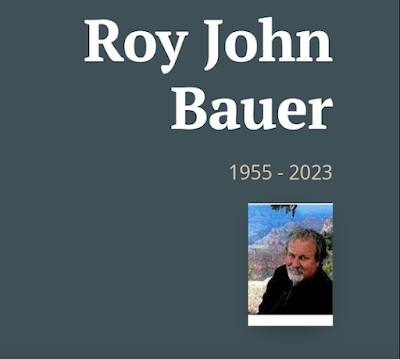
Roy's obituary in LA Times and Register: "we were lucky to have you while we did"

  This ran in the Sunday December 24, 2023 edition of the Los Angeles Times and the Orange County Register : July 14, 1955 - November 20, 2...