Tuesday, August 7, 2007

A beautiful day at the city by the bay

THESE PHOTOS were taken today, at about 5:00 p.m., from Lincoln Park, in the great city of San Francisco.


Lincoln Park is at the northwest tip of the city. (Click on photos to make them LARGER.)

This photo, and the next two, look west, more or less. Many of the rest look north, across the strait, to the Marin headlands.

That's the famous "Cliff House" in the middle, in the background. The "Sutro baths" were built here before 1900. The ruins are way cool.

Couldn't see the Farallon Islands today. Dang! They're 27 miles out there. Part of San Francisco County.


For an extremely cool 360 shot of the Golden Gate (from the Marin side), go to Golden Gate 360.


There's the Golden Gate Bridge.

Fannie's doing great. She says, "Hey."

A special hello--and my love--to Mopi!

Autonomy of higher education profoundly compromised?

Check out an interview with McMaster University Professor Henry A. Giroux in this morning’s Inside Higher Ed. Giroux is the author of The University in Chains: Confronting the Military-Industrial-Academic Complex. As the title makes plain, Giroux believes that President Eisenhower’s famous warning about the “military-industrial complex” applies also to the Academy.

Here’s a brief excerpt from the interview:

Q: You start your book with President Eisenhower’s warning about the military-industrial complex. Why was academe left out and how does the warning apply to higher education?
A: Why the academy was left out of Eisenhower’s original speech is a matter of open speculation, but it has been argued that some of Eisenhower’s advisors felt that including the term in the original formulation would have unduly besmirched the sanctity of higher education. And more importantly, it would have targeted and discredited higher education at the Ivy League schools, which played a major role in educating the rich and powerful classes with the knowledge, values, and skills necessary to assume leadership in business and government. At the same time, Eisenhower clearly recognized that the arms industry, the defense establishment, and their Congressional supporters represented a combination of unwarranted power and influence whose existence presented a danger to the university in its capacity as “a fountainhead of free ideas and scientific discovery.”

He was particularly concerned about the influence the military-industrial-academic complex would have on the autonomy of research, teaching, and a culture of learning conducive to educating an informed and critical citizenry. In light of the growing militarization and corporatization of American society, the transition in the last 30 years of the United States from a liberal-welfare state to a warfare state, it is clear that the semi-autonomous nature of higher education has been more profoundly compromised, especially with the increasing withdrawal of state and federal funding for higher education.

I began with Eisenhower’s speech in the book in order to underscore that at least historically there was a deep concern about the autonomy of the university and the necessity for it to have some remove from the influence of military and corporate power. Eisenhower’s warning about the military-industrial-academic complex strikes me as more worrisome today than when it was delivered in 1961. While some critics might believe that higher education is a hotbed of left-wing radicalism and that college campuses are “intellectually akin to North Korea,” as the notable syndicated columnist George Will once quipped, the fact is that the greatest threat faced by higher education is its annexation by the military-industrial complex and its attack by a well funded group of right wing ideologues and foundations, the result being a fundamental change in the university’s relationship with the larger society that necessarily signals a crisis in democracy and the critical educational foundation upon which it rests….

Monday, August 6, 2007

For mopi

In and around San Francisco, Pacifica.

There are some great people in this world. I know some of 'em. I'm happy.

Be happy, too.


Saturday, August 4, 2007

The SOCCCD and EPA’s “List 11”

TODAY, while researching our benighted district, I stumbled across something odd. I came upon a website provided by The Center for Public Integrity, a respected watch dog organization with which I am familiar. (See Charles Lewis.)

It turns out that the website is part of the CPI’s March 2007 two-part report on the sorry state of the Superfund program (Wasting Away: Superfund’s Toxic Legacy). That report is mighty grim.

Here’s what the website claims to provide:
As a public service, the Center for Public Integrity created a search of the Environmental Protection Agency’s database that connects companies, organizations and government agencies to Superfund sites. The results below come from the database, also known as list 11, which tracks the EPA’s interactions with these “potentially responsible parties.”
For those who need reminding about the notion of a “Superfund” site, the CPI explains:
A Superfund site is a toxic waste site that falls under the Environmental Protection Agency’s Superfund program. After public awareness grew about heavily polluted areas like Love Canal, Congress passed the … Superfund law… in 1980. Under the law, companies and other parties found responsible for polluting sites are required to clean up the area or pay the costs for cleanup to the EPA.
But what is a “potentially responsible party”? According to the CPI,
A “potentially responsible party” or PRP, is a company, organization or individual that the EPA determines possibly played a role in the contamination of a Superfund site. … The EPA keeps a database of all PRPs called List 11….
List 11 is very long. I searched for “South Orange County Community College District” on CPI’s version of List 11 and, sure enough, our district appears on it, alongside “Casmalia Resources,” a Superfund site in Santa Barbara County.

According to an EPA website regarding Casmalia,
The Casmalia Resources Superfund Site is a 252-acre inactive commercial hazardous waste treatment, storage, and disposal facility located … 10 miles southwest of the City of Santa Maria, 1.2 miles from north of the Town of Casmalia, and four miles from the Pacific Ocean.

Between 1973 and 1989, the site accepted approximately 5.6 billion pounds of waste at its 92 waste management facilities which included landfills, ponds, shallow wells, disposal trenches, and treatment units. More than 10,000 companies and government entities sent waste to Casmalia during this period.

…[T]he site’s owners and operators (Casmalia Resources, Hunter Resources, and Kenneth H. Hunter, Jr.) accepted ... industrial and commercial waste material, which included sludges, pesticides, solvents, acids, metals, caustics, cyanide, and nonliquid polychlorinated biphenyls (PCBs).

Facing multiple regulatory enforcement actions, the site’s owners and operators stopped taking shipments of waste material in 1989. In 1991, the owners and operators abandoned efforts to properly close and clean up the site. At that time, conditions at the site presented imminent and substantial endangerment to human health and the environment.

From 1992 to 1996, EPA used Superfund authorities to take emergency actions to stabilize the site. These actions included installing and operating systems for collecting, treating, and disposing of contaminated subsurface liquids, controlling the flow of storm water, and stabilizing the landfills.
(See EPA.)
In its discussion of the Casmalia Superfund site, the EPA, too, refers to “potentially responsible parties” (PRPs). It then explains that
One of EPA’s major responsibilities is to create an equitable process to ensure that each of these parties [i.e., customers whose waste went to the site] pays its share of total site costs—both for the expenses that EPA has incurred already, and for future improvements and maintenance at the site. The current estimate of these expenses is $271.9 million….

EPA will finance site work through settlements with the entities that sent waste to be disposed of at Casmalia, as well as with the site’s owners and operators….
The EPA then goes on to describe a series of settlements with PRPs, one in 1996, another in 2000, and yet another in 2003. The favorability of terms of settlement appear to decline with the passage of time.

“EPA,” the site goes on to say, “will continue to offer ‘cash-out’ settlements to former Casmalia customers.”

It appears that this information was written in 2004. What has occurred since 2004 is not explained.

If CPI’s version of List 11 is accurate (a safe bet), SOCCCD is, according to the EPA, a potentially responsible party. But I have no idea if the current list includes the many parties (e.g., “de minimis” parties, i.e., parties with minimal responsibility) that have already settled.

Thus, for all that I know, SOCCCD has already settled (in which case, of course, there would be a public record of that).

Further, it is possible that the SOCCCD has successfully contested its status, assigned by the EPA, as a “PRP.” It would appear, however, that any customer whose waste went to Casmalia is ipso facto a PRP.

Can anybody shed light on any of this? —CW

P.S.:

Just now, I looked up "SOCCCD" and “Casmalia” with the Yahoo search engine, and, essentially, I got three items, only one of which was relevant.

It was Dissent!

In an article published in 1998 entitled Williams to Lang: “Stop living in an ivory castle!”, I described the September 14, 1998, meeting of the SOCCCD Board of Trustees. At one point, I reported that
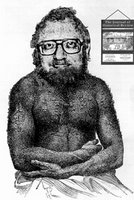
After a break, we heard about a lawsuit against the district filed by Casmalia Resources Site. Evidently, the firm took our hazardous waste and buried it at its site. Then the EPA showed up and told Casmalia that they’ll have to spend a million bucks cleaning up. Naturally, Casmalia is now trying to get the money from its clients, including us. Frogue said something, but it was stupefying, and so I have no clear memory of it.
A million bucks? Try $270 million!

So did we pay our share or what?

A small victory for free speech?

THE DISTRICT HAS F*CKED UP AGAIN.

Upshot: a judge has ruled that Board Policy 4000.2 is invalid because it violates the Ed Code.

Check out the Tentative Rulings site for Judge Robert J. Moss of the Superior Court of California, County of Orange.

Case #11 is Crosby v. South Orange County Community College [District].

Evidently, a student (Crosby) is suing our district with regard to an incident in which he or she was detained and questioned by a cop. Something about his headphones being too loud. The district, appealing to BP 4000.2 (see below), evidently suspended some of the student’s privileges.

Crosby has asked for a “summary judgment” and a “summary adjudication of issues.”

[UPDATE (8/4): reliable sources tell me that Crosby defended himself in court. Thus a non-attorney beat the district's attorney(s).]

Today (August 3), Judge Moss issued his "tentative." He did not grant the summary judgment. Further, he did not agree (with the student) that the policy is invalid “as applied.”

BUT he has agreed that BP 4000.2 is invalid. According to Moss, it violates the Education Code (see below).


Here's the ruling in its entirety:
Motion for summary judgment denied.

Motion for summary adjudication of issues granted in part and denied in part.


The defendant’s [i.e., the district’s] objections to the plaintiff’s declaration are overruled for failure to comply with CRC 3.1353(b). [?]

In summary, the court finds that Board Policy 4000.2 is facially in violation of E.C. § 66301. It is overbroad. It leaves to the Board’s discretion what is “appropriate” and what is not. E.C. § 66301 states students can engage in speech, conduct or communication on campus the same as they can off campus, whether the Board deems it appropriate or not. Since the regulation is invalid by the terms of the statute, it is unnecessary to address the Constitutional analysis. [My emphasis.]

The plaintiff established standing as he sustained at least some injury when he was detained and questioned by the security officer, even though this harm may not by itself be actionable. It is sufficient to provide a basis for challenge in this context. It is more then a hypothetical challenge. In facial challenge cases, the standing limitation is relaxed because there exists “a danger of chilling free speech” in society as a whole.

Since there is no need to consider facts to make this determination, the failure to separately address the issues in the statement of facts is of no consequence.

As to plaintiff’s claim that the regulation was invalid as applied, there are triable issues of fact. While he contends certain actions of the administration were retaliatory in nature, the defendant denies that they were and offers facially reasonable reasons for the action taken. For example, chastising plaintiff for the headphones being too loud could have been because they were. Likewise, suspending certain of plaintiff’s student privileges could have been because he failed to meet with the administrator. While these reasons may be pretexts for sanctions, whether or not they are is a question of fact for the jury to decide.

Defendant to prepare notice of ruling.
HERE'S BP 4000.2:

ELECTRONIC COMMUNICATION
The Board of Trustees of the South Orange County Community College District recognizes that it is important for staff and students to have access to electronic-based research tools and skills through its electronic/digital information network. Such open access is a privilege and requires that individual users act responsibly. The electronic/digital information network consists of (but not limited to) District owned computers, computer networks, electronic mail and voice mail systems, internet services, audio and video conferencing, and related electronic devices such as cellular telephones, facsimile machines and copiers.

The Board recognizes that resources available on the network represent extraordinary learning opportunities and enriching educational materials, but they also offer persons with illegal or unethical motives with avenues for abuse of these resources. It is the policy of this District to restrict access to and use of the electronic/digital information network to students and staff for appropriate academic, professional and institutional purposes. Use of the District’s electronic/digital information network for other purposes is not authorized and will constitute grounds for revocation of user privileges, removal of offending material, potential disciplinary action and, in appropriate cases, referral to law enforcement authorities.

There is no right to privacy in the use of the District’s resources. The District may monitor and access information contained on its resources for investigative and/or administrative purposes, and may take administrative action in response to any violation of this policy, applicable administrative regulation, or other law. The Chancellor is hereby authorized to adopt and implement such administrative regulations to implement this policy.
HERE'S California Education Code, Section 66301:
(a) Neither the Regents of the University of California, the Trustees of the California State University, nor the governing board of any community college district shall make or enforce any rule subjecting any student to disciplinary sanction solely on the basis of conduct that is speech or other communication that, when engaged in outside a campus of those institutions, is protected from governmental restriction by the First Amendment to the United States Constitution or Section 2 of Article 1 of the California Constitution.

(b) Any student enrolled in an institution, as specified in subdivision (a), that has made or enforced any rule in violation of subdivision (a) may commence a civil action to obtain appropriate injunctive and declaratory relief as determined by the court. Upon motion, a court may award attorney's fees to a prevailing plaintiff in a civil action pursuant to this section.

(c) Nothing in this section shall be construed to authorize any prior restraint of student speech.

(d) Nothing in this section prohibits the imposition of discipline for harassment, threats, or intimidation, unless constitutionally protected.

(e) Nothing in this section prohibits an institution from adopting rules and regulations that are designed to prevent hate violence, as defined in subdivision (a) of Section 4 of Chapter 1363 of the Statutes of 1992, from being directed at students in a manner that denies them their full participation in the educational process, so long as the rules and regulations conform to standards established by the First Amendment to the United States Constitution and Section 2 of Article 1 of the California Constitution for citizens generally.

YEAH, BUT...

Friday, August 3, 2007

Gratuitous Fogville Imagery

TODAY'S PICS (click on 'em to make 'em bigger).

Fannie's house is very near the water, on what the locals call "Pedro Point." The maps seem to have other ideas.

The above shot is of the neighborhood behind Fannie's place. The trees and forests are wonderful. The people are the usual mix, I guess. Some are great.

Some of 'em are total rat bastards from hell, like a certain drug dealing family that I don't wanna talk about.

ELROY AND I left from Pacifica at about 11:00 a.m.

Above is a photo of the San Francisco Penninsula. As you can see, our trip to the hospital hugs the western coastline.

I think Elroy thinks I drive too fast. Not so. I accelerate too fast. There's a difference.

As we drove northward, I played some Smiths, some This Mortal Coil, and even some White Stripes. I think Elroy dug it. He was a Marine, you know, like my brother Ray.

There's a fair amount of shabbiness to how things are built and laid-out in this area. The land and sea are beauitiful, of course, but morons seem to "plan" things and build things around here. Maybe I'll show you tomorrow. Maybe not.

No doubt things are different elsewhere on the penninsula. Could be. Hope so.

(ABOVE) We're looking south, down toward Pedro Valley/Pedro Point and Pacific Beach. My sister's place is right there on the point, to the right of the middle of the picture. She's an artist, you know. You should see her famous Easter Goose, used by the American Cancer Society.

Here's a shot of Fannie's cat, Tiger-Ann. How come? Cuz I wanted to have at least one good shot in here. Tiger-Ann is photogenic.

The next three shots are on Highway 1, headed south. I wanted to give you a sense of how much fog there is around here, even on a nice summer day. Sometimes, it blows across the road in semi-discrete wisps, like spectral tumbleweed.

--I know. I'm a Southern Cal boy, and I don't understand cold and fog and incessant wetitude. Could be. So maybe this shit is standard all over the place. I dunno.

I guess I oughta travel more.

On the other hand, I think people oughta stop movin' around so much. Stay in one spot. Make it good there. Make it better. Pick up some trash.


These next shots are from the "Great Highway," just south of that crazy Cliff House. People are always flyin' kites there. This guy seemed to be pretty good at it. I watched him for a while.

Lots of sand, man.


On the Great Highway, I parked to take some pics, and this old guy stopped me to ask about my car. "Is that yours?", he asked.
"Yup. Just got it."

"It sure looks great. How does it drive?"

"Great. Fast. It's comfortable."

"These cars are popular, aren't they?"

"I guess so."

"My, my. How do you like that?"

He wasn't saying anything.

He paused. We stared at the car, then at the ocean. The wind blew. We looked north. Birds squawked.

"Bye now," he said, after a bit.

Fannie is doing better. She says "Hey."


Thursday, August 2, 2007

Motto Magazine blows


Sister Fannie is doing better today. Recoverywise—irrespective of how she feels—she’s doing wonderfully. She’s feeling a bit better too.

An hour ago, I took a few pics in and around Pacifica—in particular, near Pedro Point/Pedro Valley. Here are a few of ‘em. Plus I took some quick snaps of Tiger-Ann, the northern weasel. Click on the pics to make them larger.

MOTTOES. I noticed a curious item in this morning’s Inside Higher Ed. IHR reports that a new publication, Motto Magazine, intends to help people to “work with purpose, passion and profit.”


M&M offers its “top ten” list of college mottoes. Here they are (the commentary is my own):

1. Cornell University: “I would found an institution where any person can find instruction in any study.”

Rumpology is a study.

2. Brown University: “In God we hope.”

Does this mean they hope God finally does the right thing? Understandable, but that’s a bit insulting to the (alleged) Deity. Not that I'm complaining. Or does it mean that they hope the guy (or Guy) exists? But then, if he does exist, he’ll be pissed at you, right?


3. Wellesley College: “Not to be ministered unto, but to minister.”

Not bad.

4. Stanford University: “The wind of freedom blows.”

I hate to break it to you guys, but, "blows" means "sucks."


5. University of Pennsylvania: “Laws without morals are useless.”

Truisms without panache are pretty useless, too.

6. Seton Hall University: “Whatever risk, yet go forward.”

Whatever risk? How about: the sky might be set on fire if we do this.

Don’t be an asshole.

7. Dartmouth College: “A voice of one crying out in the wilderness.”

I don’t get it. Are you talkin’ about Dartmouth’s voice? Hanover, New Hampshire. That's some wilderness.


8. Carnegie Mellon University: “My heart is in the work.”

I like this one. The business school must get a motto exemption, though.

9. Clark Atlanta University: “I’ll find a way or make one.”

Mottowise, a better fit might be: “we’re blowhards.”

10. Brigham Young University: “Enter to learn, go forth to serve.”

Jeez, these are the top ten? If these are the best, I wonder what the one-thousandth ranked motto is like? Maybe: "Get laid."

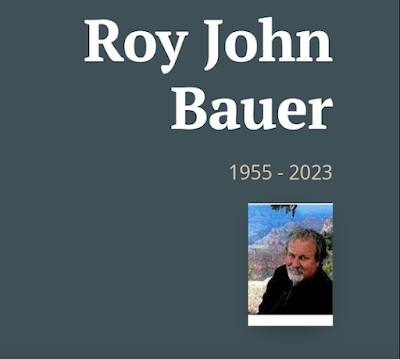
Roy's obituary in LA Times and Register: "we were lucky to have you while we did"

  This ran in the Sunday December 24, 2023 edition of the Los Angeles Times and the Orange County Register : July 14, 1955 - November 20, 2...