Taking On Adam Smith (and Karl Marx) (New York Times)
…In his new book “Capital in the Twenty-First Century” (Harvard University Press), Mr. [Thomas] Piketty, 42, has written a blockbuster, at least in the world of economics. His book punctures earlier assumptions about the benevolence of advanced capitalism and forecasts sharply increasing inequality of wealth in industrialized countries, with deep and deleterious impact on democratic values of justice and fairness.
. . .
…“Capital in the Twenty-First Century,” with its title echoing Marx’s “Das Kapital,” is meant to be a return to the kind of economic history, of political economy, written by predecessors like Marx and Adam Smith. It is nothing less than a broad effort to understand Western societies and the economic rules that underpin them. And in the process, by debunking the idea that “wealth raises all boats,” Mr. Piketty has thrown down a challenge to democratic governments to deal with an increasing gap between the rich and the poor — the very theme of inequality that recently moved both Pope Francis and President Obama to warn of its consequences.
. . .
His findings, aided by the power of modern computers, are based on centuries of statistics on wealth accumulation and economic growth in advanced industrial countries. They are also rather simply stated: The rate of growth of income from capital is several times larger than the rate of economic growth, meaning a comparatively shrinking share going to income earned from wages, which rarely increase faster than overall economic activity. Inequality surges when population and the economy grow slowly.
. . .
“It’s very difficult to make a democratic system work when you have such extreme inequality” in income, he said, “and such extreme inequality in terms of political influence and the production of knowledge and information. One of the big lessons of the 20th century is that we don’t need 19th-century inequality to grow.” But that’s just where the capitalist world is heading again, he concludes….
See also FORCES OF DIVERGENCE (New Yorker, 3/31/14)
The SOUTH ORANGE COUNTY COMMUNITY COLLEGE DISTRICT — "[The] blog he developed was something that made the district better." - Tim Jemal, SOCCCD BoT President, 7/24/23
Sunday, April 20, 2014
In the district, FIVE YEARS AGO:
![]() |
| The IVC clock tower (1979-2006) |
TUESDAY, APRIL 21, 2009
Irvine Valley College once had a clock tower. It was a good clock tower, as clock towers go. But some of its timber was rotten.So they tore it down.


We managed to rescue the clock’s hands. That’s all that’s left. Plus our memories.The clock tower is gone. But the spirit of the clock tower survives.
Here are some pictures that the Reb and I took today around campus and inside the new BSTIC building.


The A-quad: somebody told us that they put this slab of concrete "right on top of the bricks."
"So the bricks are OK," he said.
"Oh."


SEE
LATE NEWS:
• JOHN YOO STARS IN A MOST CIVILIZED DEBATE ON TORTURE: The big debate today at Chapman University. (Matt Coker gives us the blow-by-blow in OC Weekly.)Outdoor sculpture invitational
• Bush lawyer defends waterboarding in local debate: John Yoo, whose memos justified controversial interrogation tactics, defends the practices during a Chapman University debate. (Martin Wisckol in the Reg.)
ORIGINAL POST:
Breaking news!
MONDAY, APRIL 20, 2009
I was Googling today and came across a “Social Media Release” dated April 20 about an event that occurred a full week ago. (See.) Here it is:Irvine Valley College Foundation Awards Dinner - Raises More Than $43,000
The 21th annual Irvine Valley College Foundation Awards Dinner sponsored by Grainger raised more than $43,000. The gala was held on April 13, 2009 at the Irvine Marriott. [Note: Grainger is a supplier of facilities maintenance products.]This “media release” appears on the pitchengine site.
Patrick Healy, NBC Channel 4 News reporter, was the keynote speaker, and Maria Hall-Brown, producer of KOCE-TV’s “Real Orange,” served as the master of ceremonies. [Hall-Brown has done some decent journalism in recent years. In the 80s and 90s, she was an actress, appearing in David Carradine’s Open Fire (1988), among other movies.]
The evening wouldn't have been complete without an auction of city officials for charity. [I’ll spare you the corny details.]
Four individuals were recognized for their outstanding contributions to the college with presentation of the IVC Medal, the Foundation’s highest honor. Medal winners were:
• Howard J. Klein of Klein, O’Neill & Singh…
• Fawn Tanriverdi, a counselor at the college, ….
• Raymond A. Lee and Jeffrey C. Joy of Greenberg Traurig LLP….
Since 1985, IVC has been serving students…. [etc.]
I’m told that a real effort was made to make this particular Foundation dinner a class act—to raise it to a "new level," as one person put it. Those who attended tell me that Hall-Brown did a fine job as MC and the person who ran the auction was also good. Almost everything was first-rate.
I’m also told that, unfortunately, KNBC reporter Patrick Healy, the keynote speaker, bombed bigtime. All seem to agree that the fellow was dreadfully longwinded and dull.
How is that even possible? I mean, isn’t he out there every night to cover such events as treed cats, traffic accidents, decapitated horses, and, in general, the day of the locust—while looking fairly natty? C’mon!
Whoever booked Healy obviously didn't ask the right questions—such as, Is he a dull speaker?
And how come Mr. Tom Fuentes wasn’t the MC? Isn’t he always the MC? You've gotta admit: Tom always brings something beyond his florid, over-the-top "master of ceremonies" performance. With Tom, especially if he's had a few belts, there's always the possibility that—oh, I don't know—he might suddenly break down and finally explain what his goddam problem is. The tension and excitement can be incredible!Well, no. No doubt the switch to Hall-Brown was an unexpected ray of sunshine, a delightful pocket full of posies. Plus Fuentes' presence just reminds everyone that, since 2000, the Foundation seems to have drifted increasingly toward the ever-narrowing and staunch world of Tom Fuentes Republicans. That's some serious staunchitude, man. And some serious narrowification.
Next year, I plan to attend and to provide a detailed report, cuz enquiring minds wanna know about snazzy events at IVC where people dress up and somebody might trip and knock over Raghu or say something completely ridiculous that nevertheless reveals the horror, the heart of darkness, of that man's soul.
Monday, April 14, 2014
The College Faculty Crisis (NYT editorial, 4/13/14)
The public colleges and universities that educate more than 70 percent of this country’s students were burdened by rising costs and dwindling state revenues long before the recession. They reacted by raising tuition, slashing course offerings and, sometimes, by cutting enrollment.
They also cut labor costs by replacing full-time professors who retired with part-time instructors, who typically have no health or pension benefits and are often abysmally paid, earning in the vicinity of $3,000 per course.
The part-timers are often considered “invisible faculty,” because they rarely participate in academic life and typically bolt from campus the moment class ends. That researchers still know little about them — or how well they do their jobs — is especially startling given that a little more than half of all college faculty members are now part-timers, and they far outnumber full-time faculty members on most community college campuses.
The portrait of these instructors that emerges from a new study by the Center for Community College Student Engagement, a research center at the University of Texas at Austin, is alarming. The report, based on survey responses from more than 71,000 teachers, found that part-timers face many challenges. Because they are treated almost like transient workers, they are given little reason to make an investment in the institution.
They often learn which courses they are teaching just weeks or even days before the start of the semester, so there is almost no time to prepare. They often lack office space or administrative or technical support and are rarely given any guidance on how to do their jobs effectively. According to the report, they are implicitly told: “Just show up every Thursday at 5 o’clock and deliver a lecture to your class. Give a midterm and a final exam, and then turn in a grade, and the college will pay you a notably small amount of money.”
The colleges expect little of these teachers. Not surprisingly, they often act accordingly. They spend significantly less time than full-time teachers preparing for class, advising students or giving written or oral feedback. And they are far less likely to participate in instructional activities — like tutoring, academic goal setting or developing community-based projects — that can benefit students.
This situation is terrible, especially for students from disadvantaged backgrounds whom community colleges typically attract. On those campuses, nearly two-thirds of the students arrive needing remedial instruction in math, English or both, and often lack the basic competencies they need to move beyond remediation to a degree.
The community colleges have to do a better job of screening the part-time instructors they hire, and developing their skills, which means providing mentors and career paths that give them the opportunity to engage with campus life.
All of this will require more money for higher salaries and professional development. College degrees worth having don’t come cheap. Public officials who determine community college budgets should know full well that colleges, like other institutions, only get what they pay for.
The public colleges and universities that educate more than 70 percent of this country’s students were burdened by rising costs and dwindling state revenues long before the recession. They reacted by raising tuition, slashing course offerings and, sometimes, by cutting enrollment.
They also cut labor costs by replacing full-time professors who retired with part-time instructors, who typically have no health or pension benefits and are often abysmally paid, earning in the vicinity of $3,000 per course.
The part-timers are often considered “invisible faculty,” because they rarely participate in academic life and typically bolt from campus the moment class ends. That researchers still know little about them — or how well they do their jobs — is especially startling given that a little more than half of all college faculty members are now part-timers, and they far outnumber full-time faculty members on most community college campuses.
The portrait of these instructors that emerges from a new study by the Center for Community College Student Engagement, a research center at the University of Texas at Austin, is alarming. The report, based on survey responses from more than 71,000 teachers, found that part-timers face many challenges. Because they are treated almost like transient workers, they are given little reason to make an investment in the institution.
They often learn which courses they are teaching just weeks or even days before the start of the semester, so there is almost no time to prepare. They often lack office space or administrative or technical support and are rarely given any guidance on how to do their jobs effectively. According to the report, they are implicitly told: “Just show up every Thursday at 5 o’clock and deliver a lecture to your class. Give a midterm and a final exam, and then turn in a grade, and the college will pay you a notably small amount of money.”
The colleges expect little of these teachers. Not surprisingly, they often act accordingly. They spend significantly less time than full-time teachers preparing for class, advising students or giving written or oral feedback. And they are far less likely to participate in instructional activities — like tutoring, academic goal setting or developing community-based projects — that can benefit students.
This situation is terrible, especially for students from disadvantaged backgrounds whom community colleges typically attract. On those campuses, nearly two-thirds of the students arrive needing remedial instruction in math, English or both, and often lack the basic competencies they need to move beyond remediation to a degree.
The community colleges have to do a better job of screening the part-time instructors they hire, and developing their skills, which means providing mentors and career paths that give them the opportunity to engage with campus life.
All of this will require more money for higher salaries and professional development. College degrees worth having don’t come cheap. Public officials who determine community college budgets should know full well that colleges, like other institutions, only get what they pay for.
Wednesday, April 9, 2014
"What are you gonna do? Put us in cages and let them throw peanuts at us?"
from yesterday's New York Times:
Frank Bruni: The Water Cooler Runs Dry
If you’re closing in on 50 but want to feel much, much older, teach a college course. I’m doing that now, at 49, and hardly a class goes by when I don’t make an allusion that prompts my students to stare at me as if I just dropped in from the Paleozoic era.Last week I mentioned the movie “They Shoot Horses, Don’t They?” Only one of the 16 students had heard of it. I summarized its significance, riffling through the Depression, with which they were familiar, and Jane Fonda’s career, with which they weren’t. “Barbarella” went sailing over their heads. I didn’t dare test my luck with talk of leg warmers and Ted Turner.I once brought up Vanessa Redgrave. Blank stares. Greta Garbo. Ditto. We were a few minutes into a discussion of an essay that repeatedly invoked Proust’s madeleine when I realized that almost none of the students understood what the madeleine signified or, for that matter, who this Proust fellow was.
To read the rest, click here.And these are young women and men bright and diligent enough to have gained admission to Princeton University, which is where our disconnect is playing out...
Friday, April 4, 2014
Meanwhile on a freeway overpass in Irvine...
Matt Coker of the OC Weekly has the story here:
Impeach Obama Group Forms to Protest President's UC Irvine Commencement Gig
*
Wednesday, April 2, 2014
Academic freedom forum, November, 2003
Ah, the good old days!
Subscribe to:
Posts (Atom)
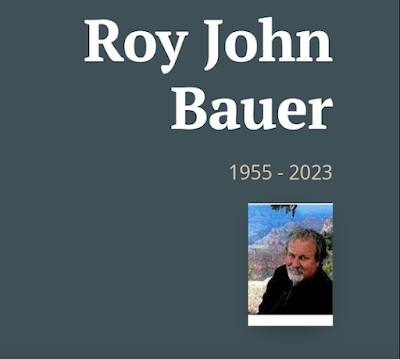
Roy's obituary in LA Times and Register: "we were lucky to have you while we did"
This ran in the Sunday December 24, 2023 edition of the Los Angeles Times and the Orange County Register : July 14, 1955 - November 20, 2...
-
Professor Olga Perez Stable Cox OCC Trumpsters/GOP A professor called Trump’s election an ‘act of terrorism.’ Then she became the vict...
-
Richard O'Neill c. 1950 Richard O’Neill (1924-2009), a wealthy Orange County land owner, wanted the Democratic Party to be...
-
The "prayer" suit: ..... AS WE REPORTED two days ago , on Tuesday, Judge R. Gary Klausner denied Westphal, et alia ’s motion f...