The Lariat provides a mildly informative update on the Amy Ahearn case: What's next for the ailing instructor? Check it out.
Tom Fuentes’ son, Joey, discusses his family and his father: Boys water polo: El Toro’s Fuentes played inspired in 2011.
Monday, November 21, 2011

Jon Wiener, U.C. Davis and "soul force"
From across town, U.C. Irvine history professor Jon Wiener weighs in at The Nation on the events at UC Davis and beyond:
Two unforgettable videos flew around the world wide web on Saturday, one horrifying, the other inspiring. Everybody knows the first: black-clad cops at UC Davis shooting pepper-spray into the faces of Occupy Wall Street student demonstrators who are sitting passively on the ground with linked arms. More than two million people have watched that video on YouTube—you might title it “the whole world is watching.”To read "Pepper Spray on Campus: A Tale of Two Videos" in its entirety, click here.
But there’s a second video, shot the next night, that is amazing in a different way: it shows the chancellor of UC Davis, Linda P.B. Katehi, walking to her car after a press conference, with hundreds of students lining her path on one side, sitting on the ground with linked arms – like the students in the first, famous video – but now in a silent protest against the violence she presided over. This video is titled “walk of shame.” [See video above]
The Davis students’ message is clear: we are not the violent ones. We’re not like you. We stand for a different kind of world. And: your violence is not working. We are not afraid. It’s the message of the nonviolent civil rights movement of the 1960s, of Martin Luther King, who spoke of “meeting physical force with soul force.”
*
• Pepper Spray Outrage (Inside Higher Ed)
• An Open Letter to Chancellor Katehi of the University of California, Davis (Inside Higher Ed)
• UC Davis police chief put on leave after protesters pepper sprayed (OC Reg)
Turkeys
Cruel and Unusual: A President’s ‘Pardon’ as Dark Parody (New York Times)
By JUSTIN E. H. SMITH
 … To riff on Dostoyevsky’s famous line about prisoners: you can tell what a nation is like by the way it treats its turkeys. Obama’s pardoning of one randomly selected bird at Thanksgiving not only carries with it an implicit validation of the slaughtering of millions of other turkeys. It also involves an implicit validation of the parallel practice for human beings, in which the occasional death-row inmate is pardoned, or given a stay by the hidden reasoning of an increasingly capricious Supreme Court, even as the majority of condemned prisoners are not so lucky. In this respect, the Thanksgiving pardon is an acknowledgment of the arbitrariness of the system of capital punishment….
The Willingham case: providing yet another reason to contemn Governor Perry

The Willingham case: providing yet another reason to contemn Governor Perry
Sunday, November 20, 2011
Derek Reeve qua Saddleback College instructor

OK. The relevant section of the college student handbook states that
Students may be disciplined for one or more of the following causes related to college activity or attendance: [A through R. Item P is] …Academic dishonesty....
This is followed by points a, b, and c, which explain "academic dishonesty." Point b defines the form of academic dishonesty known as “plagiarism”:

Obviously, based on the evidence—including admissions by Reeve—that has appeared in the press in recent months, Reeve plagiarized: on a community newsletter/blog, he engaged in political discourse or argument, repeatedly wielding ideas (or formulations of ideas) not his own but as though they were his own.
But Reeve is not a student at Saddleback College and the Student Handbook is a handbook for Saddleback students. Of course, I do not deny that the Handbook's code for students implies a standard regarding honesty that applies to others beyond students, including instructors. Perhaps this is what the reader had in mind. But, as we'll see, we need not rely on "implied" standards to see the problem with Reeve's conduct.
Further, even if Reeve were a Saddleback College student, his plagiarism would not have been a disciplinable offense, since the Handbook's code refers only to student behavior "related to college activity or attendance." The college is unwilling to enforce its honesty code upon students in their lives beyond the college. This raises an interesting question: is there a reason that a college would be so willing in the case of other persons—e.g., professors?
Reeve is, of course, a student at Claremont Graduate School, or so says his Saddleback profile. Previously (see On Derek Reeve's failure to be honest, Sept. 27), I unearthed the honesty code for CGS, and I suggested that he violated the spirit, if not the letter, of that standard.
* * *
There is a code explicitly relevant to Reeve’s conduct re honesty/dishonesty insofar as he is a Saddleback College instructor; it is the college's Faculty Code of Ethics and Professionalism. In the aforementioned post, I wrote the following:
...As it turns out, a dozen years ago, Saddleback College faculty adopted a “Faculty Code of Ethics and Professional Standards.” It quotes a familiar American Association of University Professors statement:
"Professors, guided by a deep conviction of the worth and dignity of the advancement of knowledge, recognize the special responsibilities placed upon them. Their primary responsibility to their subject is to seek and to state the truth as they see it. To this end professors devote their energies to developing and improving their scholarly competence. They accept the obligation to exercise critical self-discipline and judgment in using, extending, and transmitting knowledge. They practice intellectual honesty…." (AAUP Statement, 1990) [My emphasis.]
The Saddleback “code” goes on to require that
Faculty exhibit intellectual honesty and integrity in all scholarly endeavors.
…Qua scholar and qua college faculty, Reeve is expected to be honest, and, obviously, one aspect of honesty is not passing off other’s writings and ideas as one’s own—even in less-than-scholarly settings. Jenna Chandler’s recent piece in the SJC Patch makes very clear that Mr. Reeve does exactly that—he passed off others’ ideas and writings as his own—and he has done so repeatedly. [End of quotation.]

Further, academia is all about communities—such as communities of experts/scholars. The effort of some community of experts/scholars (re subject X) to arrive at understanding (re X) and to effectively communicate that understanding to the public is damaged when one of its members engages in discourse about X dishonestly, even in somewhat non-academic settings. That Mr. Reeve publicly argued his political theses fraudulently—i.e., with plagiarized elements—undermined the larger enterprise of the community of political scientists and of scholars. Thus, a college, among other entities, has a good reason to concern itself with the honesty/dishonesty of its "experts," even when the dishonesty occurs outside the strict bounds of the Academy.
Especially given Reeve's unambiguous denial that he plagiarized—despite his plainly having done so—I concluded (in Sept.) that he "cannot be trusted to argue honestly; he certainly cannot be trusted to instill academic honesty in his students."
In any case, it seems clear that Reeve violated the above code—Saddleback College's faculty code of professional ethics.
* * *
So what is the college doing about that? What is the Academic Senate doing?
* * *
Nothing, it appears.
Sometimes, one's doing nothing amounts to one's plainly doing something—such as exhibiting one's actual values, despite official verbiage implying very different values.
Sometimes, one's doing nothing amounts to one's plainly doing something—such as exhibiting one's actual values, despite official verbiage implying very different values.
Again, SC's inaction contrasts with the action of Concordia U to (evidently) fire Reeve based on his failures of honesty. (See More clarity on Reeve and Concordia.)
Old poets’ report: in front of Sproul Hall
 |
| Photo: adapted from The Daily Californian |
Poet-Bashing Police (New York Times; Nov. 19)
By ROBERT HASS
 |
| Former U.S. poet laureate |
. . .
…The billy clubs were about the size of a boy’s Little League baseball bat. My wife was speaking to the young deputies about the importance of nonviolence and explaining why they should be at home reading to their children, when one of the deputies reached out, shoved my wife in the chest and knocked her down.
. . .
My wife bounced nimbly to her feet. I tripped and almost fell over her trying to help her up, and at that moment the deputies in the cordon surged forward and, using their clubs as battering rams, began to hammer at the bodies of the line of students. It was stunning to see. They swung hard into their chests and bellies. Particularly shocking to me — it must be a generational reaction — was that they assaulted both the young men and the young women with the same indiscriminate force. If the students turned away, they pounded their ribs. If they turned further away to escape, they hit them on their spines.
NONE of the police officers invited us to disperse or gave any warning. We couldn’t have dispersed if we’d wanted to because the crowd behind us was pushing forward to see what was going on. The descriptor for what I tried to do is “remonstrate.” I screamed at the deputy who had knocked down my wife, “You just knocked down my wife, for Christ’s sake!” A couple of students had pushed forward in the excitement and the deputies grabbed them, pulled them to the ground and cudgeled them, raising the clubs above their heads and swinging. The line surged. I got whacked hard in the ribs twice and once across the forearm. Some of the deputies used their truncheons as bars and seemed to be trying to use minimum force to get people to move. And then, suddenly, they stopped, on some signal, and reformed their line. Apparently a group of deputies had beaten their way to the Occupy tents and taken them down. They stood, again immobile, clubs held across their chests, eyes carefully meeting no one’s eyes, faces impassive. I imagined that their adrenaline was surging as much as mine.
. . .
 |
| Paralyzed by Don |
. . .
I won’t recite the statistics, but the entire university system in California is under great stress and the State Legislature is paralyzed by a minority of legislators whose only idea is that they don’t want to pay one more cent in taxes. Meanwhile, students at Berkeley are graduating with an average indebtedness of something like $16,000. It is no wonder that the real estate industry started inventing loans for people who couldn’t pay them back.
. . .
…The next night the students put the tents back up. Students filled the plaza again with a festive atmosphere….
Robert Hass is a professor of poetry and poetics at the University of California, Berkeley, and former poet laureate of the United States.
UCPD yank women by their hair
SEE ALSO:
• Occupy Cal: a former IVC Student Reports from Sproul
• Former IVC Student Reports: "Occupy Cal: The Movement of All"
Friday, November 18, 2011
The pious and the poetic

DEREK REEVE. The recent Derek Reeve controversies (alienating Muslims, plagiarizing) have faded away. But I for one have not forgotten his promises to provide further, presumably vindicating, info regarding his “Patch” plagiarism (absurdly, he denies that it was plagiarism) and his sudden, mid-semester departure from Concordia U in Irvine. (See here and here.)
Reeve has, I suppose, decided to cut his losses and to let the controversy quietly fade away, promises be damned.
But how come he’s still teaching at Saddleback College? What’s he going to do if he catches a kid plagiarizing? Send the kid's stuff to the Patch for publication?
Will he even be able to recognize plagiarism? Apparently not.
Saddleback College is sending a message: that Concordia U has the expected academic values about honesty—but that Saddleback does not. Wanna take a course from a guy who plagiarizes and then refuses to acknowledge that his theft is improper? Become a Gaucho!
For what it’s worth, today, Mark Nielsen of the Capistrano Dispatch accused Reeve and/or his Reevettes of demagoguery. More specifically, Nielsen carps (plausibly) about some seriously misleading “election rhetoric intended to pave the way for cohorts of Councilman Derek Reeve to replace incumbents up for re-election next November.”
What is it with the Pious, anyway? I’ve got a neighbor like Reeve. She’s always got her “Saddleback Church” sign posted on the lawn, and she is pretty flashy about her alleged connections with the Lord.
Yeah, but recently she and her husband decided to build a house under the oak canopy on their property, near their existing home. (They’re claiming it’s for one of their kids, but it's obviously a spec build.) They tried to get the thing approved without telling the neighbors, contrary to Hoyle. When the requisite meeting with the County finally occurred, the neighbors showed up, hopping mad. County officials then communicated the obvious: that the project didn’t have a prayer in overcoming various serious problems, including threats to the oak canopy and a nearby creek. (These problems predated their purchase of the property.)
So what did the Pious Ones do? They put the property up for sale. The telephone sales pitch states that the property is ready for construction—a big, fat lie.
Pious liars.

The Newport Harbor High School culinary and management teams were officially honored by the state Assembly on Thursday for winning the nationwide culinary competition in April. ¶ Assemblyman Don Wagner presented the school with an official resolution Thursday morning during a special assembly honoring the NHHS California ProStart student teams. ¶ “It’s really a privilege and a pleasure to be here with you folks today,” Wagner said, “to recognize this superior accomplishment.”Now, in truth, Don is among those odd Republicans who refuse to regard any tax as anything but an evil. Public education in this state is seriously under threat, and people like Don seem to like it that way.
. . .
The Newport Harbor teams are coached by the Culinary Arts teacher, Janet Dukes, and two local chefs. ¶ Dukes traveled up to Sacramento and went on the floor before the state assembly for the resolution. ¶ “Which, I will tell you frankly… That does not happen often,” the assemblyman said. “It was a real thrill to welcome her to the floor of the assembly and say thank you publicly in that venue.”

Don’s strategy is to sprinkle these goofy resolutions around in a splashy, noisy way—at schools and colleges and whatnot.
The idea? Maybe the rubes won’t notice what he’s really doing to education.
Don relies on misdirection. He’s a magician.
POETRY & MUSIC à la IVC. Today, denizens of Irvine Valley College were alerted to a special event tonight:
Colleagues and Friends,
You are invited to attend the premiere of
The Naked Turtle Dances
Poem by David Bugay
Music by Daniel Luzko
Choreography by Marie de la Palme
Luzko teaches piano at the college; De La Palme teaches dance. But the poet, Bugay, isn’t among faculty. He’s the district’s Vice Chancellor of Human Resources.
Bugay’s a nice guy, but, I gather, his poetry just doesn’t fly among faculty who actually teach poetry. (I've heard from some of them.) Their harsh reaction reflects, I think, not so much the quality of Bugay's poem as the circumstance that scholars among us who make it their business to study and understand poetry—or writing, or history, etc.—are once again bypassed, as though they do not exist or do not matter.
Our community's authorities on poetry—including some damned good poets—would not offer this poem to represent that art. But that’s not a consideration among the benighted “leadership” of Irvine Valley College.*

*I have rewritten these last two paragraphs to clarify my point.
Thursday, November 17, 2011
Former IVC Student Reports: "Occupy Cal: The Movement of All"

Damilare "Dare" Oladapo is a former IVC student currently in his first semester at Cal. This is his report of the week's activities:
On June 12, 1993, I watched from the safe haven of my house as protesters took to the streets of Lagos defied the military order and demonstrated against the nullification of a free and fair election that should have declared the late MKO Abiola, President of Nigeria. As a child I lacked both a voice and a discerning intellect and all I could do was to share my parents’ catharsis for the protest.
On November 9, 2011, I stripped away the feeling of pity and fear and embraced pride and camaraderie as I protested alongside fellow students, faculty of UC Berkeley and the Berkeley community against the 81% tuition hike and the growing income inequality that plagues this society. We chanted, we raised our voices and fists to the sky and marched our cause to the city and the historic steps of Sproul plaza.
And now as I reflect, I realize that like the protest of June 12, 1993 in Lagos where the poor, the middle-class, tradesmen and women, university students, political factions, and countless others protested against the military government, the Occupy Cal movement included the different facets of the UC Berkeley and Berkeley community (Men, Women, Trans-gender, Whites, Blacks, Latinos, Heterosexuals, Homosexuals, Homed, Homeless). We all assembled with one voice to protest for one cause; we forgot our self-interests; we put ourselves in harm’s way of the weather and the brutality of the police. This indeed is a movement of the people, by the people, and for the people.

 |
| (Robert Hass, UC Berkeley professor, former Poet Laureate of the United States and Pulitzer Prize winner, is batoned by UC Berkeley police November 10, 2011) |
However, though Occupy Cal may generate emotions and rally individuals together into a community, its goal of change is far from being reached. And as the opponents of the Occupy Movement gaffe at the incredulity and austerity of our General Assemblies, we must realize that a consolidation of our oppositional fronts, which Dean Spade calls “differential consciousness,” is our hope for success.Rebel Girl is proud to report that Dare, too, like Lauren, is an English major. At Cal, they study with Professor Robert Hass.
“Differential Consciousness” is the application of all four forms of oppositional consciousness — Equal rights form, Revolutionary form, Supremacist form, Separatist form — that Chela Sandoval laid out in Methodology of the Oppressed. Presently, each Occupy Movement’s General Assembly has embraced one or two of these forms as the arbiter of its movement’s strategy. However, this is an ineffective approach because an application of either one of these forms would only alienate us from ourselves (the public). And just as the Trans-gender Movement championed by Dean Spade and notable others have utilized the differential consciousness, so also should the Occupy Movement. We need to adapt to the strategies of the enemy we confront; merely, calling out an ethos argument would only demonstrate us as the bitter and irrational sect of society. A simple example of the application of the differential consciousness took place — and am proud to say — at the Berkeley protest where protesters sought an end to the police brutality by identifying the police brutes as members of the “99%” and not separating them as tools or members of the infamous 1% (Equal rights form); whilst others chanted “Shame!” at the police for beating protesters (separatist and supremacist form). Together, we marshaled the police off the steps and occupied the Sproul Plaza till dawn; these are the possible effects of mobilizing our different fronts together.
In conclusion: to truly effect change in the US and around the world, there must be a movement of all; if not, we will derail, like the protest of June 12, 1993, into a mere historical movement that effected no significant change.
(Lauren Winder - Sproul Plaza)


*
Subscribe to:
Posts (Atom)
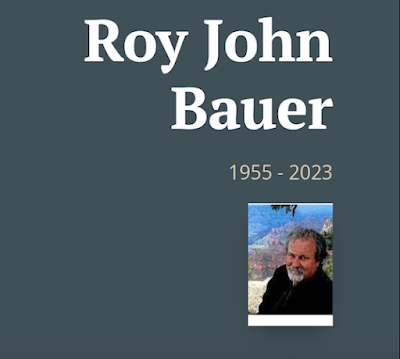
Roy's obituary in LA Times and Register: "we were lucky to have you while we did"
This ran in the Sunday December 24, 2023 edition of the Los Angeles Times and the Orange County Register : July 14, 1955 - November 20, 2...
-
 Professor Olga Perez Stable Cox OCC Trumpsters/GOP A professor called Trump’s election an ‘act of terrorism.’ Then she became the vict...
-
 Recently, I spoke with a veteran who’s been part of the vet community here at IVC for some time. He too has complained about Mr. Ma...
-
 I don’t know how anyone could learn about the way our colleges are funded and how their budget decisions are made without thinking...