Yee bill seeks equity for part-time community-college faculty (San Jose Mercury)
A bill introduced Wednesday in the Legislature seeks compensation equity for part-time community college teachers statewide who have the same credentials and work experience as their full-time counterparts. ¶ The legislation by state Sen. Leland Yee, D-San Francisco, would require college districts to create a salary and service-credit, or pension, schedule for part-time faculty that mirrors the one for full-time instructors....
Documenting Adjuncts' Pay Gap (Inside Higher Ed)
If part-time faculty members assembled the equivalent course duties of a full-time job at a Pennsylvania community college, they still would earn only about $25,000 a year -- below state levels at which a family of four would be eligible for public assistance. ¶ That is one of the conclusions of a report being issued today by the Keystone Research Center, a think tank in Pennsylvania that studies issues of interest to education and labor groups, among others. The report documents not only pay levels but also the distribution of teaching duties among adjuncts and those on the tenure track at the state's community colleges and state-supported four-year institutions....
Pay Gap Grows Between Permanent and Nonpermanent Faculty in Pa. (Chronicle of Higher Education)
A report released by the Keystone Research Center today highlights the growing divide between the compensation and benefits provided to permanent faculty members and those for nonpermanent faculty members....
Ariz. Governor Wants to Cut Community College Funds by 50% (Insider Higher Ed)
Arizona Gov. Jan Brewer, a Republican, this week proposed budget cuts for higher education that stand out even in a year of deep budget cuts. For community colleges, she wants to cut state funding in half, Capitol Media Services reported. For four-year universities, she wants to cut state support by 20 percent. The governor's budget director told the news service that "inefficiencies" in higher education can be eliminated so that the four-year institutions don't have to raise tuition. As for community colleges, the governor is hoping that they can bring in more funds from local support and tuition.
Thursday, January 20, 2011

Wednesday, January 19, 2011
When're we gonna rejoin the American Library Association?
 |
| Sssssssssshhhhhhh! |
As you know, our district has had a colorful history in this regard. Nearly five years ago, then-trustee Don Wagner had a hankerin’ for red meat tossing (a popular pastime among ambitious OC Neanderthals), and so, during a discussion of approval of the usual institutional memberships, he declared that the “American Library Association” is a “bunch of liberal busybodies,” which makes 'em "partisan," and so, on that basis, he urged the board to end our two colleges’ continued memberships in that organization. (See "liberal busybodies")
Some background: the ALA is “the” librarian organization. As far as librarianship is concerned, outfits don’t get any more thee-er than the ol' ALA.
Wagner's motion passed. Jaws dropped.
That caused some bad press (and, ultimately, accreditation issues).
A month or two later, the matter came up for reconsideration, and, owing to somebody stepping out of the room (or some such absurd fortuity), the reconsideration failed.
I couldn't freakin' believe it.
And so we’re, like, the only college district in the universe whose libraries are not in the ALA. It’s like we have a big NEANDERTHAL sign at the entrance of each college—in the middle of those stupid Manichean balloons.
 |
| Here. Have a book. Ever seen one? |
So let me ask a seriously obvious question: shouldn’t there be a move afoot to have our colleges rejoin the ALA?
Hell, maybe there is. But I don’t see the ALA on the list for IVC or Saddleback College institutional memberships. (See agenda, available here.)
Wake up!
I recall Mr. Wagner once declared, “fear is the beginning of wisdom.”
“Huh?” I thought.
Why not:
“Greed is the beginning of prosperity”?
Don, I shall never understand you.
Baboonery in Lake Forest
I don’t know many residents of Lake Forest, though I am familiar with two of them: Holocaust denying former SOCCCD trustee, Steve Frogue, and seriously nasty and self-loathing Republican and trustee, Tom Fuentes.
Knowing that those guys live in Lake Forest almost makes me expect zombies and Ku Kluxers to be wandering all over that town.
Today, I read in the OC Register that Lake Forest has decided to be the next city in this county to put “In God We Trust” on the walls of city government. (Deciding Lake Forest vote: 'In God We Trust' not about religion)
That fact is bad enough, but the Reg quotes some of the Lake Forest Councilpeople who made the decision, and their remarks are making me expect zombies again.
After the vote, Councilwoman Marcia Rudolph, who initiated the action, evidently said: “It is the original motto to become part of our decoration. If we don't follow history we will be doomed to follow our mistakes.”
Is it just me—or is Rudolph uttering gibberish? It is the original motto to become part of our decoration. Huh?
If we don't follow history we will be doomed to follow our mistakes. Again: huh?
I gather that she thinks that the Council is “following history” by deciding to write “In God We Trust” on the walls. Following history. Does she mean “maintaining tradition”? Maybe.
Rudolph and colleague Kathryn McCullough tried to get the motto on the walls back in May, but they didn’t have the votes. Now that some guy named “Scott Voigts” has joined the City Council, they tried again. Thanks to Voigts, this time, they succeeded.
Two of their colleagues voted against the measure. Mayor Peter Herzog proposed an alternative: scrawling a bunch of mottos on the walls. Don’t focus just on “our” trust in God.
Herzog was quoted as saying, “The consequences of this will be significant. It's very unfortunate. I never suggested that 'In God We Trust' was inappropriate. I attempted to bring everything together. We have a very diverse community. To not be willing to place 'In God We Trust' with other things that are emblematic is unfortunate."
Like his colleagues, Herzog is no silver-tongued devil. But at least he’s making some sense.
Not so Mr. Voigts, who said: “As a national motto, this is a phrase that has brought together the people of America. So the fact that you [Herzog] want to get on your high horse and say this is about religion—this is not about religion, this is about the heritage of our nation. Thirteen cities out of the 34 in the county of Orange that have enacted it—they haven't fallen apart.”
I do wish these people would finish an argument before moving on to the next one. How exactly is the motto not about religion? No doubt this is an allusion to some judicial reasoning. How does that reasoning go?
Has this motto brought people together? I don’t think so (it traces back to the 1860s, a period of American history not noted for togetherness). In any case, our actual community—the Lake Forest of 2011—is nothing like those heterogeneous ones that embraced this particular slogan. Like Herzog says, Lake Forest is pretty diverse. You’ve got your atheists, your agnostics, your Santerians, your Saddleback Churchians, and so on.
Partly because our society’s mechanisms for transmitting shared understandings and traditions has grown feeble, lots of people, I think, don’t view the motto as a tradition (reading it on coins does not a tradition make) so much as a statement that asserts that “we” trust in God. And so, arguably, it is about religion, and, as such, to some, it is obnoxious.
That thirteen out of thirty-four cities in our benighted county have chosen to highlight “In God We Trust” isn’t much of an argument. Most Orange Countians voted for George W. Bush. Twice.
True—those cities haven’t fallen apart. (Well, arguably, lots of ‘em have been falling apart for years, but the motto likely has little to do with that.)
But of course nobody is saying that displaying the motto will cause cities to “fall part.” Essentially, the point is that the action is obnoxious to some and, further, it is contrary to our foundational value according to which government should not establish religion or a religion.
This Voigts fella is a logical baboon.
Evidently, Rudolph was inspired to pursue the motto display by the work of Jacquie Sullivan, a Bakersfield councilwoman, who was on hand for the City Council vote. The Reg quotes Sullivan as saying, “A 'yes' vote demonstrates commitment to the values our country was founded upon. American patriotism is love of God and love of country. If we can do this in California, it can be done everywhere. It's up to the citizens and elected officials to keep our history strong.”
Wow. Logically, that speech is mighty jerky, like Voigts’ blather. I think these people are non sequiturians.
And what she’s saying is more logical baboonery. Our country was not founded on “trust” in God. It was founded on, among other things, a rejection of state religion—i.e. a rejection of religious unfreedom. These bozos wanna bring religious unfreedom back.
More baboonery.
Speaking of baboonery, there’s a chance that there will be some action in the “Wagner v. Westphal” prayer lawsuit tomorrow. Wait and see.
Knowing that those guys live in Lake Forest almost makes me expect zombies and Ku Kluxers to be wandering all over that town.
Today, I read in the OC Register that Lake Forest has decided to be the next city in this county to put “In God We Trust” on the walls of city government. (Deciding Lake Forest vote: 'In God We Trust' not about religion)
That fact is bad enough, but the Reg quotes some of the Lake Forest Councilpeople who made the decision, and their remarks are making me expect zombies again.
After the vote, Councilwoman Marcia Rudolph, who initiated the action, evidently said: “It is the original motto to become part of our decoration. If we don't follow history we will be doomed to follow our mistakes.”
Is it just me—or is Rudolph uttering gibberish? It is the original motto to become part of our decoration. Huh?
If we don't follow history we will be doomed to follow our mistakes. Again: huh?
I gather that she thinks that the Council is “following history” by deciding to write “In God We Trust” on the walls. Following history. Does she mean “maintaining tradition”? Maybe.
Rudolph and colleague Kathryn McCullough tried to get the motto on the walls back in May, but they didn’t have the votes. Now that some guy named “Scott Voigts” has joined the City Council, they tried again. Thanks to Voigts, this time, they succeeded.
Two of their colleagues voted against the measure. Mayor Peter Herzog proposed an alternative: scrawling a bunch of mottos on the walls. Don’t focus just on “our” trust in God.
Herzog was quoted as saying, “The consequences of this will be significant. It's very unfortunate. I never suggested that 'In God We Trust' was inappropriate. I attempted to bring everything together. We have a very diverse community. To not be willing to place 'In God We Trust' with other things that are emblematic is unfortunate."
Like his colleagues, Herzog is no silver-tongued devil. But at least he’s making some sense.
Not so Mr. Voigts, who said: “As a national motto, this is a phrase that has brought together the people of America. So the fact that you [Herzog] want to get on your high horse and say this is about religion—this is not about religion, this is about the heritage of our nation. Thirteen cities out of the 34 in the county of Orange that have enacted it—they haven't fallen apart.”
I do wish these people would finish an argument before moving on to the next one. How exactly is the motto not about religion? No doubt this is an allusion to some judicial reasoning. How does that reasoning go?
Has this motto brought people together? I don’t think so (it traces back to the 1860s, a period of American history not noted for togetherness). In any case, our actual community—the Lake Forest of 2011—is nothing like those heterogeneous ones that embraced this particular slogan. Like Herzog says, Lake Forest is pretty diverse. You’ve got your atheists, your agnostics, your Santerians, your Saddleback Churchians, and so on.
Partly because our society’s mechanisms for transmitting shared understandings and traditions has grown feeble, lots of people, I think, don’t view the motto as a tradition (reading it on coins does not a tradition make) so much as a statement that asserts that “we” trust in God. And so, arguably, it is about religion, and, as such, to some, it is obnoxious.
That thirteen out of thirty-four cities in our benighted county have chosen to highlight “In God We Trust” isn’t much of an argument. Most Orange Countians voted for George W. Bush. Twice.
True—those cities haven’t fallen apart. (Well, arguably, lots of ‘em have been falling apart for years, but the motto likely has little to do with that.)
But of course nobody is saying that displaying the motto will cause cities to “fall part.” Essentially, the point is that the action is obnoxious to some and, further, it is contrary to our foundational value according to which government should not establish religion or a religion.
This Voigts fella is a logical baboon.
Evidently, Rudolph was inspired to pursue the motto display by the work of Jacquie Sullivan, a Bakersfield councilwoman, who was on hand for the City Council vote. The Reg quotes Sullivan as saying, “A 'yes' vote demonstrates commitment to the values our country was founded upon. American patriotism is love of God and love of country. If we can do this in California, it can be done everywhere. It's up to the citizens and elected officials to keep our history strong.”
Wow. Logically, that speech is mighty jerky, like Voigts’ blather. I think these people are non sequiturians.
And what she’s saying is more logical baboonery. Our country was not founded on “trust” in God. It was founded on, among other things, a rejection of state religion—i.e. a rejection of religious unfreedom. These bozos wanna bring religious unfreedom back.
More baboonery.
Speaking of baboonery, there’s a chance that there will be some action in the “Wagner v. Westphal” prayer lawsuit tomorrow. Wait and see.
Ad campaign targets for-profits
Ad Campaign in Favor of Tougher Oversight of For-Profits (Inside Higher Ed)
Many in nonprofit higher education have looked on with envy or frustration as advocates for for-profit higher education have made major ad buys to oppose the Obama administration's "gainful employment" regulations. Campus Progress, a left-leaning student group, on Tuesday announced an ad buy in the Washington area in favor of the regulations. [See above.]
Community colleges chief opposes Brown funding changes (California Watch)
California Community Colleges Chancellor Jack Scott says Gov. Jerry Brown's proposal to change the way community colleges are funded is "not a good idea," and that he will try to convince the Legislature to amend it.
Scott told California Watch that Brown's proposal would unfairly punish colleges with high enrollments of "vulnerable students," and reward colleges serving students in high-income suburban areas who are more likely to succeed.
California's 112 community colleges receive funding based on the number of students who are in class on "Census Day," typically the first day of the fourth week of classes. The college continues receive funds, regardless of how many students drop out or fail to complete the class by the end of the semester.
In his budget message, Brown said:
This policy provides an incentive for colleges to take advantage of the system to maximize funding which also distorts the overall (full-time student) workload completed by the colleges. In effect, colleges are being funded for a higher level of students than actually attend courses.. . .
Scott said that the Brown proposal to change the community college funding formula "could have unfortunate consequences that no one has thought through carefully." ….
Tuesday, January 18, 2011
Gustav, Pup

…Gustav, an 8-month-old pup that has struggled to overcome infections and mange, has marshaled through another crisis. ¶ The young German shepherd was back in surgery Monday night after his colon again showed signs of damage. Veterinarians at Advanced Critical Care and Internal Medicine in Tustin this time removed the damaged section of intestine that had been leaking fluid into the abdominal cavity. ¶ Dr. Heather Mineo reports Gustav is holding his own and hasn’t lost any ground. ¶ “This poor little dog is a fighter,” she said….
The nonprofit is trying to raise more than $10,000 to pay for Gustav’s growing medical bills. You can help by visiting the dog’s FirstGiving page. Donations also can be made online or by mail: German Shepherd Rescue of Orange County; 177F Riverside Avenue, Ste. 143; Newport Beach, CA 92663. Phone: 714-974-7762.
 |
| Scott Baugh exchanges heads with Reagan bust |
Failure to learn. Duh.

A book released today makes a damning indictment of the American higher-education system: For many students, it says, four years of undergraduate classes make little difference in their ability to synthesize knowledge and put complex ideas on paper.
The stark message from the authors of Academically Adrift: Limited Learning on College Campuses (University of Chicago Press) is that more than a third of American college seniors are no better at crucial types of writing and reasoning tasks than they were in their first semester of college (see excerpt).
. . .
"We didn't know what to expect when we began this study," said Richard Arum, a professor of sociology at New York University who is one of the book's two authors. "We didn't walk into this with any axes to grind. But now that we've seen the data, we're very concerned about American higher education and the extent to which undergraduate learning seems to have been neglected."
In the new book, Mr. Arum and his co-author—Josipa Roksa, an assistant professor of sociology at the University of Virginia—report on a study that has tracked a nationally representative sample of more than 2,000 students who entered 24 four-year colleges in the fall of 2005….
. . .
Three times in their college careers—in the fall of 2005, the spring of 2007, and the spring of 2009—the students were asked to take the Collegiate Learning Assessment, or CLA, a widely-used essay test that measures reasoning and writing skills. Thirty-six percent of the students saw no statistically significant gains in their CLA scores between their freshman and senior years….
And that is just the beginning of the book's bad news.
The scholars also found that students devote only slightly more than 12 hours per week to studying, on average. That might be in part because their courses simply aren't that demanding: Most students take few courses that demand intensive writing (defined here as 20 or more pages across the semester) or intensive reading (40 or more pages per week). Mr. Arum and Ms. Roksa's finding was based on students' self-reports, but a new analysis of Texas syllabi by The Chronicle offers additional evidence of the same point: Business and education majors at public four-year colleges in Texas are typically required to take only a small number of writing-intensive courses.
"What concerns us is not just the levels of student performance," Mr. Arum said, "but that students are reporting that they make such meager investments in studying, and that they have such meager demands placed on them in their courses in terms of reading and writing."….
See also 'Academically Adrift' (Inside Higher Ed)
Subscribe to:
Comments (Atom)
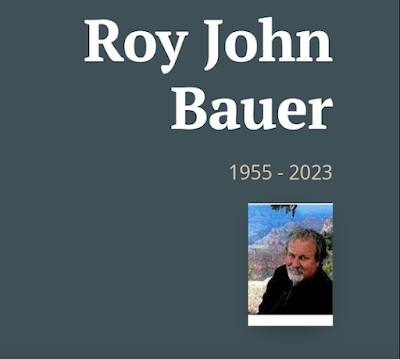
Roy's obituary in LA Times and Register: "we were lucky to have you while we did"
This ran in the Sunday December 24, 2023 edition of the Los Angeles Times and the Orange County Register : July 14, 1955 - November 20, 2...
-
 Professor Olga Perez Stable Cox OCC Trumpsters/GOP A professor called Trump’s election an ‘act of terrorism.’ Then she became the vict...
 -
 The "prayer" suit: ..... AS WE REPORTED two days ago , on Tuesday, Judge R. Gary Klausner denied Westphal, et alia ’s motion f...
 -
 [ See 50+ comments below! ] [See follow-up: The pride of Trident U ] Oh my. Word is that Kiana Tabibzadeh , IVC Chemistr...