Wednesday, November 6, 2013

Women's Studies at other local colleges/universities

G&C: guided by what's best for the students?

     Recently (see), I described the remarkable hostility with which faculty in the School of Guidance and Counseling recently responded to a proposal, by an instructor (a historian) in the School of Humanities and Languages, to develop a more comprehensive Women’s Studies (type) program, to be located in H&L.

     Oddly, at IVC, the Women’s Studies program is housed in the School of Guidance and Counseling*, which lists three WS courses:
• Women's Studies 10: INTRODUCTION TO WOMEN'S STUDIES
• Women's Studies 100: AWARENESS OF THE FEMALE EXPERIENCE
• Women's Studies 120: WOMEN/CAREERS AND LIFESTYLE
     In my previous post (see), I found elements of the course descriptions of G&C's WS courses to be worrisome (poorly written, etc.). I questioned locating WS in Guidance and Counseling when it can be housed instead in an academic area (e.g., Humanities or the Social Sciences) that routinely produces scholars with the background and expertise to approach something like WS. Finally, I condemned G&C’s unprofessional treatment of an instructor—a new hire with a very strong background in WS (and related studies)—who sought to develop and improve WS instruction at this college and in a manner that posed no threat to G&S’s existing WS courses.

     Eventually, Humanities faculty will revisit this matter using the college's program realignment policy. Hence, we'll leave the question of what's best for WS instruction at IVC in the hands of college faculty.

     I thought it might be useful to compare IVC's current WS program with WS programs (or related programs) in some local colleges or universities, namely:
  • CSU Fullerton
  • UC Irvine
  • Saddleback College
[See also Women's Studies at Santa Monica College]

California State University, Fullerton
Women and Gender Studies Program

Located in the College of Humanities and Social Sciences

Description of program:
Department of Women and Gender Studies
Women and Gender Studies explores power as it relates to gender and other forms of identity, including sexuality, race, class and nation. Courses emphasize critical thinking and analysis and social justice activism. We also offer a minor in Queer Studies for students interested in more in-depth analysis of sexualities and theory.
Courses:
Women & Gender Studies Course Descriptions

WMST 100 Introduction to Gender Studies and the Humanities
WMST 101 Introduction to Ethnic Studies 

WMST 205 Women's World Movements 

WMST 302 Introduction to Intercultural Women's Studies
WMST 308 Asian American Women 

WMST 310 Black Women in America 

WMST 312 Multicultural Identities and Women's Experience 

WMST 313 La Chicana 

WMST 316 Anthropology of Sex and Gender 

WMST 320 Gendered Techno-Culture 

WMST 343 Philosophy of Feminism 

WMST 350 Research, Methodology, and Writing 

ECON 355 Economics of Gender and Work 

WMST 360 Politics of Sexuality 

WMST 410 Women, Health, and Aging 

WMST 450 Theory, Practice, Internship, and Community Service 

WMST 480 Feminist Theories 

WMST 485 Women and Politics 

WMST 499 Independent Study 


Faculty:
Six full-time faculty are listed.

UC Irvine
Women’s Studies Program

Located in the School of Humanities

Description:
Department of Women’s Studies (overview)
UCI’s Department of Women’s Studies is dedicated to the study of women, gender, and sexuality in their complex articulation with race, ethnicity, class, religion, and nationality. The Department’s goal is to foster critical and creative analysis of the various disciplinary perspectives—historical, political, economic, representational, technological, and scientific—that have constituted women, gender, and sexuality as objects of study. By emphasizing a rigorous interdisciplinary perspective in their teaching and research, the Women’s Studies faculty seek to produce new knowledge about the social meanings of gender, race, class, and sexuality, and to equip students with a range of analytical and methodological skills.
Courses (undergraduate only)

WOMN ST 20. Queer Studies. 4 Units.
WOMN ST 50A. Gender and Feminism in Everyday Life. 4 Units.
WOMN ST 50B. Gender and Power. 4 Units.
WOMN ST 50C. Gender and Popular Culture. 4 Units.
WOMN ST 60A. Gender and Science. 4 Units.
WOMN ST 60B. Gender and Law. 4 Units.
WOMN ST 60C. Gender and Religion. 4 Units.
WOMN ST 70. Special Topics in Gender. 4 Units.
WOMN ST 100A. Knowledge and Social Change. 4 Units.
WOMN ST 100B. Feminist Theory. 4 Units.
WOMN ST 100C. Feminist Cultural Studies. 4 Units.
WOMN ST 110A. Gender, State, and Nation. 4 Units.
WOMN ST 110B. Money, Sex, and Power. 4 Units.
WOMN ST 110C. Producing Gender Transnationally. 4 Units.
WOMN ST 120A. Modern Pleasures. 4 Units.
WOMN ST 120B. Image Problems. 4 Units.
WOMN ST 120C. Practices of Embodiment. 4 Units.
WOMN ST 139. Topics in Gender Studies. 4 Units.
WOMN ST 139W. Topics in Gender Studies. 4 Units.
WOMN ST 155. Topics in Women's Studies. 4 Units.
WOMN ST 157A. Topics in Queer Studies. 4 Units.
WOMN ST 157B. Queer Lives and Knowledge. 4 Units.
WOMN ST 165B. Sexuality, Health and Medicine. 4 Units.
WOMN ST 165F. Gender and Technology. 4 Units.
WOMN ST 167A. Militarism and Gender. 4 Units.
WOMN ST 168B. The Politics of Style. 4 Units.
WOMN ST 170. Gender, Feminism, Literature, and Language. 4 Units.
WOMN ST 171. Gender, Feminism, and History. 4 Units.
WOMN ST 172. Gender, Race, and Nation in Latin America. 4 Units.
WOMN ST 173. Gender, Feminism, and Philosophy. 4 Units.
WOMN ST 174. Gender, Feminism, and the Arts. 4 Units.
WOMN ST 175. Gender, Feminism, and the Media. 4 Units.
WOMN ST 176. Race and Empire in Colonial Latin America . 4 Units.
WOMN ST 180. Gender, Feminism, and Anthropology. 4 Units.
WOMN ST 181. Gender, Feminism, and Cognitive Psychology. 4 Units.
WOMN ST 182. Gender, Feminism and Economics. 4 Units.
WOMN ST 183. Gender, Feminism, and Sociology. 4 Units.
WOMN ST 184. Gender, Feminism, and Political Science. 4 Units.
WOMN ST 185. Gender, Feminism, and Social Sciences. 4 Units.
WOMN ST 187. Gender, Feminism, and Social Ecology. 4 Units.
WOMN ST 188. Gender, Feminism, and Science. 4 Units.
WOMN ST 189. Gender, Feminism, and Interdisciplinary Studies. 4 Units.
WOMN ST 190. Topics in Sexualities Studies. 4 Units.
WOMN ST 197. Senior Seminar in Women's Studies. 4 Units.
WOMN ST 198. Directed Group Study. 4 Units.
WOMN ST 199. Independent Study . 1-4 Units.

Four Core Faculty are listed:
  • Laura H. Y. Kang, Ph.D. University of California, Santa Cruz, Associate Professor of Women’s Studies, Comparative Literature, and English….
  • Lilith Mahmud, Ph.D. Harvard University, Assistant Professor of Women’s Studies and Anthropology….
  • Jeanne Scheper, Ph.D. University of California, Santa Barbara, Assistant Professor of Women’s Studies….
  • Jennifer Terry, Ph.D. University of California, Santa Cruz, Associate Professor of Women’s Studies and Comparative Literature….

Saddleback College
Women's and Gender Studies

Located in the Division of Social and Behavioral Science

Description:
Women's and Gender Studies
The Women's and Gender Studies program at Saddleback College explores how women's and men's lives are affected by; society's values and traditions and institutions. The curriculum examines how belief structures, historical events, political systems and economic institutions shape the status of women and men in a domestic and global perspective, as well as how these experiences differ by race, class, ethnicity, nationality, religiion, ability and sexual orientation. The Women's and Gender Studies curriculum is interdisciplinary in scope and teaching, with faculty members from across a range of disciplines teaching within the major and courses count as general edeucation [sic] requirements for the Associate in Arts degree and for university transfer programs....
Courses:
Women’s and Gender Studies (pdf; see p. 242)
WS 10
INTRODUCTION TO WOMEN’S STUDIES …
An exploration of the impact of social insti¬tutions and cultural practices on the lives of women in the contemporary United States. Focuses on the ways in which differences of race, ethnicity, class, sexuality, and age define women’s experiences and identities.

WS 31
GENDER AND POPULAR CULTURE …
Examines how forms of popular culture such as advertising, film, television and music construct gender and how those construc¬tions become cultural norms. Explores how popular culture defines and shapes ideas of women, men, race, class and sexuality.

WS 120
WOMEN AND CAREERS …
Complete process of self-evaluation, decision-making, and goal setting. Offers the opportunity to reassess career aspirations, to explore the current job market, and to become acquainted with successful job-hunting and career-planning techniques.

WS 189
SPECIAL TOPICS …
The Special Topics course is a grouping of short seminars designed to provide students with the latest ideas in a field of study. The course content is thematic in nature and each seminar within the course differs from other offerings in the same course.

WS 289
SPECIAL TOPICS …
The Special Topics course is a grouping of short seminars designed to provide students with the latest ideas in a field of study. The course content is thematic in nature and each seminar within the course differs from other offerings in the same course.
     *The historical explanation for this was touched upon in my previous post.
     The program realignment policy can be found here.

Tuesday, November 5, 2013

Good News

This just in:

Cal State budget plan includes hiring more than 500 full-time faculty (LA Times)


excerpt:
Hundreds of new full-time faculty would be hired to teach high-demand courses at California State University campuses under a budget plan to be considered by trustees Tuesday.
Under the proposal, about $13 million would be used to hire more than 500 full-time faculty members, enabling campuses to increase the number of classes in highly sought subjects such as English, algebra, geography and biology. An additional $8 million would pay for 70 new academic advisors, a crucial component in the system’s push to have students meet graduation requirements more quickly...

Monday, November 4, 2013

Today's "mold" meeting: just cricket sh*t

     On November 1, faculty received an email from the college that announced
     In response to the discovery of active mold in A205 and concerns from faculty, staff and students who work in the building, the college had each room of A200 tested for mold. We learned that the building had very low mold counts overall, but it had a couple of issues which are being addressed. On Monday, November 4, [Director of Facilities] John Edwards will hold an open meeting in the faculty lounge area in A200 at 2 p.m. to answer any questions you might have regarding this issue. We work hard to ensure that everyone is secure in the space in which they work. To expect anything less is not acceptable.
     Normally, emails to my college email account are routed to my home account, but, for some reason, the routing failed and so I did not see this email until after today’s meeting.
     It provided some details:
     …[I]n A205 [i.e., the Anthro classroom] the presence of an active mold type was found in the original and the follow-up tests. This is why A205 was immediately closed. The specific type of mold found in A205 was identified in only one other place in the building. For safety, we are working with the faculty assigned to that space to accommodate scrubbing, inspecting, cleaning, and retesting. In this office test, only one spore was found, indicating it could be a random occurrence. Please note, the total mold count in that office was 80, which also is well under what is found outside in the typical ambient air we breathe (i.e., the A200 outdoor mold count of 2920). In addition, classroom A213 has a higher mold count than the exterior ambient air reading for a specific set of inactive mold spores. To be on the safe side, we are moving students and staff from classes in that room to accommodate further investigation and remediation.
     In testing the entire building, three problems were discovered. All three are located in very different areas and all with very different causes. The active mold in A205 was caused by a lawn sprinkler inadvertently set to spray water into a window casement. … The cause of the office issue is a complete unknown at this point and, as indicated, may not even be a problem. We have chosen to treat it as a concern. The final issue in the classroom is likely from a very old leak in the wall …. Again, we will find the problem and get it fixed.
     …[W]e want to remind the campus community that we react to these issues in a very orderly and timely manner. Immediately following notification that the air in A204 [sic] may have been contaminated with mold, classes were moved from the room. The tested count for mold in A204 was zero, as it was in two other spaces in A200. Two other areas on campus (the Police Department and A100) were tested recently and these tests results indicated there were no problems.
     We look forward to seeing you at 2 p.m. on November 4. We hope we can answer any questions you may have at this time.
     Few of the most concerned A200 faculty could attend today’s meeting, owing to their teaching schedules. But I was available, so I attended. (VPI Craig Justice attended the first few minutes of the meeting but then walked back to his office.)

My report of today's meeting:

     In his customary whispery manner, John Edwards, Director of Facilities, murmured forth an account of the procedure when there exists a concern of mold in one of our buildings. “We’re not the experts,” he said, and so the actual remediation steps will be taken by those people when that can occur.
     He suggested that the college goes overboard in responding to these issues, that the college is exercising a wealth of caution.
     I noted that, on some accounts, problems in (e.g.,) A205 were noted already in the summer and yet the room was not locked until fairly recently. Edwards then stated that the only complaints that were received about A205 (in the summer) concerned the temperature of the room, not the specter of mold. As soon as he and his people heard about the mold concern, they took action, he said.
     Edwards explained what will happen to A236, A205, and any remaining affected area: it will be sealed off and the cleaning will occur. Then it will be tested again. Etc.
     I read a question on behalf of another instructor who has an office in A200. “I’m aware,” she wrote, “that the most hazardous stage of remediation is the clean-up itself as spores are disturbed and can become airborne. … I’d like to know if you plan to seal off the contaminated areas … during the duration of the clean-up.”
     Naturally, because of my cold (or whatever it is), I coughed and wheezed my way through this verbiage. It was comical, I suppose.
     Edwards was quick to emphasize that the instructor is quite correct about remediation being the most hazardous stage. And so, yes, the rooms will indeed be completely sealed, etc. That hasn’t happened yet, evidently, because college personnel are “not the experts,” who will do the actual work. (In the case of A236, a faculty office, the mold indications were fairly minimal, and it does not appear that the two instructors will opt to move out of it. An attempt will be made to work around the faculty presence.)
     I noted that, earlier today, I examined the wall at the end of the hall (at the southeast corner of A200), and I noticed an alarming degree of dilapidation. Further, I noted what appeared to be a significant amount of “termite feces” piled up at the bottom of the (interior side of the) wall.
     “That’s not termite feces; that’s cricket feces,” declared a certain instructor whose office is closest to the affected area. She immediately walked over and inspected the wall. She soon returned, declaring that it’s “cricket shit, not termite shit.” This yielded a brief discussion of the nature and evolution of termite turds, which, we were told, are “like sand, not flat.”
     “They turn black,” added John.
     No explanation was given as to the lag time between the first reports of possible mold issues in A200 and official communications from the college to denizens of A200 concerning this matter.

Gracie, cat
'Read a Book for God's Sake' (Inside Higher Ed)
     Shaun Narine, associate professor of political science, was at a campus lecture by a journalist who asked the students in attendance (from political science and journalism programs) why young people don't vote. One student said that it was because students don't understand the political system, and find it complicated.
     Narine quickly interjected: "Read a book, for God's sake."….

Sunday, November 3, 2013

Trick or Treat U.C. Irvine style


Here's what savvy students were handing out on Halloween night outside the Chancellor's house in University Hills.

Someone has been studying the economics of high education even if their numbers don't quite add up.

Go Anteaters!


Don't these people watch Showtime?

Chapman gets $15 million for Irvine campus (OC Reg)
     A Newport Beach couple donated $15 million to support Chapman University's health science campus in Irvine, President Jim Doti announced during a fundraising gala Saturday night.
     Harry Rinker owns the Rinker Company, a real-estate investment and development company based in Costa Mesa. He and his wife of 48 years, Diane Rinker, are longtime supporters of Chapman, with two of their grandchildren recent graduates and the law school library named for them….
Beau Bridges honored at Chapman gala (OC Reg)
     Even some of Orange County’s most elite philanthropists and socialites were a bit star struck as Beau Bridges and his family were ushered into Fish Interfaith Center at Chapman University on Saturday evening.
     VIPs strained their necks and camera phones to catch the actor during a private reception before the 32nd annual American Celebration Gala, a black-tie affair that raised some $2 million for student scholarships….
The Real-Life Stories Told in ‘Walk on the Wild Side’ (NYT)

Friday, November 1, 2013

Dissent's weekly "Hallway Blather"

Wanna engage in some
alternatives consideration?
MORE MOLD!
COUNSELORS DESPERATE TO KEEP "FACULTY" DESIGNATION!
NOT MUCH ROOM FOR BOOKS AT THIS COLLEGE!
CONTINUED ROQUEMORIAN RACK & RUIN!

SCENE: BUILDING A200, SOUTHEAST CORNER:

IVC's new mascot: Mr. Moldy
     “I have an announcement to make,” she said, standing at the end of the hallway, where they keep the troublemakers (i.e., our most pointy-headed intellectuals). And so we all gathered around, standing in doorways and whatnot.
     “You’ll be getting an email soon explaining that Building A200 has been inspected and they’ve found some more mold. They found mold in this office (she points to the office next to mine, which houses a couple of Spanish instructors, who are present). You two will have the option of moving out temporarily to another office while the problem is addressed.”
     And so on it went. We were a little puzzled. For instance, why would they find mold there and not right next door, in our office, where actual pools of water used to form in the corner during storms?
     After a few minutes I interrupted her and asked, “Did they hire a blind man to do the inspecting?”
     Miss Zendy (she of the Anthro digs) was there, exuding dubiety. I exuded amusement. We were all exuding something. The building, of course, exuded spores.
     One denizen of the moldy office got caught up in the practical question of whether to move out of her office. Her pronouncements seemed to take most of the oxygen out of the hallway.
     I changed the subject: “So why exactly should we trust these inspections? They realize—don’t they?—that, at this point, their assurances mean nothing to any of us?”

A200's last mold episode was pretty serious, back in 2005. Actual mold (but on pie).
Update (8:33 p.m.):

     “Miss Zendy,” who is running for office (73rd Assembly District), has gone even more public about the A200 mold fiasco. Her Facebook page now sports the following remark:
     Black Mold at IVC update: After some insistent, pointed emails and personal contacts, the entire A200 building was tested for mold contamination. Apparently, when one classroom, A205, tested positive for black mold contamination, we were informed that the entire building was tested and it was only one classroom that tested positive for black mold contamination.
     That did not turn out to be the case. Once the issue was pressed and the entire building was actually tested, another classroom tested positive for black mold and a faculty office tested positive as well. We were informed that it is a "tiny little bit" of black mold. There will probably be more classrooms and faculty offices closed as the testing continues.
     A "tiny little bit" of black mold is kind of like "one termite."
     [Naturally,] We have not received any communication from the administration other than classrooms are closed, faculty offices are closed. My request for Union intervention was met with "file a workers comp complaint". Nobody is addressing the larger issue: What about our students? What about students who do not have health insurance and cannot file workers comp complaints? My students are my daughter[s].
     IVC Administration dithers and blunders as always. There's been no communication with anybody (aside from the informal hallway announcement mentioned above, which was much appreciated by all).
     Earlier today, I did notice that another classroom has been closed. Still, we hear nothing. 

* * *

     COUNSELORS' DEATH GRIP ON WOMEN'S STUDIES. Lately, there’s been a bit of noise in the hallway concerning IVC’s so-called “Women’s Studies” (WS) program. I decided to do a little digging about the status quo at IVC.
     Years ago, nobody really wanted WS, and so it was pretty much orphaned and WS half-assery was the predictable result. We in the School of Humanities and Languages had an interest in WS (see footnote at end), but we knew that that sort of program needs a strong champion, and nobody in our school (until recently) was prepared to sustain a fight.
     Back to now. The first thing I noticed about WS at IVC is that the program is housed in the School of Guidance and Counseling.
     Guidance and Counseling? Who would suppose that counselors are qualified to teach a subject like Women’s Studies? “Academic Planning,” “Stress Management,” “Introduction to Assertion”—sure, I get why they teach those things. Counselors are no doubt really good explaining to students how to get to their classes on time. (“Be sure to purchase a reliable watch. Secure it firmly to your wrist.”) But WS involves history, literature, philosophy; it demands argumentation and criticism. What do counselors know about any of that?
     Nothin', near as I can tell.
     The college website explains that “The [current WS] curriculum includes courses designed to provide students with assistance and support as they examine career choices and goals. Students investigate feminist theory and consider alternatives for men and women in our culture.”
     As an academic, when I think of WS, I think of all manner of theorizing and reflection against the backdrop of history and the usual intellectual concerns: what are “gender” roles/norms and how do they come about? Is it possible to critique them? What has been the fate of women in our history? What does history teach us?
The counselors' contribution to the college community is subtle
     —That sort of thing. It's the kind of history-based critical reflection I (as a philosophy instructor) do in class all the time. We all do it in the Humanities.*
     But the above verbiage seems to emphasize, not criticism and theorizing but, rather, the peculiarly practical: career choice and the consideration of “alternatives,” whatever that’s supposed to mean.
     What do the counselors have in mind by “alternatives for men and women”? They wouldn’t be so utterly benighted—would they?—to be referring specifically to, oh, gay and lesbian lifestyles?
     In any case, given the vague verbiage, how are we supposed to tell?
     In IVC’s course catalog, WS courses are explained thus: “Students investigate feminist theory and consider alternatives for men and women in our culture.”
     There they go with “alternatives” again. What on earth are they talking about?
     “Upon completion of the women’s studies program,” we’re told, “students will be able to … identify connections between specific people, groups, events and ideas and larger sociological, psychological, historical and gender studies specific themes, developments and topics.”
     Huh? Identify “connections” between “people, groups, events and ideas” and “larger … gender studies specific themes, developments and topics”?
     That's gibberish. Words and phrases pulled from ass and splattered upon page.
     The college website announces that Guidance and Counseling offers three WS courses:
Women's Studies 10: INTRODUCTION TO WOMEN'S STUDIES
Women's Studies 100: AWARENESS OF THE FEMALE EXPERIENCE
Women's Studies 120: WOMEN/CAREERS AND LIFESTYLE
     Naturally, the links don’t work.
     The current IVC Course Catalog does describe a WS 10 that is indeed entitled “Intro to Women’s Studies”:
This course … reviews the history of the women’s movement and examines the development of women’s power and autonomy through the prism of feminist theory and practice. The course examines the role of gender in a range of societal contexts and issues, including sexuality, relationships, work, health, religion, and violence against women….
     (Those pesky counselors: writing isn’t their strong suit, it seems.)
     I can find no WS 100 in the course catalog. (Which “experiences” did that course highlight? One wonders. I cringe.)
     I did find a modified (or alternatively titled) WS 120:
WS 120 - Women and Work
. . .
Do you choose your work or does it choose you? This course briefly explores the history of work. It will focus on gender issues as they influence work choices students may make. It explores workplace social elements of work [sic] such as sexual harassment and leadership. Women balancing work and family will also be explored….
     As a kindness, I will refrain from making the obvious points about the thinking and writing displayed above.
     I found a course in the catalog not mentioned by Guidance and Counseling’s list of courses:
WS 20 - Women in Contemporary Society
. . .
This course explores the experiences of women and the perspectives women have on their lives. It focuses on how gender is constructed, how people learn to become women and men and how major social institutions (i.e., work, school, and the family) can reinforce gender roles. It then examines how women and social movement groups have sought to change gender relationships in the United States. The course emphasizes the importance of personal reflection and encourages students to link personal experiences to broader trends in gender experiences….
     That last sentence is a doozy. It makes two assertions:
• The course emphasizes the importance of personal reflection
• The course … encourages students to link personal experience to broader trends in gender experience
     The first assertion is awfully vague. The second assertion borders on the unintelligible. What is it to “link” one’s experiences with “trends” in “gender experience”? --Linking experiences: a fun new game for the whole family! And just about anything can count as a "link"! Zany! Wacky!
     I guess they’re not into writing (or, anyway, good writing) over in Guidance and Counseling.
     They sure are into squawking, though.
     Recently, a member of the Humanities and Languages (with the backing of her department and School)—a terrific new hire—asked to meet with G&C; at the meeting, she dared suggest the possibility of locating the WS program in the Humanities—an academic area often associated with WS, gender studies, and the like. (The Social Sciences also commonly house such programs.) This could be done, she said, in a manner that preserves existing G&C WS courses.

The "links" don't work, natch  

     To her astonishment, she was met with manifestly specious arguments and utter hostility. So unreasonable were the G&C crew, that she's decided to drop the subject at least until she's tenured.
     What's the hostility all about? I'm told that the counselors are afraid that they’ll soon be recategorized as non-instructional. (There are such moves afoot statewide, evidently.) And so, one might speculate, G&C is desperately hanging on to anything remotely academic that they presently “own.”
     Even if they are utterly sans clue.
     And, judging by the above, they are.
     Luckily, the college has a program realignment policy, developed by the Academic Senate after the "Art History" debacle about ten years ago.
     Eventually, we'll turn to that process. Let that decide.
     [Counselors, please do respond in your new sub-collegiate manner. Bring it on.]

* * *
Nearly a quarter century ago, depictions of the upcoming and much-needed
"Humanities Building" hung on IVC walls.

     DON'T NEED NO STINKIN' BOOKS. As you know, at long last, the college is in the process of constructing a building to house Humanities & Languages (along with the Social Sciences). Plans to build a much needed H&L center were in existence in the early 90s, but when Raghu Mathur became President (in 1997), his pettiness was such that all H&L desiderata were put at the end of every line or list.
     But here we are in 2013. Naturally, Roquemore and his crew have made big noises to the effect that the faculty (who will occupy the building) have been regularly consulted during the entire process!
     If so, such consultation has been a pretty unhappy experience, at least thus far. We've reported this previously.
     Here’s the latest. Turns out that our new offices will require furnishing that does not comprise regular desks--or bookshelves of any significance. Nope. There won’t be much room for books, it seems. CORRECTION: a very reliable source informs me that no decision about these furnishings has yet been made.
     Yeah. Roquemore’s endless march to thorough High School-level anti-academic shittude continues.
     And, it appears, the trustees just think that’s swell.

Coming soon: the new-and-improved A400
A400: 2nd floor
Faculty offices (detail)
Detail of single office: chairs and "desks" [proposed]
Rooms: about 11' X 12' (almost 12 X 12)
Bookcases: 30" X 72" (i.e., 2 1/2 feet by 6 feet)
*Readers are invited to compare these G&C WS courses with H&L courses about women: HIST 51 (Women in American History) and LIT 45 (Women in Literature).  Descriptions are available in the IVC College Catalog (a pdf).

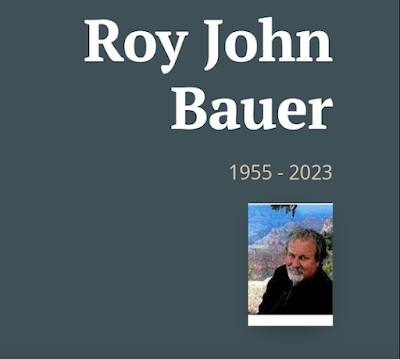
Roy's obituary in LA Times and Register: "we were lucky to have you while we did"

  This ran in the Sunday December 24, 2023 edition of the Los Angeles Times and the Orange County Register : July 14, 1955 - November 20, 2...