|
| Butcher & Forde united during the first Caspers campaign |
From the "Trustee Tom Fuentes files" [Fuentes got his start working for corrupt OC supervisor Caspers; Caspers' chief crony was the corrupt Fred Harber]:
“Some of these consultants regard a campaign as the equivalent of warfare, in which anything goes, short of overt violations of the law. Deceptions and misrepresentations, especially unleashed at the last minute through computerized mailings, seem to have become, for some, a standard campaign technique.”OK, this one’s for the “It’s a small world” file—and for those of us who love to see “connections” between people and events, especially surprising or interesting ones.
—Orange County Citizens' Direction
Finding Commission report, 1978
A couple of days ago, our old pal Matt Coker (NavelGazing/OC Weekly) reported about some seriously sleazy campaigning in San Diego that bore the fingerprints of OC dirty-tricksters.
You’ll recall that, in the past, I have noted that OC has been on the cutting edge of political methods, including sleazy and dishonest campaign tactics. One entity that figures importantly in that story is the consulting firm “Butcher-Forde,” which early on (c. 1970) exploited computer-assisted campaigning and direct-mail approaches. Butcher-Forde definitely wasn’t into the “truth” or "honesty" thing; they plainly adopted an “end justifies means,” win-at-any-cost approach.
Such language has been used to describe Tom Fuentes' approach as chairman of the OC GOP. Tom, of course, worked with Butcher-Forde and people close to the firm during its beginning.
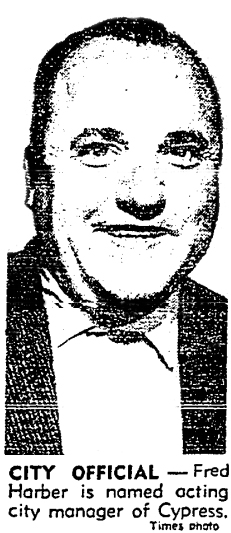
One such person was political consultant (and Shooting Star yachtsman) Fred Harber. You'll recall that Harber was crucial to the success of “Dick and Doc” and such candidates as Ron Caspers, for whom Tom Fuentes worked at the start of his political career.
 |
| Gary Kreep |
Birther and San Diego County judgeship candidate, Gary Kreep, it seems, survived the recent primary and will be on the ballot in November. But reporters down south have been looking into his campaign, and they smelled a rat:
After Kreep, a very right-wing candidate with Minuteman leanings, received the majority of votes in the primary for the Superior Court seat, the Voice of San Diego analyzed precinct data and discovered he did very well in southern San Diego, which is composed mostly of Democrats, Latinos and Democratic Latinos. [!]
Tipped by an anonymous source, San Diego City Beat's Dave Maass is reporting last-minute robocalls were made by a political action committee (PAC) called Taxpayers for Safer Neighborhoods against Kreep's opponent, Deputy District Attorney Garland Peed. Maass includes in his online report [an] audio of such a call, which claims Peed would be "the worst kind of county judge" because he used plea bargains to put a drug dealers back on the streets.
The call cites the case of a criminal named Brian Moore, but as Maass reports the group conflates the prison sentences of two inmates with the same first and last name. Robocalls in elections are outlawed in California anyway if they are not introduced by a real person. The one slamming Peed was not, according to the City Beater.

Matt goes on to explain that this sure smells like OC sleaze. And that’s because it IS OC sleaze:
The PAC [viz., Taxpayers for Safer Neighborhoods] lists as one of its directors James Lacy, a former Dana Point city councilman, constitutional-law attorney and onetime national chairman of Young Americans for Freedom. Lacy is also chairman of Western Conservative Political Action Conference, whose vice chairman and counsel is . . . drum roll, please . . . Gary Kreep!
Lacy … is one of campaign-finance reform's most lethal enemies.
 |
| James Lacy |
In DtB, Lacy’s name has come up in connection with The American Conservative Union, the conservative CPAC conference, and the Young America’s Foundation. It has come up, too, in connection with the worst kind of political dirty tricks—the kind that make one think of Lee Atwater and Karl Rove. (As chair of the OC GOP, Fuentes established the annual "Republican Party of Orange County Lee Atwater Award"—an action not unlike establishing a "Machiavelli" prize for "excellent ruthlessness.")*
And, of course, Lacy was very friendly with late SOCCCD trustee Tom Fuentes.
 |
| Butcher, c. 1982 |
I decided to read Schou’s article: Slate Nailer, Dec. 12, 2002.
Schou reported Lacy’s slate mailings in support of prominent liberal Democrats in Santa Monica. The mailings also directed voters to vote “No on JJ.” JJ was the city’s living-wage ordinance, which would have forced employers to pay bottom-wage employees more. These anti-JJ slate-mailings were paid for by hotel owners who had hired conservative consultant Jim Lacy.
It is likely (evidently) that JJ failed (by a small margin) because of the confusion among liberal voters created by these crafty slate-mailers.
Schou contacted Lacy and spoke with him. It is here where the name William Butcher comes up:
In a recent interview at his Laguna Niguel law office, Lacy acknowledged that he was asked to help defeat Measure JJ by his old friend William "Lord" Butcher, who is listed on election paperwork as the person who "authorized" the contents of the mailer.
Butcher and Lacy previously teamed up to produce slate mailers for "Save Proposition 13," having first met in the late 1970s when they worked for the Howard Jarvis Taxpayer's Association, which sponsored the controversial statewide property-tax initiative. [The Jarvis organization used Butcher-Forde.] Prop. 13 prohibited any new property taxes on existing homeowners. It had the effect of starving California of cash for welfare, education and other social programs.
Butcher, who moved to England in the 1980s and changed his name to Lord Butcher even though he is neither a British subject nor of noble birth, is even more famous for his right-wing direct-mail campaigns. He formed a Newport Beach consulting firm with Arnold Forde; the pair liked to call themselves the "Darth Vaders of Direct Mail." They raised money for conservative political causes by, among other things, scaring elderly voters into thinking they were in danger of losing their Social Security checks or that Prop. 13 was about to be overturned.
Meanwhile, they got rich, allegedly pocketing much of the money they raised. A 1996 Los Angeles Times story reported they kept as much as $5 million per year of their firm's $12 million in earnings in the mid-1980s.
Lacy doesn't find it ironic that he and Butcher, two lifelong pro-life Republicans, were the only officials of a phantom group calling itself the Pro-Choice Voters Committee. "The irony is I'm a lawyer," he said. "I work for Democrats and Republicans, but I happen to be a conservative Republican."
Because he's a lawyer, Lacy is a double threat. He helps organize deceptive slate-mail campaigns on behalf of private developers, anti-abortion groups and other conservative causes. Then, when voters pass campaign-finance laws to regulate deceptive slate-mail campaigns, he uses his legal expertise to get those regulations overturned in court.
. . .
Lacy is still trying to overturn a county-approved $1,000 cap on individual contributions—a limit that also applies to slate mailers and, thus, his pocketbook. The ordinance, which the Board of Supervisors passed in July, was authored by good-government activist Shirley Grindle.
. . .
On [Lacy’s point that slate-mailers can’t be ignored], if on nothing else, Grindle says she completely agrees with Lacy. She has spent the past three decades trying to reform campaign-finance laws, only to see much of that work overturned by legal challenges, as most recently occurred with Props. 134 and 208—both of which Lacy helped orchestrate.
"Every time we close a loophole, it seems like they find a new way to get around it," she said. "I'm just about ready to give up."
 |
| Bill Butcher today |
You'll recall that Mr. Butcher was involved in the trial of Dr. Louis Cella. Cella's business dispersed large sums of money through means seemingly designed to obscure the money trail. Butcher was a major beneficiary of such funds. (See here for Lord-Butcher's response to Schou and Schou's response to that response.)
Immediately after the SOCCCD BOT acted to appoint James Wright and not Jolene Fuentes as Tom Fuentes’ replacement on the board, a James V. Lacy wrote a piece in the California Political Review in which he expressed puzzlement over the board’s action. (I wrote a response, correcting some of his misconceptions.)
It seems likely that the piece was part of a concerted effort by those close to Tom (including the OC Reg's Frank Mickadeit) to stir up anger in hopes of fueling a petition drive or support for Jolene Fuentes’ run in November.
Today, I realized that that James Lacy is the same one discussed above in connection with William Butcher.
* * *
"When Butcher and Forde brought professional management and a fierce competitive drive to Orange County campaigning, they were challenging decades of friendly, folksy clannishness. They have been called amoral and their campaign tactics deceptive. And the accusations have not been hurled exclusively by their candidates’ opponents."Lacy's Robocall
— "Butcher and Forde, wizards of the computer letter," California Journal, May 1979.
*From New York Times:
(One of Jim Lacy’s former partners, Floyd Brown, was directly responsible for the Horton ad.)Friends said Mr. Atwater spent his final months searching for spiritual peace. The man renowned for the politics of attack turned to apologies, including one to Michael S. Dukakis, the Massachusetts Governor who was the 1988 Democratic Presidential nominee. ¶ Mr. Dukakis was the target of a campaign advertisment about Willie Horton, a black convicted murderer who escaped from the Massachusetts prison system while on a weekend furlough and raped a white woman and stabbed her husband. The advertisement became a central focus of the 1988 campaign. ¶ "In 1988, fighting Dukakis, I said that I 'would strip the bark off the little bastard' and 'make Willie Horton his running mate,' " Mr. Atwater said in the Life article [about his battle with cancer]. ¶ "I am sorry for both statements: the first for its naked cruelty, the second because it makes me sound racist, which I am not." ... ¶ The Bush organization, which campaigned relentlessly on the Horton case, was widely criticized as appealing to racial fears.
Forde, c. 1982