
Thursday, July 12, 2012
Not surprised

Tuesday, July 10, 2012
Louis Cella's trial: Harber, Overby, Hoffman and unanswered questions

This morning, I read a May 9, 1976 LA Times article, a substantial piece of reporting about the trial of the infamous Dr. Louis Cella, who, along with OC land baron Richard O'Neill, ran a campaign financing scheme in the 1970s—benefitting mostly Democratic candidates but also Republicans such as Ron Caspers—known as the "Dick and Doc Show" ("The Case Against Dr. Cella: Bits and Pieces of Paper").
It was reported by Richard O'Reilly and Tracy Wood. These days, Wood is Senior Writer for The Voice of OC. Don't know about O'Reilly.
Cella's business interests involved two hospitals, which devoted substantial square footage to non-medical workers and such non-medical activities as printing. Here, hospital funds would be directed to various persons and vendors. Ultimately, Cella was found guilty of a host of illegal activities, including fraud against the state and feds.
According to the article, one of the ways in which money was dispersed—often to persons having no clear relationship to the hospital(s)—was through postage refunds issued as treasury checks or postal money orders. Presumably, this helped obscure the money trail from Cella to payees:
The Grand Jury devoted a full day to testimony by Postal Inspector Peter Hickok about how the hospitals spent at least $145,000 on postage for political campaign mailings.
He said the hospital checks would set up bulk mailing accounts or buy credit on postage meters. But not all of the postage would be used and refunds would be issued in the form of treasury checks or postal money orders.
The practice involved about a dozen post offices, but at the time Hickok testified, he said, his investigation was incomplete. He said records showed that refunds totaling more than $92,000 were obtained from two post offices alone—Santa Ana and Cypress. Of that, $55,000 went to Butcher, he said.
Butcher, who has repeatedly refused to be interviewed by Times reporters, was not called as a witness by the Orange County Grand Jury. He was called before the federal grand jury, however, where he reportedly refused to testify.
 |
| The O'Neill family (c. 1950) |
"Butcher" was William Butcher of the campaign consulting firm "Butcher-Forde," which became notorious for bringing computer-assisted mailings and new levels of demagoguery and dirty tricks to OC politics. According to Tom Rogers, B-F were also important in the rise of the influence of developers in OC.
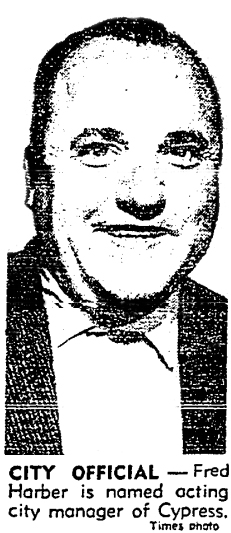
Fred Harber, Dick and Doc's chief political advisor, was very close to Butcher-Forde. He was also close to Cella, O'Neill, and Caspers.
You'll recall that lobbyist Lyle Overby has come up again and again in our saga of curious, Fuentes-related political activity forty years ago and thereafter. He, too, received these curious postal refunds:
Another person who is recorded as having received postage refunds is Lyle Overby, now an aide to Supervisor Ralph Diedrich. In 1974, Overby received $4,600 in 16 money orders acting as an agent for [codefendant Theodore] Schiffman, Hickok testified.
Overby, who was then working for the late Fred Harber, has refused to respond to a Times query as to what he did with the money.
Hickok told the jury it is highly unusual for refunds that large to be made in money orders, which are limited to a maximum of $300 each. (Money orders are issued with the payee’s name blank so that the person obtaining the money order can make it payable to anyone he wishes without anyone else knowing.)
Why did Overby receive payment in so odd and inconvenient a fashion? And just what was he being paid for? Brain surgery?
You'll recall that Harber's secretary was a woman named Arlene Hoffman, who was ultimately murdered in her Laguna Niguel home (with a cross bow!) twenty years later. That crime was never solved. (See Who killed Arlene Hoffman? ) (Incidentally, Overby had recommended Hoffman to Supervisor Silva, for whom Hoffman was working when she was killed.)
She was a witness at Cella's trial, but she was decidedly uncooperative:
Another mystery man in the transcripts is Fred Harber, a political strategist who was closely teamed with Cory, Cella and O’Neill until he was lost at sea with nine others in June, 1974, when his boat sank off Baja California.
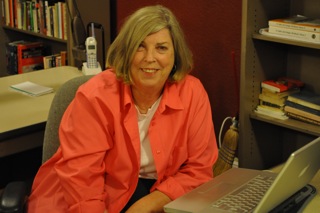
Tracy Wood (these days)
The Grand Jury called Harber’s executive secretary, Mrs. Arlene Hoffman, to testify, but she repeatedly claimed not to know many details of his work.
Mrs. Hoffman was paid by the hospitals from 1972 until last fall, but told the jury she didn’t do much work at either hospital until after Harber’s death.
Before that she worked with Harber in Jesse Unruh’s 1973 mayoral campaign in Los Angeles, Democratic Party fund raising, and in the 1974 primary campaigns of Cory, Assemblyman Richard Robinson (D-Santa Ana) and Rep. Jerry Patterson (D-Calif.)
Mrs. Hoffman testified that Harber was a consultant to the hospitals and said she considered the work she did on politics as public relations for the hospitals.
(However, Patterson told the Times he was not aware she was being paid by the hospitals during the time Harber was working on his congressional campaign.
(“If there was public relations for the hospitals, they were doing it very subltey,” [sic] Patterson said. “I didn’t know there was a connection with the hospital.”)
Dep. Dist. Atty. Brice repeatedly tried to get details of Harber’s activities from Mrs. Hoffman, usually without success.
“Can you tell us anything that he did for Mission Hospital?” Brice asked. “If he was a landscaper there, you could tell us he planted 15 trees regardless of the day or when it occurred, or if he was a nurse, you could say he changed bed pans or something. Do you know something that Fred Harber did related to the activities of Mission Hospital?”
“No. I can’t answer that question for you; I can only speak in generalities,” Mrs. Hoffman testified.
One of the “generalities” was that shortly before his death Harber was working on contracts to help large construction firms win approval for their projects from city and county governments.
What was Hoffman's motive in revealing so little about her and Harber's activities? By the time of the trial, Harber had been dead for nearly two years. Was she motivated by loyalty? By self-interest? (Note: Pam Zanelli, later a SOCCCD PIO, was among those working in the "political" wing of the hospital at the time.)
You'll recall that, according to developer Richard Jordan, Harber and Caspers were shaking him down for "help" in overcoming county non-approvals that his construction project had encountered. This was at the time of the Shooting Star sinking in June of 1974.

Caspers, Harber, and eight other men perished in that disaster. Their bodies were never found despite a massive search. (Cella desperately searched for his man Harber long after the "official" searches were abandoned.)
Like Tom Fuentes, Lyle Overby was supposed to be on that fateful boat trip. But he bailed after its first leg (to Cabo San Lucas). Richard Jordan was also invited but declined (for he wanted the DA to record conversations, which would have been impossible in Mexico).
It's all very odd.
 |
| May 9, 1976 - LA Times - Case against Cella |

Saturday, July 7, 2012
Thursday, July 5, 2012
When solicitations are threats (and, as always, Tom Fuentes was there)

An Orange County developer, actively seeking County Planning commission approval of a rezoning project, claims he was once approached following a public hearing by an appointed county official.
The official, who has since resigned his position, suggested that one developer might want to buy two tickets to a high-priced political dinner for a local officeholer.
“I told him to go to hell and walked away,” the developer said in a recent interview. “The next week, our deal was turned down by the commission.
“I could never prove that the two things were related but there was sure a damn strong inference that they were.”
—LA Times, 1974
 |
| Dorothy Fortune |
Though the Old Guard no longer controlled the union, it wasn’t quite dead. During the election of 1998, they managed to help elect two new right-wingers: Don Wagner and Nancy Padberg. (The "board majority" grew to five.)
By the election of 2000, these rogue unionists were still somewhat organized. One wonders if the resourceful Mr. Tom Fuentes—for he had just arrived on the scene—did not take steps to enhance their viability. They had money—one wonders where it came from—and they backed the “slate” of Don Davis (against Lang), Dorothy Fortune (against William Shane), Tom Fuentes (against Bob Loeffler), and John Williams (against Bill Hochmuth).
Lang/Shane/Loeffler/Hochmuth billed themselves as the “Clean Slate.”
Of the Clean Slate, only Lang prevailed. Unsurprisingly, all of the winners of the 2000 election, Lang included, went into it with the powerful “incumbent” advantage.
Fuentes, the long-time chairman of the Orange County GOP, had been appointed to the board only four months earlier (in July) when the Holocaust-denying trustee Steve Frogue announced his intention of resigning.
At the time, observers smelled a rat. They smelled accurately.
* * *
KOPFSTEIN'S CURIOUS LETTER. I’ve come across an old LA Times article (“South O.C. Seats Have 10 Trading Hostilities,” October 31, 2000) from just before the election of 2000. It was written by our old pal Jeff Gottlieb, who has since made a name for himself (Pulitzer!) covering such stories as the Bell scandal. Jeff reported:
What comes next really caught my eye:…[T]here have been nonstop battles between the administration and the faculty, with disputes often ending up in court and the district typically being ordered to back off and pay its opponents' legal fees.
Jeff Gottlieb
This history sets the stage for the current contentious campaign.
For example, four single-page anonymous fliers are circulating, filled with misinformation and inflammatory language that portray the Clean candidates as supporting domestic-partner benefits and a gay and lesbian studies program.
These have been sent out with no return address, stuffed in mailboxes and even faxed to some people. It is difficult to tell how widely they have been distributed.
The candidates named in the mailers said the subject is not even an issue in the campaign. Board President Padberg, who is part of the board majority, agreed. "I have no knowledge this [domestic partners] is going to be coming to the board," she said, adding it won't be up for discussion for at least two years, when a new contract is negotiated with teachers.
. . .
Another flier, from a group identifying itself as "Conservative Americans for College Excellence," was mailed to residents of Laguna Woods. The flier endorses "true conservative American candidates" Davis, Williams, Fortune and Fuentes. "Don't let your education tax dollars be diverted from [classes for seniors] to pay for Same-Sex Domestic Partner Benefits," the flier states.
This is not the first time that fliers with references to gay issues have become part of a campaign in the college district.
In 1996, the teachers' union spent nearly $40,000 on a slick campaign piece that attacked first-time candidate Lang and his slate of candidates for using "your education tax dollars to pay for seminars and conferences to educate participants about the Gay & Lesbian Lifestyle." A more liberal leadership took over the union in 1998, and the organization's endorsements changed accordingly.
Hostility between conservatives and liberals within the union continues.
After the change in leadership, the California Teachers Assn. sent a team to investigate a number of allegations, including that money raised by the union to support political candidates had been mismanaged.
The leader of the audit team, David Lebow, said the continuing probe centers on what happened to money collected for the union's political action committee at the rate of $15,000 to $30,000 a year. When the union leadership changed, the departing officers said there was no money left in the account and closed it down. Most of the former union presidents who controlled the fund have refused to cooperate or to turn over records, Lebow said, adding that the issue may be taken to court.
One former union president, Robert Kopfstein, did provide investigators with the information he had available, Lebow said.
Kopfstein, a professor at Saddleback, has since become treasurer of the South Orange County Taxpayers for Quality Education, and is backing incumbent trustees Fortune, Fuentes and Williams.

Presumably, the vendor judged the solicitation to be inappropriate because it could easily be viewed as a threat: pay up or we’ll give the contract to somebody else.On invitations for a Sept. 29 fund-raiser, Kopfstein added a handwritten note to 20 vendors who had done business with the district. "We hope that you can help support the campaigns of these incumbent trustees who, in the past, have shown support for your business," he wrote.
Mr. Kopfstein
District Chancellor Cedric Sampson said one vendor complained the note was inappropriate, but Sampson said he [did] not think there was anything illegal about it.
Kopfstein defended the note. "What I'm saying here is this is someone with a connection with Saddleback College and they should be concerned about the trustees who are elected," he said. "If they're doing business, there's a vested interest in the school."

Such veiled threats are familiar in politics—where the citizenry are clueless and the regulations are lax. Like in OC.
* * *
1974: WORRIES ABOUT SPECIAL INTERESTS. Back in 1974, just months before the general election (in Orange County), the LA Times’ Don Smith wrote a lengthy piece about fund raising (“Fund Raising: A Basic Necessity of Political Life,” Aug 11, 1974) and the unseemly actions that campaign finance pressures yielded. It started with the story that heads this post: an OC developer tells of being approached by a county official who suggested the developer might want to buy tickets for a certain office holder's political fund-raiser. The developer refused. The next week the developer's plan was rejected by the county.Smith marveled at the amounts that some incumbent candidates for non-partisan offices had collected for the recent June primary. For instance, incumbent supervisor Caspers had collected $196,264—for a job that made only $15K a year.
Smith quotes a visitor from Chicago, a town notorious for corruption:
“In Chicago,” she explained, “you know who you have to pay and how much to get something done. Here, there is no price tag. They hit you for anything they can get.”One campaign contributor whom Smith interviewed said,
“You give,” he snorted, “because you know there is a contract coming up. If you don’t, you might not be considered. We don’t want all of it but we do expect to get our fair share. Contributions are one way to make sure the guy remembers your name.”At the time, Tom Fuentes was an aide to Ron Caspers, who had just disappeared in a boating incident off the coast of Baja.
Fuentes explained Team Caspers' reliance on $1,000-a-plate or $500-a-plate testimonial dinners:
“We used some very special invitations for those,” Fuentes explained. “One time, we sent a dozen roses to each person on the list with the invitation included in the gift card. Another time, we used a special parchment invitation with a red ribbon around it.”
The key attraction for such events is a gourmet meal in a high-quality restaurant.
For example, Caspers’ last such affair, which drew 21 guests, was held in the Westgate Plaza Hotel in San Diego. Guests were flown there on a chartered jet from Orange County.
.jpg)
Asked what would have happened if he had simply returned [the tickets] unsold, he simply shrugged.Once again, our old friend Frank Michelena, a powerful OC lobbyist, popped up. According to Smith, he donated $1,000 to each of the incumbent supervisors (on behalf of a client). And he personally “tossed in a total of $7,000 to Caspers’ campaign and another $1,000 to Supervisor Ralph Clark.” (Caspers and Clark, of course, were in Richard O’Neill and Louis Cella’s stable.)
“Probably nothing,” he replied. “We had contributed to all the other supervisors also, so one vote might not have hurt us. On the other hand, if the guy got mad at us, he could have blocked us from getting a contract in this district. So I ate the $500 and let it go.”
Why did he do that?
“In my business, it means a lot—as well as a lot of money for some of my clients—to be able to pick up the phone and get right through. ¶ “Someone who isn’t so well-known will also get through but it may take a little time to do it. With the costs involved in developing and building today, that quick access can save a lot of money for my clients.”Evidently, the OC Grand Jury was concerned about then-current campaign practices:
In its farewell report, the jury contended that potential contributors are often harassed and claimed that at least one large contributor actually leaves the county before an election to avoid solicitations.Those solicitations, of course, could be viewed as veiled threats. No doubt, often, that’s just what they were.
The report called on county officials to stop soliciting funds from firms doing business with the county….
* * *

…[S]upervisorial candidate Marcia Bents charged Thursday that Supervisor Ronald Caspers has “strong-armed” firms into contributing to his campaign.Naturally, Team Caspers was there to rebut Bents’ charges. As usual, Team Caspers meant, not Caspers himself, but Tom Fuentes. (As we’ve seen, Tom seemed to be much more than an executive aide.) According to Smith, Fuentes asserted that Bents’ charges had “no element of truth.”
Mrs. Bents, referring to Caspers’ latest financial report showing more than $222,000 in contributions, said the firms made contributions “because they were afraid not to give.” These firms are doing business with the county or seeking county permits, she said.
“They are only an indication of her own floundering campaign,” Fuentes said, “and are unsupported by facts. [Evidently, he did not provide any facts.] The people and firms who contribute to Ron do so because they support what he is doing.”Bents also presented a written signed statement by former Caspers aide H. Ronald Jones in which the latter states that “he had worked on county time to address and stuff envelopes for a Caspers’ testimonial dinner….”
At a courthouse press-room conference, Mrs. Bents handed newsmen a list of 26 firms and individuals who have donated or pledged $1,000 or more to Caspers’ campaign. All of these donors are involved in subdivisions, zone changes, variance use permits, tracts, special projects or contracts with the county.
“…some of these firms have expressed to me, privately, that they felt they were being forced into making substantial contributions to Caspers’ campaign.”
Further, “Jones charged that he had also used county time and a county car to drive to Los Angeles County to pick up materials for Fuentes’ campaign for the County Republican Central Committee.”
–Evidently, the latter is contrary to county policy.
* * *

"He said my business would be ruined, and that my husband's business would be ruined," said [former Superior Court Judge Judith] Ryan, a challenger to U.S. Rep. Robert K. Dornan for his seat in 1992. "I was taken aback." (Guiding With an Iron Hand, Times, July 11, 1996)The more you look at it the more the fabric that is Orange County Republican politics—where it concerns the late Tom Fuentes—is surprisingly homogeneous.
~ ~ ~
*BACKGROUND: During the SOCCCD trustees campaign of 1996, a group of phenomenally unprincipled and secretive faculty—I dubbed them the "Old Guard"—controlled the faculty union and its substantial PAC money. These union leaders (Sherry Miller-White, Sharon MacMillan, and the guys for whom they fronted: Mike Runyan, Tom Carroll, et al.) supported the trustee candidacies of “fiscal conservatives” John Williams, Steven Frogue, Dorothy Fortune, and Don Davis. They printed and mailed a homophobic and stunningly deceptive flier to persuade local Republicans to defeat the slate of benign non-union (P.I.E.) candidates, including Dave Lang. (Confused? Lang “switched sides” in about 2005.)The Old Guard’s crew of Neanderthals (except for Davis) prevailed, and thus it was that, starting in December of 1996, the district was thrust into the “board majority” era, a period of incompetence, decline, venality, and embarrassment.
Through the majority’s first years, union leadership steadfastly supported “their” board members, even as the latter brought the district to near fiscal disaster (we were placed on the "watch" list), endless accreditation difficulties, 1st Amendment lawsuits, and very unflattering news stories.
(Motive? The Old Guard trustees wanted help paying for their campaigns, and, as near as anyone could tell, the Old Guard had struck a “quid pro quo” deal with these trustees to secure faculty contracts that benefited some at the expense of others.)
Gradually (by 1998), horrified rank and file faculty took back control of their union, despite the hapless CTA/CCA.
Tuesday, July 3, 2012
The corruption files: early seventies (Fuentes, Michelena, et al.)

In the early seventies, there seemed to be a recognition in the OC that the county was entering an era of increasing corruption or quasi-corruption—which, of course, it had done, especially with regard to county government. Perhaps no one at the time imagined how bad things would become:
“From 1974-77, an eye-popping 43 Orange County political figures were indicted, among them, two congressmen, three supervisors and the county assessor, according to the California Journal” (Jeffe, 1996).
And Tom Fuentes was there, in Hinky Town, pretty much at ground zero.
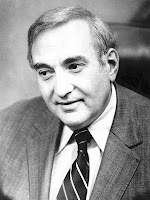
Lots of that corruption and criminality concerned “Dick and Doc” (Richard O’Neill and Dr. Louis Cella) and their stable of pols, including many Democrats and some Republicans. It is entirely possible that Ronald Caspers, another Dick & Doc pol, was "spared" from indictment the hard way: by his and Harber's mysterious 1974 deaths, along with eight others, off the coast of Baja.
(On the other hand, some say that incident took away the very people who could have prevented DA Cecil Hicks' prosecutions.)
 |
| Louis Cella |
(Pace prostitutes!)
But, in that article, there were also plenty of Orange Countians defending lobbyists. One professional lobbyist that Maxwell interviewed, Chip Cleary, rejected the assumption that there is any conflict between the public interest and the interests of the lobbyist’s typical client. And if a conflict were to come up, he said, “My advocacy would be on the side of the public interest. Our own self-interest, all of us, lies with the public interest, not any selfish private interest…Our interests are all connected.”
I do believe that people were more trusting forty years ago and, perhaps, Mr. Cleary’s remarks weren’t then manifestly ridiculous to all, as they surely are today.
The election of 1970 produced two new Supes: Ronald Caspers, who had wielded unprecedented amounts of money and remarkably devious and dishonorable tactics during the campaign, and Ralph Clark, another big spender. Both were tied to O’Neill/Cella/Harber.
Dick and Doc had managed to seat one of their own on the BOS earlier, back in 1968—namely, the mavericky and loose-cannonish Robert Battin.
A few months into the 1971 BOS, observers discerned a possible “basic philosophical shift” between the majority of Battin, Clark, and Caspers—Dick and Doc’s people—and the minority, the two old-timers: William J. Phillips (who joined the board in 1957) and David L. Baker (who joined in 1963). The new guys seemed to want to change things, and the old guard pushed back a bit.
There didn’t seem to be widespread recognition yet of the actual unifying principle of the apparent Battin/Clark/Caspers block—namely, O’Neill/Cella/Harber and (at least on the part of Cella and Harber) an embrace of lucrative varieties of “pay to play” (bribes, shakedowns, etc.). With the exception of some political insiders, that recognition came later, I think. So people talked about the board as dysfunctional and divided, and the notion that there was a kind of vision ("selfish private interest") behind the majority’s movement for "change" was only a hazy and undefined theory. (See “Supervisors take stock after a stormy beginning,” LA Times, 3/21/71.)
.JPG) |
| Robert Battin |
The new BOS “board majority” of 1971 really reminds me of the majority that emerged on the SOCCCD Board of Trustees (BOT) in December of 1996, which comprised Steve Frogue, John Williams, Teddi Lorch, and newcomer (and transitioning Democrat) Dorothy Fortune. Even though three of the four had been on the board for years, their attainment of majority block status at the end of 1996 inspired them to impose their crude “conservative” philosophy on the district, one that held no respect for how things had been done and the judgment of those who did them. This board wielded groundless skepticism or cynicism of faculty programs ("study abroad" programs in Costa Rica and later Cuba), routinely rejected the advice and urgings of administration, and imposed a clueless and ham-fisted reorganization on the district, the unfortunate consequences of which can still be felt today.
The BOS of 1971 did similar things with similar arrogance. In the 1971 Times article, Battin is quoted as saying,
“The old board was influenced by the traditional approach to things,” he explains. “They were more apt to look at things from the standpoint of whatever is good for big business was good for Orange County.” [See.] ¶ “This group will have a greater awareness of keeping Orange County as a desirable place to live, even if it means going against big business at times. [Battin acknowledged that there would be some 3/2 votes:] ¶ “The difference is that the majority will swing back and forth depending upon the issue involved,” he said. ¶ Asked why the board placed all county department heads on a 30-day employment basis until after budget time in July, Battin said it was because he feels all department heads should have their jobs examined closely.Of course, some observers (e.g., onetime OC GOP chair Tom Rogers) have suggested that, contrary to Battin’s progressive blather, the arrival of (especially) Caspers signaled the beginning of an era in which the interests of Orange Countians—in wise development, maintaining the county’s rural character—were systematically thwarted in favor of the interests of rich developers.
Dick and Doc’s chief political advisor, Fred Harber, was tied to each of the three new majority Supes. In the Times article, Clark feels compelled to answer a question about pressures applied by outside groups by attempting to diminish Harber’s role in his recent campaign. (Why bring up that name?) Battin and Harber, of course, were very close. Earlier, I described an episode in which Battin felt compelled to make a public statement to the effect that he was not Fred Harber’s “puppet.” (He protested too much, methinks.) We know that Caspers and Harber became very close, though I’m not sure when that started. They seemed to be working very closely together at least by 1973 by I'm sure that happened earlier.
("In 1968, Robert Battin, a Santa Ana lawyer, won a 12-way race to become the first Orange County Democratic supervisor since the Depression. Much of the reason for his success was the financial backing of two wealthy Democratic activists, land developer Fred Harber and Santa Ana physician Lou Cella. ¶ Two years later, again with the backing of Cella and Harber, Ralph Clark became the board's second Democrat. Cella and Harber also helped Republican Ron Caspers that year. Ralph Diedrich became the board's third Democrat in 1972, also supported by Cella and Harber." —From "Board's clout peaked with controversial reign of Democratic coalition," Chris Knap, July 17, 1988, OC Register.)
In any case, Harber was the brains (politically) of the Dick and Doc Show, and Caspers was in the Dick and Doc stable—certainly by 1969 (likely before that).
 |
| Tom Fuentes |
I found a 1972 article that describes the board as "delaying" a vote on a proposed registration ordinance ("Supervisors Delay Vote on Proposal to Register Lobbyists," 8/16/72) to consider "amendments creating a tough governmental code of ethics." Battin was noisily against any delay, and I suspect he hoped voters would read his haste and noise as commitment to clean government.
Battin there cites the "Mile Square" bribery case as something that would have been prevented had his kind of ordinance been in effect. That's odd (or just shameless and bold), for it seems likely that Battin's "puppeteer," Fred Harber, was up to his eyeballs in the Mile Square doings. (In the course of the trial, the mayor of Westminster [and defendant], Derek McWhinney, was quoted as claiming that six people, including he and Harber, ran the County. Let's see: O'Neill, Cella, Harber, McWhinney—and two others. Who? [My guess: Michelena and Fuentes.] See here.)
Curiously, Battin's ordinance got support from an unlikely character: Frank Michelena, a notorious and influential lobbyist who was very connected to Dick and Doc and Caspers. (You'll recall that, according to Tom Rogers, Tom Fuentes and Michelena worked together in the early seventies.)
According to the article, Michelena "considered the ordinance a step forward for Orange County government." ¶ "It should be broader however," he added, "to cover not only those who work for pay but also those who lobby for political purposes."
In an article that appeared over a year later ("County delays action on lobbyist measure," Times, 10/24/73), we learn that the lobbyist registration measure had still not been approved. The latest delay was caused by a "challenge to include provisions for 'honesty in government' as well."
What a dysfunctional (or just corrupt?) crew.
New Supervisor Ralph Diedrich (who, backed with big money, had defeated Phillips in '72) said he wanted "to study suggestions that county employes [sic], 'including supervisors,' also be required to report any gratuities or gifts they receive."
Diedrich, of course, would be an odd choice for "honest government" poster boy: he was later convicted of soliciting a bribe from a developer, among other things. (He resigned in 1979 and then served a prison term.)
Once again, some Supes rejected Battin's proposal or at least its latest version. Battin then "charged that the other board members already had been influenced by lobbyists."
(Battin was a bit of a hot head and loudmouth—a Democratic Don Wagner.)
Once again, Frank Michelena magically emerges as a supporter of Battin's ordinance: "Michelena said the burden of registration should lie with the lobbyists and he argued against exempting attorneys."
I don't know whatever became of the ordinance. I do know that, after the political scandals erupted in the mid-70s, Shirley Grindle pushed for a campaign reform ordinance, known as TINCUP (1978), but it has proven to be inadequate. In 2008, the OC grand jury recommended that TINCUP be updated. (Don't recall what happened next.)
But get this: a year and a half ago, the "Orange County supervisors ... voted to remain the state's only large county without any kind of registration requirements for lobbyists" (See OC is still the Wild West for lobbyists, Voice of OC, 11/9/10).
Good freakin' grief.
.JPG) |
| Ronald Caspers |
The trip came about because of an invitation, sent out in early May by Supervisor Caspers, to attend the April opening of a county lobbying office in Sacramento. (I assume the office housed those hired by the county to influence state legislators. Presumably, this is a relatively wholesome form of lobbying.)
A surprisingly large group was invited, though the core of invitees were Supervisors and department heads. This group was treated to plane travel and an expensive luncheon at the famously luxurious Firehouse Restaurant. On the menu: “two wines, beef tenderloin and strawberries in champagne for dessert.”
Among the invited: Supervisor Robert Battin; his executive aid, Steve Polatnick; Medical Center Administrator Robert White; Gene White, administrative aide to Supervisor William Phillips; County Administrative Officer Robert Thomas; Board of Supervisors Chairman Ronald Caspers; Supervisor Phillips; County Assessor Andrew Hinshaw [who was convicted of accepting bribes in 1977]; Tax Collector Robert Citron; Recorder J. Wylie Carlyle; Harbors and Parks Director Kenneth Sampson; Probation Officer Margaret Grier; Public Information Officer Christine Galanis; Planning Director Forest Dickason; and Casper’s two executive aides, Tom Fuentes and Paul White. (Owing to the restraining order, several of these people did not actually attend. For many, the order was handed to them too late to prevent the trip/luncheon.)
According to the April 7 Times article, “The new suit alleges that the use of tax funds for a trip to Sacramento to open the lobbying office was ‘an improvident expense.’”
Maybe yes, maybe no. But it sure was interesting.
Once again, Frank Michelena’s name comes up. According to the Times, he arranged for the lunch at the pricey restaurant. “Michelena is a governmental advocate in Orange County who once served as executive aides to Supervisor Williams Phillips and currently represents several clients before various county departments and the Board of Supervisors.”
Why wouldn't a guy like that wine and dine these county officials? ('Cause it looks dishonest, is why.)
That crazy "champagne strawberries" lunch idea sure sounds like something that Tom Fuentes dreamed up. And, of course, he was there.
A week and a half later, there was a hearing in which several people testified. According to the Times (April 19) “Frank Michelena, owner of a public relations firm, said he volunteered to pay for the cocktail reception and wine served with the luncheon.”
The judge indicated that he would make his decision within a few days.
A week later, the judge essentially threw out the case. According to the Times (April 26),
Superior Judge Kenneth Williams denied a request for a preliminary injunction aimed at preventing Orange County from using tax money to pay for county officers’ transportation to Sacramento and lunch at the opening of a new lobbying office. In denying the request, Judge Williams also dissolved a temporary restraining order, thus clearing the way for the county to pay the bills….
Dang. Do you suppose Williams was responding to pressures? Gosh, I just don't know.
BATTIN: the "COALITION" HARBER'S "BRAINCHILD
 |
| OC Reg Feb 18 1976 |

Monday, July 2, 2012
Subscribe to:
Posts (Atom)
Roy's obituary in LA Times and Register: "we were lucky to have you while we did"
This ran in the Sunday December 24, 2023 edition of the Los Angeles Times and the Orange County Register : July 14, 1955 - November 20, 2...
-
 Professor Olga Perez Stable Cox OCC Trumpsters/GOP A professor called Trump’s election an ‘act of terrorism.’ Then she became the vict...
 -
 Recently, I spoke with a veteran who’s been part of the vet community here at IVC for some time. He too has complained about Mr. Ma...
 -
 I don’t know how anyone could learn about the way our colleges are funded and how their budget decisions are made without thinking...