Tuesday, August 31, 2010

From the archives


     Recently, my mother told me that the woman she called mom—in reality, she was mom's aunt Martha—worked for many years with people in the garment district of her little town of Bärwalde. The people she worked with were Jewish, and they were friends.
     When mom was christened in about 1935, one of these friends was in attendance and gave her a gift: a handmade macramé lace bag (I’m only guessing it’s macramé and lace; what do I know?). Its flap sported a star of David. In its center were my mother’s initials: ES (Edith Schultz).
     I asked mom what became of this friend and the other Jewish friends. She was sure they made it out of the country to safety, probably to Switzerland. I pressed for details. She said that they had stayed very long—until maybe 1941. But they did get out. (This late date strikes me as implausible; mom was a young girl when these events occurred, and maybe she has her dates wrong.)
     Aunt Martha must have greatly valued the little bag, for she took it with her when, late in the war, they fled west to evade the Russian advance. She was able to take very few things, and what she did take she struggled to preserve (they fled on an open train car, which was strafed by Russian planes).
     Evidently, my mom took it with her when she headed for North America six years later, alone, at age seventeen. (She lied about her age.) Martha died ten years later. By then, mom had finally made it to the U.S.A.
     Today, on my way to work, I ran into my dad who said that mom had found the bag. I said I’d drop by to take some pictures. And so I did.


     What follows is an account of Martha and my mom's exodus from Bärwalde in 1945 that I wrote several years ago. It was based on taped interviews from 2004 of my mother, Edith, and my dad, Manny:



     By early 1945, the collapse of Germany had begun, and, in the eastern part of the country, the Russians advanced. 
     Edith, who was 11 or 12 years old, lived with her mother in Bärwalde, Pommern, in the eastern part of Germany. The woman Edith calls her mother was in reality her aunt, who, along with her husband, took Edith in when her real mother died in the late [?] 30s. [Her death is somewhat mysterious.] In 1941, her uncle died as well. Edith was very close to him. (Her actual father died in 1939.)
     In those days, in Germany, no child was legally permitted to be without two parents, and so, when Edith’s uncle died, the town’s chief of police—a family friend—was assigned the role of father-guardian.
     At the time of her real mother’s death, Edith’s sister, Ilsa, was sent to live with other relatives nearby.
     Edith recalls that Ilsa was somewhat “gung ho,” a patriot. So was Edith, in a way, she now says, for she was an avid athlete, an ardent competitor, and, as we know, the Nazis promoted athletics. Edith remembers attending the 1936 Olympics in Berlin. She loved that sort of thing.

     In the days before the Russian invasion, Ilsa moved in with Edith and her mother. They lived in a beautiful home on a hilltop—the last house on the eastern side of town, and thus the dwelling that would first encounter the advancing Russians. Already, local soldiers occupied it: ammunition and weaponry was stored in the garden, and men were billeted inside. Now, as the Russians drew close, the local soldiers selected this particular home for their defensive stand.
     “It would be like a fort,” says Edith.
     Edith’s mother stubbornly refused to abandon her home, protesting, repeatedly, that she had worked too long and hard on it simply to abandon it. The soldiers tried to tell her what the Russian troops would do to women, even to little girls, but she wouldn’t listen. Finally, the soldiers commanded: “Take the two girls and leave here, now!” And so, on the 28th of February 1945—Edith recites the date without hesitation—Edith, her “mother,” and her sister, along with several relatives, abandoned their fine home.

     Most of Edith’s relatives lived on farms and thus owned wagons, but Edith and her mother lived in town, and they lacked transportation. The soldiers told them to go the railroad station to await the westbound military trains, so Mom and the girls and a few other relatives packed their most cherished belongings in suitcases and put them on a little wagon—Edith remembers that it was like the little red wagons kids have here in the U.S.—and rolled their stuff to the station.
     They waited there for days, enduring strafing and bombing. Edith remembers the siren’s howl and the noise of bombs and guns. At one point, the station [?] suffered an attack that killed fifteen hundred people, including most of their neighbors and relatives, who were also waiting for the trains. (Apparently, German papers ardently covered such events.)
     Finally, the trains arrived, and so the refugees hurriedly secured possessions, and themselves, to the open flatcars. Then, at the end, there came another attack. Some people hid by the flatcars, while others dove under nearby wagons. Edith ran clear of the trains and into a hole somewhere. All of a sudden, a portion of one train blew up, killing everyone aboard it.
     Edith remembers that, about then, the engineer of her train yelled, “the Russians are closing in on all sides; everybody get on the train; we’re leaving now!”
     The engineer was a Pole. Polish prisoners had worked and lived in the town since the invasion of Poland years earlier. People from conquered territories manned much German industry during the war, and, evidently, they did other work as well. Edith recalls that Polish women and girls worked as domestics in her town.
     Edith’s mother ran the family lumberyard across the street from their home, and that business relied on thirty or so Polish workers who slept on bunk beds in a barn-like structure. Edith says that her mother prided herself in treating her prisoners with kindness, and, in general, prisoners were not mistreated in the town, though she recalls that there were exceptions.
     Manny explains that, on the eastern front, many “German” soldiers were in fact Poles, Ukrainians, and Finns who had decided to join the Wehrmacht [army]. They wore the regular German army uniform, but with a thin armband indicating their non-German nation of origin. (Manny lived in southern Germany.)
     Evidently, during the Russian advance into collapsing Germany, some Poles stayed, hoping to be embraced by their new masters; others feared the Russians no less than did the natives and, alongside Germans like Edith and her little group, they fled to the west. Many Poles thus eventually ended up in barracks-like housing—at first, along with German refugees—in what became West Germany, and lived in those conditions well into the 50s.
     Edith says that the non-German refugees were often mistreated, though she adds that the German refugees, too, were not treated well, since, wherever they showed up, they represented an added burden on already burdened locals.
     Some of Edith’s relatives, including Oma Losa, didn’t make it out of Pommern. Later, Edith learned that the younger girls who remained behind—not Oma Losa, who was older, but virtually all of the younger women, including toddlers—were raped. That was the fate of Edith’s sister-in-law, Frida. Years later, says Edith, Frida refused to acknowledge the event, though what had happened to her was no secret at the time. There was no doubt that it had occurred and that it was traumatic. (See Red Army atrocities. See also Every German female raped.)
     The invading soldiers had diseases, and so, says Edith, it was necessary for rape victims to do all sorts of awful things to themselves. Terrible bubbling liquids were used, she says.

Polikarpov I-16 "Rata" (rat)

     Frida was raped, but her husband was killed. He had worked for the diplomatic service, and, when the Russians entered and ransacked his and Frida’s home, they found pictures of him in uniform with his ribbons and medals. They assumed that he was a dignitary, an official. He had built a hiding place behind a false wall, and he and Frida were there when the Russians entered the house; but these Russians were no fools: they tapped on the walls and found the two. They dragged Frida’s husband to the front of the house and hanged him there.
     Edith’s little group of refugees learned these terrible facts only later; they learned about the rapes and killings and about the burning of all the homes of the neighborhood; they learned, too, that all the younger people were forced by the Russians into work camps.
     For some reason, says Edith, after about two years, the Russians allowed Germans to leave, and so they did, traveling west. That was before the Wall had been erected to prevent emigration.
     During that exodus and before, people were scattered throughout the country and had no way to find each other. Agencies such as the Red Cross organized efforts to reunite family and friends. Thus, they would announce that former citizens of town X were to meet in town Y at a certain date. People arrived there, carrying signs with their names on them. This went on for years.
     Edith remembers one day—this was years later, when she lived near Hamburg—coming home from work and noticing the smells of cooking wafting from her family’s small apartment. She was alarmed, for she knew that, at that moment, her mother and sister were elsewhere. When she entered, she was astonished to find that the mystery cook was none other than her Oma Losa!
     Manny hastens to add that, before Edith and her group left Pommern by rail, they had the option of travelling north, instead, to a Baltic harbor, where a ship awaited refugees. But travel by ship would mean abandoning various larger things that they hoped to take with them. Edith’s mother therefore insisted that they take the train.
     That was fortunate: later, they learned that the Russians sank that ship, killing most on board. (After this taping session, my father read an issue of National Geographic that described the sinking of the Steuben. See National Geographic: Ghost Ship Found.) 
     I have done further research, and it appears that three refugee ships (part of a massive evacuation project) were sunk by a Russian sub at about that time, killing perhaps 20,000 people. It is possible that the ship that my mother almost boarded was one of the other two. See also Sinking of the Wilhelm Gustloff. See also Tragedy at Sea.]

Monday, August 30, 2010

SOCCCD board meeting—live and direct!

August 30:
6:15 p.m.:

     OK, dang. I'm sitting just outside the "RONALD REAGAN BOARD OF TRUSTEES ROOM." I got here at 6:00 for the August meeting of the SOCCCD board of trustees. As it turns out, however, tonight's meeting is scheduled for 6:30, not 6:00.
     If they start at 6:30, that means that they expect to spend more time than usual in closed session (just prior to the open session). Hmmm. Don would have decided that. I bet he's expecting sparks to fly.

6:23:

     OK, since I'm just sitting out here like an asshole, I've decided to throw you some factoids. Here's a fun one: exactly one board member is requesting travel money for a conference. Guess who.
     But wait a minute! In the past, these agendas read like one of those redacted memos from the CIA--essentially, you get nothin'. But, this time, it's clear that it's our own Orlando Boy who seeks to travel (all the way to San Diego, I think) on the taxpayers' dime. Do you suppose that this is a sign of change?

6:47: meeting starts.

     Marcia: No actions to report from closed session.
     Bugay pipes up: what about… Wagner cuts him off: “the lawyers told us this is not something to be reported out.” Oh. Don glares, subtly. The death glare.
     Marcia introduces a lady who explains a service called "OC 2-1-1." It's like 9-1-1, only minus 7. It's a three digit number when you need help in human services, evidently.
     Todd Spitzer is quoted: it's “a valuable asset," says Todd.
     “Whatever happened to him?” asks Don, smiling at John.

Public comments:

     Lisa Davis Allen on behalf of the IVC Academic Senate: she reads a statement on behalf of the senate in support of continued membership in ASCCC (the Academic Senates for California Community Colleges, aka the "state senate"). Evidently, there is concern that the board will pull our membership in ASCCC tonight.
     Wagner: “can I ask a clarification?”
     Evidently, a document, submitted by Allen, says “articulation” where it should say “accreditation.” Oh. A typo.
     This item will come up tonight: 6.3. Will be discussed further then, says Wagner.
     Housekeeping details: advance the budget items. Students will be up pretty quickly to present their (student government) budgets.
     A retired faculty member named Cromwell passed away. Will adjourn in memory of her (him?).

Board Reports:

     Jay: the semester opened with a bang, says Bill.
     Williams: took a tour of the ATEP campus… Toured buildings to tear down. Big areas, big job.
     Milchiker: remembers Cromwell… Attended flex week, Chancellor’s Opening Session. Refers to Bugay’s corny “This way to the top” motif. “My debut as an actress,” jokes Marcia.
     Wagner: refers to success of Bullock and Bugay’s “opening session.” There’s “a bug or two still to work out,” jokes Wagner. Groaning. "Great job," says Don.
     Fuentes: visited Reagan Ranch in Santa Barbara. Celebrated anniversary of the "greatest tax cut in American history." Tiny American flags popped out of his ears. It was a very special day, he says. Mentions naming this room after the guy. Takes credit for it. Looks like shit.
     Lang: refers to successful opening session. Refers to trustee Wagner’s “almost stinging performance,” the second lame joke about bees of the night. Didn’t know that Bob Bramucci is such a “frustrated rock star," says Lang.
     Padberg not present.
     Students present budgets. IVC kids pithy, efficient. Saddleback kids halting, but cute.


Item 6.2: adoption of final budget (waiting for Padberg).

6.3: institutional memberships.

     Fuentes pulled this item last time. All of his questions answered, evidently.
     Not Wagner’s.
     Wagner: “How is the amount of the membership decided?”
     Allen: a predetermined calculation we have no control over. Once again, she notes that the ASCCC helps senate be helpful in Accreditation, SLOs, hall monitors, etc.
     Wagner: what about things you do that are not helpful. Seven items mentioned here that “senates find themselves involved in.” What is the benefit to us for the other things they [the dang state senate] help you with.
     “It seems to me there are other activities the senates get involved in that are either not on this list or the benefits to local academic senates are not apparent. How do you figure out how much money goes to each of the pursuits?
     How about political agendas?
     Not us, says Carmen. But state senate yes. S’pose so.
     How is this a good deal for the taxpayers? asks Don. Not necessarily in the best interests of taxpayers.
     Lewis Long: we all fund the legislature, even if we don’t agree with its legislation. By and large, as a body, they are there to advocate for students….
     Wagner: members of the legislature are elected. That’s where the comparison breaks down, dude. Also: I agree that they do good things. But what about their political decisions? They pursue a political agenda too. What ability does this board have in giving or not giving taxpayer dollars in assisting this organization in pursuing a separate agenda that may or may not have the support of this board (and this community)? How do we get a handle on that?
     Carmen D: well, we can take your message and bring it to the state senate. Carmen uses example of lawsuit of senate vs. district re development of faculty hiring policies (4011.1). (Pretty useful, I guess.)
Don didn’t like that example. Smiled it off as if to say “let’s not go there.” No freakin' wonder.
     Wagner: You're not answering the question, says Don. There are issues that are contentious in the community. So why do we have to support their pursuit of that?
     Don suggests: “What if we just give half of it.” Carmen directs Wagner to a section of a document, but Don tags her for not answering the goshdang question.
     Wagner: we don’t want the full services of the (state) Ac. Senate. Their political agenda is not consistent with policies of this board. Why can’t we give something less than 100 cents on the dollar because of some of the “services” they are providing … Example (of how to do this): state bar. You do not have to pay 100% of the membership if you don’t want to support certain political actions of the state bar.
     What’s wrong with that?
     Lewis Long: challenges assumption that senate is pursuing policies that we do not agree with. Wagner says: “They're pushing a pretty political agenda in the courts right now.” (I’m guessing this is a reference to the state Ac. Senate’s decision to provide an amicus brief for plaintiffs in the “Westphal v. Wagner” “prayer” lawsuit.)
     Lang: I call for the question.
     Underlying item voted upon: Carries on a 5 to 2 with one absence. (Four trustees, plus student trustee; Padberg absent.) So I guess this means that we get the money for membership in the ASCCC.

Item 6.4: Five year construction plan, ATEP.

     Fuentes: at the recent special meeting, I expressed the end of my patience with ATEP. Do not favor going forward: it's a white elephant; a deep, dark hole. So it’s important that we can still vote against these ATEP projects in the future, despite accepting this item (five year construction plan). Passes unanimously (Padberg is now present).
     So now they go back to 6.2: adoption of the final budget. David Bugay, then Beth Mueller, present.
     Good grief. Half a billion dollar budget! Am I seeing that right? That's, like, the budget of a tiny country in Europe.

     Much discussion about remaining unfunded liability. (Unfunded amount, $5 million.) Fuentes is very concerned/surprised about that. They are proposing to use basic aid for eliminating remainder. Marcia says “that’s fantastic.” Fuentes is surprised that we’ve got this unfunded liability at all, I guess.
     Marcia asks: do I have this right? The budget is close to half a billion dollars? Beth and David nod. An absurd moment. I sense the coming apocalypse.
     Gosh, our expenditures sure have increased over the years, says Marcia. Yep. I stare at the gold-plated screws on the crummy plastic chair in front of me.
     Jay: gives an evidently accurate review of the liability issue, the tanking economy and investments, etc. Recent investments have turned out well, he says. The current unfunded amount is “certainly acceptable” compared to other districts. It’s huge in other districts. He grins.
     Williams: blathers, echoing Jay.
     Wagner: troubled by an apparent discrepancy (again). Numbers don’t quite add up. Why are you asking for $8 million? Answer: we have to add blah blah blah. (You know me and fiscal stuff. I'm hopeless.) Wagner remains perplexed. You have to set aside 2.5 million, says Beth. Don's still perplexed. Fuentes: attempts to make sense of the numbers. (There’s obviously some sort of miscommunication here. Beth and David don’t seem to understand Don’s confusion. It’s not clear to me that other trustees share his confusion or are being patient with it. Probably the former.) Fuentes: offers what appears to be a knowledgeable question concerning how we might act prudently. Bugay says something that doesn’t seem to help. Jay has been trying to help. Finally, he speaks: “These are moving targets,” he says. He gives his Turbotax story. Jay gets a figure of $5 thousand owed in taxes. But the tax guy says it's $11 thousand. The numbers are mysterious. Deal with it. Beth nods. I am bewildered.
     It’s voodoo community college district economics, I figure. Waddoo I know.
     Lang says: yeah, there are lots of moving parts here. Mixing apples and oranges. Blah blah blah. He seems to be saying, "Yeah chill. Numbers get zany, wacky, goofy. Blah."
     Item passes unanimously. Don has a look of resignation. (He'll go to Sacramento not knowing what the f*ck these people are talking about.)

Republican art

Item 6.6: ATEP: agreement for real estate services....

     Lang says it seems a little "generous." Some suits came up and blathered a bit. Gray, expensive. Nice cut. Good hair. They had a look like they might lose some money.

Item 6.7 Board policies for review and study. Passed Unanimously.

     Boom, boom, boom—to the end of the agenda.

8.0 reports (now 9:00 p.m.)

     Blah, blah, blah
     Burnett rings bells, blows whistles
     Roquemore: presents the mystery of the low number. Everybody on campus reports that the campus is a third more crowded, and yet the number of students we're getting is 14,400 (I forgot the exact number; something like that). Trying to figure out the discrepancy. (I think they just stopped counting the rabbits.)
     Peebles: golly things are swell.
     (God, will it never end? Do these people actually want to be here?)
     Davis Allen: preparing for accred visit. Whoopee cushions at the ready. Stink bombs almost completed.
     Carmen D: blah blah blah site visit blah blah blah accred blah. Passes out cards. Some kinda BS.
     Lewis: no report. Etc.
     Gotta go home. Tired of this. It continues: infernal, endless. Adjourned at 9:14. I'm outa here.
     (For the record: the trustees were not at each others' throats tonight. As I left, three or four of 'em stood around and laughed about something, just like regular people. Go figure.)

OC is No Longer Nixon Country!


This just in from the New York Times (front page no less):

Orange County is No Longer Nixon Country

Orange County has been a national symbol of conservatism for more than 50 years: birthplace of President Richard M. Nixon and home to John Wayne, a bastion for the John Birch Society, a land of orange groves and affluence, the region of California where Republican presidential candidates could always count on a friendly audience.

But this iconic county of 3.1 million people passed something of a milestone in June. The percentage of registered Republican voters dropped to 43 percent, the lowest level in 70 years.

It was the latest sign of the demographic, ethnic and political changes that are transforming the county and challenging long-held views of a region whose colorful — its detractors might suggest zany — reputation extends well beyond the borders of this state.


To read the rest, click here.

*

Sunday, August 29, 2010

This Williams-Spitzer thing is loosing tongues!

     Wow. The news about Williams, Rackauckas, and Spitzer (and Rackauckas’ girlfriend at Williams’ office, and Mike Schroeder's wife at T-Rack's office) is interesting enough. But check out the comments left by readers!
     Sure, some of 'em are shite. But some of 'em are—well, maybe not shite. 
     This story might grow into something big.

• Sunday News Notes: Todd Spitzer Out! (OC Weekly)
• Spitzer Speaks Out on His Firing From DA's Office (Voice of OC)
• Todd Spitzer says district attorney fired him (OC Register)
• Rackauckas’ firing of Spitzer should be investigated due to conflict of interest (OJ Blog)
• Rackaukas Fires Spitzer (OJ Blog)
• Mickadeit: Firing of Asst. D.A. Spitzer raises questions (OC Register)

Giant scandal?

     The Orange Juice Blog’s Art Pedroza doesn’t mince words. In his latest post (Rackauckas’ firing of Spitzer should be investigated due to conflict of interest), he explains that
OC Public Administrator/Guardian John Williams has been a favorite subject of ours for some time. Click here to read all about how corrupt he is, courtesy of our editor, Vern Nelson.
     He also notes that “John Williams is a Quadruple-Dipper – taxpayers may have to spend millions on his retirement!”
     It seems so.
     According to Pedroza, “[Spitzer’s] firing does seem politically motivated. This could easily turn into a giant scandal that could bring down both Rackauckas and Williams. That would be a good thing for the people of Orange County.”
     Well we’ll see.
     It would be lovely to see these two corrupt Friends-o'-Fuentes go down for good.

"The district will not discriminate on the basis of viewpoint...."

     We’ve heard good things about Dixie Bullock’s performance and style as Chancellor. Friends and acquaintances have told me that meetings with her are nothing like the old Mathurian meetings.
     They’re good.
     I’ve even been told that she is showing an independent streak with regard to her relationship to the board. Well, we’ll see how it goes.

     The August meeting of the SOCCCD board of trustees is tomorrow night. You can find the agenda (and replacement pages) here. (See blue box on the right side of that page.)
     I skimmed the agenda, and nothing especially jumps out at me. There’s no big discussion item, and so the meeting could be short. But who knows. With this crew, anything can happen. Lately, they've been at each others' throats.
     Item 6.7 concerns the board policy revision process. Several policies and their revisions are up for discussion and approval. That’s routine.
     Among these is BP 1311, which concerns “civic center and other facilities use.” There is a Civic Center at each college and campus, we’re told. No doubt these are facilities that can be rented or used by members of, and organizations in, the community: church groups, political groups, etc.
     Here’s the revision from a replacement page:


          Not sure what to make of these changes (especially the underlined part--an addition no doubt).
     Is the BOT engaging in CYA? What’s this about?

“They should clean up this whole county”


     Norberta Santana of the Voice of OC sheds further light on DA-hopeful Todd Spitzer’s firing—supposedly based on a complaint of impropriety coming from John Williams! That complaint isn't making a whole lotta sense. And this whole firing episode looks as hinky as hell.

Spitzer Speaks Out on His Firing From DA's Office

     Former state Assemblyman and county Supervisor Todd Spitzer spoke out Saturday, saying he was improperly fired from the Orange County District Attorney's Office over a routine phone call to the Public Guardian's Office to check into the status of a case.
     Spitzer made the call on behalf of Huntington Beach resident Teddie Alves, who had called Spitzer at the Harbor Justice Center and asked him to look into allegations of domestic violence and elder abuse at the Public Guardian's Office.
     "She [Alves] told me a crime was occurring," Spitzer said, adding that as an officer of the court, he was obliged to look into the matter. "That's what's so ridiculous," he said about his firing.
     That call alone was apparently enough for Rackackaus to fire a man who just months ago he was touting as his possible successor.
     "He [Rackauckas] told me I mishandled the situation with the public guardian," Spitzer said. "I was told this was the only reason I was let go."
. . .
     But John Williams, the elected head of the Public Guardian's Office, apparently sent Rackauckas a notification – confirmed through a statement received by the Orange County Register on Saturday – saying that Spitzer had improperly contacted his staff.
. . .
     Ironically, the Public Guardian's Office that Spitzer called has been at the center of controversy for years, with grand jury reports and efforts to remove its elected chief, John Williams.
     Adding to the mystery is the fact that District Attorney Tony Rackauckas' fiancée, Peggy Buff, is a high ranking official in the office.
     Spitzer joined the District Attorney's Office after years in public office in Orange County. He served as a county supervisor in the late 1990s and then moved to the California Assembly.
     By 2006, there was talk of the soon-to-be termed-out Spitzer mounting a serious challenge against Rackauckas. That talk stoked fear inside Republican circles that Spitzer would be an effective prosecutor when it came to politics and elected officials.
     Spitzer eventually decided against a run this year. Instead, he brokered a deal with Rackauckas to return to the District Attorney's Office as a prosecutor with the understanding that he would run in 2014 with Rackauckas' official blessing.
     Spitzer did come back, and said he stayed quiet through a half-dozen assignments in the felony and fraud divisions. He said he was scheduled to teach prosecutorial ethics on issues involving crime victims for the entire DA staff in early October.
. . .
     "I called him out of the blue, and he was very supportive," said Alves, who was stunned to hear that Spitzer was fired because of the few calls made on her behalf.
     She said she had called Spitzer after also calling Supervisor John Moorlach on her friend's behalf as well. Moorlach was helpful in getting her friend some public assistance like food stamps, Alves said.
     She said she called Spitzer because of his reputation as someone not afraid to take on other public officials.
     "He's a serious, heavy guy, and he can get into this and investigative [sic] it. ... I wanted him to jump in there like Batman."
     Yet, Alves said, "he didn't do that."
     She said Spitzer called her back and informed her that an investigation was underway at the Public Guardian's Office.
     "He said, 'This is the District Attorney's Office; I can't get involved,'" she said. "From my point, I was disappointed. I thought he'd jump right in."
     Spitzer said all he was trying to do was to make sure that some agency was reviewing Alves' allegation and that her friend was safe.
     "I just wanted to make sure we didn't end up with a situation where someone was seriously injured or dead and people asked why didn't Tony Rackauckas' office make a phone call," Spitzer said.
     Indeed, an email from the public guardian's office to Spitzer on Thursday morning doesn't seem to indicate that Spitzer's questions were so badly received.
     Supervising Deputy Public Administrator Sheila Roberge addressed Spitzer with a "Hi Todd" greeting. Her email continued with an offer to answer any questions: "Our office received your message regarding the above case. I attempted to contact you at your office – voicemail was full, so I left a message on your cell. I will be in a meeting most of the morning. Please feel free to email me and I am sure I can answer any questions you may have. I will get back to you as soon as possible."
     To Alves, it is a scandal.
     "He jumps into it and he gets fired. What does that tell you?" she asked.
     What does it tell her?
     "He [Spitzer] should be the next DA, and they should clean up this whole county."

ORLANDO:
     Someone sent me the ad for the “League for Innovation” ORLANDO conference at the Walt Disney World Swan and Dolphin resort that (it appears) Williams plans to attend, at taxpayers’ expense. Check it out. See.
     It is ridiculous to imagine that Williams would get anything out of this “tech” conference, what with his brain being the size of the head of a pin. But it is utterly plausible that it is he who seeks to attend this conference, what with his ethics also being the size of said head.
     Williams clearly thinks that he can pretty much do as he pleases. Is that true? Well, it's all up to you, mister and missus taxpayer. Call somebody up! Send an email! DO SOMETHIN'!

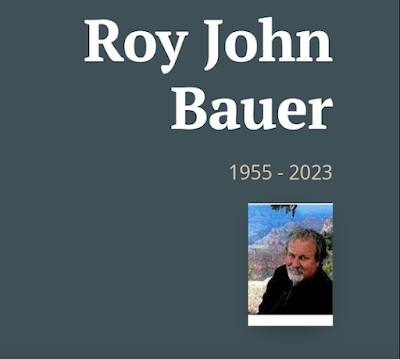
Roy's obituary in LA Times and Register: "we were lucky to have you while we did"

  This ran in the Sunday December 24, 2023 edition of the Los Angeles Times and the Orange County Register : July 14, 1955 - November 20, 2...