Sunday, January 17, 2010

Another beer

This morning, I came across a surprising (to me) online ad for a big Saddleback College MLK event: Dr. Martin Luther King, Jr. Celebration: Exploring Social Action Through Religious Diversity

“Uh-oh,” I thought. “Religion meets the New Age meets PC.”

The college evidently produced a promotional blurb that appeared in Friday’s OC Reg:

Saddleback College to celebrate Dr. Martin Luther King, Jr.

There, we were told:
To commemorate the life and legacy of Dr. Martin Luther King, Jr., Saddleback College will host a celebration entitled "Exploring Social Action Through Religious Diversity" on Saturday….

Topics will include social justice, women's roles in reconciliation, social change, and church and state issues. The event is a joint effort of the Saddleback College Associated Student Government, Diversity Student Council, and participating community groups.
The “keynote presentation” involves “Members of the Southern California Committee for a Parliament of the World's Religions,” who will “discuss the 2009 conference in Melbourne, Australia.”

This is followed by panel discussions:
Workshop on the Parliament of World Religions
What My Worldview Means to Me
Social Justice and Action From Multiple Perspectives
Interpreting the Words ‘Separation of Church and State’
The Woman's Role in Conflict Resolution
The Sacred Art of Listening: Hearing With the Heart
Interfaith Café
The Pillars of Peace: “Stephen Fiske will outline the Ten Pillars of Peace, and through spoken word, music and participatory process, lead us to a deeper commitment to building bridges across our differences and to peace, both within ourselves and in the world.”
Then there’s a closing ceremony with Fiske and Reverend Richard Rose.

Yesterday, the Reg reported the event:

Saddleback event honors King's legacy and activism
The Rev. Mark Whitlock sat near the back of the room … as the mini-conference honoring Martin Luther King Jr., "Exploring Social Action Through Religious Diversity," got going.
. . .
"Injustice anywhere is a threat to justice everywhere," Whitlock said to himself, quoting the words King wrote in his "Letter From a Birmingham Jail"….

Monday is Martin Luther King Jr. Day…. Whitlock and the church where he is the senior minister, Christ Our Redeemer AME in Irvine – the county's only large predominantly black church – organized the Saturday program as part of a weeklong series of events dedicated to King's contributions.

The event brought together a roomful of people of many races, ethnicities and religions – and non-religions…. Many of them, in speeches and in seven different panel discussions, talked about the elemental need for peace and understanding across cultures and national borders....
. . .
"We have the benefit of what King lived and died for, but there is injustice in south Los Angeles, …there is injustice in Haiti, with buildings that were not built well enough to sustain an earthquake," [Whitlock] said. "While we may benefit from a peaceful environment for the most part in Orange County, we must not be lulled into apathy or a feeling that we have no responsibility to those places. So this week is a wake-up call."

Richard Rose, who's an associate minister at Christ Our Redeemer and whom Whitlock placed in charge of organizing the Saddleback College event, said the interfaith movement inevitably lost momentum after King was murdered in Memphis in April 1968. Much of his work on other issues besides race has been overlooked. Before his death, King was becoming increasingly outspoken against the Vietnam War, and addressing issues of poverty. He went to Memphis to help striking garbage workers – an issue of economics, which is, after all, what King spoke most about in his August 1963 March on Washington speech, before he got to the famous "I have a dream" part....
I happened to refer to MLK’s famous “letter” in class last week, illustrating a tradition in understanding law and its basis or legitimacy. I assumed that most students had read the letter—they had—and so it’s a convenient reference.

I'm happy to talk about King's actions and philosophy. If you're gonna have a hero, he'll do, I suppose.

But I have always wondered about this “interfaith” business. It has always seemed to me that different religions tell different stories, identify different creators, different ultimate truths. No doubt one can make a case for a certain amount of overlap among traditions, but surely, after that area has been identified, there will be contested zones, and not just about nits neither, but about the crucial, the really real. —Beyond all the bullshit. (I realize that some faiths are exceptional in this regard.)

I figure that the interfaith crowd are all “bracketing” disagreement about ultimate truth so that it doesn’t interfere with the project at hand—like Rommel and Montgomery meeting for drinks to discuss how best to handle all those goddamn sandstorms and desert fleas.

I'm not sure this bracketing is such a good thing. If you fundamentally disagree with somebody, then you should say so. Start there.

Or are these Kumbayasters all assuming that, despite the differences among them, they're all finally looking into the abyss and seeing the same ultimate truth, the same impossible-too-get-at really real cosmic "it"?

Why on Earth would anybody assume something like that?

In grad school, I had a good friend who was a devout theist. After a while, I got the idea that he, along with others of his particular faith, supposed that non-believers are headed for eternal torment.

He knew I was a non-believer. I made no bones about it.

One day, I said: “So you think I’m headed for eternal damnation?”

“Well…”–he seemed uncomfortable, but not very—“that’s what the church teaches.”

“Do you believe that?”

“Yeah. I do.”

I looked hard at him: “Then how come you never try to convert Kathie ‘n’ me? Doncha care about us?”

He seemed amused. Then he shrugged. He had nothing to say.

He seemed OK with his picture of our differing fates.

He went off to the kitchen. He brought me another beer. He changed the subject.

Asshole.

Stephen Fiske (the "Ten Pillars of Peace" guy)


Saturday, January 16, 2010

That notorious episode: Tom's "goons"

SOCCCD Trustee Tom Fuentes may be pious as hell, but he ain't decent.

Perhaps the most notorious episode of Fuentean ungentlemanliness (aka "abject loutitude") occurred twenty-one years ago.

In an open letter to Tom, Gustavo Arellano describes the incident:
...[Y]ou approved the use of poll guards to stand outside polling places in Latino neighborhoods when they cast ballots for the 72nd Assembly District race. The Republican Party candidate, Curt Pringle, won the election. But the subsequent furor led to your resignation as communications director for the Catholic Diocese of Orange, an exodus of Latino voters from the GOP (the first of many, it would turn out) and various settlements of lawsuits regarding the matter totaling more than $480,000. (See An open letter to the former GOP chairman, current college trustee, forever self-destroyer, OC Weekly.)
It happened during the election of 1988. You remember: Bush Sr. v. Dukakis, etc.

This morning, I scraped together newspapers LA Times articles that covered the "poll guard" incident at the time. They paint quite a picture. If you want to know how things went down, well, here’s your chance:

• State Assails GOP's Posting of Poll Guards, LA Times, November 9, 1988
Uniformed security guards hired by the Republican Party of OC were removed from Santa Ana polling places Tuesday morning after the chief deputy secretary of state termed their presence "unlawful intimidation of voters."

Outraged Democratic Party leaders had charged that the guards were harassing Latino voters in the bitterly contested 72nd Assembly District, writing down automobile license plate numbers and challenging voters to prove that they are U.S. citizens.

Santa Ana police were investigating charges that at least 20 security guards, clad in blue uniforms and wearing badges, had interfered with voters at Santa Ana polling places and displayed signs in English and Spanish warning against voting by non-citizens, officials said.
. . .
Republican Party Chairman Thomas A. Fuentes confirmed that the security guards "were part of our Election Day security effort" in mostly Latino neighborhoods in central and south Santa Ana. Along with the uniformed guards, signs in English and Spanish were posted outside polling places warning non-citizens that it is a felony to vote.
. . .
…[T]he Democratic candidate in the 72nd Assembly District, Christian F. (Rick) Thierbach of Anaheim, blasted the GOP's use of uniformed observers.

"It shows me the people in control of the Orange County Republican Party are desperate, ruthless individuals who would stop at nothing to get what they want," Thierbach said, referring to the all-out GOP effort on behalf of his Republican opponent, Curt Pringle.

Stunned Latino leaders from both political parties sharply condemned the GOP's ballot tactics.

[Republican] Santa Ana Councilman John Acosta predicted that [Fuentes and crew] had set back party efforts to recruit Latinos "by 20 years." Positioning uniformed guards outside polling places is "totally, totally un-American. It smacks of Nazism...."

But David Gilliard, a consultant to Pringle, said their campaign "received a tip" several weeks ago to watch for "voting irregularities" on Election Day.
Yep. Their story was that they had heard that Democrats hatched a plan to bus lots of illegals into the County to vote.

Um, that’s ridiculous. And, in fact, these busloads never materialized. Plus, isn’t the job of catching “illegal” voters something for the authorities? Why not make a phone call?

Sending these guards, as it turns out, was flatly illegal. They'd been warned about that weeks earlier. They did it anyway.

• FBI Probes GOP's Posting of Guards at Santa Ana Precincts, LA Times, November 10, 1988
The FBI is investigating allegations of voter intimidation by uniformed security guards who were hired by the Orange County Republican Party....

Republican officials said the guards were hired because of anonymous tips about a Democratic plan to bus illegal aliens to the polls to vote….

The uniformed guards were sent to the polling places with large signs in English and Spanish warning non-citizens not to vote.

The polling places were in the 72nd Assembly District, and Carlos Rodriguez, the chief consultant to the Republican candidate who apparently won there, said Wednesday that the outcome might have been different without the guards.

"I'm not at all sure we would have won," Rodriguez said.

Republican Curt Pringle was leading Democrat Christian F. (Rick) Thierbach of Anaheim by 671 votes, as the counting of absentee ballots continued Wednesday.

[Orange County Registrar of Voters Donald F.] Tanney said he visited two of the polling places Tuesday night and will report his findings to the Orange County district attorney's office for review of any election code violations, such as interference with a polling place or intimidation of voters.
. . .
Latinos and Democrats reacted strongly, likening the presence of uniformed security guards at the polls to "Gestapo" tactics.
. . .
…"We were even told that one of the guards was sitting next to a ballot box and was handling ballots as people left," Thierbach said.
. . .
Bob Hattoy, director of the Dukakis presidential campaign in Orange County, said he found four polling places where security guards were sitting at tables with volunteer poll workers….
Was Rodriguez saying that hiring the guards was justified because, without 'em, Pringle would've lost? Good grief.

• GOP Was Warned About Poll Guards, Registrar Says, LA Times, November 11, 1988
The county registrar of voters said Thursday ... that he had warned Republican officials 4 weeks before the election not to challenge voters at the polls.

Registrar Donald F. Tanney said he issued the warning at a meeting requested by two Republicans involved in the race in the 72nd Assembly District.

"They inquired about challenging voters about their eligibility to vote as they arrived to cast their ballot," Tanney said. "I strongly cautioned them about any form of interference."

GOP County Chairman Thomas A. Fuentes has taken responsibility for the decision to station guards at 20 polling places in heavily Latino areas of the 72nd District on Election Day, and pressure was building Thursday for Fuentes' ouster.
. . .
State Republican Party Chairman Bob Naylor said Thursday that the GOP has guidelines specifically precluding the use of uniformed personnel at polling places because there is a "heavy-handed look to it that could cause people not to exercise their perfectly legitimate (voting) rights."

Naylor added that he was outraged by the use of uniformed guards: "It's a terrible, terrible symbolic insult to the Hispanic community to have these put in just Hispanic precincts."….
OK, so Team Fuentes were told by the head County official that this guard thing was illegal a month before the election. Hmmm. And, besides, the GOP specifically forbids this kind of thing. What on earth was Team Fuentes thinking?

• GOP Official Says He OKd Observers at Polls, LA Times, November 12, 1988
Orange County's GOP chairman said Friday that he had agreed to use party funds to hire Election Day observers at polls in the 72nd Assembly District, but that the chief consultant to the district's Republican candidate decided that those observers should be uniformed guards.
. . .
County Registrar of Voters Donald F. Tanney ordered the guards away from the polls. Only voters and election officials are allowed within 100 feet of a polling place.

County Republican Chairman Thomas A. Fuentes, who has accepted responsibility for the incident, said Friday that the guards were requested by Carlos Rodriguez, Assembly candidate Curt Pringle's political consultant, a few weeks before the election. Fuentes said he and Rodriguez were concerned that Democrats might bring illegally registered people to the polls….
Tom takes responsibility. He evidently went along with the "guards" idea. Then he points a finger at Rodriguez, who wanted uniforms—as if uniforms were the only problem here. But what about Tanney's warning not to send people to "challenge voters" or to "interfere" in any way, which nixed chatty guards or even loitering observers, uniformed or not?

• GOP Chairman Says Poll Guard Decision Was Pringle Aide's, LA Times, November 12, 1988
…The [poll guard] incident has become an embarrassment for the Republican Party, whose leaders at the state level have joined in denouncing the plan because of its potential for intimidating prospective voters, particularly Latino voters who may be new citizens.

County GOP Chairman Thomas A. Fuentes, who has accepted responsibility for the incident, said Friday the guards were requested by Carlos Rodriguez, Assembly candidate Curt Pringle's political consultant, a few weeks before the election….

"I said we would be willing to pay for that segment of our Election Day overall voting security," Fuentes said, adding that he authorized a $4,000 expenditure. But he said the details of the security arrangement were left to Rodriguez.

GOP Assemblyman John Lewis of Orange, who assisted the Pringle campaign, said Friday that the issue of hiring uniformed personnel to monitor polls was discussed by Republican officials as early as 2 months before the election. Lewis said he recalls such a discussion at a meeting also attended by Fuentes, Pringle campaign staff members and several other GOP officials….
Oh my. "Uniformed personnel" were discussed, with Fuentes present, two months before the election? That doesn't seem to square with what Tom said earlier. "Oh, what a tangled web we weave...."

• Fuentes Should Resign, LA Times editorial, November 13, 1988
…No matter how ... investigations turn out, there is no question the county GOP organization, and its chairman, Thomas A. Fuentes, are guilty of a blatant violation of fairness, decency and basic common sense in the inexcusable and reprehensible attempt to intimidate Latino voters.

County Registrar of Voters Donald F. Tanney says he warned Republican officials 4 weeks before Election Day not to challenge voters at the polls. Still, Fuentes allowed the security guards to go to the polls, where they displayed signs in English and Spanish warning against voting by non-citizens, sat alongside election officials at some polling places and, according to witnesses, wrote down license numbers and reportedly questioned some voters about their citizenship.

By singling out Latinos, the alleged security action introduced an element of racism against an innocent group of people. Santa Ana Councilman John Acosta, a Republican, said the action set back party efforts to recruit Latinos "by 20 years."
. . .
Fuentes, in confirming that the security guards at the polls "were part of our Election Day security effort," first termed the charges of harassment and intimidation "a media event." The following day he issued a weak apology and added: "I would say in retrospect, based on the brouhaha created by the opposition in the media, I would not have" hired the uniformed guards.
. . .
County Supervisor Gaddi H. Vasquez, probably the most prominent Republican Latino in the state, said the episode "showed a tremendous lapse in judgment."

Bruce Nestande, a highly respected county Republican leader who was co-chairman of the Bush campaign in Orange County, was shocked that Republicans took part in the security-guard fiasco, and he said "anyone who has that thought process ought not be involved in our party."

Nestande is right. And so are those clamoring for Fuentes to resign as the county's GOP chairman. … The head of the GOP should be providing leadership and sound judgment, not overseeing loathsome operations that intimidate and insult a minority community and hold the county Republican organization up to ridicule throughout the state and nation.
Loathsome, yes. What sort of person would defend this "poll guard" gambit?

• Way Out of Step in Orange County, LA Times (del Olmo commentary), November 17, 1988
What's the problem with Republicans? Whenever they seem on the verge of a breakthrough with Latino voters, they shoot themselves in the foot.

…[W]hat Latinos will remember about the election of 1988 were the insulting and heavy-handed tactics used by Republican officials in Orange County (and a few other places) to keep them from voting. …In one instance a guard handled a voter's ballot, a felony under state law.

Fuentes can apologize in any language he wants, but his explanation doesn't wash….
The "guard" gambit had become a PR nightmare. Heads would roll, right? Well, no.

• Hispanic Caucus Assails Precinct Guard Use, LA Times, November 18, 1988

• 5 File Suit Claiming Harassment at Polls by Security Guards, LA Times, November 19, 1988
A lawsuit was filed Friday in U.S. District Court in Santa Ana on behalf of five Santa Ana Latinos, who said they were harassed and intimidated by uniformed security guards as they voted last Election Day.
. . .
Plaintiff [Rudy R.] Rios, a member of the Laborers' Union, said Friday that the security guard at his precinct was seated behind the table with voting officials.

"As I got close, he got up and crossed his arms and looked at me," Rios said. "I thought, 'Are they expecting trouble today or what's happening?' I thought, 'Wow, this is like Mexico or something.' " Rios, a second generation American, said that his wife is from Mexico and that he has heard "horrible stories of guards and stuff" at Mexican elections from her relatives….
• B'nai B'rith Criticizes GOP for Poll Guards, LA Times, November 22, 1988
...The letter to Fuentes [expressing dismay and deep concern], which was signed by Jack Adelman, chairman of the Anti-Defamation League of B'nai B'rith Regional Board, and Harvey B. Schechter, the organization's Western states director, said the Jewish leaders were "writing to you as registered Republicans" in Orange and Los Angeles counties....
• GOP to Pay Legal Fees in Guards Case, LA Times, November 23, 1988
Orange County Republican officials have agreed to pay legal defense fees for party activists sued over the use of uniformed guards in Latino election precincts, Assemblyman-elect Curt Pringle said Tuesday.
. . .
…[T]here was no criticism of Fuentes at a meeting Monday night of the Orange County Republican Central Committee. In fact, "I ♥ Tom" stickers were handed to everyone entering the room and an agenda item about ballot security was passed over.

"If you ever imagined Jonestown, that's what it was like," said a veteran party member, referring to the 1970s religious cult headed by Jim Jones in Guyana. "It was clear that had there been a call for a vote of confidence, people there were prepared to give it to Fuentes because it was his crowd."
. . .
[Curt] Pringle said Tuesday that the issue of legal fees was raised at a meeting of the county GOP executive committee last week. "Legal assistance did come up as a topic of discussion, and there was a consensus that the party would pay to defend anyone named in a lawsuit," Pringle said.
. . .
Fuentes told executive committee members that Orange County businessmen Peter Muth and Johnny Crean had offered to help pay for legal assistance, according to people who attended the session….
So some Republicans seem to think that Tom's got a cult going. That would explain all these Republicans blowing off this illegal and racist "poll guard" thing.

Johnny Crean? Now where have I heard that name before? (A tiny IVC fiascoette, 21 years hence: Crean Lutheran.)

• Candidate Says Poll Guard Wanted ID, LA Times, November 24, 1988
...Orange County Registrar of Voters Donald F. Tanney said Wednesday that it is illegal for anyone except appointed precinct workers to "question any voter."
According to The Long Shadow of Jim Crow: voter intimidation and suppression in America today (2004), a publication of the “People For the American Way” Foundation,
The GOP officials involved in the [poll guards] plan … claimed they acted on rumors that there was illegal registration of voters. However, according to the Orange County Register, they admitted they had no evidence of such activity and were concerned because of a sudden surge in voter registration in some Latino neighborhoods….
Just what are they acknowledging here? Is the Reg saying that these Republicans "really" were motivated by this surge in registration and the rumor had nothing to do with it?

A year after the "poll guard" incident, lawsuit(s) were settled for about half a million bucks:

Voters to Get $400,000 in O.C. Poll-Guard Suit, LA Times, December 28, 1989

Latinos reveal documents they say prove that Republicans intended to intimidate their ethnic group. GOP says insurance concerns forced deal.

Five Latino voters announced Wednesday they have accepted $400,000 to settle their lawsuit against Republican officials who posted uniformed guards at polling places last year, and they revealed documents that they said prove that the Republicans had intended to intimidate Latino voters.

The evidence released at a morning press conference included a deposition from Assemblyman John R. Lewis (R-Orange), who told attorneys he once joked with county Republican chairman Thomas A. Fuentes and the county GOP's executive director Greg Haskin about the possibility of driving green vans around polling places to give the impression that Immigration and Naturalization Service agents were lurking in the area. That idea was not pursued.* [*In a later “correction,” the Times specified that, in deposition, Lewis had a “vague recollection” that “someone” joked about the green vans. Though Fuentes and Haskins were at the meeting, others were also there.]
. . .
Attorney Joseph Remcho, representing the plaintiffs, said Pringle and the Republican officials "may have succeeded in buying this election with security guards," but the settlement satisfies the five voters because it marks the highest sum ever paid in a voting-rights case. … "Goons in polling places will not be tolerated."
. . .
… In [a] statement [issued by GOP defense attorneys], the defendants said the five voters had "struck out" in their bids to overturn the election results and to prove any wrongdoing by Republicans.
. . .
Flanked by four of the five plaintiffs, Remcho presented documents that he said made his case a "sure-fire winner."

In addition to the Lewis deposition, the evidence included notes scribbled by political strategist Michael R. Williams after a meeting with another Pringle consultant, Carlos Rodriguez. Williams wrote in a corner of his calendar on Oct. 17, 1988, the words Carlos and goons and, in another corner, the names of security guard companies.
. . .
An Oct. 19, 1988, memo from Williams to Rodriguez outlines the security guard program, noting that the 20 guards would be in uniform and that "voters will be challenged."

[Darryl R.] Wold, the county GOP's attorney, said that the 20 guards did nothing wrong, that in final instructions the guards had been told not to challenge or stop voters and that Williams' "goons" notation referred to Democrats who were allegedly registering voters illegally.

Other evidence presented included a map of the 72nd Assembly District, on which an employee of Rodriguez indicated to a sign-making company where they should post signs for the Pringle campaign, Remcho said.

The map showed plans to put signs reading "Thank You Curt Pringle" in predominantly Caucasian areas and signs—in Spanish and English—that said "Non Citizens Can't Vote" in largely Latino areas.
. . .
Earlier settlements of $20,000 from the county registrar of voters and $60,000 from the firm that employed the security guards bring the total settlement to $480,000.
. . .
The settlement encompasses all the remaining defendants: Pringle; the county Republican Central Committee and two of its officials, executive director Haskin and chairman Fuentes; Lewis; Pringle's campaign manager, Marsha Gilchrist; political consultants Williams and Rodriguez, and attorney William P. Godfrey.
. . .
Defense attorneys said the defendants did not want to settle, but their insurance companies insisted "for purely economic reasons."

If the defendants had chosen to go to trial anyway, they would have given up their right to insurance coverage for their legal fees, the attorneys said. The insurance firms will pay the $400,000.
. . .
Thierbach, who lost the 72nd Assembly District seat to Pringle by 867 votes, said it is a shame that "the insurmountable evidence of illegal activity" by the Republicans will not be revealed in a trial. [End]

--So, that’s the story. It's pretty ugly.

It does appear that Fuentes lost his influential Diocese of Orange PR gig over this fiasco:

Fuentes Keeps His GOP Post, Quits Catholic Diocese Job, LA Times, January 10, 1989
Thomas A. Fuentes, who Monday night won his third term as Orange County Republican Party chairman, has left his influential post as director of communications for the Diocese of Orange, it was learned Monday.

…His leaving comes in the wake of concerns that his role as GOP chairman had inadvertently drawn the Catholic Church into a political controversy over the county GOP's hiring of uniformed security guards on Election Day at polling places in predominantly Latino areas of Santa Ana. Church officials said Fuentes' departure is not related to the security guard incident.

But Msgr. John Sammon said Monday that the controversy was "not well received" in the diocese because several news stories about it at the time also mentioned that Fuentes worked with the diocese.

"It made us become part of the party, which we weren't," Sammon said. He said that many church leaders also hold leadership posts in other areas, but that being the head of a political party and working with the church—"those two are not compatible."

While Sammon said he did not think that the security guard flap was the reason that Fuentes left his diocesan post, he added that concern over the incident was expressed to the head of the diocese, Bishop Norman F. McFarland….

On Monday night, Fuentes was the overwhelming choice of county Republican Party activists to lead the GOP for the coming year.

He was unopposed in his bid for a third, 2-year term and was selected county chairman by acclamation by the 66-member county central committee, which met to elect new officers at a Costa Mesa hotel.
. . .
In a partisan swipe, he labeled the county Democratic Party as "sad and ineffective." Then, in his only public reference to the controversy, he accused the Democrats, who have filed a federal lawsuit to overturn the election results in the 72nd Assembly District, of attempting to "use the courts to seek revenge."

Referring to the Republican Party's decision to post uniformed security guards at 20 Santa Ana polling places, Fuentes said, "We would not let them then, or will not let them now steal" that election….
Sammon's remark about the incompatibility of being a head of a party and working for the church sure is odd. It sounds like some important people in the church had only recently become struck by this "incompatibility." Fuentes had held both supposedly contradictory roles for years.

After the "poll guard" fiasco, Fuentes was still a hero to his pals down at the party. But Fuentes' popularity with that crowd disguised a serious rift among local Republicans—one that ultimately led to Fuentes' ouster fifteen years later. Some Big Money OC Republicans viewed Fuentes as a relic of OC's unattractive Neanderthalic past. They had desperately sought to overcome our county's Cave Man reputation, and Fuentes seemed invariably to stand in the way.

Bad for business, I guess.

And then there are those pesky political realities concerning ideological purity. Fuentes has long stood for hardball politics, which makes him a creep. But he's also long stood for fidelity to "conservative" (and libertarian) principles, which makes him a True Believer. These principles just don't seem to play well with voters, including increasingly numerous Latino voters.

Fuentes refused to compromise. He was always down at Laguna Beach, shoveling shit against the tide.

This ensured a noticeable failure of enthusiasm concerning some important Republican stars (especially Ah-nold). In the new millennium, he really pissed off some important Republicans--even ones with big hats.

He was toast.

After 1988:

In 1994, Fuentes's principles were such that he was a big supporter of California's infamous Proposition 187, which was designed to identify illegal immigrants and to prevent them from using social services, health care, and public education.

It passed. But then it was declared unconstitutional. And it pissed off Latino voters.

In 2006, Fuentes was the senior advisor to Tan D. Nguyen’s campaign to take Loretta Sanchez’ Congressional seat.

Nguyen used a Spanish-language mailer that warned illegal residents and “immigrants” not to vote. Their voting, it said, is a crime that could lead to imprisonment and deportation. (See State investigators focus on Nguyen Campaign.)

Nguyen lost. The mailer was investigated. As it turns out, it is possible that the reference to “immigrants” was caused by a poor translation.

In any case, Nguyen has always denied ordering the mailer, but the state (and local reporters) have determined otherwise.

Fuentes stepped away from this particular mess pretty quickly. Though he was the chief political advisor to Nguyen, Tom has not been implicated in any wrongdoing with regard to the mailer episode.

Still…


Thursday, January 14, 2010

Living through the Stupid People Revolt

As last semester came to a close, I thought things had gone pretty well, but Frank across the hall and two or three other friends in cheesy old (and increasingly abandoned) A200 carped loudly and persistently that this latest crew of studentry is marked by a disturbing degree of cluelessness and assholery.

“Good God!” they’d shout from somewhere in the building. “Good God!”

Guess so, I said, but (I thought) I don’t see how that could be, unless it’s just one of those random clusters, like leukemia under high tension wires or logs and seaweed spelling “FU” in the sand. Could happen, but so what.

Well, for me, the hidden horror lurking among my smiling students finally revealed itself once I submitted grades, at about Christmas Eve. Since then, it’s been nothing but whining and wheedling and mewling and, in at least one case, snickering, bleating loutery from hell.

Today, after a few rounds with one breathtakingly obtuse and persistent bellyaching Fall '09 jackass, I stood at the door of my office, leaned into the hallway, and declared, “Good Lord! What can it all mean!”

“It’s like I said,” muttered Frank from within his office. “Just like I said.”

* * * * *

Well, the new semester begins, and, as was the case five months ago, the kids this time seem nice enough, and I’m goin’ with it. Only once this week did I detect a brief flare-up of High Schoolitudinal Groupstink. (I’m gonna bring a squirt gun to that class.)

Suddenly, I’m feeling old and students seem ridiculously young. It doesn’t help that they are perfect, and I am (mostly temporarily) decrepit. My back is killing me and I keep having to don and then doff* these stupid reading glasses.

“You know, we’re living through history,” I declare to the class, absurdly. “Thirty years from now, your nephew or niece will walk up to you and say, ‘Gosh you’re old. What was it like living through that Stupid People Revolt? Do you remember it? Um, were you one of ‘em?’”

They smile.

I think I like 'em.

* * * * *

Another delightful nugget from Newspaper headlines tell the story

The Old Guard’s Tony Garcia “clears his throat.” The Saddleback College Lariat, April 2, 1998

An article in the 4/2 Lariat reports that, according to Saddleback student Antonio Aguilar (the student who, months ago, challenged an explicit Holocaust denier during a board meeting), he was ‘spit at’ by English instructor Tony Garcia on March 30.

Evidently, Garcia responded to the charge by saying that “I cleared my throat as [Aguilar] went by.”

The article ends with a masterpiece of understatement:

Richard McCullough, Saddleback College Interim President, said he would not condone this type of behavior from faculty if it did, indeed, occur.

“That’s not what they should be doing,” he said.

Comments:

Anonymous‬ said...
A little practice with those glasses and you'll be doffing and donning as punctuation marks for your comments.

You're not old.
7:07 AM, January 15, 2010

‪Anonymous‬ said...
Sadly, after years of observations such as these I went to a psychiatrist. It was a " Is it me, or is it them moment". He asked me something like "if a thousand fish washed up on the shore and you could save but one or two, would it be your fault?" I said, " you're a freekin idiot, too!"
7:56 AM

Distance-Ed fraud

From yesterday’s Chronicle of Higher Education:

Online Scheme Highlights Fears About Distance-Education Fraud
An Arizona woman pleaded guilty on Tuesday to running an elaborate scam that highlights what federal authorities describe as the vulnerability of online education to financial-aid fraud. The scheme embroiled Rio Salado College, home to one of America's largest online programs, in a half-million-dollar con.

The defendant, 38-year-old Trenda L. Halton, blended in with the working-adult students at Rio Salado. But the neatly organized records in her suburban Phoenix home held clues to a double life. ¶ Social Security numbers. Tax returns. High-school diplomas. Ms. Halton used those records in a scheme that defrauded the federal government of about $539,000 in student-aid dollars—a scheme that involved dozens of people recruited to pose as phony "straw" students, according to court records.

But the high-tech methods she admitted using have already set off alarms at the U.S. Education Department. Ms. Halton made her bogus recruits look like real students by assuming their identities online to "participate" in classes and collect a share of their aid money, authorities say.

Confirming whether someone in an online class is a legitimate student represents a "significant challenge," says Mary Mitchelson, acting inspector general for the department. Ms. Mitchelson told Congress in October that her office had opened 29 investigations related to distance education since 2005, 19 of them in the past two years. And the number of distance-education investigations has increased since her testimony.

The targets of such digital crimes tend be community colleges, where requirements to establish financial-aid eligibility may be minimal, tuition is cheap, and distance education is booming….

Wednesday, January 13, 2010

Meanwhile, on another campus, a wildflower rages about cellphones in the classroom

via Rate Your Students:


I’m sure others out there are experiencing my pain when it comes to professors and the obnoxious policies they implement regarding cell phone usage during lecture. In the past, I’ve tolerated their dictatorship like authority and snuck messages under the desk or behind my laptop, but that era is over. In my latest course, the professor thinks he has the right to automatically deduct 10% of a students final grade for any single use of cell phones: that means texting, tweeting, facebooking, and the like.

In most instances when it comes to colleges and universities, I find that they operate under a backwards business model. As a rule of thumb, customers come first. After all, satisfied customers means increased revenue and likeliness that references will be acquired. Nope. Not with education. Many academic institutions (from a financial standpoint, they are businesses) treat students with little respect. Yet, enrollment is ever growing. Why? Because “a degree is what you need to succeed” in today’s society. That means school officials operate under a do as I please system.

I find this absolutely atrocious and I’m taking action to eliminate the power for grade deduction per cell phone use school-wide; please note, I’m not talking about holding audible conversations during lecture. After a “go here” and “go there” run around, I finally made it to the Student Government Office, where to great pleasure, my ideas were wholeheartedly shared. Already underway, petitions are being drawn up and should make it to the student population in the coming weeks. I plan to submit an article to the school newspaper and gain maximum attention. No school has the right to bar me from texting during class. I pay their fees for a degree, in turn, respect my decision to text. I am not jumping on tables, screaming obscenities, blasting music, or audibly laughing. I am silently responding to friends. No harm done.
Just in case you were wondering what some students might be thinking about your classroom policies...

(Check out the original post here.)

Comments

Anonymous said...
My students simply ignore my policies about e-toy usage as if I am blind and deaf and can't see what they are doing.
9:17 AM, January 13, 2010

alannah said...
I don't do 10% for a single use, but I make it clear that the classroom is a learning environment and that doing anything to detract from that, including e-toys, walking in and out, etc., are as serious as stomping on another student's freedom of expression. They're rude and distracting, and they do deduct from the class participation grade. It's anti-participation, isn't it?
9:56 AM,

Anonymous said...
Where did these little shits get the idea that they are "customers" and "consumers" and that the college is sort of an academic McDonald's?
12:13 PM

Anonymous said...
So glad I may be deemed a "shit." Thanks.
12:42 PM

Anonymous said...
I go, I eat, I sit, I sleep, I twit, I text. So where's my degree?
1:11 PM

Anonymous said...
I've placed a policy in my policy statement where the focus is on the material, the discussion and the exchange of ideas which does not include folks on the other end of a text message who are not officially enrolled.

Consideration of courtesy is important in our "business" and in other businesses. If I were your employer, I doubt that activity would be tolerated while an important stragegy message is under consideration such as a 10% reduction in staffing.

Multi tasking has been fould bogus: you can't focus intently on work while you're doing something else. I doubt if students who are addicted to the e-toys (which are extremely useful in the appropriate settings) would appreciate a surgeon texting while cutting on one of us.

And what kind of message does that send to others around the texter? He or she can do so then why shouldn't I?

If this were a text messaging class, then it would be appropriate: mine isn't. If you are texting you are in the wrong class: it's not on my syllabus or in my policy statement as an approved activity for the 75 minutes we meet twice a week.

So to those who do this in my class, I'll ask you to leave, talk to me before returning, or you may be dropped under the Instructor drop policy.
1:18 PM

Anonymous said...
Well, 12:42, if you're texting while in class (and you're probably doing it while driving and at the movies also) then, yes, the term fits.
1:42 PM

Anonymous said...
"No harm done." Classic example of someone who just doesn't "get it". What a shame that this student's energies and initiative are not better used.
ES
2:28 PM

Anonymous said...
It is difficult to know what it is like to be an instructor unless you've been one. Instructors will tell you: many students observe the instructor as though he were a TV, just playing, insensible to anything occurring in the room. In fact, most instructors are very aware of what students are doing--their activities, their expressions, their apparent interest of lack thereof. We do this because we take seriously the project of getting them to think, and so, naturally, we study students' faces. So, first, the kind of behavior this students defends is simply rude, boorish--pretending to listening intently while in truth fingering some gizmo and contemplating something unrelated to the lecture. Second, as a rule, students who do not give their undivided attention to the instructor are not likely to learn from him/her. Surely it is not unreasonable to view a classroom as the product of a kind of agreement in which the instructor has committed to being prepared and presenting well and students are committed to being prepared and interacting with the instructor (listening, responding, etc.) well. And, again, it is not unreasonable to suppose that students who text or observe internet content, etc., are failing in their part of the bargain. To me, the only issue here is HOW an instructor should secure good classroom conditions for instruction/learning--i.e., how they should prevent texting, noodling, fiddling, diddling, sleeping, snoring, grab-assing, and all the rest. I would argue that the middle-aged instructor sends an unfortunate message that he/she is The Law of this Land and the Executer of that Law--when declaring the unacceptability of any manner of gizmophication. I think it's better to pleasantly indicate that the behavior is a problem as it comes up. But that's just me. Never liked being The King of the Room. It is my goal to run the room without declaring my sovereigny. --BvT
3:34 PM

Anonymous said...
Yep; 12:42 is most certainly a shit (others might use meaner names)--not for the initial boorishness of texting in class, but for his aggressive, misguided, in-your-face, and poorly reasoned defense of it. ES and BvT have nailed it, as so often happens in this forum.

For some reason, I've never had this problem in my classes--perhaps because I teach at a somewhat elite place (in terms of attracting students who can afford a private school and came for the personal interactions of a small place; they actually tend to be quite friendly and courteous--well-brought-up).... I don't think I'm simply oblivious to texting, because as BvT points out, like most instructors I am ACUTELY aware of every little facial expression or tapping of pen on the table. I wouldn't miss it.

It gets to me all too much even when they sit there looking bored. I always felt an obligation of courtesy/morality to look pleasant and interested, to nod (or shake my head "no") and hold eye contact--in short, to treat the professor as a person. As BvT notes, that attitude has been replaced for many with the "prof-as-TV" practice.

It is so very odd that many of a certain young generation haven't a clue about what respect entails. But many of them *do* get it, too--which makes me confident in chiming in about a certain poster being a sh-t.
MAH
7:21 PM

Tuesday, January 12, 2010

Remembering Bobby Salcedo

Rebel Girl returned from her otherwise idyllic holiday trip to Mexico to the news that El Monte school board member Bobby Salcedo had been killed during his Mexican holiday sojourn, one of the causalities in the growing Mexican drug war. The war has been raging for years, some two hundred miles south of us. In the last month, dozens of people have been killed, in Tijuana and its environs; most recently three high school students were gunned down last week.

Rebel Girl's friend, Michael Jaime-Becerra, MFA grad from UCI and currently professor of creative writing at UC Riverside, offers this remembrance of his childhood friend Bobby Salcedo. She wants to share it with you today.


from Zocalo:

On New Year’s Day my wife and I were driving to my parents’ home for our annual tradition of menudo breakfast when my sister called with the news of Bobby Salcedo’s death. She related the preliminary details — Bobby kidnapped at gunpoint from a restaurant, that he was in Gomez Palacio, Durango visiting his wife’s family for the holidays, that his body was found the following morning with those of the five other abducted men. I was shocked as I made the turns toward home and horrified as I drove past the Salcedo house. Their driveway was crowded with vehicles, and I recognized this as the first indicator that the tragic news was true.

The Salcedos live around the corner from my parents and a major portion of my childhood was spent with Bobby, his brothers, and their neighbor. We mostly played basketball in each others’ driveways. The Salcedo driveway was narrow and long, epic shots flung from the sidewalk, a low brick wall along the right sideline that tore up your knees if you weren’t careful. All sports at the Salcedos were typically rough. One brother would pound you like Charles Barkley until he scored, and another was nicknamed “Chueck,” a version of “chueco,” as “crooked” was the best way to describe his unorthodox moves driving the ball toward the basket. Their neighbor was quick and agile. I recall that he also played tennis. At this point, Bobby was old enough to get in the mix if he didn’t feel like sitting out with his younger brother. Bobby wasn’t particularly good, but he always seemed to have fun talking smack as we played. This was how a number of my summers passed. Eventually we all got older, and our paths diverged as the brothers found a passion for hockey and I traded out Oingo Boingo for the darker thrill of punk rock. Soon we graduated from different high schools. Then we went to college and our paths diverged some more.

But I never lost sight of Bobby or his family. His sister became a teacher at the elementary school where my mother was a clerk, and around this time I recall hearing that Bobby had started working as a cashier at the dairy on Durfee Avenue. I remember hearing from one of the brothers that he had been held up at night, but that he needed to continue working to put himself through school. Each Fourth of July my sister and I bought our fireworks from the stand where Bobby would be volunteering, following him from the 7-Eleven parking lot on one end of Durfee when he began teaching at South El Monte High School to the Big D’s parking lot at the other end of Durfee when he became Assistant Principal of Instruction at Mountain View High School. This past spring Bobby invited me to speak to an assembly of his students at Mountain View about my writing, which is set in the El Monte of our adolescence. I was happy to do so, honored really, for I knew that we were of a similar spirit when it came to our hometown. In fact, Bobby’s love for our city and the pride he had in its community were only surpassed by the optimism that he had for its young people.

Call me biased, but as I write about Bobby I find myself reluctant to call him “promising” as some news reports have. To call him “promising” suggests that he had yet to accomplish much, if anything, when in reality Bobby had long ago dedicated his life to the service of others. His record of toy drives and international fundraising and other seemingly endless charity work dating back nearly two decades is both inspiring and humbling. And the commitment to education — history teacher, assistant principal, elected school board member — is undeniable. At the outset of his thirties he was overseeing his former teachers and administering structural changes to improve the classroom experience for the students in their charge. Police helicopters don’t fly in a salutary formation for people who are only promising. Thousands of people don’t sit in vigil in a chilly football stadium for someone who is only promising. Bobby was tremendously accomplished and, more importantly, he used his accomplishments to make a difference in the lives of the people around him. It seems to me that he somehow fit a lifetime of achievement into the short span of time that he was here.

Despite the manner of Bobby’s death, I also refuse to associate him with the drug traffickers rampant in the region of Mexico where he was killed. In my opinion, Bobby and the Salcedo family represent the absolute best of El Monte. They also represent the best of the immigrant American experience. It is truly remarkable for any family to go, in the span of one generation, from parents with grade-school educations to all five children earning college degrees, some continuing on to master’s degrees. At the time of Bobby’s death, he was only a few courses away from a doctorate in educational leadership. When I visited him at Mountain View last May, his office was decorated with images of Cesar Chavez. His email signature quoted education reformer Horace Mann. Bobby struck me as someone possessed of a vision beyond the material. I continue to understand him as someone with the intelligence, work ethic, focus, and sheer will to achieve whatever goal he envisioned for himself.

While so many things made Bobby’s life spectacular, I am not forgetting those qualities about him that I see in so many other people. He loved the Dodgers, even in the leanest of years, and he loved the UCLA Bruins, even in the face of cross-town juggernaut USC. He was loving and supportive to his family, both here and in Mexico. He was a husband. A brother. A son. In these ways he was just like you or me, and his murder has left me with a profound sense of interconnectedness. The events of foreign drug wars and gangland executions no longer seem isolated to passing news clips. They are not fleeting glimpses at another world. I cannot shake the impression that Bobby’s death could have happened to anyone in the wrong place at the wrong time, and I am steadfast in my belief that such violence is unacceptable. I will be writing my elected officials, informing them about Bobby and demanding that they do all in their power to bring closure to his family, and to the community grieving his loss. If you recognize yourself or your loved ones in the story of Bobby’s life, I encourage you to tell others about him as well.

—El Monte, California, January 5th, 2009

*

Monday, January 11, 2010

The town of Fairview


Everybody knows the intersection of Harbor and Adams in Costa Mesa, right?

According to an article in yesterday’s Daily Pilot (Railroad tracks, $12,000 hotel and proximity to Newport Beach helped town enjoy brief success), it was the location of one of OC’s late-19th Century boom towns—Fairview.

There were lots of boom (and bust) towns during the local boom era (1863-1888), all over the county.

The period between 1873-1896 is known as the “Long Depression” (companies born during downturns)—it was called the “Great Depression” at the time—and it comprised the Panic of 1873 and the Panic of 1893.

I’m having a Panic right now just thinking about it.

OC (which broke away from LA County when Fairview was founded) had been ranching land,  but a series of natural disasters—especially a drought—changed all that, starting in the 1860s.

Fairview was, more specifically, a railroad boom town:
A group of businessmen known as the Fairview Development Co. purchased 3,000 acres of land between Santa Ana and Newport Bay in November 1887, with the intention of laying out a 100-foot-wide road and motor railway line that would end at the Pacific Ocean.


“Surveyors are now laying out the town of Fairview, through the center of which will run the 100-foot avenue and motor road,” the Los Angeles Times reported Nov. 2, 1887.

“The site for this new town is one of the most beautiful in California, being situated on a gently sloping mesa, giving a delightful view of the entire valley.”

According to one LA reporter at the time,
“Here on this level mesa, 80 acres have been laid out in a town site, with adjacent acreage in 5, 10 and 10-acre lots around it,” the correspondent wrote. “Carpenters were busy erecting the pioneer building of the town, the [Fairview Development Co.’s] office. It was designed to place the town lots on the market on the 14th instant, but so great was the local demand that all the business lots have been sold, and a large portion of the residence lots and acreage.”
Two railroads were in a fare war, and so travel was cheap. Fairview did quite well, according to reports:
“The town was laid out about the time the boom subsided, and has been steadily pushing forward, notwithstanding the general depression experienced through the country,” The Times reported in the January 1892 article. “It has a good hotel, which cost $12,000, a number of fine store buildings and numerous neat cottages and handsome residences which would do credit to a town of much larger size.”

It soon went into decline, and, by 1907, it was a ghost town. But a nearby town—Harper—located at 17th and Newport did better.

It changed its name to “Costa Mesa” in 1920.

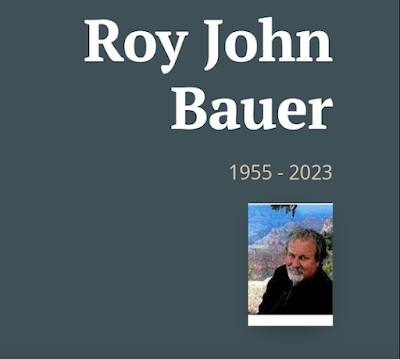
Roy's obituary in LA Times and Register: "we were lucky to have you while we did"

  This ran in the Sunday December 24, 2023 edition of the Los Angeles Times and the Orange County Register : July 14, 1955 - November 20, 2...