Adjuncts Urge Labor Dept. Inquiry Into Working Conditions (Inside Higher Ed)
More than 500 adjunct professors and their advocates have signed a petition calling for the U.S. Department of Labor to investigate their working conditions. The petition's authors, all current or former adjuncts at various colleges and universities, allege that they are being paid for only part of the work they do, and that that amounts to wage theft. The petition is addressed to David Weil, director of the agency's Wage and Hour Division, and urges him to "open an investigation into the labor practices of our colleges and universities in the employment of contingent faculty, including adjunct instructors and full-time contract faculty outside the tenure track." The investigation should be conducted at the "sector" level, they say, rather than individually.
The petition says that average yearly income for adjunct professors "hovers in the same range as minimum-wage fast food and retail workers," since adjuncts typically are paid only for the time they spend teaching–not the time they spend preparing or meeting individually with students….
A Tale of ‘Too Big to Fail’ in Higher Education (NYT)
City College of San Francisco Survives
…[W]hen it came to actually running community colleges, the state fell short. Many of the existing two-year schools had begun as locally run junior colleges with no tradition of state control. Instead of being led by a single chancellor, like the universities, each of California’s 112 community colleges is governed by a locally elected board. The state also passed a law requiring the boards to share day-to-day decision-making power formally with faculty unions.
A result has been chaos and dysfunction in many places. With no state leadership, and with boards and faculty unable to resolve their many differences, institutions like City College have achieved terrible results for students….
The SOUTH ORANGE COUNTY COMMUNITY COLLEGE DISTRICT — "[The] blog he developed was something that made the district better." - Tim Jemal, SOCCCD BoT President, 7/24/23
Wednesday, July 16, 2014
Tuesday, July 15, 2014
Monday, July 14, 2014
Chancellor's evaluation
![]() |
| Notice on the district website |
Evidently, a "special meeting" will be held prior to the usual closed and open sessions that day. It concerns Chancellor Poertner's evaluation.
No doubt an opportunity for public comments will be provided at the start of that meeting.
Sunday, July 13, 2014
Frickin' For-Profits, ridiculous regulators
Flunking Out, at a Price (NYT)
In the years before the mortgage crisis, financial regulators often looked the other way as banks and other lenders pursued reckless activities that cost investors, taxpayers and borrowers billions of dollars. When trouble hit, these regulators had to scramble to fix the mess that their inertia had helped create.
This same dismal pattern is now playing out in the for-profit education arena.
For years, federal and state regulators have done little as dubious operators of for-profit colleges and trade schools have pocketed tuitions funded by taxpayer-backed loans. Many students left these colleges with questionable educations and onerous debt loads that cannot be erased in bankruptcy.
Regulators have finally woken up to this ugly reality. And, once again, taxpayers and borrowers will pay the price of regulatory failures.
. . .
“Many of the students who have already graduated will default on their loans and will be followed by the federal government for the rest of their lives,” said Robyn Smith, of counsel to the National Consumer Law Center and author of a recent report on how states can improve oversight of for-profit schools. “If the regulators had been better at doing their jobs, this could have been avoided.”
For example, Ms. Smith pointed out that while the Department of Education had cited Corinthian in November 2012 for falling below the department’s financial responsibility standards, it still allowed the company to recruit students until last month. That put an additional $1.5 billion in taxpayer money at risk.
. . .
It isn’t clear, though, that those lessons have been learned. Given that other for-profit institutions are also facing difficulties, I asked the Department of Education in an email what it planned to do in the future to avoid a repeat of the Corinthian disaster.
. . .
It’s not clear what kind of an education Corinthian students have received, and it’s too soon to determine the total taxpayer burden in the collapse. Tallying that bill will depend on whether the company can sell its colleges and keep students in place.
Perhaps Corinthian’s fall will become a teaching moment for both state and federal regulators. Here is one suggestion from Mr. Safalow: The Department of Education should monitor the financial position of for-profit colleges more closely, to protect both students and taxpayers.
. . .
Looking the other way also harms students and taxpayers. Can we all agree that something about this regulatory construct needs to change?
In the years before the mortgage crisis, financial regulators often looked the other way as banks and other lenders pursued reckless activities that cost investors, taxpayers and borrowers billions of dollars. When trouble hit, these regulators had to scramble to fix the mess that their inertia had helped create.
This same dismal pattern is now playing out in the for-profit education arena.
For years, federal and state regulators have done little as dubious operators of for-profit colleges and trade schools have pocketed tuitions funded by taxpayer-backed loans. Many students left these colleges with questionable educations and onerous debt loads that cannot be erased in bankruptcy.
Regulators have finally woken up to this ugly reality. And, once again, taxpayers and borrowers will pay the price of regulatory failures.
. . .
“Many of the students who have already graduated will default on their loans and will be followed by the federal government for the rest of their lives,” said Robyn Smith, of counsel to the National Consumer Law Center and author of a recent report on how states can improve oversight of for-profit schools. “If the regulators had been better at doing their jobs, this could have been avoided.”
For example, Ms. Smith pointed out that while the Department of Education had cited Corinthian in November 2012 for falling below the department’s financial responsibility standards, it still allowed the company to recruit students until last month. That put an additional $1.5 billion in taxpayer money at risk.
. . .
It isn’t clear, though, that those lessons have been learned. Given that other for-profit institutions are also facing difficulties, I asked the Department of Education in an email what it planned to do in the future to avoid a repeat of the Corinthian disaster.
. . .
It’s not clear what kind of an education Corinthian students have received, and it’s too soon to determine the total taxpayer burden in the collapse. Tallying that bill will depend on whether the company can sell its colleges and keep students in place.
Perhaps Corinthian’s fall will become a teaching moment for both state and federal regulators. Here is one suggestion from Mr. Safalow: The Department of Education should monitor the financial position of for-profit colleges more closely, to protect both students and taxpayers.
. . .
Looking the other way also harms students and taxpayers. Can we all agree that something about this regulatory construct needs to change?
Friday, July 11, 2014
Whatever happened to Jolene Fuentes? (By hook or by crook: the real Fuentean legacy)
![]() |
| By hook or by crook |
You’ll also recall that, in a special meeting soon after Tom's death (in May of 2012), the board decided to appoint a replacement for Tom instead of leaving a vacancy and letting the voters decide his successor at the next election, just five months away.
One guesses that this was a crafty political decision, for it was known that a Fuentes—either widow Jolene or son TJ—would seek that office, and, given the Fuentes family’s GOP connections, a Fuentes would likely prevail in an election sans incumbent. On the other hand, if the board were to appoint a replacement—a non-Fuentes—he or she would come into the election in November with an enormous incumbent advantage and would very likely prevail, even against a well-heeled Fuentes.
Well, who knows what trustees (or board Prez Nancy Padberg) were actually thinking. But surely there was no one on the board, save Tom’s curious minion Dave Lang, who wanted another thuggish (i.e., Fuentean) politico on the board. Unless they took action, that is exactly what would occur.This was great theater, of course. It culminated in a special meeting in June of 2012 in which the trustees interviewed two candidates: James Wright, a popular recently retired long-time instructor and dean—and Jolene Fuentes, who, as it happened, had no experience in the community college system or in higher ed.
She was a Fuentes, is all.
In my view, both candidates did well answering questions that night, but it was obvious that Wright had the superior resume. In any case, Wright was selected. Trustees used a points system, and the final tally was Fuentes: 367.5 and Wright: 454.
Naturally, the local GOP, or at least its knuckle-dragging Fuentes wing, cried foul. Immediately after the selection was announced, Lang and TJ carped that the board should not have appointed anyone; rather, they should have left the matter of selection to the voters (again, in five months). OC Reg columnist Frank Mickadeit made the same point.
Leave it to the voters! That’s what Tom would have wanted, said Jolene.
Curiously, back in 2000, when the notorious Holocaust-denying trustee, Steve Frogue, resigned from our board (four months prior to election), Tom had no objection at all to being appointed to the board by trustees rather than by voters, a point I made here on DtB (7/1/12) and that was repeated elsewhere.
(See also Frank Mickadeit, OC Register Columnist, Slams College Professor on Behalf of Late Tom Fuentes [6/28/12]).
Well, soon, reality set in and all that peevitude faded. Wright, now an incumbent, was duly elected the following November. After a dozen miserable years, the "Fuentes" era at the SOCCCD, that long lurid nightmare, came to an end.
| Frank M, Thugophile |
Well, a year later, she emerged as a candidate to fill yet another empty seat—this one on the Lake Forest Planning Commission (PC). Once again, she had no experience or background for the office. She had never even attended a Lake Forest PC meeting!
To make a long story short, Fuentes and company managed to bully the existing City Council members (who appoint the PC replacement) to select Jolene, despite the availability of manifestly superior alternative candidates. (When asked about his peculiar decision to reverse himself and vote for the inexperienced Jolene Fuentes, Mayor Voigt actually said, "I don't know.")
Upon arriving on the commission, she immediately announced that she would be missing a meeting—despite attendance having been a salient issue for the commission in the recent past.
In general, it appears that Jolene has turned out to be a very bad commissioner who has a poor attendance record and who is widely regarded ineffective, owing to a lack of experience. Nowadays, she's gotten the PC embroiled in an issue regarding granting an exemption to a rule restricting sale of alcohol (see below).
You can read all about it here. The last post is a scathing review of Jolene’s efforts on the commission in a guest editorial that appeared in the Voice of OC two months ago:
• Council Dismisses Planning Experience In Favor of Fuentes (Lake Forest Patch, 9/4/13)
...However, [Mayor Voigts] had difficulty justifying the switch from one woman [Morrell] who was worthy of his first ballot choice to another woman [Fuentes] who is a relative newcomer by comparison. Morrell has an extensive background, including being a project planner on a new town of 100,000 outside Tokyo, Japan, and master planning and infrastructure planning support for agencies such as the Navy, Army Corps of Engineers and county of Orange.• Fuentes Participates in First Planning Commission Meeting (Lake Forest Patch, 9/13/13)
Finally, after being pressed why he chose Morrell as his No. 1 choice in the first round and then switched to Fuentes, Voigts gave up.
"I don't know," he said softly....
...But [Fuentes] offered a somewhat surprising revelation during the commissioners' comments at the end of the meeting when she informed her colleagues she would be absent at the next regularly scheduled meeting to attend a long-awaited wedding in Memphis, Tenn. The planning commission meets twice a month.• Lake Forest 99 Cents Only stores win appeals to sell beer, wine (OC Reg, May 21, 2014) (See also One Lake Forest 99 Cents Only store allowed to sell beer, wine, 7/11/14)
Fuentes was appointed to replace Tim Hughes, one of the original planning commissioners in the city. He resigned because his work out of state would force him to miss meetings and prevent him from devoting up to 80 hours of prep time for each meeting....
• Community Editorial: Planning Commission Is Not for Politics (Voice of OC, March 26, 2014)
A little more than six months ago, Jolene Fuentes was appointed to the Planning Commission in Lake Forest amid controversy about her lack of background, experience and education, given the excellent qualifications of the applicants passed over in favor of her.• Political cronyism destroys Lake Forest’s Planning Commission (OC Pol Blog, July 29, 2014)
The controversy was exacerbated by the claim of then Mayor Scott Voigts that he had no idea why he cast the deciding vote for Fuentes, failing to mention the $1,000 contribution to his 2010 campaign from (now deceased) Tom Fuentes, the Republican bigwig and husband of Jolene.
In the intervening months, Fuentes' record of attendance has been poor, and that’s on a commission that already cancels more than 20% of its meetings....
![]() |
| Tom loved his machine |
Huntington Beach college faces accreditation uncertainty (OC Reg)
Golden West College in Huntington Beach has more work to do before its status as an accredited community college can be secure, a regional agency determined this month.
The college is one of three in the Coast Community College District, which received a warning from the agency in charge of accrediting all colleges in the area, the Accrediting Commission for Community and Junior Colleges. Losing accreditation means students would not receive federal financial aid or grants.
The other two colleges in the district, Orange Coast College in Costa Mesa and Coastline Community College in Fountain Valley, were removed from the warning status on the basis of a follow-up report with a visit.
The commission found fault with Golden West College’s ability to measure its academic objectives and to prove that students were learning what was on course syllabuses. It also recommended a better financial planning process that would consider both long-term and short-term financial planning as well as future enrollment....
Thursday, July 10, 2014
State of the district? Heads will pop
![]() |
| The "territories" of the two colleges have long been by El Toro Rd. That is likely to change. |
Please feel free to disagree or chime in one way or another. Let’s do the “forum” thing.
THE GOODAnything good to report?
Absolutely, though you sure don’t need me to hear about it.
Not sure about Saddleback (I just haven’t kept track), but here at IVC, we’ve hired some terrific new faculty in recent years. Really good people, good scholars, good educators. I am impressed and reassured.
And there are some wonderful programs at the colleges. We know what they are.
It appears that, occasional desperate yelps from college presidents to the contrary notwithstanding, our finances are in relatively good shape. In part that is owing to some of the board’s “conservative” policies. (No doubt the unions see the matter differently.)
Relative financial health is a very good thing. Only time will tell whether our “basic aid” boondoggle, upon which much of this goodness rests, will continue. I sure hope so. (I do not object to taxpayer money being spent on community colleges. Basic Aid isn't really a boondoggle; it's just convoluted taxation, though our "fiscally conservative" trustees encourage the fiction that it is somehow not tax money. That which we call a turd by any other name would reek anew, y'know.)
The kids that come through our colleges continue to be, in my estimation, very, very likeable—a chirpy crew that, generally, one is more than happy to educate. They’re almost as charming as puppies and kittens.
Obviously, lots of district/college employees, including some administrators, are good, hard-working people—the kind of people a guy is proud to know. They’re a big reason that going to work in the good ol' SOCCCD, for most of us, is still enjoyable.
If you want to experience more positivity still, that’s easily accomplished: just attend any board meeting or any one of the many college presidents’ public presentations, where never is heard a discouraging word and the sky is not cloudy all day.
Me, I prefer realistic accounts.
So what are the negatives?
BOARD IN BUBBLE.
The district community now enjoys the best board of trustees (BOT) that it's ever had. Unfortunately, that isn’t saying much. The SOCCCD’s* BOTs have been penny dreadful from the start, often because they’ve been political—consider the original board's loony “John Birch” paranoia and authoritarianism—or dominated by crafty members seeking political careers—e.g., Frogue, Wagner, Fuentes, Williams, Lang, et al.
The fact is that, despite its legacy of having overcome many serious challenges, our current board routinely reveals profound cluelessness. This is wonderfully illustrated by a recent episode concerning part-time instructors. Fifteen months ago, a polite and articulate representative of the part-time instructor ranks addressed the board, offering a reminder of that group’s continued plight: no benefits, lousy pay, poor student access, poor job security, etc. It is, of course, a fundamental truth about our system that it relies heavily on the exploitation of part-timers. This truth is our great yet ignored failing, our Big Sin. Who would deny it?
It is a truth that our board evidently does not understand at all.
The board’s response to the part-timer? –Hostility and dismissal. (See here.) Evidently, they regard complaining part-timers as mere cranks.
Ridiculous. Absurd. Shameful. (It has always puzzled me that the faculty union, dominated by full-timers, has never really regarded our system's miserable status quo as intolerable. But they don’t run the district.)
In truth, The Seven wonderfully illustrate life in a perpetual Bubble.
BOARD BUBBULOSITY @ LARGER ISSUES.
In the last decade or so, the higher ed “accreditation” system has been beset by loud and persistent complaints and even scandals, including recent developments that bring into question some accred agencies’ competence and fairness. The situation is too big and complex to describe briefly, so I won’t try.
The SOCCCD's leadership has of course taken the short view, the nearsighted view, on all of this, noisily concentrating on just giving the accreditors what they want. To switch metaphors, district leadership has opted for the low road, ignoring the high road entirely. Maybe they’re just scared shitless of the Accreds (I think Babs Beno owns a knife). Could be. In any case, they seem oblivious to the deeper issues at hand at the colleges—administrative incompetence & abuse, disastrous student realities—and generally fail to actually improve matters.
Obviously—though not to the BOT, it seems—the accrediting system, especially the ACCJC, has become an unaccountable, secretive, and incompetent bureaucracy, a force for massive wastes of time and money (SLOs, etc.) and, in general, a clearing house for bad educationist “theory” and the wrong-headed directives that such thought has produced. Instead of joining with enlightened groups to combat this enemy of common sense and openness, the SOCCCD and its colleges have become the great appeasers of that ruinous blob. Hence the obsession with “barriers to civility” and SLOs, which has occasionally made us look like a high school system. (Federal and state pressures to improve “student success” has also produced some dubious initiatives, burdened again by politics and the profoundly annoying “leadership” of folks with Ed.D. degrees.)
You really should attend board meetings. You wouldn’t believe how much of meeting discourse proceeds in the spirit of the gassy politician or the jargon-happy educationist. Everything and everybody is celebrated. Big fricking fundamental facts (e.g., profound student unpreparedness and pervasive disastrous student attitudes toward homework and commitment) go largely unmentioned. Instead, one is treated to an endless series of (often) meretricious dog and pony shows—impressive only to the clueless or the self-deceptive. (There are exceptions, of course. I do not deny that we have some terrific employees among faculty, classified, and administrators/managers. And admirable programs and initiatives, too. Pace.)
FEAR AND LOATHING IN IVC.
Many of us at Irvine Valley College are dejected and dispirited because district leadership (i.e., the Chancellor and BOT) fails to perceive the painfully obvious: that much is wrong with the college and its top leadership. That leadership is largely incompetent (especially at the tip top) and it has long settled into a culture of bullying. To this, the BOT remain resolutely oblivious. We sure do draw attention to it here at DtB, but to no avail, it seems.
IT’S A TECHNOLOGY PARK, I GUESS.
ATEP continues to be a problem for the district, a money pit and an emblem of continued wrong values. Unfortunately, the early development of that property occurred at the district’s historical nadir: the disastrous era of the “board majority” (c. 1996-200?).
Despite state law, which grants to faculty (not administrators) primary authority over the development of instructional programs, faculty have always taken a back seat in the development of ATEP and its programs. The latter endeavor has gone so badly that, after more than 15 years of effort and expense, ATEP remains a tiny tin school of who-knows-what. And faculty continue to be largely in the dark about the meaning and future of “ATEP” (the “advanced technology and education park”).
Further, the presidents of the two colleges have long pursued a pissing contest over control of this dubious facility. This has annoyed the chancellor. But not enough.
A REVERSAL OF PROPORTIONS.
A new 800 pound gorilla has entered the SOCCCD zoo.
The district has always been dominated by the larger Saddleback College (the district, of course, started with solitary Saddleback College nearly 50 years ago; "north campus" was opened in 1979). To this day, the district has been burdened by typical (and atypical?) large college/small college tensions.
But now there’s surprising new writing on the wall, and it proclaims a massive change: Saddleback College has stopped growing; meanwhile IVC will grow tremendously. It’s just a matter of time: IVC will become the new “big sister” of the SOCCCD.
One wonders if this approaching reality will cause certain heads, located 15 miles to the south, to simply pop. That would be my guess.
*Naturally, the district has not always been called the "South Orange County Community College District."
![]() |
| The rapidly growing Irvine area |
Subscribe to:
Posts (Atom)
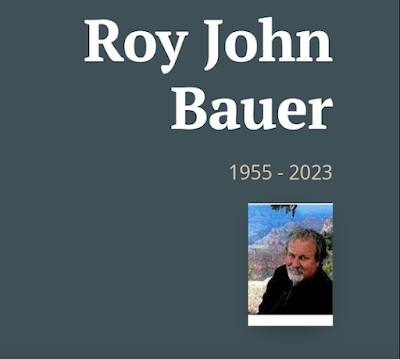
Roy's obituary in LA Times and Register: "we were lucky to have you while we did"
This ran in the Sunday December 24, 2023 edition of the Los Angeles Times and the Orange County Register : July 14, 1955 - November 20, 2...
-
Professor Olga Perez Stable Cox OCC Trumpsters/GOP A professor called Trump’s election an ‘act of terrorism.’ Then she became the vict...
-
Richard O'Neill c. 1950 Richard O’Neill (1924-2009), a wealthy Orange County land owner, wanted the Democratic Party to be...
-
The "prayer" suit: ..... AS WE REPORTED two days ago , on Tuesday, Judge R. Gary Klausner denied Westphal, et alia ’s motion f...