Sunday, November 11, 2012

Delivering factoids for
Turkish anti-feminists
     Here’s a curious factoid. I came across the following press release, evidently dating back to April of 2008. It was posted by the “Pacifica Institute,” which has a dozen or so offices, including one in Orange County (Irvine):

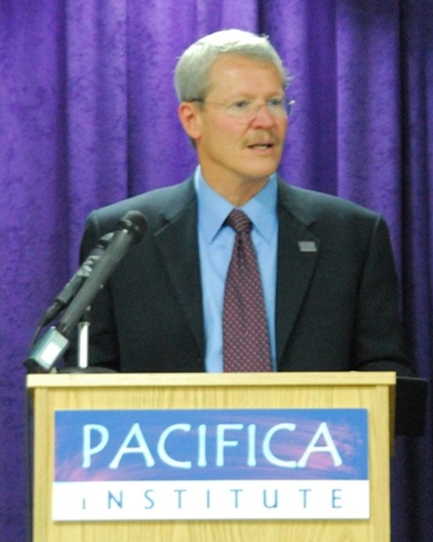
Glenn R. Roquemore-Irvine Valley College President Speaks at PI - Orange County
     Today Pacifica Institute hosted Irvine Valley College President Glenn Roquemore. Before this luncheon forum in Irvine , New Zealand Consul General Rob Taylor and Irvine Mayor Beth Krom were the keynote speakers. Consul General Rob Taylor spoke about Welcoming Diversity as a Path to Peace and Mayor Beth Krom’s topic was How to Create a Balanced Community. Dr Glenn Roquemore’s topic is the Role of Community Colleges in Higher Education.
     Dr. Glenn Roquemore is President of Irvine Valley College….
     Dr Roquemore gave very important statistics of the Community Colleges in California….
     You’ll recall that, in the past, we’ve kidded Roquemore over his tendency to approach speaking always as an occasion to dispense the merest of statistics as though they were astonishing jewels. "Two percent of our students," he'll say, "sport a vestigial tail." Huh?
     What’s the matter with ‘im? Dunno.
     But just who are these “Pacifica Institute” people?
     According to PI’s website,
     Pacifica Institute was established in 2003 as a non-profit organization by a group of Turkish-Americans. Pacifica Institute designs and executes projects covering social welfare, education, poverty, and conflict resolution issues in collaboration with scholars, activists, artists, politicians, and religious leaders-communities….
. . .
     The Institute seeks to …[engage] in a variety of civic activities and [seeks to invite] others to generate and share insights, thereby removing barriers to confidence-building and trust….
     Gosh, it sounds as though that illiterate pseudo-educator, Raghu Mathur, may have had a hand in writing this stuff.
     Elsewhere, PI presents “Frequently Asked Questions about Pacifica Institute and Fethullah Gülen.”
     One naturally assumes, then, that Mr. Fethullah Gülen and his ideas are important to PI. Sure enough, in the Q&A, Gülen and his movement are central:
Fethullah Gülen
Q: How is the Pacifica Institute involved with the Gülen movement?
A: Some of the founders and donors of Pacifica Institute are participants of the so-called Gülen, or Hizmet movement. Pacifica Institute was inspired by the movement’s philosophy and goals….
. . .
The Gülen/Hizmet movement is a values-driven social movement and following a philosophy that advances interfaith dialog, education and community service as tools to build a better and more harmonious society. The movement was inspired by the philosophy and teachings of Fethullah Gülen, a Turkish scholar, author and advocate….
. . .
Q: Who is Fethullah Gülen?
A: Fethullah Gülen is a Turkish scholar, preacher, thinker, author, opinion leader, education activist, and peace advocate who is considered by many to be one of the world’s most influential religious thinkers. He is regarded as the initiator and inspirer of the worldwide civil society movement, the Gülen Movement, which is committed to education, dialogue, peace, social justice, and social harmony….
     Well, I’ve done a little looking, and this Gülen fella is mighty controversial, in some circles at least.
     I skimmed a couple of sites, which suggested that Gulen is, among other things, a conservative and a vocal opponent of feminism (although I ask that readers judge for themselves based on his writings--and the writings of his mouthpieces).
     So I went to the Fethullah Gülen website. There, I searched the term “feminism” and that brought me to a page with links to various relevant essays, evidently by Mr. Gülen, including The Gülen Movement: Gender and Practice.
     I clicked on that. That essay includes this passage:
     Although he promotes equality between the sexes, Fethullah Gülen's views on gender can indeed be described as complementary. He sees women and men as having equal value but inheriting different roles and characteristics due to physical and psychological differences. He classifies men as "physically stronger and apt to bear hardship" and women as "more compassionate, more delicate, more self sacrificing" (Gülen 2006: 1). Although he does state that women can be involved in any field of work he idealizes the mother as the pure educator (Gülen 2006: 2) implicitly implying that the man should be the family provider. This may open up for critique on behalf of Western feminists or scholars of religion and gender. According to this relatively new academic discipline[,] gender is a social construction. Human beings are born with different sexes, but social roles and expectations of fulfillment of these are constructed and emphasized by the norms that prevail in society.
     Another link takes one to an essay entitled Women Confined and Mistreated. Here are some excerpts:
     As a reaction to all the injustice done to women … a movement to claim women's rights emerged, particularly in the West. Even though this movement is considered an awakening of women, it occurred as a reaction and was doomed to imbalance like all other reactionary movements and ended up in extremism. Although the starting point was to defend women, in time it deviated from the original aim to the degree of being full of hatred towards men and to feeling a grudge against them. The movement named feminism, which was born from the idea of protecting women and providing them with rights equal to those of men, has only left behind longing, sorrow, and wreckage as a movement of discontentment….
. . .
     According to Islam, women's role in this world is not only restricted to doing the housework and raising children. In fact, as long as it does not conflict with her primordial nature or with observing religious requirements, she is responsible for carrying out the duties that befall her in every area of society and making up for shortcomings where men fall short in social life. However, this reality was ignored in time, even among Muslims; rough understandings and crude thinking upset this system based on women and men's mutual assistance. After this upset, both family life and the social order were also upset. Different peoples' perception of their own historical heritage as a part of Islam, their seeing and reflecting their folklore and traditions as essentials of religion, and making judgments pertaining to this issue at certain periods all resulted in the usurpation of women's rights; they were pushed into a more restricted area day by day, and in some places they were totally isolated from life without consideration of where this issue leads. However, the source of mistaken thoughts and deviations in this matter is not Islam whatsoever. The mistakes belong to those who misinterpret and misapply the religion. Such mistakes in practice must definitely be corrected.
     On the other hand, while correcting these mistakes, approaching the issue from a feminist standpoint will upset the balance again and an opposite extremism will replace the former. For instance, just as it is very ugly to see women as merely child-bearing objects and is insolence towards them, it is equally unbecoming and unnatural to build a society where women are unable to bear and bring up the children they wish for, or for a woman to feel a need to rebel against marrying and to avoid bearing children in order to show that she is not a machine. As a woman is not a dirty dish, her place at home is not confined to the kitchen with the dirty dishes. However, a woman who claims to have no household responsibilities and thereby turns her home to a quarters for eating and sleeping is far from being a good mother, a good teacher, and a good spiritual guide to her children.
     Besides all this, it is another form of oppression to make women work under difficult conditions, such as mining and road-building. It contradicts human nature to push women into heavy tasks like agricultural manual labor, or military field operations, and other harsh pursuits, just for the sake of proving their equality with men; it is nothing but cruel torture. It shows ignorance of women's qualities and conflicts with their primordial nature. Therefore, just as an understanding which imprisons women at home and takes them completely away from social life is absolutely incorrect according to Islam, likewise, depriving women of financial support, preventing them from bearing and raising children in security, and forcing women into the labor force to do uncongenial work is also oppressive. A woman, like a man, can have a certain job as far as her (and his) physiology and psychology are taken into consideration; but both women and men should know that a good life consists of sharing and division of labor. Each should assist the other by doing tasks in compliance with their nature.
     Yikes.
     I’m in no position to judge this “take” on feminism relative to the various Muslim communities (e.g., in Turkey) and the possibility of discourse within them. But it’s pretty plain that Gülen’s philosophy, as expressed here, is antithetical to some of the core tenets of Western feminism, broadly understood. It seems clear that Gülen is not likely to gain many adherents or followers among contemporary Westerners, with their commitment to the ideal of equality, as they understand it at least, between the sexes.
     The Wikipedia article on Gülen is alarming—if, that is, it can be trusted. It asserts that
     ...Gülen's views are vulnerable to the charge of misogyny. As noted by Berna Turam, Gülen has argued:
     "the man is used to more demanding jobs . . . but a woman must be excluded during certain days during the month. After giving birth, she sometimes cannot be active for two months. She cannot take part in different segments of the society all the time. She cannot travel without her husband, father, or brother . . . the superiority of men compared to women cannot be denied." [35]
Berna Turam, Northeastern
     Wikipedia is quoting Berna Turam, a serious academic at Northeastern U. She herself seems to cite a work from 1996 entitled Fethullah Gulen Hocaefendi ile ufuk turu (Aktuel kitaplar dizisi). It is written in Turkish.
     One should be careful to note that the superiority that Gülen is discussing is physical, not moral, or at least that's how I read it. Even so, his remarks are mighty offensive, at least to these Western ears.

     Gosh Glenn, you really oughta be more careful who you hang out with. Philosophically, these Gülenites are a problem, at least relative to most of our community on these shores.
     I'll see if I can shed more light on the Pacific Institute and what it means for the likes of Glenn Roquemore and Beth Krom (a Democrat) to be hanging out with 'em.

Saturday, November 10, 2012

Money makes the world go around

     I seem to have lost interest in playing OC Rat Bastard Bingo, but I will mention this further observation of such creatures cavorting through OC history, past and present. This one involves early Tom Fuentes associate Arnold Forde and—anti-matter to Fuentes' matter—Larry Agran, Irvine politician and Democratic political boss extraordinaire.

* * *
Early model Forde
     FORDE. One of the names that popped up again and again during my inquiries—earlier this year—into the early career of political operative Tom Fuentes was one Arnold Forde, now 76, a political consultant. Here's some background:
     …[D]onning one’s historian’s cap in hopes of identifying a meaningful narrative, with beginning, middle, and end—it appears that one will not go too far wrong in starting with the 1969-1970 campaign of Ron Caspers to challenge and replace 5th District Supervisor and Republican Alton Allen. At least as far as the Republican establishment was concerned, Caspers seemed to come from out of nowhere. But he had money. More specifically, he had “Dick [Richard O’Neill] and Doc [Louis Cella]” money. And he had the talents (the ruthless and clever methods) of Arnold Forde (and later Butcher-Forde) plus the uncommon energy and ambition of young Tom Fuentes. Most importantly…, Caspers had a vision of how county government should operate. That vision was actualized after his 1970 election, when “Caspers made the contacts and set the ground rules for developer participation in the grand scheme of patronage carried to an exponential degree” (Tom Rogers). —The Bold and the Ruthless, DtB
     Caspers set a new standard by employing, not merely stunningly unscrupulous campaign tactics (some of these, of course, were already familiar), but also advanced, computerized, data-driven campaign approaches associated with the consulting firm Butcher-Forde. These approaches have come to be considered essential. —Orange County Incomporruption, DtB
     "When Butcher and Forde brought professional management and a fierce competitive drive to Orange County campaigning, they were challenging decades of friendly, folksy clannishness. They have been called amoral and their campaign tactics deceptive. And the accusations have not been hurled exclusively by their candidates’ opponents." —"Butcher and Forde, wizards of the computer letter," California Journal, May 1979.
     An Orange County Superior Court judge has criticized the Howard Jarvis Taxpayers Assn. and two of California's best-known political consultants for "hoodwinking" the public with fraudulent fund-raising tactics in the 1980s.
     Superior Court Judge Donald E. Smallwood said this week that the anti-tax Jarvis group, along with consultants William Butcher and Arnold Forde, raised money from the public under false pretenses to put more than $1.5 million into the consultants' pockets.
     "There is something terribly wrong when huge sums of money can be raised in the course of political campaigns, transferred to a parent or sponsoring organization and then funneled back to the political consultants," Smallwood wrote.
     Smallwood's scathing assessment of the mid-1980s fund-raising techniques of the tax-fighting Jarvis group and Butcher and Forde capped one of the county's most complex and secrecy-shrouded legal cases.
     The judge wrote that although he found the conduct of Butcher and Forde "reprehensible" and they had "facilitated" campaign reporting violations by the Jarvis group, they could not be held liable under the Political Reform Act. —Tax Group Guilty of Campaign Violation : Courts: Judge also scolds Howard Jarvis organization and political consultants for fund-raising tactics (LA Times, 5/11/95)
* * *
     AGRAN. Now let’s shift to 2012 and, really, the last dozen or so years. Here’s something from ace investigative reporter R. Scott Moxley, published 9 days ago (Larry Agran's Great Irvine Election Robbery, OC Weekly, Nov. 1, 2012):
     First elected to the City Council 34 years ago, [Irvine City Councilman Larry] Agran's aggressive, nanny-state liberalism made him a lefty hero and a target for ridicule among OC Republicans. For nearly two decades, there wasn't anything fake about the contemptuous battle between the two camps.
     Agran, now 67, continues to speak as though those days still exist, when he was a rebel outsider fighting for the little guy against powerful, moneyed interests. He utters passionate lines memorized during that era, but nowadays, the words are hollow. The outsider became the entrenched insider 12 years ago, when his political machine took over the city, its coffers and one of the biggest prizes in California municipal history.
     The federal government's gift of the El Toro Marine Corps Air Station to Irvine put Agran's 3-2 council majority in control of land worth tens of billions of dollars, an end-of-the-Cold War move that inexorably altered the local political landscape. Agran became the gatekeeper to the potential spoils of more than 4,700 acres of prime Southern California property now called the Orange County Great Park.
     The Republican real-estate developers and businessmen who'd funded bitter campaigns against Agran didn't just suddenly become silent about their old foe. They became his primary source of campaign revenue. It helped that members of Agran's machine—hamfisted operatives such as the late Ed Dornan—let the business community know the newfound mutual-admiration society depended on their generous donations to Agran's numerous political bank accounts.
     Generosity bred generosity. With typically more than double the campaign resources of his GOP challengers, Agran's Democrat operation has won six consecutive elections in a city with a majority of Republican residents. The price of such an arrangement is corruption: a long list of lucrative, no-bid city contracts has been given to the very businesses that pump as much as $50,000 at a time into Agran's campaigns.
     And then Moxley continues:
     Please don't forget this alarming fact, even if the FBI looks the other way: Arnold Forde, Agran's top political consultant, pocketed $120,000 per month in taxpayer funds for more than half a decade to do public relations for a local public park that still has not been completed.
     Just sayin'.
     Moxley goes on to explain Agran's curious relationship with Fuentes' associate Adam Probolsky. Probolsky was Fuentes' little helper on the night of Tom's coronation as trustee back in July of 2000. (At the time, his partner was Steve Sheldon--now heading a big local PR firm--the son of the Rev. Lou Sheldon of the Traditional Values Coalition.) He's been involved in the IVC Foundation. He once took one of my classes—to spy on me, I guess (he dropped). He's been involved in Irvine politics in recent years. And now he's Agran's pal.

SEE ALSO:

• Adam Probolsky Orange County Register Journalistic BJ for Larry Agran—Explained! - Matt Coker - Nov. 2, 2012

• Orange County Republicans Outraged That DA Tony Rackauckas Aided Larry Agran's Campaign - R Scott Moxley - Nov. 8, 2012

• Larry Agran Blasted By 3 Former Close Allies As Corrupt & Unworthy of Irvine Mayor's Job - R Scott Moxley - Oct. 18, 2012

• Remembering the future of Orange County’s Great Park - Nathan Callahan, Feb. 28, 2002

Friday, November 9, 2012

So long, Orlando Boy & the Gooster

     Head of cabbage? I'm being kind. (Pace cabbage.) And let's not forget that some of our benighted union brethren/sistren saw to it that over $5,000 of our money was given to Cabbage Head for his candidate's statement. I want my money back. I'll settle for never having to see Brown Boy again.

The cry of the Goo: "I feel discriminated!"
     I have no doubt that Raghu still thinks that he is destined for greatness. He must be discouraged, though.
     "Why don't they love me?" he asks, in the dead of night.
     "Because you're an asshole," I answer here on my MacBook Pro, on this lovely and cold Friday evening.
     Bugsy says "hey."


RACHEL RULES

Thursday, November 8, 2012

Random Newsoids

☆ Ole Miss Students Protest Obama Victory (Inside Higher Ed)
     Several hundred students at the University of Mississippi who were frustrated by President Obama's re-election held a protest early Wednesday morning. The Clarion-Ledger reported that while the event was incorrectly described as a "riot," it did involve burning of an Obama campaign poster and the shouting of racial epithets. Chancellor Dan Jones issued a statement expressing disappointment in the “immature and uncivil approach” of some students.
☆ Community-College Degree Often Smooths the Path to a B.A., Report Says (Chronicle of Higher Education)
     Nearly three-quarters of students who earned an associate degree and moved to a four-year college graduated with a bachelor's degree within four years.
☆ Prop. 30: Schools, colleges win reprieve from dire cuts (OC Reg)

Wednesday, November 7, 2012

College-Wide Forum at Saddleback College (featuring the Chancellor and three trustees): any questions?

     I went to the Saddleback forum today, scheduled for 3:00. Got held up a bit, so I showed up two or three minutes late, and the event had already begun.
     The auditorium was mostly full, especially in back, and so I walked down the right side toward the front of the room, where a row remained empty. Chancellor Gary Poertner was holding forth, but he stopped what he was doing to stare at me, pause, and then ask, in a friendly way, what the hell I was doing there. (We’re practically pals.) Why didn’t I attend the forum earlier today at IVC? he asked.
     I tried to answer—that Glenn had scheduled the IVC forum at teaching prime time (12:30), when I teach—but the opportunity quickly evaporated and Poertner continued forumizing.
     We were in the grand “Ronald Reagan board of trustees meeting room”—yes, that’s what it’s called—a bulbous appendage of the tallish building that houses nursing (those people think they’re mighty special) and the district offices (up on the "third floor"). Sitting before the audience were three trustees—Board President Nancy Padberg, Dave Lang, and Jim Wright. They all looked as pleased as punch—well, maybe not Nancy, but she was as pleased as, say, Iced Tea.
     Gary was saying that, when he arrived at the district in 1999 (part of the Cedric Sampson neo-totalitarian package), we had accreditation trouble and we’ve been having accreditation trouble ever since. Then, about 18 months ago, the Accreds gave us a serious warning, which didn't go down well at the time. But, says Gary, it was “the best thing that ever happened to us.” It forced us to work together as a district, and that’s been great.
     The Accreds, reminded Gary, shall descend upon us on Friday.
     BUDGET ISSUES. Gary then shifted to “budget issues.” Last Friday, he said, he sent out an email to the district community about our new budget reality—namely, that revenue has remained flat but inflation has steadily raised expenses, and so now we’re headed for a kind of Malthusian crossing of the lines. It was not his intention, he said, to be “alarmist.” Nope. He had in mind raising awareness of this issue, long before a crises occurs, so that we can slowly and deliberately plan crisis-prevention.
     Gary noted that our district, unlike the vast majority of CA districts, is on “basic aid”—funding via local property taxes—which, in our case, means that we’ve managed to duck the big 17% cut that was experienced by most other districts/colleges. In fact, owing to our special circumstances (high property values, etc.), we’ve had more than the usual allotment of moola. Gravy.

     WHY NOT USE BASIC AID GRAVY? So why not fill the anticipated shortfall with our basic aid gravy? Well, said Gary, we haven’t done that sort of thing since the 90s. The board has long enforced the policy that the colleges are to be funded according to the usual Sacramento levels and that basic aid money (i.e., the remainder) is never to be spent on ongoing expenses. Nope, that gravy is slathered on new construction and the like. You can’t fully depend on basic aid to provide adequate funds because of potential unexpected property devaluations, etc. And so it’s unwise to rely on it for ongoing expenses, as some districts have done.
     Gary (and, later, Lang and Padberg) referred to the bad old days—back in the late 90s—when the board took that unwise path and found itself suddenly behind the eight ball. Back then, the board (namely, that asshole John Williams and his benighted "fiscally conservative" pals) were forced to spend district reserves, and that got the district in dutch with the state chancellor’s office, the accreds, etc.

     STUDENT SUCCESS. Gary turned next to the “completion agenda”—as it is referred to across the country—which we in Cal insist on calling the “student success act,” cuz we’re special, I guess. This year, at each board meeting, one of the “student success” recommendations is discussed. It's on ongoing thing.
     The Accreds tagged us for having no “district plan,” which, as it turns out, is an over-arching plan that includes both colleges, not just the district as a super-entity. So we’ve worked on that; each college has plans that fit into the district plan, etc.
   
     MUTUAL RESPECT. Our #1 goal is creating and maintaining an atmosphere of “mutual respect,” etc. It became clear, not long ago, that “our relationships are terrible”; there were animosities, jealousies, and so on, throughout the district and its two colleges. That needed to be fixed. That wouldn’t be easy, because there are some “raw emotions,” said Gary.
     Over the summer, five “barriers” (to mutual respect and good relationships) were identified (we've discussed these previously). Soon, the two presidents will be sending up their colleges’ strategies in this regard, i.e., barrier-wise.

     NANCY. Next up (at 3:18) was Board President Nancy Padberg, who started by asking all those folks lining the back wall to move up to the front. They complied, sort of.
     “These board forums are wonderful,” said Nancy. She explained the need for trustees to be careful; after all, they don’t want to be accused of “micromanaging.” She noted an ant on the floor. Furtively, she gave Burnett the stink eye.
     Nancy referred to the board’s goals. They’ve held “retreats,” where trustees discussed the “district culture,” which needs to be warm and fuzzy and befogged with mutual respect. The Chancellor is supposed to pursue all that and to hold the college presidents responsible for pursuing all this warm and fuzziness at their colleges.
     Whew.
     “There’s been progress,” said Gary. I think he meant it. (I wonder if he realizes that IVC is pretty freaked up?)
     The board, said Nancy, is committed to monitoring student success. Nancy briefly described current efforts to increase communication and collaboration between K-12 and the community colleges. The goal is to create a new and improved “environment,” collaboration-wise, said the Nance.
     Nancy declared her enthusiasm about the ongoing presentations re all this collaborating and planning and whatnot. I've never detected this alleged enthusiasm, but if she says so, I believe it.

     SAY SOMETHING NICE. Golly, I don’t think I’ve ever seen Nancy so loose, so informal. She wasn’t setting any records in that regard, but she was awfully chirpy and friendly for her. Really!
     In fact, everything about this meeting seemed to express openness and informality and Kumbayaitude. I don’t think I’ve ever felt quite so removed from those awful Mathur years and all that went with ‘em.

     ANY QUESTIONS/COMMENTS? Nancy now opened up the meeting to questions and comments. She seemed to have in mind directing questions at the trustees—and, I suppose, at Gary.

     Lee Haggerty (a SC poli sci instructor and long-time union leader) asked Gary to explain how the passage of Prop 30 will affect funding at our colleges. (Didn't he already explain that?)
     Gary, who confessed that he was surprised by 30’s passage, asserted that, had 30 not passed, districts receiving funding from Sacramento would have experienced another 7.5% cut in funding. Naturally, since we’re on basic aid (and property values remain sufficiently high), none of this directly affects us. Our problem is that our revenue remains flat but inflation has increased expenses. The “cost of living,” said Gary, “catches up with you” eventually.

     Vice Chancellor Deb "the Debster" Fitzsimmons chimed in to say that Prop 30 brings a temporary tax. I think she said that the money cannot be spent on administration.

     Speaking of raw emotions, Ken W (SC economics instructor and former Old Guardster) referred to “return on investment” studies. I think he advocated “separating out” ATEP in these studies. I don’t recall what Gary said in response.

What about Bob?
     Ken then offered a "friendly suggestion" about something else: the district offices. One doesn’t experience many “warm and fuzzies,” said Ken, upon being “buzzed in” to enter the district offices. Such extreme security measures encourage the thought, “Just what goes on in there?”
     Naturally, this typically Woodwardian remark was received by all with a dollop of mirth. Poertner protested that he wasn’t involved in the decision to create Fort Knox on the Third Floor. He said that, as he understood it, somebody saw this sort of thing at a concentration camp over at Rancho or someplace. “Why don’t we do that?” they said. Also, HR traffic includes some routine heavy squawkers, and it’s best to slow down and formalize the comings and goings of that noisy crowd.
     Ken seemed especially concerned about what “Bramucci” was doing “back there,” beyond the machine gun nests. Laughter.

     Anna Maria C asked a question, I think, about all those early retirements and whether they would all be replaced. (Hope I got that right.) Gary said some vaguely reassuring things, I guess. But he noted that these decisions (about who is hired) are made at the college level, and it’s basically none of his business. “It’s up to the colleges.”
     Somebody said something about the 50% law (which requires that at least half of expenditures be on “instruction”—i.e., faculty salaries and benefits), and Trustee Dave Lang noted that the board carefully monitors how the district is doing on that score.

     SC Prez Tod "the Todster" Burnett got up to yammer about those early retirements. “Blah, blah, blah,” he said. At least that’s what I got out of it.
     Trustee Jim Wright noted that, at the last board meeting, the board approved SC’s list of new hires, but it's up to the colleges to prioritize the list.

     BULLET-PROOF GLASS. Claire C-S chimed in re Woody’s Fort Knoxian concerns. In her estimation, the situation would be much improved if they just got rid of the “bullet-proof glass.” That’s what’s gotta go, she said.
     There was much laughter, of course.
     She (or somebody) addressed Gary: you didn’t mean to be alarmist, she said, but talk of a 5% cut is scary. Gary noted that 5% really isn’t much. It’s just that inflation caught up with us, and so we’ve decided to anticipate the problem and encourage a collaborative discussion long before any crisis appears. It’s up to the colleges to decide what they’re going to do to reduce expenses. They’ve got to balance their budgets, etc. (At this point, I thought I sensed minor peevitude on Gary’s part.) He said that his Friday communication only included the obvious suggestions, not directives. How the college budgets are balanced is up to the colleges. So is fidelity to shared governance in the process.
     Gary noted that he purposely sent his email before the election. He didn’t want to seem to be responding to the failure of Prop 30 (which he expected).
     Again exhibiting some degree of peevitude (I think), Gary said that we can just wait and do nothing until a crises unfolds—or we can carefully discuss the problem with the time that we have.
     Golly. Gary never seems to really get angry. His peevishness, if it exists at all, is as subtle as a breeze.
     Nancy reminded everybody how bad things were when she arrived at the district (in late 1998). We went off (or were taken off) basic aid and we were suddenly in big trouble. (This was a de facto slam of Williams and Co.)
     She noted that, surprisingly, yesterday, many higher ed bond issues passed. Two passed in OC; seven across the state. Only one failed.
     WILL THEY TAKE AWAY OUR GRAVY TRAIN? Someone asked how vulnerable our “basic aid” gravy train is. Gary explained that, about two years ago, we started experiencing anti-basic aid heat. That was coming from the other OC districts. Why? Because they were “envious” of us. (Gary wasn’t mincing words.) Now, in fact, derailing basic aid wouldn’t help those districts at all. In truth, were we to go off basic aid and then line up with all those other districts for Sacramento money, that would be another mouth to feed for Mother California, and so, in the end, these peevish other OC districts would get less money, not more.
     Challenges to basic aid have “always been there,” said Gary. At this point, if our basic aid is challenged, it likely won’t be by local districts but by the economy.
     Gary explained that Mira Costa went on basic aid but then experienced unexpected plummeting revenue. Now they’re saying, “we wish we did what you’re doing” (i.e., I suppose, not using basic aid gravy for ongoing expenses.)
     As it turns out, injected VC (Fiscal Services) Deb Fitzsimmons, more and more districts are turning to basic aid, so it’s not as if this form of funding is facing extinction. And each district that goes on basic aid means one less district depending on state money—so there’s “one less mouth to feed.”
     SC Academic Senate chief Bob C noted that, if you think that the district offices' No Man's Land is bad, you shoulda got a load of the spy cameras that used to festoon the elevators! (“I always thought that was the colleges spying on us,” quipped Gary.)
     Eventually, the irrepressible Ken W asked another question: a couple of years ago, Capo Unified switched over to “area” elections. That is, each trustee is elected only by citizens of their area, not by citizens of all the district's areas. Has the board discussed the possibility of that kind of change?
The Accreds arrive on Friday
     Nancy acknowledged that the subject has come up. Gary piped up to remind us that, not long ago, CSUF did a study of local districts with regard to optimal trustee representation. Evidently, the chief worry was that, in areas sporting significant ethnic diversity, without “area” trustees and elections, minority groups are not well-represented. These recent studies yielded the recommendation that two north county districts switch to area elections. But our district, owing to its lack of diversity (wall-to-wall white Republicans), did not receive the same recommendation. And so no change was made.
     Nancy explained her own view, that we should retain the current representation. The truth is, said Nancy, that the trustees need to make decisions for colleges serving the entire district area, not just one sub-area within the district. And so having trustees elected by the entire citizenry is right and good.
     Lang chimed in to suggest that the demographic homogeneity of our district is a compelling argument to leave things alone.
     Ken, evidently unable to control himself, chimed in to suggest that our district is increasingly diverse. (Yeah, I think I spotted an African-American in the audience.)
     Tere F advised the Woodster how he can locate the relevant demographic data.
     At that point, Nancy solicited further questions, but there were none. (I thought about asking one, but, hey, it's not my college.) And so, at 4:02, the meeting was declared over and out. There was a fair amount of applause. And that was about it.

The Beat Goes On

Over at the Weekly, Matt Coker chimes in on losers across the county, including the rout of Williams and Raghu:

excerpt:
In the Trustee Area 7 (Rancho Santa Margaritaville) race for the board that governs the South Orange County Community College District (Irvine Valley and Saddleback of Mission Viejo), former board leader John S. Williams, who went on to shame as Orange County public administrator/public guardian, came in third to Timothy "Tim" Jemal. The same college district's former chancellor, Raghu Mathur, came in fourth in the race for two Laguna Hills City Council seats, which were won by Andrew Blount and Dore Gilbert. 
To read the rest, click here.

*

Roy's obituary in LA Times and Register: "we were lucky to have you while we did"

  This ran in the Sunday December 24, 2023 edition of the Los Angeles Times and the Orange County Register : July 14, 1955 - November 20, 2...