Thursday, August 11, 2011

Ray's "faculty contract alert"
 |
| Brought to you by the people who brought us Tom Fuentes |
From: Ray Chandos
To: unabauer
Date: Thu, Aug 11, 2011 10:40 pm
FACULTY CONTRACT ALERT
DID YOU KNOW THAT 75 OF YOUR COLLEAGUES WILL GET NO RAISE IN THE CURRENT CONTRACT?
IS THIS FAIR???
SHOULDN’T EVERYONE GET THE SAME RAISE???
WE JUST WANT FAIRNESS FOR ALL FACULTY.
DETAILS BELOW:
To: SOCCCD faculty members
From: Faculty members sold out by our union negotiators in the current contract tentative agreement (Ray Chandos, Michael Channing, Sharon MacMillan, Mike Merrifield, Sherry Miller-White, Ken Woodward)
The Faculty Association negotiating team has signed a tentative agreement with the administration which excludes over seventy-five faculty members from the salary increase given to all other faculty members in the form of step advancement. This blatant discriminatory exclusion is a shocking first in the history of our district. Faculty members at the top of the columns have spent an entire career on a salary schedule which encouraged the acceptance of lower wages early on in return for a promise of a better retirement. After these faculty members have finally reached the highest step, the union has now devised and implemented a plan which breaks that promise. The union has not even had the courtesy to negotiate a grandfather provision. The union has negotiated a one time, off-the-schedule approximately one thousand dollar check for these faculty members and is asking them to vote for a three-year contract with no other monetary incentive. The union leadership does not care that this contract will have a devastating effect on the retirement and lives of these faculty members. In a secretive and divisive move, the union leadership is forcing a quick vote asking the remaining faculty to vote themselves a raise by approving the contract which excludes and insults long time employees. It seems that the District and union collaborators have found the money for everything else they want except for this segment of the faculty. In fact money is not the issue at all. The union leadership says the district is worried about the public perception. Apparently the District is not worried about the public perception of administrators’ salaries and spending projects and all the other monetary provisions of the contract which are public information anyway. The District, as always, is just trying to spend less money in the classroom and apparently the union leadership has bought into their arguments and decided to sell out a big chunk of their membership. Certainly the District appreciates the union’s consent to give only part of the faculty raises. Earlier the union leaders ignored pleas not to support the retirement incentive the District asked them to request until the District agreed to leave the money saved in the classroom. The union leadership ignored pleas last spring to do their legally mandated duty of fair representation for all bargaining unit members. This is the most blatantly unfair, lopsided and discriminatory contract ever negotiated. Not only are there unfair salary proposals, but discriminatory lab compensation decisions were made arbitrarily by the union leadership. Many faculty are confused about what the contract means for them. We are requesting that the union leadership provide a list specifying the monetary incentive each faculty member will receive in this negotiations round. Hypothetical cases for example: Alden, Beverly $35,000 (from step advancement multiplied by years collected plus increased reassigned time for Faculty Association leadership) Hughes, Bob $130,000 (from retirement incentive, changes in part time compensation, increased union reassigned time) Norris, Mary $1,000 (from the bad luck of being a second class citizen under the current contract negotiations for salary and lab compensation) If the Faculty Association would provide such a list, every voting faculty member could not only review the monetary benefits he/she would receive but could also see how his/her vote on this contract will affect all colleagues. It is unfortunate that the union negotiating team decided to exclude a large segment of the faculty from representation instead of negotiating a grandfather provision elevating the compensation of this group in a way equivalent to other faculty members. It is a cavalier misuse of power for the union leadership to arbitrarily decide who gets salary and lab compensation. It is amazing that the team would sign away the rights of people they are legally bound to defend.
RECENT DEVELOPMENTS The Faculty Association negotiating team has told us that is necessary to stiff (or discriminate against) experienced faculty members because the Trustees insist on it in order to protect their political images. Miraculously, the Trustees are unconcerned about the political appearance of increasing reassigned time for union leadership to 60 OSH (the Faculty Association worked for decades on 20 OSH). Recent investigations so far have found that ALL sources blamed by the union leadership for the current contract disaster (such as CTA advice, the District administration, and the Board of Trustees) contend that the SOCCCD union negotiating team itself promoted and wants this contract. Why would the union leadership intentionally sell out certain groups of faculty? Why did union leaders blatantly ignore the pleas of faculty members last spring? We can only speculate about individual union leaders’ motivations which could cause them to place self interest or personal, ideologically-based positions above benefits for the faculty as a whole. ALL faculty will some day reach the top of a column. This is a very dangerous precedent to set for all faculty.
WHAT CAN WE DO? It is possible to reverse this state of affairs. Although the fact that the union team has already signed the agreement to sell us out makes it much more difficult, it is possible to reverse the egregious decision. It is possible to make this contract work for all faculty. We must convince the union negotiating team to cancel the vote on this untenable contract and return to the table to negotiate (WITH SUPERVISION) for the interests of all their bargaining unit members.
Really? Adjuncts not invited?
 |
| Good grief. |
Part-timers, you should show up for this thing and ask why you weren't invited.
You should just take the goddam thing over (and, no, I don't mean violence, tea-baggers).
Again, during discussions of the CAFÉ (i.e., the "Center for the Advancement of Faculty Excellence") on the senate floor, we were assured that the center was for all faculty, not just full-timers!
The MRC, the CAFÉ, and the IVC Academic Senate

Like all Schools at IVC, the School of Humanities and Languages has two senators: I am one of them; the other is my colleague MH. The two of us take turns providing Senate meeting notes to all School members. What follows are all the notes I could find re the CAFÉ:
Jan 6 Academic Senate Meeting:
IVC Faculty Teaching/Excellence Center – Lisa [Davis Allen] had an idea and has full support from [VPI] Craig [Justice]. The concept is a space, a home, for faculty to gather, to be trained, with cabinets, house text books, journals, a place for colleagues to talk, a place to explore and test new software and technology, a place to do grant writing, – all things that relate to excellence in in teaching – a place to house people, technology , and support all in one place. We would be able to go into a space/place and meet with peers, discuss teaching, problems, strategies. It would be wide open. A morale booster of sorts. [MH]Jan 20 Academic Senate Meeting:
FACULTY EXCELLENCE CENTER. Item 16 concerned the “IVC Faculty Excellence Center,” a scheme evidently sunshined during the [Jan 6] general assembly meeting during inservice week (aka oblivion). I missed that. This “center” sounded harebrained to me: mentoring and training and gadgetry and brown baggery, etc. I asked LDA how we can justify opening a new center at a time of huge budget cuts. She declared that this thing wouldn’t cost much. Plus it would be a tangible way that administrators could express their respect for faculty.Feb 3 Academic Senate Meeting:
(Somebody whispered to me, “it’s a lounge.”)
When we voted on it, I voted yes (reluctantly), but one person voted no (Mirriam C of Math). Evidently, this thing is going forward, like new Coke. Picture Michael Jackson, dancing and singing, on fire. [RB]
IVC FACULTY TEACHING/EXCELLENCE CENTER: CAFÉ (Center for the Advancement of Faculty Excellence) is moving forward with the support of the President and Vice President. [MH]Feb 17 Academic Senate Meeting:
Strategic Planning and Budget Development – … CAFÉ (Center for Academic Faculty Excellence – the idea has be[en] sunshined at the AFTPC [the Academic, Facilities and Technology Planning Committee]– they seemed to like the idea and will consider it over the next few weeks before their next meeting to see what space can be used…. [MH]March 3 Academic Senate Meeting:
Re Strategic Planning/Budget Development: LDA reported chirpy news about the “CAFÉ,” i.e., the faculty “excellence center” initiative. Administration, she says, still supports the idea (namely, a center or lounge for faculty). I have expressed skepticism, especially in view of new budget realities. I am hoping that, as this initiative develops, we can at least steer it towards benefiting part-timers in some way. [RB]March 24 Academic Senate Meeting:
There was nothing new to report re Strategic Planning and Budget—e.g., no news regarding our push … for a faculty lounge called CAFÉ. [MH]April 7 Academic Senate Meeting:
Strategic Planning and Budget Development … CAFÉ (Center for Academic Faculty Excellence) – The go-ahead has been given and there is a place holder for a spot during flex week for an open house. [MH]April 21 Academic Senate Meeting:
COUCH AND FACULTY ENVIRONMENT (CAFÉ). … LDA … noted that plans for the CAFÉ … are being finalized and she fully expects the scheme to be accepted and whatnot. (Part-timers: my advice is this: when CAFÉ is built, take it over immediately. Lay claim to it. Never let it go.) (Actually, the CAFÉ is supposed to be some sort of faculty “excellence” center. I’m inclined to think it will have little to do with “excellence.” Excellent bullshit maybe.) [RB]May 5 Academic Senate Meeting:
Strategic Planning and Budget Development … CAFÉ (Center for Academic Faculty Excellence) –The Café will be housed in the MRC (the computer center in the BSTIC building with the metal door and all the windows). This has been agreed to by all parties involved. It will be a multifunctional space that includes a conference area, which can be rented out. [MH]—Observe that the CAFÉ initiative was never linked to the MRC—not until May, i.e., three and a half months after the vote to proceed with the CAFÉ concept. As far as I know, the decision to place the CAFÉ in (part of) the MRC space reflected, not a plot or scheme to replace the MRC with a faculty center, but simply the fact that the MRC space became available and it was judged (by "all parties," evidently) to be suitable for the CAFÉ. (Frankly, many of us didn't know what the MRC was. We certainly weren't aware of any roiling issue concerning it.)
COMMENTS:
Anonymous said...
Look, the CAFÉ is a great idea, I suppose. But what happened to the MRC? Is it being relocated? Will it share a common space with the CAFÉ? Is it no more? Is it being absorbed into other labs? Was there ever a discussion in the Senate about this? If not, why not?Anonymous said...
Given the history of the lack of transparency at IVC and the District—a major theme in this blog—, the fate of the MRC should at least raise a question. I don't assume there was a plot. I just want to know how that space became available and why. That is a valid question. And I don't expect you, BvT, to know the answer to that question. And, obviously, you don't. But, someone out there must know what happened. Is there anyone out there among the Dissent readership who knows what happened to the MRC? (Believers in UFOs, Bigfoot, or the Tea Party need not answer.)
—10:01 AM, August 11, 2011
Interesting...It appears that part-time faculty are excluded from the CAFÉ, at least they are not mentioned on the invitation. This CAFÉ business more and more reeks of pretentious, elitist snobbery!NOTE: I seem to recall that, during senate discussions of the CAFÉ, Lisa Davis Allen was very clear that the center is for all faculty, adjuncts included. —BvT
—11:24 AM, August 11, 2011
NOTE: On the other hand, when I looked more carefully at the flier for the CAFÉ opening, it does indeed specify "full-time" faculty. That is a bad mistake. I hope it is a mere error, that it is not indicative of what is to become of the CAFÉ. —BvT
Wednesday, August 10, 2011
Remembering 2003 (and a certain idea allegedly hatched by the VPI)
 |
| Former IVC VPI White |
What follows is based directly on what the contact told me:
I seem to recall that, back in 2003, Irvine Valley College Vice President of Instruction, Dennis White, was pursuing an idea according to which the college would add maximum lab hours to the Carnegie Unit system without granting units. In this way, the college could maximize “billable” hours.Of course, according to this arrangement, students would be paying for and attending hours in which there were no instructors and they were getting no units.
White evidently took the view that Title 5 required the lab to be “supervised” by (e.g.) a lab tech and not necessarily by the faculty of record in whose class the student was enrolled. This amounted to “drop in labs” with sign-in sheets.
CIS and CIM classes, where faculty pay was tied to both lecture and lab hours—despite faculty being there for neither—would be covered in the same way; White, as VPI, would turn a blind eye and assume their attendance. Faculty would receive 5/8 or .888 LHE if the lab was in their normal teaching load and one-for-one if it was in overload, summer, or online.
Naturally, the plan would have to pass muster in the curriculum process. I [Roy] was deeply involved in the Academic Senate at the time, and it seems clear to me that our Curriculum Committee would never have approved this scheme.

At the time (namely, c. 2003), the college was embroiled in the “war talk ban” controversy (which was caused by White’s infamous faculty "war talk ban" memo) and then the “hiring policy” lawsuit (which was caused by the Chancellor/board violating the law granting important rights to Academic Senates). And so perhaps the changes occurred unnoticed by the usual suspects.
How it came about that (allegedly) students received unit credit for these "lab" hours: dunno.
For what it's worth: my contact is someone with whom I have worked; they were in a position to know things, as were many at the time, including me; further, I am persuaded that the above account is an honest one.
COMMENTS:
Among comments:
• My recollection is similar. Dennis White unilaterally changed what was formerly a lecture/learning (aka tutorial) center to a lecture/lab. This was against the recommendations of the Business faculty. At that time, the lab was staffed by two full-time lab instructors who had previously been paid on a 2 for 1 basis. The change to lecture/lab caused their pay to be adjusted to 5/6. I know for sure that the curriculum changes did not go through the faculty. Curious, how courses can be shoved through the committee on courses when admin is behind it. Insinuating that faculty did this out of some motive of greed is irresponsible and inaccurate. I urge faculty to check their facts before turning on their colleagues. We need to stick together now more than ever.Re the last comment: why not simply set the record straight right here? If someone made a claim that is false, why not identify that claim and then explain how it is false? I would be happy to lay out some of the claims that have been made (and please note that many different claims are being made by different people).
• Since I am the only CIM instructor left on campus with the history and background to be able to speak to this issue, I invite you to stop by my office, BST201D. I'll be happy to answer your questions. Please do not attack the Business Science faculty. We are not Raghu's buddies (as if that mattered), nor are we greedy or dishonest. Sadly, Dixie Massaro
For instance, is it true that ① students received units for "lab" hours (in computer courses that combine lecture and lab) despite their not attending lab or attending "lab" to do homework (despite Title 5's regulations to the contrary*)? This is among the chief claims being made. Is that claim true or false? It ain't rocket science. Tell us.
Here's another: did ② Dennis White bring about changes of the sort described above? ③ Was the curriculum process circumvented in any way in making any such changes?
Tell us!
*According to California Community Colleges Guidelines for Title 5 Regulations, Chapter 6, Part 1—adopted by the California Community Colleges Board of Governors, July 9, 2007 and effective August 16, 2007—the following is an example of how units are to work for combined “Lecture and Lab” courses:
“Three units = 32 hours (minimum) in-class lecture, 48 hours (minimum) in-class laboratory, plus 64 hours (minimum) out-of-class study. In this case, two units are awarded for lecture and one unit for laboratory.” [Note: IVC's CIS courses are the "combined" type. Not sure about CIM courses.]
Tuesday, August 9, 2011
"Lab" critics ignored years ago?

THIS SUMMER, I have been attempting to stay out of college and district politics as much as possible. Perhaps you noticed. I really wanted to take a break from that.
Nevertheless, starting several months ago, I have been contacted by people who seem to want me to pursue the “story” regarding the (alleged) recent audit or report about facilities and programs in the Business Science and Technology Innovation Center (BSTIC) and the recent actions of top administration at Irvine Valley College with regard to those facilities and programs. (I’m not sure whether this is an IVC story or a broader one.)
Some of these contacts have told me essentially the following: that, years ago (perhaps as long as nine years ago*), certain parties attempted to address perceived serious irregularities or inadequacies regarding (at least some) Computer Information Management (CIM)** and Computer Information Systems (CIS)*** courses. The issues concerned, among other things, the failure of students to attend labs for which they received credit and the failure of course instructors to run those labs or to run them appropriately.**** According to accounts I’ve received, efforts to address these perceived problems were rebuffed and dismissed by top administration, who seemed determined not to rock any boats—and perhaps to placate faculty who had particularly powerful district friends.*****
I’m told, though I have not confirmed, that the recent report or audit concerns just such issues as those mentioned above.
Is any of this correct? If it is not, I would certainly like to know the actual truth. If it is, confirmation would be appreciated. I'm told that the alleged audit is a public document, but, as far as I know, it has not been made available.
Anyone with useful information can contact me at the college via email or through my private account. I’m not hard to find.
(Feel free to comment here. But please do so responsibly.)
UPDATE/CLARIFICATION:
One of my sources—a very reliable and knowledgeable person—sent this “clarification.” Referring to the period of perhaps five or six years ago, they said:
there was always an instructor in the lab. But he did not teach the lab. There were no "lab" assignments the way there are in a bio lab with an instructor. There was an instructor (Al Murtz, Nancy Bishopp, etc) who helped students who came in individually with their homework. So students were getting hours of lab credit in CIM or CIS for doing their homework in the lab, or not. Mostly they did homework at home. Instead of a lab of 40 students from the lecture attending at a specific time/day and getting specific lab assignments to do, they worked on homework with the teacher assigned to the lab for that hour. If no one came in, the teacher could just correct papers, do whatever. … [Another] problem with this arrangement [beyond students getting lab credit despite not attending the lab or attending and doing only homework] is that the lecture instructor did not "teach" or moderate the lab. So what happens if a higher level class in programming has a student come into the lab for help and the "teacher" assigned to the lab is a spreadsheet teacher?My source is of the opinion that the lecture teacher should be “teaching” the lab with assignments to earn the credit. But that’s not what was happening. Far from it.
(My [Roy's] note: do keep in mind that two different schools taught courses involving computer labs; further, there are (or were) several "computer labs" on campus. These circumstances may be causing some confusion in interpreting some of my sources' claims.)
NOTES:
*According to my sources, the phenomenon of dismissing concerns about labs at IVC stretches back at least to the “Dennis White” era. White was hired as IVC's Vice President of Instruction in early 2003 and was canned in 2006. He was replaced by Craig Justice in June of 2007.
**Housed in IVC's School of Business Sciences
***Housed in IVC's School of Math, Computer Science, and Engineering
****According to California Community Colleges Guidelines for Title 5 Regulations, Chapter 6, Part 1—adopted by the California Community Colleges Board of Governors, July 9, 2007 and effective August 16, 2007—the following is an example of how units are to work for combined “Lecture and Lab” courses:
“Three units = 32 hours (minimum) in-class lecture, 48 hours (minimum) in-class laboratory, plus 64 hours (minimum) out-of-class study. In this case, two units are awarded for lecture and one unit for laboratory.” [Note: IVC's CIS courses are the "combined" type.]
According to reliable sources, years ago (and until recently), students (at least in the case of some lab courses at IVC) were not required by their instructors to attend lab, and those students who did attend used "lab" time for homework. Further, faculty often were not present for these "lab" hours.
One source close to relevant governance at IVC told me: Only about a fourth of the Computer Science (CIS) Lab Hours per week are covered by an instructor at IVC. This means that most students are getting credit for lab hours (in CIS courses) without an instructor. “In my [reading of Title 5], that is a violation of the rule that instructors be present when students are earning credit. If an instructor is not present, credit cannot be awarded. … Title 5 regs regarding these labs are there expressly to eliminate a credit class as a place to ‘do homework.’”
Other seemingly reliable sources with whom I have spoken hold this interpretation of Title 5. It is difficult for me to see how it can be interpreted otherwise.
One source told me:
“The School of Business [at IVC] has come to run their lab as a sort of service to the entire college. Thus, an instructor can direct his students to enroll in a ticket number and be able to use the computer lab’s better equipment. That seems great, but how does it jibe with Title 5 regs—to award students credit for using the college’s computers?”
*****One of my sources, a very reliable sort, says:
“The operation of labs and learning centers became a hot issue when the state added to Title 5 very specific requirements for the hours and content of such courses. … Many fought these requirements—the Math faculty, Reading, School of Business. They all had reasons, ranging from 'it doesn't apply to us' to 'that’s not how they do it at Saddleback' to 'we've always done it this way.'"
My source identified one “area” at IVC that did not fight, but instead embraced, the spirit and letter of the requirements. So the negative reaction was not uniform at IVC.
Second largest for-profit sued
 |
| Raghu Mathur works for Argosy in Orange |
The Department of Justice and four states on Monday filed a multibillion-dollar fraud suit against the Education Management Corporation, the nation’s second-largest for-profit college company, charging that it was not eligible for the $11 billion in state and federal financial aid it had received from July 2003 through June 2011.
While the civil lawsuit is one of many raising similar charges against the expanding for-profit college industry, the case is the first in which the government intervened to back whistle-blowers’ claims that a company consistently violated federal law by paying recruiters based on how many students it enrolled. The suit said that each year, Education Management falsely certified that it was complying with the law, making it eligible to receive student financial aid.
“The depth and breadth of the fraud laid out in the complaint are astonishing,” said Harry Litman, a lawyer in Pittsburgh and former federal prosecutor who is one of those representing the two whistle-blowers whose 2007 complaints spurred the suit. “It spans the entire company — from the ground level in over 100 separate institutions up to the most senior management — and accounts for nearly all the revenues the company has realized since 2003.”
Education Management, which is based in Pittsburgh and is 41 percent owned by Goldman Sachs, enrolls about 150,000 students in 105 schools operating under four names: Art Institute, Argosy University, Brown Mackie College and South University.
In a statement Monday, the company denied any wrongdoing.
. . .
According to the 122-page complaint, Education Management got $2.2 billion of federal financial aid in fiscal 2010, making up 89.3 percent of its net revenues.
The states joining in the suit are California, Florida, Illinois and Indiana.
The complaint said the company had a “boiler-room style sales culture” in which recruiters were instructed to use high-pressure sales techniques and inflated claims about career placement to increase student enrollment, regardless of applicants’ qualifications. Recruiters were encouraged to enroll even applicants who were unable to write coherently, who appeared to be under the influence of drugs or who sought to enroll in an online program but had no computer.
According to the suit, recruiters were also led to exploit applicants’ psychological vulnerabilities — for example, a parent’s hopes of moving a child out of a dangerous neighborhood….
. . .
Publicly traded for-profit college companies have recently been a target both of government scrutiny and whistle-blower suits. In 2009, the Apollo Group, which owns the University of Phoenix, the largest for-profit college, settled a whistle-blower case for $78 million.
The complaint noted that Todd Nelson, the chief executive of Education Management, previously headed the University of Phoenix. At Phoenix, he signed a $9.8 million settlement with the Department of Education, which had found that Phoenix had “systematically and intentionally” violated federal rules against paying recruiters for students. Phoenix never admitted any wrongdoing in either that settlement or the larger whistle-blower settlement two years ago.
The Justice Department complaint said Education Management’s compensation system was similar to the one at Phoenix; company officials have said it was set up long before Mr. Nelson joined it in 2007.
In 2003, Education Management’s chief executive was Jock McKernan, a former governor of Maine who now serves as chairman of the board. Mr. McKernan is married to Senator Olympia J. Snowe, a Maine Republican whose 2010 financial disclosure form lists Education Management stock and options worth $2 million to $10 million.
Subscribe to:
Posts (Atom)
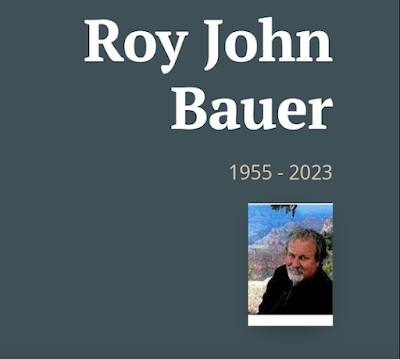
Roy's obituary in LA Times and Register: "we were lucky to have you while we did"
This ran in the Sunday December 24, 2023 edition of the Los Angeles Times and the Orange County Register : July 14, 1955 - November 20, 2...
-
 Professor Olga Perez Stable Cox OCC Trumpsters/GOP A professor called Trump’s election an ‘act of terrorism.’ Then she became the vict...
 -
 Richard O'Neill c. 1950 Richard O’Neill (1924-2009), a wealthy Orange County land owner, wanted the Democratic Party to be...
 -
 The "prayer" suit: ..... AS WE REPORTED two days ago , on Tuesday, Judge R. Gary Klausner denied Westphal, et alia ’s motion f...