Monday, February 28, 2011

February board meeting: "Corporate welfare!" fumes Fuentes

     (Check out Tere's highlights.)
     6:04 - Well, the meeting is supposed to start at 6:00, but there's no sign of any trustees here in the Ronald Reagan Board of Trustees Meeting Room here in beautiful Saddleback College. No doubt they're busy dealing with important business in their closed session. Back in a minute, I hope.
     6:18 - Just spotted the two rat-faced Jones Day lawyers leaving the building. They're the district's attorneys in "Westphal v. Wagner" (the prayer  case). Could it be that an announcement concerning the case is about to be made?
     Sorry, been jawin' with various varmints scattered about the room.

     (While we're waiting, lemme remind you about Westphal v. Wagner. When we last saw our heroes, they were goin' through complex litigation with various motions and such. The judge (we plaintiffs weren't very happy with him) did make a ruling. He judged that (1) Wagner's infamous 2007 Scholarship Award Ceremony "prayer"/rant crossed the line and was unconstitutional. (2) Mathur's stupid "Jesus/patriotism" video also crossed the line and was unconstitutional. (3) But, given the board's purpose, their "generic" prayers at commencement, etc., are constitutionally permissible (i.e., they don't constitute government action to "establish" religion).
     (You've got to understand that this kind of litigation doesn't comprise one simple cycle. Even a single cycle isn't really one cycle. You've got lawyers appealing some of a ruling while hangin' tight to another part, etc. In this case, there's the very real prospect of plaintiffs' appealing over that third element--and its likely they'll prevail. And then there's even the possibility of the board taking that ruling (i.e., if they lose) to the Supremes. That would take years. And big money.
     (Two or three weeks ago, despite simultaneously pressing for a settlement conference, the district announced (re the judge's ruling) that the district had "won." That was spin. Why push a settlement conference if you've "won"?
     (Back on the 17th, the settlement conference occurred. That's all I'll say for now.)

     HIDE NOR HAIR. OK, it's 6:33, and still I've seen neither hide nor hair of trustees. Brandye D is conversing with that guy "Dante" (I think he used to be one of the Belmonts), who came to the last meeting with some seriously wacky-sounding proposed financial whizzbangery in which the district sells itself ATEP, and then goes to dinner with itself. Or something. (I'll dig up my notes.) The guy's smooth, man. When he saw Brandye, he complimented her on her outfit. Good grief. Now, he's saying "anyhoo" and talkin' opera. I may have to move.
     6:41 - The room is buzzing with conversations. Quite a few suits here tonight--Dante (rather rumpled), and various other guys (yes guys). Lawyers? Financial gurus? Men in Black? Who knows.
     Somebody--no, I ain't sayin' who--came up to me and whispered his/her appreciation of my recent Don Wagner graphic--you know, the one with Don's nasty finger wavin' at some liberal. I turned that digit of his into an obscenely lengthy instrument, a probe. If Don saw it, he's pissed. But's he's eminently pokeworthy.
     6:47 - The trustees are out! One of 'em, anyway. Todd B is yuckin' it up; TJ Prendergast is walkin' around; Fuentes has appeared--looks pretty bad, I'm afraid. Bugay is smilin'. Meldau. Now The Nance. Things could start hoppin' pretty soon.
     6:52 - Two trustees still absent: Bill Jay and Marcia Milchiker. Don't know what it means. Sure hope those two were at the closed session. Aha! Jay just arrived. But where's Marcia?
     6:53 - they're all settled in up there--but no Marcia. It's getting quiet. A tomb. Sheesh.

     6:54 - RECONVENING -- Milchiker absent tonight. That's not good.

     Announcement of ACTIONS taken in closed session by VP Prendergast: nothing of consequence announced! (Nothing about Westphal v. Wagner!)
     Fuentes does the invocation: "almighty and eternal God," he says. He lays it on really thick. Mentions Ronald Reagan. "We remember him, Amen." That's what he said. Really.
     Former Saddleback College Prez Rich McCullough comes up for public remarks. Thanks various persons for a construction item (science building) tonight.

Board reports:
Jay: no report
Meldau: no report
Prendergast: attended "Astounding Inventions" event. President's Cup at IVC.
Padberg: attended "Astounding Inventions." Also President's Cup.
Fuentes: yammers about OC legislative task force. Blah blah blah. Fuentes invites one and all... to be looking for "cost cutting." Cost cutting ideas come from citizens, too. (He speaks to people in TV land.) Any ideas? "Call me, send me an email."
Lang: congratulates Saddleback's team. Mentions that Jim Gaston's been "seriously ill," but recently released from hospital.
Chancellor's report: Working with College Presidents on accreditation. A couple of upcoming issues of concern: 20/20 vision report for student success. Increase completions.

Lease/Leaseback: avoiding the "lowest responsible bid" millstone:

Discussion item (4.1) Project planning: construction delivery methods; lease/leaseback.
Bugay. Refers to Dante, I think. Brandye is up at the podium. Bugay praises, then introduces, her.
Some guy (Andreas?) comes up to explain Dante's odd whizzbangery. (It's no good; I ain't gettin' it.) He explains that this deal has been made at other colleges. Some kind of advantage over other ways of going about construction. It's flexibility, man. I like this guy's tie.
Poertner: bottom line, we are normally forced to go with the low bid, but that can really be problematic. Often the work done is unacceptable. This proposed process allows us to select contractors in advance, avoid others.  Naturally, we would want competition between contractors. Brandye says: would be a very competitive process.
Lang: asks a question about whether this approach circumvents the law. Andreas seems to have lots to say about that. This lease/leaseback thing is now "tried and true." For 15 years now, we've seen hundreds of projects--without the "lowest responsible bid scenario."
Lang: why haven't more districts taken this approach? Have there been problems? Andreas explains that there've been no problems at colleges, though some issues at K-12. Also, the Chancellor's office says its "appropriate," it's not an issue.
Any companies going bankrupt? Andreas: I haven't seen that.
Meldau: so this would speed up the process? Not necessarily, etc.

4.2: New Market tax credit program....

Fuentes: re "new markets" program. I've cautioned my colleagues about this, he says. This program needs "daylight." It continues to move forward, yet we've not had adequate open discussion with participation with the community. No dialogue in the public eye. There's been many articles about this program, some demonstrating scandalous problems across the country. [Fuentes seems to have difficulty continuing. He seems ill.] When I was a young man, growing up in OC, a student, we used to refer to Tustin as an important part of our community. People in Tustin had bumperstickers: "Tustin: the Beverly Hills of Orange County." People were very proud. Things have shifted a bit. A study of the "new markets" program under the Clinton Administration--was conceived to assist low-income communities. The ATEP project is in Tustin. We're playing a game here. It's a high-end development now (the part of Tustin where Marines were). I'm troubled we're contemplating participating in this kind of game. People have questioned "new market" moneys. High income areas have benefited. (Padbergg asks Fuentes to wrap it up; [it does seem clear he's making a speech]). We're putting the cart before the horse. This idea has not been shared enough with the community; too much of this has been done behind closed doors. "It's corporate welfare." It's to benefit the rich; it's a scam. This program is "unworthy," says Fuentes.

     Wow. This is a bit like Little Richard railing against flamboyance.

Prendergast: notes that there is a large section of Tustin that is low income. True, things have changed on the old base. But drive down between Redhill and Barranca, you don't see that kind of development. Wants to clarify that the area (ATEP) is indeed the low income area of Tustin.
Poertner: we've been struggling with the issue of how to pay for ATEP. We have talked about new market tax credits in this room half a dozen times at least. We're not trying to force these credits in a track that may not comply. This area does comply. It's an opportunity to get $18 million that we don't have to pay back. It will help the Tustin community, help the district. It's a good program to move forward with.
Padberg: it's about the base, not the city of Tustin. It's a run-down area.
Lang: asks for Dante Gumucio to come up and deal with these concerns. Respond to the "corporate welfare" charge.
Dante: it would be corporate welfare if no purchase were required. Lang disagrees. Dante responds: [I can't follow it.] In the case of ATEP, those who benefit are community college students at ATEP. Discusses the physical boundary of the project. The Census Tract. The poverty rate of residents in 2000 was 17%. (Fuentes makes one of his classic ugly faces.) This is 39% lower than median family income. The area qualifies as "highly distressed." Dante seems to make a strong case.
Prendergast: will this change with the new census?
Dante: my expectation: the easterly part will break off and the northern part is what we'll have. We'll still qualify. No guarantees. So, yes, there's a certain "expendiency" to trying to get this transaction finished by the middle of summer.
Fuentes: asks Chancellor: if we "rush into this," tie ourselves into this new markets program. Then we come to our senses and say, we shouldn't be spending money at ATEP. Should be spending at IVC, etc. What's our commitment?
Poertner: our commitment is to build the new building. We need to decide now.
Fuentes: there's too much that goes on in this district [of this kind]: we get sucked into obligations before we've thought it all the way through. (He's loud and perhaps angry. Trustees seem uncomfortable.)
6.14 New Markets tax credit transaction. Brokerage services agreement.

All but Fuentes vote for it. (Milchiker absent.)

[It already seemed circumstantially obvious that Fuentes is isolated on this "new" board--though he still seems to have the (occasionally reluctant) support of Lang. But tonight's meeting makes clear that Fuentes is very much isolated with regard to the ATEP issue. Fuentes has always been against ATEP. Poertner favors it at least as funded by this new tax thing. Other trustees seem to support it as well. I'm especially struck by how strongly Poertner went up against Fuentes with regard to this issue.]

6.13 Project schedule and basic aid assignment

Blah, blah, blah. Charts, numbers, etc. Brandye has a proposal. [I dunno what it is. You know me and fiscal issues.] Brandye sure looks like she knows what she's talking about. Big Smile, good shoes.
Prendergast asks if other building projects can qualify for the Lease/Leaseback..... [I'm not sure what the answer is.]
Jay motions to accept.
Lang: thanks Brandye for an excellent report. Does have a question about "budget reassignments."
Poertner: this ATEP money was set aside when we thought we needed to do that. Nothing on this list is something we are depending on for current operations.
Fuentes: asks about Bill Jay's motion. Fuentes asks to divide the question. Divide off item 2 (the ATEP item, I'll bet).  All but Meldau agreed to divide the question.
They vote on items 1 and 3 - unanimous.
They vote on item 2: all vote yes but Fuentes (no). (At one point Nancy snaps at Fuentes. Good fun.)

6.15

All vote yes except Fuentes, votes no.

Consent calendar:
pulled:
Lang: 5.8
Fuentes: 5.19 (Master Architectural Services)

5.19
Moved, seconded.
Fuentes: will vote "no" because of concerns of continued expenditure at ATEP. Doesn't reflect on esteem for gkkworks.
Lang: will abstain from voting on this item; did receive contribution from gkkworks.
They vote.

6.1 - passes unanimously
. . .
6.8
Fuentes nominates his boy Dave Lang for the Marian Bergeson award. Everybody goes along with that. Dave simpers. Nancy says something like, "good luck, fool. You've got lots of competition." (Well, maybe she didn't actually say "fool." But she thought it.)
. . .
6.10
Bill Jay seems to have issues about a couple of new IVC positions.  Gwen Plano answers most questions satisfactorily. Glenn chimes in. One position concerns veterans on campus. Bill wants to table "2 and 3." Bugay explains that one position involves removing one position to create another. Nancy chimes in to say that it isn't new money. Gwen explains that there have been negotiations with CSEA. We need to stay within our current budget, she says. Critical for accreditation. We have no one at IVC right now doing this work. Critical. No one offers a second to Jay's motion. So they vote on 6.10. Unanimous yes.

6.11 probationary faculty - tenure - passes unanimously.
. . .
Went through "reports," without comments--except 7.8.

7.8 Retiree (OPEB) Trust Fund
Lang asks for elaboration. Bugay asks to come back with report next time.
Fuentes: Gary, maybe provide comparative overview, with other districts in OC. We are proud to say that we have no "unfunded liability." Poertner: this does not deal with pensions. It's medical benefits owed to employees, etc. Not related to what you will call "pensions."  Fuentes: how do we match up compared to our colleagues? Could you come back with answers? Poertner: sure.

8.0 reports from constituent groups
Blah blah blah
Burnett: Congressman Gary Miller was on campus (oh good). "He's a wonderful man."
Me: No he isn't. He's a corrupt rat bastard. Get a clue, Tod.
Blah blah blah
Blah blah
Blah

9:12 - finis

Heads up: meeting of the SOCCCD board of trustees tonight

     Open session is set to start at 6:00 p.m.
     The agenda is available at the district website.

Sunday, February 27, 2011

"Inside Job" wins Oscar

‘Inside Job,’ Documentary That Skewers Banks and Economists, Wins Oscar (Chronicle of Higher Education)

     The Academy Award for Best Documentary Feature was presented Sunday night to Charles Ferguson and Audrey Marrs for the film Inside Job, about the causes of the 2008 global financial meltdown. In his remarks from the stage of the Kodak Theater in Los Angeles, Mr. Ferguson said: “Not a single financial executive has gone to jail, and that is wrong.” Mr. Ferguson, the film’s producer and director, wrote about the former Harvard president Lawrence H. Summers and the convergence of academic economics, Wall Street, and political power for The Chronicle Review last year.

gkkworks video, etc.


     A brief video about gkkworks, the firm helping our colleges with future construction planning. One of the firm's people appearing on screen (at 00:58) is David Hunt, who gave $500 to then-trustee Don Wagner's assembly race back in May.
 (See here
. Scroll into document.)
     Not that there's anything, um, wrong with that.
     Among the gkkworks projects flashing across the screen: ATEP.


     This video concerns the head facilities guy at the Los Angeles Community College District.

"Anyone who has remodeled a kitchen knows that there are always unanticipated issues"

LaVista
     The Reb and I have been doing some research into the Los Angeles Community College District Sustainable Building Program, and it’s HUGE. I’m amazed just at the number of firms cashing in—er, participating.
     You might try Googling “LACCD” and “construction,” see what you get!
     I came across an important "state of the district" letter from LACCD Chancellor Daniel J. LaVista, evidently promulgated just two months ago. It focuses on these construction projects (see Chancellor letter). The letter is remarkably upbeat about LACCD’s building program, though it does acknowledge the LA Times’ ongoing investigation (which resulted in the series currently running in the paper).
     In the letter, LaVista, who has been on the job only since August, explains that
I’d like to do two things: First, I’d like to explain my plan for the LACCD. Secondly, I’d like to give you an update on our incredibly successful construction program.
     Incredibly successful? Well, yeah, that’s what all those firms are saying too. Gosh, they're awfully positive about the whole dang thing!
     Here are a few of Dr. LaVista’s more memorable remarks (from that letter)*:

• Of course, anyone who has remodeled a kitchen knows that there are always unanticipated issues, and in a $6 billion construction program, we’ve had our share.

• The wise spending of taxpayer dollars is critically important, so we need to continue the strong management of this program….

• As many of you know, the Times has been looking into our building program since July 2009. When [former chancellor] Dr. [Tyree] Wieder sent her letter [announcing the investigation], we thought publication was imminent. Since then, we have been told many times that an article would be published any day. ¶ While the long and continuous investigation for more than 18 months has sometimes become a distraction from our core mission of serving the needs of our students and surrounding communities, we cannot deny the right of the Times to look into the spending of public monies.

Wieder
• Our construction program management team provides the necessary program, project and construction management expertise to properly manage the program and consists of District and consultant personnel selected from many of the best known and qualified firms in the industry. ¶ We have organized that management team with one set of consultant firms at each of the nine college locations where the construction takes place and another set at the District office to support the overall contractual, financial, and reporting of the program. [My emphasis.]

• Oversight is provided by a number of separate entities that report to the Board of Trustees and the District Citizens’ Oversight Committee, which is required by law to monitor bond funded construction. By law, the District is required to conduct regular independent audits…. The results of those audits have been uniformly positive, endorsing the effectiveness of our management, as well as demonstrating our willingness to look for and to make continuous improvements.

• The overall quality of construction on the program’s projects has been first rate.

• A few of our projects … have faced some challenges. Those were some of our very first projects, and on those the challenges have been resolved.

• We have thousands of construction, architectural, engineering and specialty firms working on our program. Sometimes they make mistakes or do not perform as well as we expect.

—Gosh, I've got an idea. It's kinda madcap. Maybe the community should look into all the money that's gone into the development of our own district's issue-laden kitchen remodel: ATEP!

Oops

Saturday, February 26, 2011

Is gkkworks involved in the LACCD mess?

     Re our earlier post about the incompetence, waste, and sleazitude of recent Los Angeles Community College District (LACCD) construction project(s):
     gkkworks, an Orange County firm, is assisting Irvine Valley College and Saddleback College in planning future construction. Some of us have asked: is gkk involved in the massive LACCD fiasco?

     That gkkworks has the LACCD among its clients is revealed here: gkkworks: clients (click on "clients").
     It could be that this relationship exists through CCS Group (and LHA, etc.). These firms were purchased by gkkworks in 2007. (See below.)
     On this page (click on "projects"; then "LACC capital outlay support"), one finds various gkk projects, including:
Los Angeles Community College District:
[gkk's] CCS Group has been advising the District on Facility Issues; Funding and Space Utilization to assist them overall with their bond and capital outlay programs. CCS Group provides support to individual colleges as well as to the District. CCS Group completes Final Project Proposals, Five-year Construction Plans, Initial Project Proposals, and facilitates Master Planning and serves as Chancellor Office Liaison. We continue to assist various colleges within the District to align bond projects with established goals and objectives. Reference: Larry Eisenberg, Executive Director of Facilities
     I found the following OC Reg article, from nearly four years ago, reporting gkk's acquisition of CCS Group and LHA, two names that come up in various sites I have come across when Googling* "gkk LACCD":
Gkkworks in Irvine buys CCS Group (OC Reg; 7/20/07)
     Gkkworks, an Irvine architecture and construction management firm, said today that it has bought CCS Group in Sacramento.    
     Terms of the deal were not disclosed. Gkkworks has 270 employees in nine offices. CCS has 20 employees and specializes in community college projects. CCS President Shaun Blaylock will remain with the company in charge of the Sacramento office.    
     It is gkkwork’s second acquisition in the past year. It acquired the Glendale architectural firm of Leidenfrost Horowitz & Associates Inc. [LHA] last July.
THE UPSHOT: gkkworks, which now owns CCS, seems to be involved in the bond and capital outlay programs that have gone so wrong for LACCD. And our district is currently relying on the same company to plan its construction projects.
     That the LACCD construction programs have gone badly may well be the fault of other parties than gkkworks (and the companies that gkkworks has acquired).
     Still, it is fair—and it is important—for us, in the SOCCCD,  to ask: does gkkworks have any share in the blame for the LACCD fiasco?

*See:

☁ Community college construction projects can go very, very wrong

     Today's Times article about the stunning waste and abuse involved in a massive construction project for the Los Angeles Community College District is well worth reading in full. Some excerpts below.
     (7:05 p.m.: Based on a reader suggestion, I Googled gkk & LACCD and found numerous connections, including projects related to measure J, referred to in the Times article. gkk is currently working with Irvine Valley College, helping the college plan its future construction. I'll let you know what I come up with. Obviously, that gkk was/is involved in recent LACCD construction does not imply that they have been guilty of anything.)

Waste throws wrench into Los Angeles community colleges' massive project (LA Times)

     The effects of decades of neglect were all too visible at the nine far-flung campuses. Roofs leaked. Furniture was decrepit. Seismic protections were outdated.
     In 2001, leaders of the Los Angeles Community College District decided to take action. With support from construction companies and labor unions, they persuaded voters to pass a series of bond measures over the next seven years that raised $5.7 billion to rebuild every campus.
     The money would ease classroom crowding. It would make college buildings safer. New technology would enhance learning. And financial oversight would be stringent.
     That is what was promised to Los Angeles voters.
     The reality? Tens of millions of dollars have gone to waste because of poor planning, frivolous spending and shoddy workmanship, a Times investigation found.
     Bond money has paid for valuable improvements: new science buildings, libraries, stadiums and computer centers. But costly blunders by college officials, contractors and the district's elected Board of Trustees have denied the system's 142,000 students the full potential of one of California's largest public works programs.
     This picture emerges from scores of interviews and a review of thousands of pages of district financial records, internal e-mails and other documents.
     At East Los Angeles College, construction of a grand entry plaza with a clock tower degenerated into a comedy of errors. Heating and cooling units were installed upside down, inspectors found. Concrete steps were uneven. Cracked and wet lumber had to be torn out. A ramp for the disabled was too steep for wheelchairs, and the landmark clock tower listed to one side.
     Fixing the problems helped drive construction costs from $28 million to $43 million.
     A new health and science center at Valley College was marred by defective plumbing, cracked floors, leaky windows and loosely attached ceiling panels that threatened to crash down in an earthquake.
     The district paid a contractor $48 million to build the complex, but had to hire others to correct the problems and finish the project — for an additional $3.5 million.
     At least those buildings were finished, eventually. At West Los Angeles College, officials spent $39 million to design and begin construction of four major buildings, only to discover that they didn't have the money to complete them.
     Just as crews were starting work last summer, the projects, including a $92-million athletics center, were abandoned.
     "This is astounding," said David Beaulieu, president of the District Academic Senate. "How could this have happened?"
     At Valley College, workers renovated a theater complex, installing new seats, lighting and sound equipment in time for a 2009 student production of "Alice in Wonderland." But even before the $3.4-million job was done, officials decided to build a new theater complex. The renovated one is slated for demolition.
     "I think it's obscene, given what's going on in this economy," said Pete Parkin, former chairman of the theater department. "It's mind-boggling."….
. . .

     By the 1990s, however, many campus buildings had fallen into disrepair. So in 2001, the board placed before voters a $1.2-billion bond measure, followed by another for nearly $1 billion in 2003.
     Both passed by wide margins.
     In one respect, trouble was inevitable: Voters had put $2.2 billion under the control of seven of the region's most obscure elected officials. They would be spending it with almost no public scrutiny — despite their promise of "strict oversight" by a citizens committee.
     Nearly all of the trustees are longtime players in local politics. To fund their election campaigns, waged largely by mail, they typically solicit donations from college administrators, unions and contractors.
     Voter approval of the construction program opened a spigot of new campaign money by turning the trustees into powerful figures in the world of California public works. All but one of the trustees — Tina Park — have accepted donations from builders, architects and engineers who have won contracts from the board, records show.
. . .
     By 2007, it was clear that the $2.2 billion in bond money would run out long before the district had finished all the projects on its list. The trustees decided to go to voters once more, this time with the biggest bond measure of all — a $3.5-billion proposal, Measure J, on the November 2008 ballot.
     Contractors put up nearly two-thirds of the $1.9 million raised for the ballot campaign. Measure J passed with 70% of the vote, more than doubling the size of the construction program.
     Taxpayers will be repaying the debt until at least the 2050s. With interest, the bill is likely to exceed $11 billion.
     Overwhelmed by the program's scale, the trustees mostly let [construction chief Larry] Eisenberg run it as he saw fit.
     "He was in charge of everything, all the money," said former Pierce College President Thomas Oliver. "Because the district wasn't good at building anything, everybody kind of followed his lead."
     Eisenberg played to the trustees' thirst for recognition, pursuing construction awards that they liked to publicize. Even after problems spilled into the open — such as the loss of several million dollars when a financing plan for solar power projects collapsed — the trustees rarely questioned his leadership.
. . .
     By Eisenberg's account, the program has been "remarkably clean in terms of relationships and ethical behavior and those kinds of things."
     But district leaders have not hesitated to help family members land jobs, The Times found.
. . .
     After Times reporters began asking questions about waste, construction errors and other problems, the trustees in November 2009 commissioned a special audit of the program by a management consulting firm, Capstone Advisory Group LLC.

. . .
     In addition to the Capstone audit, the district ordered a review of the program by its bond counsel, Fulbright & Jaworski. The law firm reported that millions of dollars in bond money had been spent in violation of state law.
     The money went, among other things, to public relations, food, travel and aerial photography for promotional videos. The law allows bond spending only for construction and the purchase of property or furniture.
     The law firm's review led officials to lay off at least 15 people, including a woman whose main job was to book speeches for Eisenberg and the trustees. Also dismissed was an avant-garde Swedish photographer hired to take what one official, in an internal e-mail, called "glamour shots" of new buildings.
     In theory, such excesses should have quickly been flagged. In all three ballot measures, the district had promised that a citizens committee appointed by the trustees would rigorously monitor spending. But the panel was starved for money, staff and information and failed for eight years to file annual reports to taxpayers, as required by law, Fulbright & Jaworski found.
     James Lynch, chairman of the committee from 2006 to 2009, said of the construction program: "Quite honestly, it was run so well that it would be a model for any place."
     Lynch, a former chief executive of the Beverly Hills, Santa Monica and Century City chambers of commerce, said he had heard nothing about construction errors, misspending or nepotism. "It seemed like everything was pretty transparent."….

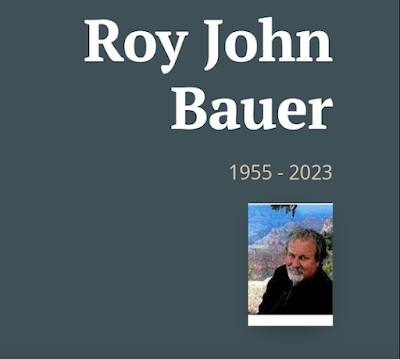
Roy's obituary in LA Times and Register: "we were lucky to have you while we did"

  This ran in the Sunday December 24, 2023 edition of the Los Angeles Times and the Orange County Register : July 14, 1955 - November 20, 2...