Saturday, November 27, 2010

Yes, there'll be no climate disaster, "for the Bible tells me so"

SCIENCE RESEARCH FUNDING. Physicist Bob Park (What’s New) has gloomy news about federal science funding: it will be cut between 5 and 10%. So says Alan Leshner of Science magazine, who notes that the case for adequate science funding—it is necessary for the U.S. to keep competitive with other nations—was made by Rising Above the Gathering Storm and Rapidly Approaching Category 5 (U.S. National Academies).

     SCIENCE AND EARMARKS. Bob also notes that Congressional “earmarks,” those sneaky expenditures that are not openly discussed and voted upon, are almost as old as Congress itself and have been “a principal means of funding sewers and other water projects.” Hence, three days after House Republicans voted to ban the practice, one of earmarking’s most vocal critics, John Kyl (R-Az), “slipped a $200 million settlement for Arizona Indian water rights claims into an unrelated bill.”
     That’s right. That’s an earmark.
     There have been earmark scandals concerning scientific research. Bob tells of
a Washington lobbying firm specialized in obtaining large earmarks for federal scientific research grants to specific universities in the decade from 1984 to 1994. The work often failed to measure up to the standards of the funding agencies, and the money was often diverted to other uses, seriously undermining the stature of federal research awards. The [American Physical Society, of which Bob is a member] was the first science organization to expose the earmarking practice and continued to expose … science earmarks.
     THE REPUBLICAN WAVE OF ANTI-SCIENCE. Speaking of wacky Congressional Republicans, Bob zeroes in on Rep. John Shimkus (R-Ill.), a member of the House Committee on Energy and Commerce since 1997:
     He submitted a letter to his colleagues earlier this week asking for their blessing in his campaign to assume the gavel of Energy when Republicans take control of the chamber.
     Shimkus rejects the possibility of man-made climate disaster. [He asserts that] "The Earth will end only when God declares it’s time to be over. Man will not destroy this Earth. This Earth will not be destroyed by a Flood."
     Shimkus then quoted God's promise to Noah after the flood: "Never again will I destroy all living creatures as I have done" (Genesis 8:21-22).
     "I do believe that God’s word is infallible," Shimkus said, "unchanging, perfect."


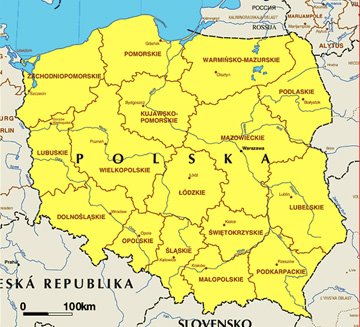
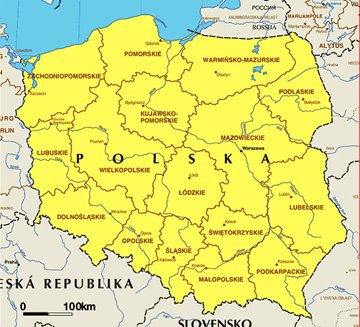
Map of Poland--and Chunk's mom' story, pt. 1

This, of course, is a map of modern Poland. The borders of Poland throughout history--well, that's a seriously messy and violent subject. I won't go into it.

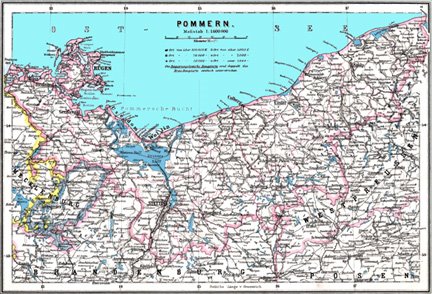
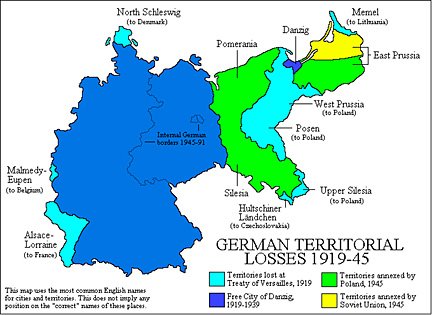
For a long time, regions of what we now know as northwestern Poland were German. Pommern (Pomerania) was among these regions. (See map.)

As Nazi Germany collapsed at the end of World War II, the Soviet forces invaded from the east, raping and pillaging. (See Red Army atrocities.) Civilians were ordered to flee to the west, and few remained. Many men--usually elderly--who remained, including one of my relatives, were killed. Almost all women were raped. See Every German female raped.

After the war, Pommern, renamed, was a part of Poland.
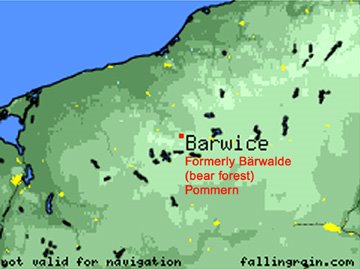
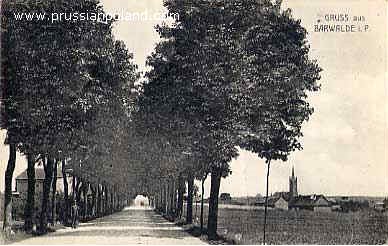
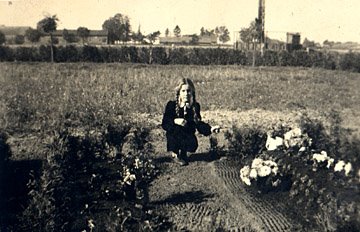
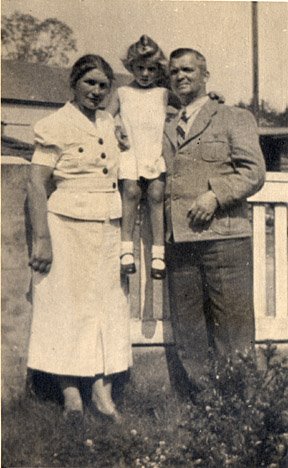
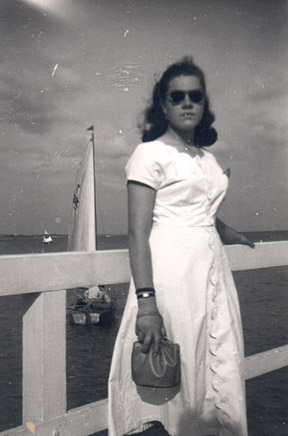
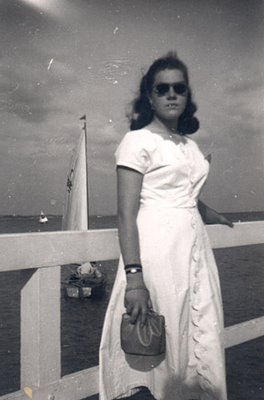
Until the "Russian" invasion of 1945, my mother lived in the town of Bärwalde ("bear forest"), Pommern. There were two towns in Pommern by that name at the time, and I do believe that my mother's town--her stepfather was its mayor until his death in 1939[?]--is now named Barwice.
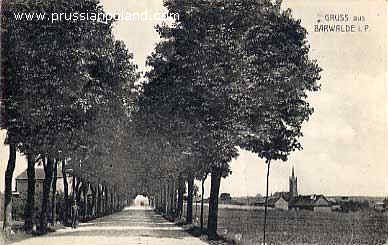

In 1945, mom, then 11 years old, and her mother (actually, her aunt) fled west by rail, ending up in Hamburg, which was ultimately occupied by British forces. At one point as they planned their escape, the pair were faced with the choice of rail or ship (further north), including the 550-foot von Steuben. They chose rail. Their train was among the few that survived strafing by Russian aircraft. They were extremely lucky.

The Steuben was filled beyond capacity with 5000 people, including over 1000 refugees, almost all women and children. It was sunk by a Russian sub on Feb. 10. There were 659 survivors. (See National Geographic: Ghost Ship Found.)


Germans (correctly, near as I can tell) viewed the British and American invaders as much more humane than their Russian counterparts. Mom was very happy to settle in what became the British sector of post-war Germany.

She watched lots of American movies. She got the notion that she must go to America and become an American. Simultaneously, my father, in southern Germany, hatched similar dreams.

She eventually became an American citizen (during the mid-60s). Nobody's more American than my mom.

She voted for Bush, but we don't talk about that.

THE MORE DETAILED VERSION OF MOM'S STORY:

What follows is an account of the war and post-war experiences of Manny and Edith Bauer, based on taped anecdotes recorded in the summer of 2004. Manny and Edith were children at the time of the war’s end (his birthdate is 1932; hers is a year later), and they left Germany for Canada only a half-dozen years later, when Manny was 19 and Edith was 18 (she turned 18 on the boat). The two married not long after. Eventually, Manny and Edith moved their little family (including a girl and boy) to the U.S.A (in 1960).

I have generally resisted the temptation to editorialize about, or to correct, my parents' (usually my dad's) perceptions and historical assertions. I am telling the story essentially from their point of view. (--RJB aka CW.)
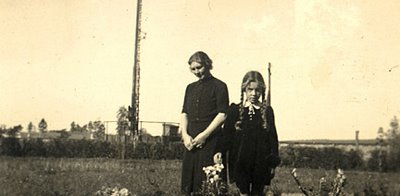

The Russians were coming:

By early 1945, the collapse of Germany had begun, and, in the eastern part of the country, the Russians advanced. Manny [my dad] states that the “Mongolians” were by then the vanguard Russian troops. “The Soviet Union had run out of white Russians,” he says. “So the Russians brought in the Mongolians.” These troops, he says, were even more brutal than the Russians.
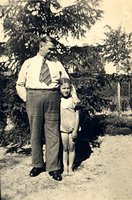
Edith, who was 11 or 12 years old, lived with her mother in Pommern, in the eastern part of Germany. The woman Edith calls her mother was in reality her aunt, who, along with her husband, took Edith in when her real mother died in the late [?] 30s. [Her death is somewhat mysterious.] In 1939 or perhaps later, her uncle died as well. Edith was very close to him.

In those days, in Germany, no child was legally permitted to be without two parents, and so, when Edith’s uncle died, the town’s chief of police—a family friend—was assigned the role of father-guardian.

At the time of her real mother’s death, Edith’s sister, Ilsa, was sent to live with other relatives nearby.

Edith recalls that Ilsa was somewhat “gung ho,” a patriot. So was Edith, in a way, she now says, for she was an avid athlete, an ardent competitor, and, as we know, the Nazis promoted athletics. Edith remembers attending the 1936 Olympics in Berlin. She loved that sort of thing.

Ilsa’s “gung ho” tendencies got her into trouble with her family at least once. Polish prisoners were supposed to stand aside on sidewalks in deference to Germans. One time, evidently, a Polish prisoner did not stand aside quickly or far enough to satisfy young Ilsa, and so she angrily pushed the guy onto the ground. Someone saw this and reported it to Oma [Grandmother] Losa. There was hell to pay that night.

The family was very clear that they were not the sort to mistreat the Polish prisoners.
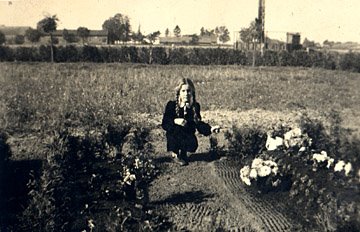

In the days before the Russian invasion, Ilsa moved in with Edith and her mother. They lived in a beautiful home on a hilltop—the last house on the eastern side of town, and thus the dwelling that would first encounter the advancing Russians. Already, local soldiers occupied it: ammunition and weaponry was stored in the garden, and men were billeted inside. Now, as the Russians drew close, the local soldiers selected this particular home for their defensive stand.

“It would be like a fort,” says Edith.

Edith’s mother stubbornly refused to abandon her home, protesting, repeatedly, that she had worked too long and hard on it simply to abandon it. The soldiers tried to tell her what the Russian troops would do to women, even to little girls, but she wouldn’t listen. Finally, the soldiers commanded: “Take the two girls and leave here, now!” And so, on the 28th of February 1945—Edith recites the date without hesitation—Edith, her “mother,” and her sister, along with several relatives, abandoned their fine home.
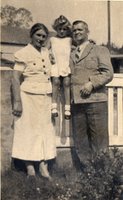
Most of Edith’s relatives lived on farms and thus owned wagons, but Edith and her mother lived in town, and they lacked transportation. The soldiers told them to go the railroad station to await the westbound military trains, so Mom and the girls and a few other relatives packed their most cherished belongings in suitcases and put them on a little wagon—Edith remembers that it was like the little red wagons kids have here in the U.S.—and rolled their stuff to the station.

They waited there for days, enduring strafing and bombing. Edith remembers the siren’s howl and the noise of bombs and guns. At one point, the station [?] suffered an attack that killed fifteen hundred people, including most of their neighbors and relatives, who were also waiting for the trains. (Apparently, German papers ardently covered such events.)

Finally, the trains arrived, and so the refugees hurriedly secured possessions, and themselves, to the open flatcars. Then, at the end, there came another attack. Some people hid by the flatcars, while others dove under nearby wagons. Edith ran clear of the trains and into a hole somewhere. All of a sudden, a portion of one train blew up, killing everyone aboard it.
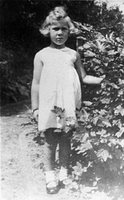
Edith remembers that, about then, the engineer of her train yelled, “the Russians are closing in on all sides; everybody get on the train; we’re leaving now!”

The engineer was a Pole. Polish prisoners had worked and lived in the town since the invasion of Poland years earlier. People from conquered territories manned much German industry during the war, and, evidently, they did other work as well. Edith recalls that Polish women and girls worked as domestics in her town.

Edith’s mother ran the family lumberyard across the street from their home, and that business relied on thirty or so Polish workers who slept on bunk beds in a barn-like structure. Edith says that her mother prided herself in treating her prisoners with kindness, and, in general, prisoners were not mistreated in the town, though she recalls exceptions.

Manny explains that, on the eastern front, many “German” soldiers were in fact Poles, Ukrainians, and Finns who had decided to join the Wehrmacht [army]. They wore the regular German army uniform, but with a thin armband indicating their non-German nation of origin. (Manny lived in southern Germany.)

Evidently, during the Russian advance into collapsing Germany, some Poles stayed, hoping to be embraced by their new masters; others feared the Russians no less than did the natives and, alongside Germans like Edith and her little group, they fled to the west. Many Poles thus eventually ended up in barracks-like housing—at first, along with German refugees—in what became West Germany, and lived in those conditions well into the 50s.

Edith says that the non-German refugees were often mistreated, though she adds that the German refugees, too, were not treated well, since, wherever they showed up, they represented an added burden on already burdened locals.

Some of Edith’s relatives, including Oma Losa, didn’t make it out of Pommern. Later, Edith learned that the younger girls who remained behind—not Oma Losa, who was older, but virtually all of the younger women, including toddlers—were raped. That was the fate of Edith’s sister-in-law, Frida. Years later, says Edith, Frida refused to acknowledge the event, though what had happened to her was no secret at the time. There was no doubt that it had occurred and that it was traumatic.

The invading soldiers had diseases, and so, says Edith, it was necessary for rape victims to do all sorts of awful things to themselves. Terrible bubbling liquids were used, she says.

Frida was raped, but her husband was killed. He had worked for the diplomatic service, and, when the Russians entered and ransacked his and Frida’s home, they found pictures of him in uniform with his ribbons and medals. They assumed that he was a dignitary, an official. He had built a hiding place behind a false wall, and he and Frida were there when the Russians entered the house; but these Russians were no fools: they tapped on the walls and found the two. They dragged Frida’s husband to the front of the house and hanged him there.

Edith’s little group of refugees learned these terrible facts only later; they learned about the rapes and killings and about the burning of all the homes of the neighborhood; they learned, too, that all the younger people were forced by the Russians into work camps.

For some reason, says Edith, after about two years, the Russians allowed Germans to leave, and so they did, traveling west. That was before the Wall had been erected to prevent emigration.

During that exodus and before, people were scattered throughout the country and had no way to find each other. Agencies such as the Red Cross organized efforts to reunite family and friends. Thus, they would announce that former citizens of town X were to meet in town Y at a certain date. People arrived there, carrying signs with their names on them. This went on for years.

Edith remembers one day—this was years later, when she lived near Hamburg—coming home from work and noticing the smells of cooking wafting from her family’s small apartment. She was alarmed, for she knew that, at that moment, her mother and sister were elsewhere. When she entered, she was astonished to find that the mystery cook was none other than her Oma Losa!

Manny hastens to add that, before Edith and her group left Pommern by rail, they had the option of travelling north, instead, to a Baltic harbor, where a ship awaited refugees. But travel by ship would mean abandoning various larger things that they hoped to take with them. Edith’s mother therefore insisted that they take the train.

That was fortunate: later, they learned that the Russians sank that ship, killing most on board. [After this taping session, my father read an issue of National Geographic that described the sinking of the Steuben. I have done further research, and it appears that three refugee ships (part of a massive evacuation project) were sunk by a Russian sub at about that time, killing perhaps 20,000 people. It is possible that the ship that my mother almost boarded was one of the other two.]


Life as refugees:

So Edith’s little group, unlike so many others, did manage to escape to the west, to the area near the western port city of Hamburg. As Edith recalls, the area was at first controlled by the Americans, and then the British.

The Allied soldiers weren’t nearly as cruel as the Russians, but they were no angels. Rape was fairly common—it tended to happen to incautious “bad girls,” says Edith—and theft and ransacking were routine. Soldiers would regularly rifle through refugees’ suitcases and simply take what they wanted. Anyone who owned something of value—say, a radio—removed essential parts so that it didn’t work, hoping that that would deter theft, though Allied soldiers often simply smashed “broken” things.

Americans also tended to destroy anything that sported the Swastika, even though much that had no special connection with Nazism adorned with that symbol.

One had to be careful around Allied soldiers, to not be caught alone and in a quiet place with them. British soldiers seemed to be relatively decent and reliable compared to the Americans.

Edith remembers that many of the American soldiers who drove the trucks were black. She had never seen a black person before that.

Edith and Manny express disapproval at the misconduct of invading or occupying soldiers. German troops, says Manny, faced severe penalties for abusing civilians in occupied territories. Rape was especially forbidden in occupied territories, Edith explains, owing to the importance the Nazis placed on German racial purity. (One hopes that that was not the sole reason for the prohibition!)

Manny remembers that an older German friend named Karl—Manny met him years later, in Canada—was for a time thwarted in his efforts to emigrate, owing to a problem with his German military record. As a Wehrmacht soldier in Italy, some of Karl’s colleagues had taken firewood from a peasant, and the episode was duly noted as a black mark in Karl’s German military record!

Unfortunately for Karl, says Manny, the German army took a dim view of such misconduct relative to civilian populations.

Manny and Edith evidently detect no irony in the fact that, as they say, Germany applied high standards of conduct to its soldiers relative to the treatment of people. [To this day, my parents seem to view the Nazi atrocities that were revealed after the war as utterly strange, as though they were not a part of the Germany in which they lived.]

* * * * *
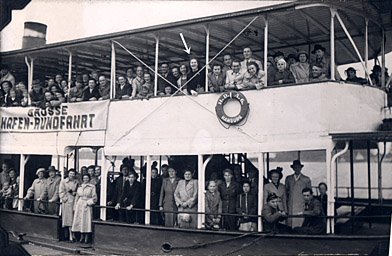

Edith’s arrival in Hamburg was no picnic. She and her small group were taken straight from the train to a large gymnasium—a kind of regional sports center, with wooden flooring. They were kept in that place with nothing to do for maybe two months.

Edith remembers how local families were forced to share their houses and apartments with the refugees, and this, along with other sacrifices in that time of scarcity and poverty, inspired strong anti-refugee feelings.

“They hated us,” she says, referring to the locals. She recalls when, during any icy February, soldiers came and ordered everyone in a neighborhood outside. Housing was then reassigned and people would be forcibly relocated and separated from their friends. Such events especially caused bitterness toward refugees.

Edith recalls curfews and the importance of carrying one’s papers on one’s person at all times....
Friday, November 26, 2010

Thanksgiving Tom

Trustee Tom Fuentes is not happy

Carol Sobel on the case (but the 1st Amendment takes a hit)

“You don’t like to be told you are a fascist or a racist or a sexist, but those are statements of opinion . . . This case is an attempt by a large corporation to silence a small group of former employees and their advocate.”
     —Nativo Lopez attorney, Carol Sobel*

From Split decision in Overhill Farms case has chilling free-speech implications, dissenting justice asserts, OC Weekly/Moxley Confidential
     The third justice on the panel, Richard D. Fybel, dissented.
     “My colleagues in the majority have incorrectly made this court the first state or federal appellate court in America, ever, to hold that the epithet ‘racist’ constitutes a provably false assertion of fact as the basis of a claim of defamation,” wrote Fybel. “The employees’ claims might not be persuasive . . . that does not make them defamatory.”
     Fybel suggested the First Amendment had been weakened: “To illustrate this point, would it be actionable if the Los Angeles Times, the Orange County Register, Fox News or MSNBCcomplained that the actions by anyone were ‘racist’ or ‘discriminatory’? Of course not. Employees complaining about their employer enjoy the same protection.”
*Carol Sobel has served as the 1st Amendment attorney in a several successful lawsuits against our district.

Thursday, November 25, 2010

Never listen to those fools at the CCLC


     Our district—the SOCCCD—pays the “Community College League of California” (CCLC) $36,000 a year in membership dues. Evidently, all 72 of the state’s CC districts pay their share and are members.
     I’m not sure how the board feels about the CCLC. Once in a while, some trustees grumble about some of the district’s memberships, but I’m not sure if they’ve carped about CCLC in particular. In any case, some board members have connections with the CCLC, and some have even been CCLC officers (including John Williams, I think; no doubt he got a trip to Orlando out of it).
     I recently visited CCLC’s website and came across some interesting info. For instance, the organization offers advice about trusteeship (here), including “What Being a Trustee is Not.” Ready?
     You have no personal authority as an individual trustee. ... Individual trustees do not direct college staff or programs.
     Being a trustee is not a paying job, although state law permits a stipend for board service. Trustees rarely have offices; staff support is for the board as a whole. Being a trustee is a public service—a gift of individual talent, experience, knowledge, energy and time....
     Trustees should not use the board to focus on single interests [e.g., the Bible-totin’ Booboisie] or the needs of employee groups [goddam unions]. While those interests are important, trustees are there to represent the common public good. The board is not a platform for individual campaigns for future public office….
     Something tells me that Don and Tom (and John and Quisling Boy) don’t agree with CCLC about trustee NOTitude. —Or they agree, but they've opted for being wicked is all.
     Imagine Don Wagner’s “Complete Idiot’s Guide to Community College Trusteeship.” His “5 crucial tips” might be:
  1. Yell down opponents and recalcitrants, even Marcia, until they shut the f*ck up.
  2. If yelling doesn’t work, glare at ‘em as if you’re contemplating violence.
  3. Never apologize, but pledge to the flag and pray often and noisily.
  4. Don’t hire that bastard Raghu P. Mathur.
  5. Don’t listen to those fools at the CCLC.
     CCLC "TALKING POINTS": Boy, those CCLC people sure are opinionated! Check out their responses to “Common Criticisms” (I’ve excerpted from lengthier responses). To me, these responses sound like political "talking points":

Too many trustees turn the office into a full-time job, becoming inappropriately immersed in the internal operations of the college.

Horror story
“Of the 435 elected trustees serving on the boards of the state’s 71 community colleges districts, there are trustees who take the job so seriously and who are so committed to helping their districts that they sometimes do become involved in activities better left to college administrators. But this number is very small and certainly does represent a significant statewide problem. It gets a great deal attention, however, because anecdotes—or ‘horror stories’—about a handful of trustees get spread statewide and are repeated often.”

Too many candidates supported by special interests such as employee unions are elected to boards of trustees, thus giving these groups far too much influence on the boards and creating roadblocks for innovation and change.

“It is true that district boards have been criticized for being under the influence of employee unions. It is also true, however, that boards have been criticized for being unresponsive to employee unions.”

Look for the union label
It is not appropriate to have a K-12 governance model imposed on a collegiate institution.

“There is an unspoken assumption in this particular criticism that any connection to K-12 education is demeaning to a higher education system. In fact, California’s 90-year system of community college governance, with its emphasis on the leadership of locally-elected boards, has been replicated throughout the nation.”

Local boards are responsible for the rapid turnover of community college [CEOs], which has led to a breakdown in leadership and effective management.

“In any organization there will arise, from time to time, conflict over goals, processes or priorities that result in disagreement and difficult relationships between individuals…. ¶ Some boards and CEOs do have a difficult time working together. Some CEOs have poor communication or leadership skills [yeah, or they’re just rat bastards]. Some boards lack good judgment when selecting a new CEO or when working with the CEO.”

Orlando Boy
The notion of community service has been lost. Trustees are provided generous financial compensation as well as health and life insurance benefits.

“Very few trustees are wealthy. To some degree, receiving compensation allows trustees to spend the time necessary to undertake their significant responsibilities. The compensation received equals very low wages when divided by the hundreds and hundreds of hours required to do the job.”

Elections of community college trustees are a sham. Only a small percentage of voters actually cast ballots for trustees. They do not truly represent the people.

“Board members … do everything in their power to encourage voters to participate in the democratic process. In some district elections, tens of thousands of voters, even hundreds of thousands of voters, turnout for the community college board election. In some, very few people turn out. Low voter turnout is a much broader societal issue. ¶ But whether a lot or a few, the successful candidate received, in the end, the endorsement of local voters—something an appointed board can never claim.”

Community colleges operate under an incompatible finance and governance structure. The state pays a majority of the bills and locally-elected boards make a majority of the decisions.

“In many of our own personal lives, someone else decides our income level but we make the decisions about how to spend that income. Sound decision-making does not require those who control the revenue level to be the same as those who decide the expenditure levels. In truth, proponents of this argument are advocates of the political Golden Rule: ‘He who has the gold, rules.’ That does not equate with sound education judgments.”

Deregulation is good, evidently.
A rigid, state-determined finance system is imposed on campuses that are locally governed and administered, causing conflict and preventing cooperation and coordination.

“In other sectors of our society and economy, deregulation has fueled creativity and innovation [and massive taxpayer bailouts]. In the community colleges, however, decisions that should be left to locally-elected board members and educators are often pre-empted by State law and regulation.”

The community colleges’ historical vestiges with California’s public elementary and secondary schools continue to be evident in several ways and contribute to the perception that it is not an equal partner in California higher education.

“As the [1960] Master Plan made clear, the three systems of higher education are intended to accomplish complementary but unique missions. The mission of the community colleges is not to be a world-renown research university…. The community college mission is, however, of equal value to the residents of this state and, according to public opinion polls, more highly regarded than either UC or CSU.”

If community colleges were governed by centralized boards like the University of California and the California State University, they would be much more prestigious institutions.

“‘Prestige’ is an issue that rests squarely in the mind of the beholder. Universities as diverse as Harvard and Cal State, Hayward are often considered by academicians more ‘prestigious’ than community colleges because of their student body, the degrees held by faculty, the degrees awarded by the institution, their research mission and the visibility of successful faculty and alumni.”

Organizing community college districts under a state board would allow districts to cut back on administration and put more money and resources into the classroom.

“There is no evidence that implementing a single state board governance structure would reduce administrative costs.”

P.S.: CCLC has a handful of corporate partners, including the big law firm of SOCCCD attorney Warren Kinsler: Atkinson, Andelson, Loya, Ruud & Romo. The notorious Capo Unified School District also retains this firm. Another corporate partner: Keenan & Associates--also retained by the SOCCCD.

Higher education as a deeply uncivic project

 
"I think it would be a good idea."
     —Mahatma Gandhi, when asked what he thought of Western civilization

     A friend sent this article (see below) my way.
     I’m no Marxist. I am less impressed by Freire and Giroux’s radical theorizing than my friend.
     On the other hand, I recognize that huge changes are afoot, and, in the absence of leadership, education in this country is becoming far more hollow than it has already been. I am amazed by the trends and the forces at work—and, as usual, by the general stupor of Americans and their educators.
     Good grief.
     I do wish radicals would abandon their religion and then learn to speak more plainly.* Still…
Lessons to Be Learned From Paulo Freire as Education Is Being Taken Over by the Mega Rich (Truthout)

Henry A. Giroux

     At a time when memory is being erased and the political relevance of education is dismissed in the language of measurement and quantification, it is all the more important to remember the legacy and work of Paulo Freire. Freire is one of the most important educators of the 20th century and is considered one of the most important theorists of "critical pedagogy" – the educational movement guided by both passion and principle to help students develop a consciousness of freedom, recognize authoritarian tendencies, empower the imagination, connect knowledge and truth to power and learn to read both the word and the world as part of a broader struggle for agency, justice and democracy. His groundbreaking book, "Pedagogy of the Oppressed," has sold more than a million copies and is deservedly being commemorated this year – the 40th anniversary of its appearance in English translation – after having exerted its influence over generations of teachers and intellectuals in the Americas and abroad.
     Since the 1980s, there have been too few intellectuals on the North American educational scene who have matched Freire's theoretical rigor, civic courage and sense of moral responsibility. And his example is more important now than ever before: with institutions of public and higher education increasingly under siege by a host of neoliberal and conservative forces, it is imperative for educators to acknowledge Freire's understanding of the empowering and democratic potential of education. Critical pedagogy currently offers the very best, perhaps the only, chance for young people to develop and assert a sense of their rights and responsibilities to participate in governing, and not simply being governed by prevailing ideological and material forces.
     When we survey the current state of education in the United States, we see that most universities are now dominated by instrumentalist and conservative ideologies, hooked on methods, slavishly wedded to accountability measures and run by administrators who often lack a broader vision of education as a force for strengthening civic imagination and expanding democratic public life. One consequence is that a concern with excellence has been removed from matters of equity, while higher education – once conceptualized as a fundamental public good – has been reduced to a private good, now available almost exclusively to those with the financial means. Universities are increasingly defined through the corporate demand to provide the skills, knowledge and credentials in building a workforce that will enable the United States to compete against blockbuster growth in China and other southeast Asian markets, while maintaining its role as the major global economic and military power. There is little interest in understanding the pedagogical foundation of higher education as a deeply civic and political project that provides the conditions for individual autonomy and takes liberation and the practice of freedom as a collective goal.
     Public education fares even worse. Dominated by pedagogies that are utterly instrumental, geared toward memorization, conformity and high-stakes test taking, public schools have become intellectual dead zones and punishment centers as far removed from teaching civic values and expanding the imaginations of students as one can imagine….
*And, no, I don’t mean more simply.

Wednesday, November 24, 2010

Golden Oldie: an aerial tour of the SOCCCD


Music:
   "Dawn is a Feeling," Moody Blues (1967)
   "Chances Are," Bob Marley (1968)
Created on Google Earth by R. Bauer

Roy's obituary in LA Times and Register: "we were lucky to have you while we did"

  This ran in the Sunday December 24, 2023 edition of the Los Angeles Times and the Orange County Register : July 14, 1955 - November 20, 2...