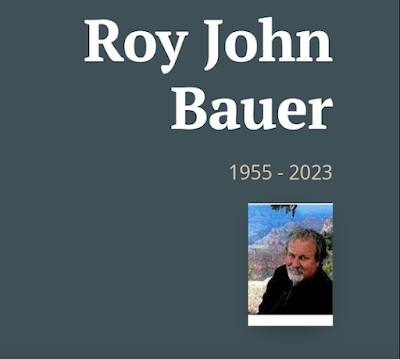
The SOUTH ORANGE COUNTY COMMUNITY COLLEGE DISTRICT —
"[The] blog he developed was something that made the district better." - Tim Jemal, SOCCCD BoT President, 7/24/23
Like the U.S. government, the British government is routinely advised by academics—scientists and other experts.
That’s good. By and large, we have every reason to suppose that such people are in a privileged position of knowledge and understanding relative to their fields.
And, especially nowadays, the average Joe (or Jane) is an ignoramus about almost everything.
Like I said, our British cousins routinely rely on, or at least solicit, advice from academics. But, warns Beddington, there’s a problem: “Government … is in danger of eroding the relationship and squandering [academics’] expertise.”
What's this? People who actually know something might just take the ball and march home?! How come?
Well, it seems that Britain’s ministers often blow off expert advice for political reasons. And then, to add insult to injury, they reprimand scientists for their impolitic advice!
According to the Guardian,
The situation is particularly fraught when eminent scientists are asked to advise on politically sensitive issues, such as the government's drug policy. A debate over the risks of recreational drugs erupted into a public row in February when the former home secretary, Jacqui Smith, vetoed recommendations from her own drug advisers to downgrade ecstasy from its class A status.
A parliamentary report published last week directed further criticism at ministers for demonstrating a cavalier attitude to scientific evidence, which was often viewed as "at best a peripheral concern, and at worst as a political bargaining chip."
Gosh. It sounds like the Brits are as backward as we are. Backwarder even.
The report “called on chief scientists within government departments to name and shame ministers who flout scientific advice when formulating policies.”
Would "shaming" somebody work? Maybe in the U.K. Here, it would likely ensure the guy’s standing as a real American.
Plus they’d replace “flout” with “flaunt.”
The chair of the committee (that issued the report) isn’t demanding that government policy always reflect scientific evidence. He’d be happy, it seems, if ministers were to refrain from making “false claims.”
Whoa. What an unreasonable guy.
I don’t think Beddington wanted his advice to be made public. Those clever Guardian scribblers used the Freedom of Info Act to acquire his letter to a former government official. That’s where he was doing his squawkin’.
In his letter, Beddington referred specifically to a dust-up created when home sec "Jacqui" admonished an academic advisor for “comparing the risks of ecstasy with horseriding in an academic journal shortly before the council announced its recommendations on the drug.”
Yeah, but what if they're actually comparable? Those Brits fly off horses a lot.
The admonition and subsequent media brouhaha "will discourage scientists from working with government," wrote Beddington.
Beddington’s esteemed predecessor has weighed in, emphasizing the importance of scientists giving "honest, rigorous and independent advice" to government.
He added:
"During the Bush period in the White House, scientific advice was not only ignored but sometimes absolutely overturned for no good reason at all. Documents were altered by the White House, including Environmental Protection Agency documents on climate change, with absolutely no scientific input to explain why. There's a situation where the scientific community have every right to say there's little point in working with this government”….
Well, I’m glad that we Americans are so useful. –As an example of how absolutely not to do things.
Stupid People are, you know, an interest group with real clout
Meanwhile, many Americans (aka Stupid People) are convinced that Prez Obama’s health care proposal is a plot to kill old people and to provide reparations to African-Americans for slavery. Others (of the GOP "base") are convinced, overwhelming evidence to the contrary, that Obama wasn’t born in the U.S. and thus he is the amazing Illigitimate Negro Prez.
Some of these people hint at the need for revolution. They keep eyeing their guns. They mutter about "one world government."
"End times."
Many prominent Republicans have gone out of their way not to discourage these spectacular ignoramuses and racist yahoos. It’s a new low for Republicanism. And that’s really saying something.
I'm starting to get worried.
BACK TO GOVERNMENT AND SCIENCE:
Prez Obama has pretty consistently indicated that he means to reverse the Bush administration’s de facto exclusion and/or perversion of science. In the case of the space program, he created the “Augustine committee” to review NASA’s plans and projects.
Good idea. I think Bush wanted us to return to the moon to get cheese.
Alas, physicist and government watchdog Bob Park reports that (the NY Times reports that)
a panel of the Augustine committee favors a plan for human space flight that would go beyond low-Earth orbit, but avoid the deep-gravity wells of the Moon and Mars. What's left? The article suggests Lagrange points, asteroids and the small moons of Mars.
We’re gonna send people to Lagrange points? For all the potential importance of Lagrange points, their intrinsic interest is zero. Is this just an indirect way of saying there is no role for humans in space?
Politically, it’s easier to fund the space program if it offers “humans in space.” People just love to see astronauts in their space suits on big Hollywood adventures. For many Americans, essentially, the space program is an adventure epic (“We do it because it's hard”) with splashy action sequences—like, say, exploring an enormous inexplicable meatball at the bottom of the ocean.
Cool!
Scientifically, humans in space means absurdly inefficient research, since robots and gizmos can do more for much less. If scientists ran the show, we’d bail on humans in space and send mechanical surrogates every time.
But where does Bruce Willis fit into all this?
He don't.
So guess what? We’re gonna put people back in space, even if it means checking out scientifically uninteresting “points” and wasting vast shitloads of money.
Despite rising student fees, Ivan Krimker can finally rest easy about paying for his senior year at UC Riverside. The Marine Corps reservist will soon get a boost from the biggest increase in veterans' education benefits since after World War II.
The Post-9/11 G.I. Bill, which took effect Saturday, doubles tuition and education benefits for veterans nationwide. More than 2 million veterans live in California, and at least 30,000 attend colleges and universities here. When the money starts reaching schools this fall, the bill will provide considerably more benefits than the current G.I. Bill, which Krimker has been using for the past three years.
"It's a night and day difference," he said. … The bill, signed into law by former President George W. Bush last summer, will pay undergraduate tuition and fees up to the cost of the most expensive public university in each state—California's is UC Berkeley, at $6,586 per term. … A plan called the Yellow Ribbon program was also set up to pay the difference for veterans who want to attend private schools that cost more than the most expensive public university.
The benefits will be available to any active duty service members, National Guard personnel, reservists and veterans who served a minimum of 90 days after Sept. 11, 2001. The benefits are proportional to the amount of time a veteran served (maxing out at four years), and will be available up to 15 years after the end of their service. Active duty personnel will for the first time be able to transfer benefits to their spouses or children if they have served for six years and agree to serve four more….
August 1, 2009: What if your friend buys a car, and, as time passes, you realize that she loves everything about it. Performance? Excellent! Reliability? Astounding! Styling? Magnificent!
That would be odd. Surely there is something about the car that is less than excellent, even poor. One might say that her assessments of the many features of her car exhibit uniform favor and that that uniformity of favor is surprising or unexpected—something that, prima facie, stands in need of explanation.
Political orientations
Our embrace of political orientations is like that. “Conservativeness” or “liberalness” is some form of embrace of a sprawling and messy assortments of ideals, beliefs, and convictions that (with regard at least to a prominent subset) fail to reflect a single philosophy.
Here’s the surprising thing: with some familiar exceptions (e.g., libertarians among Republicans; Quakers among liberals; etc.), people tend to embrace pretty much every element of the whole mess (i.e., they exhibit uniform favor). So, if, say, John is a conservative Republican, then we can expect him to believe in a strong military and to enjoy old-fashioned expressions of patriotism. If Jane is a liberal Democrat, we can expect her to support “a woman’s right to choose” and to look favorably upon ethnic diversity.
Again, there are exceptions, but they tend to follow familiar patterns. Lots of semi-selective belief “packages” are conceivable regarding the whole messy stew of familiar liberal political beliefs. But, in fact, one finds only a few familiar kinds. Same goes for conservatives. (Try to find a conservative or Republican who is down on the pursuit of wealth! Show me a liberal who doesn’t celebrate “diversity”!)
BUT WAIT. One might argue that “uniformity of favor” (UF) is precisely what one would expect, for the set of liberal (or conservative) ideas are indeed unified by a philosophy or a small set of core values/beliefs. There's no reason why a car should be uniformly excellent. But there's every reason that the set of familiar conservative beliefs will all be conservative.
That does seem true for some, perhaps many, of the ideas of liberals and conservatives. But it seems false for many others. For instance, why expect liberals to reject and condemn the development of nuclear power? (Is it liberal to fret over the welfare of future generations? Why isn't that conservative?) But they do, almost always.
Why expect a conservative to suppose that an apparently brain-dead person has an active and sophisticated mental life? (Remember the Terri Schiavo case?) Is there something about conservatism that inclines one to reject empirical evidence?
Why expect a liberal to embrace multiculturalism? Why expect a conservative to oppose environmentalism or land and resource conservation? Etc.
Given the manifestly suspect doctrinal fidelity (or coherence) of the familiar bundle of "conservative" or "liberal" beliefs, one is tempted to make an unpleasant suggestion: that most conservatives and liberals don't think their way to their political convictions; rather, they fall in line.
My suspicion is that a form of irrationality is at work here. (Actually, likely there are several forms.) Given that, leaving aside core convictions/ideas, the "liberal" or "conservative" idea bundles are plainly illogical (or doctrinally indefensible), and given that, nonetheless, most conservatives and liberals embrace the whole package (or, at any rate, enough of it to exhibit the illogicalness at issue), there would appear to be some poor thinking or thoughtlessness afoot.
So why is it that virtually all liberals "celebrate diversity" and virtually all conservatives "defend the rights of the unborn"? How come conservatives aren't especially interested in conserving things (such as wilderness or our humane cultural legacy) and liberals are so illiberal about incorrect or hateful speech?
What gives?
If there is irrationality at work here, I’m not sure what it is. Is it that we are members of a team--onecompeting with another—and thus, knowing that success depends on team unity, we automatically go along with the team leadership’s agenda and game plan—forgetting that, in truth, we do not actually or equally endorse each element of that agenda?
Do the set of “liberal” ideas reflect, not principle, but (to an extent) historical accident (and strategy and whatnot), and, because we are unreflective or shallow or suggestible, we fail to notice this fact, embracing every element with equal passion and conviction?
Is it that most of us do not have the time to examine the issues, and so we trust some elite to work out the appropriate application of values—only we fail to perceive this elite's incompetence, corruption, or opaque strategic machinations?
Are there other fallacies at work?
The opposing view (I think)
My guess is that, with regard to their own convictions, many liberals and conservatives would insist that the set of “liberal” (or “conservative”) ideas do hang together naturally: they are (more or less) the result of the application of core beliefs and values: belief in tradition and unobtrusive government, belief in government as a social problem-solver, etc. Hence, no fallacy or irrationality is involved in the phenomena of political UF (PUF). --Not, at least, in the case of my side, they will say.
Maybe so. But I have my doubts. Really look at these beliefs.
Liberals and farming
Take farming. Liberals can generally be counted on to embrace “organic farming” and to reject “genetic modification” of foods (GM).
First, just what is liberal about these stances? Do pesticides prevent free expression? Are science and technology the enemies of equality?
Now, in fact (see below), the organic farming philosophy is shot through with myth and fallacy; logically speaking, embrace of this philosophy is similar to the embrace of, say, alternative medicines or conspiracy theories regarding the assassination of JFK. File under “people thinking poorly.”
GM foods? Again, the rejection of this technology depends largely on myth and fallacy. In fact, given the likely (and unfortunate and probably avoidable) facts of world population, a rejection of GM would be catastrophic.
Naturally, these points require evidence and argument. But they’re readily available. And it ain't rocket science. It’s like belief in alternative medicine: a rudimentary grasp of scientific method—and especially an understanding of such tools as clinical trials and double-blinding—will quickly end enthusiasm for homeopathy, medicinal herbs, and all the rest. A similar competence (minimal scientific or logical literacy) will be devastating for belief in organic foods and a rejection of GM.
OK, so why do liberals take the views that they do about this stuff? There’s nothing really “liberal” about these beliefs. They aren’t liberal; they’re foolish and unfortunate.
(I've chosen an example among liberals in part because most people would place me in that camp. I could easily have chosen a "conservative" example.)
The case against organic farming
For those interested in the logical or evidential case against these planks (or plankettes) of the liberal agenda, I recommend reading Robert T. Carroll’s “Skeptic’s Dictionary.” Read in particular his article Organic food and farming.
Carroll, a philosopher, begins by stating, “Organic food is food produced by organic farming, a set of techniques based on anti-scientific beliefs, myths, and superstition.” By the end of the article, it is difficult avoiding embrace of that thesis.
Goldacre easily tears apart a prominent pro-organic organization’s critique of a British agency's predictable recent finding—that “organic food is no better than normal food, in terms of composition, or health benefits.”
Goldacre starts by saying, “I don't care about organic food. I am interested in bad arguments”—namely, those provided by the pro-organic Soil Association.
Ooh, I love it when he talks “logical” like that to me.
He ends with this:
In reality, this is not about organic food. The emotive commentary in favour of organic farming bundles together diverse and legitimate concerns about unchecked capitalism in our food supply: battery [hence inhumane] farming, corruptible regulators, or reckless destruction of the environment, where the producer's costs do not reflect the true full costs of their activities to society, to name just a few. Each of these problems deserves individual attention.
But just as we do not solve the problems of deceitfulness in the pharmaceutical industry by buying homeopathic sugar pills, so we may not resolve the undoubted problems of unchecked capitalism in industrial food production by giving money to the ... [2 billion pound] industry represented by the Soil Association [a prominent pro-organic group that routinely defies logic and ignores evidence].
Aha! Goldacre is in effect weighing in on my PUF issue. He seems to be saying that there is a group of thinkers (contemporary liberals, more or less) with “legitimate” concerns who, owing perhaps to some sort of emotionalism (and whatnot), bundle (and conflate) issues, supposing that embrace of organic food and rejection of GM cohere with the set of (reasonable) criticisms and suspicions regarding Big Money and Farming.
As I’ve argued elsewhere, I don’t think “emotionalism” helpfully identifies the fallacies at work here. (Emotions are problematic only when they are tied to false beliefs and fallacies.) But I’m sure that Goldacre is on to something with this notion of “bundling” and mistaken association.
It is as though we assume that the world has a simple regularity that it does not in fact have: the bad guys are always bad and, if they embrace something, it is bad. The good guys are always good, and if they embrace something, it is good.
Not. C'mon. Are we not adults?
As Goldacre points out, “organic” farming IS big money, big farming. Further, it is relatively hazardous (manure and disease) and it is ecologically unsound (future generations will have fewer resources). (See Carroll.)
So how come liberals aren’t down on it?
These pro-organic liberals: even their confusion is confused.
See a clip from Penn and Teller's recent episode concerning organic food.
UPDATE:
For some reason, the system won't let me leave comments. Go figure.
I just wanted to respond to 10:57 (see under comments). I seem to have ruffled his/her feathers. [I see that Bohrstein has anticipated many of my points. BS, did I actually give you a B? What was I thinking?]
Dear 10:57:
Pace!
Gosh, I would have thought people would be more careful these days employing the adjective “stupid.”
But that’s OK. I guess I’m stupid all too often. (BTW, I do not believe that you are stupid. I suspect that you fall prey to the syndrome I focused upon in my post. You are a competitor and an advocate. That's fine, but be an honest thinker first. No biggie. I have high hopes for you.)
Allow me to address your comment, point by point:
“You assume that organic farming is some new invention.”
I don’t know why you think I assume this. In any case, I fail to see how the question of organic farming’s “newness” or “oldness” is relevant here. I am, of course, aware that some central techniques and practices of “organic” farming are old—e.g., the use of manure as fertilizer. OK, that’s not new. So what? What is your point?
The question is: what kinds of farming are available? What are the pros and cons of each, short-term and long-term? Those who embrace organic farming steadfastly cherry-pick or exaggerate its pros and seem determined to ignore its cons. (It's as though they are all enrolled in some goddam debating class. Heh heh.) They make claims (e.g., that current pesticide residue on produce is toxic) that the relevant experts and studies have repeatedly refuted. Their fidelity to this “old” (and thus simple and good?) agriculture seems to be driven more be ideology (or…?) than logic. Very curious.
"In fact … industrial factory farming is a relatively new form of food production which uses pesticides, cancer-causing chemicals such as methyl-bromide; genetically-modified foods splicing the genes of tomatoes with tuna; irradiation, etc.”
You seem unaware that contemporary organic farming IS "industrial," as you are using that term. OF is dominated by Big Farming, not small independent farmers. Further, that non-organic farming techniques are in some sense “new” is irrelevant to the questions at hand. Newness is not necessarily bad, just as oldness is not necessarily good.
I don’t have the space or time to address every point (though all are addressed in the sources I cited--not interested in reading that?), but briefly:
• Organic farmers use pesticides too. The question is: which pesticide uses are less problematic (short-term and long-term). You seem unaware that experts have faulted “organic” pesticides as particularly problematic.
• Again, were you to consult expert opinion (discriminating between the reliable and unreliable, looking, of course, for consensus among the relevant experts), you would be compelled to abandon your fears of GM and irradiation. All that you are doing here is confronting this factoid and shouting, “Not!”
“Not to mention that industrial food just tastes like shit compared with organically grown foods.”
Well, you are ignoring the evidence. You are warranted in citing scientific testimony when it roughly achieves consensus. There is no consensus for the assertion that organic foods taste better. On the contrary, my impression is that existing studies tend to refute your belief. (I guess you didn’t watch the Penn and Teller clip. For fun, you might check it out.)
“Most of the GM and industrial foods have had very little research into the effects they have on human health and bio-diversity….”
Well, again, the relevant scientific testimony tends to the contrary of your view. GM is actually fairly old, and we know enough about it to be confident that it will not produce the “scary” disasters the pro-organic crowd loves to portray (taking a page, I guess, out of the Bush/Rove playbook). Again, read the Carroll piece. Look at his references. Read Goldacre’s piece. Find reasonable, objective people on the “other side.” Be fair to them. Don’t reject a view on the basis of ad hominems (viz., that some who take the non-organic side work for or reflect the views of rich interest groups).
Ironically(?), you seem to be doing precisely what I warn against in my piece: you assume that the bad guys (big agricultural concerns, etc.) necessarily do bad things. No. Even Duane Andreas does good things sometimes (mostly by accident, not by design). Why is this so hard to accept?
Further, you’re obviously spouting “talking points.” I’m not interested in rhetoric; I’m interested in evidence. Stop viewing this as a competition.
“Industrial farming is irresponsible and until the proper scientific research has been produced which explores the effects of the use of pesticides and genetic modification on bio-diversity, I'll stick with the traditional forms of food production which are organic.”
First, assertion ("irresponsible") is not argumentation.
Second, you are assuming what you are obliged to establish: that we do not know the effects of pesticides (again, you wrongly assume that organic farmers do not use pesticides—and that the same “issue” does not arise for them) and GM, etc. Again, you need to survey the available expert testimony/studies, favoring the scientific/reliable over the merely anecdotal or poorly conducted. Upon doing that, you will find little reason to worry about current pesticides (much improved over the old ones, thanks to the environmental movement and its critics of Big Farming) or GM or effects on bio-diversity.
Hey, if I’m wrong about that assessment, then I will change my view. I want to follow the evidence, and if the evidence favors your view (or some part of it), I will join you.
It’s all about the evidence, you see. This is not a competition or contest. First, get the facts, the truth. Only then: put on your warrior outfit and grab your megaphone. Logic before advocacy. OK?
“Furthermore, the British study makes the claim that organic foods are no healthier than industrial foods. No one ever claimed they were.”
This claim is routinely made by the advocates of organic foods. You know that.
“History has shown that industrialization has produced all sorts of unintended effects on the natural environment. Why should we think that industrial food production as any less harmful?”
There is wisdom in your skepticism. We should be very careful adopting new technologies, etc., especially when they involve massive activity. But you seem to believe that organic farming is excluded from “industrialization.” It isn’t. Organic farming is now Big Farming. Further, by all accounts, it uses much more land than does non-organic farming. It is much less efficient in the conversion of natural resources into food. As far as I know, that is not in dispute.
You seem unaware of the world’s population issues. How can that be? (You know better.) And you seem to insist on viewing “organic farming” as little traditional farms dotting the landscape, emitting the moos and clucks of happy critters, leaving a small footprint and no residue. Surely you realize that that is nonsense.
Drop the talking points—these are inevitably dishonest. Honestly address the points and arguments of your critics. If the logic and evidence favors your side, then competent and honest thinkers will join you there eventually.
If, as I suspect, the logic favors some version of non-organic farming, will you defy or ignore this?
If so, how are you different from George W. Bush?
Ah, but I sense that you are, at bottom, nothing at all like W. You want to do the right things. So do I.
If you hang out with students, you notice that they consistently beef about certain things.
Like textbook prices. A student can spend two or three hundred dollars or more per semester just on books. And prices keep rising.
Students at both campuses of SOCCCD have started textbook lending programs, which should help. But, for many reasons, not all textbooks will be available for lending and I suspect that these programs are not equipped to serve all or even most students. They are little more than gestures.
Meanwhile, as usual, our board of trustees is clueless, though they do seem to recognize the problem. On the positive side, some trustees have consistently pressured student government, which receives serious district money, to focus more on providing genuine benefits for students—scholarships, cheaper textbooks, etc. Good for them.
Student government (at least on many campuses) is a part of the textbook cost problem. At Saddleback and Irvine Valley Colleges, student government gets a cut of textbook sales at the college bookstore. It’s a huge source of revenue for ASG. That cut is added to the bookseller's cut.
So textbooks are expensive in part because student government jacks up prices in order to fund student activities: campus concerts, dances, co-curricular activities (speech tournaments, Model UN, etc.), scholarships, and the flying of pretty blue balloons above bucolic lawns in the bright Southern California sky.
The situation is, well, ironic. And trustees who lean toward libertarianism (Don Wagner and Tom Fuentes [in some of his moods]) have made that irony plain.
(It’s amazing to see these people actually doing their job for a change. Do you suppose that the dominating board majority—the "fiscally conservative" Fuentes, Wagner, Williams, and Lang—recognizes that, on such occasions, they punctuate an endless dark saga of cluelessness, counter-productivity, and contempt with bright points of honest trusteeship? Are they proud or ashamed? Do they even perceive the absurdity?)
Still, much cluelessness prevails on the board. For instance, with monumental obliviousness, trustee John "the dolt" Williams, who has served on the board since 1992, has suggested that instructors get together to write textbooks and provide them to students for free.
I guess they can do that over lunch.
Actually, I’ve written and provided free text materials for my students for years.
But that avenue is more available to some of us than to others, owing to the differing natures of academic areas. Further, for most people, writing textbooks is difficult and time-consuming—so the work must be funded. Further, as a "humanist" (aka left-wing, devil-worshipping, homosexual atheist), I'm accustomed to writing, but this cannot be said of most instructors, many of whom desperately avoid writing (thank God). Then there's this: the notion that a department should settle on a standard text (for a particular course) obviously undercuts instructor autonomy, a freedom that continues to be greatly valued by the professorate (or, um, the instructorate), and for good reason.
For this and various other reasons, to anyone who actually understands colleges and academics, Williams' suggestion is unworkable and absurd. (In seventeen years, Orlando Boy has learned nothing, except how to work the system to his advantage. He is: the world's most uninteresting man.)
Regarding textbooks, instructors can behave badly too. Some (a very few, I think) approach textbook selection as a way to line their pockets. (We've all heard of scandalous instances: instructors who sell a package of materials apparently designed to maximize profit.) More significantly, many instructors, it seems, choose textbooks with little thought to student cost issues. With some exceptions (e.g., IVC's English Dept.), instructors do not organize to achieve some sort of uniformity or economy in textbooks selection. (Again, sometimes, such avenues aren’t available.)
Meanwhile, textbook publishers have generally approached students merely as a market to exploit for all it's worth. Still, in recent years, they have felt the pressure created by student dissatisfaction with high textbook costs, some of it coming from legislators. Some publishers have made available “online” versions of texts—students “own” them for the semester. But that avenue remains expensive, and it has been attended with abuses--e.g., the often-meretricious "bundling" of materials.
And now, we read, publishers too are moving into lending. From this morning’s Inside Higher Ed:
Students frequently rent DVDs to watch in their dorm rooms, but soon they may start checking out something much heavier and pricier: textbooks.
Saying they offer an alternative to the textbook industry's bloated prices, a growing number of companies are renting new and used titles at reduced prices. Among them are Chegg, BookRenter and the Follett Higher Education Group, which will test drive a rental service at campus bookstores this fall. They join a number of colleges that have already started their own on-campus programs.
With all of them, the concept is essentially to pay to check out textbooks as if they're out of a library – only there are more copies and titles, and they can be used for longer periods of time. Through Chegg, for instance, a student searches for a book and rents it for up to a certain number of days, such as up to a quarter or a semester. Users are promised discounts of 65 to 85 percent off the list price, but if they don't return a book on time, they are charged full price. The same punishment applies to doodling in the margins, since the books are meant for reuse…. … At least one publisher has noticed Chegg. In an arrangement that will go live in August, McGraw-Hill Companies will provide the site with new books and share an undisclosed portion of the revenue…. Until now, Chegg has been purchasing books on its own and through affiliate programs…. … Studies have shown that textbook prices are rising faster than the rate of inflation, but not as much as tuition and other higher education costs. Last year's Higher Education Opportunity Act mandated that institutions report annually how much they spend on essentially reducing the costs of textbooks and other instructional fees. It also required textbook publishers to expand the information they provide about pricing and changes from past editions. Most significantly for companies like Follett and Chegg, a bill outlining the U.S. Education Department's budget, crafted in February, mandated that $10 million be reserved for a "new college textbook rental initiative" to "provide competitive grants to colleges to expand opportunities for students to rent college course materials." … Charles Schmidt, a spokesman for the National Association of College Stores, said that 2 percent of the group's stores offer some kind of rental service and more are likely to come. He, too, warned that the savings touted by companies may not be as great as they seem. If a student rents a book at a discounted price, the savings would be minimal, he said, considering he or she could have sold a bought-new copy back to the bookstore to make up the difference. Plus, he said, there is some value in keeping a book well past the semester's end: "A book such as [organic] chemistry is the type of book that a student is probably going to want to keep in their education, and possibly in their professional life or graduate student life."….
Things change. When I was a student, I kept all my textbooks, for I saw them as representing what I had learned. I often referred to them in subsequent years. I still consult some of them.
I guess that practice has fallen out of favor. Too bad.
The online encyclopedia Wikipedia has become embroiled in a bitter row with psychologists after a Canadian doctor posted answers to controversial tests on the site. ¶ The Rorschach test is designed to give psychologists a window into the unconscious mind, but many now fear their patients will try to outwit them by memorising the "right" answers….
Of course, the test was already useless, so this is no big deal.
Essentially, the doctor poked a hole in a flat tire.
The Rorschach inkblot test is considered controversial by some researchers for several reasons. Some skeptics consider the Rorschach inkblot test pseudoscience, as several studies suggested that conclusions reached by test administrators since the 1950s were akin to cold reading. [I added the link.]
Cold reading. That’s what palm readers do. It’s what John Edward and James Van Praagh do.
Rorschach tests are bullshit.
Here’s inkblot 3.
If you see two humans, then, deep in your unconscious, either you (1) seek to realize your potential or (2) you are a pedophile.
Plus: Have you been thinking about taking a class or doing some maintenance on your mind, body or soul? Now is the time.
There’s an interesting story about college kids and religiosity in today’s Inside Higher Ed: God and Majors.
Many parents worry that college will drive religion out of their kids. Does it?
A new national study that looks at trends between study of certain subjects and religious observance provides some evidence to back up those worries, but also may surprise members of some disciplines and some faiths. And the research also finds that religious students are more likely than others to attend college….
Among the findings:
• [1] The odds of going to college increase for high school students who attend religious services more frequently or who view religion as more important in their lives….
• [2] Being a humanities or a social science major has a statistically significant negative effect on religiosity…. …The impact appears to be strongest in the social sciences.
• [3] Students in education and business show an increase in religiosity over their time at college.
• [4] Majoring in the biological or physical sciences does not affect religious attendance of students, but majoring in the physical sciences does negatively relate to the way students view the importance of religion in their lives.
• [5] Religious attendance is positively associated with staying in majors in the social sciences, biological sciences and business majors. For most vocational majors, the researchers found a negative relationship between religious attendance and staying in the same major….
…The study’s authors were interested in exploring whether a “scientific mindset” discouraged religiosity:
"Our results are … consistent with [that] overall theoretical framework guiding this research. We believe that there are important differences among the college majors in world views and overall philosophies of life....," they write.
"[O]ur results suggest that postmodernism, rather than science, is the bête noir – the strongest antagonist – of religiosity."
Some of these findings (as reported) are a bit perplexing, but I’m sure nobody’s surprised by indications that humanities and social science majors are negatively influenced concerning their religiosity.
I’m not at all surprised that education and business majors tend to move towards (or more deeply into) religion. I bet they go to chiropractors and read horoscopes, too.
They (i.e., people with education degrees) are in charge of K-12 education, you know. Our K-12 education system is a disaster you know.
Just sayin'.
That fourth "finding" is interesting. Of course, if most science majors are irreligious at the outset, we shouldn't be surprised that their college years won't change their church attendance. I would expect most college students (in demanding fields) to increase in sophistication and understanding of their irreligiousness, which is consistent with this "finding."
The fifth "finding" is curious. Does this refer to students who choose a major and stick with it? I would expect religious students to be more likely to do that, owing to their, um, faith-based thinking. It's harder, I would think, to decide what to do with one's life if one proceeds without the comfort and inertial intellectual infrastructure of a theistic world view.
The family photo archiving continues. These pics are from 1952. Here's mom, checking out the scenery in western Canada. I think she learned all her moves and poses from glamour and show-biz magazines. She was daffy for that stuff.
This is mom with her (soon to be) mother-in-law, near Niagara Falls, I think. Eventually, mom and pop moved west, to British Columbia. (I don't think mom was terribly fond of "Oma.")
In those days, Canadians, it seems, were in the habit of bringin' out their rifles and just walking around with 'em. People did lots of hunting, I guess. But what can you bag on a road? Squirrels?
Mom would have been barely eighteen in this pic. A year or so earlier, she had left Germany alone, age 17, on an old Liberty ship (the kind Henry Kaiser made; they tended to break in half).
I think she lied about her age. Pop was a year older. They met on the boat.
Lookin' for varmints, I guess.
My folks have lots of bear stories. Moose and elk stories too. Mostly, they seem to be tall tales. I guess some of 'em could be true.
But I refuse to believe the one about the bear that cursed in French. Ain't buyin' it. Nope.
 Wrong answer, College Boy!
 Like I said, our British cousins routinely rely on, or at least solicit, advice from academics. But, warns Beddington, there’s a problem: “Government … is in danger of eroding the relationship and squandering [academics’] expertise.”
 In his letter, Beddington referred specifically to a dust-up created when home sec "Jacqui" admonished an academic advisor for “comparing the risks of ecstasy with horseriding in an academic journal shortly before the council announced its recommendations on the drug.”
 "End times."
 (From OC Reg)